

NEEWER QZ-C TTL Wireless Flash Trigger Transmitter for Canon cameras with OLED touchscreen and 1/8000s HSS
Product description
What it is and why you’d buy it
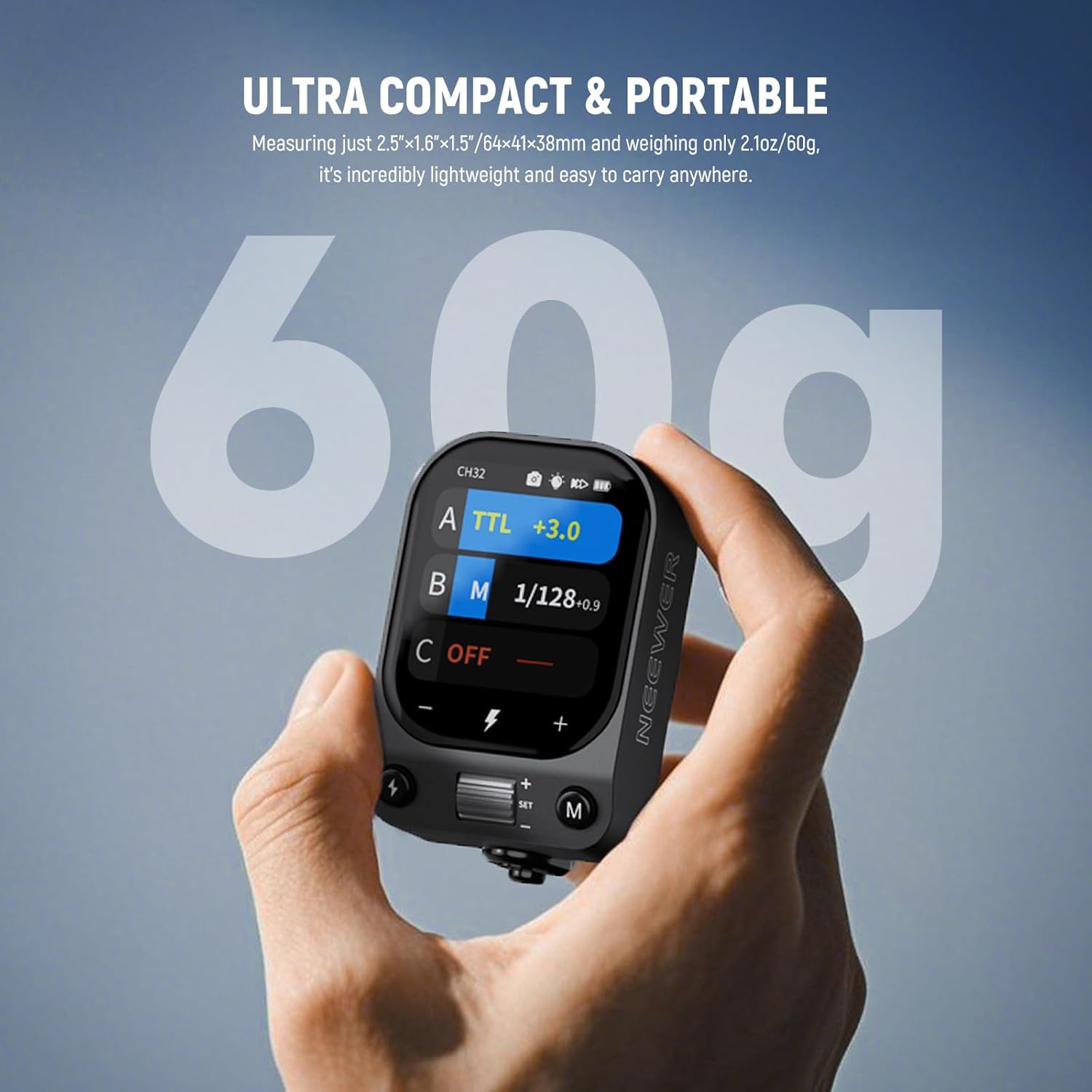
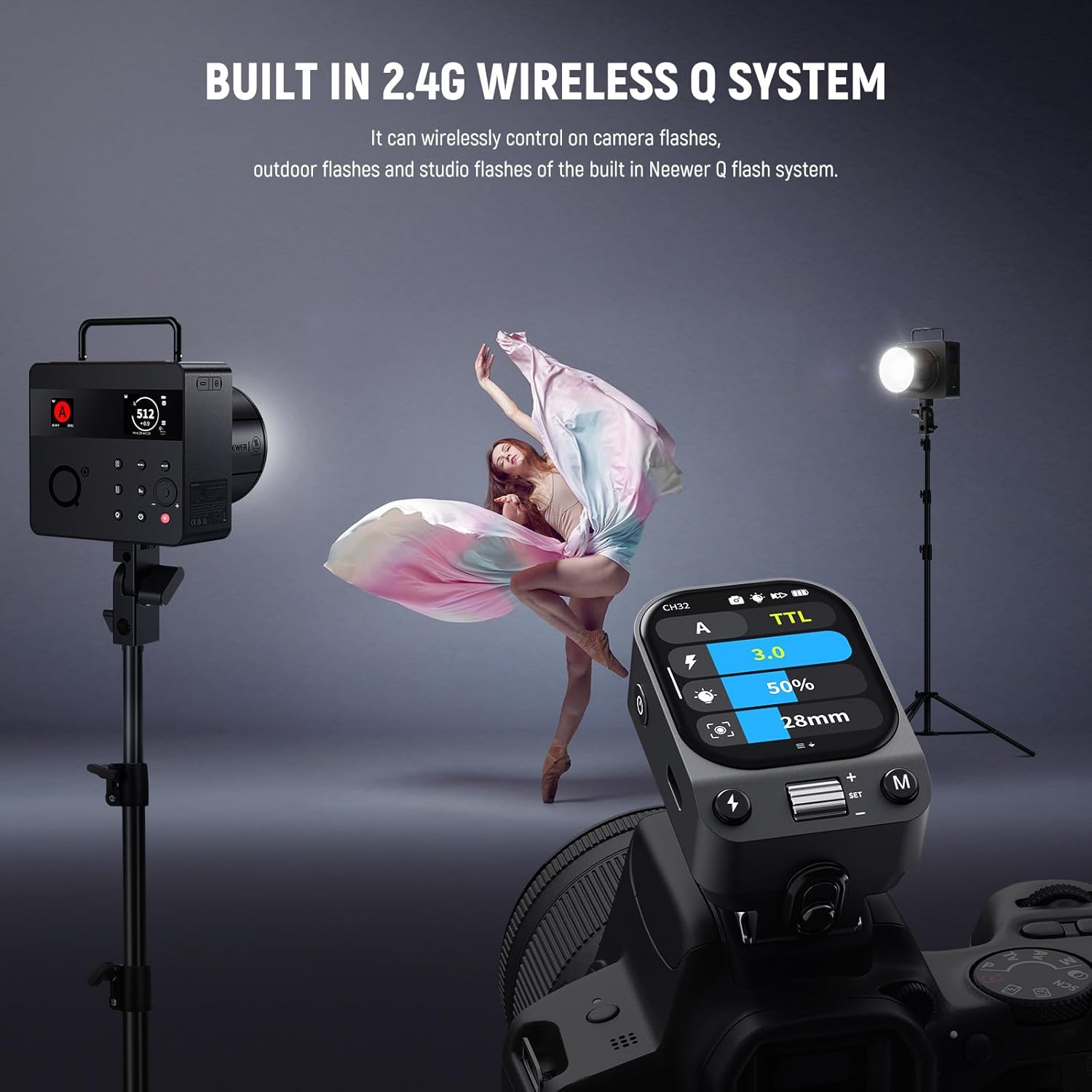
The NEEWER QZ-C is a wireless flash trigger transmitter designed to sit on your camera and control compatible off-camera flashes. On paper, it’s aiming at photographers who want proper TTL-style automation (where supported), fast high-speed sync (up to 1/8000s), and a more hands-on control approach thanks to an OLED touchscreen and touch-friendly settings.
In practice, a transmitter like this matters when you’re building lighting that isn’t stuck to the hotshoe. If you’ve ever wanted to change flash output, adjust groups, or trigger strobes from different positions without fiddling with the flash menus, this is the sort of tool that makes that workflow smoother.
That said, it’s not a universal “works with everything” device. The name itself hints at compatibility with specific Canon-camera setups and a particular NEEWER “Q system” ecosystem, so it’s worth double-checking your gear before you assume it will slot in.
Key features you’ll notice day to day
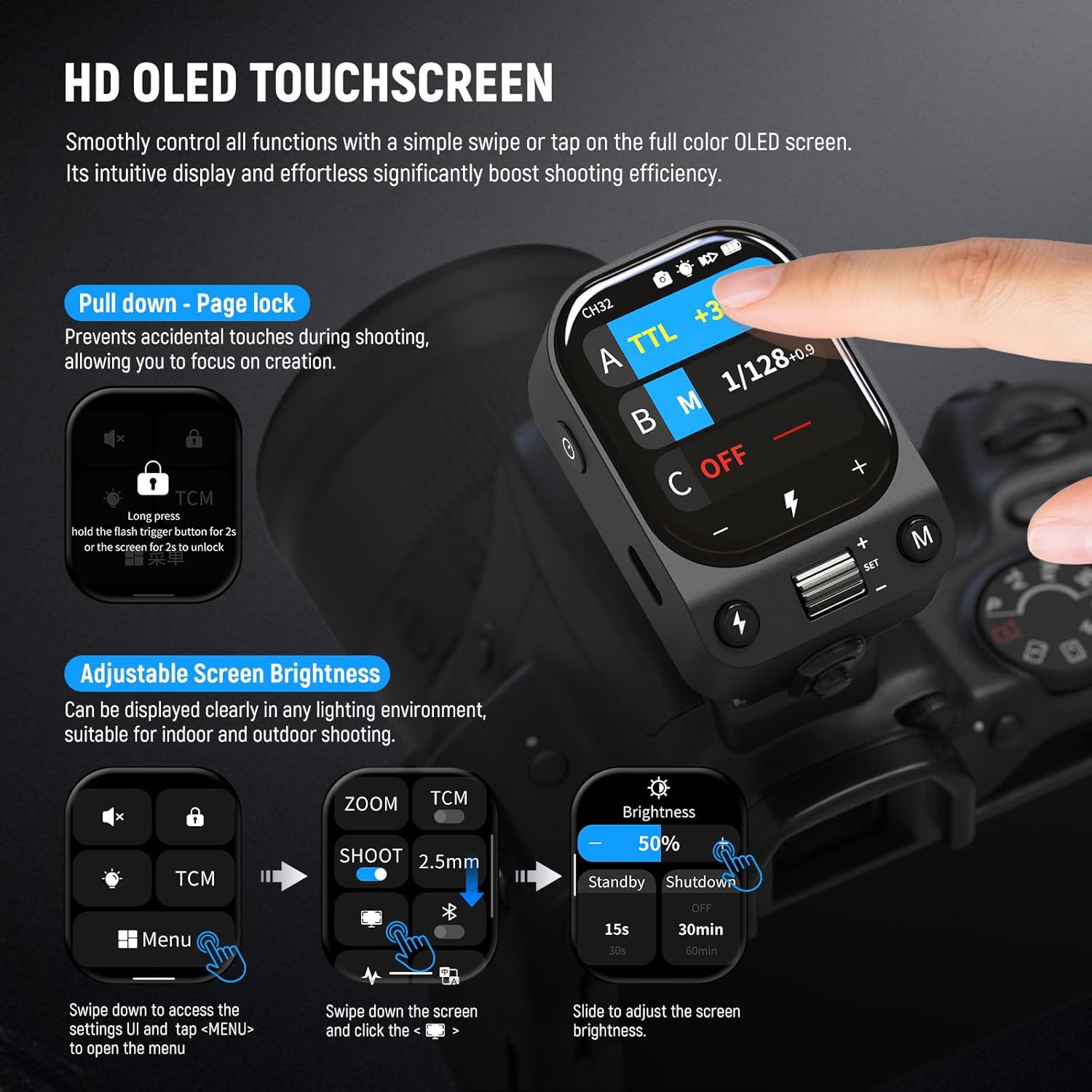
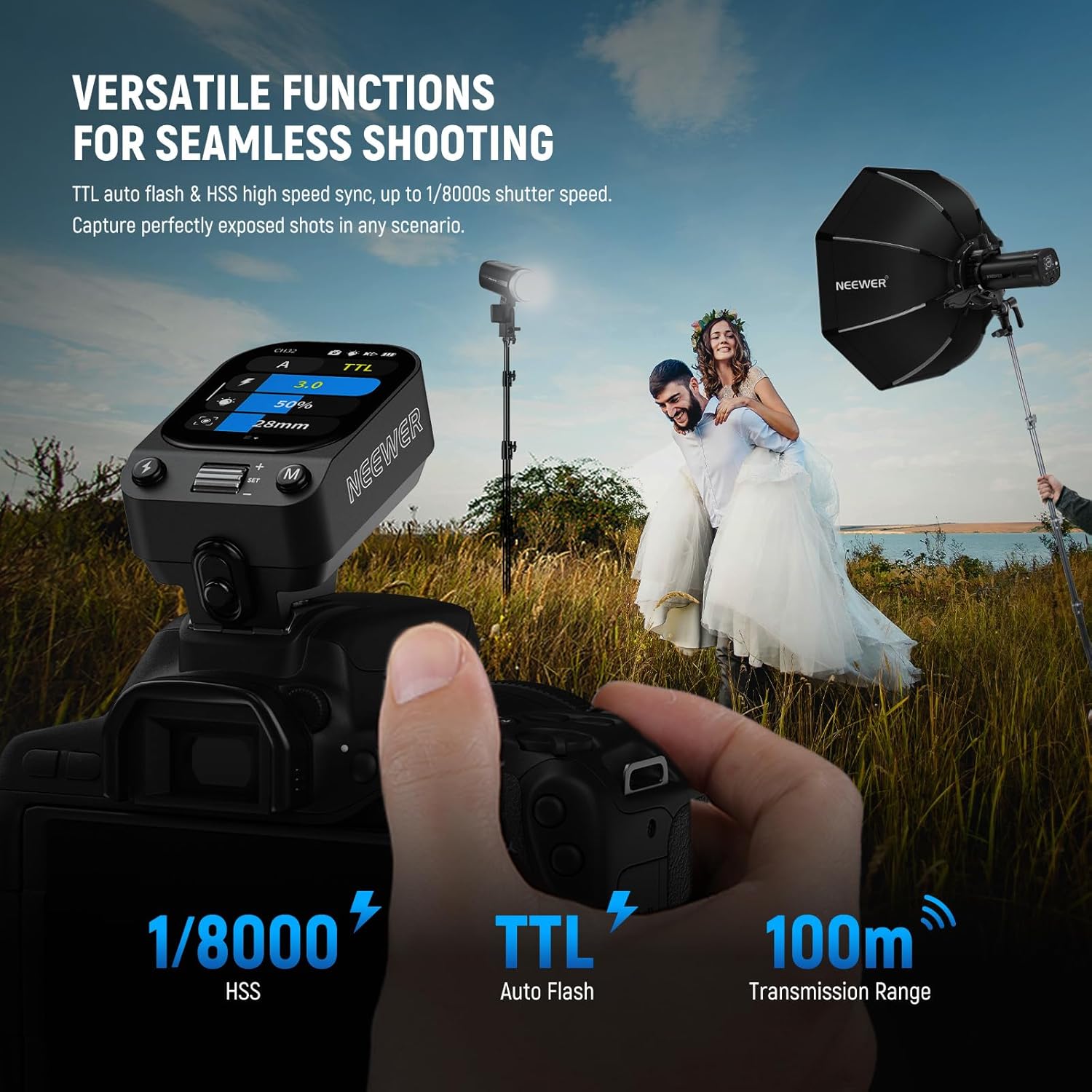
The most obvious convenience here is the dimmable OLED touchscreen with intuitive controls. Even when you’re mid-shoot and light is changing fast, a touchscreen display can reduce menu-hopping compared with more basic remotes.
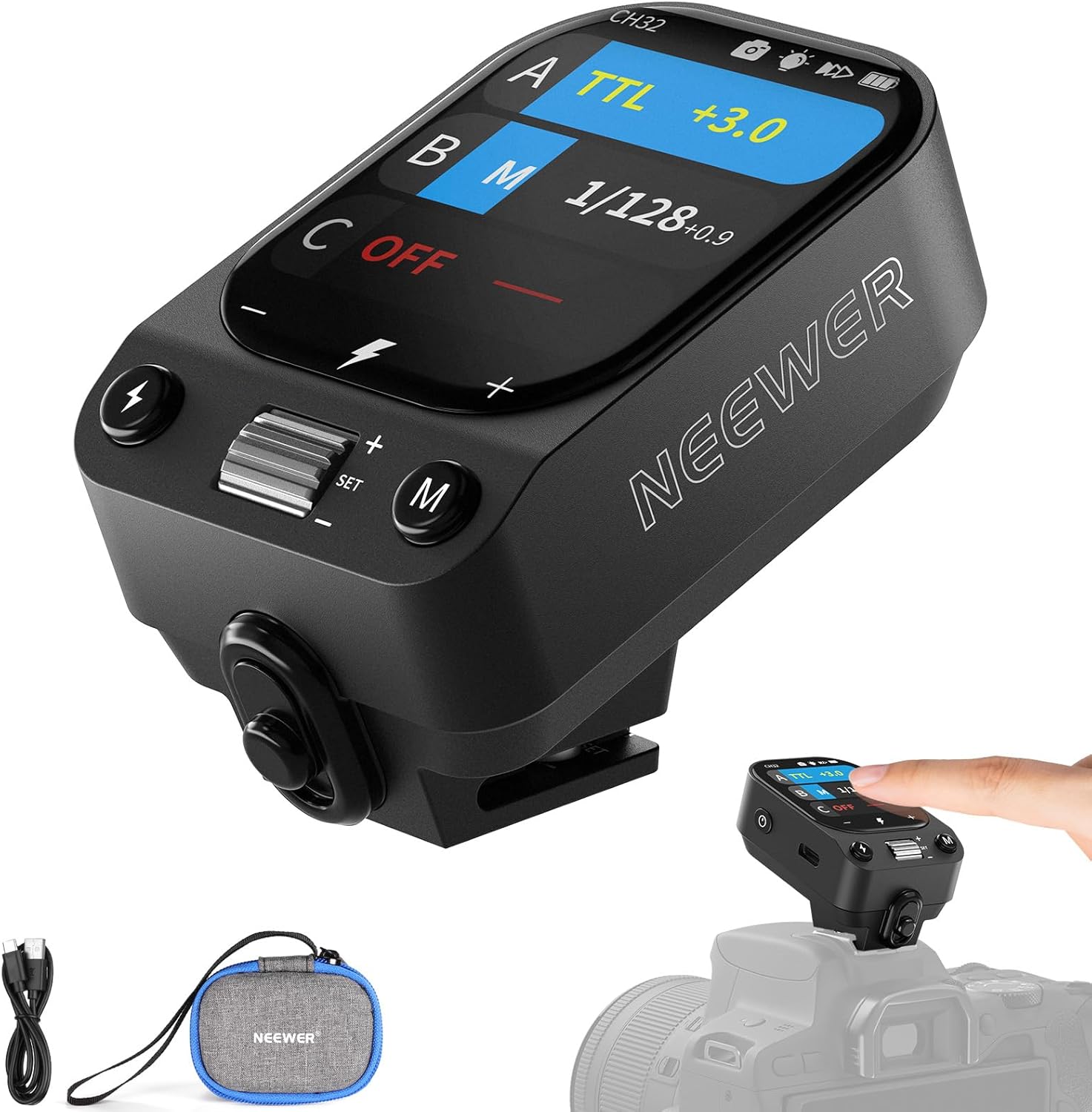
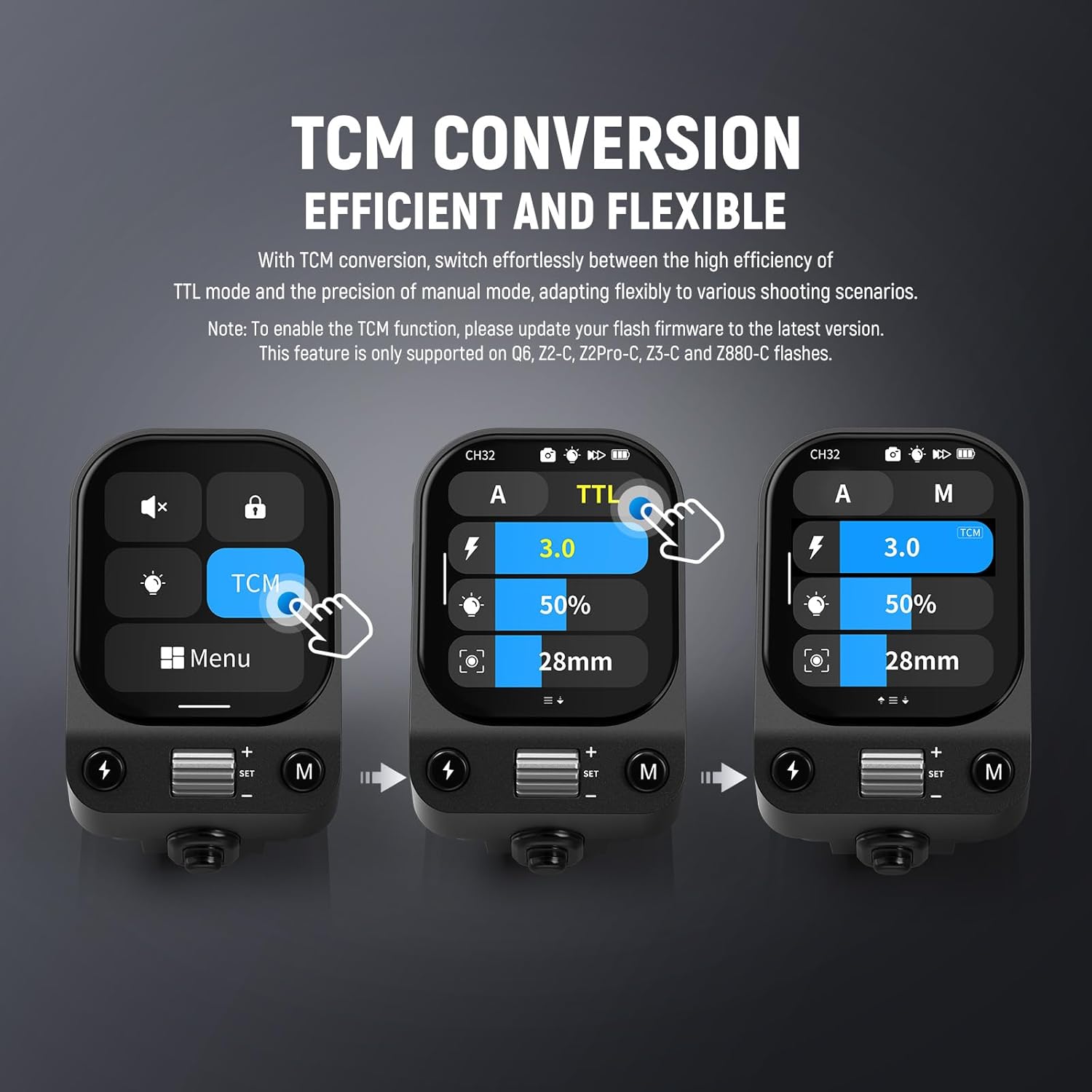
You also get a set of flash control modes that cover a lot of real-world scenarios: - TTL and M/Manual options for when you want automation or full control. - TCM (as listed) and Strobe modes, which can be useful depending on how you’re balancing exposure. - ±3 EV exposure compensation (as stated), so you’re not trapped doing everything by trial and error.
For high-speed action, it supports 1/8000s high speed sync, which is particularly relevant if you shoot outdoors with wide apertures or want to freeze motion without constantly stopping down.
There’s also group control and wireless channel flexibility: it supports 5 groups, 32 channels, and 01–99 IDs. That’s the kind of detail that becomes important in busy locations where multiple photographers may be using wireless gear.
The essentials: wireless performance and setup logic
The QZ-C uses a 2.4G “Q system” approach for off-camera triggering. It’s listed as being compatible with a range of NEEWER Z-series and related flashes/controllers within that same system, including models like Z3-C, Z2PRO-C, Z2II-C, Z2-C, Z880-C, plus some other referenced units and Q-series flashes (as provided in the input).
A small “read the fine print” point: the base notes say you may need to disable single contact mode for TTL and Strobe. If you’re seeing odd triggering behaviour when you expect TTL to respond, that’s one of the first things to revisit.
Also note the single point triggering option is mentioned. That suggests it can be more straightforward than a pure “everything in a zone” setup, but it may not suit every kind of multi-light choreography if you prefer more complex, simultaneous triggering.
Tech specs that matter in buying decisions
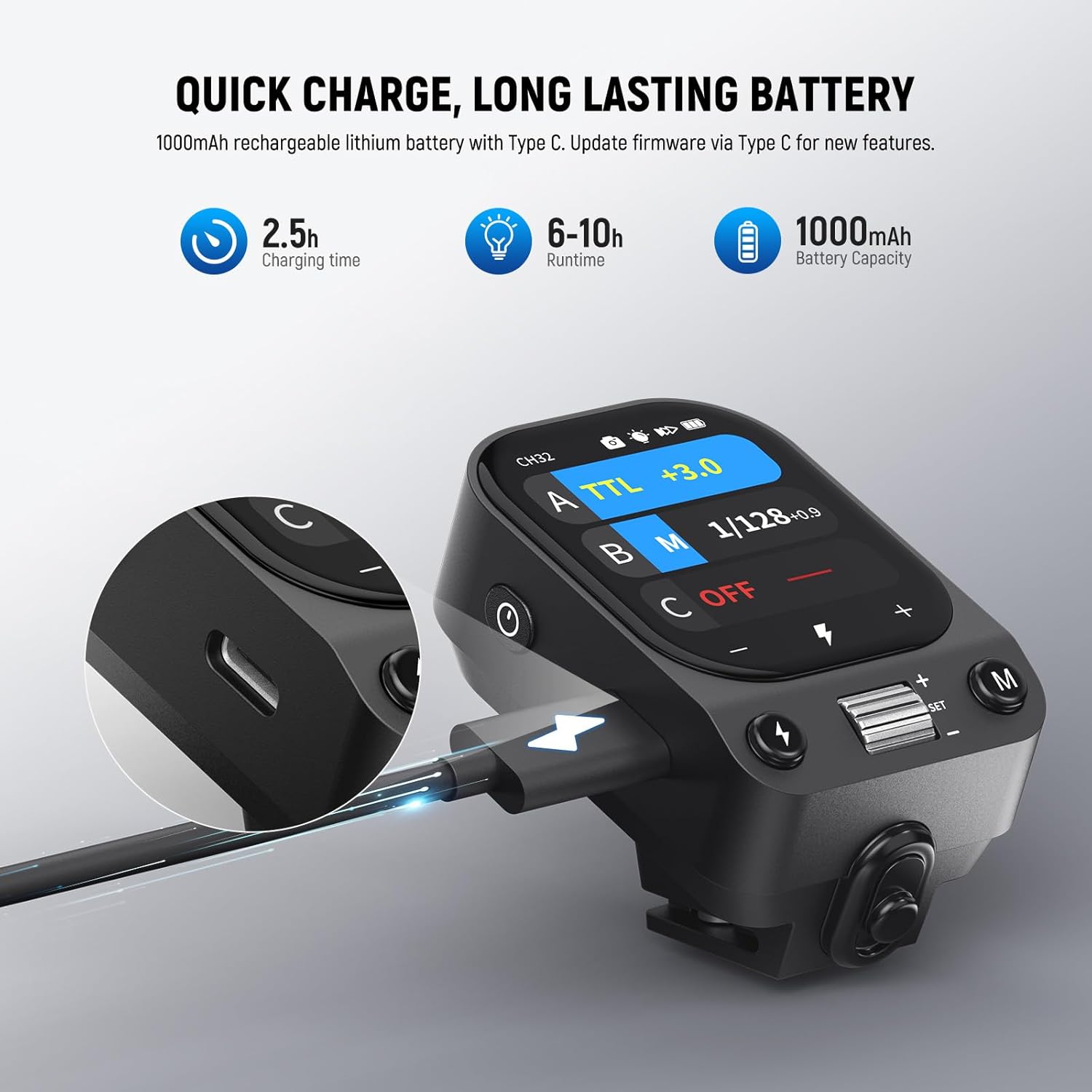
This transmitter is powered by a 3.7V 1000mAh lithium battery. The input states it charges in 2.5 hours (charging cable only included), and it supports real-time battery level display and firmware upgrades.
If you’re trying to judge whether it fits your shooting rhythm, battery indicators and update support are the kind of practical features that reduce downtime.
For lens coverage control, it supports auto or manual zooming from 20 to 200mm (as listed). That can help keep your flash light coverage aligned with your framing, rather than leaving it on an approximate setting.
The input also mentions a single-point warning style note for powering down: you can force shutdown by pressing and holding the power button and test button at the same time. It’s not something most people use daily, but it’s the sort of detail that can save time if the unit behaves unexpectedly.
Finally, compatibility is explicitly linked to Canon cameras and excludes some models listed as not compatible. This is a big buying factor—more on that below.
Compatibility: where it fits (and where it doesn’t)
Compatibility is clearly a mixed bag here, with an included Canon camera list and a list of models marked as not compatible (RP, R50, T7/1500D, 2000D, per the input).
It’s compatible with a variety of Canon bodies listed in the input, including R6, R5, R3, R, M6, 850D, 800D/T7i, 760D/T6s, 750D/T6i, 650D, 600D, 7D Mark II, 7D, 6D Mark II, 6D, and several 5D variants, plus SL3/250D and some T-series bodies (with exclusions noted).
It may not suit you if you’re using one of the excluded Canon models, or if your flashes/controllers aren’t part of the “Q system” ecosystem referenced in the input.
Best use cases (with a quick example)
If you shoot portraits or small product sessions with off-camera lighting, the combination of group control, TTL support (where applicable), and HSS up to 1/8000s is exactly what you’d use.
A concrete scenario: imagine you’re outdoors on a bright day and you want a shallow depth of field look. You set high-speed sync to keep the exposure workable at a wider aperture, then place a flash off to the side. On the QZ-C, you can adjust group behaviour and exposure compensation without constantly touching the flash itself. The touchscreen makes it easier to see what you’ve changed mid-session, rather than guessing from tiny indicator lights.
Where it may feel more “middle of the road” rather than premium is in how it relies on the specific system compatibility and mode behaviour notes. If you’re expecting it to work seamlessly with every flash brand or every Canon model, it could be frustrating.
Is it worth it?
It’s a solid pick if you already own compatible Canon equipment (from the list provided) and use NEEWER flashes within the 2.4G Q system range. The OLED touchscreen, 1/8000s HSS support, and the mix of TTL/M/TCM/Strobe modes are the kind of features that can genuinely streamline off-camera flash work.
You may want to skip it if: - your Canon body is one of the explicitly listed “NOT compatible” models, - your flash gear isn’t part of the Q system / referenced compatible units, - you need absolute simplicity and don’t want to think about mode-related notes like disabling single contact mode for TTL and Strobe.
If you’re the type of photographer who changes lighting setups often, values quick adjustments, and is happy to stay within a defined wireless ecosystem, this transmitter makes practical sense. If you’re shopping for maximum universality across random flash brands, it might not be the right direction.
Mini FAQ
Will it work with all Canon cameras?
No. The input includes a compatibility list and also mentions specific Canon models as not compatible. Check your exact camera body against the listed supported and excluded models.
Does it support high-speed sync?
Yes. It’s stated to support 1/8000s high speed sync.
Does it include a charging cable?
The input says the battery charges in 2.5 hours and that only the cable is included.
What flash modes are supported?
TTL, M/Manual, TCM, and Strobe modes are listed, along with exposure compensation and triggering/zoom behaviours as described.
What should I check if TTL doesn’t behave as expected?
The input notes to disable single contact mode for TTL and Strobe, which is a useful troubleshooting step if you encounter unexpected TTL behaviour.