

NEEWER CM28 Wireless Lavalier Microphone System
Product description
What it is
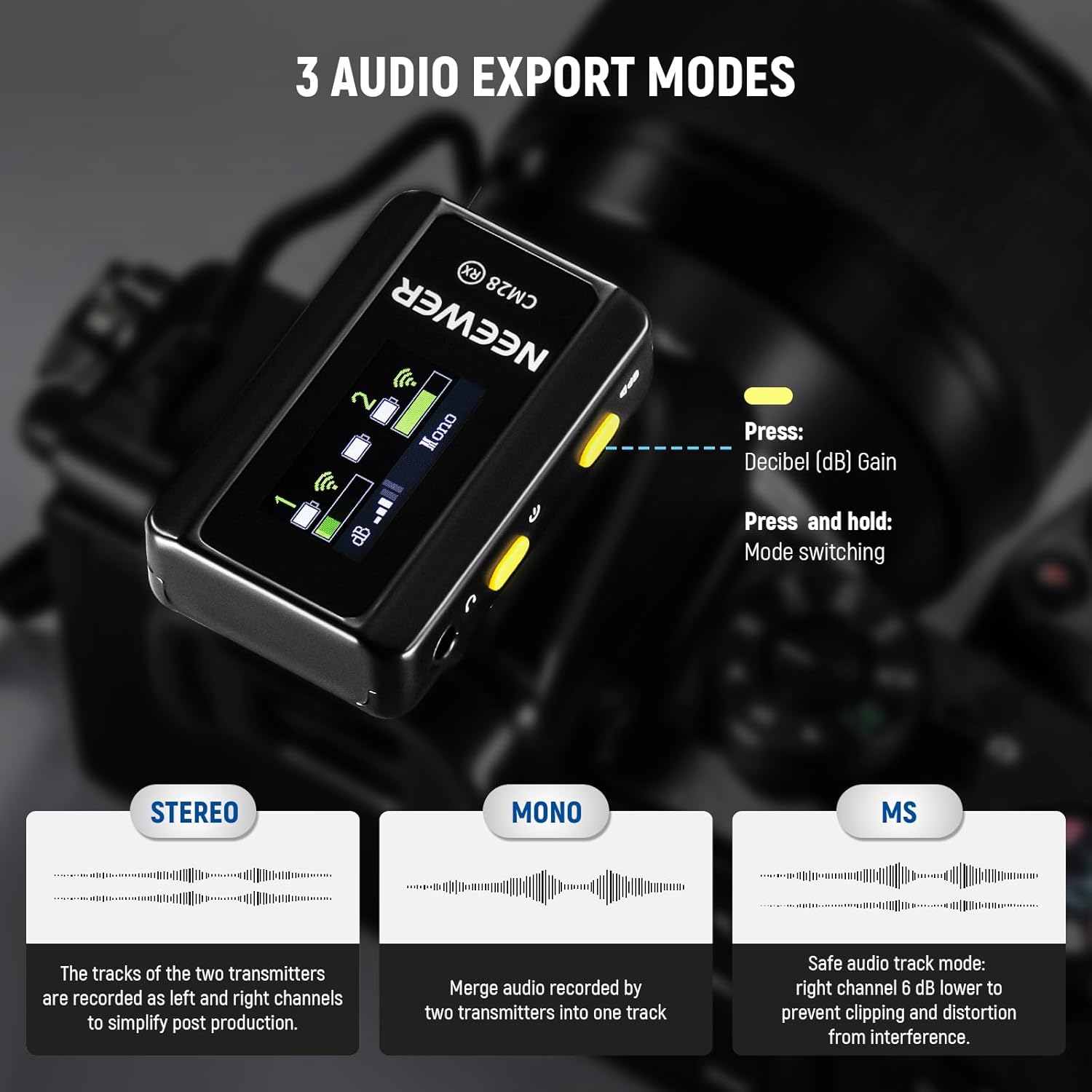
The NEEWER CM28 is a compact wireless lavalier microphone set designed for on‑the‑go audio capture. It includes two transmitters (TX) and one receiver (RX), with built‑in options for standalone recording and real‑time playback. It’s aimed at creators who record outside a studio—think outdoor interviews, fitness classes, live streams, or quick vlogs.
How it works
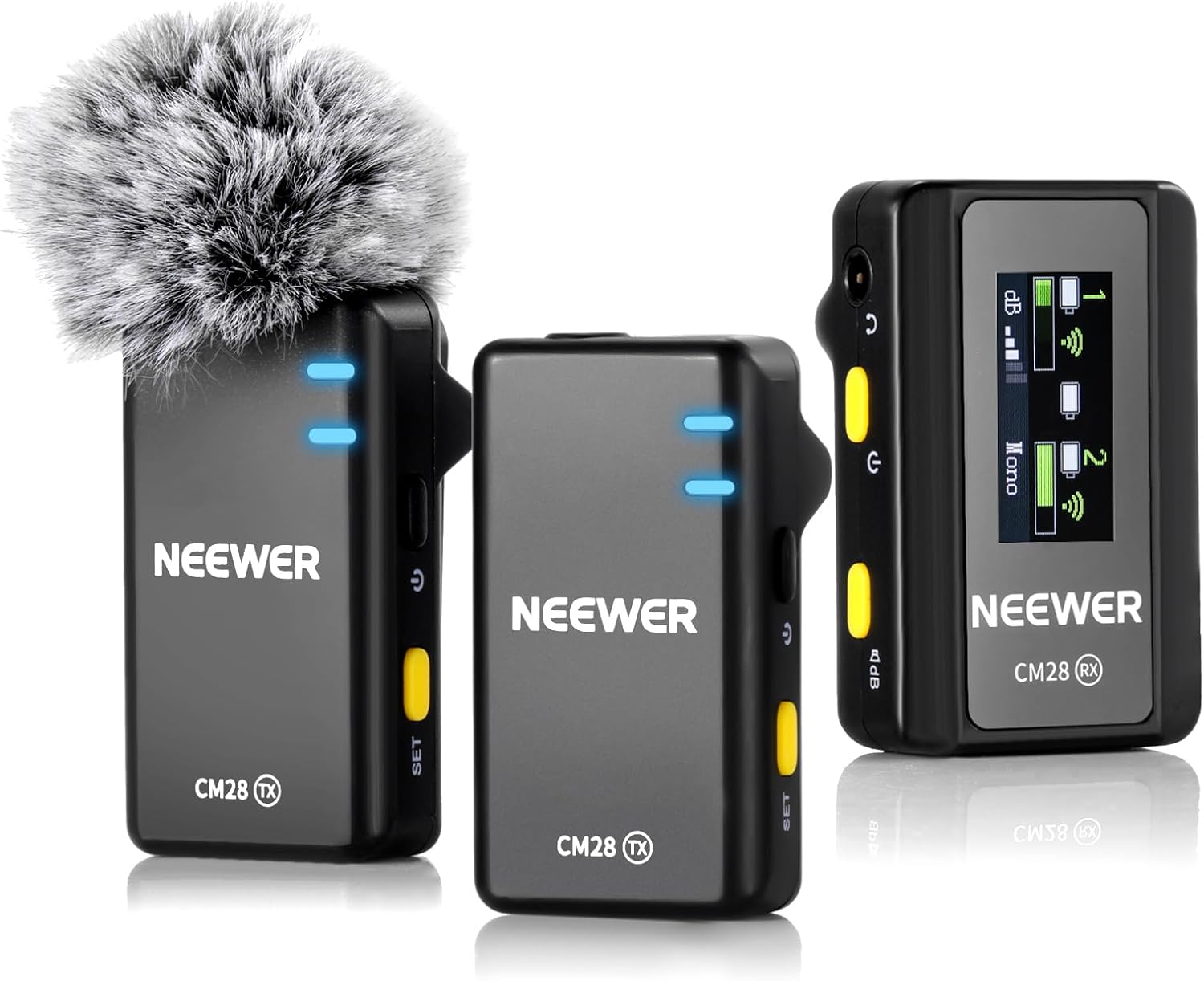
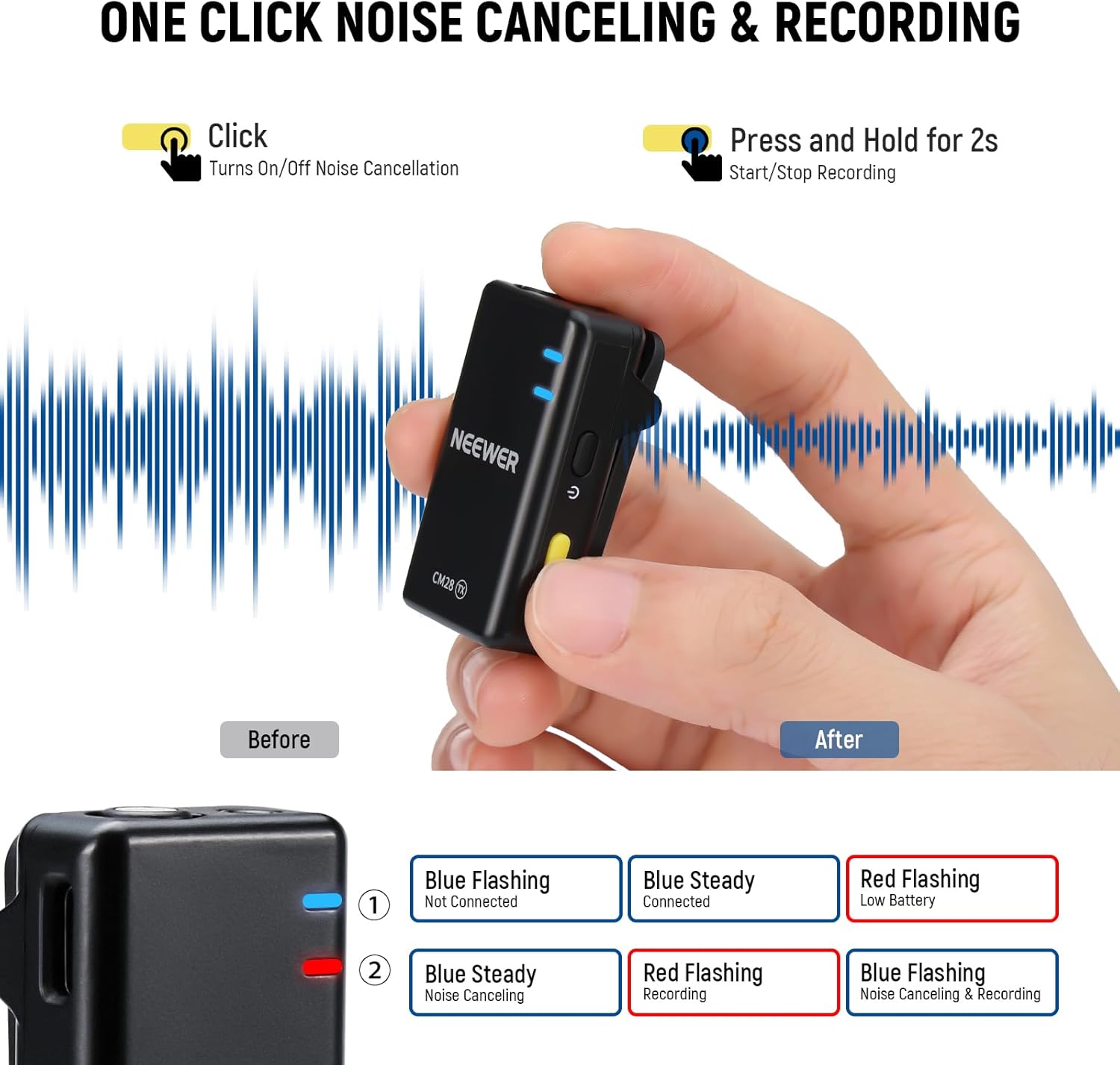
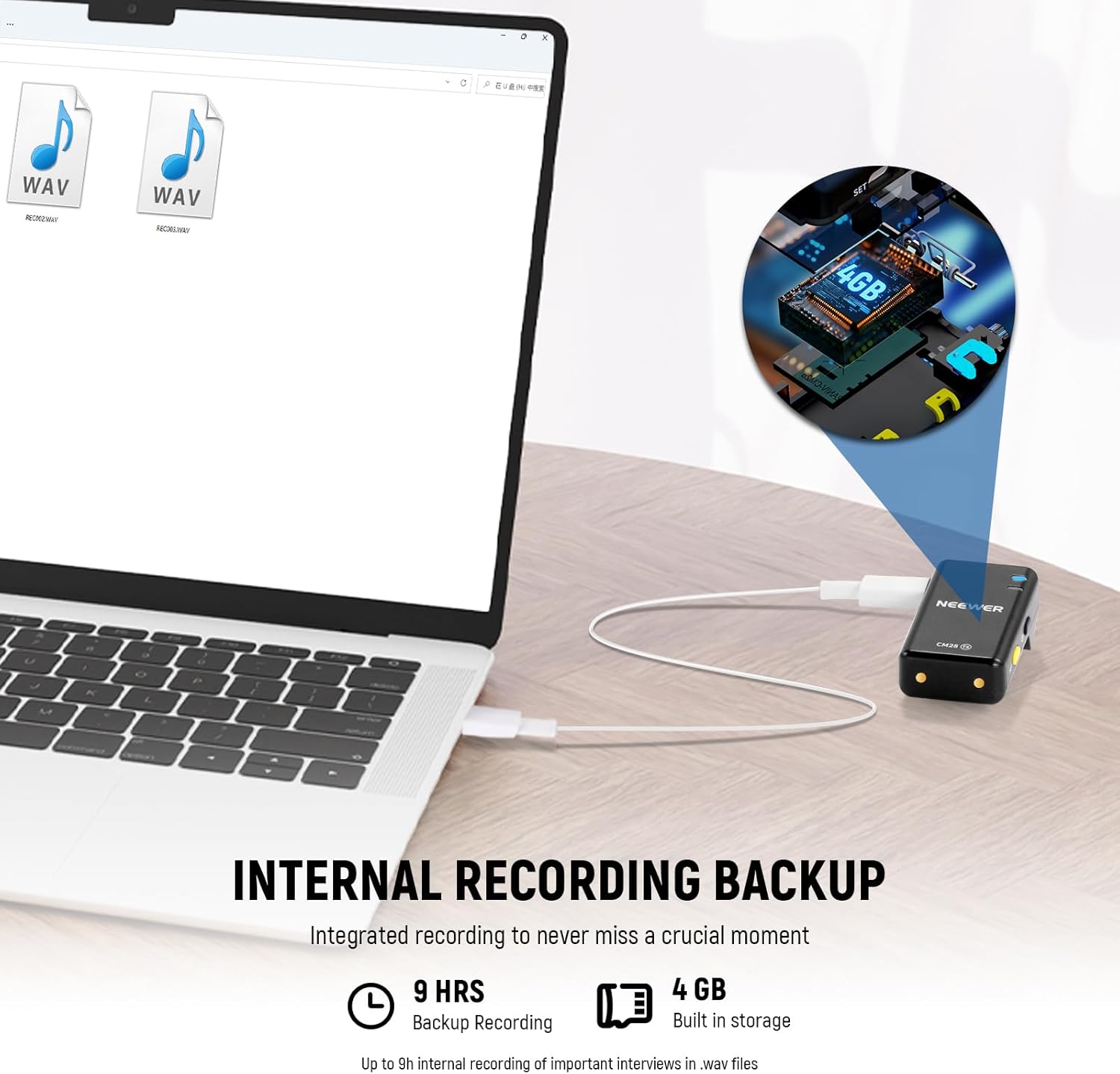
Two TX units pair with a single RX to provide wireless audio transmission. The TX units can record locally as WAV files with 4GB of storage, delivering up to 9 hours of uncompressed 48kHz 16‑bit audio per the stated capacity. A one‑button noise canceling chip on the TX aims to reduce background chatter at the source, while two windshields and magnetic attachments help keep the microphones in place and reduce wind noise during movement.
Recording and storage
If you prefer standalone recording, you can rely on the TX’s 4GB onboard storage to save long sessions without always needing a separate recorder. In practice, this can be useful for journalists or educators who want a backup track or when camera gear is limited.
Range and reliability
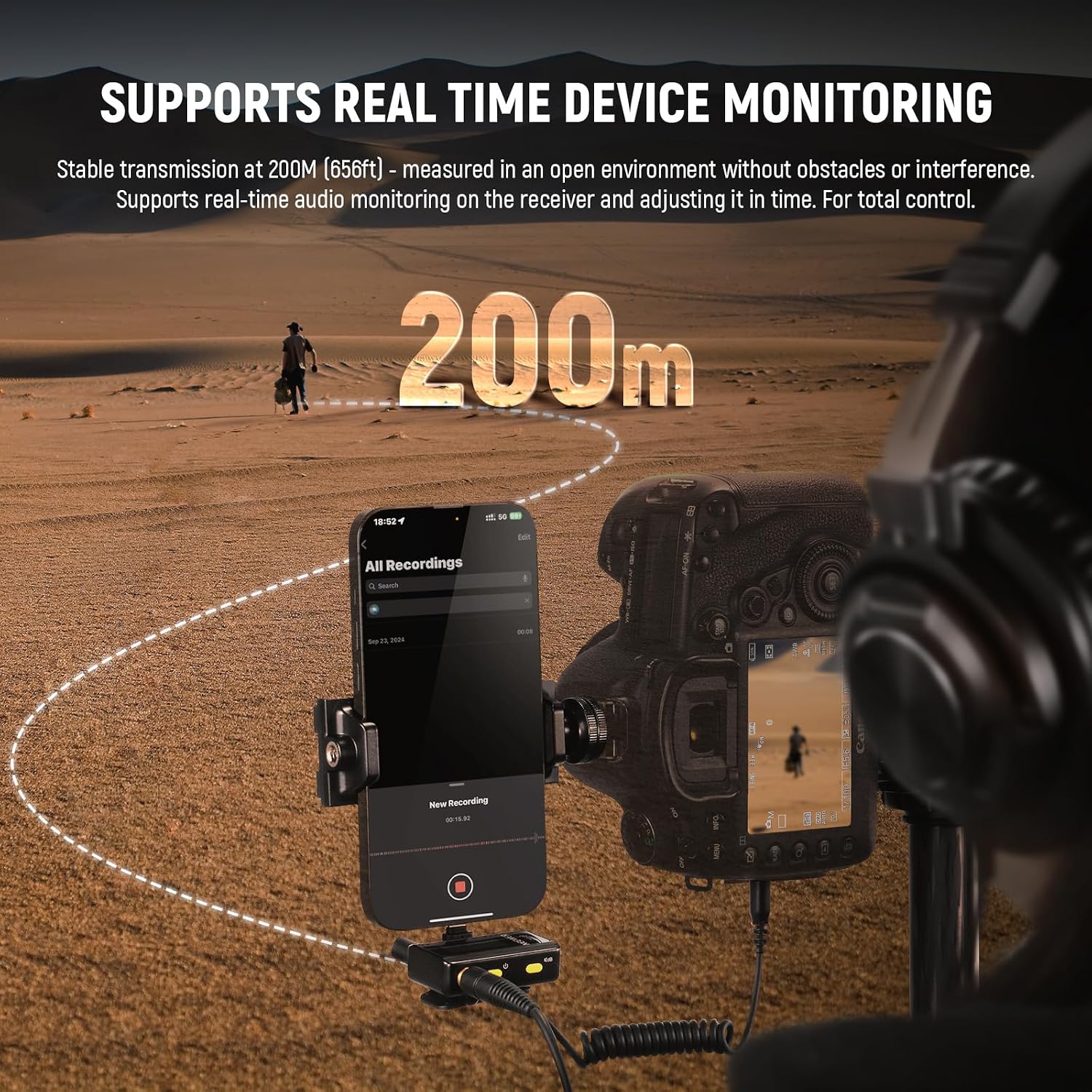
In unobstructed environments the CM28 claims up to 656ft (200m) transmission, which is useful for larger spaces or when you’re moving around a subject. Real‑world performance will vary with walls, metal, and other interference, so it’s wise to plan for shorter ranges in busy locations.
Compatibility and setup
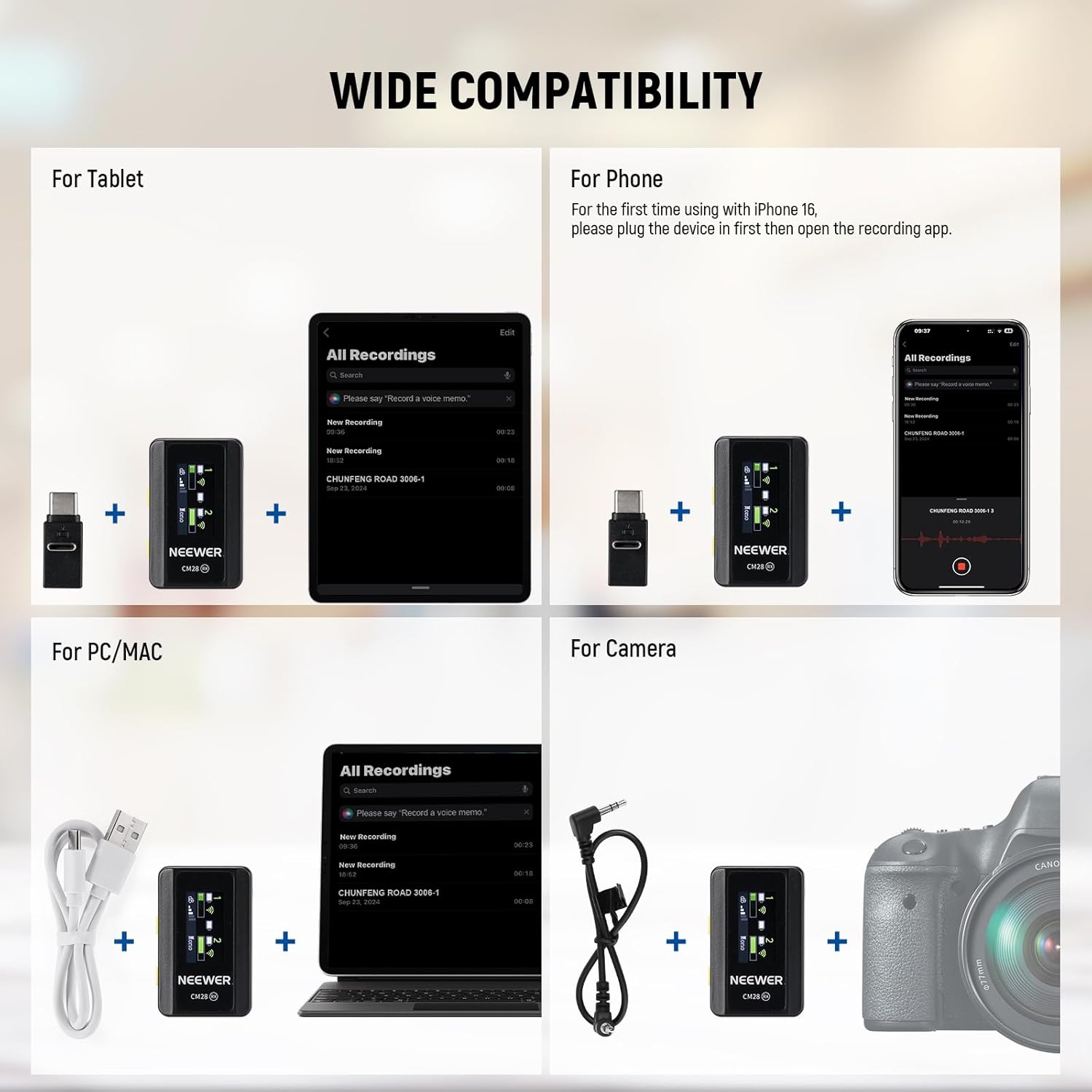
The tiny RX unit is designed to pair with a range of devices via OTG adapters: iPhone and Android phones, tablets, PCs, and cameras. A USB A to C cable is included for computer use, while a 3‑in‑1 USB‑C charging cable supports charging both TX and RX. Note that some phones may require enabling OTG functionality in settings.
What to weigh up
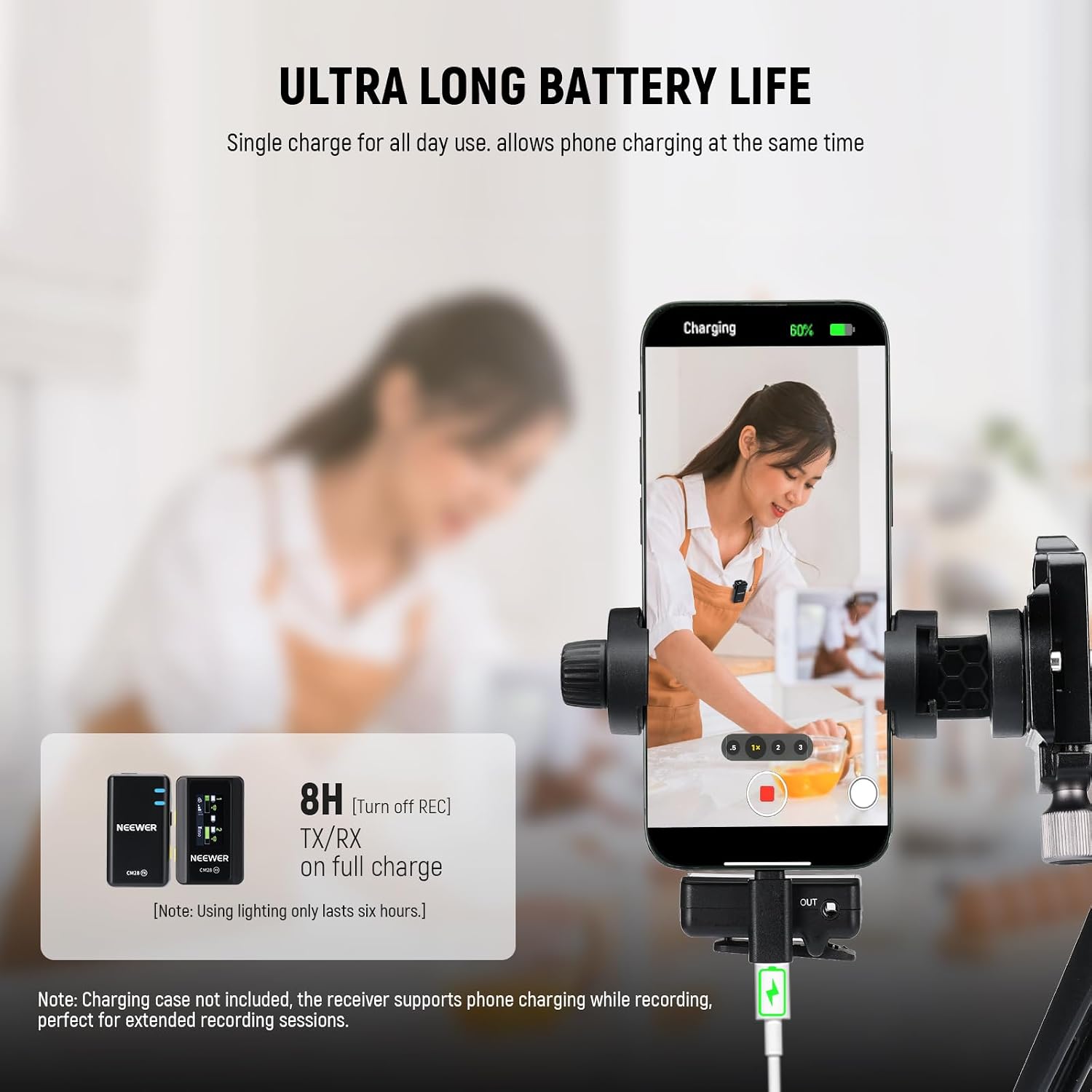
On the positive side, this kit bundles dual transmitters for flexibility and a built‑in recording option, which can be handy if you’re trying to avoid dropouts or if the main camera’s mic input isn’t ideal. The 9‑hour TX / 8‑hour RX runtimes suggest solid all‑day use between charges. The one‑button noise cancellation is convenient, especially for casual setups where post‑production editing isn’t feasible.
On the downside, the system relies on a dedicated wireless channel, in crowded radio environments or dense venues, you may encounter interference or dropped audio. The onboard 4GB storage is helpful, but it’s still a backup rather than a full replacement for reliable live capture if you’re syncing tracks later.
Who it’s for
This kit fits you if you record interviews, lectures, or fitness classes on the move, or you’re a beginner creator looking for a simple wireless solution with a built‑in recording backup. It’s also suitable for someone who wants to test wireless lavalier concepts before committing to more expensive gear.
Who it’s not for
If you require the utmost reliability in high‑interference environments, or you need multiple mic channels beyond two TX sources, you may outgrow this setup. It’s not a replacement for a high‑end wireless system or a studio‑grade multi‑mic arrangement.
Before you buy
Consider whether your primary use will be live audio to camera, or if you’ll rely on local recording as a safeguard. Check that your device supports OTG with the provided adapters, and whether you’ll need additional cables for your recording workflow. Remember that range is “up to”, expect shorter transmission in real‑world settings.
Practical usage example
Imagine filming an outdoor Q&A: you clip one TX to your subject’s lapel and keep the second TX on your sleeve for ambient mics. The RX sits close to the camera, and you capture clean voice while the TXs’ one‑button noise cancel helps reduce wind noise during a light breeze. If the camera isn’t actively recording, you still have 4GB of WAV on the TX just in case you miss a cue.
FAQ
- Do I need the charging case to use it? No, charging case is not included.
- Can I use this with an iPhone without extra adapters? You may need OTG adapters or appropriate cables to connect the RX to your device.
- Is the 4GB storage sufficient for long shoots? It supports up to 9 hours of 48kHz 16‑bit WAV on the TX, which is helpful for backups but may not replace the primary recording in longer sessions.
- Will it work with my DSLR or mirrorless camera? Yes, there is an audio cable included to connect to camera equipment, ensure your camera’s mic input is compatible.
The decision you’ll make
Is it worth it? If you prioritise portability, simple setup, and a built‑in recording backup for starter‑level wireless audio, the CM28 offers a practical balance between convenience and capability. It’s a modest step up from basic wired lavaliers for on‑the‑move filming, but it isn’t a full replacement for higher‑end systems if you demand maximum reliability or multiple independent channels.