

NEEWER 58mm Variable ND Filter 1–5 Stops
Product description
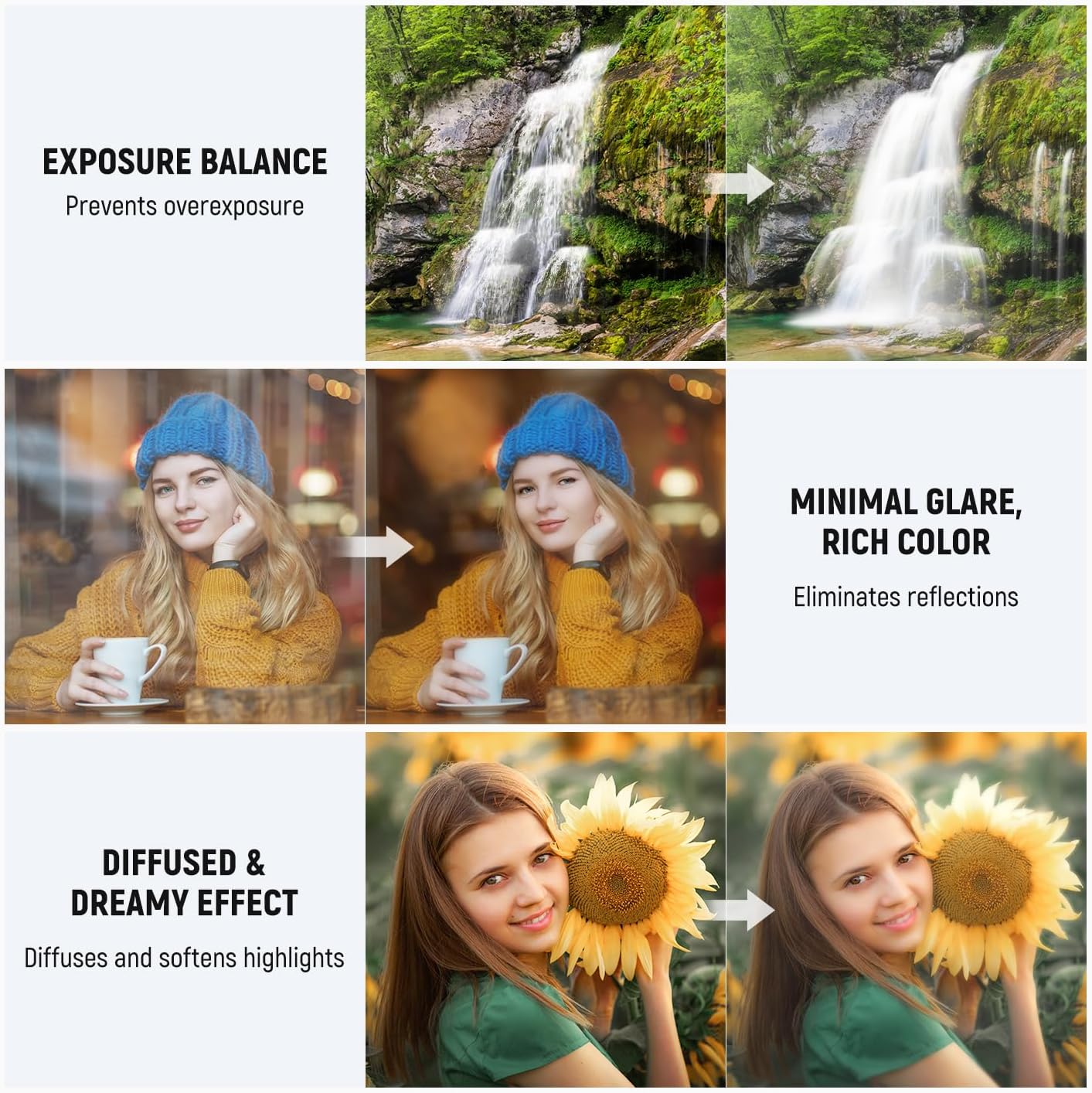
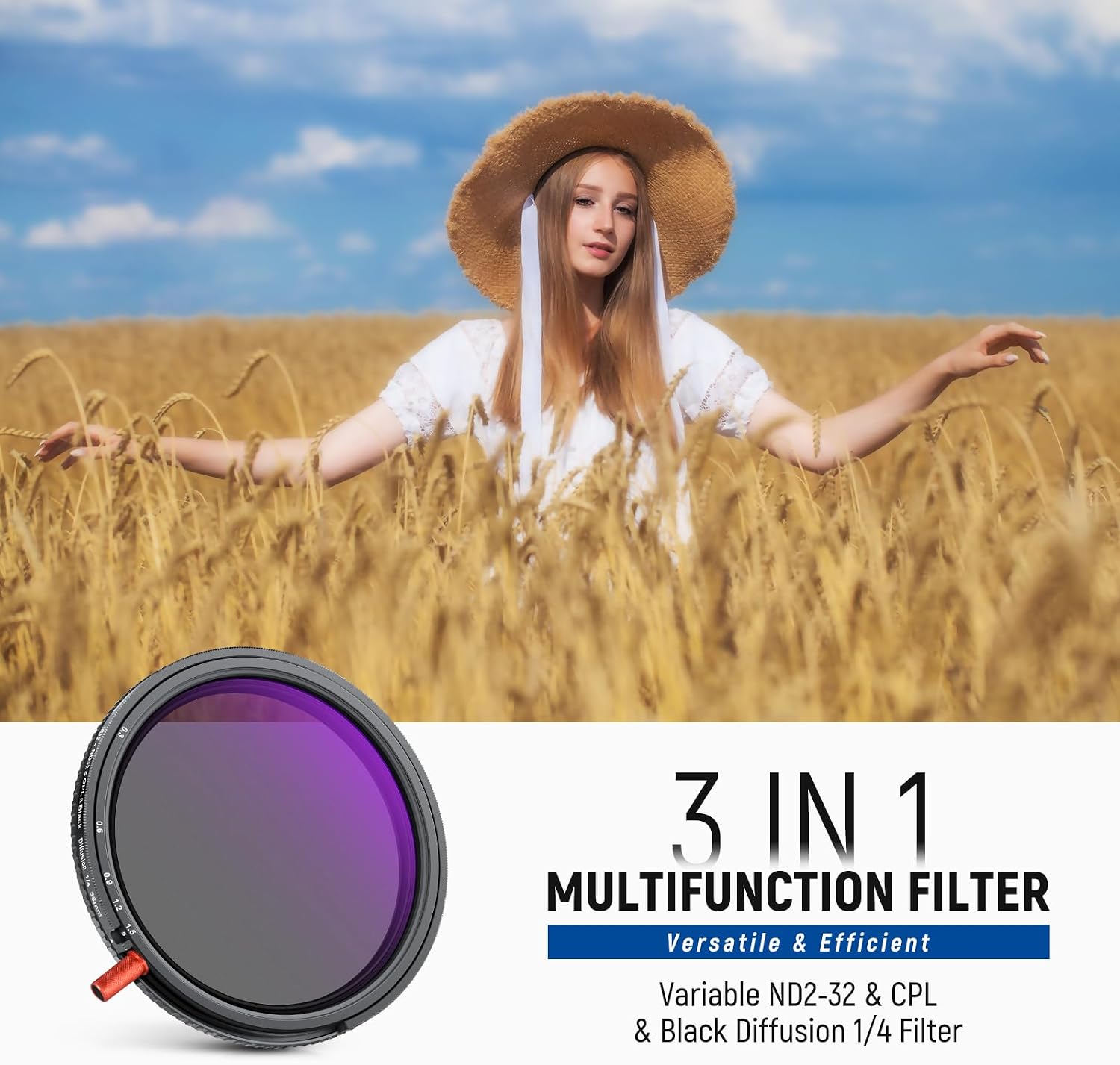
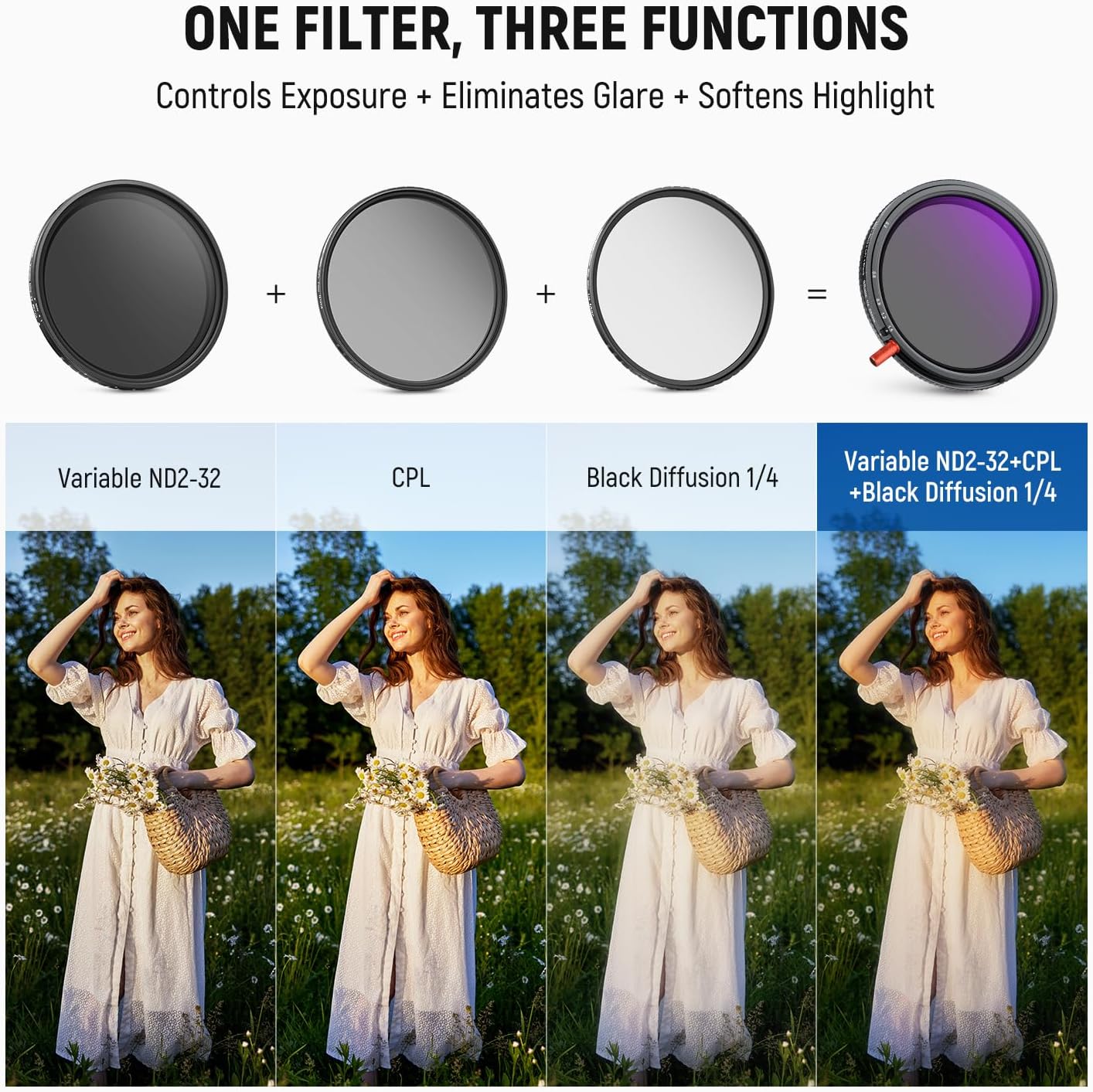
This 58 mm combination filter brings neutral density control, circular polarisation and soft black diffusion together in one accessory for DSLR and mirrorless lenses, helping to manage exposure and reflections during outdoor shoots. It allows longer exposures and reduced glare so you can capture motion blur or richer skies while keeping handling simple for run-and-gun work.
Key Points
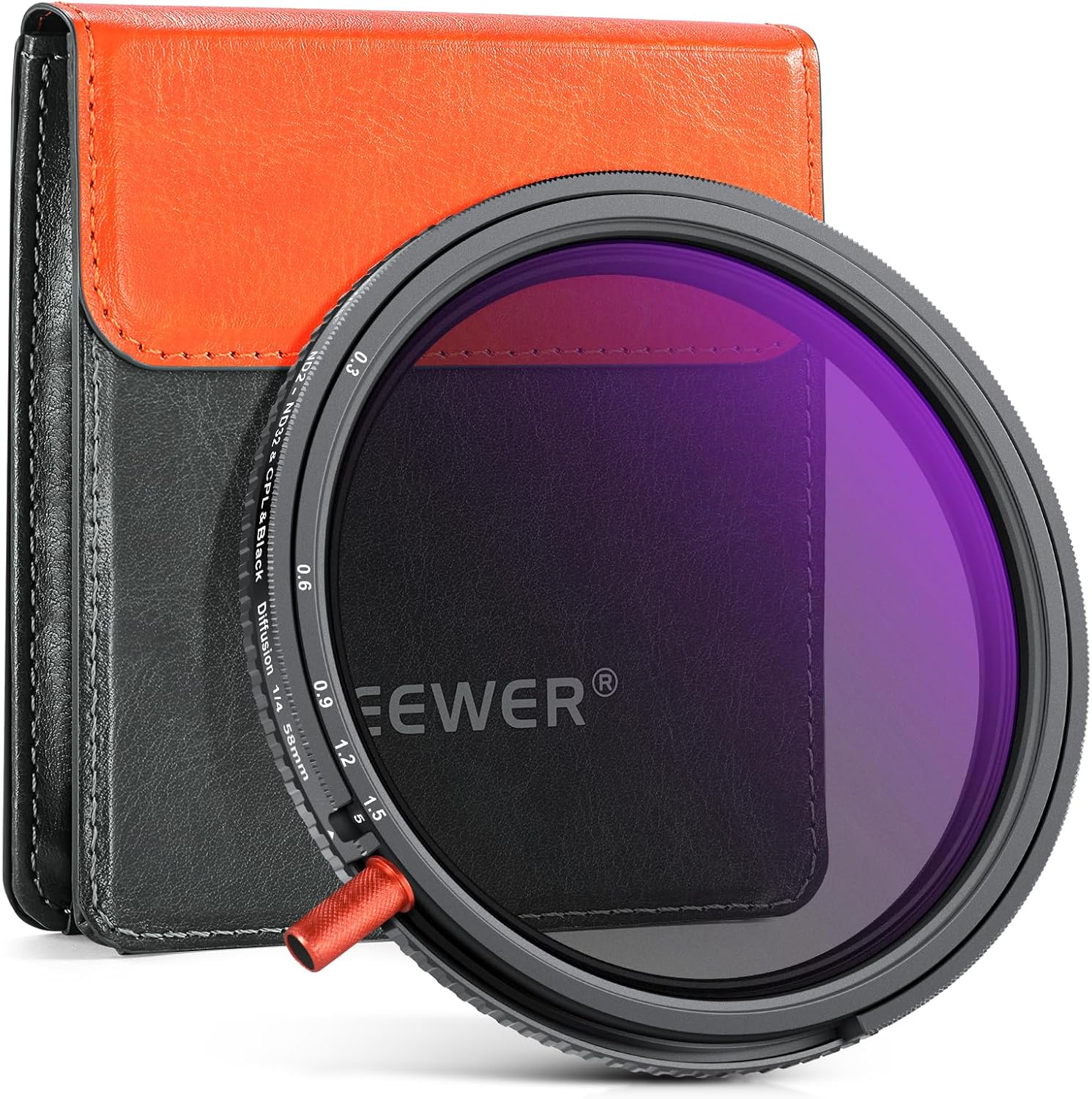
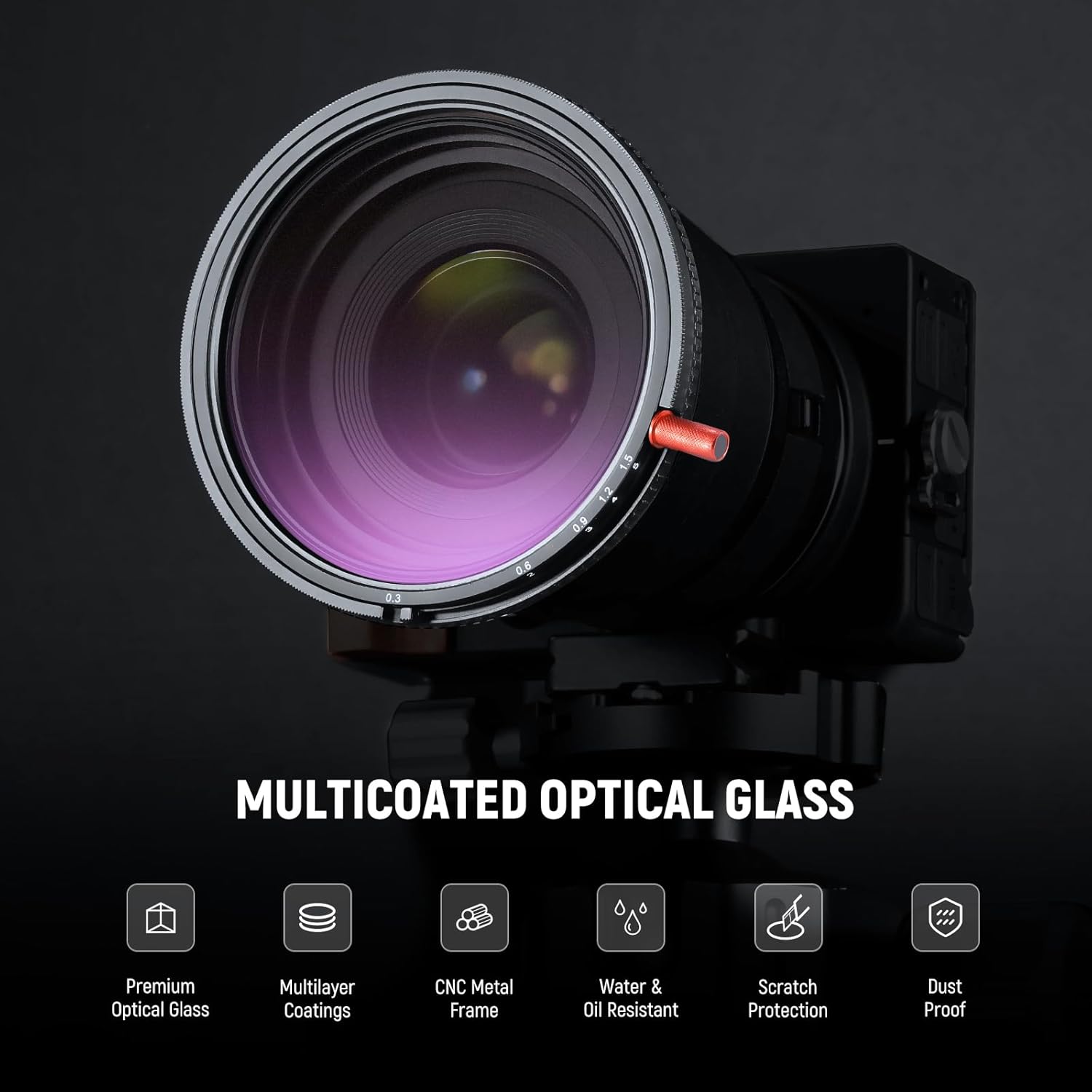
The filter combines three functions into a single threaded unit that fits lenses with a 58 mm front thread. Turning the outer ring adjusts the variable neutral density from light reduction to stronger stops, while the polariser reduces unwanted reflections and enhances saturation. It includes a protective synthetic leather case and a cleaning cloth for everyday maintenance. 📷
Benefits
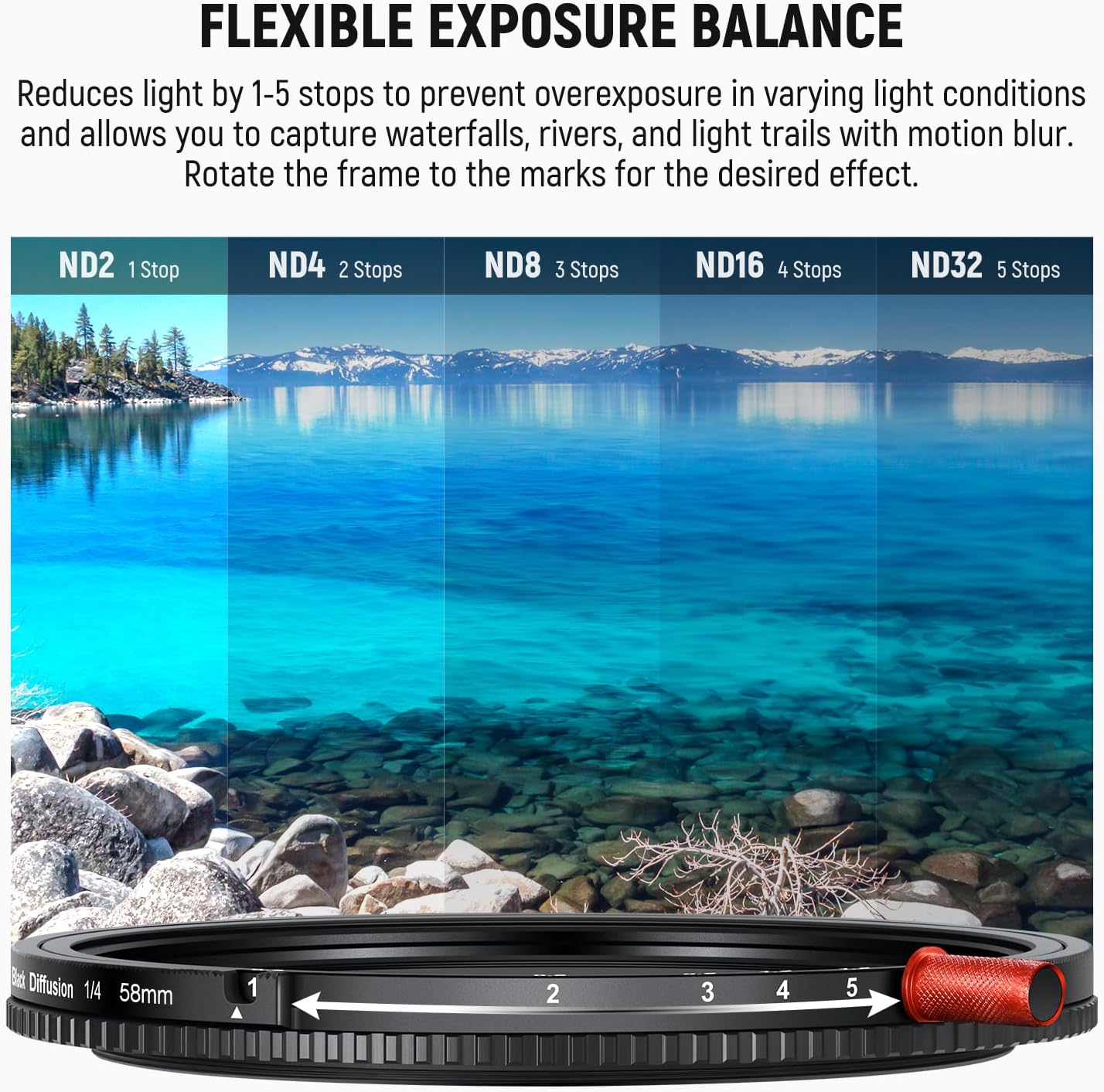
Using the variable ND makes it straightforward to shoot waterfalls or busy streets at slower shutter speeds without changing aperture or ISO too much. The circular polariser helps cut reflections from water and glass and can make skies appear deeper. The black diffusion element softens highlights and can add a gentle, film-like glow for portraits and fashion shots, which is useful when you want a subtler, more flattering look. 💧
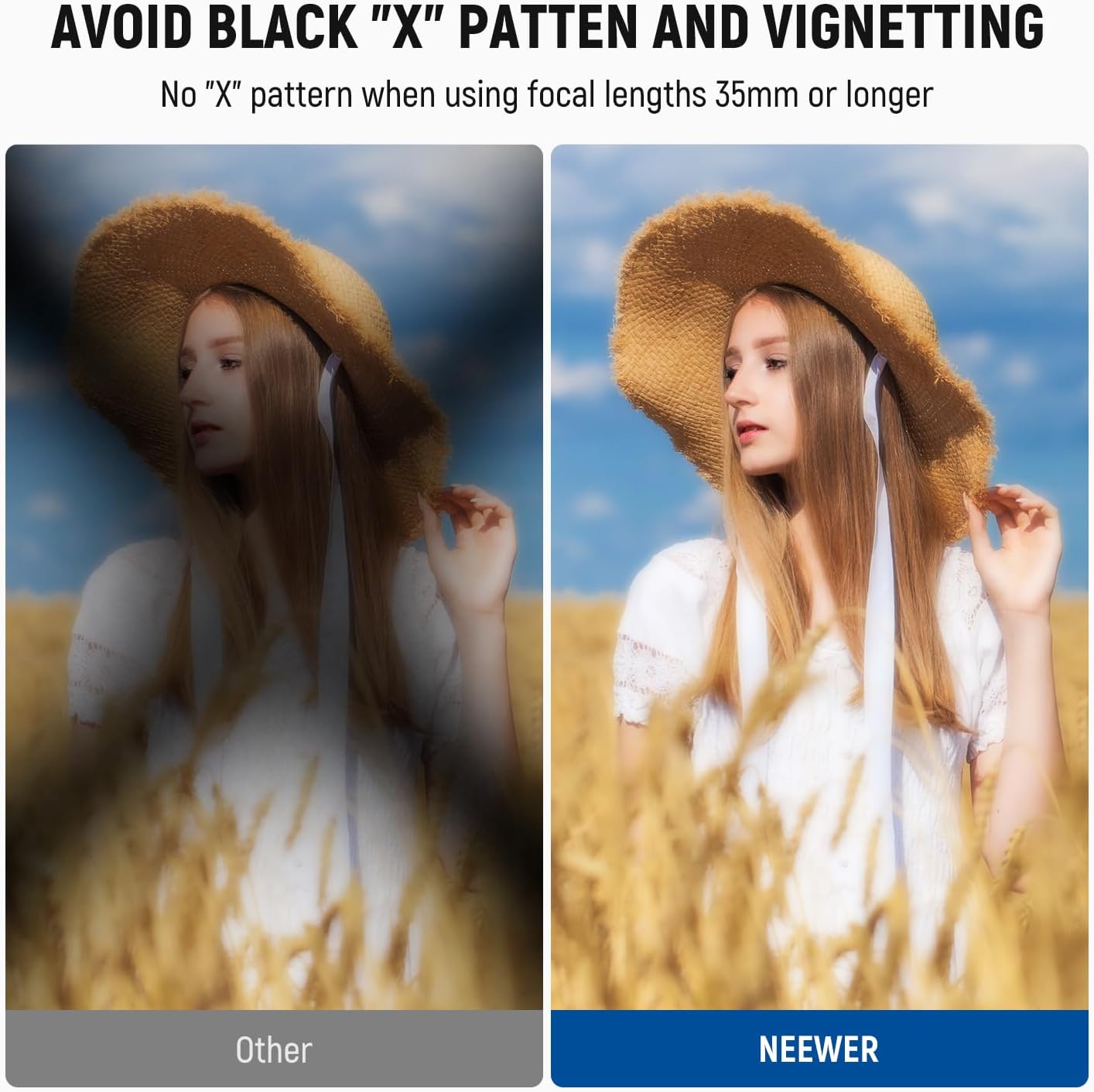
Consider that multi-function filters need careful rotation to combine effects precisely, and the combined design is optimised for 58 mm lenses only. According to the manufacturer, the glass has multiple coatings to resist fingerprints and light moisture, which helps during outdoor sessions.
Technical Specifications
- Name: NEEWER 58 mm 3 in 1 Variable ND Filter + CPL + Black Diffusion
- Thread size: 58 mm
- ND range: ND2-32 (1-5 stops)
- Elements included: Variable ND, circular polariser, black diffusion filter
- Material: Multilayer HD optical glass
- Accessories: Synthetic leather case, cleaning cloth
Usage Recommendations
Mount the filter onto a lens with a 58 mm thread and rotate the ND ring slowly until the exposure appears correct for the effect you want. For polarisation, rotate the front element while observing reflections or sky contrast to find the optimal angle. When using the diffusion element for portraits, check skin tones and highlights on a test frame to avoid overly softening fine detail. Avoid overtightening the filter on the lens thread to preserve both the filter and lens finish.