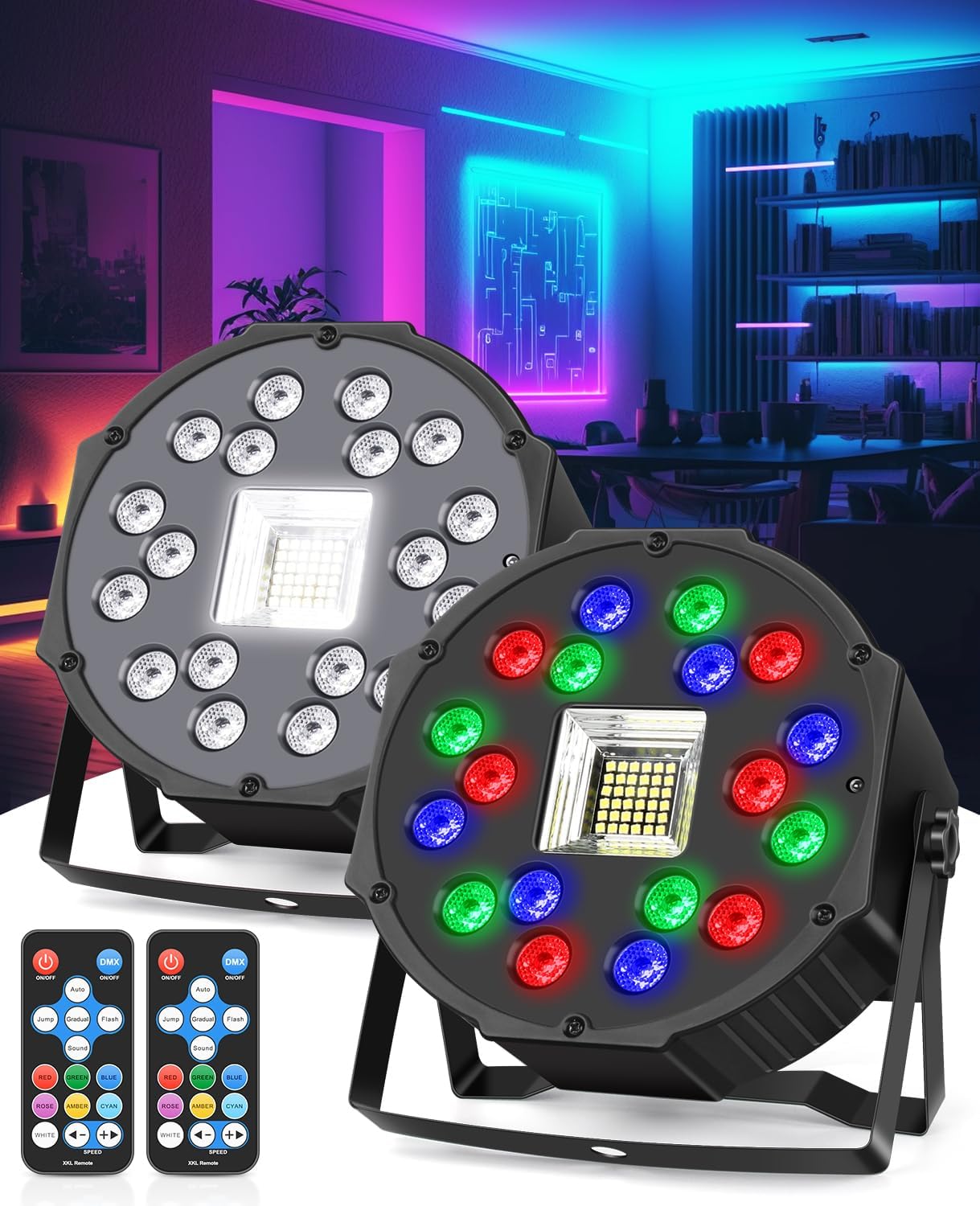
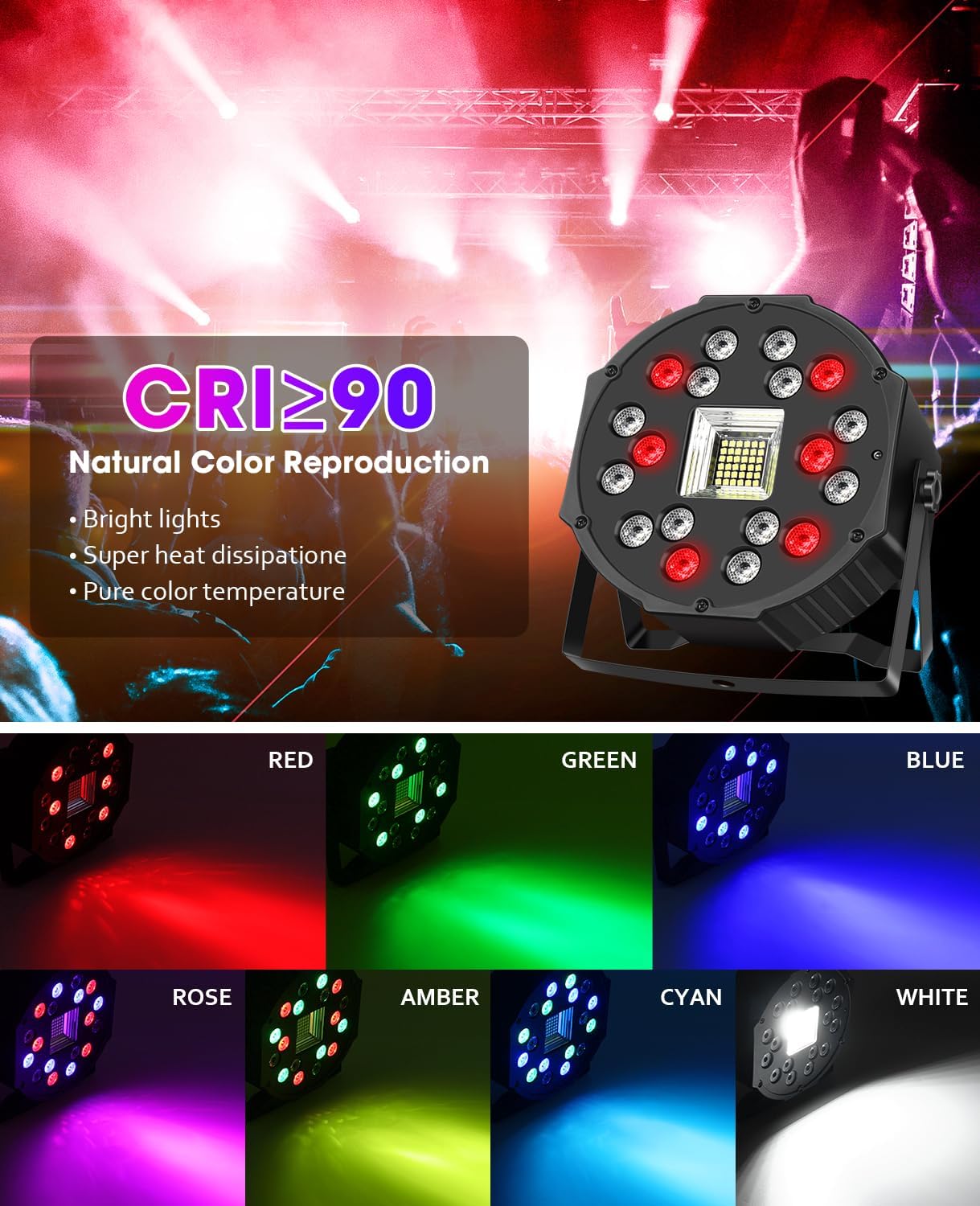
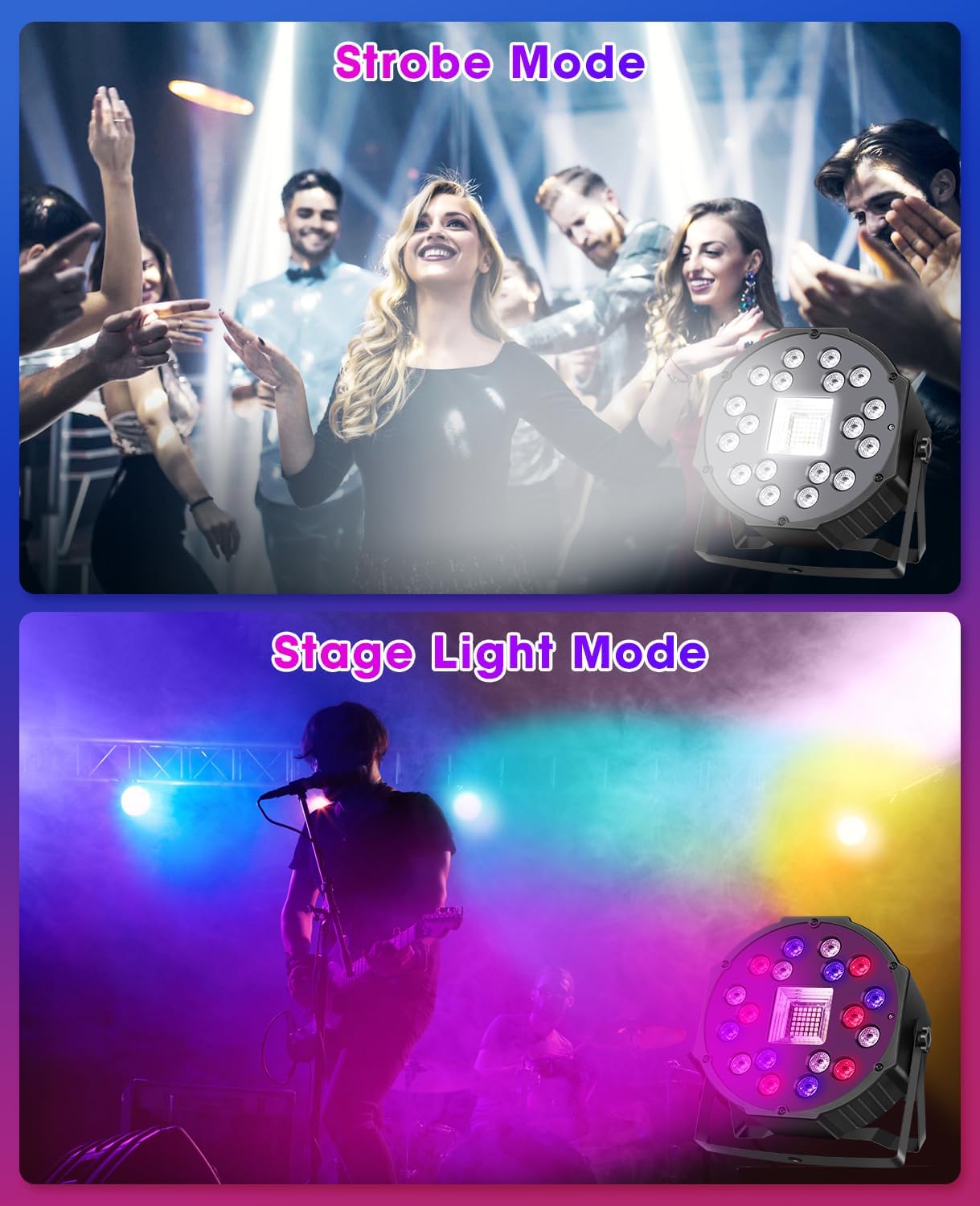
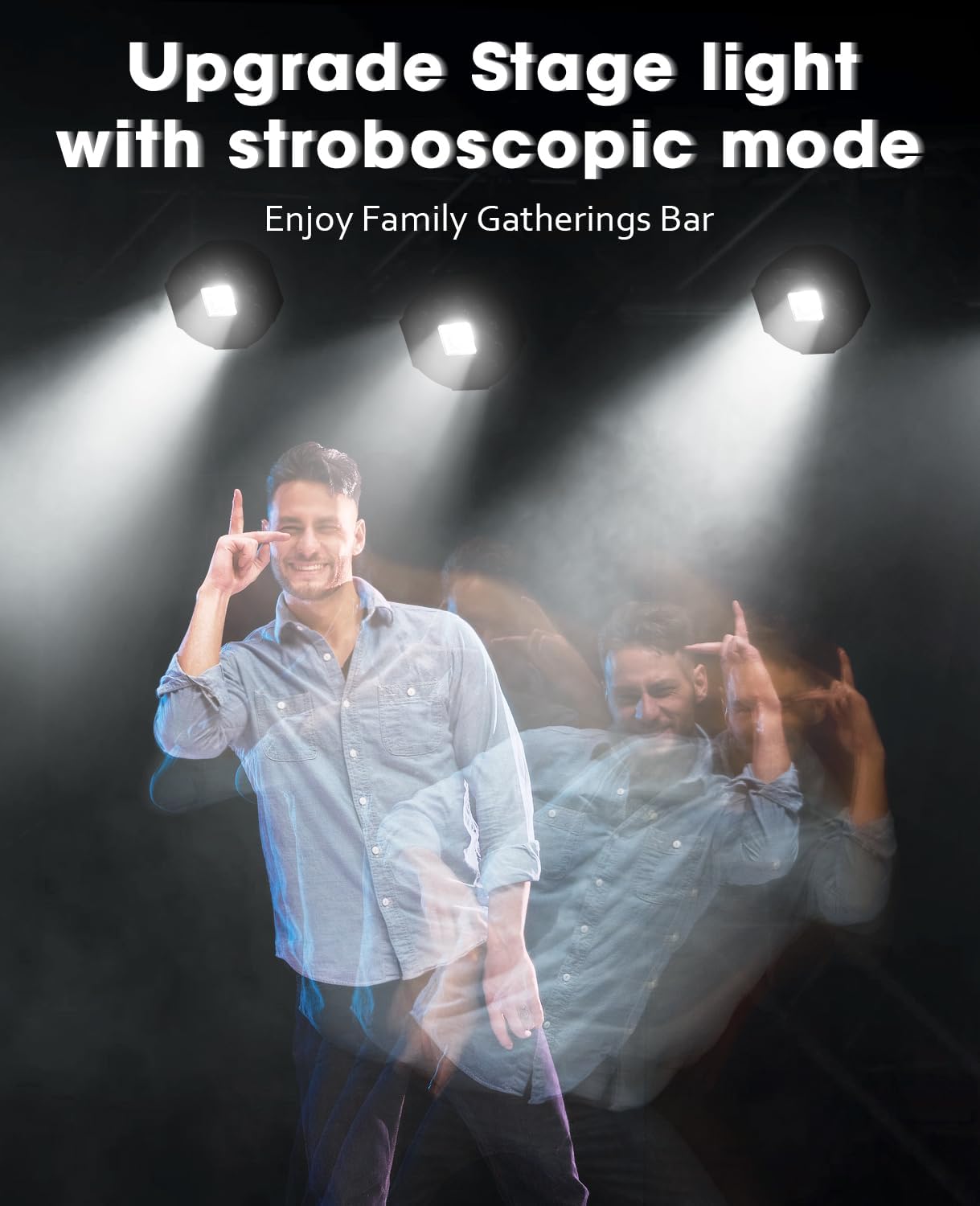
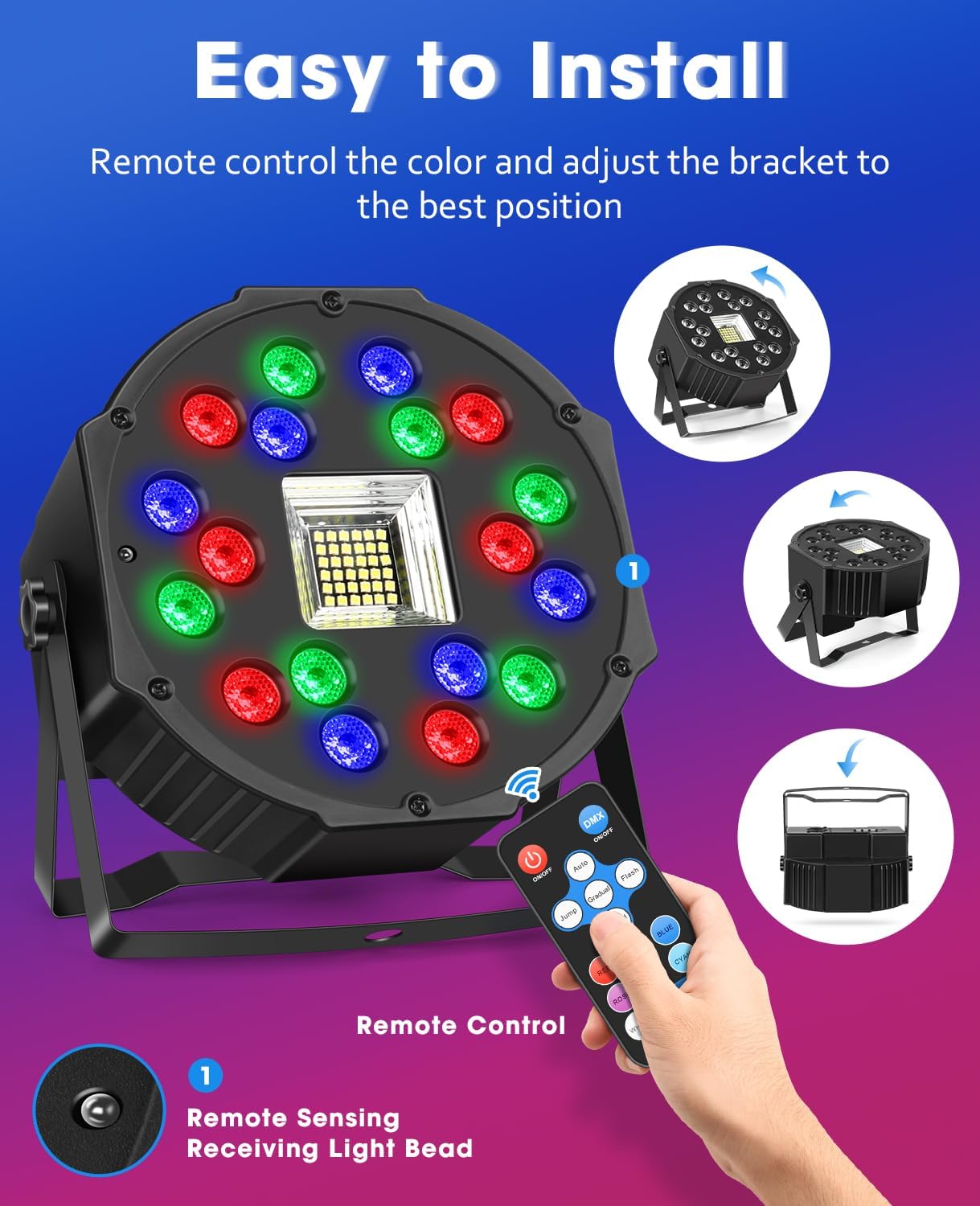
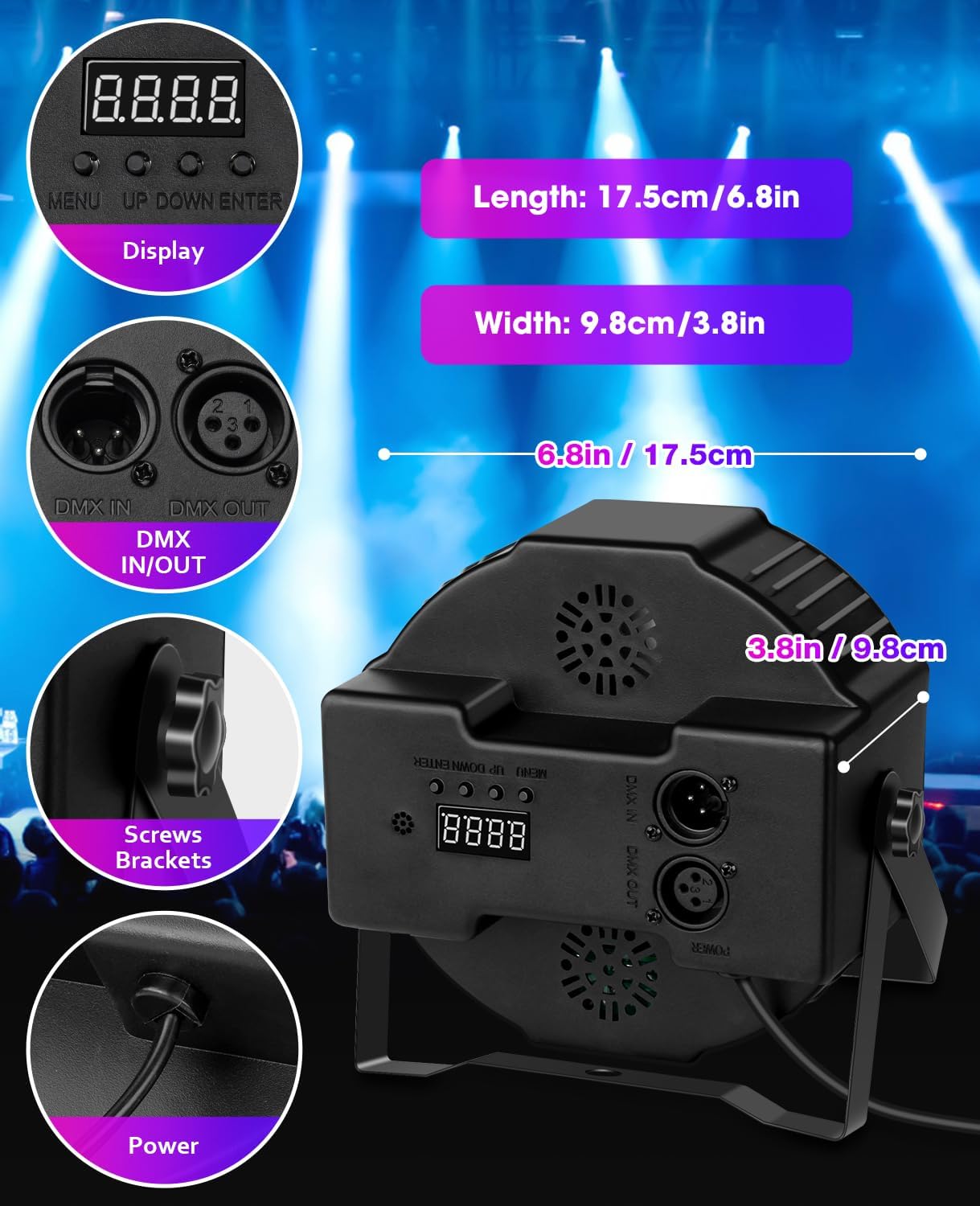
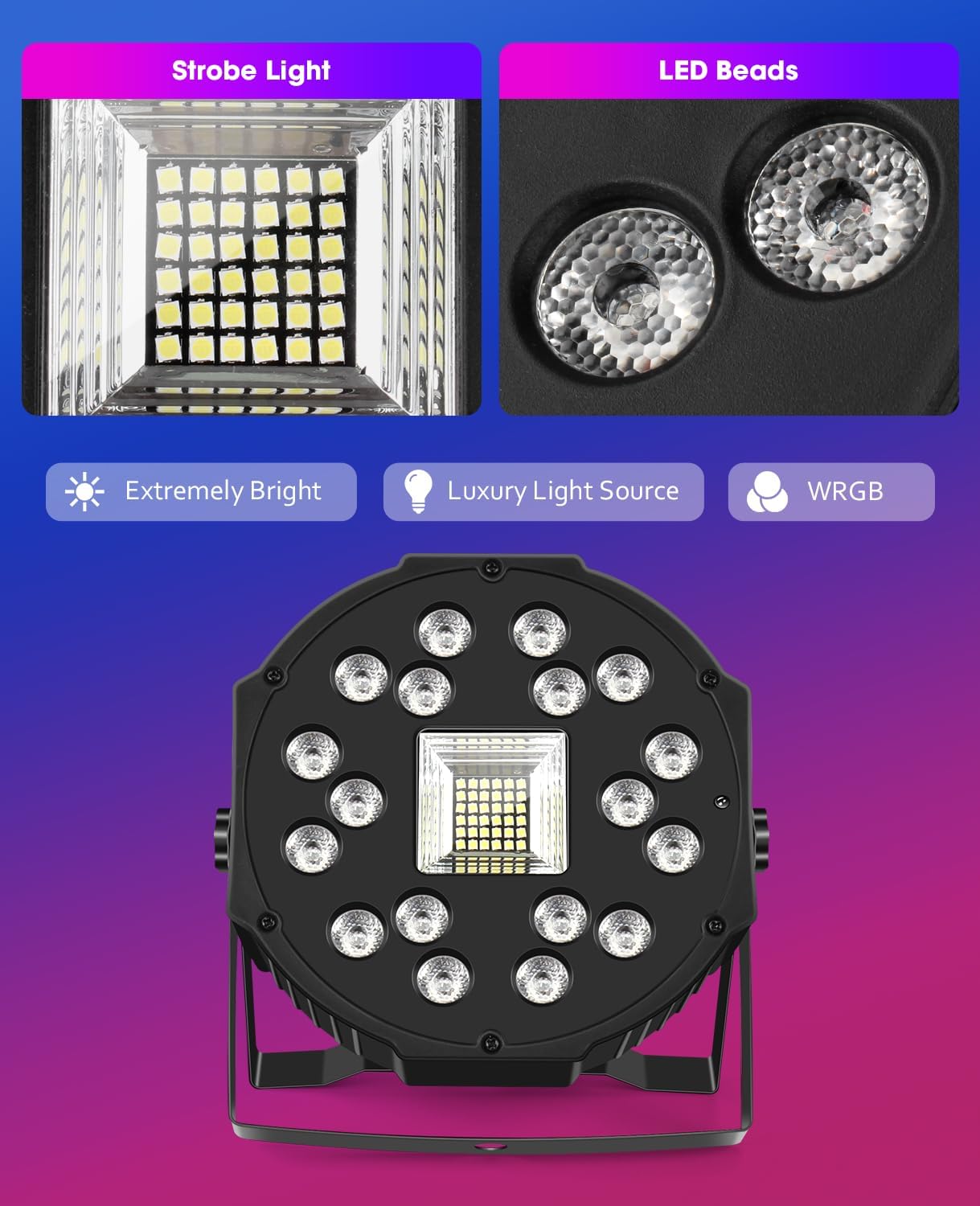
What this is and what it helps with\nThese are two RGB LED stage lights designed for small to medium venues, parties, and events. Built with 16 high‑quality LED units and 36 strobe beads, they offer a range of effects to add visual impact to performances or gatherings. The units run in 7 modes and can be controlled via wireless remote or DMX, making them flexible for casual use or more coordinated light shows. They’re designed to run for longer sessions thanks to a robust copper wiring build and a larger irradiation surface from a six‑prism design. If you want a mid‑range, hands‑on lighting solution that can be used in clubs, theatres, or festive occasions, this kit is worth considering on paper.\n\n## How it works in practice\nSetups are straightforward: mount the lights with the included two handles so they can point in different directions, or place them on a surface. The angle is adjustable to fit ceilings, walls, or floors. A remote can steer both lights at once, which saves time during setup and changes. For larger events, DMX mode offers integration with a larger light system. The mix of static colours, strobe, fade, auto, sound‑activated, and master/slave options means you can craft everything from slow washes to pulsing effects in time with music.\n\n## What stands out (pros)\n- The combination of 16 LED emitters and 36 strobe beads delivers both colour and rhythmic flashes.\n- Seven lighting modes include sound‑activated and DMX, adding versatility for different venues.\n- Independent angle adjustment and two‑handle mounting simplify placement in tricky spaces.\n- The build emphasises reliability (copper wiring) for longer sessions without overheating.\n- The package includes a 2‑pack, which is practical for symmetric setups or larger rooms.\n\n## What may give you pause (cons)\n- If you’re after a compact, plug‑and‑play single‑light experience, two units may feel more than you need for very small rooms.\n- DMX control typically implies some light‑engineering knowledge, for casual use, relying on the remote or master/slave may be preferable.\n- The description doesn’t state power consumption or exact lumen output, so you’ll need to test in your space to be sure it meets brightness expectations.\n\n## Who it’s for (target audience)\n- Event organisers, DJs, or clubs that need a mid‑range lighting setup without investing in high‑end consoles.\n- Theatres or churches seeking adjustable uplighting and strobes for emphasis during performances.\n- Anyone planning a Christmas party, wedding reception, or disco night where flexible effects and paired lighting help create mood.\n\n## Who it isn’t ideal for (when to skip)\n- If you require a compact, low‑cost one‑unit solution for a tiny room, consider whether two units are necessary.\n- If your venue already uses a DMX system but you’re not comfortable with programming, you might prefer simpler controls or a different cost tier.\n\n## What to check before buying\n- Confirm power needs and cable routing to avoid overheating in enclosed spaces.\n- Think about where you’ll place the units and whether the two‑unit kit covers the lighting angles you need.\n- If you plan to use DMX, ensure compatibility with existing control gear and the number of channels required.\n- Consider room size and ambient light—strobes can be intense, so you may want a dimmer or slower modes for indoor venues.\n\n## Comparison in context (how it fits other options)\nCompared with basic single‑light kits, this 2‑pack offers broader room coverage and more control options. For those who want a straightforward, club‑style effect without a full lighting rig, the remote control and multiple modes provide a convenient compromise between simplicity and feature set. If you prioritise plug‑and‑play over programmability, you may prefer other kits with explicit brightness specs and simpler remote functionality.\n\n## Buyer's decision: when it makes sense\n- Buy if you need two consistent uplighters that can operate in sync, with multiple modes and DMX for future expansion.\n- Reconsider if you rarely use DMX or you need a smaller, budget‑oriented single unit for a compact room.\n- This kit suits users who value flexibility, reliability for longer sessions, and a mix of sound‑activated and static effects.\n\n## Quick practical use example\nImagine a mid‑sized room where a DJ wants a warm wash during the early set and a punchier strobe during the chorus. Place the two units on stands at opposite ends, set to auto or sound‑activated mode, and use the remote to match colours to the music, then switch to DMX for a coordinated mid‑tempo light show.\n\n## FAQ (assumptions based on available data)\n- Do these lights require professional installation? Not necessarily, with the two handles, ceiling, wall, floor, or desk placement is feasible.\n- Can the remote control both lights at once? Yes, the remote controls 2 lights at the same time.\n- Is there a built‑in automatic mode? Yes, Auto mode is among the seven options.\n- Are the lights suitable for outdoor use? The data mentions indoor and outdoor occasions but does not specify weatherproofing, so use indoors or in covered spaces.\n\n## Is it worth it? Final thoughts\nWorth considering if you value a versatile, two‑unit system with multiple effects and DMX compatibility for growing a light setup over time. It isn’t perfect for every scenario—if you need a tiny, straightforward, ultra‑cheap option or a highly technical DMX programming suite, you may want to look elsewhere. However, for clubs, venues, and festive events where practical, mid‑range lighting makes a real difference, this kit offers tangible flexibility and reliability.