

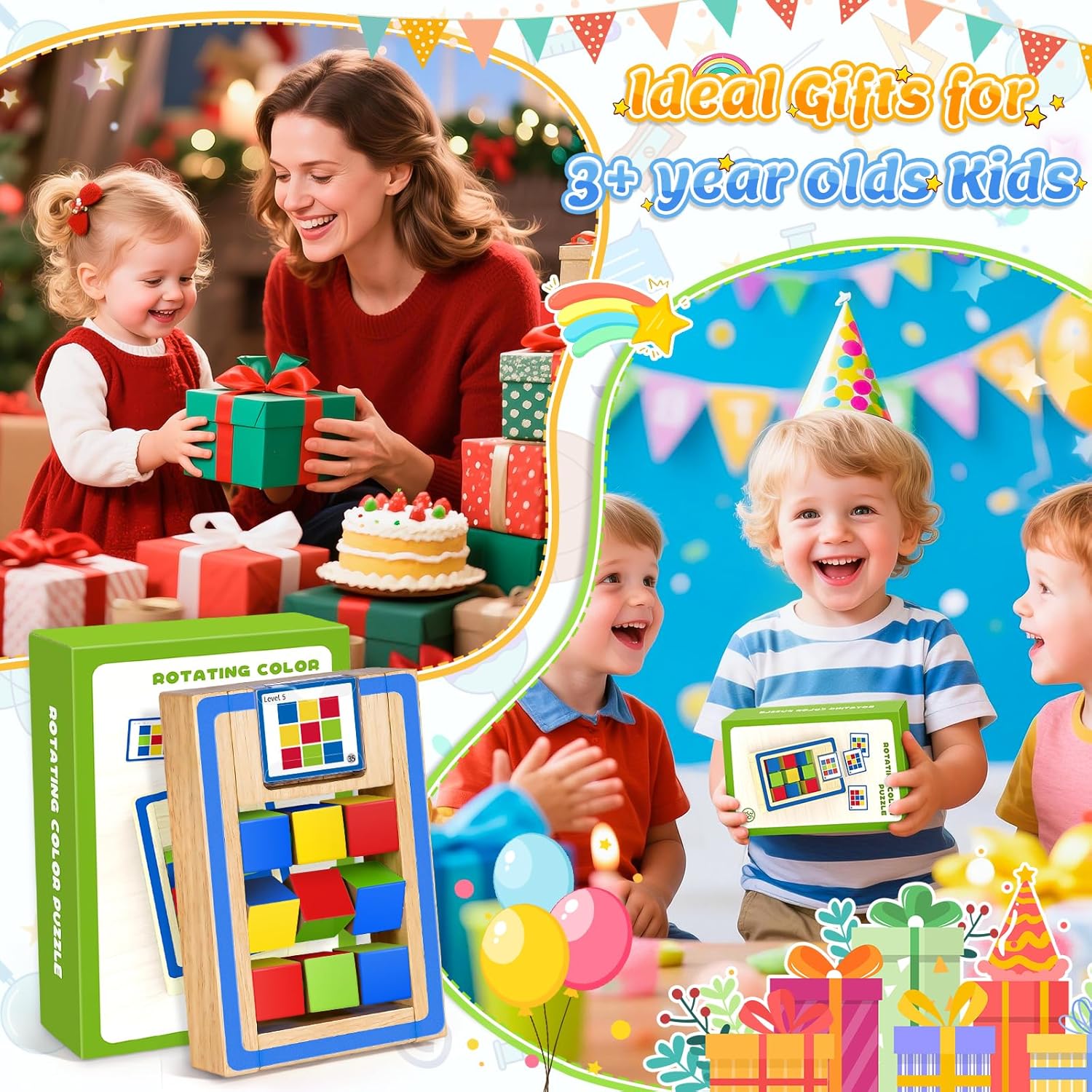
Montessori Wooden Colour Matching Toy for 3–5 Year Olds
Product description
What it is and what problem it solves
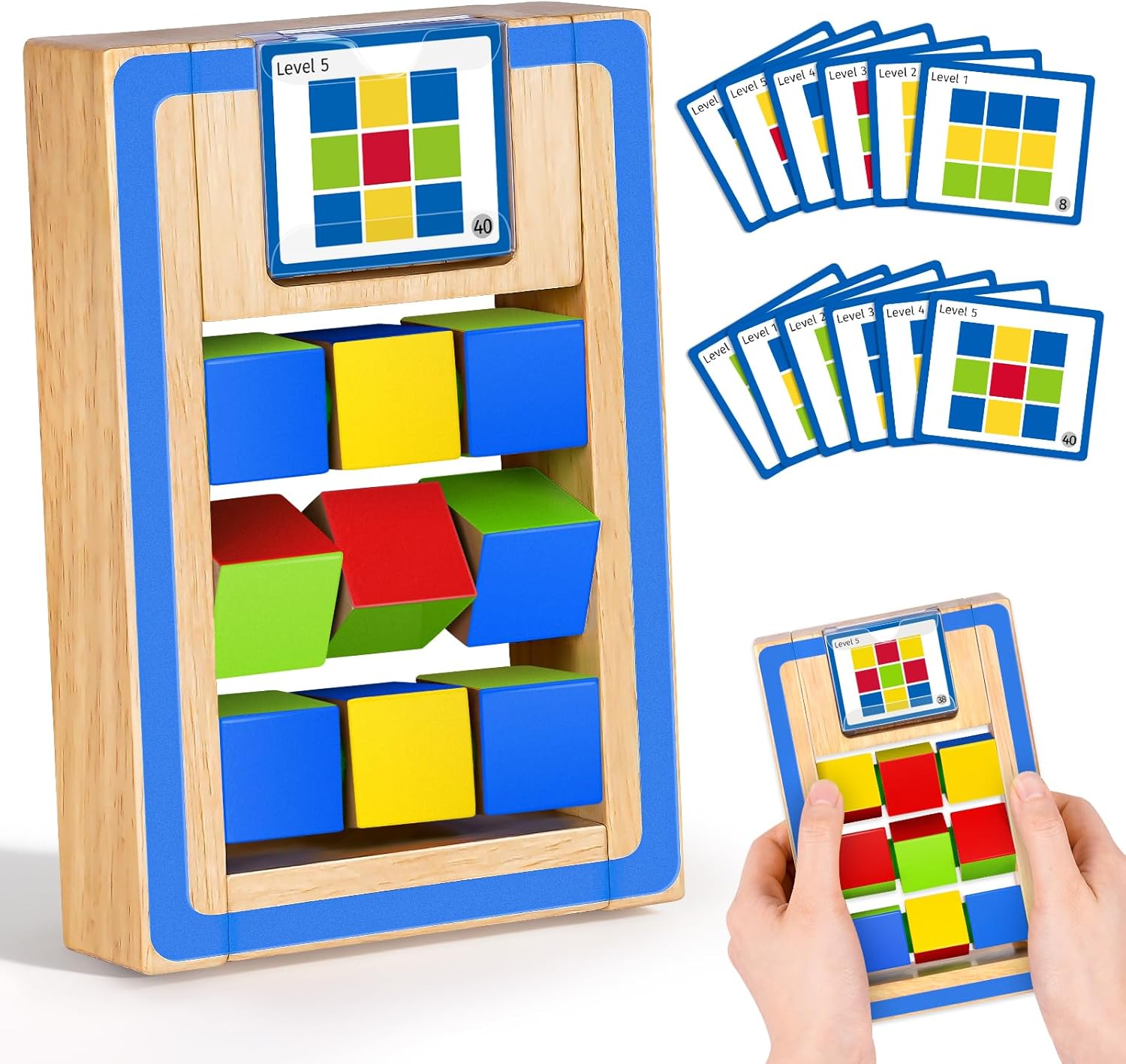
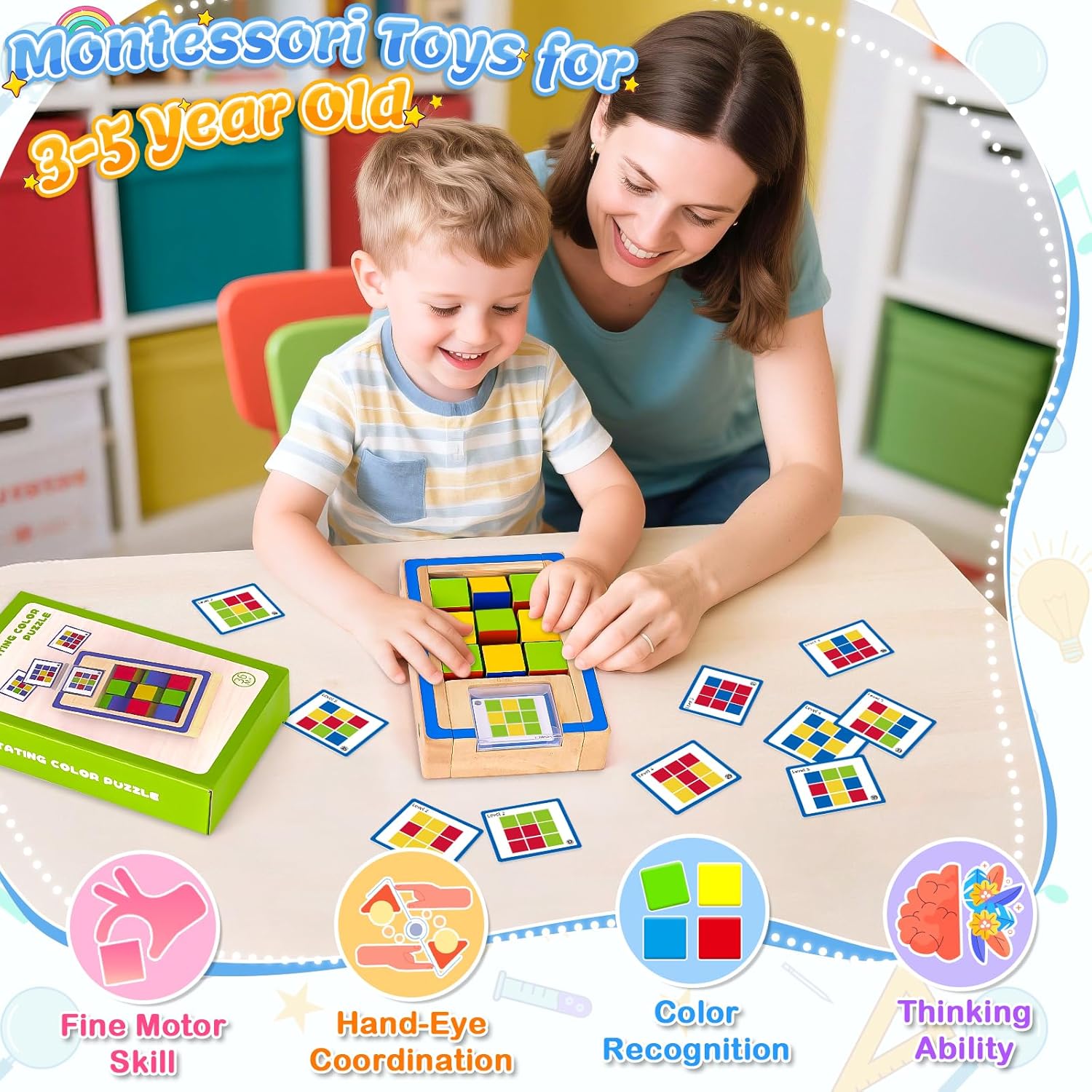
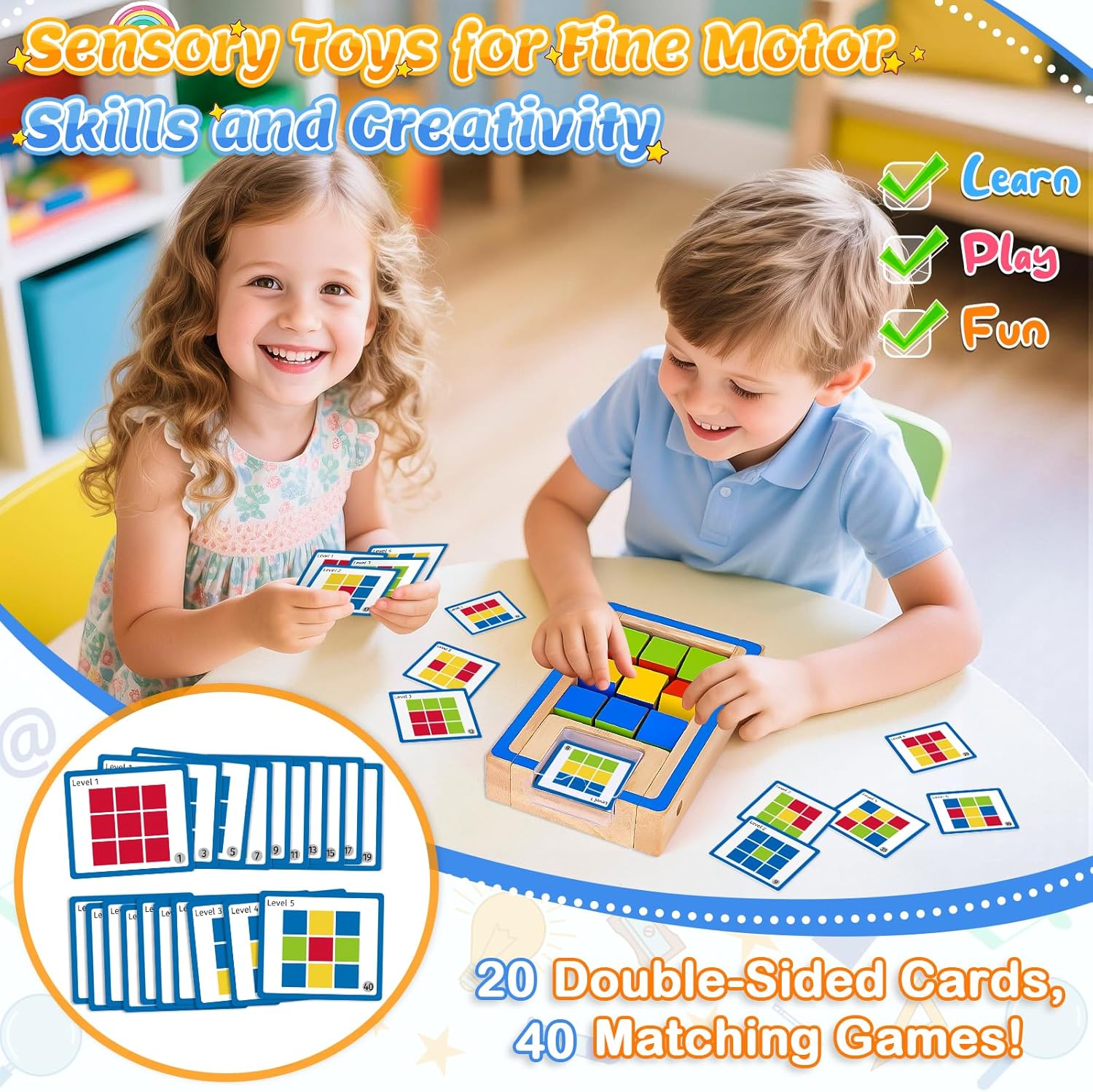
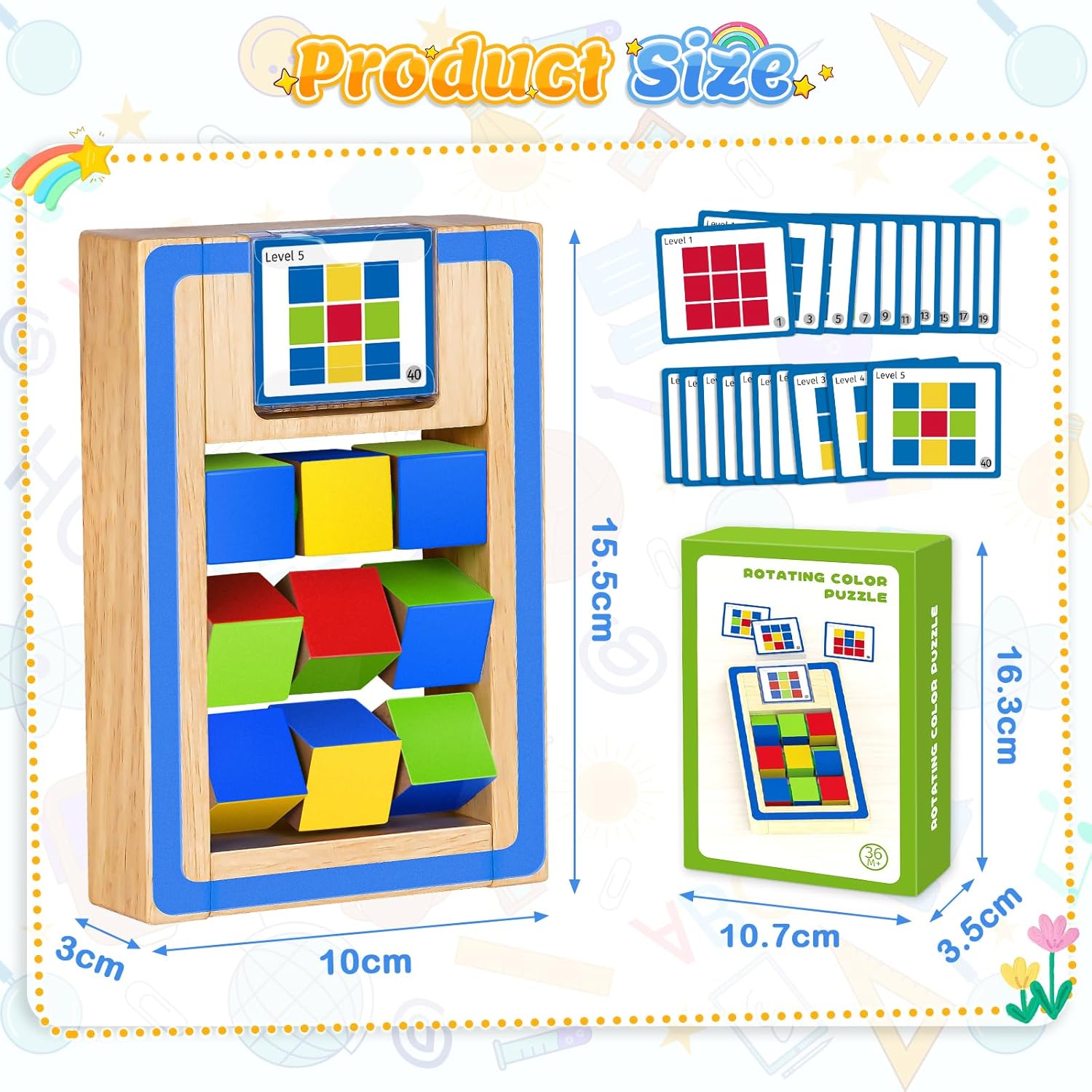
This is a Montessori-inspired wooden colour matching puzzle set designed to support early learning. It includes a wooden board with four rotating colour blocks and 20 double‑sided cards. The goal is simple: flip the blocks to reproduce the patterns shown on the cards. On paper, it targets core early skills such as hand–eye coordination, colour recognition and concentration, while also introducing sequencing and logical thinking through progressively tougher challenges.
How it works in practice
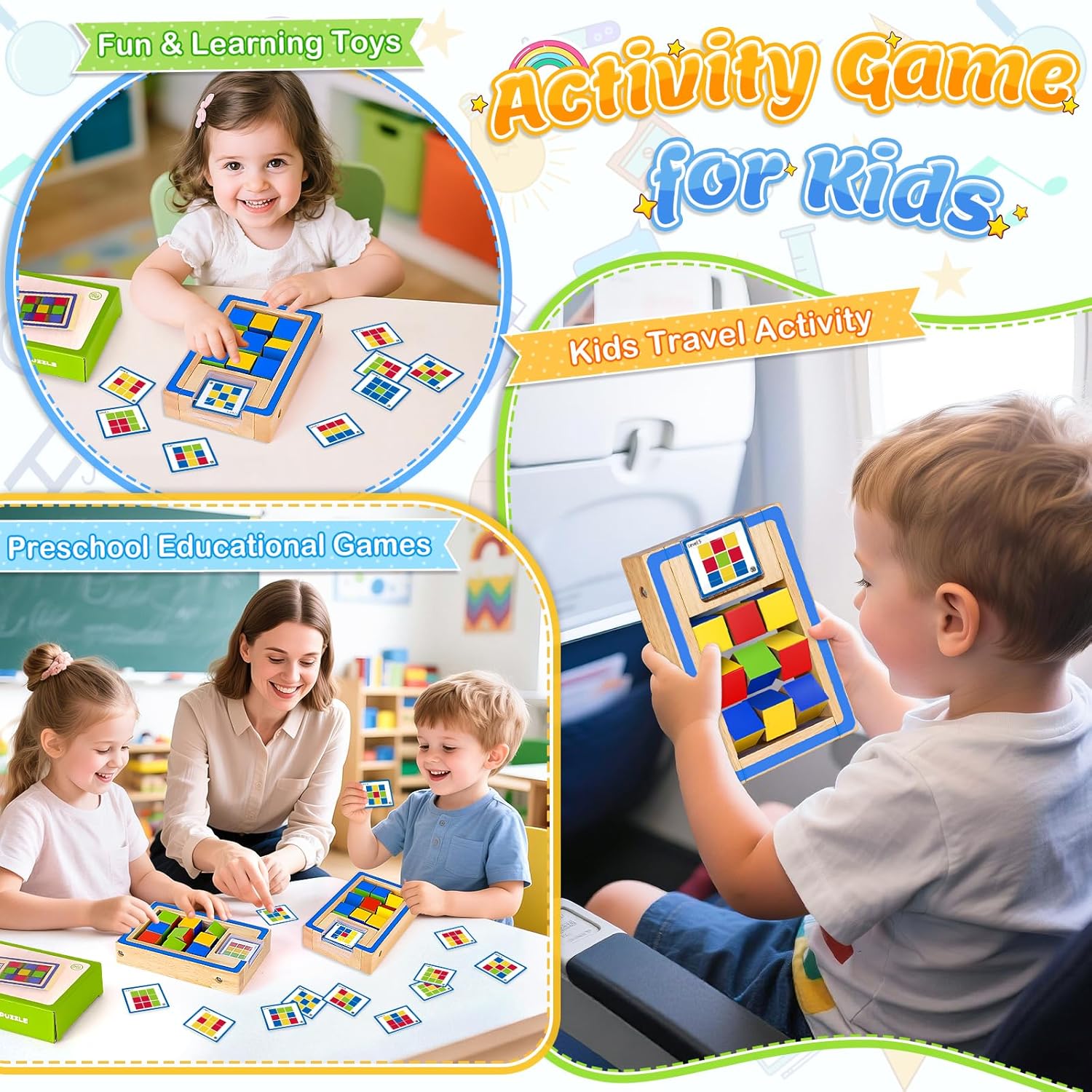
Children draw a card and use the four blocks to match the pattern. The act of ordering the blocks teaches cause and effect, and the rotating mechanism keeps little hands engaged. The card slots are designed to reduce misplacement, which helps maintain focus and reduces frustration during play. With five levels of difficulty and up to 40 colour combinations, the activity can scale with a child’s growing abilities, from basic matching to more complex sequences.
What stands out for everyday use
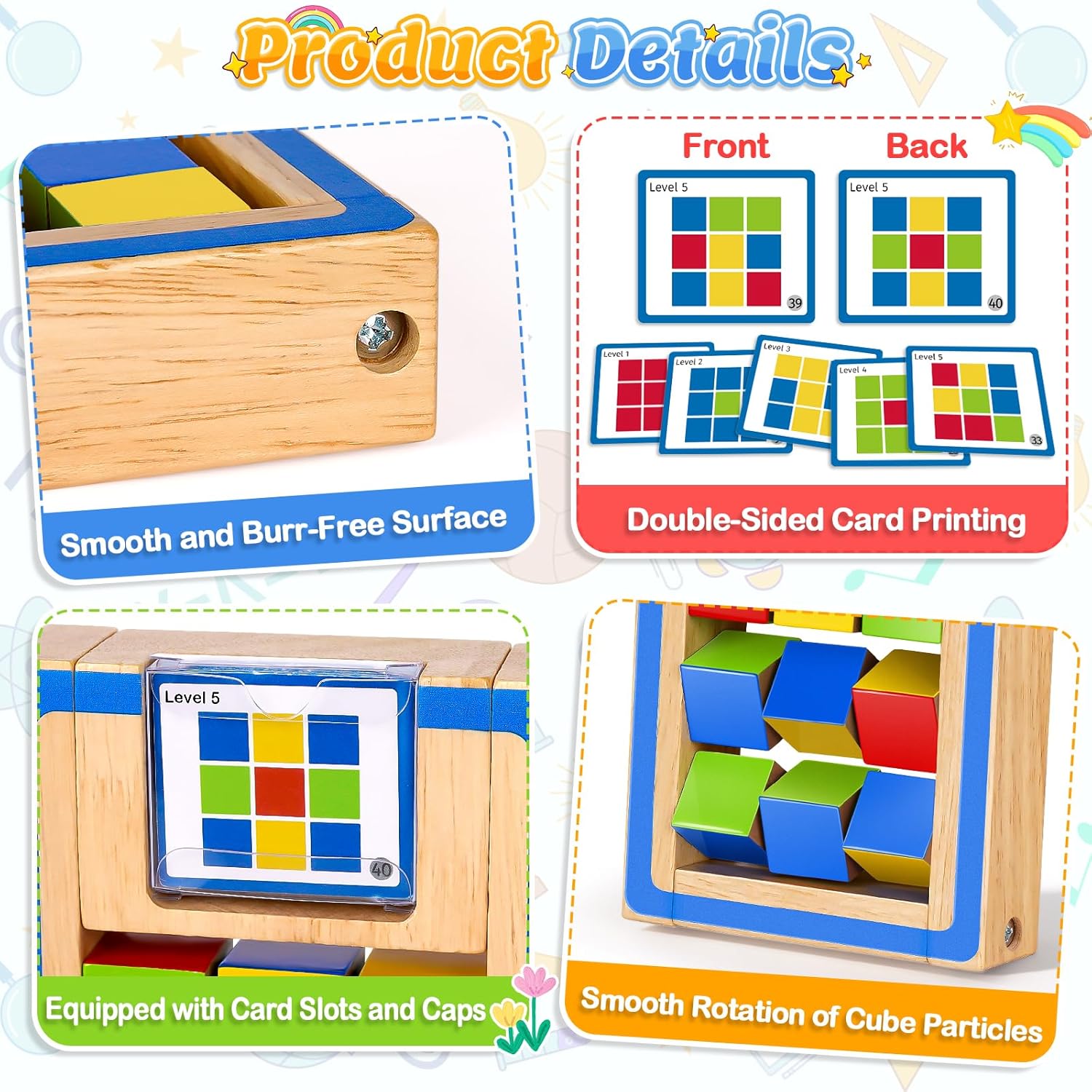
This toy is compact and lightweight, making it easy to slip into a backpack for trips, meals out or classroom activities. It’s a screen‑free option that supports calm, focused play and practical hands‑on learning. The wooden construction is thickened to 3 cm for durability, and the pieces are finished with a non‑toxic water‑based paint. In real life, that means it’s robust enough for busy preschoolers and the inevitable bumps of travel or group play.
Pros and real limits you should know
Pros: clear progression that matches typical development for 3–5 year olds, tangible manipulation builds fine motor skills, portable for on‑the‑go learning, durable wood with a safe finish. The five difficulty levels provide room to grow without needing a new toy. Cons: the activity relies on child initiative and may require some adult guidance at the very start to demonstrate the pattern‑matching concept. If your child isn’t drawn to colour puzzles, it may take a little longer to catch enthusiasm.
Who it’s for and when it makes sense
It suits curious preschoolers and school beginners who benefit from hands‑on, visual problem solving. It’s particularly useful for children practising colour recognition, sequencing or simple logic, and for families seeking a classroom‑friendly, low‑blue light activity. It’s less ideal if you want a quick, high‑energy game or if your child prefers story‑based activities over pattern matching.
When to buy and when to pause
Consider purchasing when you want a quiet, focused activity that doubles as travel entertainment or a classroom task. It can be a practical gift for birthdays or early learning milestones. If your priority is a highly verbal or social interaction‑driven toy, you might want to pair this with other activities.
What to check before buying
Look for smooth, burr‑free edges and a sturdy board if you’ll use it with a range of ages. Ensure the finish is non‑toxic and water‑based as advertised. Check that the card storage slots actually hold double‑sided cards without loss. Consider whether the five‑level progression aligns with your child’s current abilities and how you’ll introduce the patterns to them.
Implicit comparison: how it fits among alternatives
Compared with electronic or arcade style games, this option emphasises tactile learning and independent skill growth. It sits between basic colour flashcards and more complex logic puzzles, if you want a calm, screen‑free activity that scales with a child’s development, this type of puzzle is a sensible middle ground. For busy households, its portability and simple setup are practical advantages over bigger, more complex kits.
Is it worth it?
The product offers a thoughtful approach to early cognition, with durable materials and a clear progression. It’s worth considering if you value a hands‑on, portable learning tool that grows with the child and reduces screen time. It may not be the best fit if you prioritise rapid, high‑energy play or if your child responds better to narrative or social play rather than pattern matching.
FAQ
- How many different patterns can be created with the cards? Up to 40 colour combinations across five difficulty levels.
- Is the toy suitable for travel? Yes, it’s compact and designed with portability in mind.
- What ages is it appropriate for? Designed with 3+ year olds in mind, while the cards guide 2–4 year olds through sequencing and logic as they grow.