

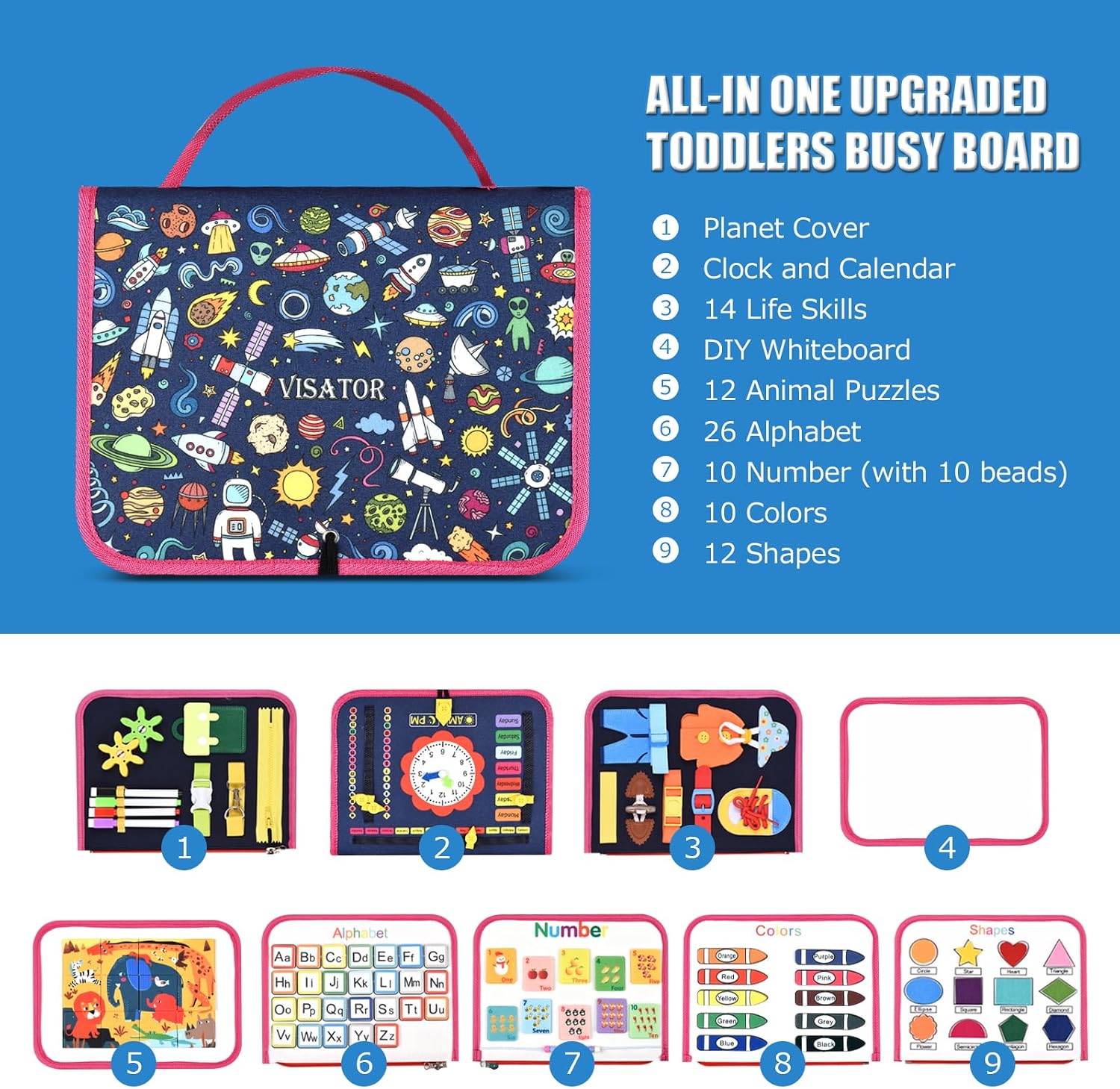
Montessori Busy Board sensory activity board (Navy blue) for ages 1–6
Product description
What it is and why parents buy one
A Montessori-style busy board is basically a hands-on learning surface your toddler can explore with fingers instead of screens. This one (in navy blue) focuses on everyday-life tasks and small fastening actions—things like buttons, zips, snaps and buckles—so children can practise motions that look simple to adults, but take real coordination to master.
On paper, it’s the kind of toy that earns its keep because it does two jobs at once: it keeps little hands busy, and it gives you a structured way to practise fine motor skills. If you’re trying to cut down on screen time during travel or those in-between moments, that “hands busy, mind engaged” angle is exactly what busy boards are for.
What’s on the board: life skills and fastening practice
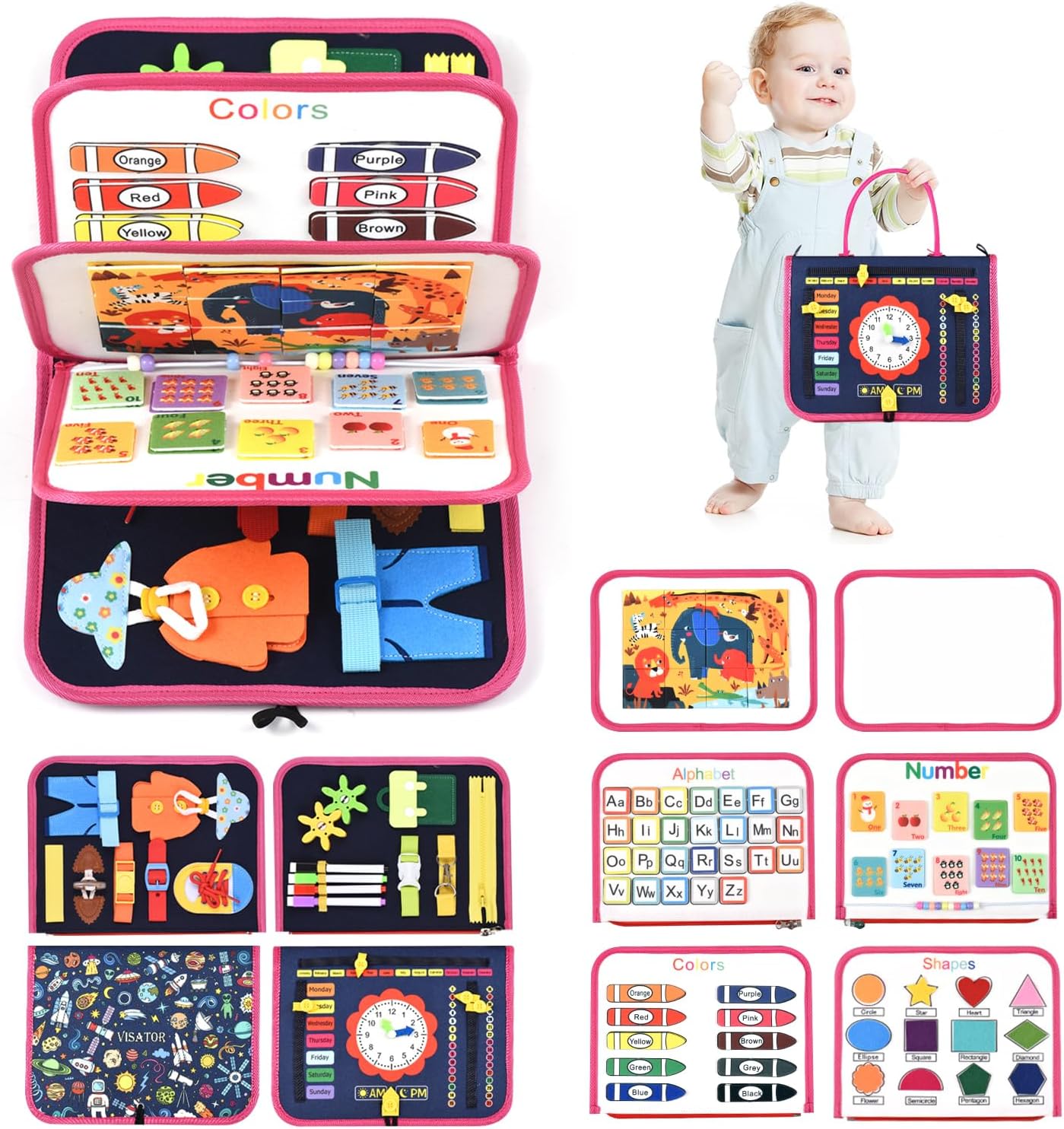
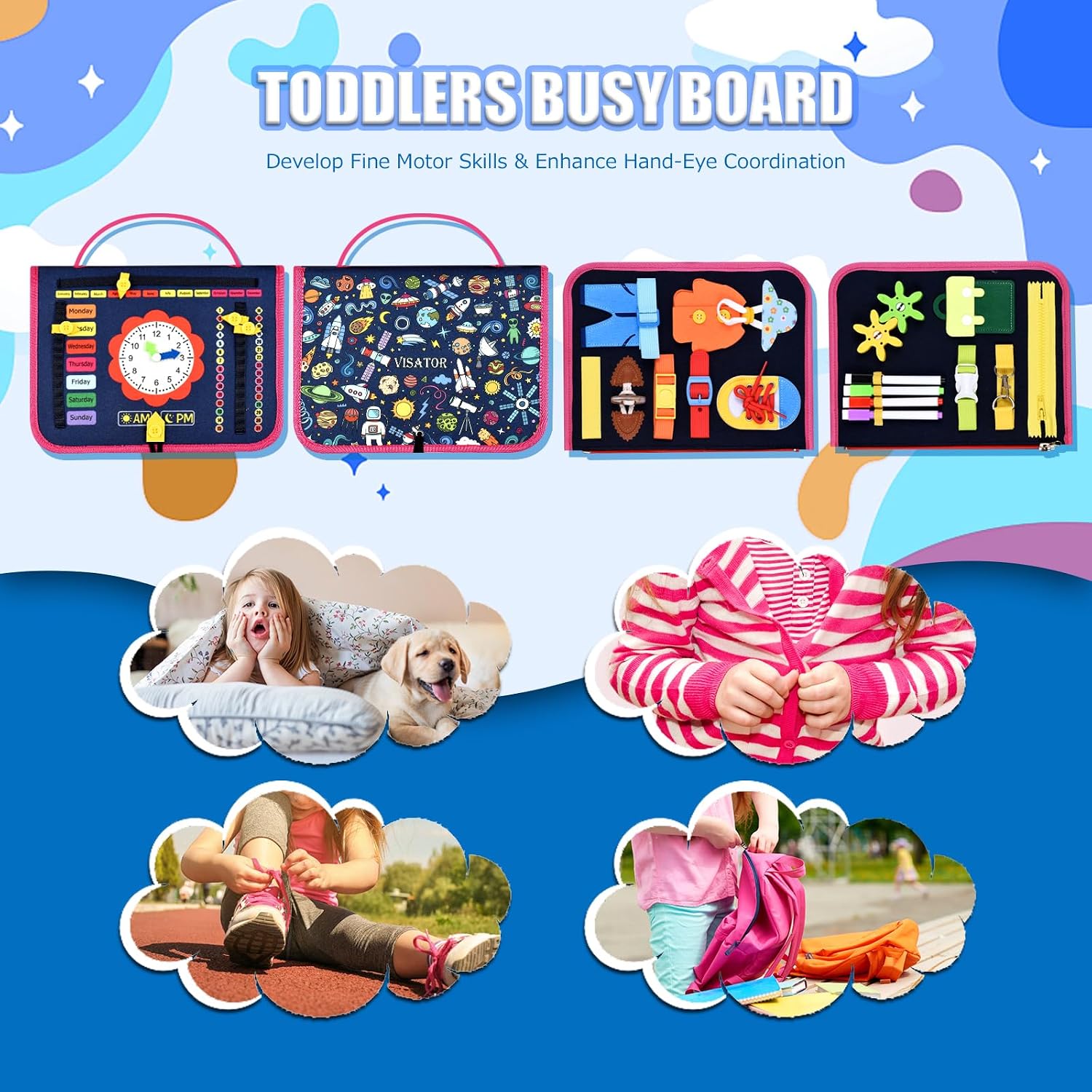
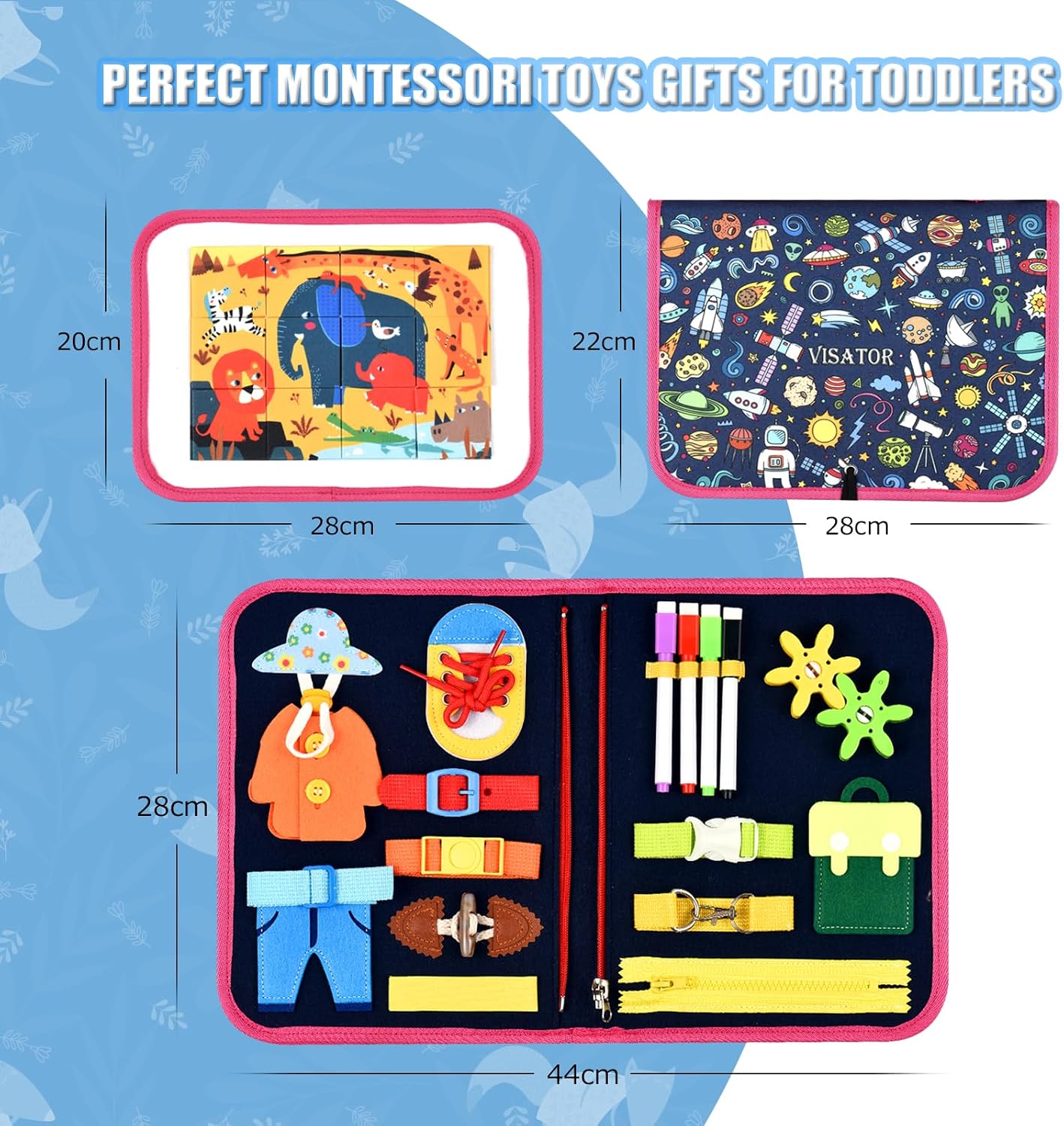
The board includes multiple daily-skill themed sections and different closures/textures, including a clock and calendar area, a hat tether, clothing-style elements (such as buttons and safety buckles), and fastening practice like velcro and buckles. There are also items mentioned such as cow horn buckles, trouser belt buckles, shoelaces, zippers, snaps and more.
That variety is the main selling point here: it’s not one activity repeated. Instead, your child gets lots of small “try, pull, open, close” movements, which can help build hand–eye coordination and finger control over time.
Worth noting: this isn’t a curriculum you follow step-by-step. It’s more of a guided playground—some kids will want to repeat the same latch again and again, while others move around the board quickly.
The sensory and learning side (and where it may fall short)
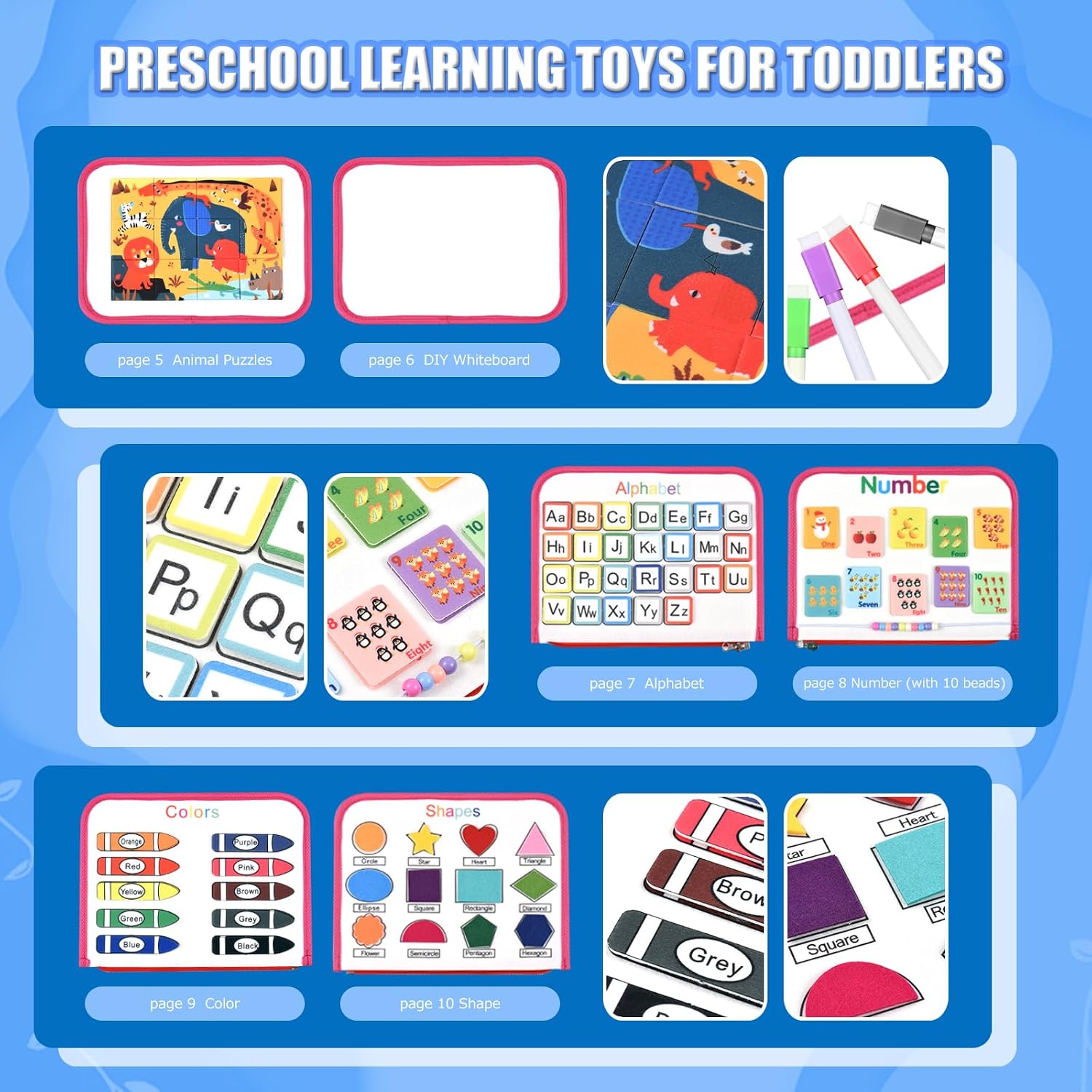
Alongside fine motor practice, the listing positions it as a sensory and learning toy with educational games such as puzzles, letters, figures, colours and shapes. The idea is that it can make early learning feel less resisting and more engaging.
However, keep expectations realistic. A busy board is usually best seen as a supportive tool, not the main source of learning. If you’re expecting deep, age-specific learning outcomes, you may find it a bit broad—because the board includes a mix of activities rather than one tightly focused set.
Portability for travel: plane, car and the “quiet journey” problem
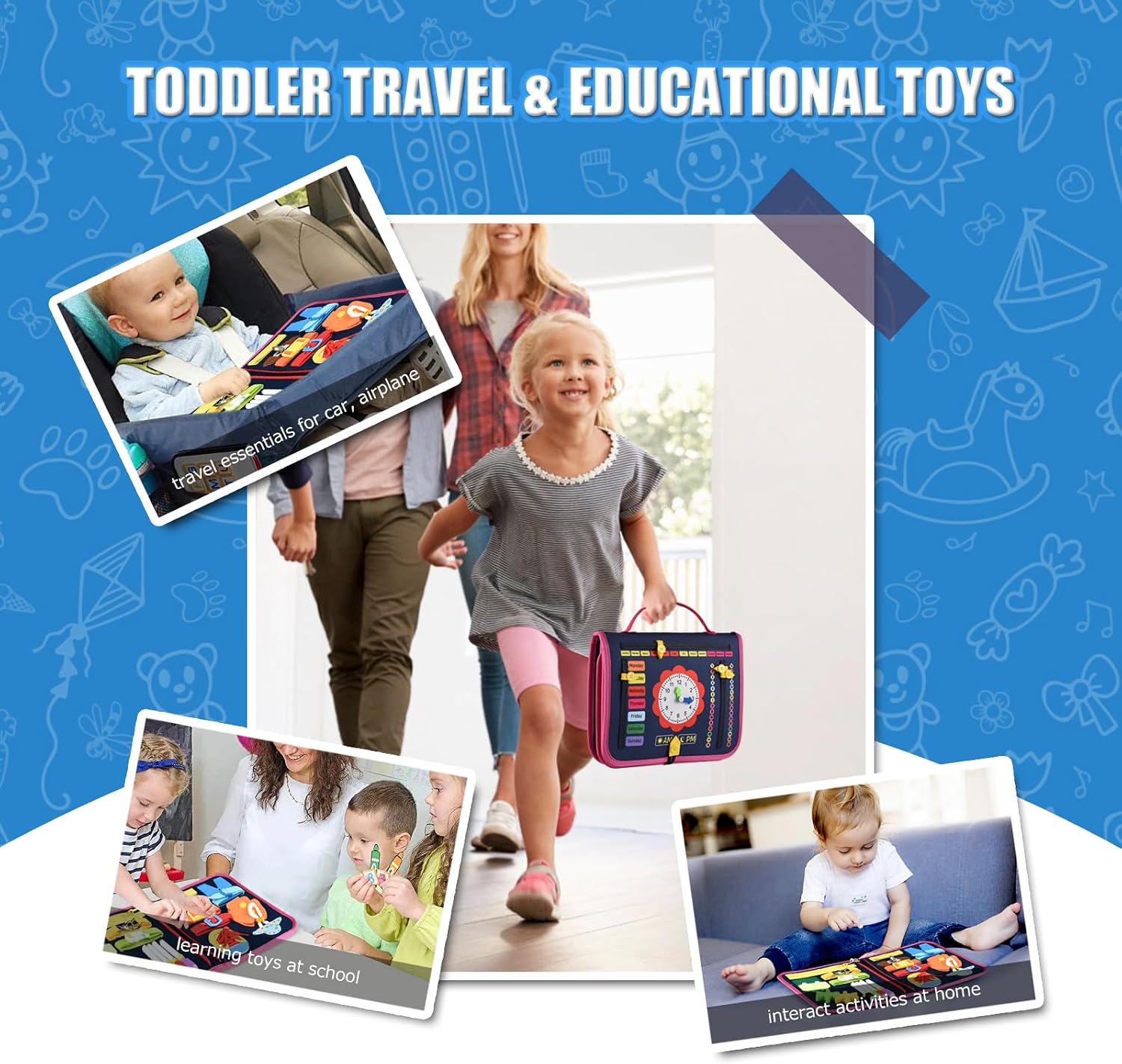
The compact design and the fact it has a handle and an extra strap is designed for real-life carrying. The listing specifically calls it a travel toy for journeys by plane or car, with the practical promise that it can help keep toddlers occupied and quieter while you’re on the move.
A small example: on a car journey, you can offer it during waiting times—before snacks, after buckling up—so your child can focus on zips, velcro and buckles while you handle the rest. It’s the sort of toy that can reduce “Are we there yet?” energy without needing electricity.
Materials, safety and durability: what to check
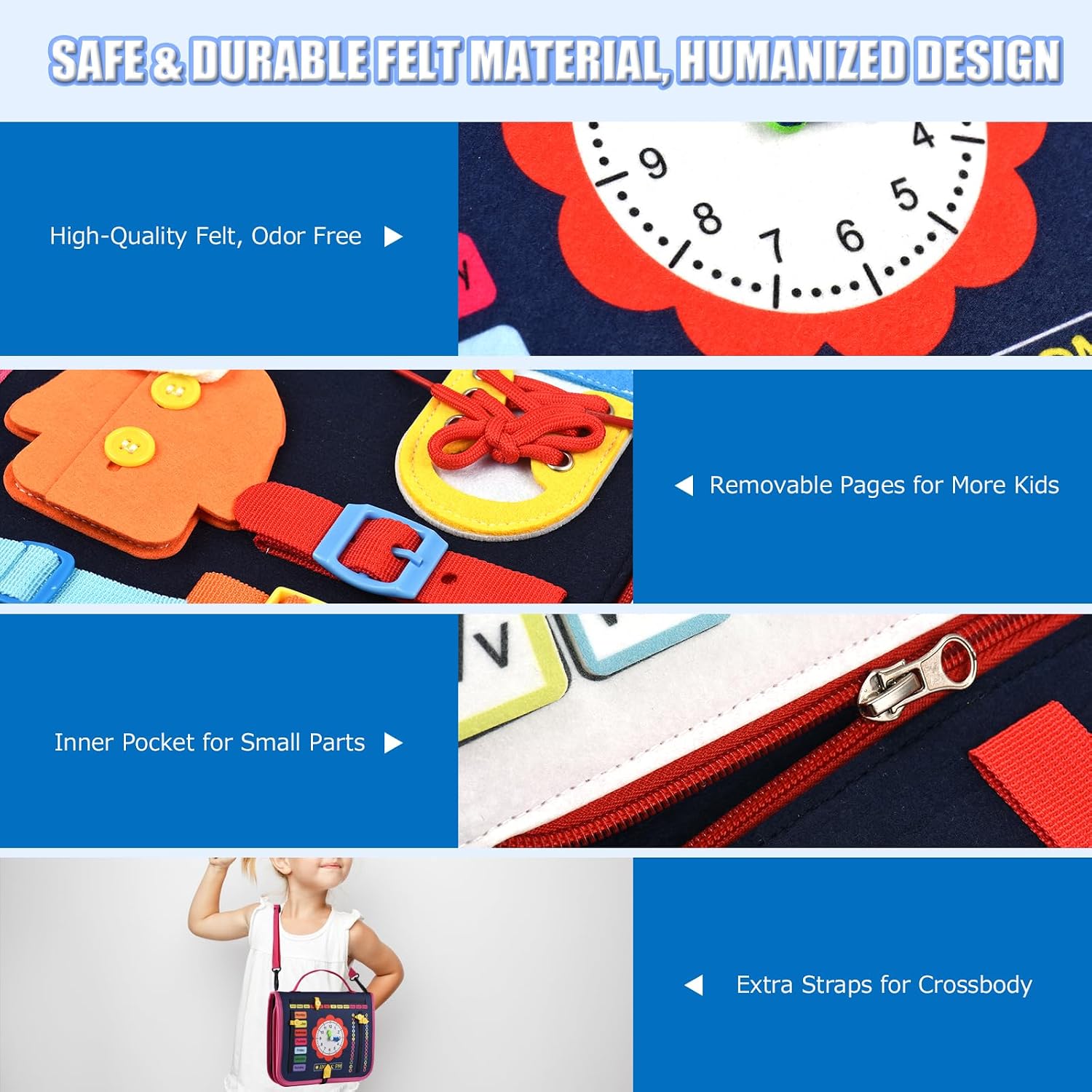
This busy board is made from felt wool with moderate thickness and softness, with no sharp edges mentioned. It’s described as chemical-free, odour free, and the items are securely fastened.
There’s also a note that pages are connected by zip and can be removed for multiple kids to play, plus an inner pocket after the zipper for storing small parts. That pocket detail is useful because it’s one less place for tiny pieces to end up.
Still, you’ll want to consider day-to-day handling: any toy with removable sections and small components generally works best when you supervise at least at the start, then adjust based on your child’s habits.
Pros and cons to help you decide
What you’ll likely like - Lots of different fastening actions (buttons, zips, snaps, buckles, velcro, shoelace-style practice), which can keep attention longer than single-activity toys. - The life-skills angle (clock/calendar and clothing-style elements) feels practical rather than purely decorative. - Travel-friendly design with handle and straps. - Felt construction with no sharp edges mentioned, plus securely fastened parts.
Potential downsides - Because it bundles many activities together, it may suit some children and disappoint others—especially if they’re only interested in one type of motion. - It’s not a guaranteed “screen replacement” on its own, it depends quite a lot on your child’s temperament and how you introduce it.
Who it suits (and who should be cautious)
It makes sense if you’re looking for a Montessori-inspired busy board for toddlers and preschoolers that focuses on fine motor skills, hand–eye coordination and simple everyday independence practice. If you’re the sort of parent who wants something your child can use for a while without constant prompting, this matches that use case.
It might not be the best match if your child is very rough with toys, or if you strongly prefer toys with no removable sections/small parts (even with storage pockets). Also, if your main goal is advanced learning content, this is more of a practical skills and engagement tool than an in-depth educational system.
Final verdict
Is it worth it?
Buying this busy board is a sensible choice if you want a portable, felt-based activity board that targets fine motor practice through everyday-life tasks and fastening actions, with a travel-friendly design for keeping toddlers occupied. It’s also a decent gift idea for parents who like Montessori-style, hands-on learning.
You may want to skip it if you already have plenty of similar “busy hands” toys and your child tends to lose interest quickly with multi-activity boards, or if you’d rather avoid anything with removable pages and small parts altogether.
Quick questions before you buy
Frequently asked questions
Is this suitable for younger toddlers? The listing frames it for children aged 1–6, but as with any busy board, supervision and introduction matter—especially for the smaller components.
Is it good for travel? It’s specifically described as a portable travel toy for plane and car journeys, thanks to its compact design and carrying straps/handle.
Does it help with fine motor skills? Yes, the description links the fastening and manipulation activities (buttons, zips, snaps, buckles, velcro, shoelaces) with developing fine motor skills and hand–eye coordination.
What age range is it aimed at? It’s marketed for ages 1, 2, 3, 4, 5 and 6 (boys and girls). If you’re buying for a narrower age, it can still work, but you may notice different levels of independence depending on the child.
Will it replace screens completely? It’s designed to help keep toddlers away from screens, but whether it fully replaces screen time will depend on how you use it and what your child responds to.