

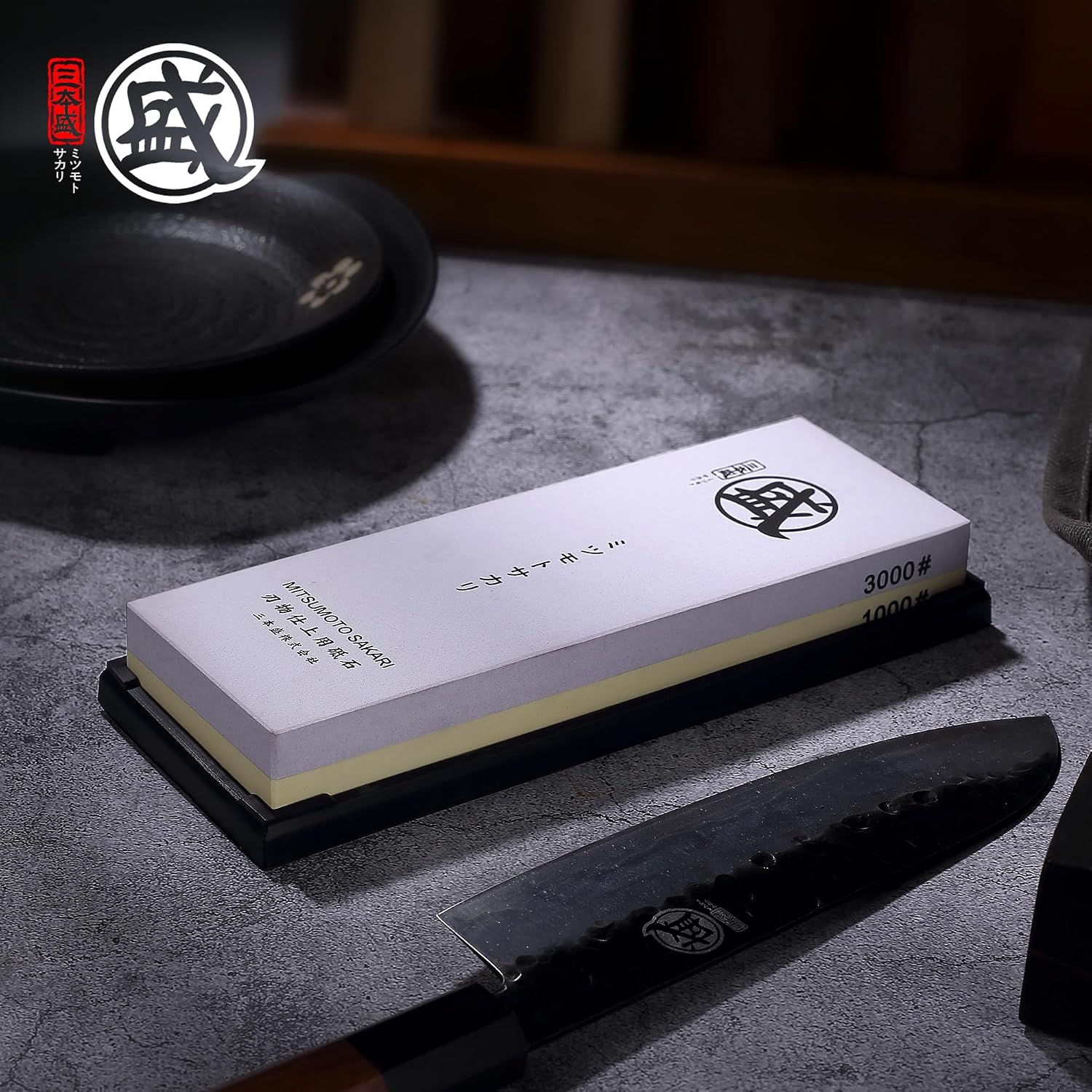
MITSUMOTO SAKARI Japanese Knife Sharpener Whetstone 1000/3000 grit with TPR non-slip base
Product description
The essentials
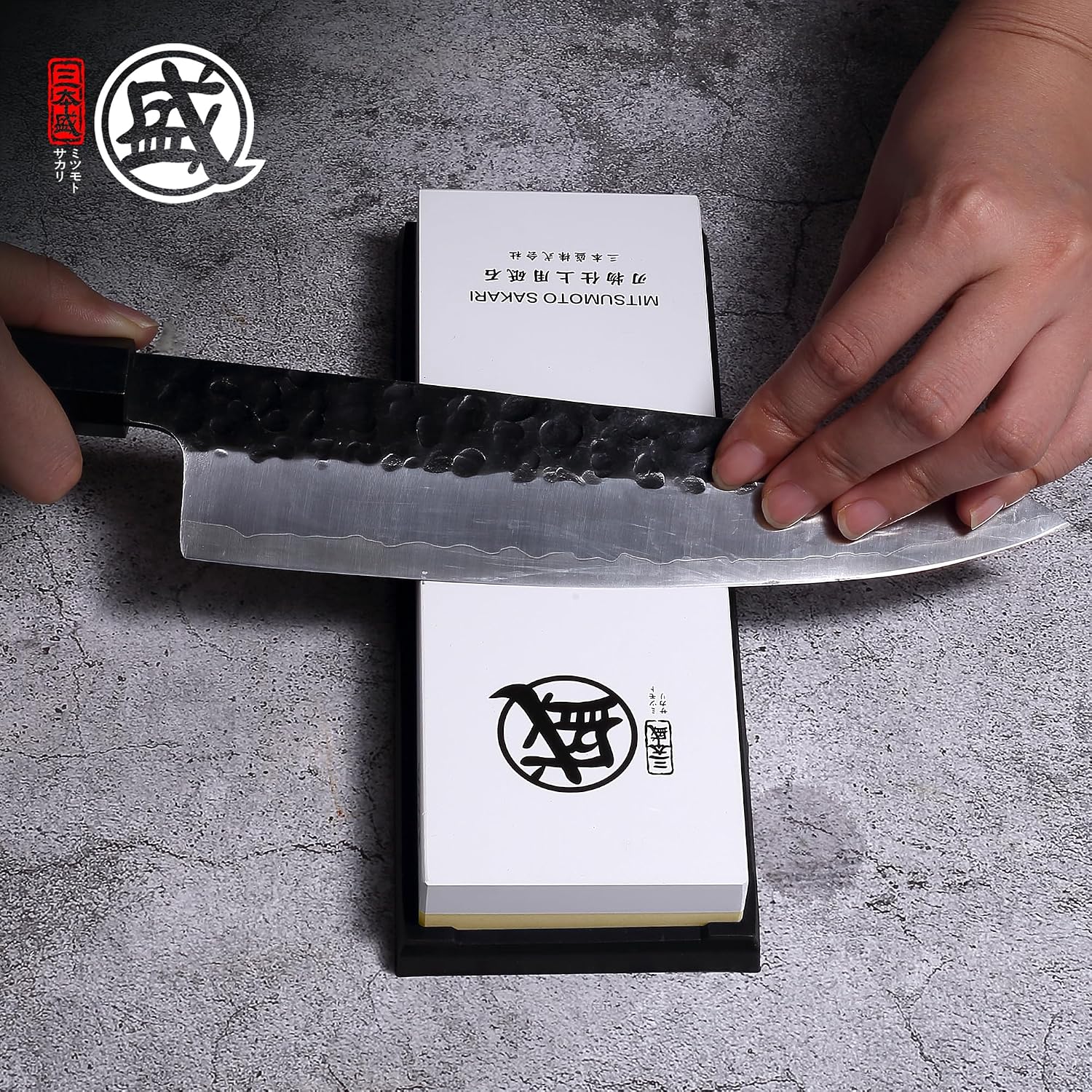
If you own Japanese-style knives (or just want your kitchen blades to bite properly again), a whetstone can be a more hands-on way to sharpen than relying on a gadget. The MITSUMOTO SAKARI Japanese Knife Sharpener is a double-sided water whetstone with two grits—1000/3000—mounted on a TPR rubber base designed to hold steady while you work. On paper, it’s aimed at people who want a practical route from “too dull to be fun” to “useful and presentable,” without damaging the knife.
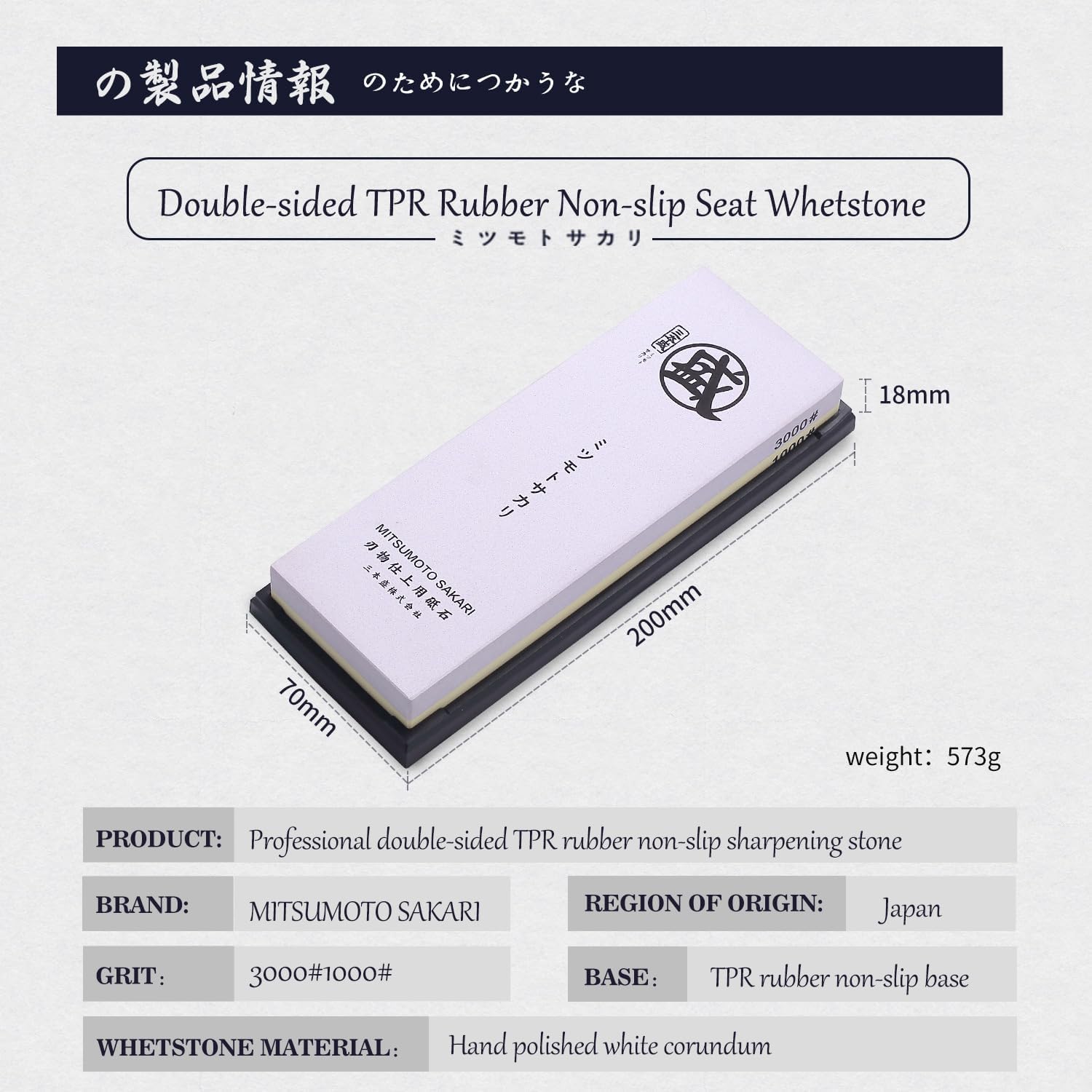
The stone is described as white corundum (aluminium oxide), with high hardness and good wear resistance. That matters because softer stones tend to dish out faster when used regularly. The rubber base is there for more than convenience too: it’s meant to reduce slip and shock while you sharpen, which is exactly the bit that can make the whole process feel less stressful.
Key takeaways
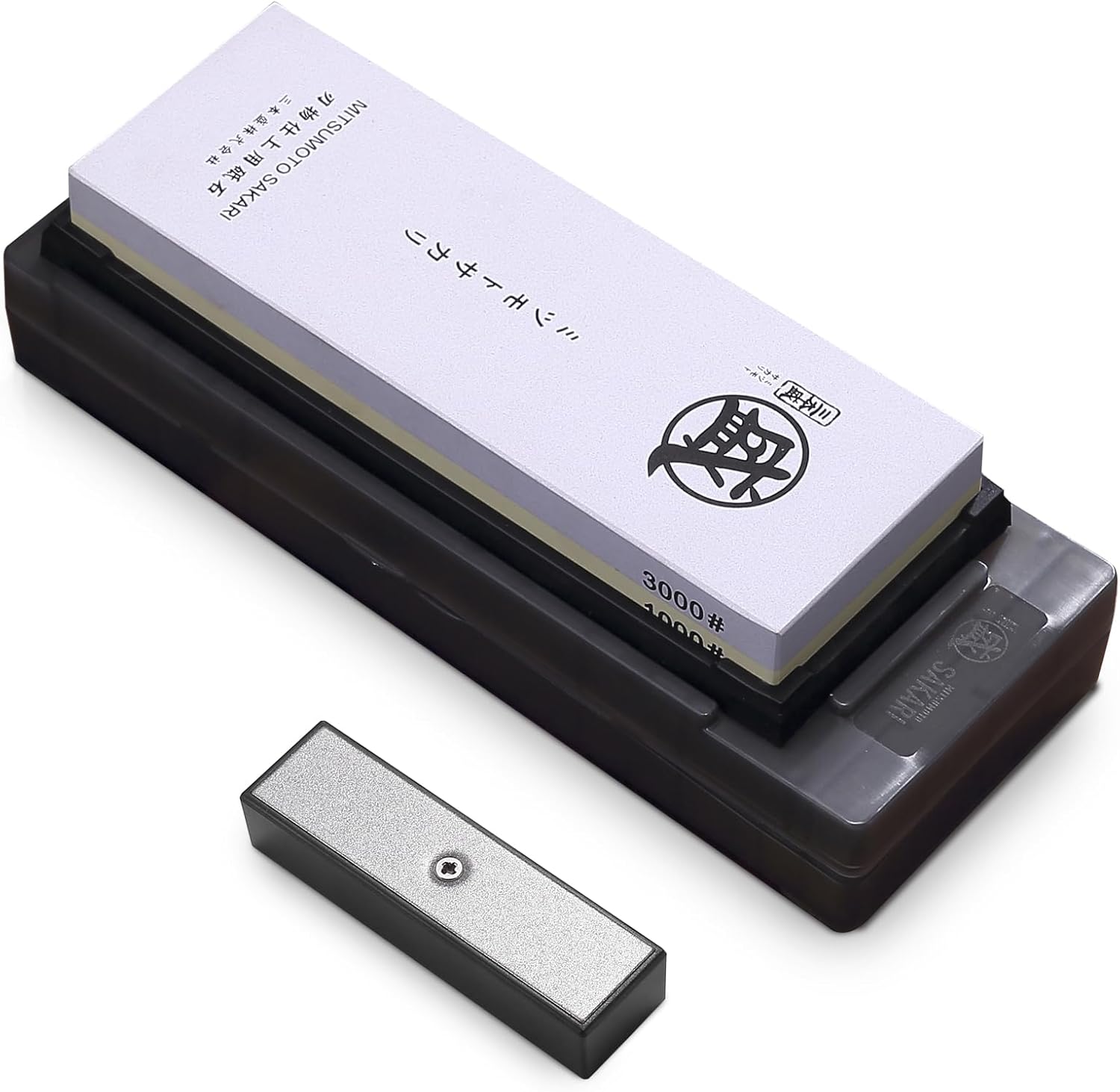
This is a dual-grit whetstone: 1000 grit for repairing and sharpening dull edges, and 3000 grit for sharpening and polishing. In other words, it’s set up for a two-stage workflow—coarser first to get the edge back, then finer to refine it.
Where it feels sensible is for everyday kitchen knives you want to keep in shape. It’s also pitched as multi-purpose, so it’s intended to sharpen different kinds of knives, not only one blade type. That said, whetstones are still a skill-based tool—if you’re looking for fully “set and forget” sharpening, this isn’t that.
What matters most in use
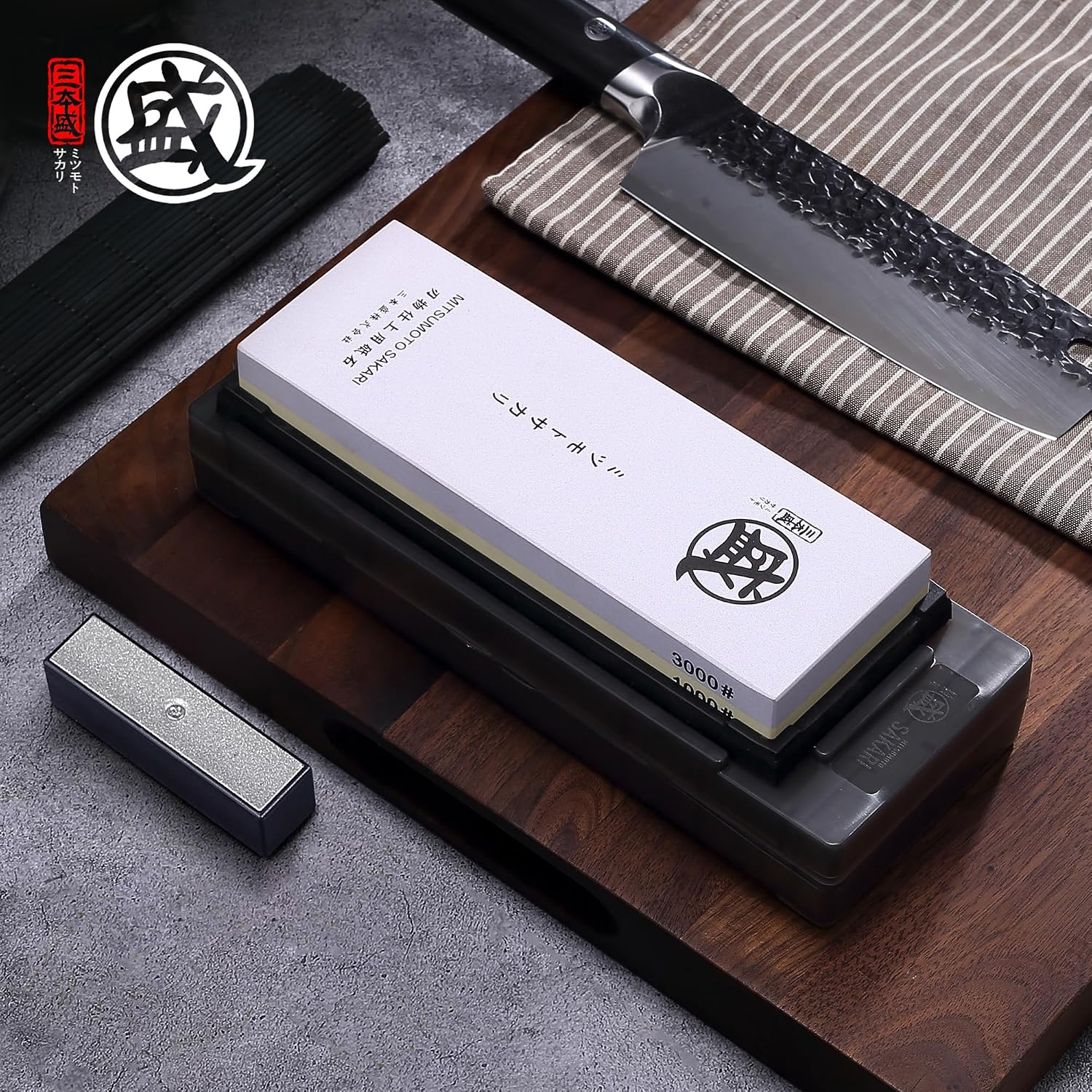
A stone like this only works as well as your technique, but the design choices here are trying to reduce friction. The non-slip TPR rubber base is a straightforward quality-of-life feature, especially if your current sharpening setup tends to slide around on the worktop.
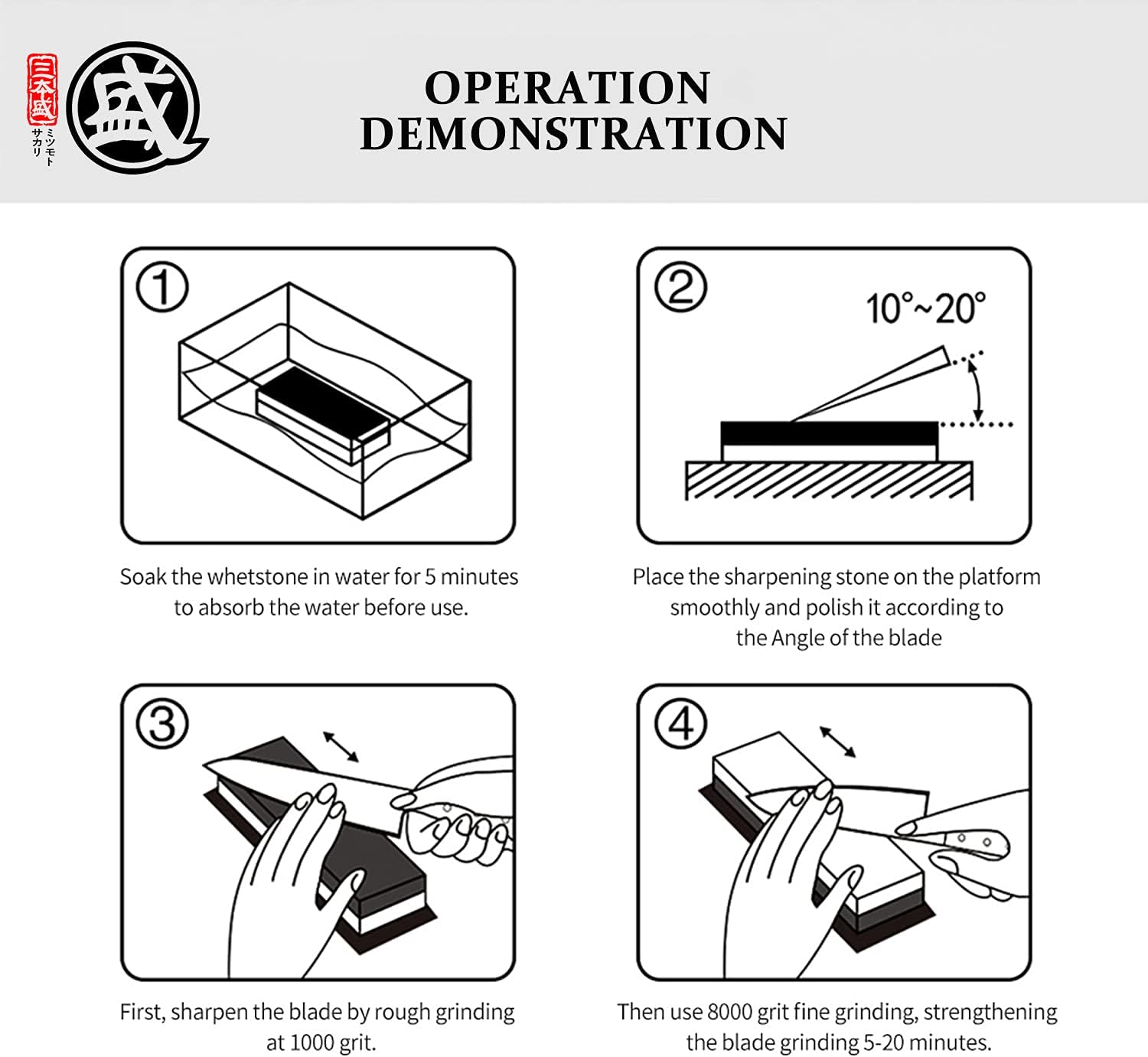
In a typical session, you’d use the 1000 side when the knife has gone noticeably dull—think along the lines of cutting onions that start to feel like they’re being crushed rather than sliced. Once the edge is reset, you’d move to the 3000 side for finer sharpening and polishing to bring back a smoother feel. It’s not perfect—some knives can be stubborn depending on how neglected they are—but the 1000/3000 combination is a very common pairing because it covers both “repair” and “refine”.
Pros
- Double-sided 1000/3000 grit for a two-stage sharpening approach (repair/sharpen, then refine/polish).
- White corundum (aluminium oxide) is positioned as hard with good wear resistance.
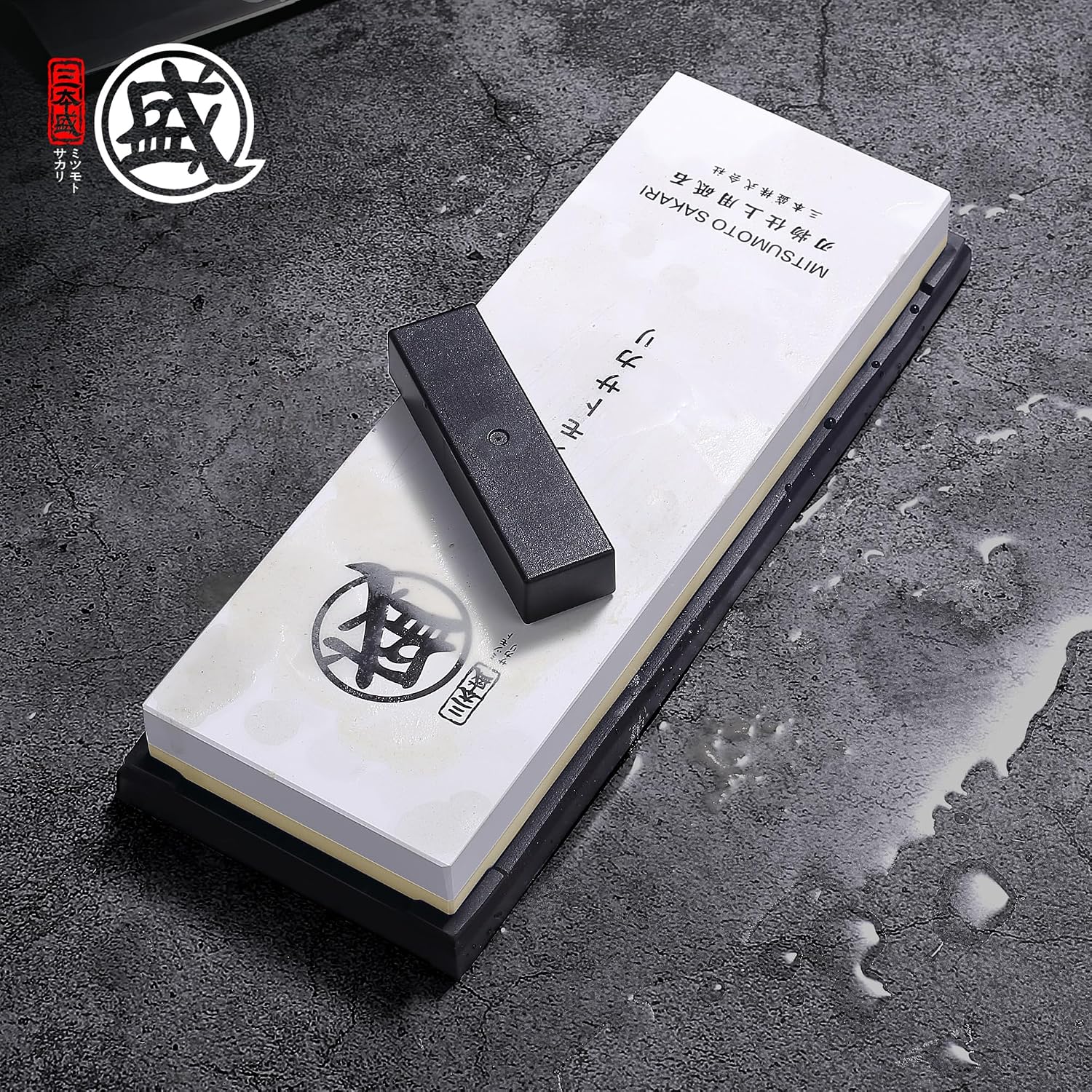
- TPR rubber non-slip base helps keep the whetstone in place and reduces shock while sharpening.
- Multi-purpose positioning: the stone is presented as suitable for different knife types.
Where it may not suit you
There are a couple of practical limitations to keep in mind. First, sharpening on a whetstone is usually slower and more involved than using guided systems or pull-through sharpeners, so it may not be the best fit if you want speed over control.
Second, while it’s marketed as a professional-style sharpening stone, 1000/3000 is a middle-of-the-road progression rather than a full “every grit you could ever want” ladder. If your goal is ultra-fine polishing beyond what 3000 typically provides (or you’re dealing with very specific steel types and edge targets), you might find this setup a bit limited.
What to check before you buy
- Your expectations: do you want to learn a more manual sharpening routine, or do you prefer something more guided?
- How dull your knives usually get. The 1000 side is aimed at dull edges and repairing, but severely worn or badly damaged edges may require more attention than you want.
- Workspace stability: the TPR rubber base helps, but your surface setup still matters for comfortable, consistent sharpening.
It’s also worth considering that this is water whetstone-style sharpening (based on the context of whetstones in general), so you’ll want to be happy with the extra steps compared with sharpening tools that are faster to use.
Mini FAQ
Is this good for Japanese knives?
It’s specifically described as a Japanese knife sharpener and uses a professional Japanese knife sharpening stone approach, so it’s designed with that use in mind.
What does the 1000 grit side do?
The 1000 grit side is stated to be used for repairing tools and sharpening dull tools, which in kitchen terms typically translates to resetting an edge that’s gone blunt.
What’s the purpose of the 3000 grit side?
The 3000 grit side is described as fine grit for sharpening and polishing, so it’s the finishing stage after the 1000 grit.
Does the rubber base actually help?
The base is presented as TPR rubber with non-slip and shock absorption properties, specifically to keep the whetstone stable while sharpening.
Should you buy it?
This MITSUMOTO SAKARI whetstone makes sense if you want a straightforward 1000/3000 two-step setup to bring dull knives back and polish the edge without overcomplicating your sharpening routine. The stable TPR non-slip base and the double-sided stone are the practical reasons it’s worth considering.
You may want to skip it if you’re after a quick, low-effort sharpening solution, or if you’re chasing a wider grit progression than 1000/3000 for very specific sharpening goals. In short: it’s a solid choice for people who are willing to put a bit of time into sharpening and want a reliable, simple workflow for everyday kitchen use.