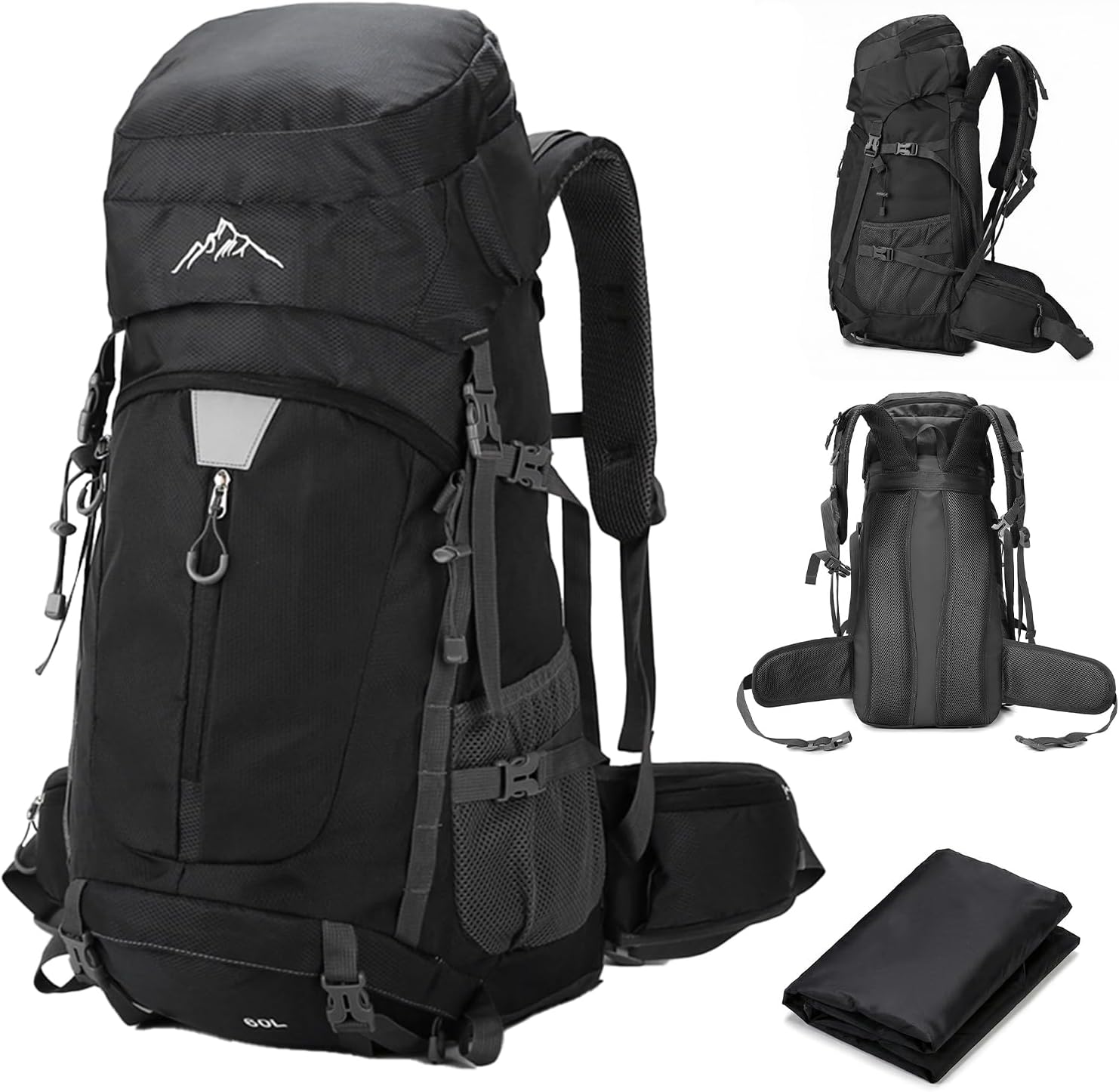
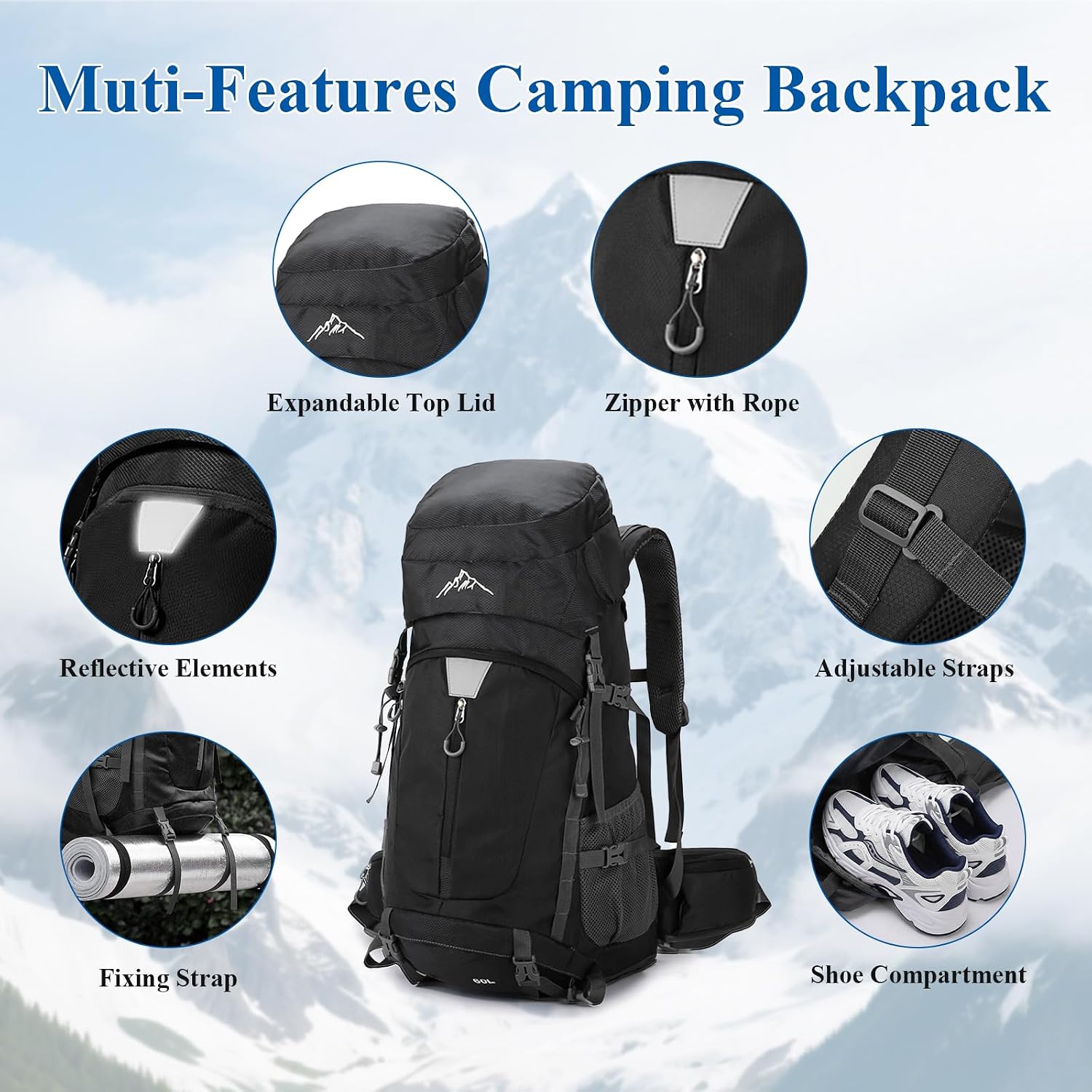
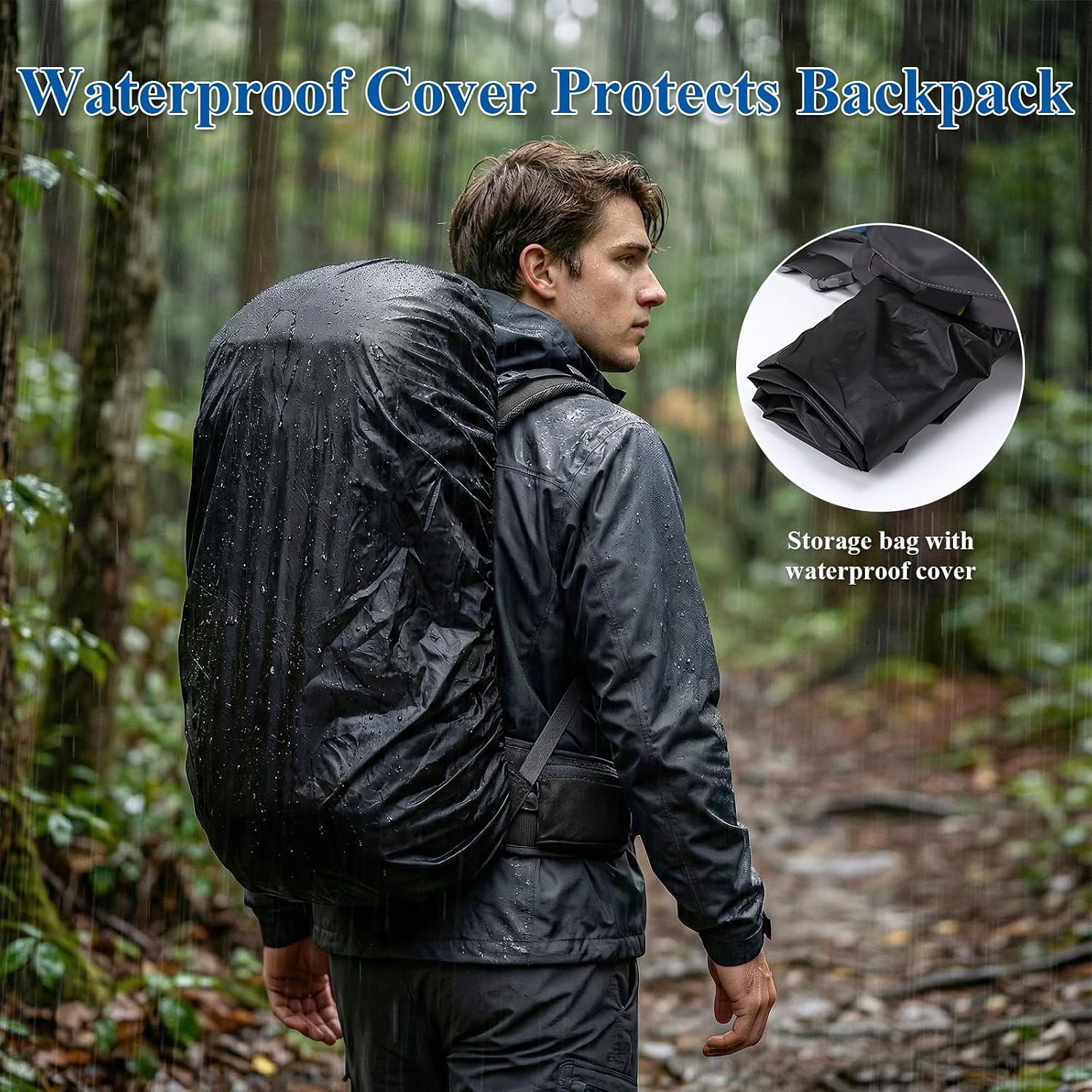
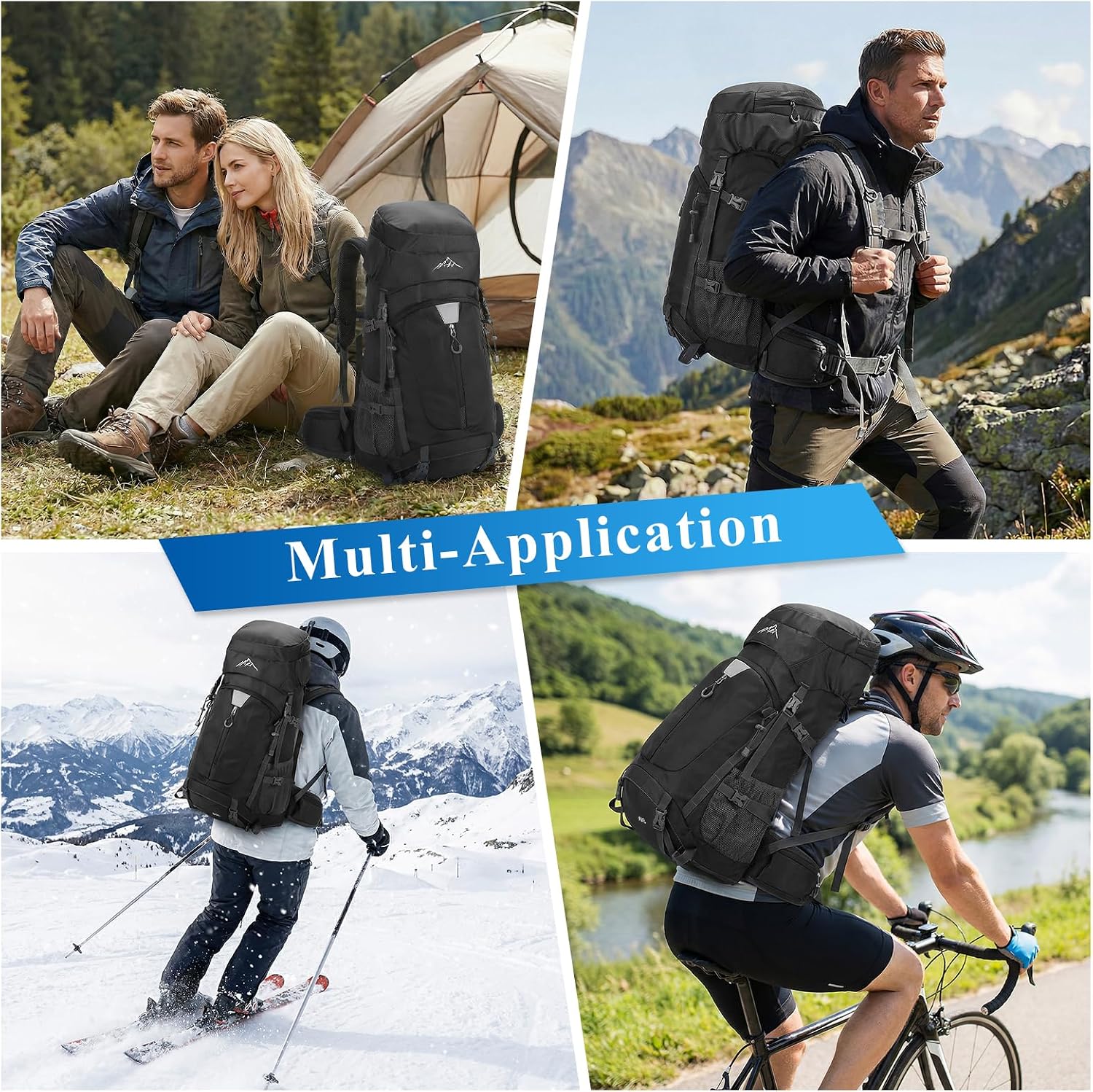
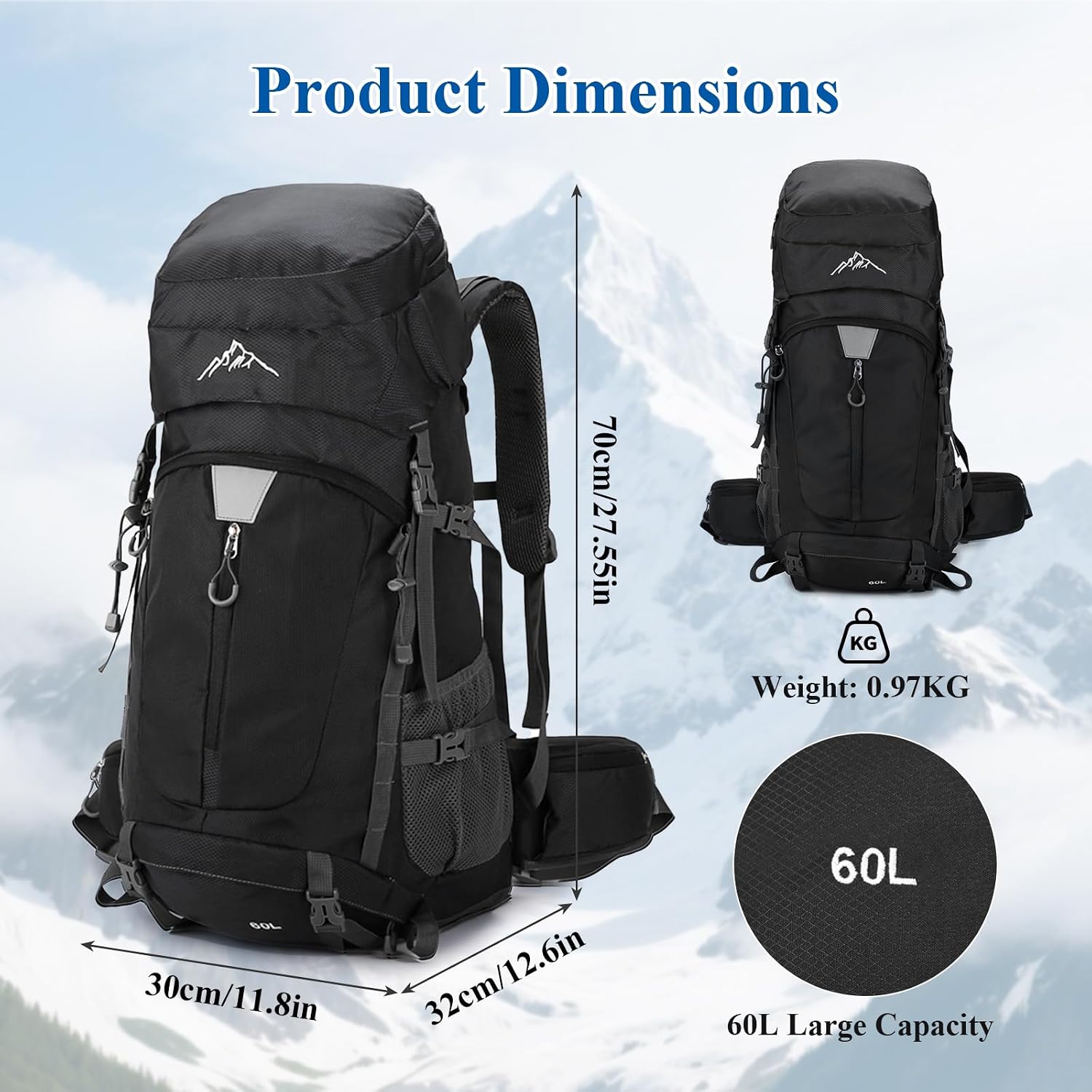
What this is and what it solves\nIf you’re after a versatile, travel-friendly backpack for long weekends or light treks, the Mingfuxin 60L hiking backpack aims to cover the basics without dragging you down. On the page, the emphasis is on capacity and practicality: a 60L main capacity, separate compartments, and a bottom section designed for wet or dirty items. It’s sized to carry clothes, gear and daily essentials for 1–2 weeks of light travel, making it a sensible option for weekend hikers, climbers and campers who want a single bag that can flex with their plans. On paper, the design speaks to a straightforward use case: plenty of space, clever separation, and a rain-ready build for uncertain weather.\n\n## Design and build: what to expect\nMaterial choices focus on durability and water resistance. The fabric is described as high-quality ripstop polyester with water-resistance and tear-resistance properties, and the bag includes a rain cover tucked in a bottom pouch to guard against heavy rain and dust. The absence of an internal or external frame keeps the load management simple, relying on a contoured back panel and cushioning to distribute weight. In practice, this means a lighter feel in the shoulders, with breathable mesh straps and a back panel intended to reduce heat buildup on longer hikes. It’s not described as a framed pack, so if you rely on rigid support for heavy loads, you may notice the difference compared with more structured models.\n\n## How it fits and carries\nComfort is a recurring theme: widened, thickened S‑shaped shoulder straps paired with a waist belt to help stabilise the load, plus a chest strap with a whistle for safety on windy ridges. The mix of adjustable shoulder straps and waist support allows for a custom fit that suits both men and women up to a 28-inch waist. If you prioritise airflow and lighter carry, this configuration aims to deliver enough padding and ventilation for day-to-day use, but it’s worth noting that the pack relies on fabric and padding rather than a rigid frame to shape the ride.\n\n## Capacity, organisation and versatility\nThe 60L capacity is subdivided into multiple compartments, which is handy for organising clothes, towels, cups and cooking gear. A notable feature is the ability to separate the main compartment with an additional bottom section, effectively creating a wet/dirty compartment. For weekend treks, climbing days or active travel, this separation can help keep damp items apart from dry gear, which is a practical touch. If you tend to overpack or travel with a lot of kit, you’ll likely appreciate having dedicated pockets and the option to compartmentalise.\n\n## When it makes sense to buy this\nThis backpack appears well-suited for walkers, hikers and light trekkers who want a single, foldable 60L bag that doesn’t weigh them down. Its low-ish weight (just under 1kg) is a clear advantage for those who aim to maximise payload without adding bulk. It supports up to 20kg, which is a sensible ceiling for day-to-extended trips when you’re carrying basics like a shell, layers, food and a compact sleeping setup. If your trips involve more substantial equipment, or you require a highly structured frame for heavy loads, you may want to consider alternatives with more rigid support.\n\n## What to check before you buy\nBefore committing, consider how you’ll actually use the space. Do you need the wet/dry separation regularly, or would a simpler layout suit you better? Ensure the fit works for your torso length and that the waist belt sits comfortably without pinching. Since the bag is designed for a range of outdoor activities—from climbing to trekking—evaluate how much you’ll rely on the rain cover and whether the folded size fits your packable needs. Remember that the advertised 60L is a guideline for capacity, and actual usable space can vary with how you pack and the presence of internal dividers.\n\n## Alternatives and context\nIn practice, this style sits between basic, budget-friendly rucksacks and more advanced, framed packs. If you value a lightweight footprint with flexible capacity and a built-in rain cover, this Mingfuxin model offers a pragmatic middle ground for casual to intermediate outdoors enthusiasts. If you expect to push heavier loads or need premium suspension, you might explore packs with more robust framing or customisable suspension systems. For shorter trips or city-to-hike transitions, a smaller daypack could also suffice, but you’d lose the 60L capacity when needed.\n\n## Final decision: is it worth it?\nWorth considering if you want a roomy, adaptable pack that remains light and compact when empty, and you appreciate a dedicated bottom compartment for wet or dirty items. It’s not the most advanced option for technical expeditions, but for hikers and casual travellers who prioritise value-for-money, durability and practical organisation, this bag can cover a wide range of outdoor needs. If your priority is maximum structural support and ultra-long trips with heavy gear, you may prefer alternatives with a stronger frame and more bespoke adjustability.\n\n## Quick FAQ\n- How much can it carry? Up to 20kg, with a 60L capacity and multiple compartments.\n- Is it fully waterproof? It is described as water-resistant with a rain cover included for additional protection.\n- Who is it best for? Suitable for men and women who need flexible space for 1–2 weeks of light travel or varied outdoor activities.\n- Does it have a frame? No internal or external frame is mentioned, relying on padding and a back panel for comfort.\n- What’s a realistic use case? A weekend hiking trip with layers, a compact stove set and a quick-dry towel, with the option to separate damp items from dry items.