Meross Matter Presence Motion Sensor 1 📷

Product description
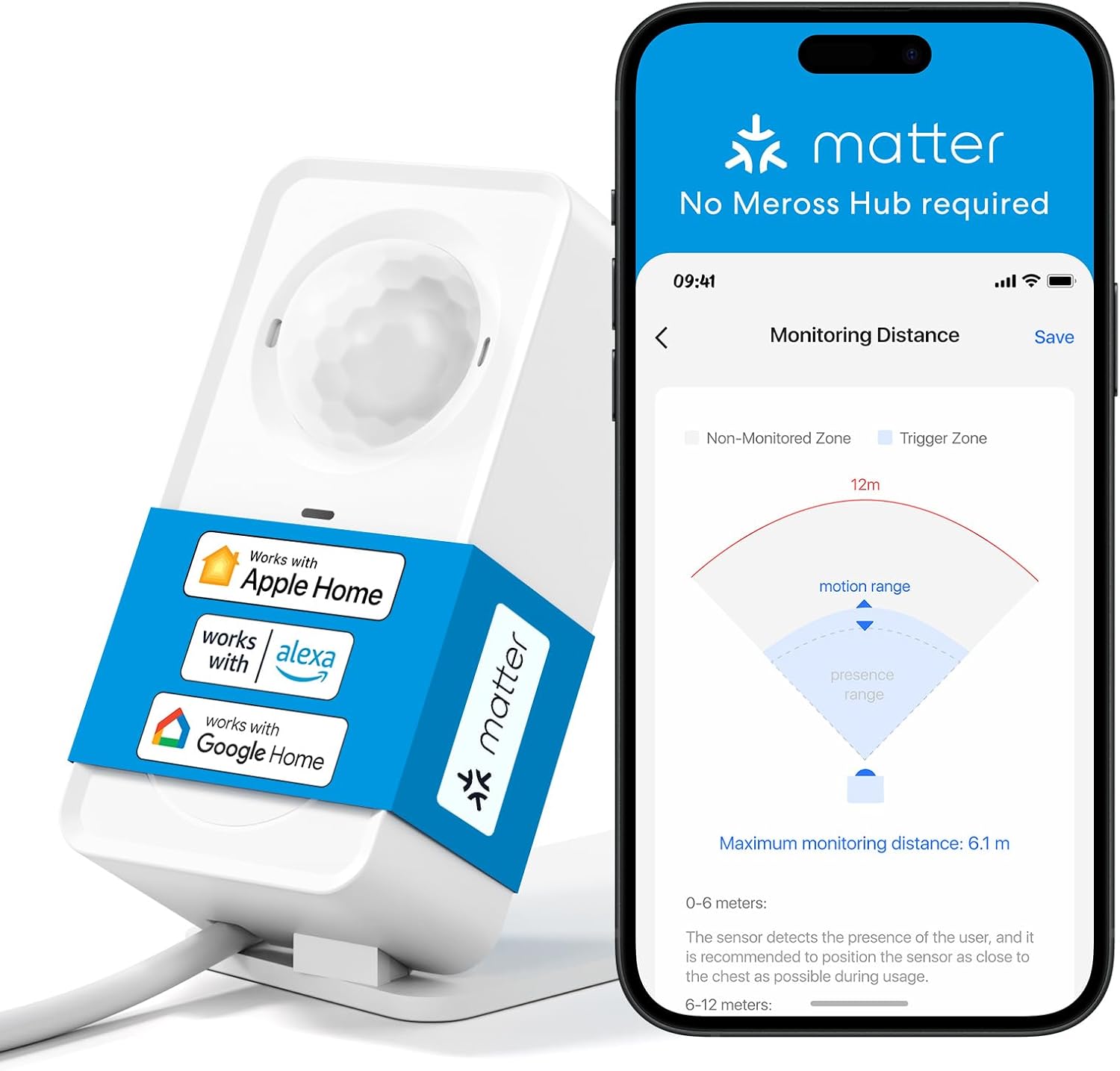
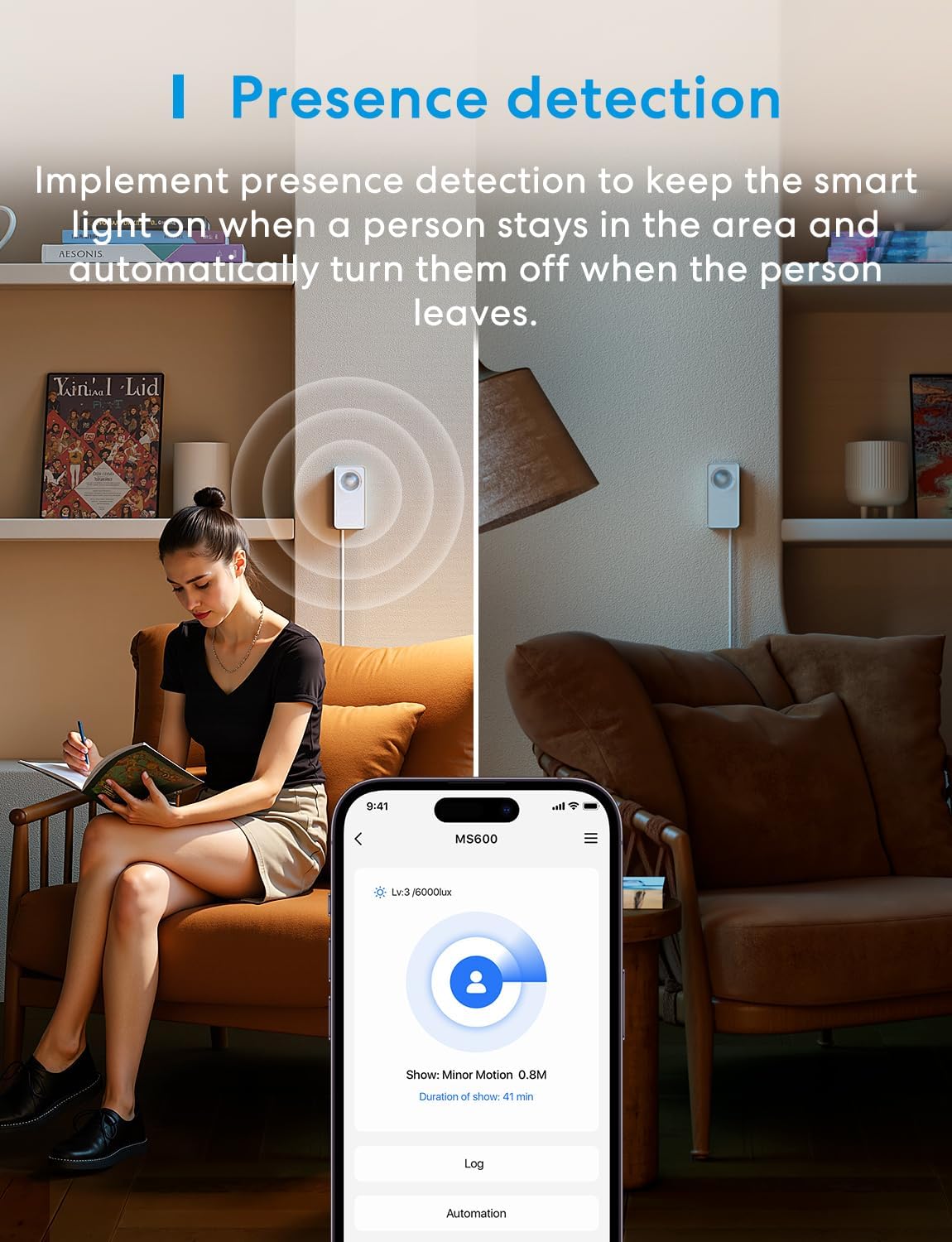
This smart presence sensor combines passive infrared and millimetre-wave radar to detect both motion and stationary occupants, making it useful for lighting automation and home security. Ideal for rooms where you want quick app notifications and local processing, it plugs in with a 1.5 m cable and works across major smart home ecosystems.
Key Points
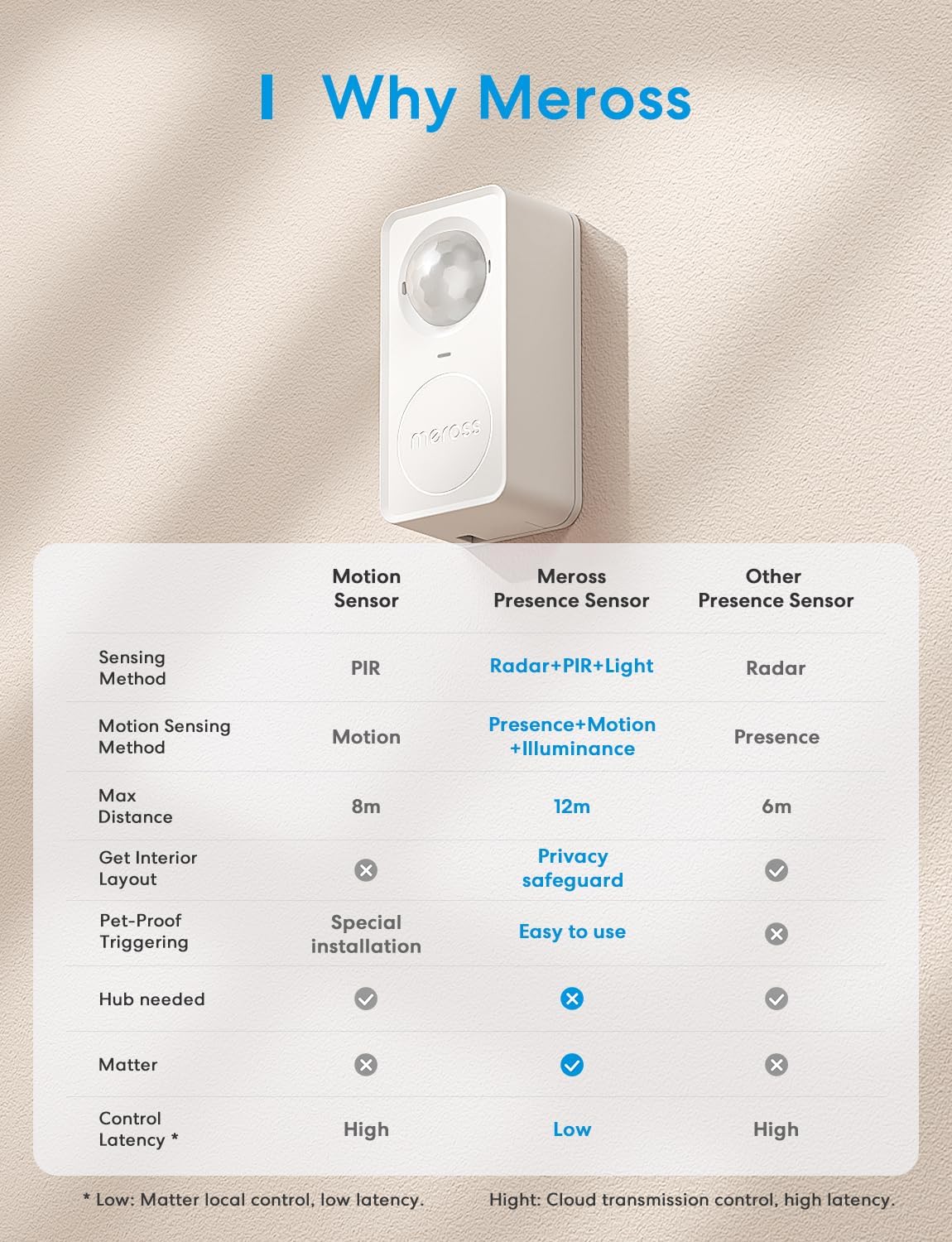
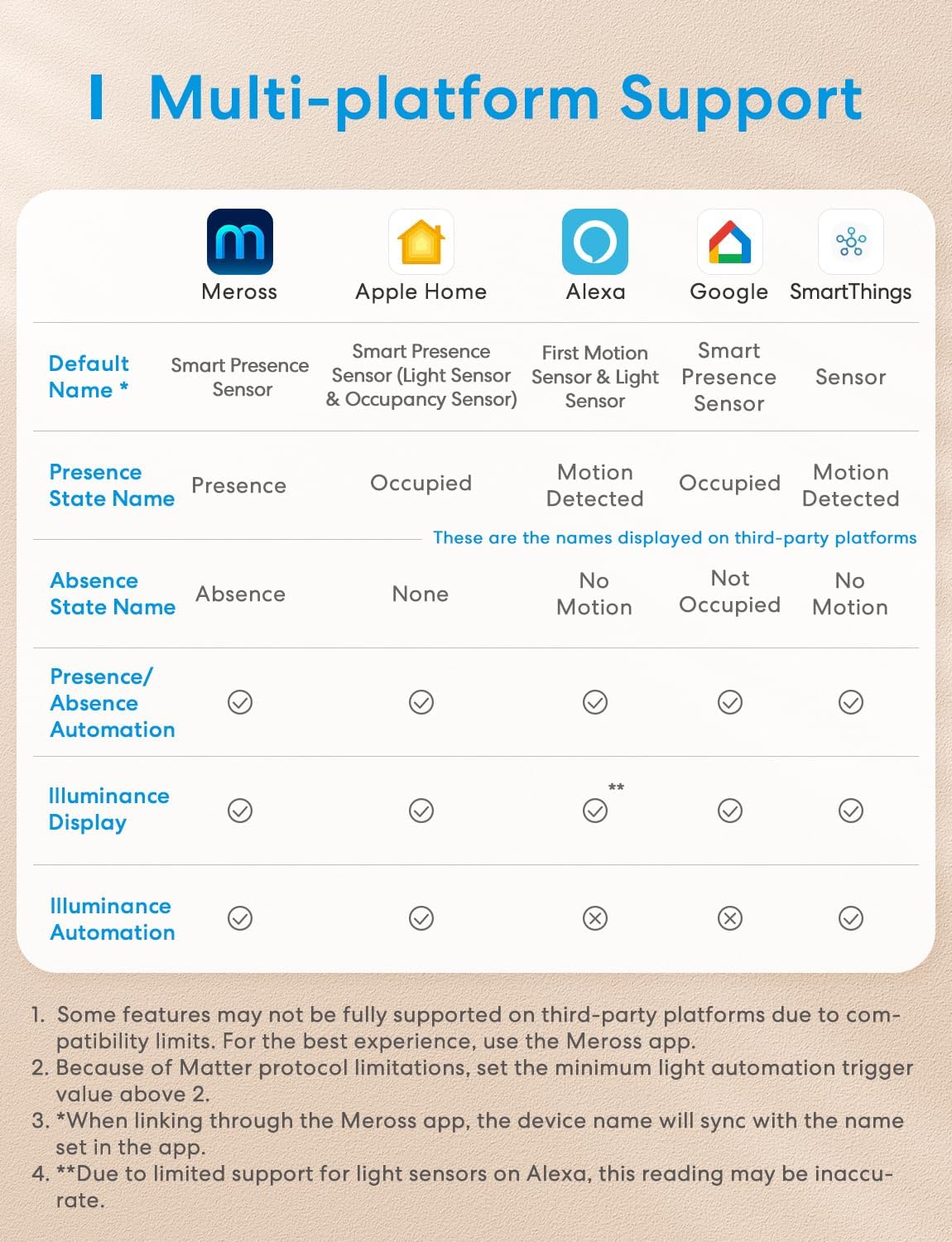
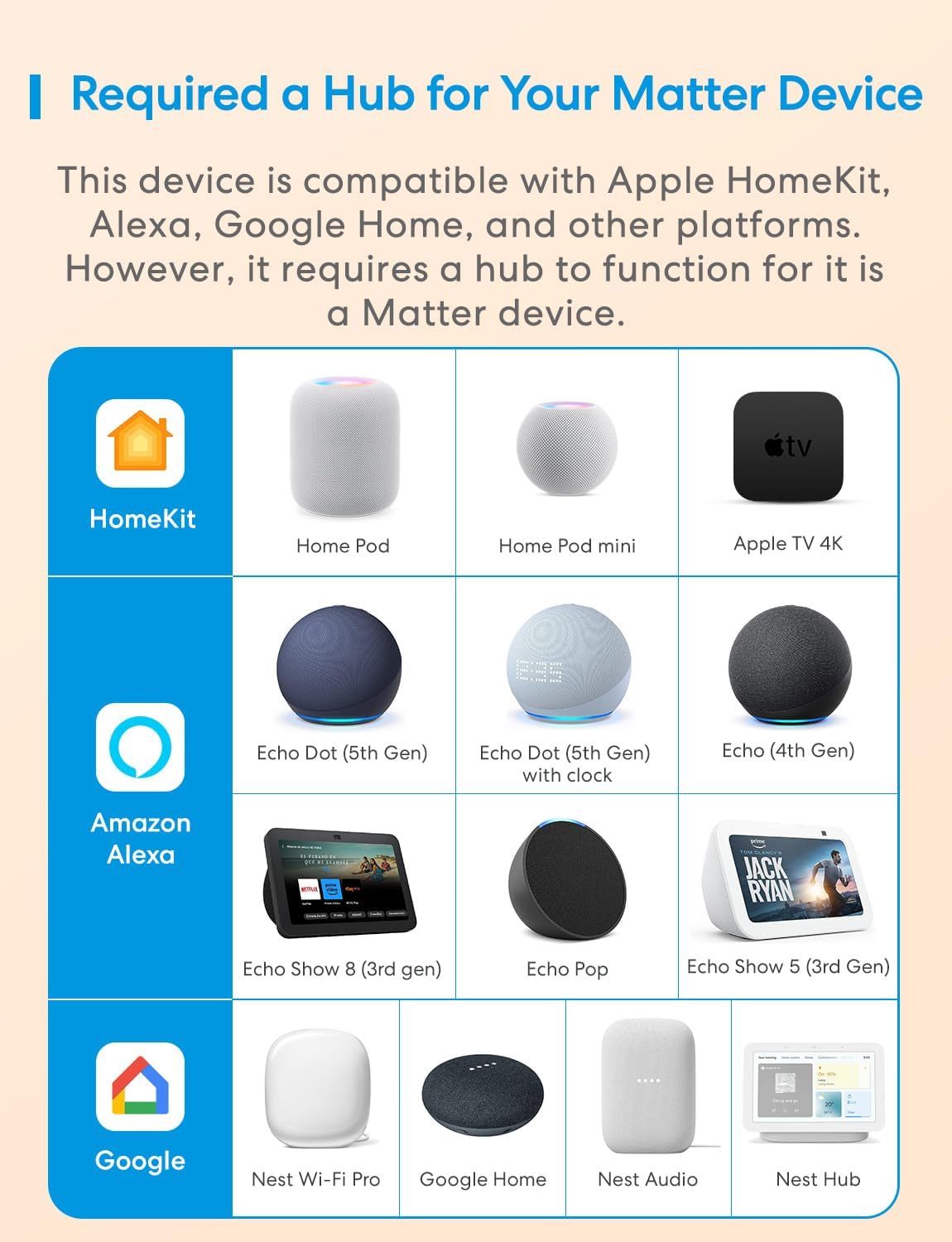
The sensor reduces false alarms by cross-checking PIR input with radar measurements, and an ambient light sensor helps trigger lights only when needed. It is Matter-enabled so it integrates with Apple Home, Alexa, Google Assistant and other platforms, and it uses 2.4 GHz Wi-Fi for hub-free operation and lower latency. The design avoids cameras and visual recording, supporting privacy-focused installations according to UK and EU data protection expectations. Note that Alexa does not support the light sensor feature.
Technical Specifications
Name: Meross Matter Presence Motion Sensor
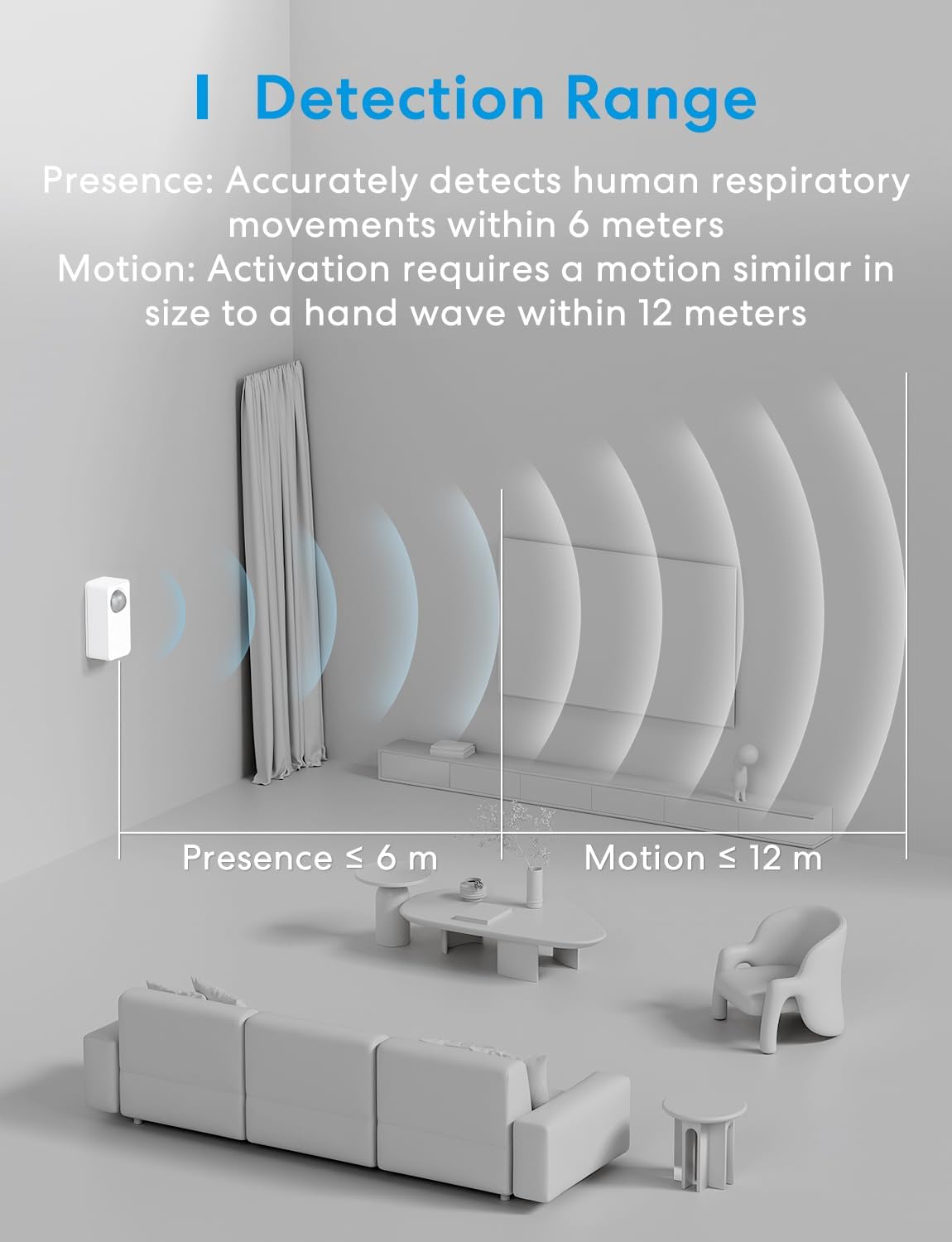
- Detection range: up to 12 m for motion, up to 6 m for stationary presence.
- Power: plug-in with 1.5 m cable and included adapter.
- Connectivity: 2.4 GHz Wi‑Fi, Matter-compatible.
- Sensors: PIR, millimetre-wave radar, ambient light sensor.
- Mounting: 360° rotating base and 90° tilt-adjustable stand.
Advantages
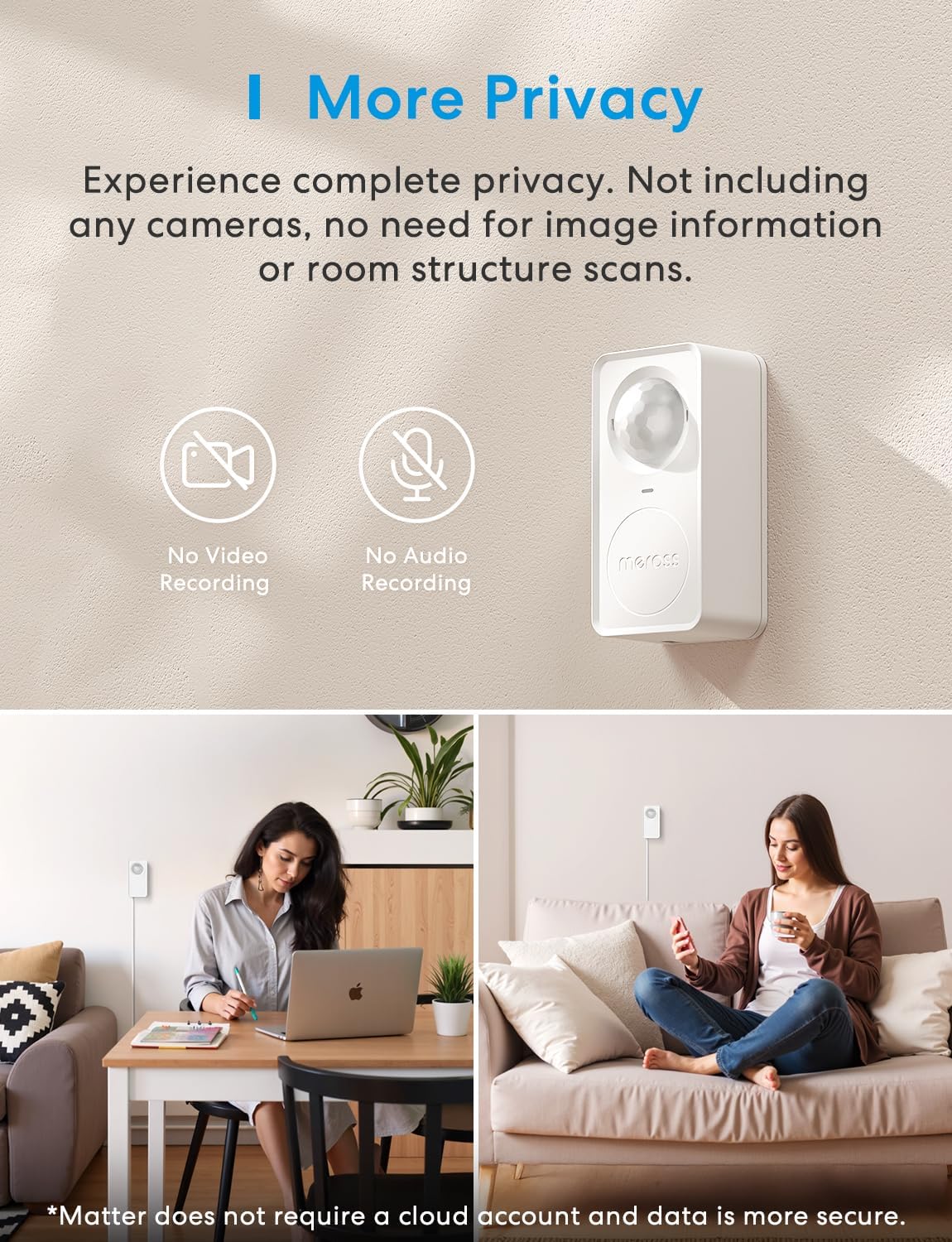
This unit supports localised processing, which can reduce response times and keeps most data processing on the device rather than relying solely on cloud services. It includes pet and robot immunity measures, so small animals and cleaning robots are less likely to trigger alerts, making it practical for households with pets. The absence of cameras will suit users who prioritise privacy while still wanting reliable presence detection.
Usage Recommendations
Position the sensor on a shelf or fixed surface using the swivel base to cover entryways, stairwells or open-plan living areas. For best results, aim the radar and PIR array towards the main pedestrian flow and allow for a clear line of sight within the stated range. Consider using Human Presence Detection mode when you need to detect stationary people, and switch to Motion Detection mode for conventional movement-triggered automation.
Price evolution
Description:
This smart presence sensor combines passive infrared and millimetre-wave radar to detect both motion and stationary occupants, making it useful for lighting automation and home security. Ideal for rooms where you want quick app notifications and local processing, it plugs in with a 1.5 m cable and works across major smart home ecosystems.
Key Points
The sensor reduces false alarms by cross-checking PIR input with radar measurements, and an ambient light sensor helps trigger lights only when needed. It is Matter-enabled so it integrates with Apple Home, Alexa, Google Assistant and other platforms, and it uses 2.4 GHz Wi-Fi for hub-free operation and lower latency. The design avoids cameras and visual recording, supporting privacy-focused installations according to UK and EU data protection expectations. Note that Alexa does not support the light sensor feature.
Technical Specifications
Name: Meross Matter Presence Motion Sensor
- Detection range: up to 12 m for motion, up to 6 m for stationary presence.
- Power: plug-in with 1.5 m cable and included adapter.
- Connectivity: 2.4 GHz Wi‑Fi, Matter-compatible.
- Sensors: PIR, millimetre-wave radar, ambient light sensor.
- Mounting: 360° rotating base and 90° tilt-adjustable stand.
Advantages
This unit supports localised processing, which can reduce response times and keeps most data processing on the device rather than relying solely on cloud services. It includes pet and robot immunity measures, so small animals and cleaning robots are less likely to trigger alerts, making it practical for households with pets. The absence of cameras will suit users who prioritise privacy while still wanting reliable presence detection.
Usage Recommendations
Position the sensor on a shelf or fixed surface using the swivel base to cover entryways, stairwells or open-plan living areas. For best results, aim the radar and PIR array towards the main pedestrian flow and allow for a clear line of sight within the stated range. Consider using Human Presence Detection mode when you need to detect stationary people, and switch to Motion Detection mode for conventional movement-triggered automation.