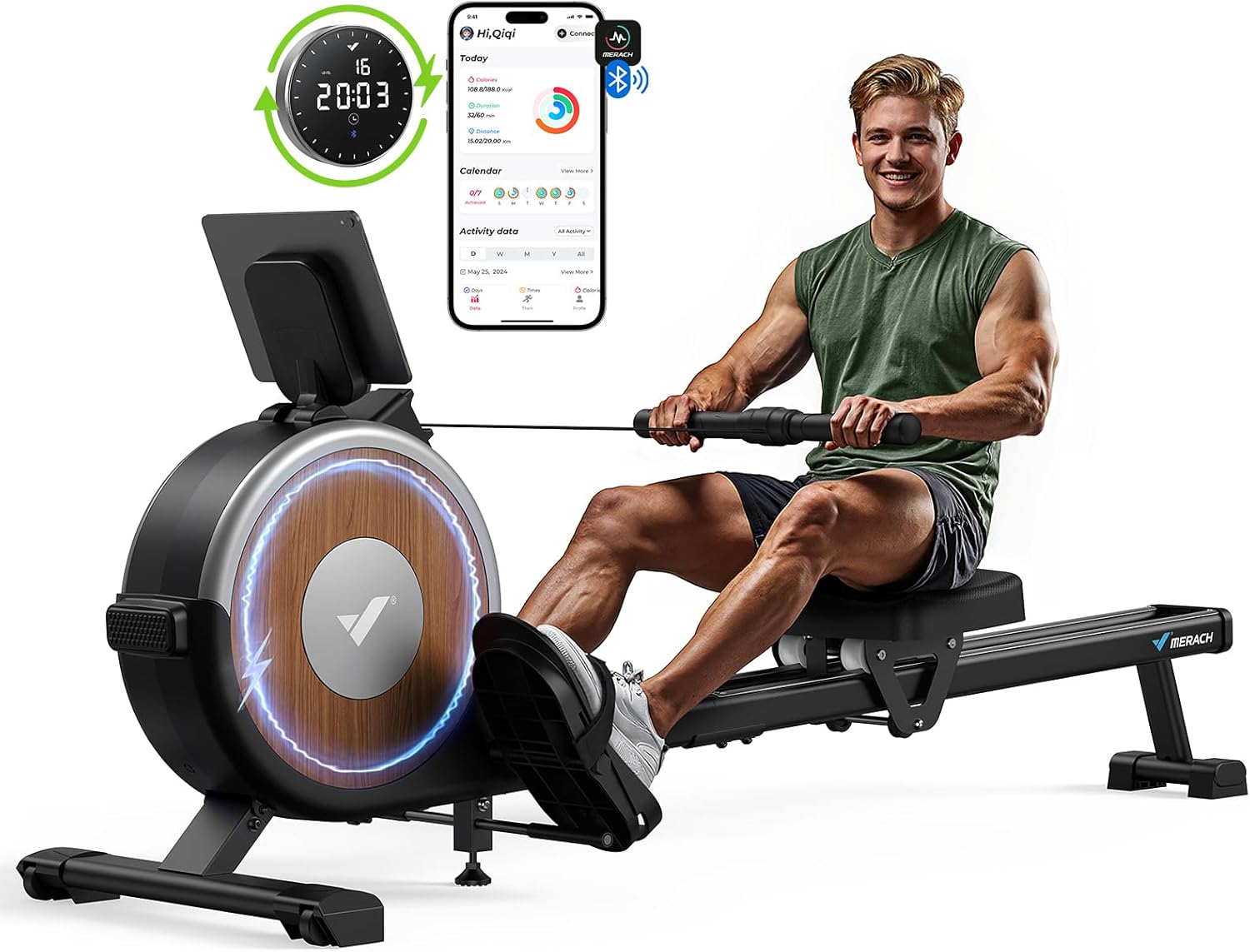
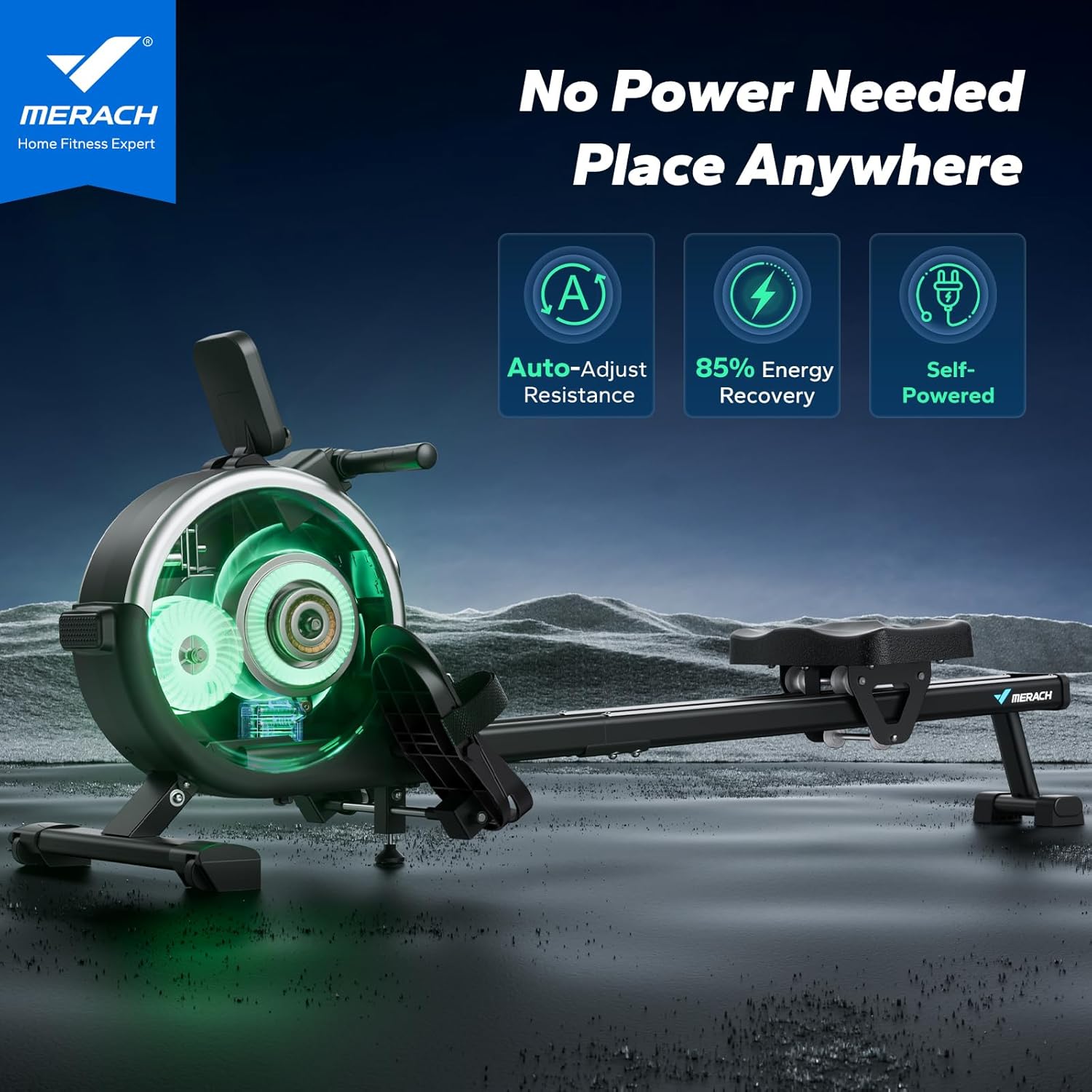
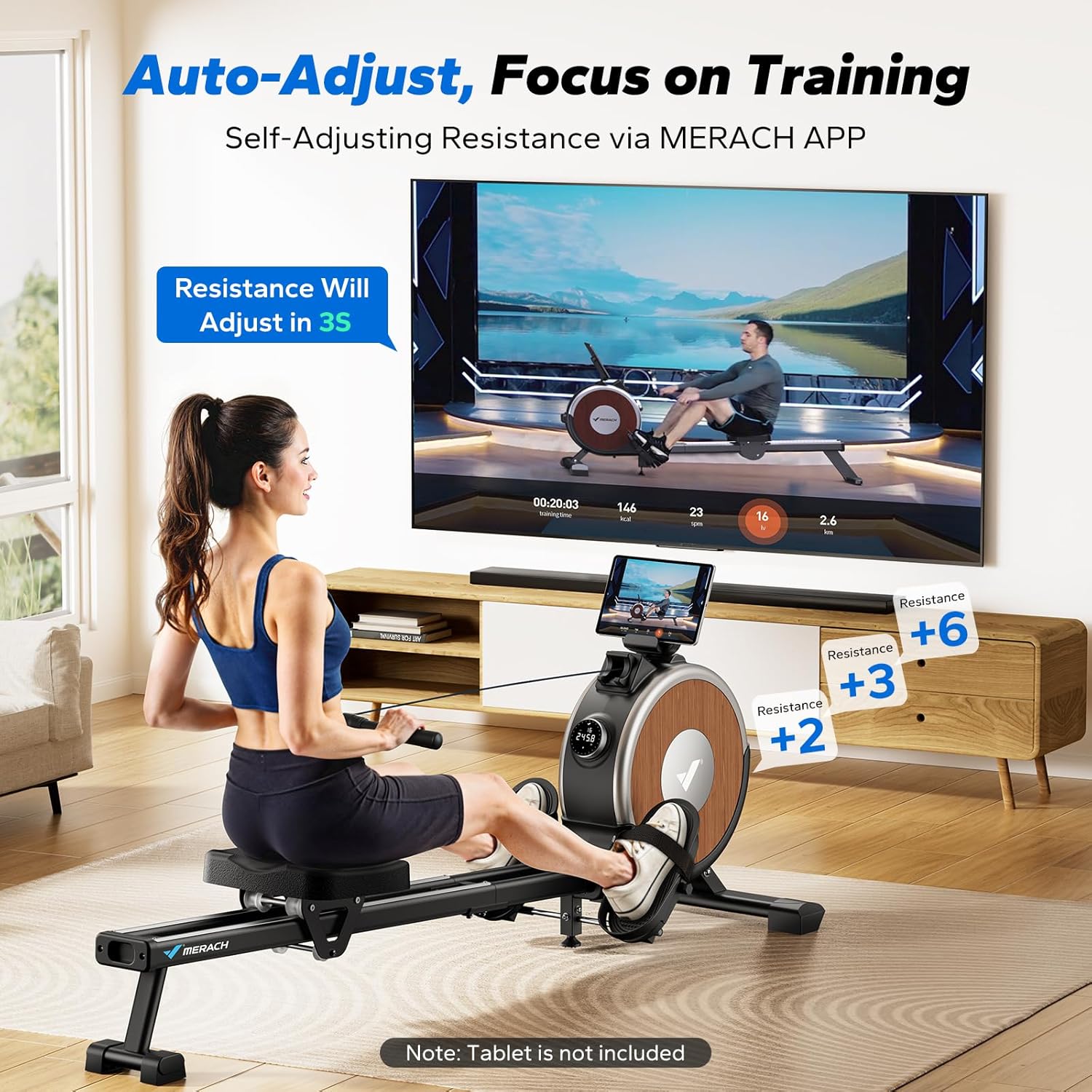
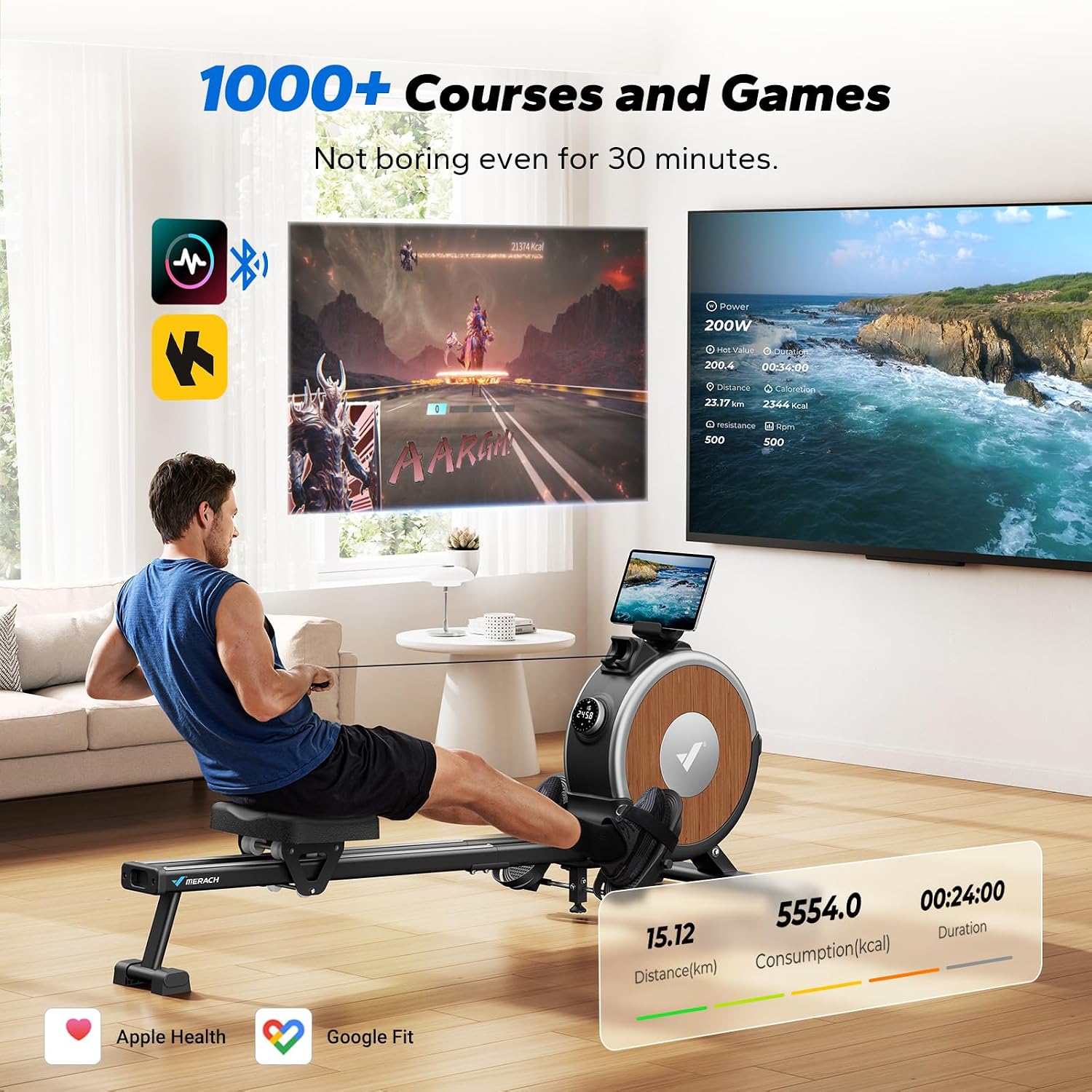
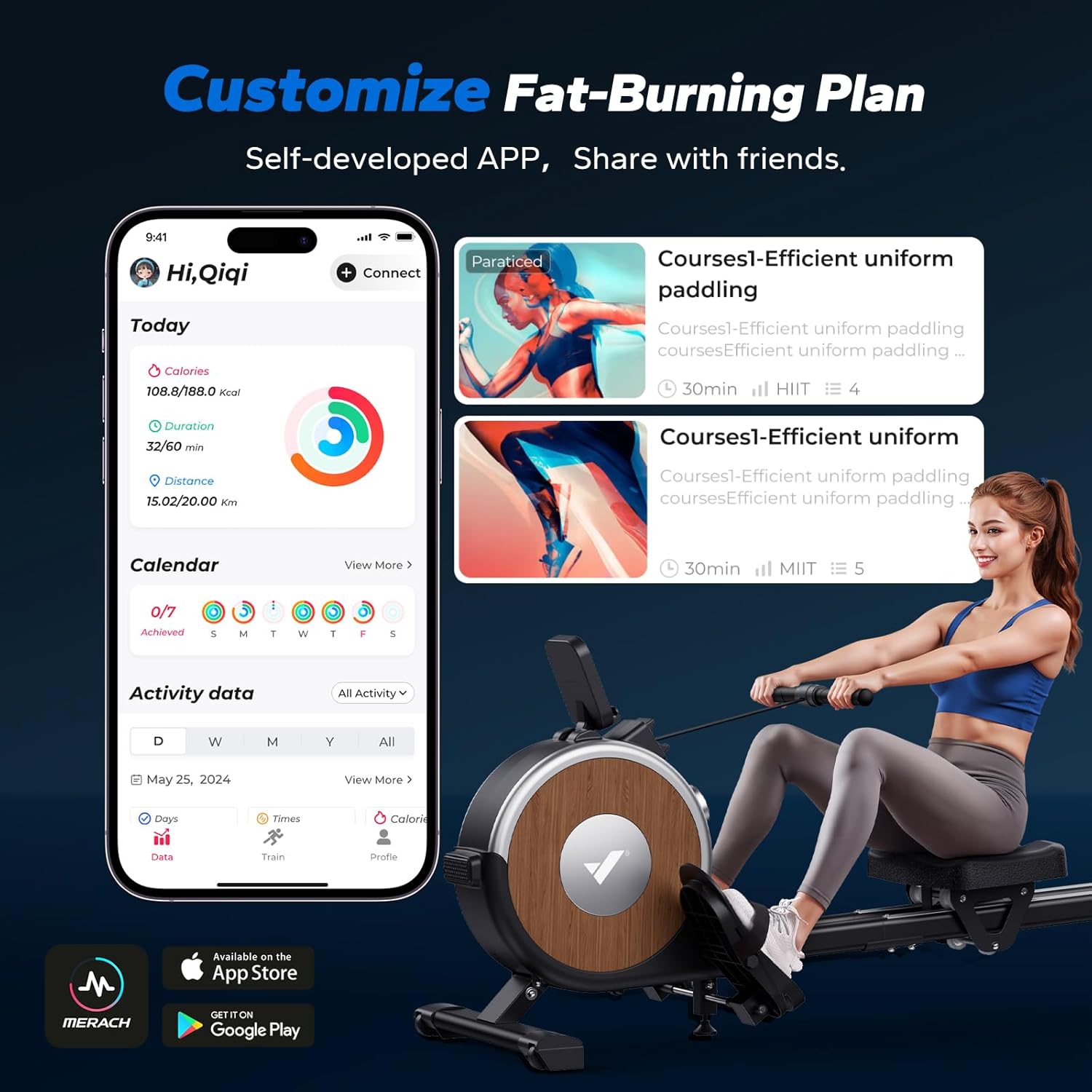
What it is and what it’s for\nThe MERACH Rowing Machine is a magnetic rower designed for home gyms, offering 16 levels of electromagnetic resistance and a compact, stability-focused two-rail design. It aims to deliver a smooth, quiet rowing experience while tracking workout data through a connected app. If you’re after a low‑hassle cardio option that fits a busy home environment, this machine positions itself as an approachable, space‑friendly choice.\n\n## How the resistance works\nThe flywheel is self‑powered and uses magnetic resistance that can be adjusted by a simple twist control, with automatic adjustments available via the MERACH app. This means you can start rowing and let the app guide the resistance and programmed workouts without needing to press extra buttons mid‑session. The system emphasises a stable feel and steady feedback, which can help with pacing and form.\n\n## What stands out in use\nThe dual‑rail track is designed to mimic the smoothness of a traditional wooden rower while improving stability and reducing the risk of wobble during intense strokes. The setup emphasises quiet operation, which is helpful if you’re sharing living spaces or have nearby sleepers. The machine supports a user weight up to 158 kg, widening its potential user base.\n\n## Performance and data at a glance\nWith the MERACH app (and compatibility with Kinomap), you can access a range of courses and programmed workouts. Workout metrics—distance, time, calories burned, speed, cadence, and even heart rate—are visualised in‑app, making it easier to track progress and stay motivated. It’s useful to note that while the app adds depth, core rowing performance remains mechanical, so the benefit hinges on how you engage with the programmes.\n\n## What you gain from the app and connectivity\nApp connectivity can be a compelling reason to choose this model if you value guided sessions and data feedback. Having pre‑set courses removes some guesswork from routine planning. However, if you’re not inclined to use the app, you’ll still have a solid, manual resistance control and a straightforward rowing motion.\n\n## Pros and cons in practice\n- Pros: quiet magnetic flywheel, 16 resistance levels, improved dual‑rail stability, self‑powered operation (no cord needed), easy assembly (about 30 minutes), strong user weight capacity.\n- Cons: benefits from app features depend on whether you actively use the MERACH (or Kinomap) ecosystem, some users may prefer a single‑window rower with fewer connected features.\n\n## Who it’s for\nIf you want a relatively compact, low‑noise cardio option for a home gym and you value structured workouts with data tracking, this model could fit well. It suits people prioritising stability (dual rails) and a straightforward setup. It may appeal to beginners through to intermediate rowers who want guided sessions.\n\n## Who might want to reconsider\nIf you’re seeking a premium, high‑power machine with extremely aggressive resistance, or if you don’t plan to use the app ecosystem, you might find other options more aligned with your priorities. Also, if you have very limited space, measure carefully—the footprint matters even with a foldable‑looking design.\n\n## What to check before buying\n- Confirm space for the machine’s footprint and clearance around the rails.\n- Consider whether you’ll use the app and Kinomap features regularly to justify the connectivity.\n- Verify the assembly steps fit your DIY comfort level, even though it’s marketed as easy to assemble.\n- Check the weight limit (158 kg) against your current needs.\n\n## Practical use example\nImagine finishing a 20‑minute interval workout at level 10, the screen showing steady cadence and distance while the room remains quietly humming in the background. You can switch between programmes or rows without interrupting your flow, making short, focused sessions feasible during a busy day.\n\n## Quick comparison into everyday choices\nCompared with a non‑connected rower, this MERACH model leans into guided routines that may help with consistency for those who prefer a structured plan. If you mainly want a simple, no‑fuss cardio machine, a basic magnetic rower without app integration could feel simpler and lighter on the wallet.\n\n## FAQ (where data supports it)\n- Does it require a power outlet? No, it’s self‑powered via the flywheel.\n- Is the data in the app accurate for progress tracking? The app provides visualised metrics like distance, time, calories, speed, and cadence, real‑world accuracy depends on usage and device pairing.\n- How easy is the assembly? It’s described as easy, with most users completing it within 30 minutes.\n\n## Final decision\nIs it worth it? Worth considering if you value quiet, adjustable resistance and structured workouts with app support, and you have space for dual rails. It may not be the best fit if you prefer a purely mechanical, stand‑alone rower or if app features aren’t a priority. \n\n## Is it worth it? (Bottom line)\nIf the combination of stable handling, quiet operation, and guided workout data aligns with your home‑gym goals, this MERACH model offers a balanced option the everyday user can justify.