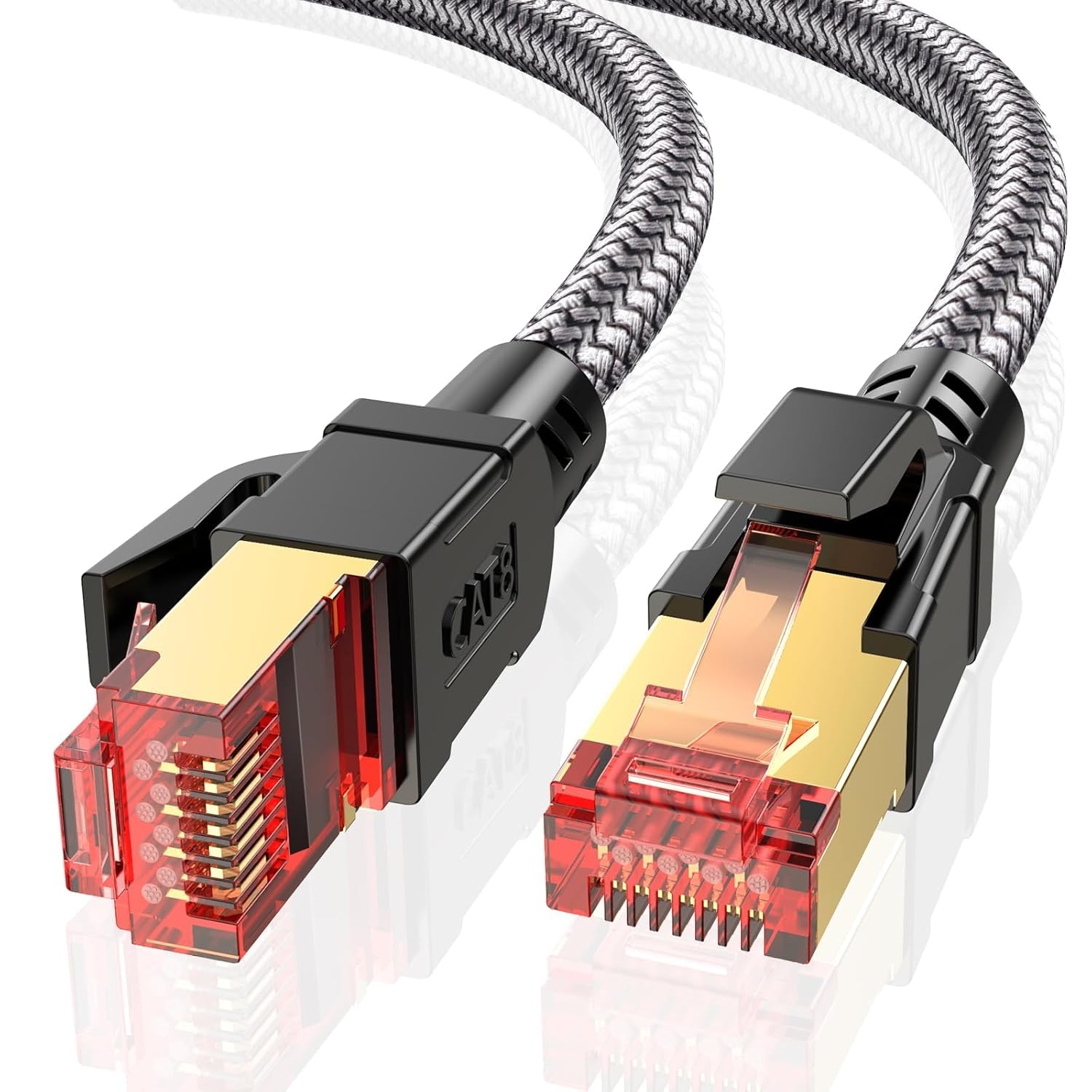
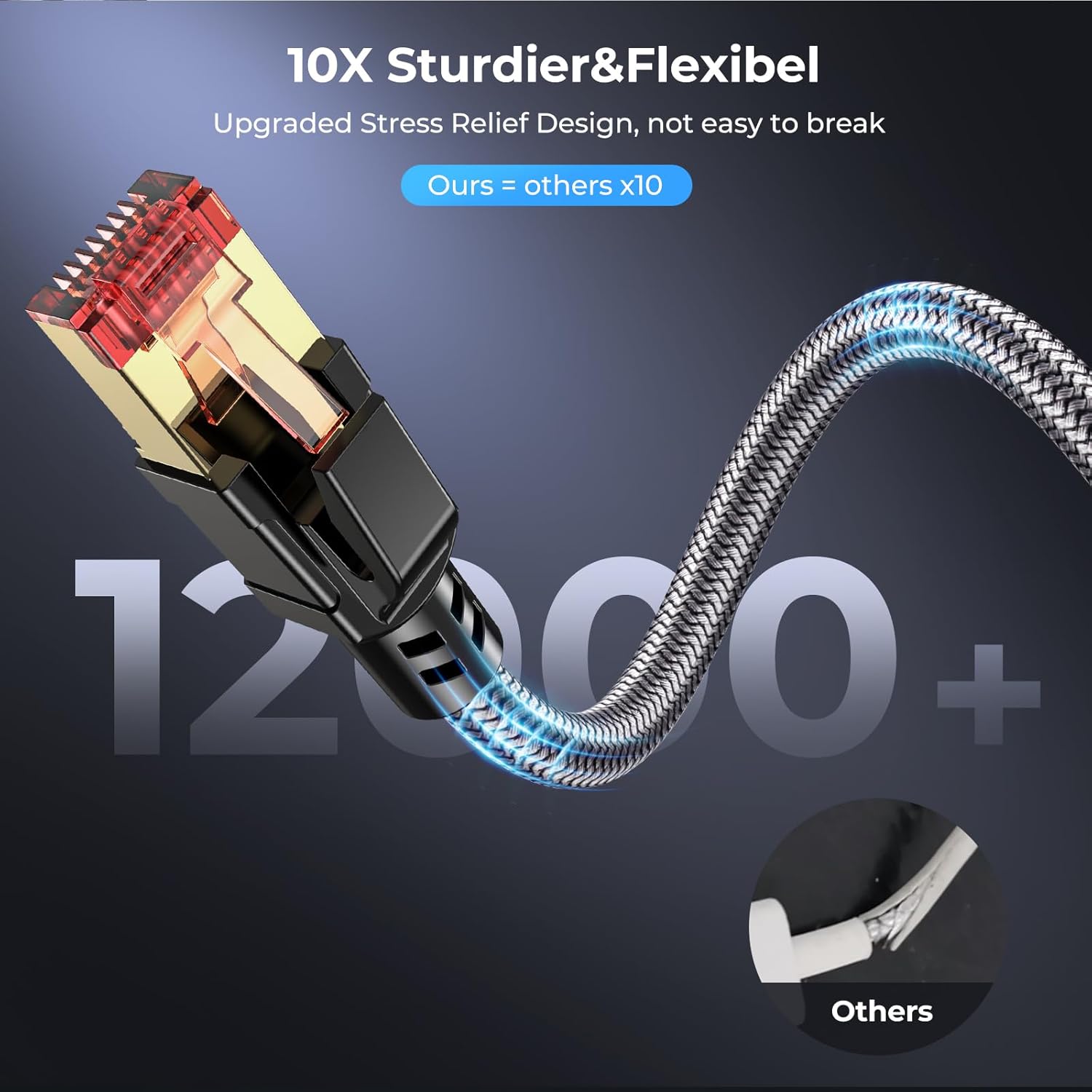
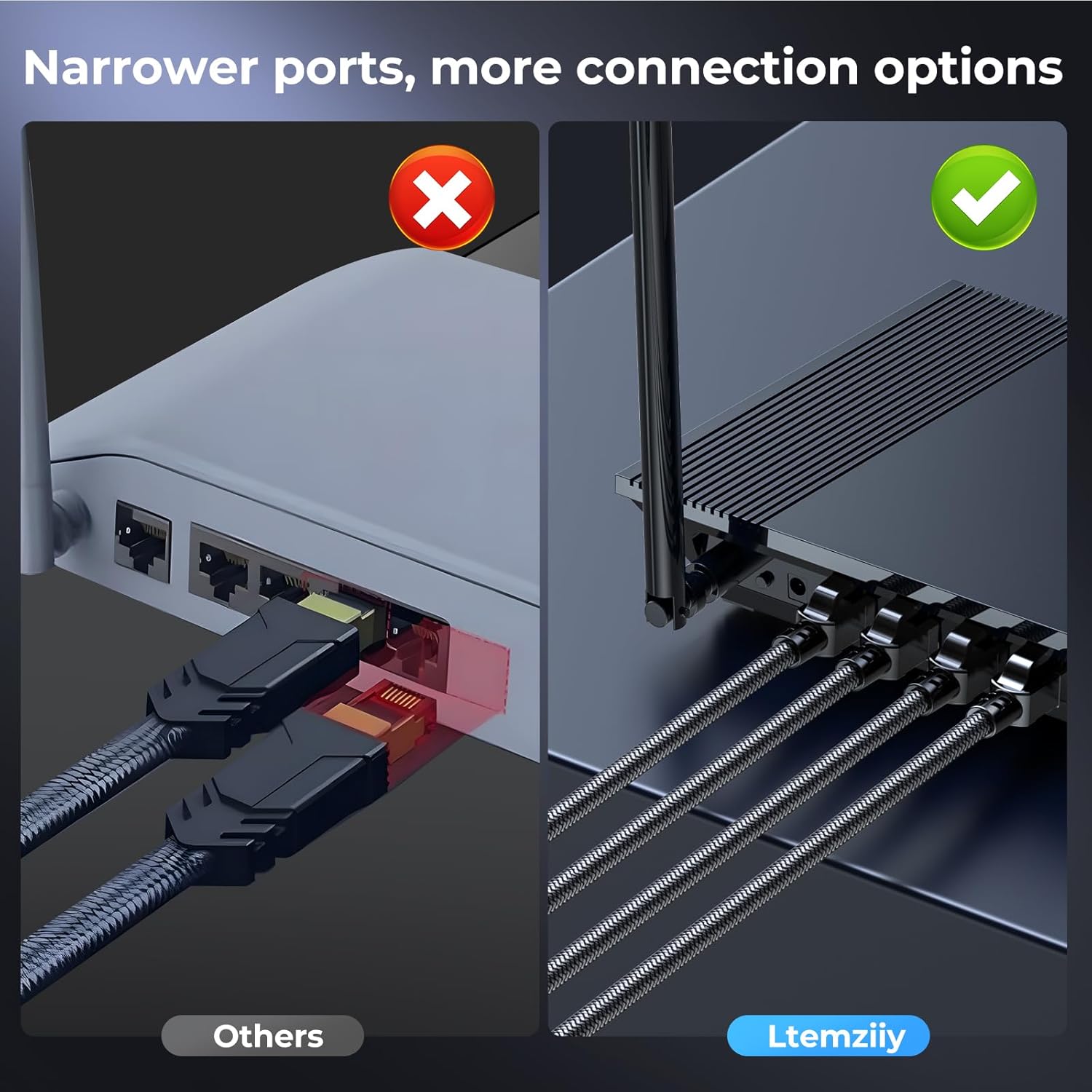
What this is and what it solves\nThe Ltemziiy CAT 8 Ethernet Cable is a high‑speed network patch cable designed to handle demanding home and office setups. At 2 metres in length, it aims to offer a tidy, sturdy connection for devices that need fast, reliable wired networking—from gaming consoles and PCs to network storage and servers. If your priority is reducing lag, improving upload/download consistency, or streaming HD and 4K video with fewer interruptions, this cable presents a candidate worth considering on paper. One practical question to ask: is a 2-metre run the right length for your space, or would a longer option be better?\n\n## Key features in plain language\nThe cable advertises a 40Gbps data rate and up to 2000MHz bandwidth, which on paper supports rapid data movement for high‑throughput tasks. Its outer braid uses 48 strands and is described as stronger than standard braids, with tests suggesting good bend resistance. The connector ends use four shielded twisted pairs (S/FTP) and 50‑micron gold plated contacts, which are intended to minimise interference. This combination aims to keep signals clean in busy environments (think busy home offices with wireless networks and nearby electrical gear). It’s also pitched as backwards compatible with Cat7, Cat6a, Cat6 and Cat5 cables, so it should slot into existing networks without a whole‑scale swap.\n\n## Practical advantages and what to watch for\nOn the upside, the braided design and shielding may help in reducing crosstalk and external interference, which matters if you’re near power lines, metal shelving or multiple network devices. The claimed outdoor‑readiness—resilience to sun, cold and humidity—could translate into a longer service life in non‑perfect installation spots. However, there’s no explicit performance data here beyond the general spec, in real‑world terms, factors like your router, switch capabilities, and environment will influence actual speeds. A potential limitation is that Cat 8 cabling, while capable of very high theoretical speeds, may be overkill for many home setups where devices, not cables, cap performance.\n\n## Who this is for\nThis cable targets users who want a robust wired backbone for demanding tasks: online gaming with low latency, fast file transfers to NAS, and stable HD/4K streaming from a central media server. It also suits small offices or smart home hubs that demand reliable, shielded connections. If your network gear only supports up to Cat6a or Cat7, this cable will still work but you may not realise the full 40Gbps potential.\n\n## Who it isn’t ideal for\nIf you mainly need simple broadband browsing or light streaming, this may be more than you require. It’s also less compelling if your current network hardware isn’t capable of sustained multi‑Gbps throughput or if you need a longer reach than 2 metres without joining segments. The absence of detailed real‑world test results means you should temper expectations about performance gains in typical setups.\n\n## When it makes sense to buy\nChoose this when you’re building a high‑speed, low‑latency network core—for example, pairing a gaming PC or server with a capable switch and a fast internet connection. It can be a sensible upgrade in environments with many interference sources or where cable robustness matters, such as direct outdoor installations or ground burial (as claimed). If your setup uses mostly wireless or standard Cat5/6 cabling, you may not see a dramatic improvement.\n\n## What to check before buying\n- Length: 2 metres suits many desks and home offices, but measure to avoid excess slack or too tight routing.\n- Compatibility: RJ45 ends and Cat8 claims mean it should operate with devices that support RJ45 networking, verify your router, modem or switch can leverage higher speeds.\n- Environment: while the cable claims outdoor resilience, ensure it matches your actual installation conditions and weather exposure.\n- Realistic expectations: 40Gbps peak speeds require compatible equipment and real network conditions, practical gains depend on the weakest link in the chain.\n\n## How it compares to other approaches\nIn practice, many users opt for shorter, well‑shielded Cat6a/Cat7 cables for typical home use, which are sufficient for most gaming and streaming needs. The CAT 8 option shines where long runs would bottleneck a fast LAN or where the internal network gear is designed to exploit multi‑gigabit links. If you prioritise simplicity and proven compatibility with standard home setups, a lower category might be more economical, if you prioritise future‑proofing and peak performance under load, this CAT 8 cable is worth a closer look.\n\n## FAQ (practical answers you can use)\n- Q: Will this cable double as a general replacement for my current cat5e/6 setup? A: Yes, it will work, but you may not notice a speed boost unless your other equipment supports higher speeds.\n- Q: Is 2 metres long enough for a typical desk setup? A: For many setups, yes, measure to be sure you won’t have slack or tension.\n- Q: Can it be buried or used outdoors? A: The description mentions suitability for tough conditions, confirm installation needs and any local guidelines.\n- Q: Do I need a Cat 8 port on all devices to use it at full speed? A: The full speed requires compatible hardware—router, switch and NICs that support multi‑gigabit rates.\n\n## Is it worth it?\nWorth considering if you’re building or upgrading a high‑speed LAN with devices and equipment that can take advantage of higher bandwidth and robust shielding. If your current network is mostly consumer‑grade and your devices don’t exceed Cat6a capabilities, the incremental benefit may be modest. It’s more about future‑proofing and reliability under heavy use than about a daily speed bump for typical web surfing.