

LOTMOS 72 LED Solar Landscape Spotlights (3 Modes) — IP67 outdoor garden wall & pathway lights
Product description
The essentials
If you want low-effort outdoor lighting, solar spotlights like the LOTMOS 72 LED set are designed to do the hard work for you: charge during the day, then automatically switch on at nightfall thanks to a built-in light sensor. The appeal here is fairly straightforward—no wiring, and a lighting pattern meant for gardens, paths and outdoor walls.
On paper, these are positioned as a mid-range solar option that leans into runtime and weather protection rather than pure brightness claims. You’ll see a lot of solar lights promise “bright”, but this one is at least explicit about how long it’s expected to run in different brightness modes, which makes it easier to judge whether it fits your nights.
What matters in everyday use
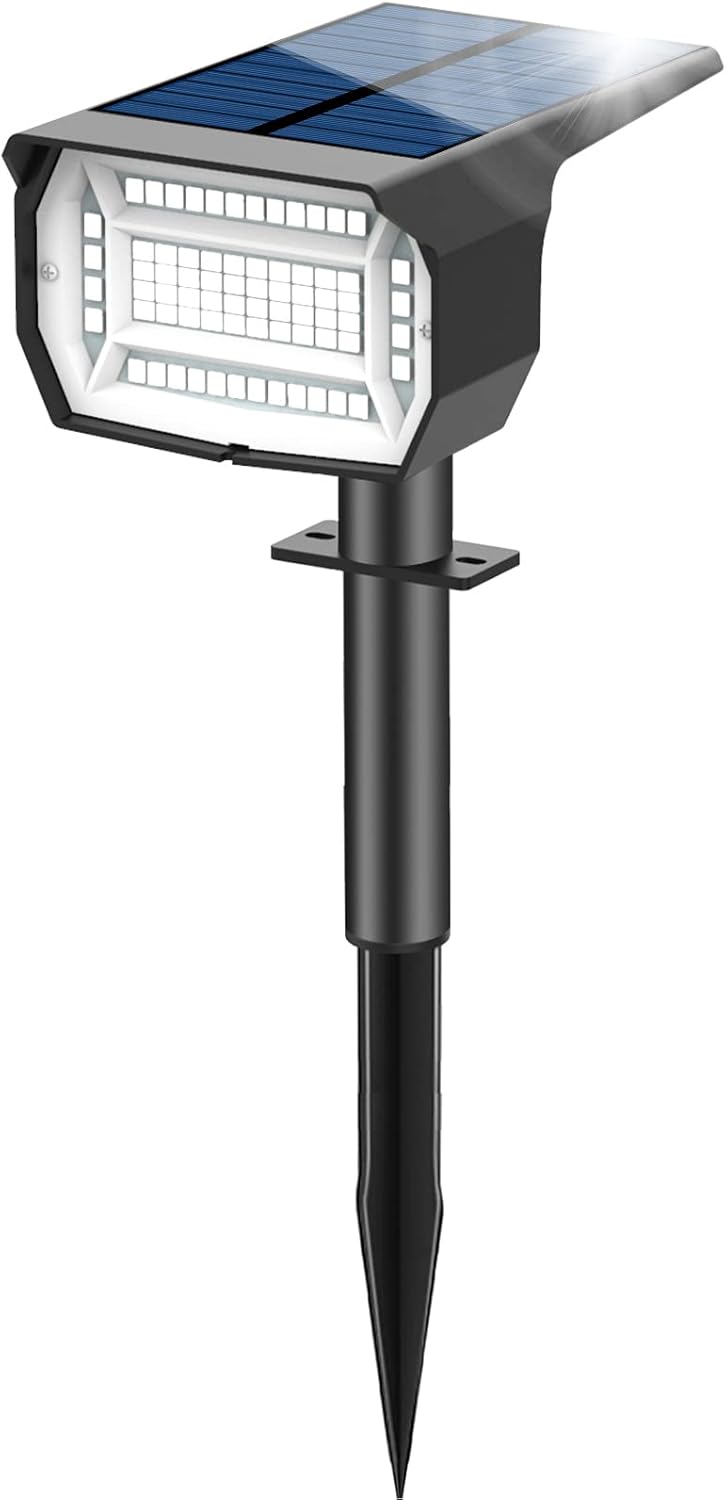
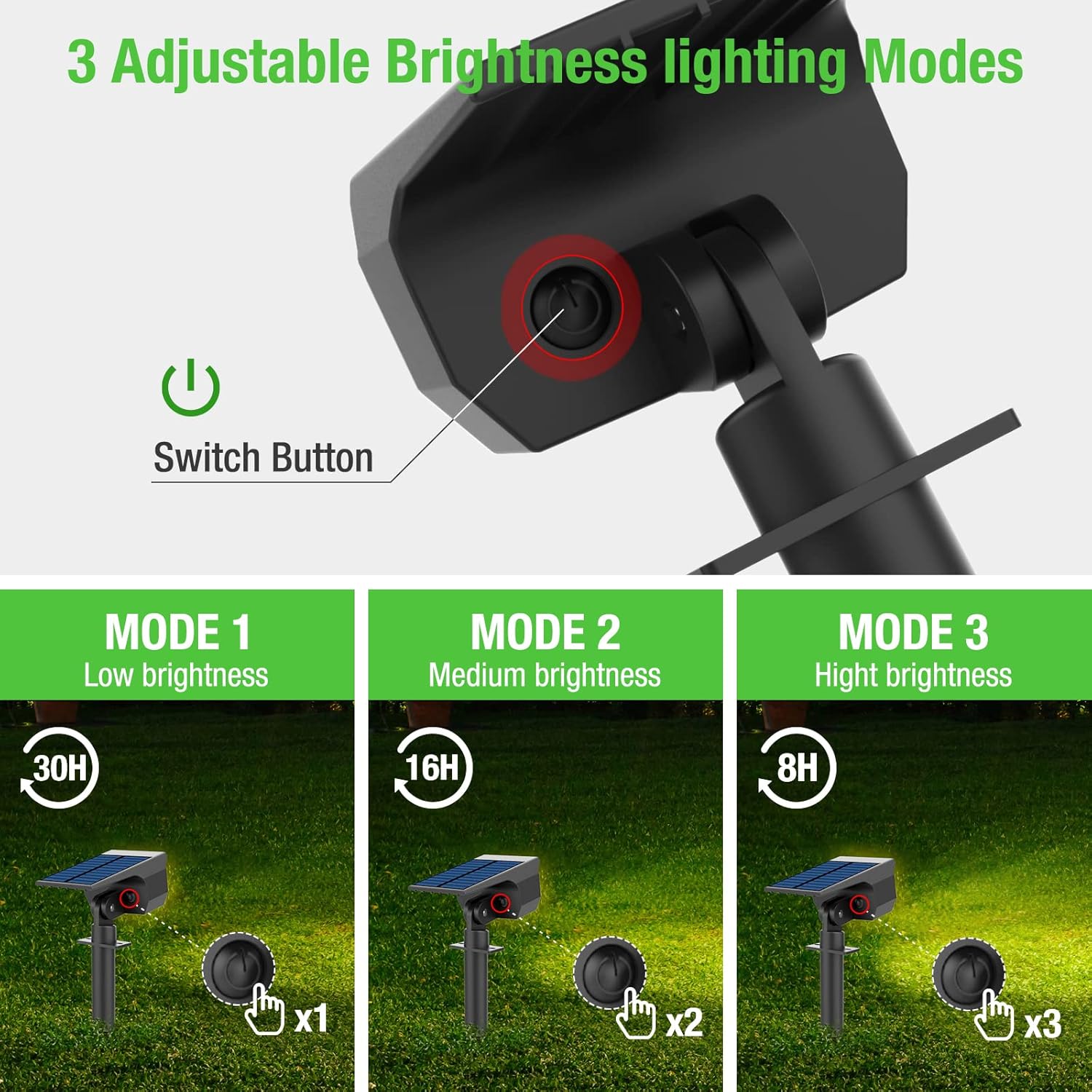
This model comes with three brightness modes (low, medium, high). The practical benefit is that you’re not locked into one level of light. If you’re using the lights mainly for visibility around a path or driveway, you may prefer a longer low-light runtime. If you’re hosting outside and want stronger illumination for shorter periods, you can switch to a higher mode.
There’s also a charging/runtime angle to consider: it’s stated that performance depends on sufficient direct sunlight. That means in UK gardens with partial shade, dense trees, or walls that don’t get consistent sun, the real-world runtime may vary. It’s not a deal-breaker, but it’s worth thinking about where you’ll install them before expecting “set and forget” performance.
A quick micro-scenario: imagine placing a couple of these along a front walkway. In the evening, they should come on automatically. If you set low mode for most nights, you’re choosing longer-lasting ambience. If you switch to high for a weekend evening, you’re trading some runtime to get a stronger light effect.
Key takeaways
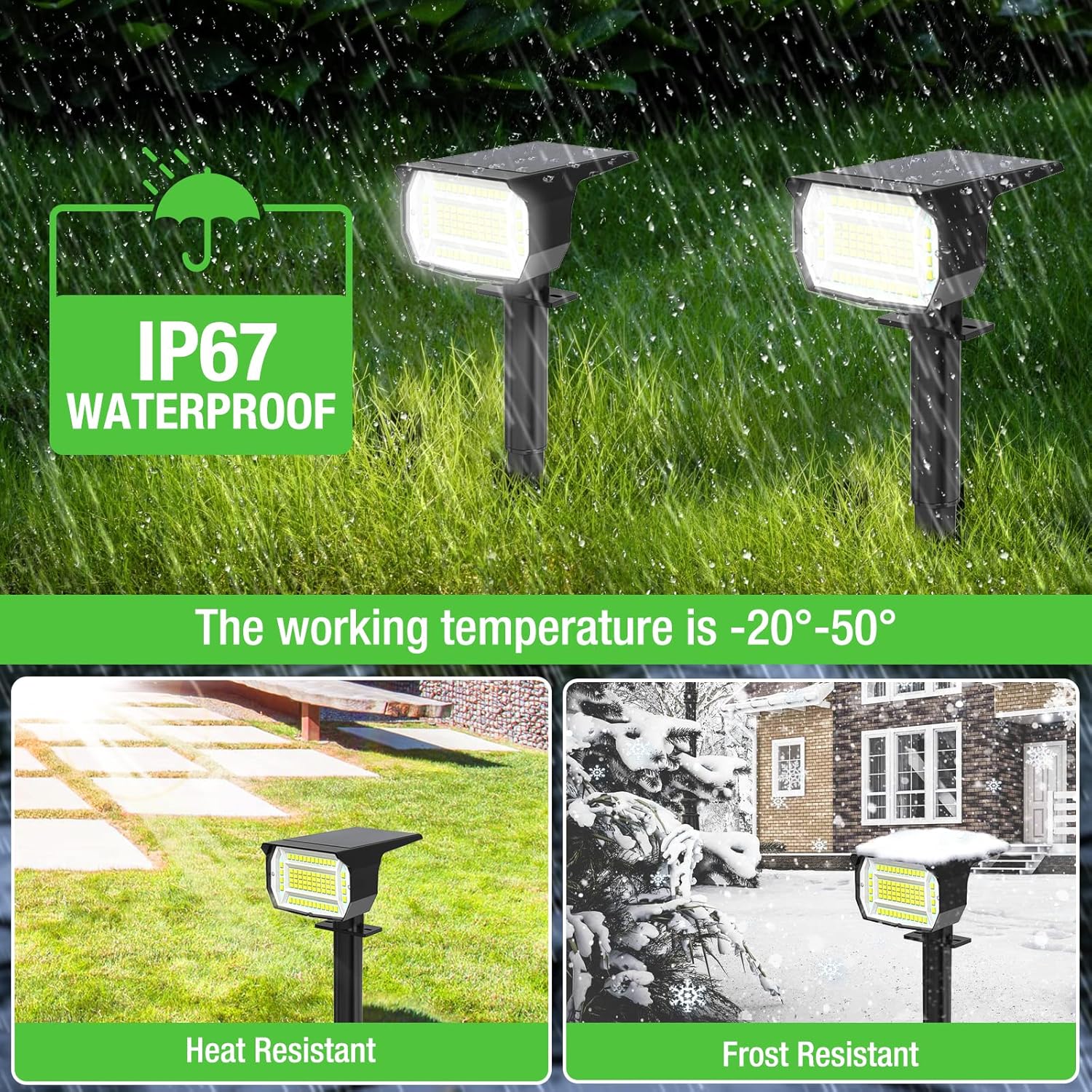
The standout features are durability and weather-readiness. The housing is ABS high-strength material with an IP67 waterproof rating, and it’s also described as frostproof/weatherproof for temperatures from -20°C to 50°C. There’s even an anti-fog design intended to reduce lens fogging, which is a common annoyance in outdoor lighting.
It also uses polycrystalline silicon solar panels, with an energy conversion rate stated as 20%. That kind of figure can be hard to verify without independent testing, but it does suggest the manufacturer is trying to push the charging efficiency rather than relying purely on marketing.
One limitation to keep in mind: runtime is given as ranges tied to “sufficient direct sunlight”, and brightness affects duration. If you need consistently bright light all night long, solar may still feel like a compromise compared with wired outdoor lighting.
Tech summary
- Name: LOTMOS 72 LED Solar Landscape Spotlights
- Type: Solar outdoor landscape spotlights / garden wall lights
- Colour: Not specified
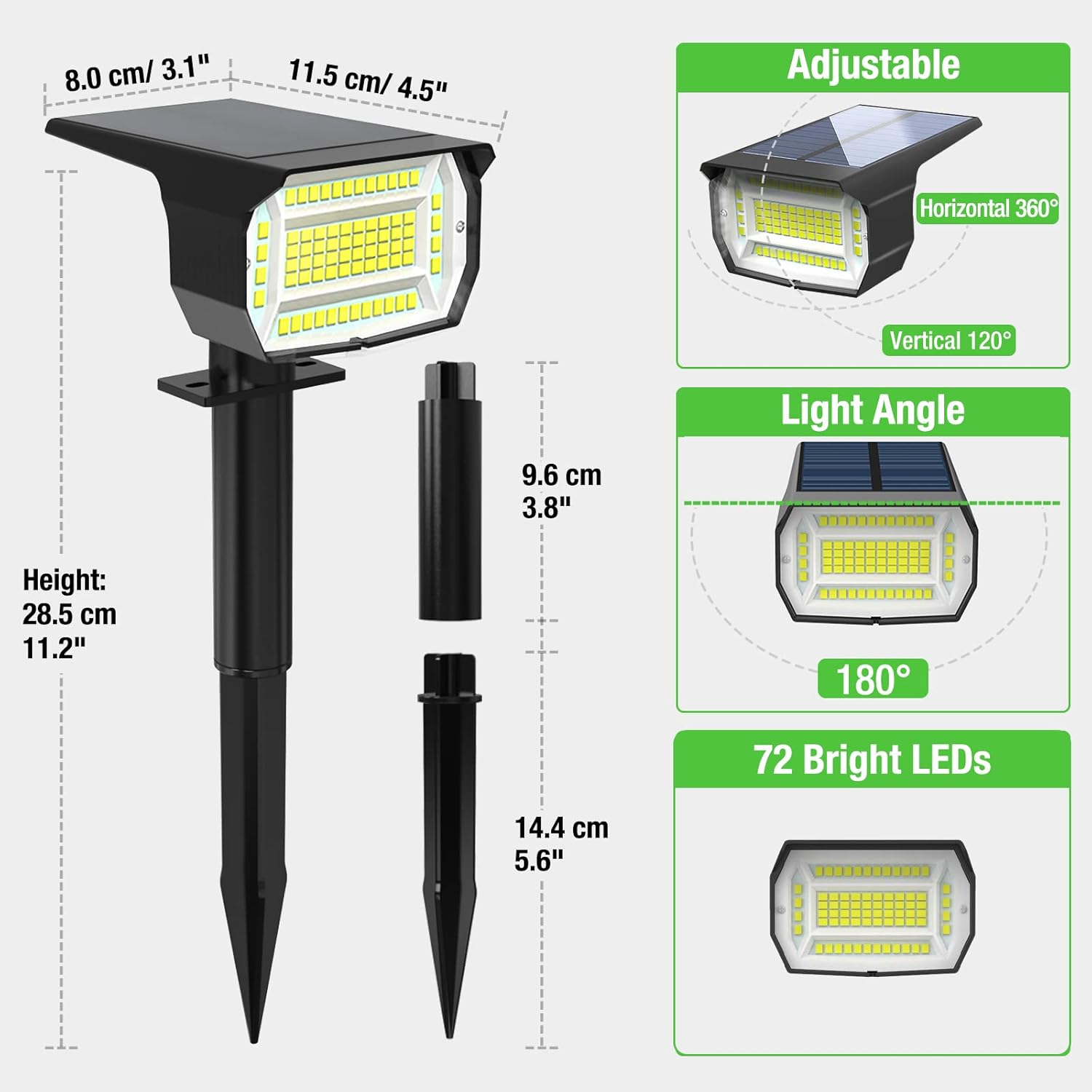
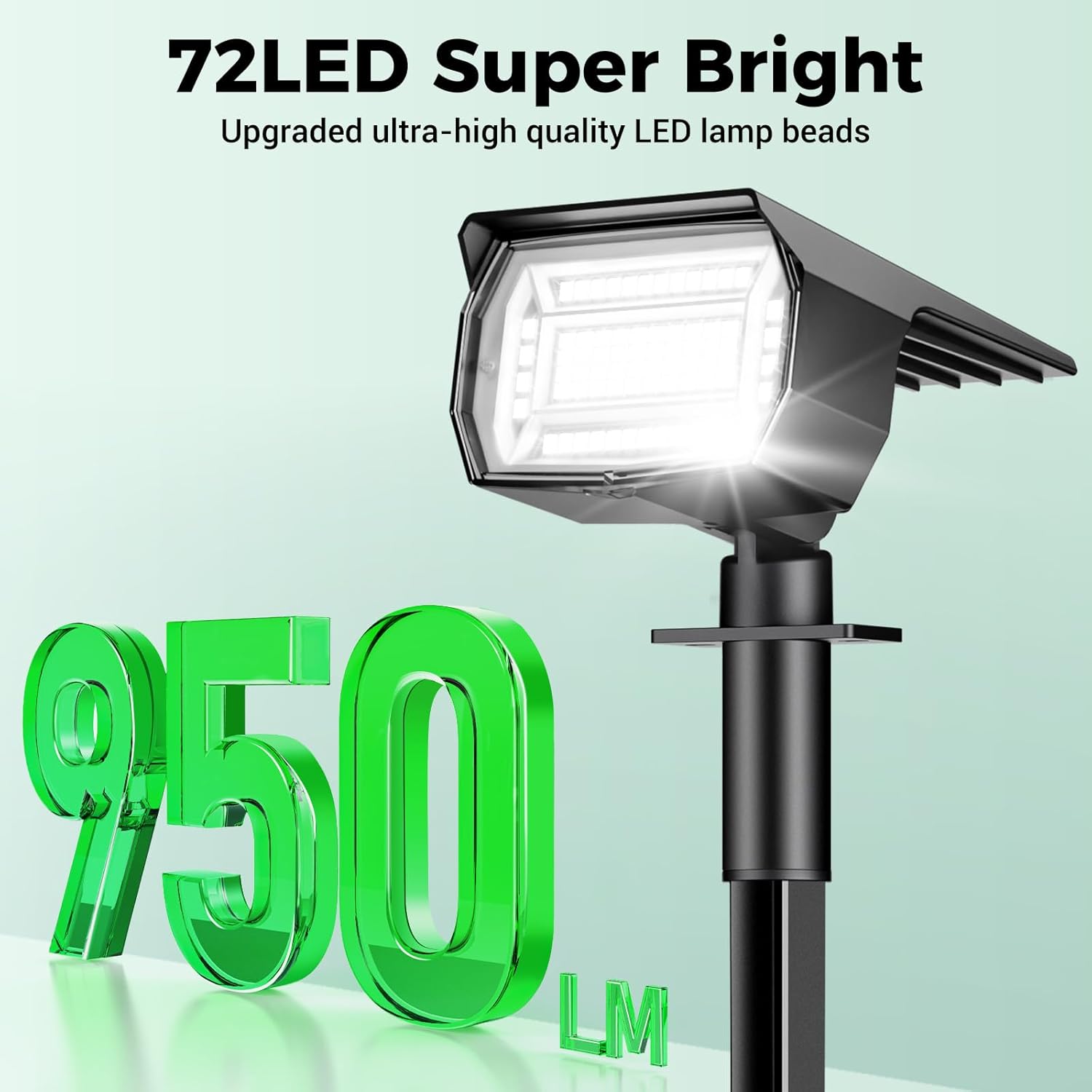
- LED count: 72 LEDs
- Battery capacity: 1500mAh
- Runtime (under sufficient direct sunlight): up to 8–30 hours depending on brightness mode
- Brightness modes: 3 modes (low, medium, high)
- Charging/charging requirement: place in direct sunlight to charge
- Waterproof rating: IP67
- Operating temperature range: -20°C to 50°C
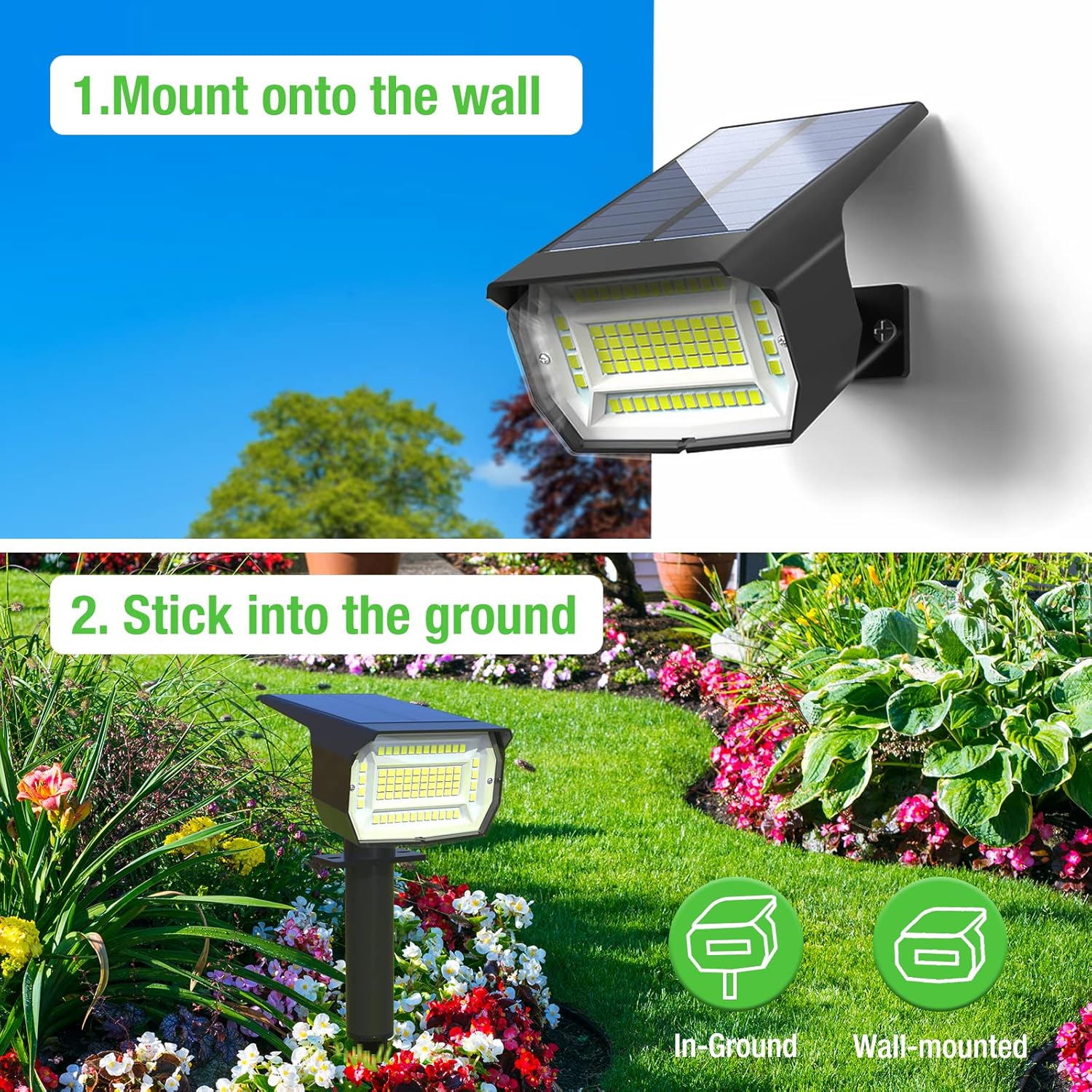
- Installation: uses ground stakes or can be mounted on a wall (2-in-1 installation)
Where it shines, and where it may not
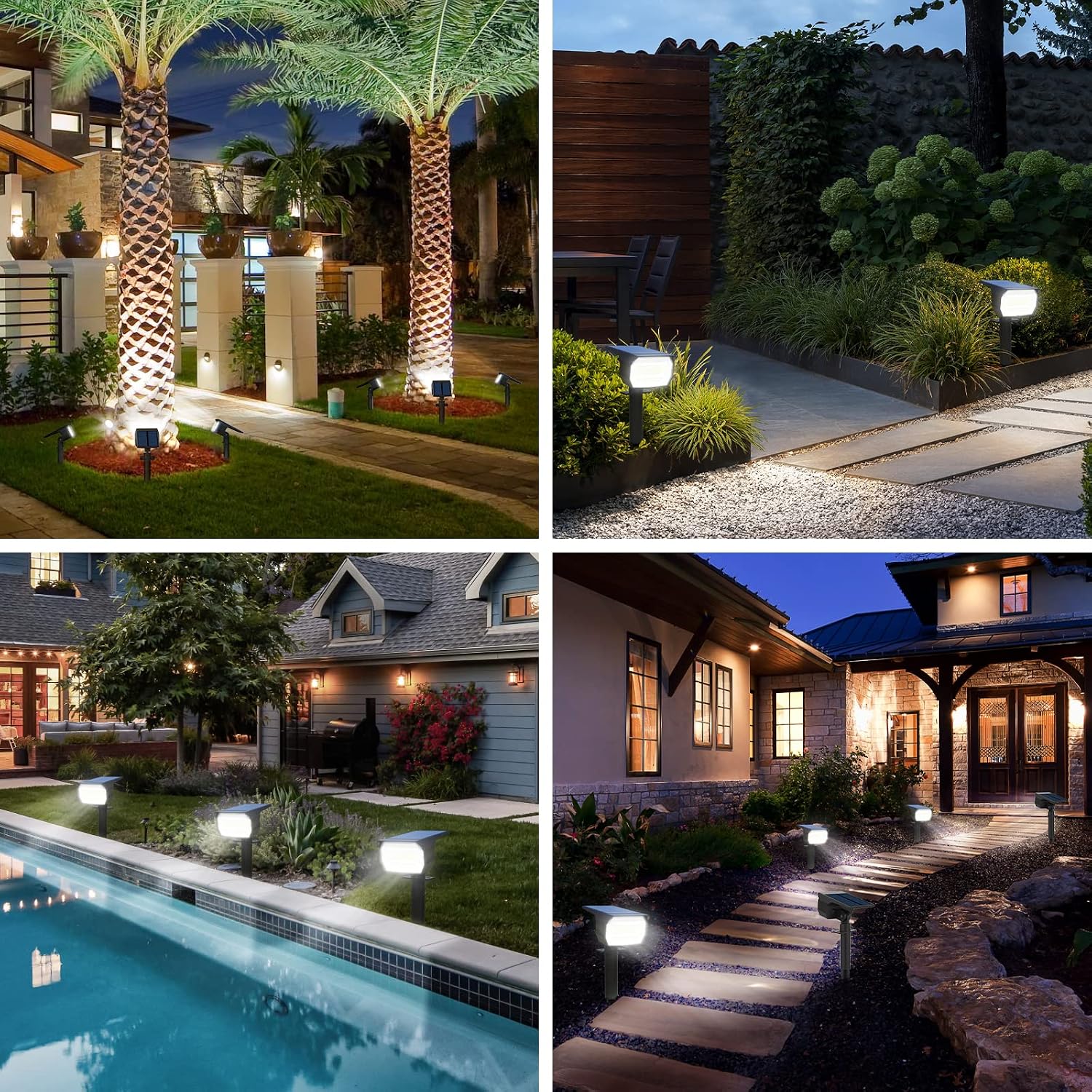
These are a strong fit if you want outdoor lighting for features like pathways, driveways, garden walls, or general yard decoration, and you’d rather avoid running cables. They’re also a sensible choice if you’re happy to adjust brightness mode based on season—dimming for longer evenings and boosting light when you need it.
It may not suit you as well if your installation spot doesn’t regularly receive direct sun, or if you’re expecting near-wired brightness for many hours. Solar lights tend to be most convincing when you can place them where they charge well.
Quick check before you buy
Before committing, think about three practical points. First, plan placement for direct sunlight charging (not just “some daylight”). Second, check whether you’re happy with three brightness levels and the corresponding runtime trade-off. Third, if you’re mounting them to a wall, make sure you’re comfortable with the 2-in-1 setup approach described (wall mounting or ground stakes).
If you live in a particularly windy or rain-heavy area, the IP67 rating and ABS shell are reassuring on paper, and it should hold up better than very lightweight solar units.
Is it worth it?
Buy it if you want solar landscape spotlights with automatic dusk-to-dawn switching, a clear multi-mode runtime plan, and protection that’s explicitly geared towards outdoor weather. It’s especially worth considering for paths, driveway edges and garden wall accents where you don’t want to run wiring.
Skip it (or at least reconsider) if your chosen spots won’t get reliable direct sunlight, or if you need strong illumination for the entire night without switching modes. In those cases, solar can feel a bit too variable compared with wired alternatives.
FAQ
How do these lights know when to turn on?
They use a light sensor system to switch on at nightfall and off in the morning.
Do they need direct sunlight to charge?
Yes. The guidance is to place the solar garden lights in direct sunlight to charge.
Are they suitable for wet weather?
They’re rated IP67 and described as waterproof, frostproof and weatherproof, with an operating range stated as -20°C to 50°C.
Can they be installed on the ground or mounted to a wall?
Yes. The setup is described as 2-in-1: you can use the ground stakes or nail/mount them on a wall as wall lights.
Will the brightness stay the same all night?
The output depends on the selected brightness mode, and the runtime changes accordingly. It’s not presented as a constant-output system across the whole night.