





Long Type 2 EV Charging Cable (3 Phase) – Waterproof 15m & 20m, 20m 11kW, CE/TÜV/UKCA Certified
Product description
A long Type 2 charging cable can be the difference between “I can park anywhere” and “I’ve got to shuffle the car into the one spot near the post”. This 3 phase EV cable is designed for that kind of practical flexibility, with a waterproof P67-rated build and sealed connectors intended to cope with dust, water and general road grime.
On paper, it’s pitched at regular home or public charging where you’d rather not be limited by cable reach. Just be aware that longer lengths usually mean you’re committing to a bigger, bulkier cable to store and manage.
What it is and what it’s for
This is a Type 2 EV charging cable for connecting an EV to a compatible charging station. The listing positions it around fast, efficient charging with a 3 phase connection, aimed at people who need more reach than a standard short lead. Length options are mentioned for 5m, 10m, 15m and 20m, and the product specifically notes a 20m 11kW version.
A small “day to day” example: if your home wallbox or street charger is slightly off-centre from your driveway parking line, a 15m or 20m cable can let you pull into a more natural parking spot while still reaching the charging point. That’s the sort of inconvenience this is trying to remove.
The essentials: reach, power support and charging behaviour
The standout for many buyers is the long cable length. If your charge point is not aligned with the usual parking position, extra length gives you options without needing to reposition your car every time.
In terms of charging performance, the description states it supports up to 32A, 3 phase 22kW charging, with an “up to 50%” reduction in charging times mentioned versus some baseline. However, the listing also includes a 20m 11kW variant, so real-world charging speed will still depend on what your EV and charging point can supply. If you’re shopping specifically for maximum speed, it’s worth double-checking the exact kit/variant you’re buying and what your charger and vehicle support.
Why the cable design matters (durability and weathering)
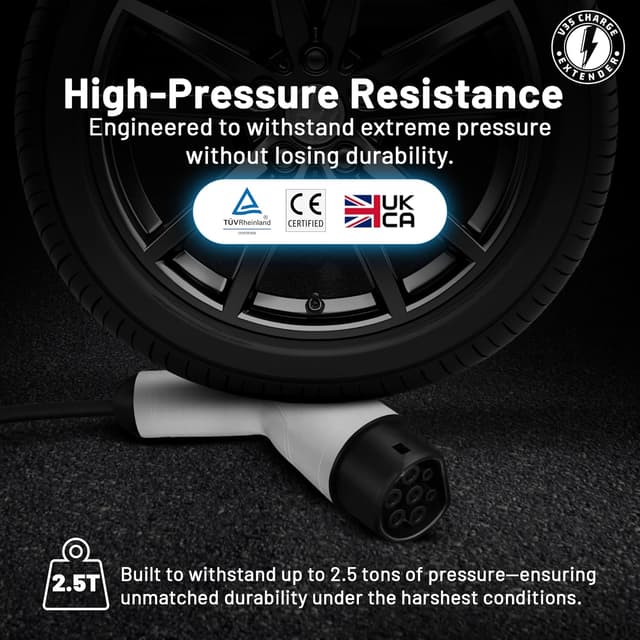
This cable is described as driveable, crush-resistant and high-pressure resistant (up to 2.5 tons), which is useful if the cable may be run across driveways or through spaces where tyres or foot traffic might accidentally press it.
It’s also described as heat resistant, with P67-rated waterproof construction and sealed connectors intended to prevent dust, water and debris getting into the connection points. In real life, that kind of sealing matters most when you’re charging in damp conditions or you need the cable to survive being stored and transported between locations.
That said, “driveable” and “crush-resistant” don’t remove the need for basic care. Try not to deliberately run it in ways that would repeatedly trap it under weight or kink it around edges.
Safety and compliance: what you can take from the certifications
The product is stated to be CE-, TÜV- and UKCA-certified, with mention of strict testing for electrical safety, EMC protection and environmental resilience. For most buyers, that’s the reassurance you’re looking for: the cable isn’t just “a lead”, it’s been built and assessed against recognised standards.
Do note a practical limitation: certifications and test claims don’t replace checking that you’re using the correct Type 2 connection and that your charging station is compatible.
Tech specs (as stated in the listing)
- Type: Type 2 EV charging cable
- 3 phase charging support
- Capacity/charging support: up to 32A
- Power: 22kW supported (with a noted 20m 11kW variant)
- Waterproof rating: P67
- Certifications: CE, TUV, UKCA
- Lengths mentioned: 5m, 10m, 15m, 20m
Where it shines vs where it may fall short
This is a strong choice if you regularly struggle with cable reach, want a weather-ready cable, and value a sealed connector design for outdoor charging. The inclusion of a storage bag and the “tangle-free” cable plus ergonomic handles also points to a focus on everyday handling rather than leaving the cable coiled in a garage all year.
It may not suit you if you only charge from a very close point. In that situation, a shorter lead is usually easier to store and handle. Also, if your goal is consistently the highest possible charging power, you’ll want to align the cable’s stated charging support with your EV and station capabilities—because the listing itself mentions both 22kW support and a 20m 11kW version.
Pros
- Long-length options (including 15m and 20m) for parking flexibility
- P67-rated waterproof construction and sealed connectors
- Stated 3 phase support with up to 32A and 22kW charging support (plus a noted 20m 11kW version)
- CE, TUV and UKCA certification mentioned
- Driveable, crush-resistant design claim, plus heat resistance
- Comes with a storage bag for easier transport
When it’s worth buying (and when to skip)
Worth buying if you need extra reach, plan to charge outdoors, and prefer a cable that’s designed to cope with weather and rougher handling.
Better avoided if your charging point is right next to where you park every time, or if you’re chasing a specific charging rate and can’t match the cable/variant to your EV and charger’s real support.
If you’re undecided, it helps to check three things before you commit: the exact length/variant you’re selecting (15m vs 20m, and the 20m 11kW mention), your vehicle’s Type 2 charging capabilities, and what your charging station can actually deliver.
¿Merece la pena?
For people who need more cable reach and want something built for damp, outdoor use, this cable looks like it’s aimed at practical, repeatable charging rather than occasional use. The certifications (CE, TÜV, UKCA) and the P67 waterproof claim add weight, and the storage bag plus ergonomic handles make it easier to live with.
The catch is simple: if you don’t need long reach, you’re carrying extra cable for no benefit. And if you’re relying on “fast charge” speed, you still have to match expectations to your charging station and the stated power details of the specific length/variant.
Quick FAQ
Is this Type 2 cable compatible with all EVs?
The listing says it supports every type 2 EV, but in practice compatibility still depends on your car and the charging station both using the Type 2 standard.
How waterproof is it?
It’s described as P67-rated waterproof, with sealed connectors intended to keep dust, water and debris out.
Can the cable be used outdoors?
Yes, the waterproof construction and sealed connectors are specifically intended for environmental resilience, including outdoor conditions.
What length should I choose, 15m or 20m?
Choose based on how far your car needs to sit from the charging point. Longer lengths give more parking flexibility, but they’re also heavier and more awkward to store.
Does it always charge at 22kW?
The description mentions up to 22kW support with 3 phase and 32A, but it also references a 20m 11kW variant. Real charging output depends on your EV and the station’s capabilities.