

Linsoul ZiiGaat Horizon In-Ear Monitor (IEM) wired earbuds with 1DD+2BA+2 planar drivers
Reviews
Price
Product description
The essentials
If you’re shopping for a wired in-ear monitor that aims for studio-style realism, the Linsoul ZiiGaat Horizon is built around a specific idea: extend the treble in a smoother, more natural way than many IEMs manage. On paper, that “buttery-smooth treble extension” approach is the headline, backed by a driver layout that mixes one 10 mm biodynamic woofer with balanced armature mids and planar tweeters for ultra-high frequencies.
It’s the sort of tuning that tends to appeal to musicians and audiophiles who care about texture and air, not just loudness. That said, it’s not an all-purpose pick if you want something strictly laid-back and forgiving in the treble all the time—this model is designed to let detail through, and your source and tips still matter.
What you’ll notice in listening
The Horizon’s tuning philosophy is described as “natural and balanced,” with a smoother transition across the spectrum. Bass is positioned as punchy and engaging, while the roll-off is said to be softer—so lower-mid guitar presence should stay more present rather than disappearing under a sudden drop.
For the midrange, the claim is that it stays smooth with an “analogue texture,” helped by two Knowles balanced armatures with a custom port. In practical terms, that’s the kind of voicing you’d listen for when vocals sit naturally in the mix and instruments don’t feel overly etched.
The most distinctive part is the treble behaviour. The manufacturer states an almost linear extension from 10 kHz to 40 kHz, with deviation not exceeding 4 dB across that band. The intent is to reduce the usual issues—hardness, sharp peaks, and that “spitty” quality that can make brighter IEMs feel fatiguing.
Driver setup and why it matters

This is a multi-driver design: 1 dynamic driver (biodynamic, 10 mm) for low end, plus 2 balanced armature drivers for the midrange, and 2 planar drivers dedicated to the upper end. The planar units are positioned as the mechanism for extending upper treble effectively—up to a stated 40 kHz.
You don’t need to obsess over the engineering to benefit from the concept. The point is that the Horizon is trying to cover different parts of the frequency range with different driver behaviours, rather than forcing one driver type to do everything.
One limitation to keep in mind: while the specification targets very high frequencies, how “impressive” that sounds will depend on your music, your ears, and especially your ear tips and fit.
Design, build quality, and day-to-day practicality

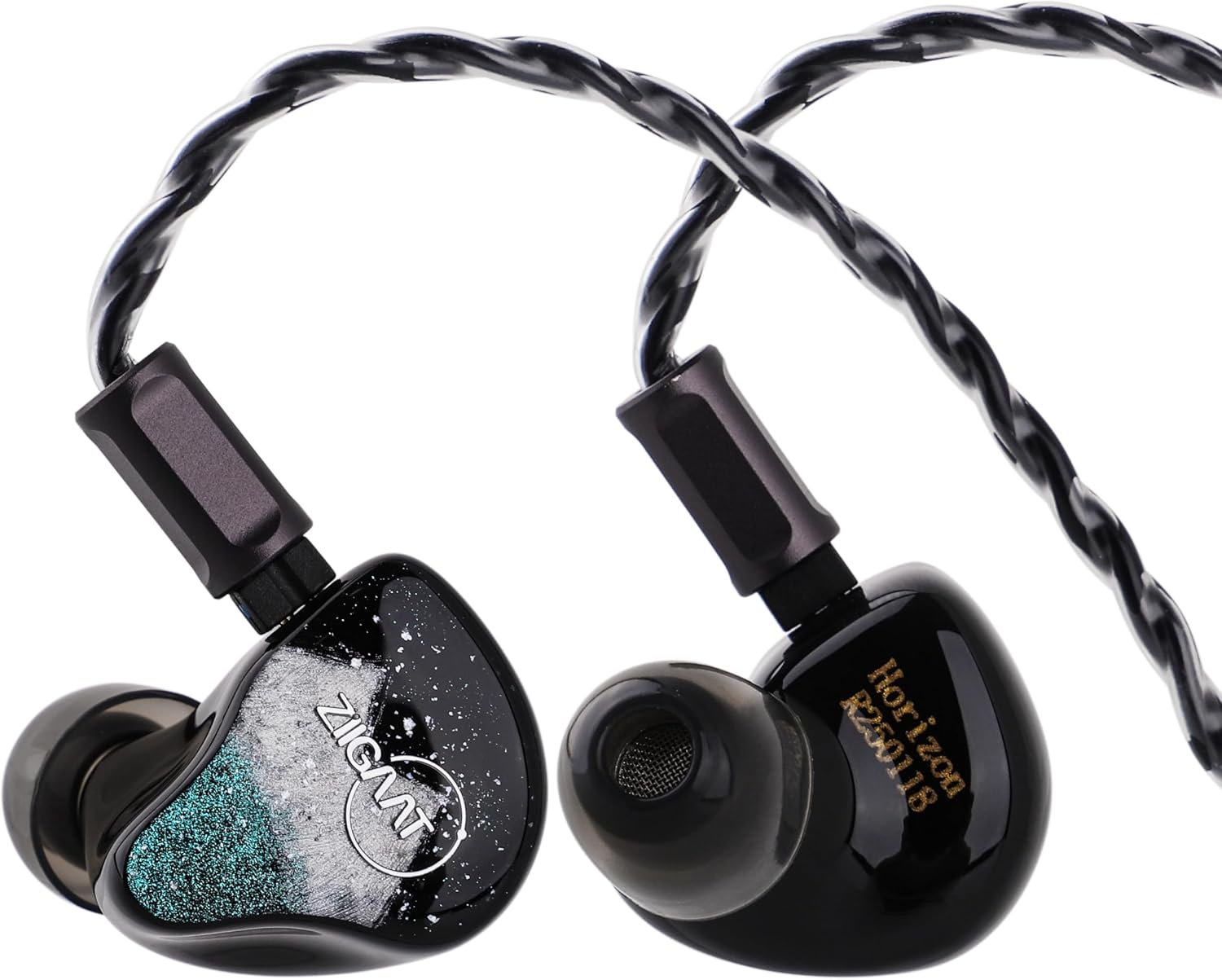
The Horizon is described as hand-finished, starting with a 3D-printed resin shell using medical-grade resin. The selling point here is comfort for longer studio sessions—also a sensible detail if you’re using IEMs in rehearsals or extended listening blocks.
Channel matching is described as being done by hand before assembly, and there’s individual testing before final finishing. There’s also a hand-poured and decorated front plate, which is less about sound and more about that boutique, “not mass-produced” feel.
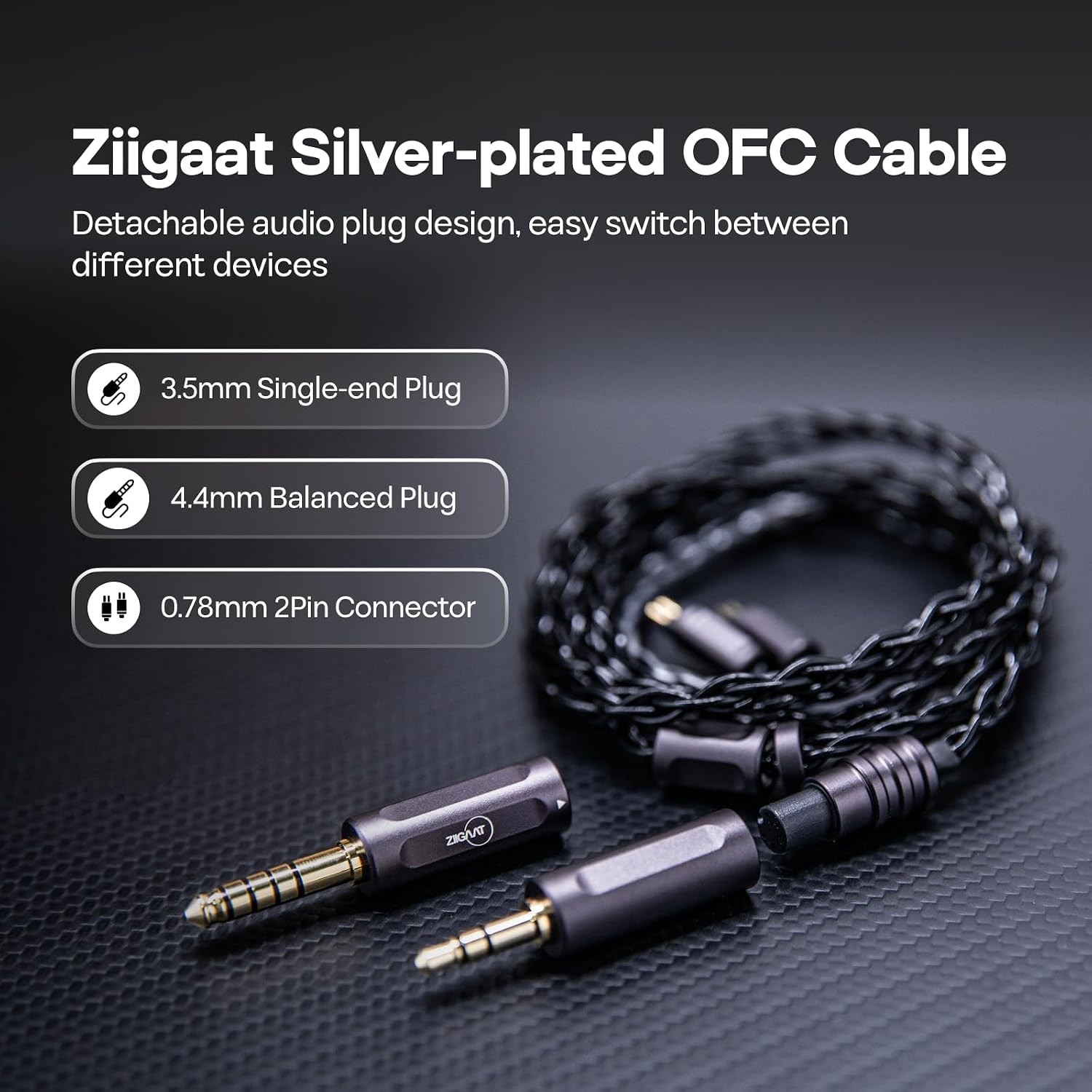
On the cable side, it includes a detachable cable with 2-pin and 0.78 mm connection. The cable is described as oxygen-free copper plated with ultra-pure silver, aiming for cleaner signal transfer without added noise.
Where it shines (and when it doesn’t)

Worth considering if you prioritise natural tuning and want an IEM that’s built to preserve air and stage feel without the usual treble harshness. It also makes sense if you’re the kind of listener who notices when highs go from detailed to uncomfortable.
It may not suit you if you want a very mellow, aggressively “smooth” sound that deliberately hides detail. Also, if you’re early in IEM ownership, be aware that fit and source pairing can make or break how treble extension feels in day-to-day use.
In the box and compatibility notes
What’s explicitly mentioned is the inclusion of a detachable 2-pin cable with a 0.78 mm connector. Beyond that, you’ll want to rely on the product’s own stated connection standard when thinking about third-party cables.

Is it worth it?
If you’re after a wired IEM with a studio-minded tuning approach—especially focused on smoother treble extension—the Linsoul ZiiGaat Horizon looks like a serious contender. The multi-driver design and the stated treble linearity are the core reasons it could appeal to musicians and audiophiles who want detail without sharpness.
However, it’s not automatically the best choice if your preference is “safe” and laid-back across treble. For this type of tuning, it’s worth taking care with ear tips and ensuring your source output suits you, because any imbalance there will show.
Mini FAQ

Is the Horizon a good choice for studio listening?
On paper, it’s positioned for studio-grade listening, with tuning aimed at naturalness and smooth upper treble rather than exaggerated brightness.
Does it focus mainly on bass or treble?
It aims for a full, balanced sound: punchy sub-bass, smooth midrange, and treble extended up to 40 kHz with a smoother response.
What does the detachable cable add?
A removable 2-pin 0.78 mm cable gives you flexibility if you prefer a different cable later or want easier replacement—though you’ll still be limited by that connector type.
Why does fit matter so much with this model?
Because the treble behaviour is a key part of the design goal, a poor seal can change how the highs and perceived “air” come across.