

Linsoul Kiwi Ears Septet Quadbrid 1DD+4BA+Planar+PZT open-back IEM with modular 3.5mm/4.4mm cable
Product description
What it is and why people look at it
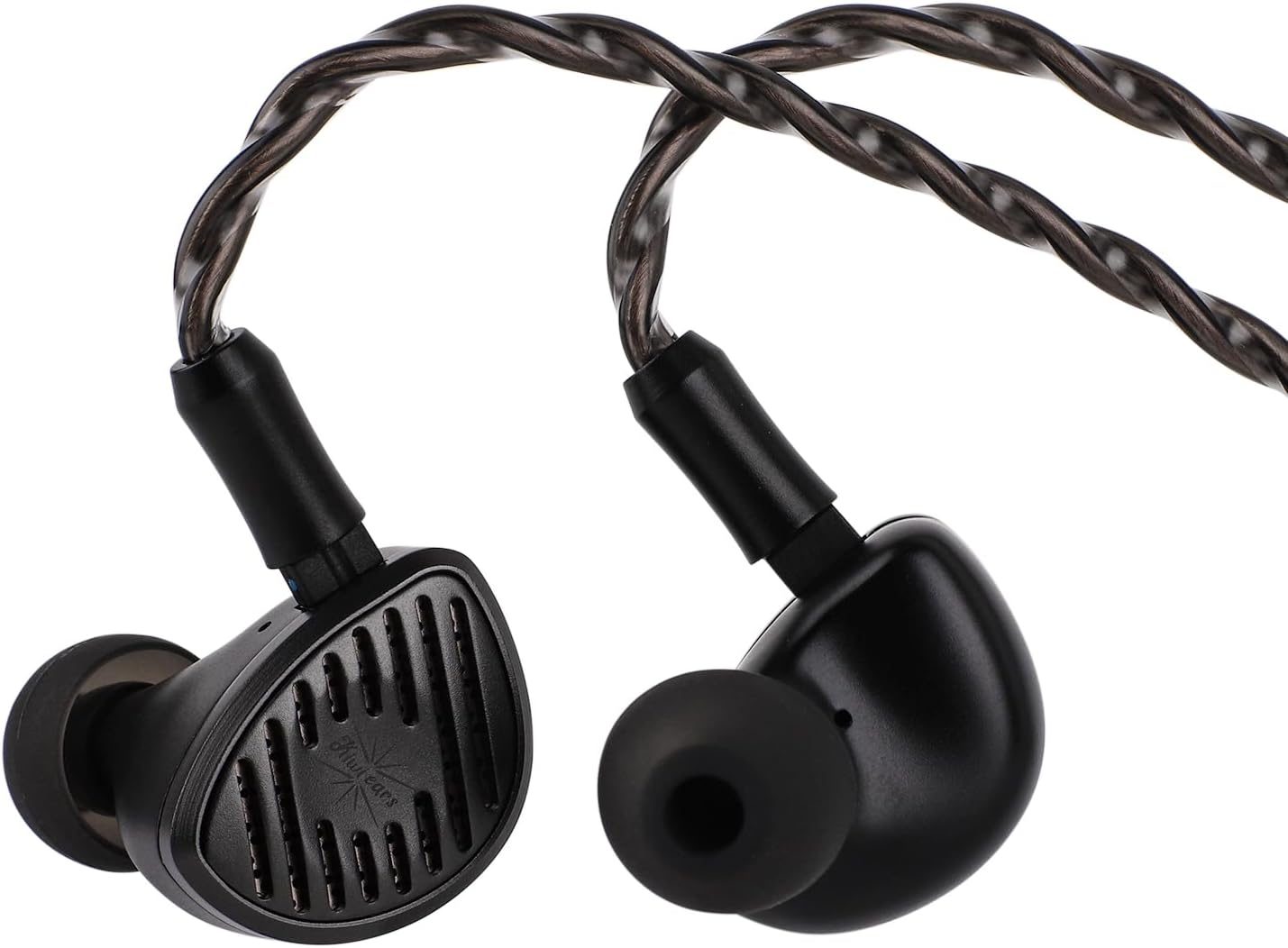
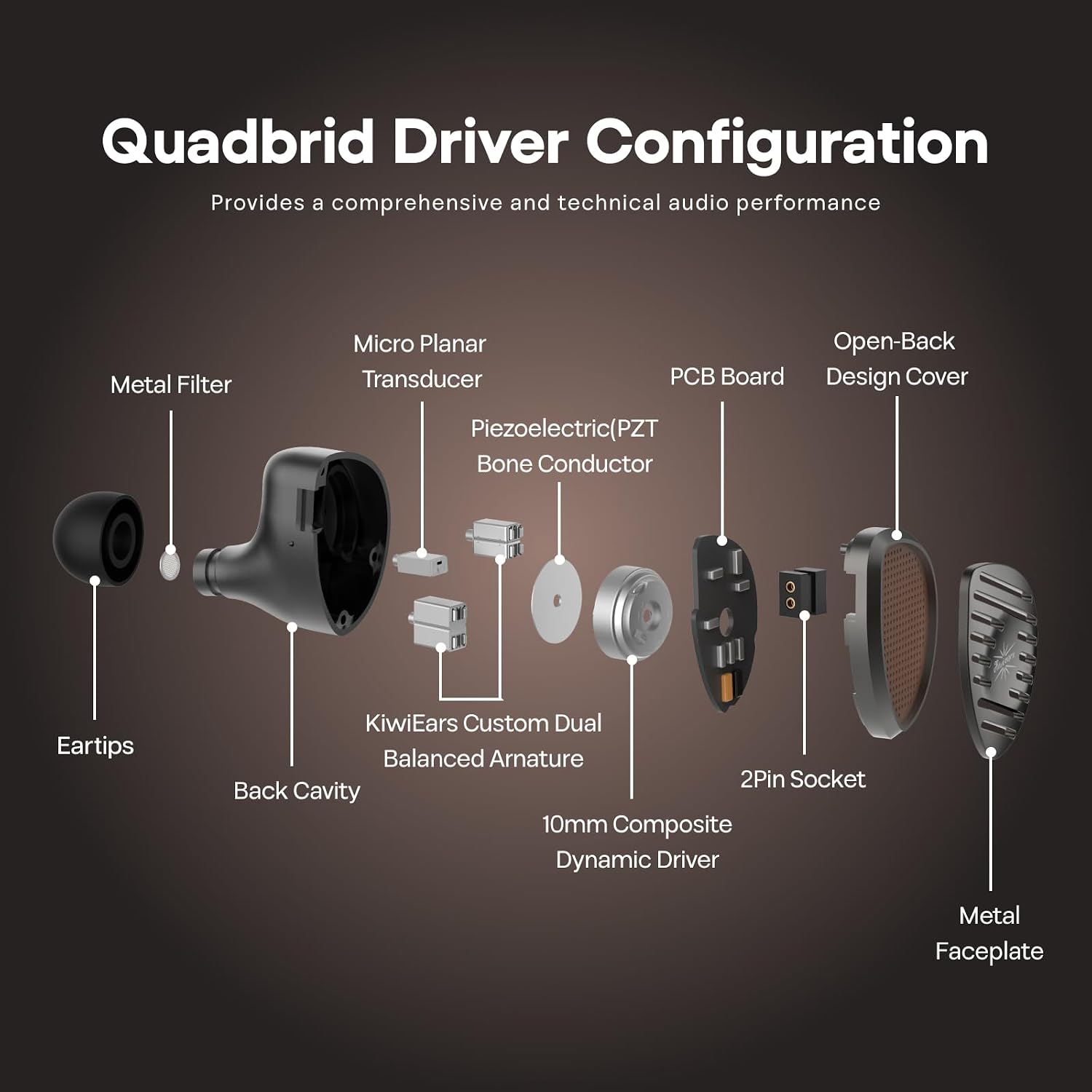
The Linsoul Kiwi Ears Septet is a wired in-ear monitor built around a “quadbrid” driver layout: 1 dynamic driver, 4 balanced armatures, plus a micro planar transducer and a PZT driver. On paper, that’s a lot of engineering in one shell, aimed at covering low end, mids, and high treble with different technologies so you get both impact and detail.
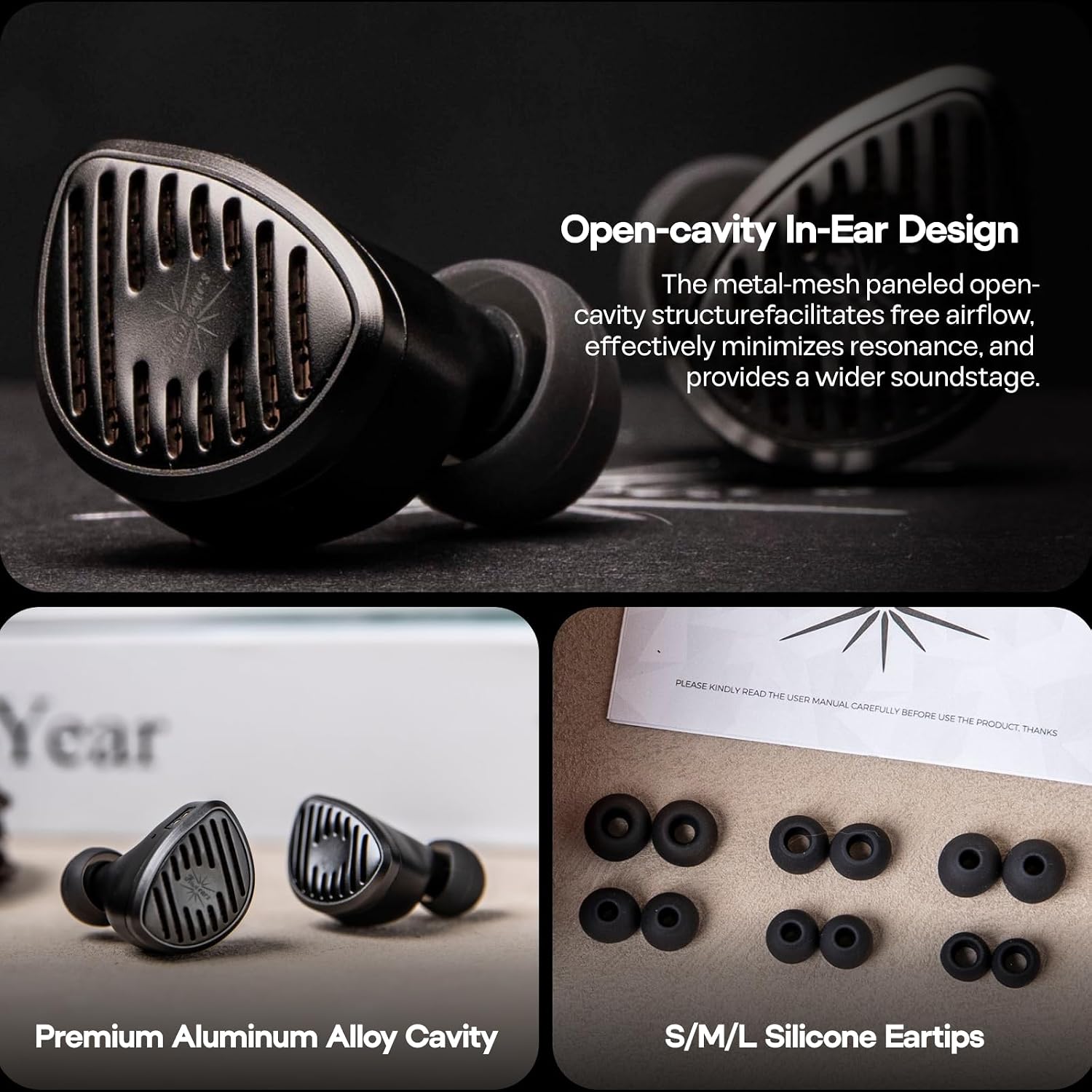
It’s also designed as an open-back IEM. That matters, because open-back tunings usually trade a bit of isolation for a more airy, speaker-like presentation. If you’re the type who cares more about how music feels and breathes than blocking out the world, that design choice is the heart of what makes the Septet different.
Key features (the stuff you’ll actually notice)
The headline attraction here is the driver mix and the crossover strategy. The Septet uses a 10mm composite dynamic driver for sub-bass and bass, positioned as capable of delivering deep rumble down to 8Hz, with a “sub-woofer-like” bass character. That’s paired with four balanced armature drivers covering low-mid through mid-treble duties, which should help with speed and separation.
For the top end, there’s a micro planar transducer (MPT) tuned for ultra-treble extension up to 30kHz, plus an updated PZT driver to refine upper-register clarity. In practice, the idea is that you should hear more micro-detail and “air” without the treble turning edgy.
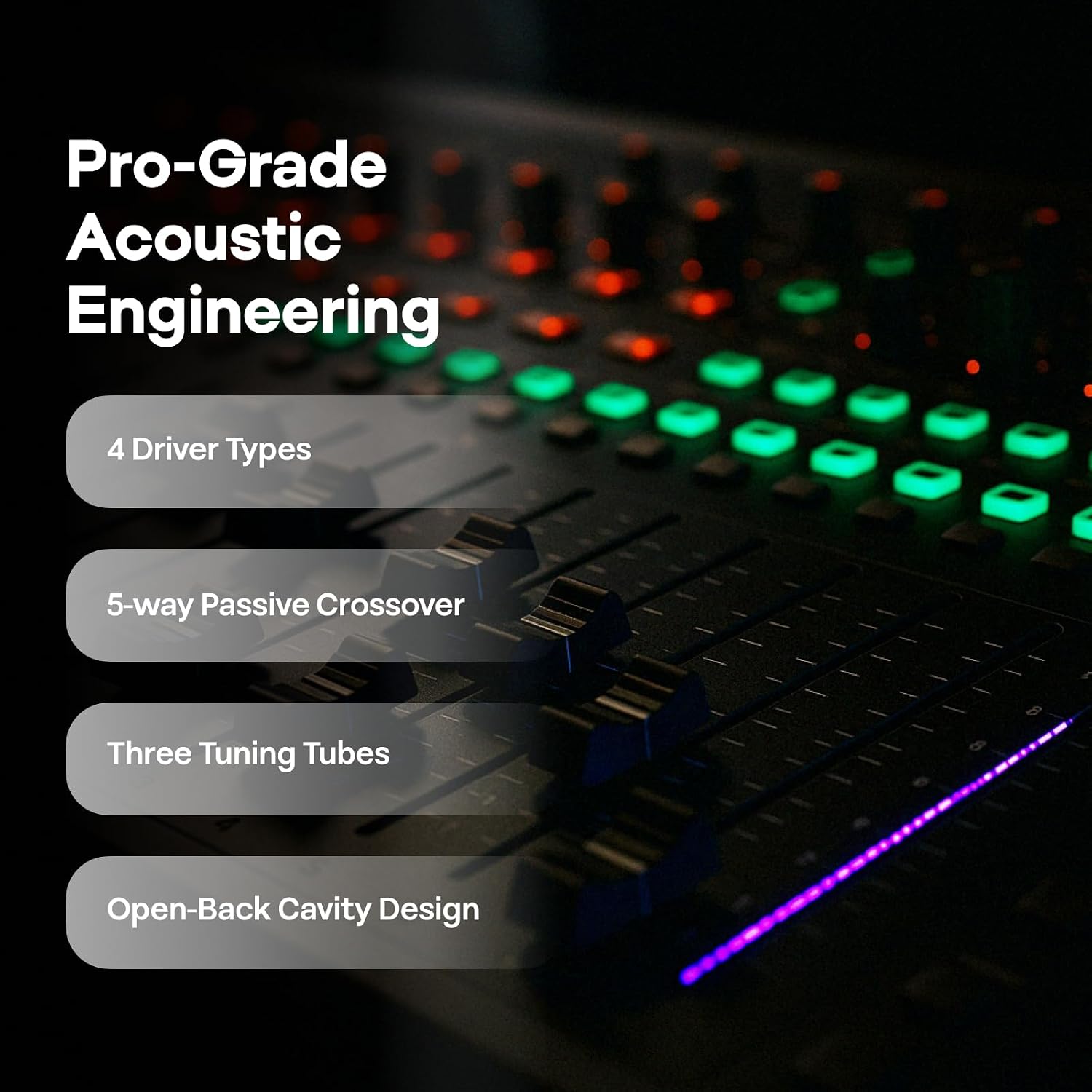
The tuning is supported by a 5-way passive crossover network combined with acoustic strategies and a three-bore nozzle system. Without getting lost in circuit talk, what this usually means in listenable terms is a more deliberate balance between bass texture, mid clarity, and treble smoothness—rather than just cramming different drivers together.
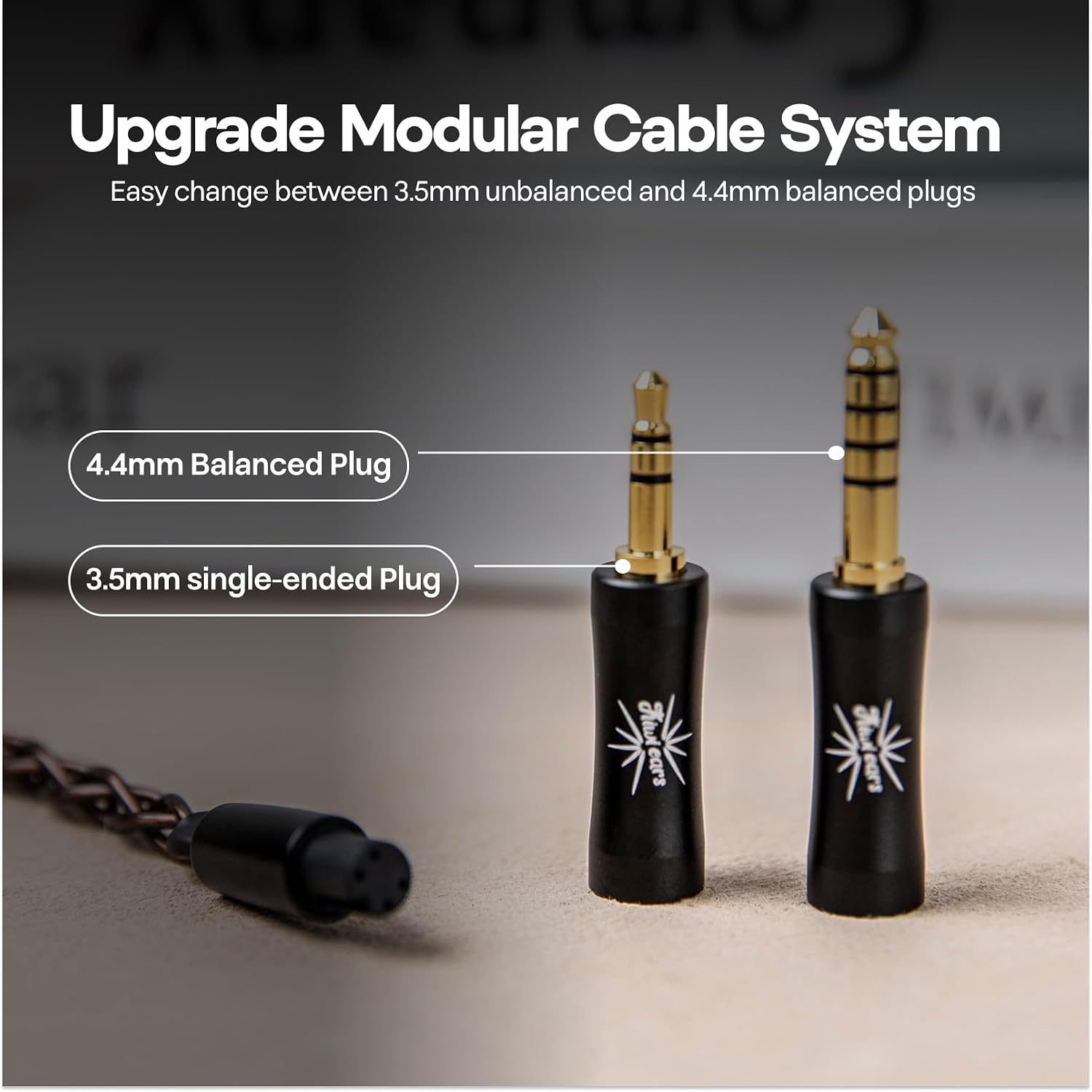
One more practical note: it comes with a modular cable with both 3.5mm and 4.4mm options, which can be useful if your music setup varies between devices.
What matters most for listening (open-back reality check)

Open-back IEMs can sound more spacious and naturally textured, and the Septet leans into that. The ventilation is meant to keep the drivers responsive and contribute to a wider, more “acoustic” like texture, along with improved soundstage and imaging.
However, it’s not perfect. You should expect much less isolation than a sealed IEM, so in busy environments the sound leakage goes both ways. If you mostly listen on buses, in open-plan offices, or anywhere you need privacy, you may find the open design a limitation rather than a bonus.
Sound signature expectations: where it sits
This model is described as targeting a balance of musical engagement and tonal accuracy, with an impactful sub-bass shelf and a clean, rich yet controlled bass character. That suggests it won’t be a “thin” or purely analytical tuning—more of a listen-for-music presentation.
At the same time, the presence of balanced armatures plus planar/PZT treble drivers points to a desire for resolution and articulation, not just low-end weight. So if you like bass that has texture (not just quantity) and treble that extends smoothly, it’s aiming right at that sweet spot.
Still, it may feel more like a mid-to-high tier IEM experience (given the driver complexity) than a casual, simple “grab and go” pair. If you want something straightforward with no fuss, open-back wiring and a multi-driver tuning philosophy may be more than you need.
Usage tips
If you get this style of IEM, it helps to treat it like a “home-or-studio desk” earphone more than a commute tool. A good way to test the tuning is to pick one track you know for sub-bass presence (for the 10mm driver impact) and one with delicate highs (to judge the MPT and PZT treble behaviour). Because it’s open-back, try it in a relatively quiet room first to hear what the design is offering.
Also, with a modular cable supporting 3.5mm and 4.4mm, it’s worth thinking about what you’ll plug into most often. If your main device uses one of those formats, you’ll likely spend more time with that cable configuration, so the practical comfort and fit become even more important.
Who it suits, and who should look elsewhere
It makes sense if you’re looking for an IEM that tries to deliver both deep sub-bass character and extended, smooth treble, while aiming for a wider soundstage through an open-back approach. It also fits well if you’re curious about driver technologies beyond the common single dynamic or hybrid sets.
It might not suit you if you need strong isolation, or if you often listen in noisy public spaces where leakage and outside sound will be an annoyance. You may want to skip it if you’re after a simple sealed design tuned primarily for portability and blocking out the environment.
For a more conservative buying approach, many people choose a simpler driver configuration when their priority is plug-and-play sound with minimal trade-offs. Here, the trade-off is intentional: open-back openness and a complex tuning strategy.
Box contents
The provided information doesn’t list what’s included in the pack, beyond mentioning the modular 3.5mm/4.4mm cable.
Final verdict
When it makes sense
The Linsoul Kiwi Ears Septet is worth considering if you want an open-back IEM with deep sub-bass focus, detailed treble extension, and a tuning approach that uses multiple driver types and a 5-way passive crossover to target a balanced, engaging listen.

It may not be a great match if
You should probably look elsewhere if you need isolation for everyday commuting or quiet-in-the-office listening, or if you prefer simpler, closed designs that avoid leakage.
Mini FAQ
Is the open-back design good for everyday listening?
It depends on your environment. In quiet or controlled spaces it can bring more spacious, natural texture, but in busy public areas the lack of isolation may be a deal-breaker.
What’s the point of having 3.5mm and 4.4mm on one modular cable?
It gives you flexibility across different sources that use different audio outputs, so you’re less likely to be stuck with one connection type.
Does the Septet focus more on bass or detail?
It leans toward a strong sub-bass character (down to 8Hz is cited) while also targeting treble clarity and micro-detail via the MPT up to 30kHz and an added PZT driver—so it’s trying to do both.
Where would you use it for best results?
Over a quiet listen at home or at a desk, where you can hear the soundstage and the treble texture the open-back tuning is designed to create.