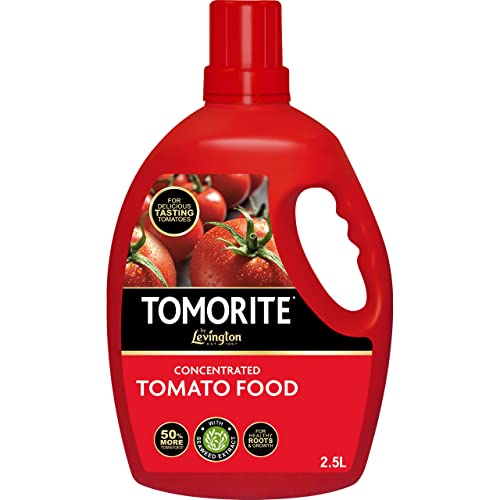
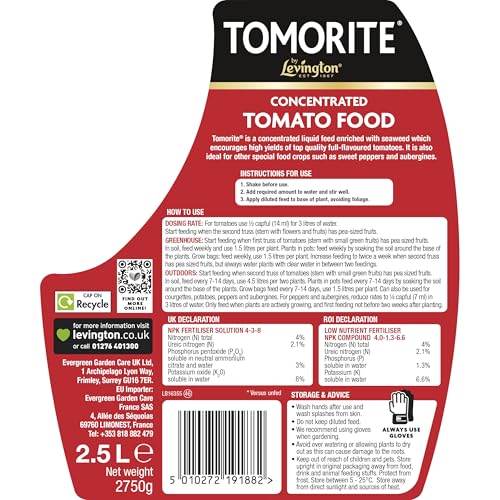
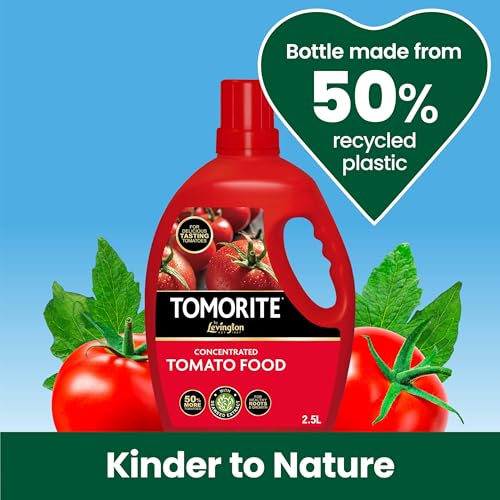
What it is and what it’s for\nLevington Tomorite Concentrated Plant Food is a liquid fertiliser designed for tomato plants and other vegetables. It comes as a 2.5 L concentrate and is marketed as a favourite in UK gardens, promising to help you achieve higher yields and tastier produce. On the page you provided, the product is described as enriched with seaweed extract and carrying an NPK ratio of 4-3-8, which suggests a balanced mix aimed at supporting fruiting crops. If you’re growing tomatoes in pots, grow bags, or traditional beds, this kind of concentrate can be convenient because it lets you tailor feeding to plant growth stages without mixing granular fertilisers.\n\n## The case for it on paper\nFrom the information available, Tomorite is positioned as a straightforward liquid feed with a claim of producing more yield and improving flavour. The seaweed element is commonly associated with plant vitality and cell structure, while the NPK split indicates a moderate emphasis on potassium to support fruit development. For gardeners prioritising ease of use, a liquid concentrate can be faster to apply than granular feeds, especially for larger tomato plants or early-season growth.\n\n## What stands out\n- Targeted at tomatoes and other vegetables, suggesting suitability across common kitchen garden staples.\n- Enriched with seaweed extract, which may contribute to plant resilience and nutrient uptake.\n- Liquid format means easier dilution and application, potentially saving time during busy growing seasons.\n- The claim of “50 percent more yield” is appealing, though it remains important to view such figures in context of growing conditions and plant health.\n\n## Potential limitations to consider\n- The information provided doesn’t include growth-stage dosing guidance or application frequency, which matters for optimising results. If you’re new to liquid feeds, there may be a learning curve to ensure correct dilution and timing.\n- Nutrient needs vary with climate, soil, and plant variety, relying on a single formulation may not address all contingencies, such as heavy fruiting varieties or pruning practices.\n- The description doesn’t specify whether the product is suitable for edible crops in all growing systems, so you may want to verify any local guidelines or container compatibility if you’re growing herbs or leafy greens alongside tomatoes.\n\n## Who it’s for\nThis product may suit gardeners who want a convenient, pre-mixed option for tomato crops and a range of vegetables, particularly if they prefer a liquid feed that’s quick to apply and scales with plant size. It could be a reasonable choice for home growers with larger pots or garden beds who value simplicity and a plausible yield-focused claim.\n\n## Who may want to look elsewhere\nIf you’re prioritising long-term soil health or personalised nutrient regimes, or if you grow plants with very specific feeding needs, a bespoke or soil-first approach might be more appropriate. Those who garden in very small spaces with limited watering tolerance may also wish to compare gradual-release options or milder feeds to avoid over-fertilising.\n\n## Before you buy, check these points\n- Confirm the dilution instructions and feeding frequency for tomatoes at different growth stages.\n- Consider your irrigation routine, a liquid feed works best if you’ve got a steady water supply and you can apply it evenly.\n- Assess whether you’re feeding only tomatoes or a broader vegetable rotation, and ensure the product aligns with those crops.\n- Think about your container setup (pots, grow bags, or raised beds) since this influences how evenly the root zone can receive nutrients.\n\n## Practical use: a quick scenario\nImagine a sun-filled weekend when your tomato plants have started setting fruit. You mix the concentrate as directed, apply along the dripline or around the base, and water in. Over the following weeks you monitor growth and fruit set, adjusting as needed if you notice slower flowering or uneven growth. It’s not a magic wand, but for many gardeners it offers a straightforward path to extra fruiting and a consistent feeding routine.\n\n## Tech details (brief)\n- NPK: 4-3-8, suggesting a balanced approach with a potassium emphasis for fruiting.\n- Contains seaweed extract, which some users feel supports plant vitality.\n- Liquid concentrate, 2.5 L size, marketed for tomatoes and other vegetables.\n\n## What’s included\nThe information provided does not list separate contents beyond the 2.5 L concentrate bottle.\n\n## What to know before using\nTen to consider is whether your garden’s climate and soil type align with the product’s intended use. A cautious approach—starting with a mild dilution and observing plant response—can help avoid over-fertilised plants or nutrient burn.\n\n## Final thoughts on use and value\nIf you prioritise ease of use and a feeding regime aimed at tomatoes and common vegetables, Tomorite Concentrated Plant Food could be a practical fit. It isn’t presented with exhaustive technical guidance in this description, so if you’re new to liquid feeds, you may want to start with small batches and monitor plant response before expanding usage. For experienced growers, it offers a straightforward option to support fruiting crops during key growth periods.\n\n## Is it worth it?\nFinal verdict: Worth considering if you want a simple, liquid feed aimed at tomatoes and vegetables, with a focus on yield and flavour. It may not be the best option if you need detailed nutrient regimes or if your growing setup requires more customised feeding.\n\n## FAQ\n- Can I use this for leafy greens? It’s designed for tomatoes and vegetables, it may be used with other crops, but confirm suitability for leafy greens to avoid unintended outcomes.\n- How often should I feed? Feeding frequency isn’t specified here, refer to dilution guidelines and monitor plant response.\n- Does it improve shelf life or taste? The description mentions “delicious tasting tomatoes,” but individual results will vary based on variety, climate, and growing conditions.