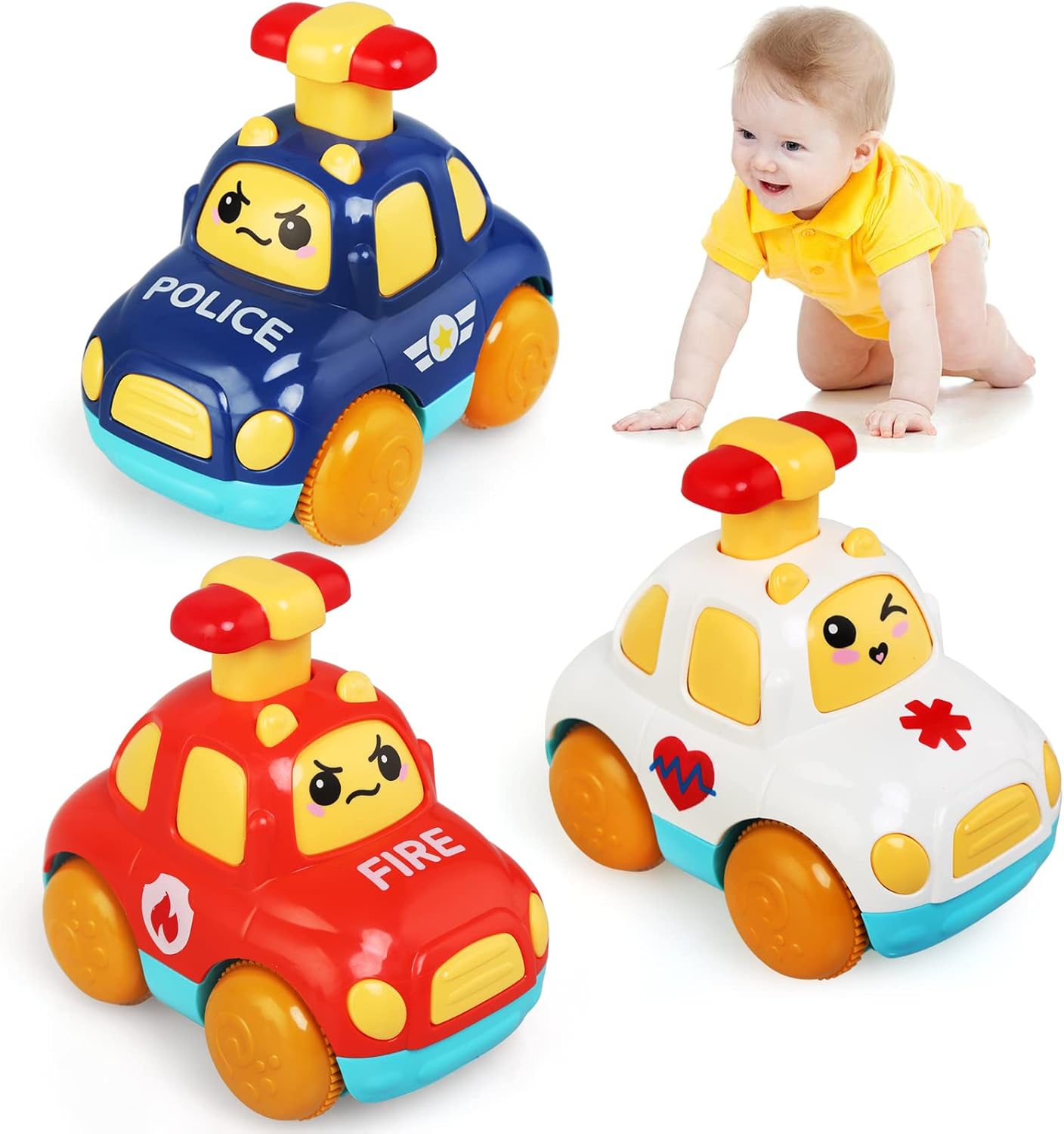
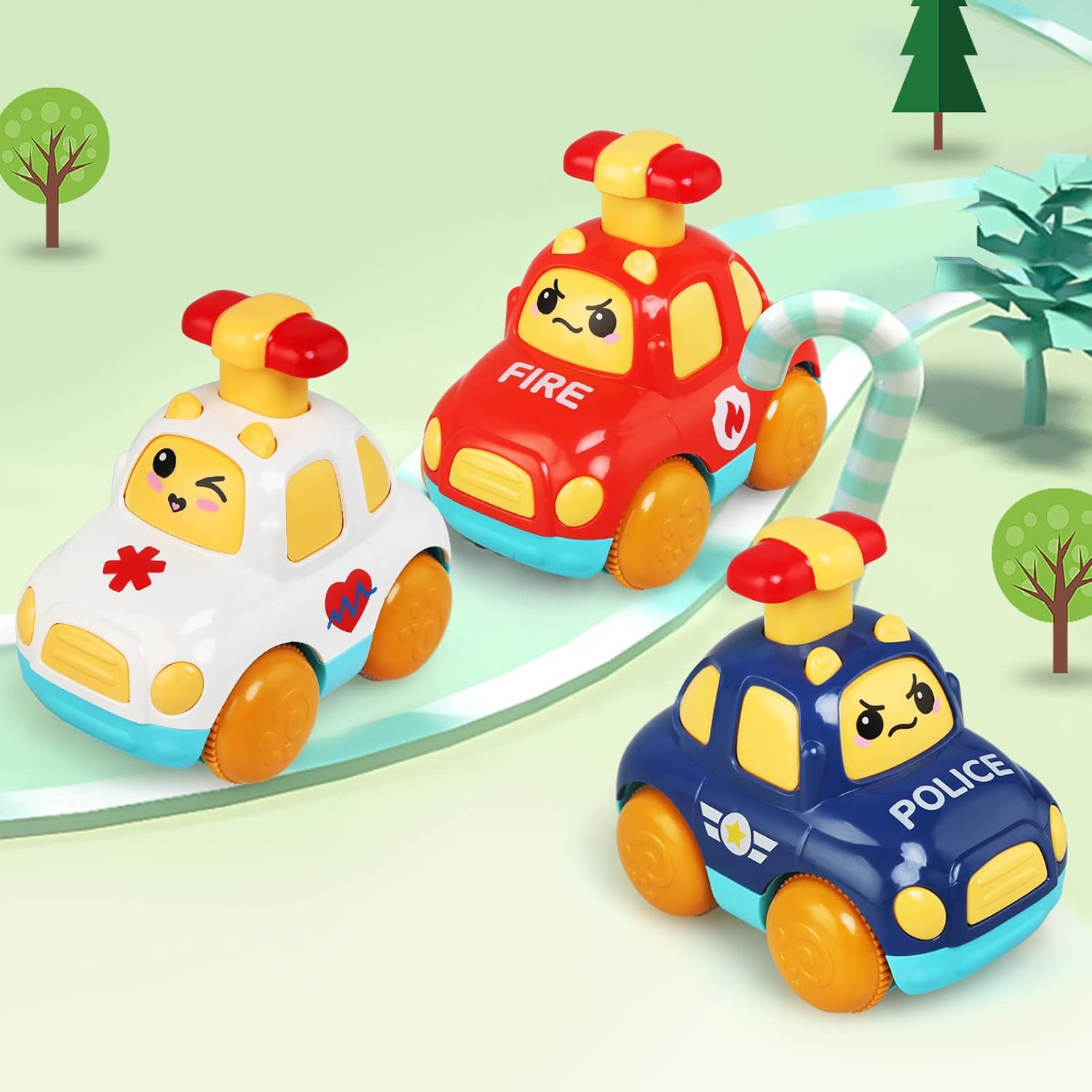
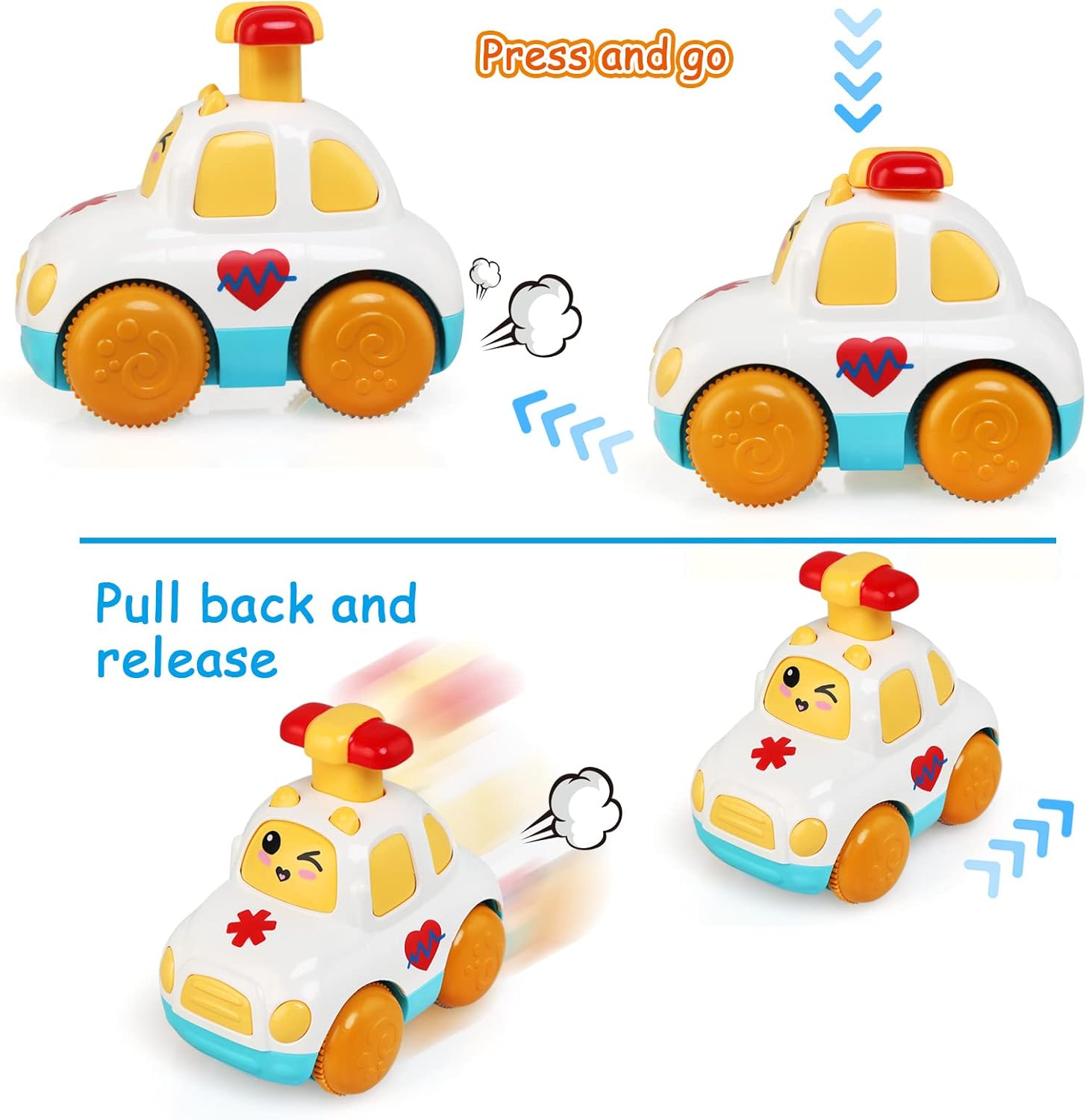
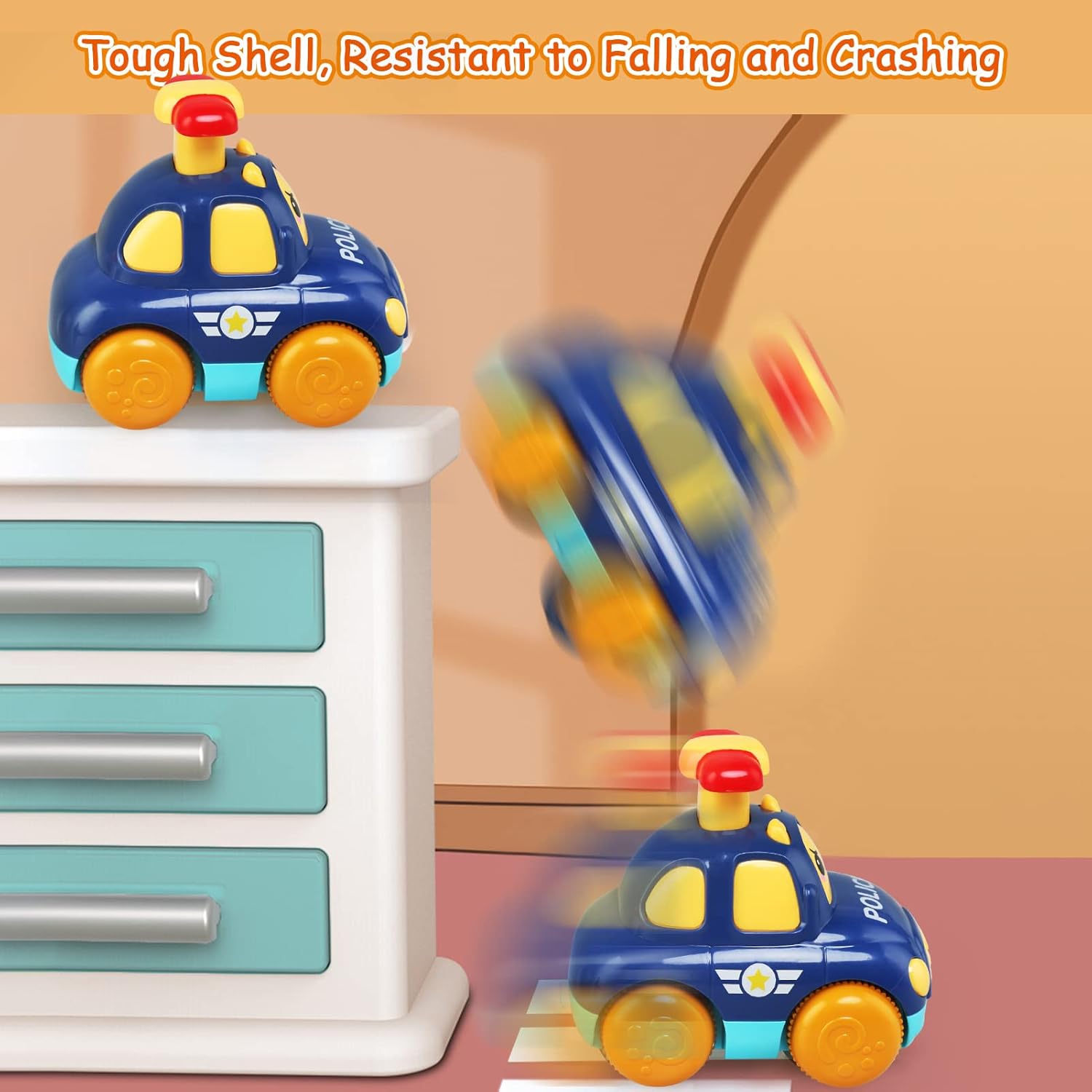
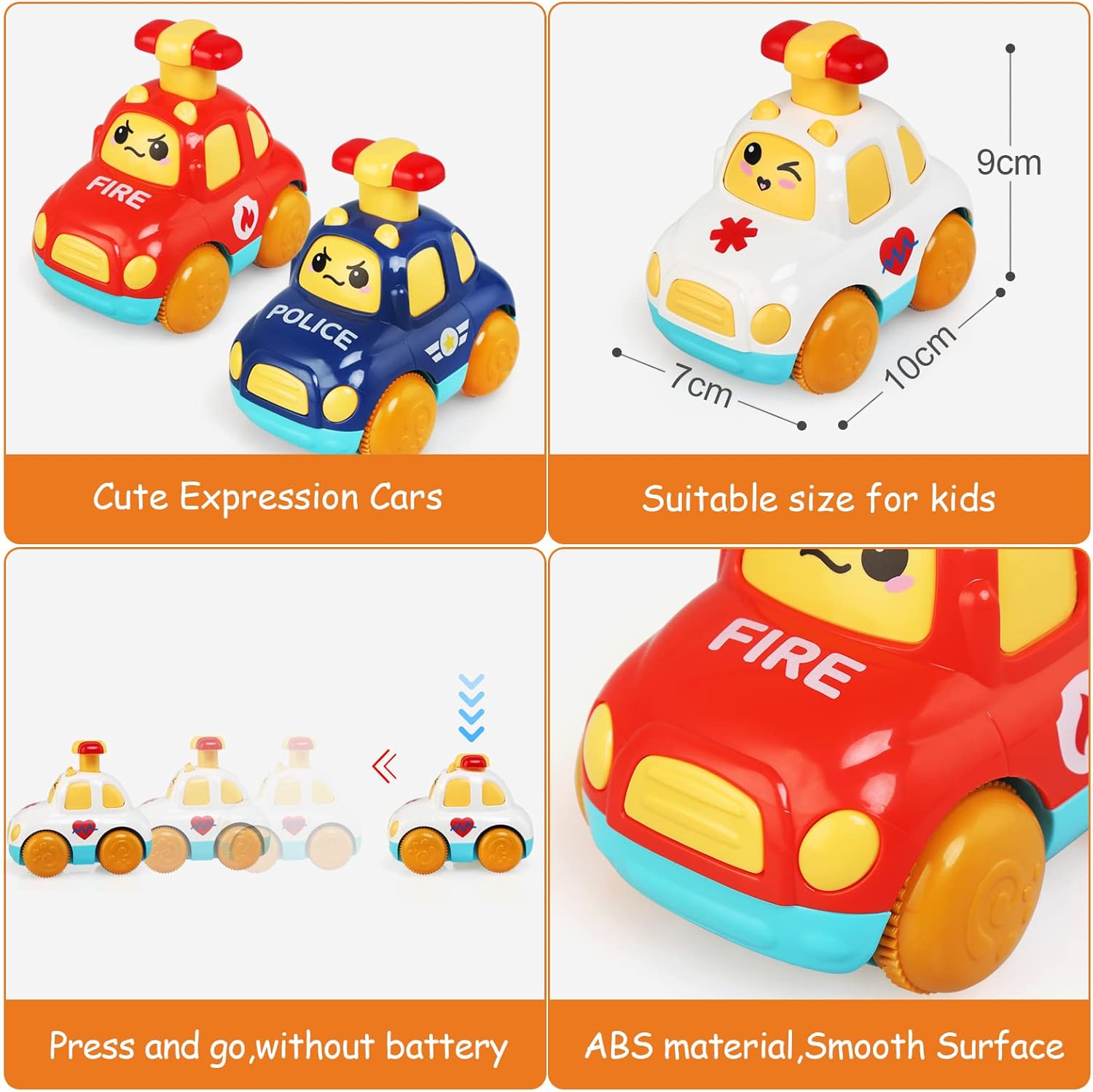
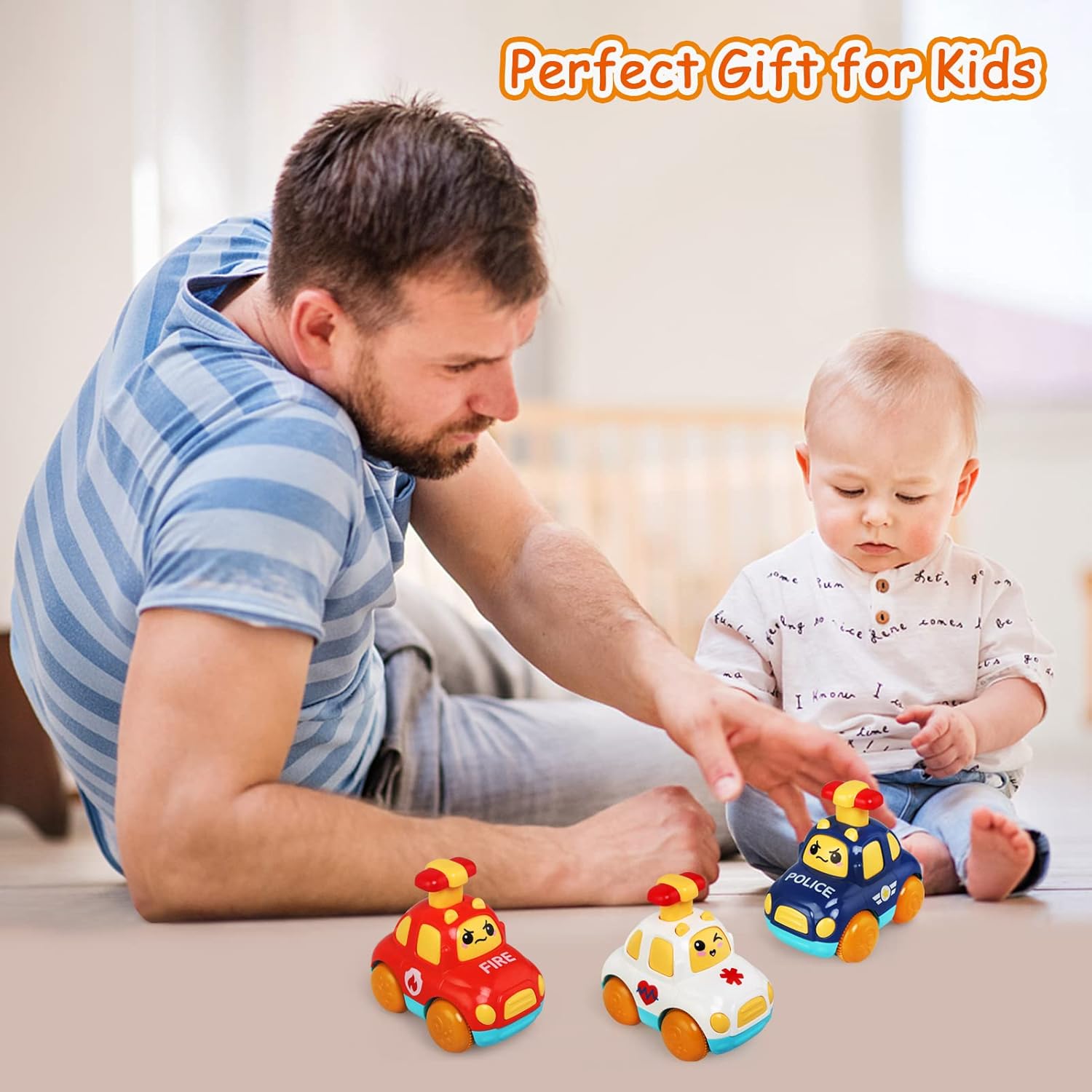
What it is and who it’s for\nLEADSTAR Baby Toy Cars are a set of three small, colourful cartoon-style vehicles designed for toddlers aged 1 to 3. With bright faces on police, fire and ambulance cars, they’re meant to attract little hands and curious minds while offering simple, hands-on play. If you’re after a compact, lightweight set to keep little travellers entertained, these wind-up cars are worth considering.\n\n## Two modes, no batteries\nThe cars work without batteries, offering two quick ways to move. In press-and-go mode, you simply push down the top and release to see the car roll forward. In pull-back mode, a built-in threaded gear on the rear wheel lets the car spring forward when pulled. This setup introduces toddlers to basic cause-and-effect and prompts them to experiment with different ways to get the cars moving.\n\n## Safety and durability you can feel confident about\nSelling points here are durability and safety: made from durable ABS plastic and finished with smooth edges to minimise finger-pinching risk. The material is described as non-toxic and food-grade safe, aligning with parents’ desire for tougher toys that survive the inevitable drops and rough handling of 12–36 month play. It isn’t perfect, but on the page the design does prioritise tiny fingers and everyday play scenarios.\n\n## What it supports in learning\nBeyond just moving around, these toy cars support colour recognition and early motor skills. As toddlers push, pull, and pretend play, they practise hand–eye coordination and fine motor control. The cartoon faces add a friendly, engaging element that can help with imagination and social play during both solitary and shared moments.\n\n## Who it’s best suited for\nIf you’re shopping for a first vehicle set for a 1–3 year-old, or a small travel toy for a toddler on the move, these cars aim to fit. They’re light enough for little hands and easy to carry in a bag for trips to visit relatives, or to keep at nursery for quick, contained play.\n\n## When it may fall short\nThe set is intentionally simple, so it won’t satisfy a child who wants more complex features or interactive electronics. If your child craves larger, louder toys or more varied stimuli, a battery-powered option with sounds and lights might be more engaging. Also, since the description mentions three colours and three vehicles, the variety is decent but not exhaustive.\n\n## What to check before buying\nLook for a comfortable grip on the top of the press-and-go car and ensure the pull-back mechanism operates smoothly. Consider the space where your child plays, the tiny wheels work best on flat surfaces like a wooden floor or carpeted area, rather than rough outdoor terrain.\n\n## Practical usage example\nDuring a car-themed playtime, a parent can demonstrate how pressing the top makes the car move, then switch to the pull-back method to show a different propulsion. A child might mimic this action with a smile, linking cause (press or pull) to effect (the car moving). This simple loop supports curiosity without overwhelming with complexity.\n\n## Alternatives and where this fits\nIf you’re comparing options, these wind-up cars sit between basic push-along toys and more feature-rich battery cars. They’re a good match when you want a compact, low-maintenance option that prioritises physical manipulation and imaginative play rather than high-tech interactivity.\n\n## Final decision\n## Is it worth it?\nWorth considering if you prioritise simple, durable play that helps a toddler learn cause-and-effect and early motor skills. It suits parents seeking a compact, transport-friendly gift for 1–3 year-olds. It may not be the best choice if you want more interactive features or a broader range of textures and sounds.\n\n## FAQ\n- Do the cars require batteries? No, they operate without batteries.\n- What ages is this suitable for? Advertised for 1–3 years, general play can extend beyond that, depending on the child.\n- Are the materials safe for toddlers? Made from durable ABS plastic and described as non-toxic. Always supervise use with very young children.