

Labgear 6-Way TV Aerial Signal Booster Amplifier with F-Type Connections (4G & 5G filtered, RED compliant)
Product description
What it is and why you might want one
If your TV picture looks fine most of the time but still drops out occasionally, you’re probably dealing with a signal that’s struggling to stay stable. A TV signal booster aerial amplifier like this Labgear unit is designed for exactly that kind of scenario: strengthening and distributing aerial (TV/FM/DAB) signals while helping them stay more consistent across a wider setup.
This model is built around a 6-way distribution approach, using F-type connections, so it’s aimed at homes where you want to feed multiple outlets rather than relying on a single run. It also flags 4G & 5G filtering, which is relevant if you’re in an area where mobile interference can make reception flaky.
One thing to keep in mind, though: a booster can only do so much. If the incoming aerial signal is extremely poor or installation is fundamentally off (wrong cabling, poor earthing, a damaged aerial), amplification won’t magically fix everything.
Key points that matter in daily use
On paper, what stands out here is the way the booster is described: improved switch-mode power supplies that run cooler, better gain flatness across the performance range, and a lower noise figure for optimised signal quality. In plain terms, that’s the sort of wording that usually matters when you care about keeping the picture steady across multiple channels and outlets, not just “getting a signal at all”.
It’s also described as having greater signal handling capacity, which can be important when a distribution setup is carrying more channels at once.
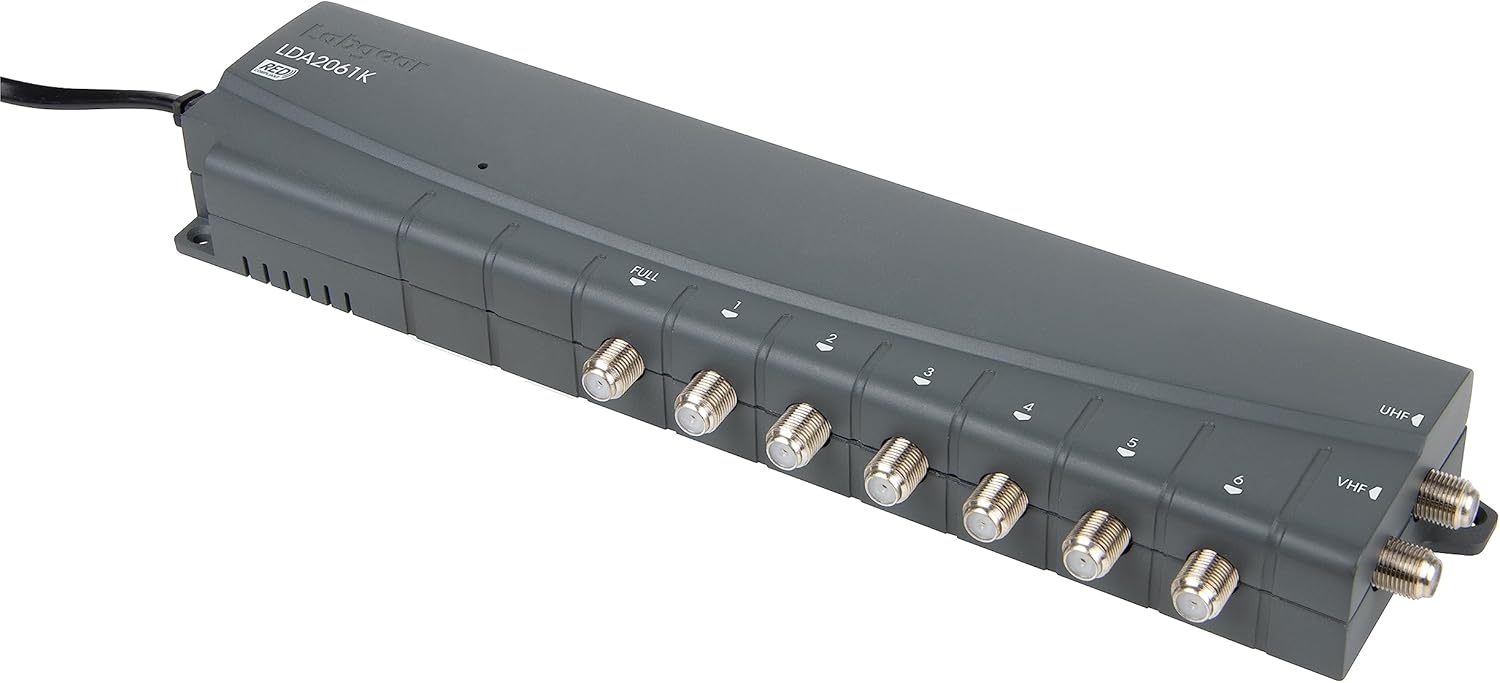
And since this is a distribution amplifier (6-way), it’s worth thinking about how your home is wired. If you’re planning to split one aerial feed to several rooms, this is the category of device you’d typically look at.
Where it fits: TV, FM, and DAB distribution
This amplifier is positioned for TV aerial signals, and it’s also referenced for TV/FM/DAB signal use. It’s the kind of unit you’d consider if you’re setting up a multi-room setup and want a single aerial distribution solution rather than ad-hoc methods.
A small practical example: imagine you’ve got one main aerial feed coming into a cupboard, and you want to send clean lines to living room and bedrooms. Without a distribution-focused amplifier, signal splitting can reduce strength at each outlet. A 6-way booster can help maintain a more balanced level across the distribution.
That said, the best results usually depend on the overall installation quality—signal booster performance isn’t only about the device.
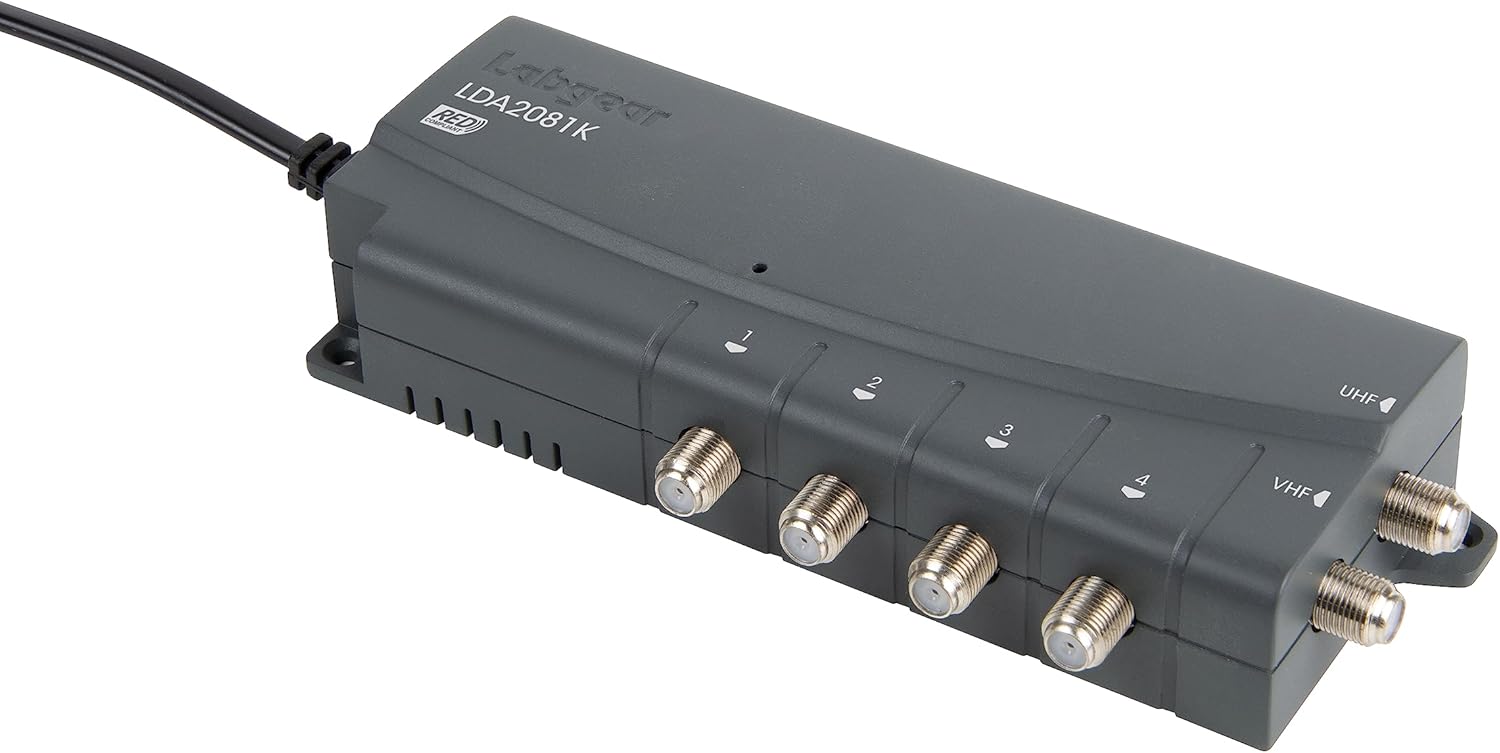
What stands out (and what could disappoint)
Where this unit looks most convincing is in the design intent: cooler running switch-mode power supplies, improved gain flatness, and lower noise figure. These are the kinds of details that suggest the booster is trying to deliver consistency rather than only brute-force amplification.
Pros (based on the information provided): - Cooler-running switch-mode power supplies (reduces heat stress compared to some alternatives, on paper) - Improved gain flatness to support steadier performance across the range - Lower noise figure aimed at optimised signal quality - Greater signal handling capacity intended to cope with more channels - 6-way distribution with F-type connections, which suits multi-outlet homes - 4G & 5G filtered approach, relevant for interference-prone areas
What to watch (limitations to be honest about): - It’s not a replacement for a weak aerial or a poor installation. If the incoming signal is already very low, you may still see issues. - “Better balance across the performance range” sounds good, but without more measured data (like exact gain values or how it behaves in your specific wiring), you can only judge suitability based on your setup and local reception conditions.
What to check before you buy
Before choosing any aerial booster/distribution amplifier, a few things are worth double-checking—especially with a 6-way model:
- How many outlets you actually need: this is designed for distribution to six outputs, so if you only need one or two feeds, you may not need a higher-way unit.
- Connection type: it uses F-type connections. If your cabling and wall plates don’t match, you’ll need compatible adapters or an alternative approach.
- Your reception environment: the inclusion of 4G & 5G filtering suggests an interference-conscious design, which can be relevant depending on where you live.
- Whether your issue is signal strength versus something else: boosters help with signal quality/levels, but won’t fix things like incompatible wiring, damaged coax, or faults in TV hardware.
Also, the description mentions “RED compliant”. That may reassure you about regulatory compliance, but it still doesn’t tell you everything about performance for your exact aerial setup.
Quick overview of the tech approach
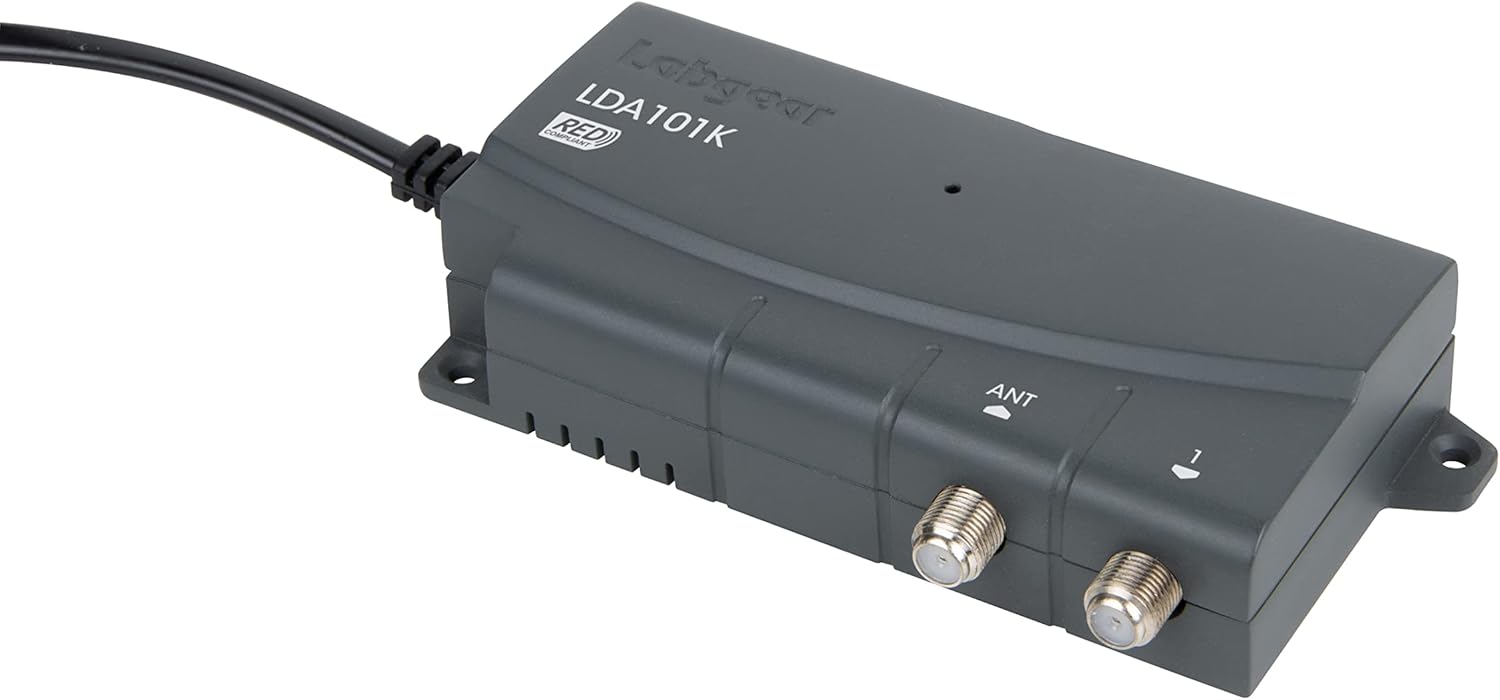
The base description highlights several technical directions: - More efficient switch-mode power supplies that run cooler - Improved gain flatness for better balance across performance - Lower noise figure to optimise signal quality - Greater signal handling capacity to cope with more channels
That cluster of claims is essentially about maintaining a cleaner, more stable signal across a range of conditions. It’s not the same as “guaranteed perfect reception”, but it does align with what you’d want from a professional-leaning booster for multi-outlet homes.
Buying verdict
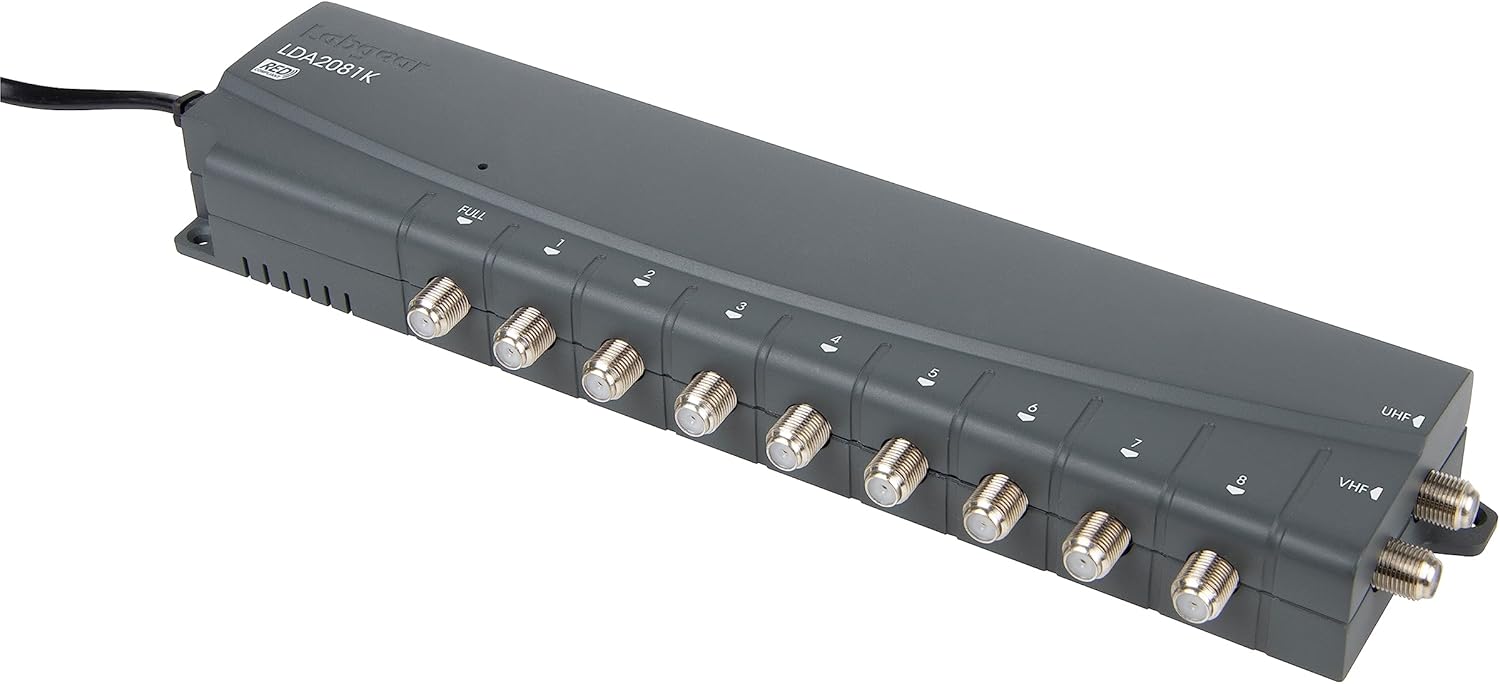
If you’re planning a 6-way aerial distribution for TV/FM/DAB and you’re also concerned about mobile interference, this Labgear 6-way signal distribution amplifier with 4G & 5G filtering looks like a sensible fit on paper—particularly thanks to the emphasis on cooler operation, flatter gain, and lower noise.
You may want to skip it if you only need a simple split to one or two rooms, or if your aerial system is already borderline (a booster can’t compensate for a fundamentally poor incoming signal).
It’s a more “proper setup” choice than a basic splitter approach. For people who care about keeping reception consistent across several channels and rooms, it’s the sort of device that can make sense—just don’t forget to factor in installation quality and correct cabling.
Mini FAQ
Is this suitable for splitting one aerial feed to several rooms?
It’s designed as a 6-way signal distribution amplifier, so it’s made for multi-outlet distribution setups rather than a single-room feed.
Does it help with 4G/5G interference?
The description specifically mentions 4G & 5G filtering, which is aimed at reducing the impact of mobile interference on TV reception.
What connections does it use?
It uses F-type connections, which is a common coax connection type for aerial installations.
Will it fix a very weak aerial signal?
A booster can improve signal quality and handling, but if the incoming signal is extremely poor or installation is faulty, it may not fully resolve reception issues.
Is it only for TV?
The description references TV/FM/DAB signals, so it’s intended for more than just one broadcast type.