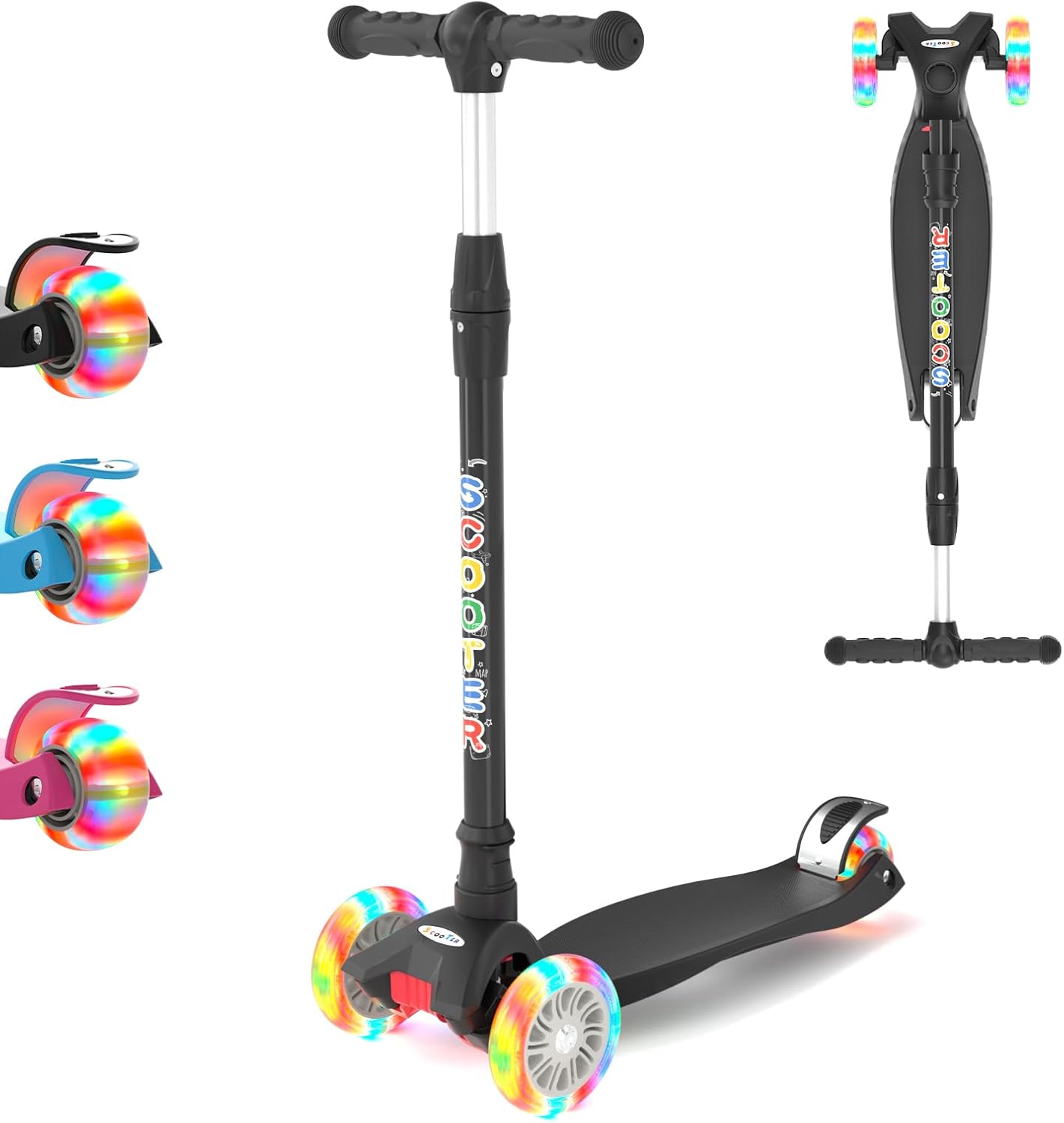
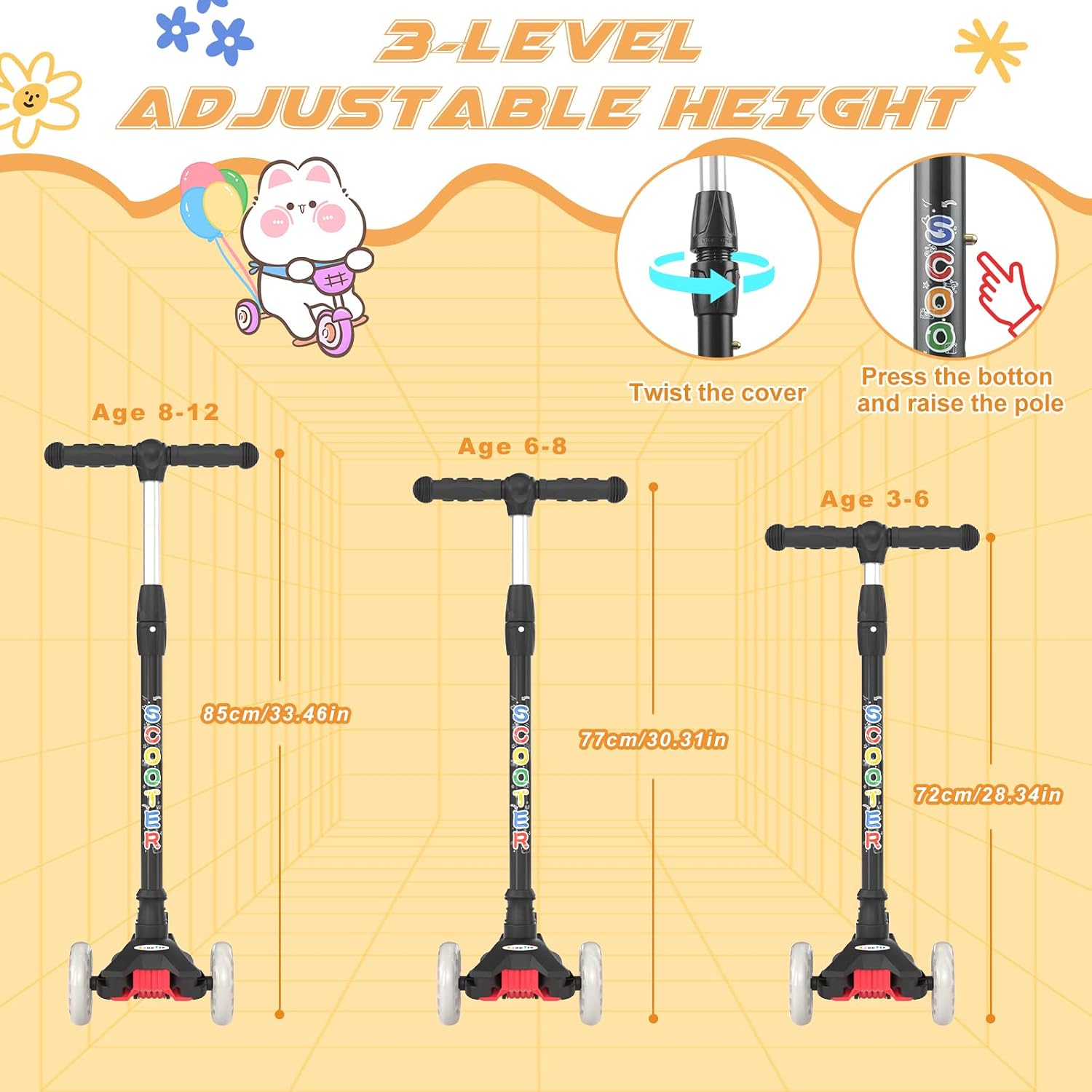
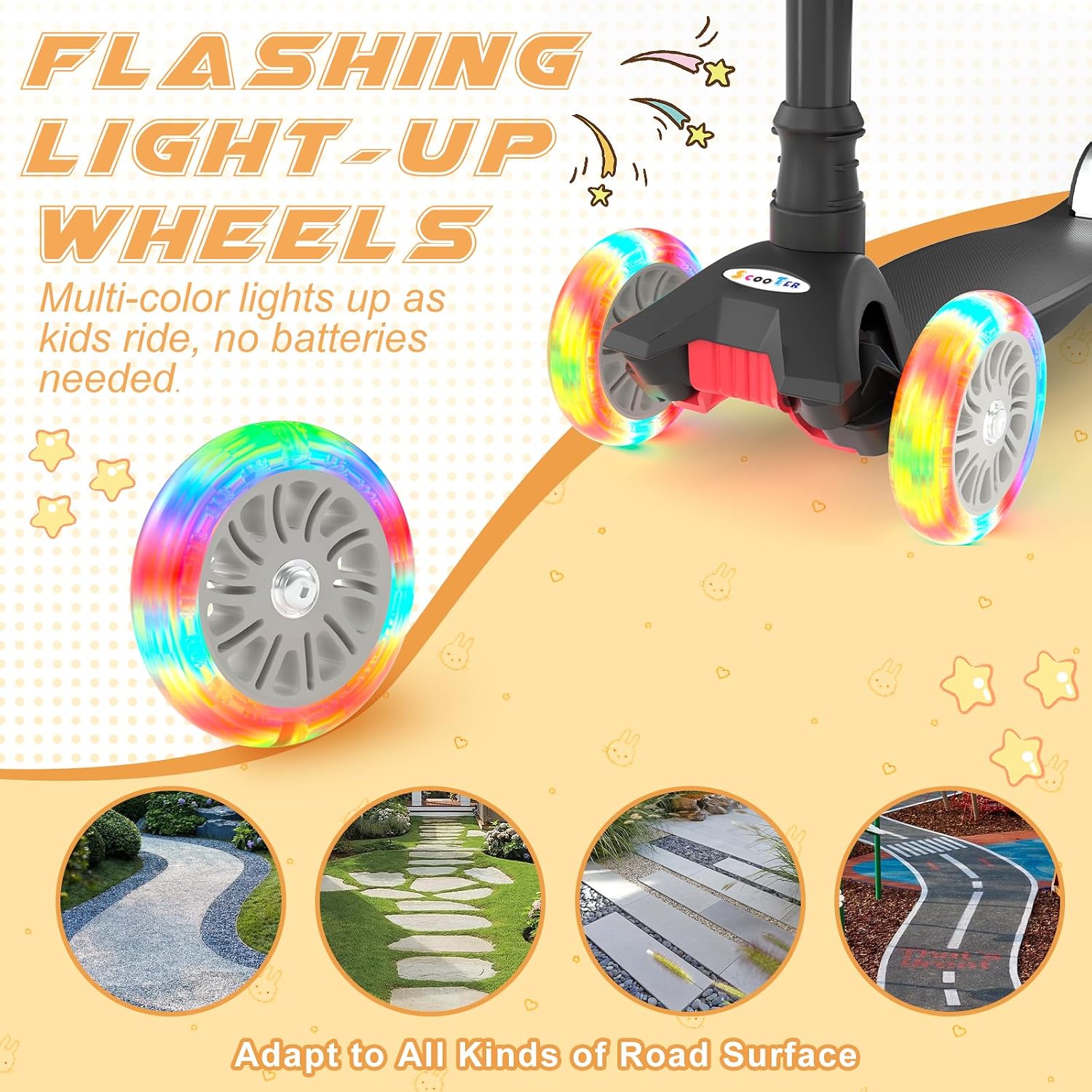
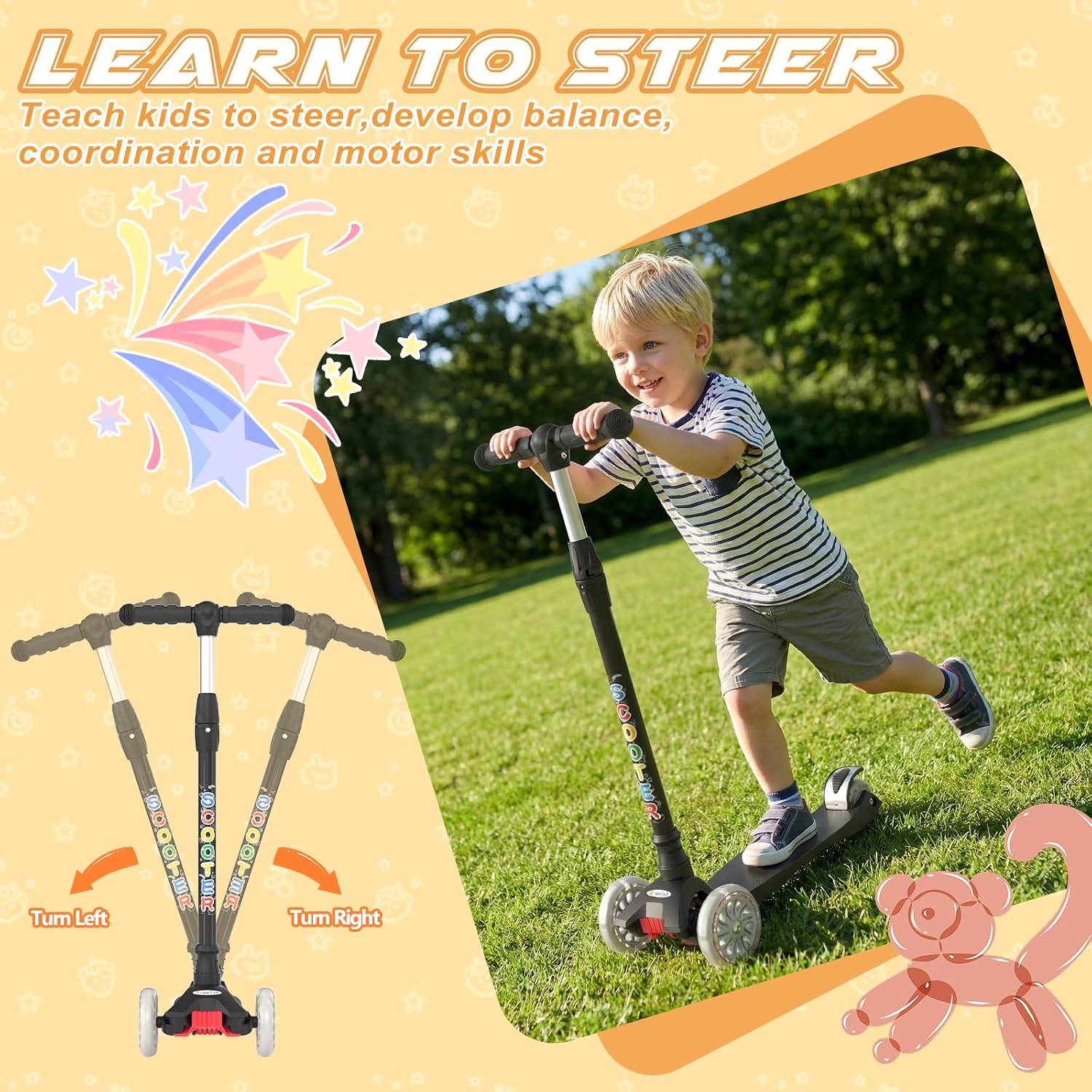
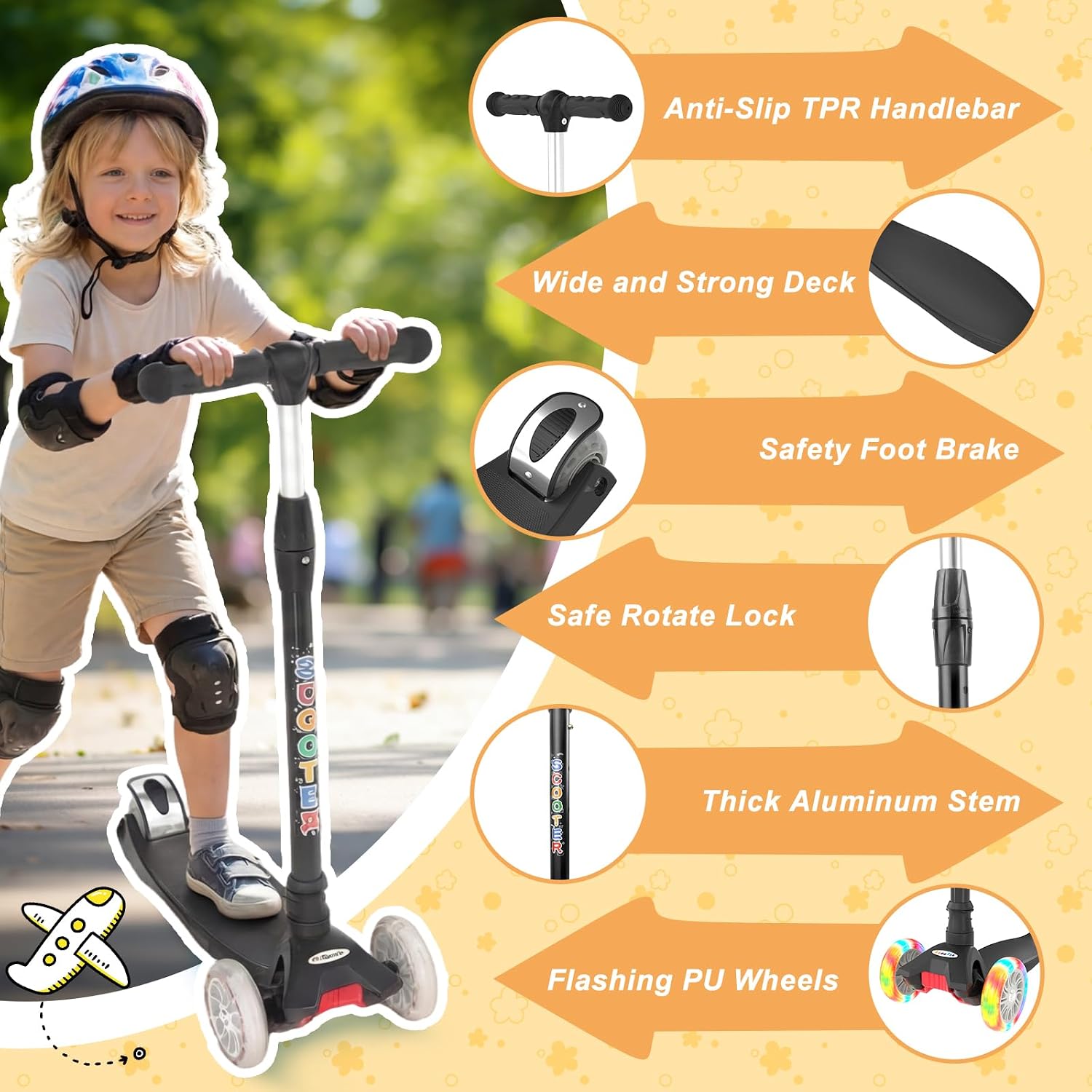
What it is and who it suits\n\nThe KORIMEFA 3 Wheel Kids Scooter is a lean-to-steer, three‑wheel kick scooter designed for children aged 3 to 12. It emphasises stability with a wide 5.5 inch deck and a true three‑wheel setup, aiming to support beginners while remaining engaging for older kids. If you’re after a pragmatic first scooter that can grow with a child, this model offers a straightforward path from early scooting to more confident balancing.\n\n## How it works and core design choices\n\nThe scooter features a two‑front, larger PU wheels with flashing LEDs and a smaller rear wheel, all powered purely by motion—no batteries or chargers required. A built‑in foot brake on the back wheel adds a simple stop mechanism for younger riders, while the lean‑to‑steer design helps kids gain coordination and balance in a natural, progressive way. The deck is notably wide at 5.5 inches, giving feet ample room to stabilise themselves, which can reduce wobble during learning.\n\n## Adjustability and durability\n\nHeight adjustment spans from 72 cm to 85 cm, allowing the same scooter to be used as a child grows. With a maximum weight capacity of 65 kg, it’s positioned to cover a broad span of childhood. The construction aims for lightweight handling—about 2.5 kg—so it’s easy for youngsters to manoeuvre and for caregivers to carry or store between uses.\n\n## Practical pros and limitations\n\nOn the plus side, the three‑wheel build offers more stability at lower speeds and during initial practice, which can be reassuring for anxious or younger riders. The LED wheels add visibility during the day and at dusk, a small but meaningful safety boost for outdoor use. However, the LEDs are passive in bright sun and the overall ride will depend on terrain and rider confidence. For taller kids near the 65 kg limit, performance may feel less sprightly on steep gradients.\n\n## What it’s best for and who it’s not ideal for\n\nThis scooter is well‑suited to little riders who are learning to balance and steer, particularly if you value a wider deck and a stable stance. It may not be the best option for those looking for a high‑speed or highly responsive ride, or for kids at the upper end of the weight range who want a sportier experience on uneven terrain. If your child prioritises flashy features over straightforward stability, you might seek alternatives with different suspension or wheel setups.\n\n## Before you buy: what to check\n\n- Confirm the rider’s height and weight aligns with the adjustable range and weight limit.\n- Consider the typical riding surface—pavement or smooth tarmac is ideal, rough paths may reduce stability.\n- Check the handlebar adjustability to ensure a comfortable reach for your child.\n- Ensure you’re comfortable with how the LED wheels look in daylight and at night, since brightness can vary with light conditions.\n\n## Practical usage example\n\nImagine a sunny afternoon in the park: your child stands with both feet on the wide deck, lightly steering with the lean‑to‑steer motion and gaining confidence as the front wheels flash with each turn. A quick brake tap slows them safely before a gentle stop at a bench, all without needing batteries or remote settings.\n\n## Is it worth it?\n\nWorth considering if you want a beginner‑friendly scooter that grows with your child, emphasises balance rather than raw speed, and provides a simple battery‑free lighting effect for visibility. It may not deliver the most dynamic ride for heftier or more advanced riders, and it’s sensible to assess if the height and weight ranges fit your child’s current and near‑term needs.\n\n## FAQ\n- How easy is it to assemble? It arrives as a board and handlebar, you simply snap the T‑bar into the deck and you’re ready to ride.\n- Do the LED wheels require batteries? No, they operate without batteries and change colour as you ride.\n- Is the scooter suitable for very young children? Yes, the 3‑wheel design with a wide deck is intended to support early learners.\n\n## Final note on usage expectations\n\nIf you prioritise stability, straightforward handling and a compact, light design for storage, this model fits that brief. It won’t replace a more feature‑rich or sportier scooter for older kids or frequent heavy use, but it offers a practical stepping stone for young riders moving from training wheels to real balance and control.