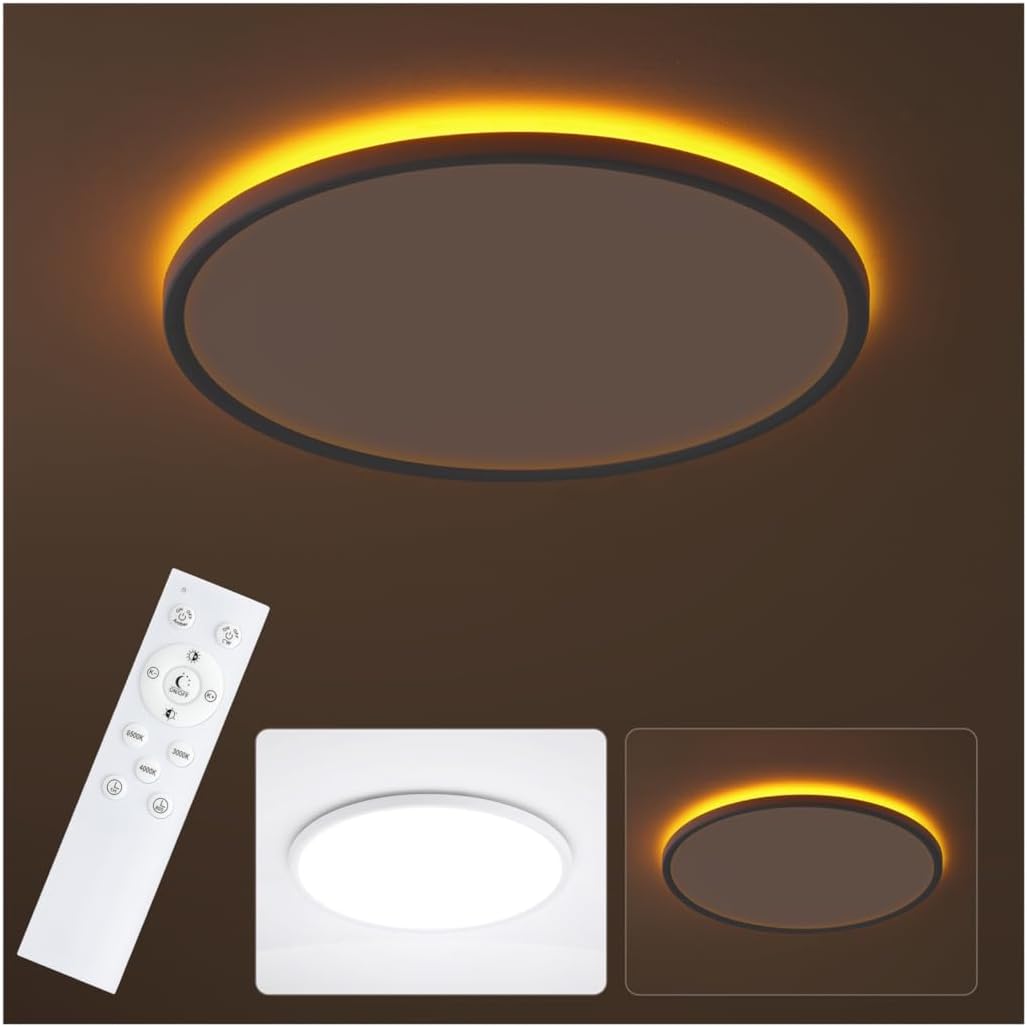
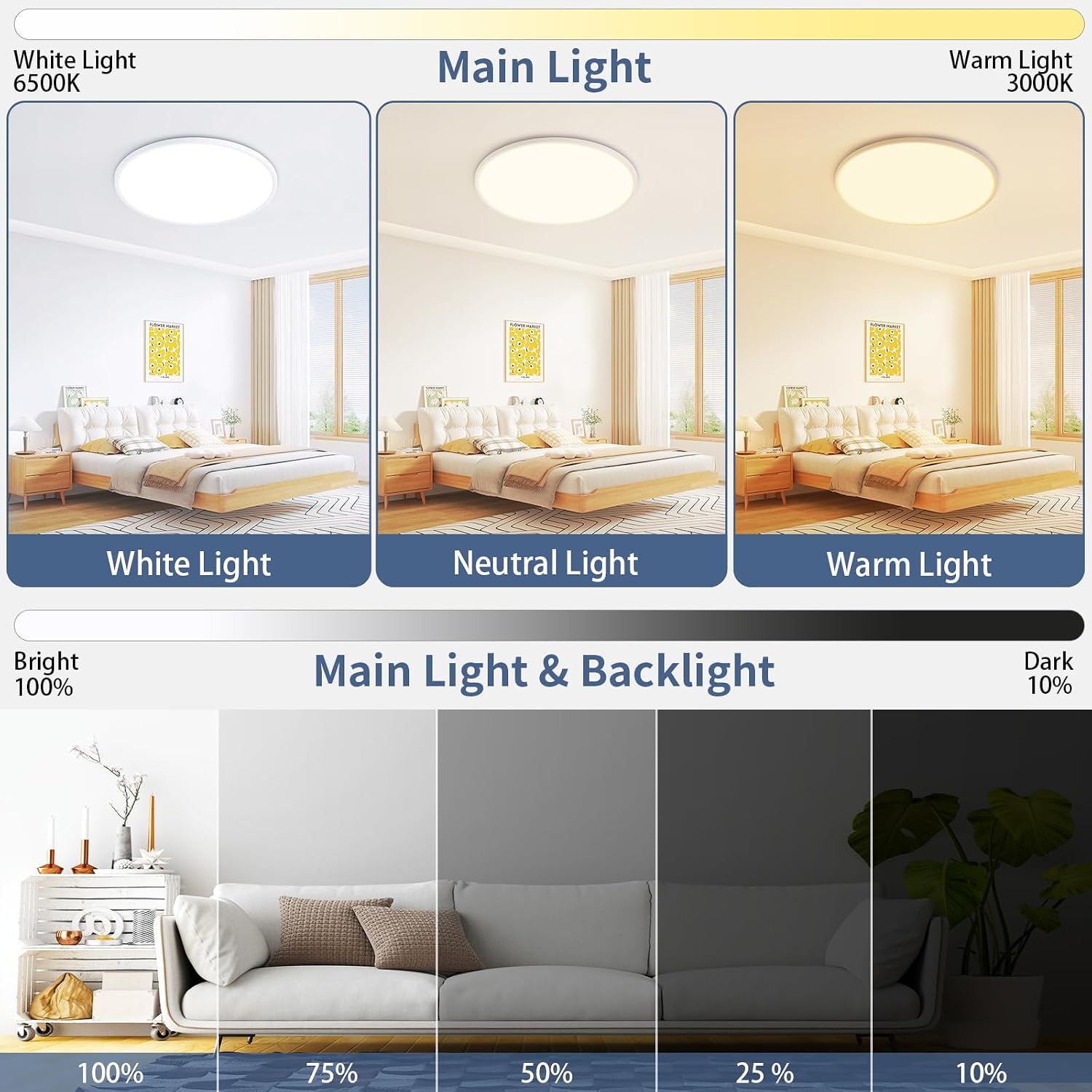
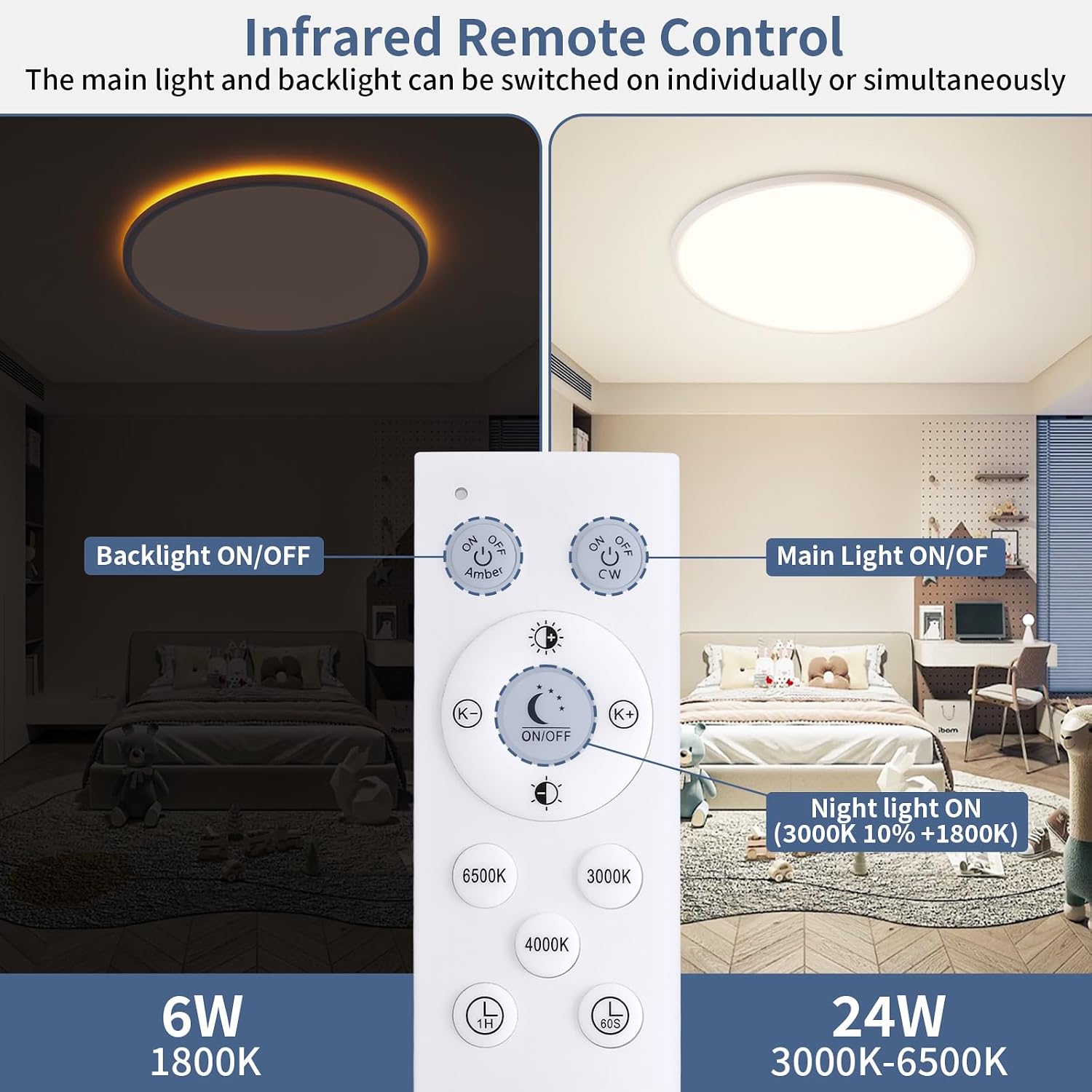
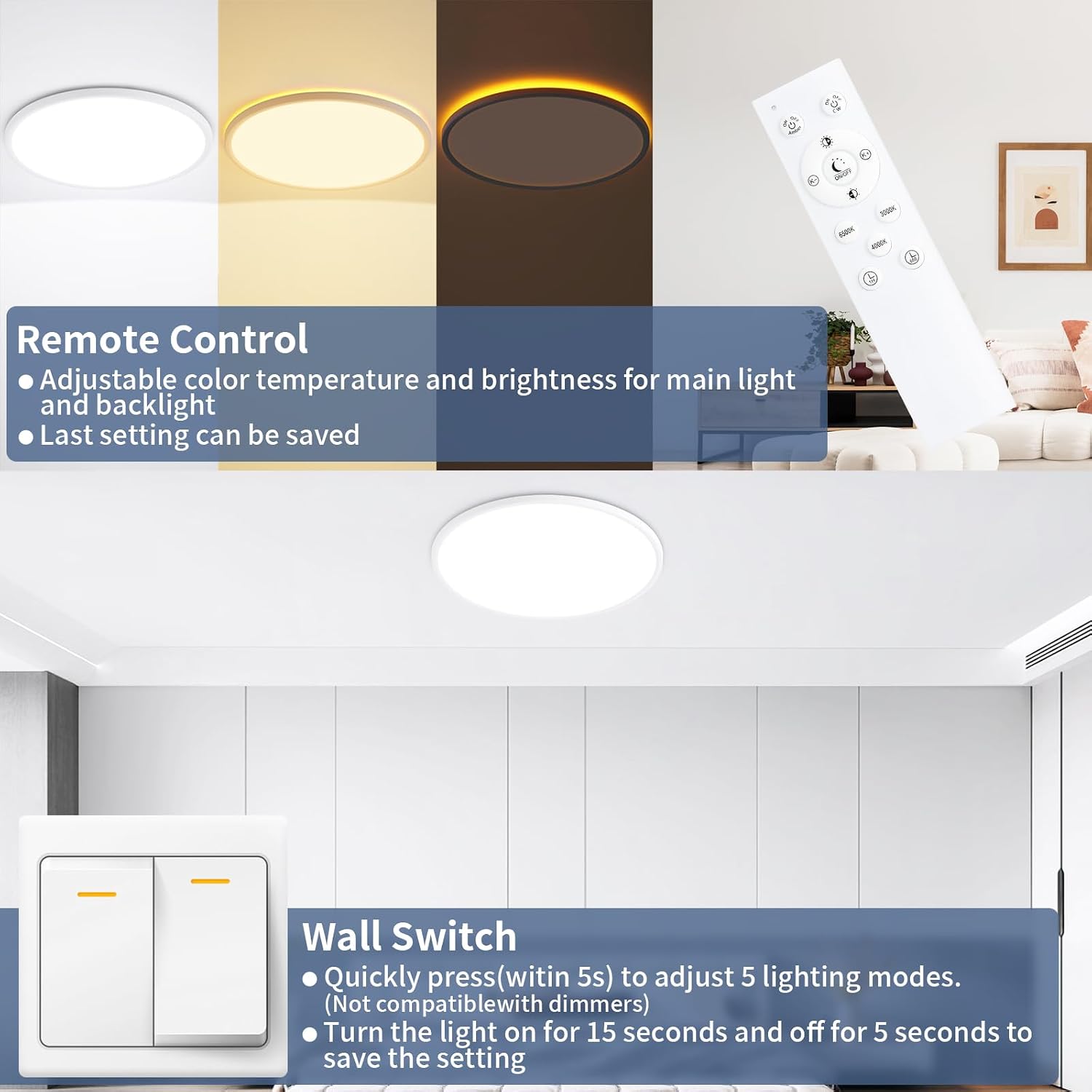
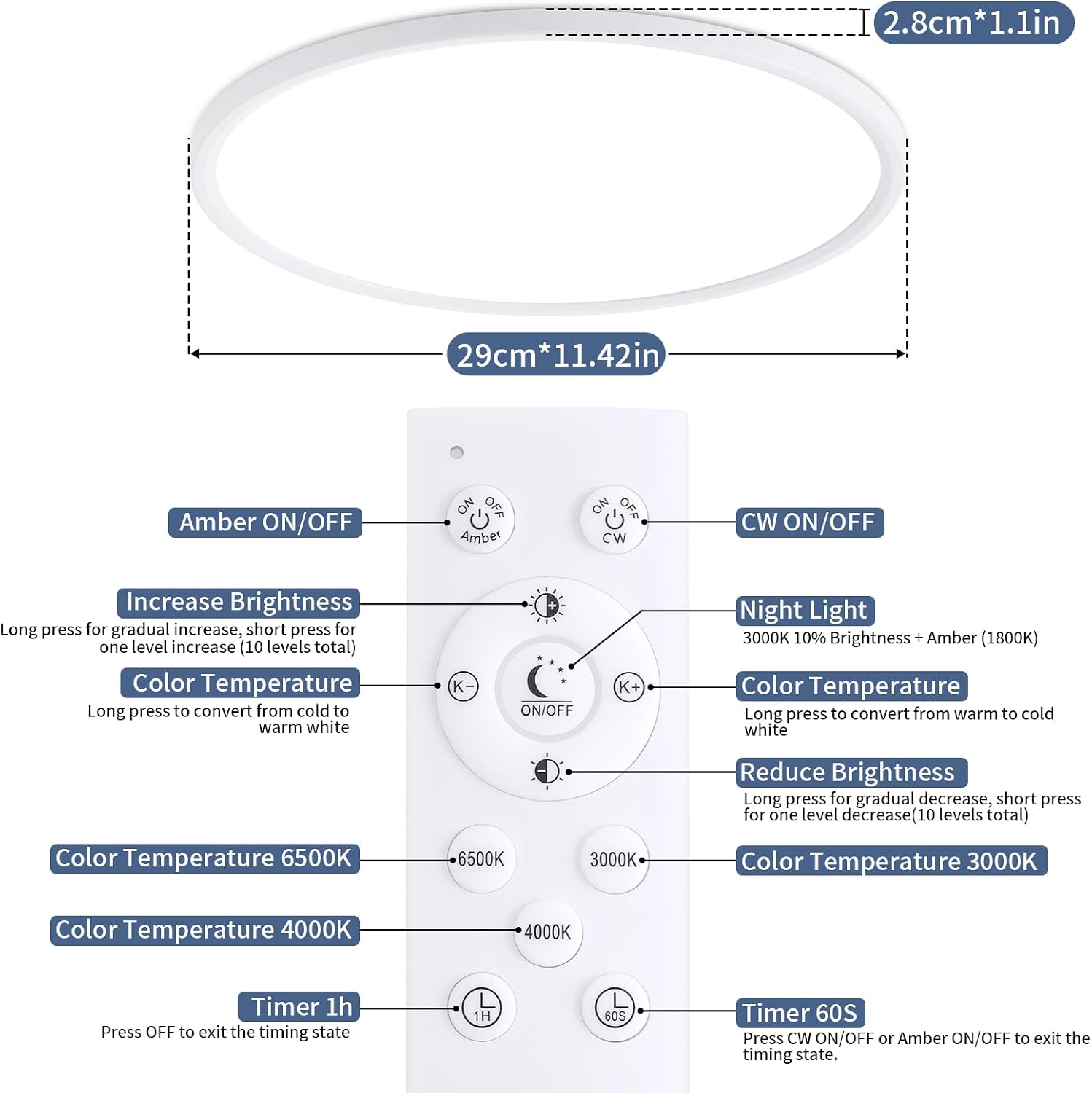
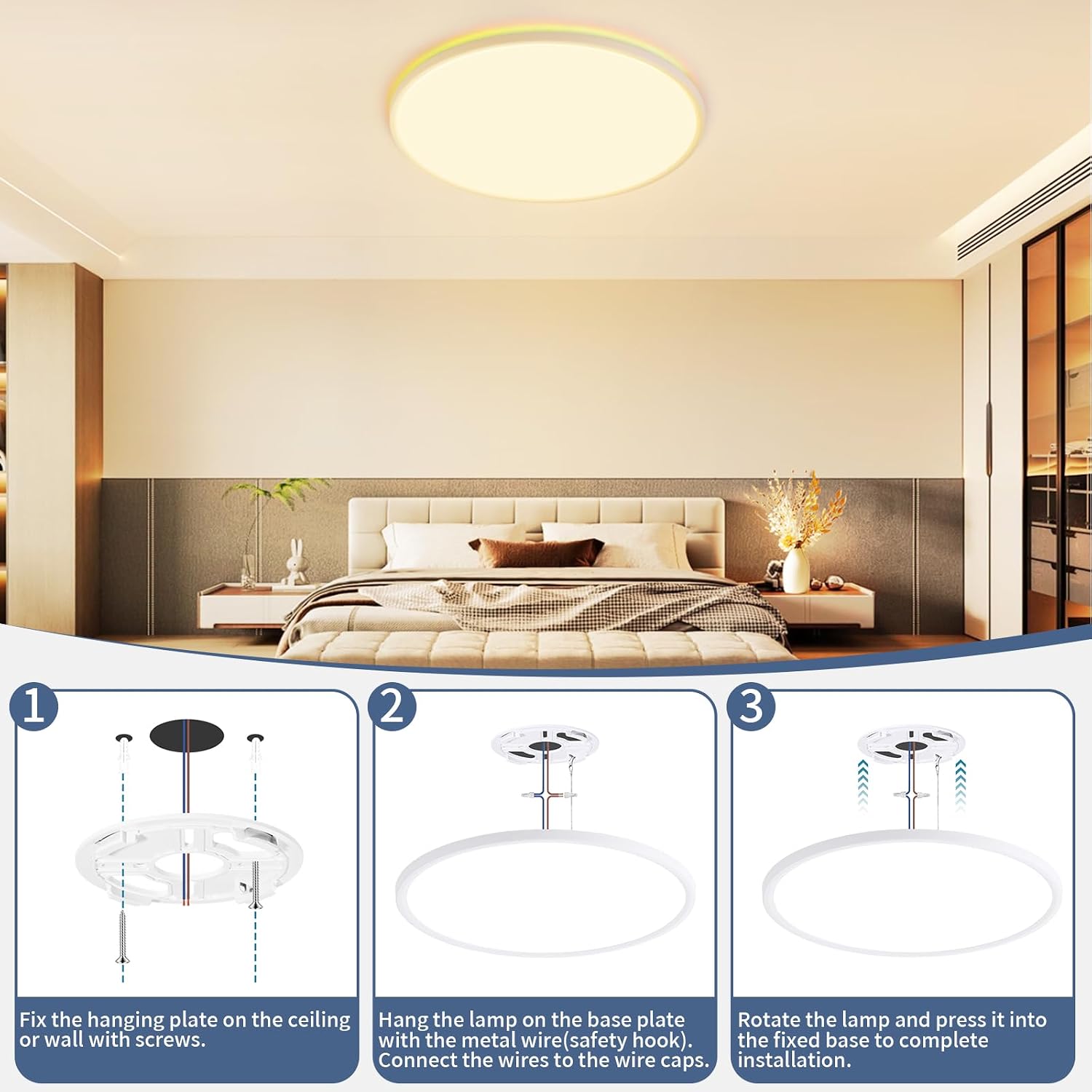
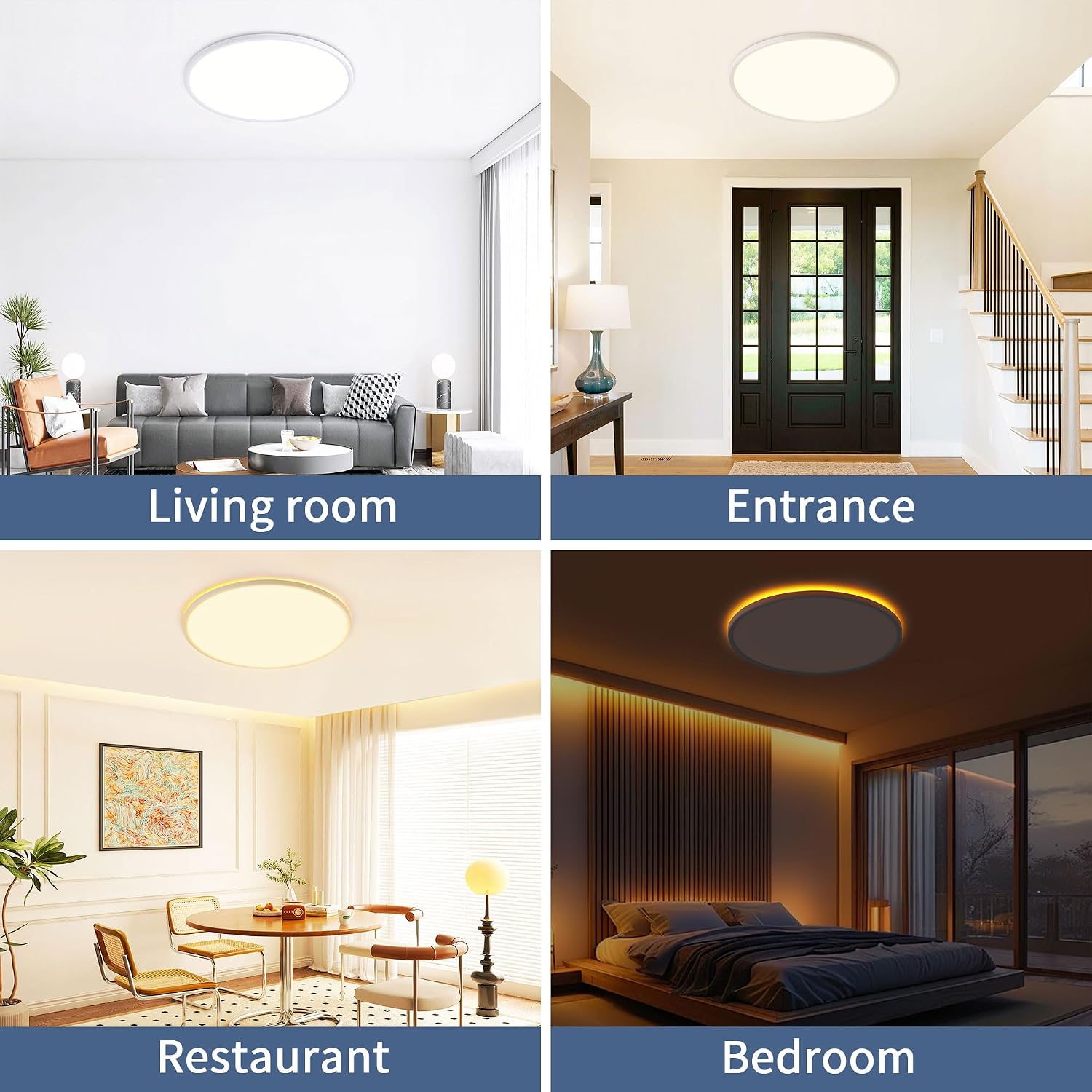
What this is and what it tries to solve\nThe KIWIVIC ceiling light is a 30 cm, 24 W LED fixture designed to illuminate a range of living spaces—from kids’ rooms to kitchens and hallways. It combines a dimmable main light with a separate amber backlight, aiming to provide both general illumination and a cosy night-time glow. On paper, the dual-layer approach can help reduce glare during evening routines while still offering a bright option when needed. If you prioritise a single light that can adapt to different moods or times of day, this model presents a straightforward, one-twist solution.\n\n## How the light works in practice\nThe main light is colour-temperature tunable from 3000 K to 6500 K with stepless dimming from 10% to 100%, and it’s controlled via a remote. The backlight is fixed at 1800 K amber and can be used independently or alongside the main light. The backlight’s low power draw (7 W) complements the brighter main light, potentially cutting overall energy use when a full brightness isn’t necessary. The fixture also features a memory function for the last used settings, which can be handy if you frequently return to a preferred mood.\n\n## Practical use cases and realistic expectations\nIn a child’s room, you might rely on the warm 1800 K glow for bedtime or quiet time, then switch to a neutral or cool temperature for homework or dressing. In a kitchen or hallway, the main light’s broad reach and high brightness can aid general visibility, while the backlight remains a soft night-time option. However, the device notes that it is not compatible with standard wall dimmers, which means you’ll need to rely on the remote and the wall switch’s preset colour temperatures rather than a traditional dimming mechanism.\n\n## What stands out, and what might disappoint\nOn the plus side, you get a large 30 cm ceiling panel with visible energy savings claims—up to 85% cost reduction versus older lighting in the same role. The included remote adds convenience, removing the need to reach for a switch every time you want a different ambience. The separation of main light and backlight allows flexible lighting scenes, and the timer function adds a practical feature for bedtime or timer-based tasks. It may not feel premium if you’re after a very high-end lighting aesthetic or if you expect seamless integration with a broad smart-home ecosystem, since the description focuses on traditional remote control rather than smart assistants.\n\n## Who this is for\nThis fixture is sensible for households seeking practical, adaptable ceiling lighting with a cosy night-time option. It suits families with children who benefit from a gentle amber glow at night, as well as those who want a flexible main light for daily activities without complex setup. It’s also a reasonable pick for spaces that need both brightness for tasks and a softer backdrop for winding down.\n\n## When it makes sense to buy\nIf you value independent control of warmth and brightness, and you don’t need dimming through a wall switch, this light provides a clear two-zone setup in one unit. It’s a practical upgrade if you’re replacing an old ceiling light in a room used for multiple activities with different lighting needs. It’s less ideal if you require smart home compatibility or compatibility with standard dimmer switches.\n\n## What to check before buying\nConfirm the room size to ensure the 30 cm panel provides adequate coverage for your space. Check that the 1800 K amber backlight aligns with your preferred night-time ambience and that you have space for the remote control storage in the room. Remember that the main light’s temperature range is broad (3000–6500 K), but dimming is not achieved through a wall dimmer.\n\n## How it compares to alternative approaches\nIf you favour a single mood-optimised light, a traditional warm or cool ceiling light may be simpler but less flexible. This unit bets on a two-layer approach: a main adjustable light plus a dedicated warm backlight. For spaces where you want a quick switch between “bright for tasks” and “soft for winding down,” it represents a balanced middle ground between basic ceiling LEDs and more complex smart lighting systems.\n\n## Decision point: is it worth it?\nIt’s a reasonable choice if you prioritise practical adjustability and a dedicated night light without needing to programme routines or integrate with a smart home. It may not be the best option if you want full smart control or compatibility with dimmer wiring. If you value energy savings and easy control via remote, this model could well fit your day-to-day needs.\n\n## Quick use-case example\nImagine you’re tidying the kitchen after dinner: you switch the main light to a bright neutral tone (around 4000 K) and full brightness for clear visibility. As bedtime approaches, you dim the main light and enable the 1800 K amber backlight to create a calm, ready-for-sleep atmosphere without a harsh glare. The timer can be set to turn off after a chosen period, offering a simple routine aid.\n\n## FAQ (practical answers)\n- Can I dim the main light with a wall dimmer? Not compatible with dimmers. Use the remote or preset wall switch temperatures instead.\n- Does the backlight affect energy use? The backlight uses 7 W, while the main light can run up to 24 W, so overall energy use scales with how you use the two zones.\n- Is memory function reliable? The remote saves the last setting, but the wall switch requires at least 15 seconds of on time to remember the colour temperature setting.\n