

KAIWEETS HT100S Voltage Tester: Dual-Range 12–1000V NCV Non-Contact Tester
Product description
What it is and what it’s for
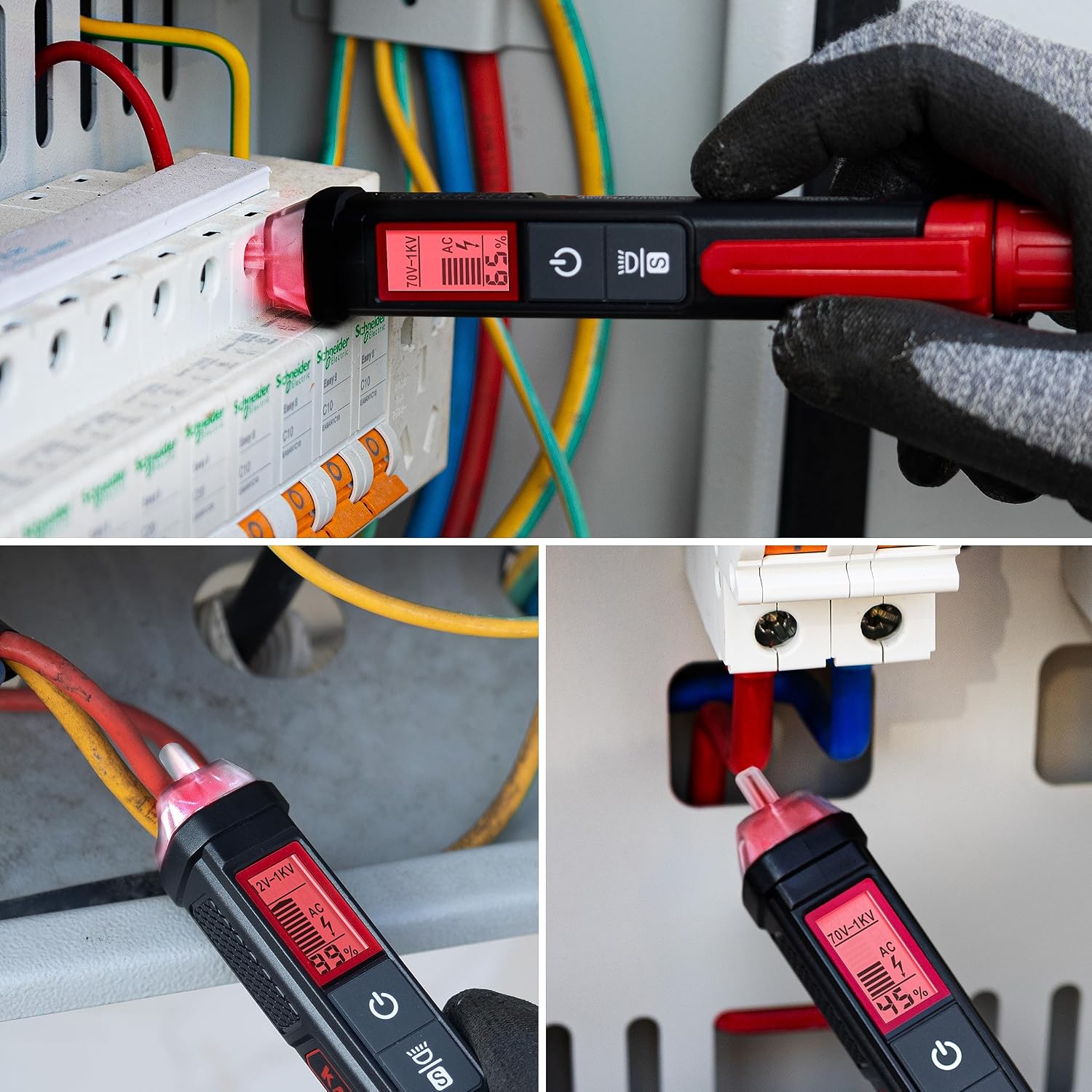
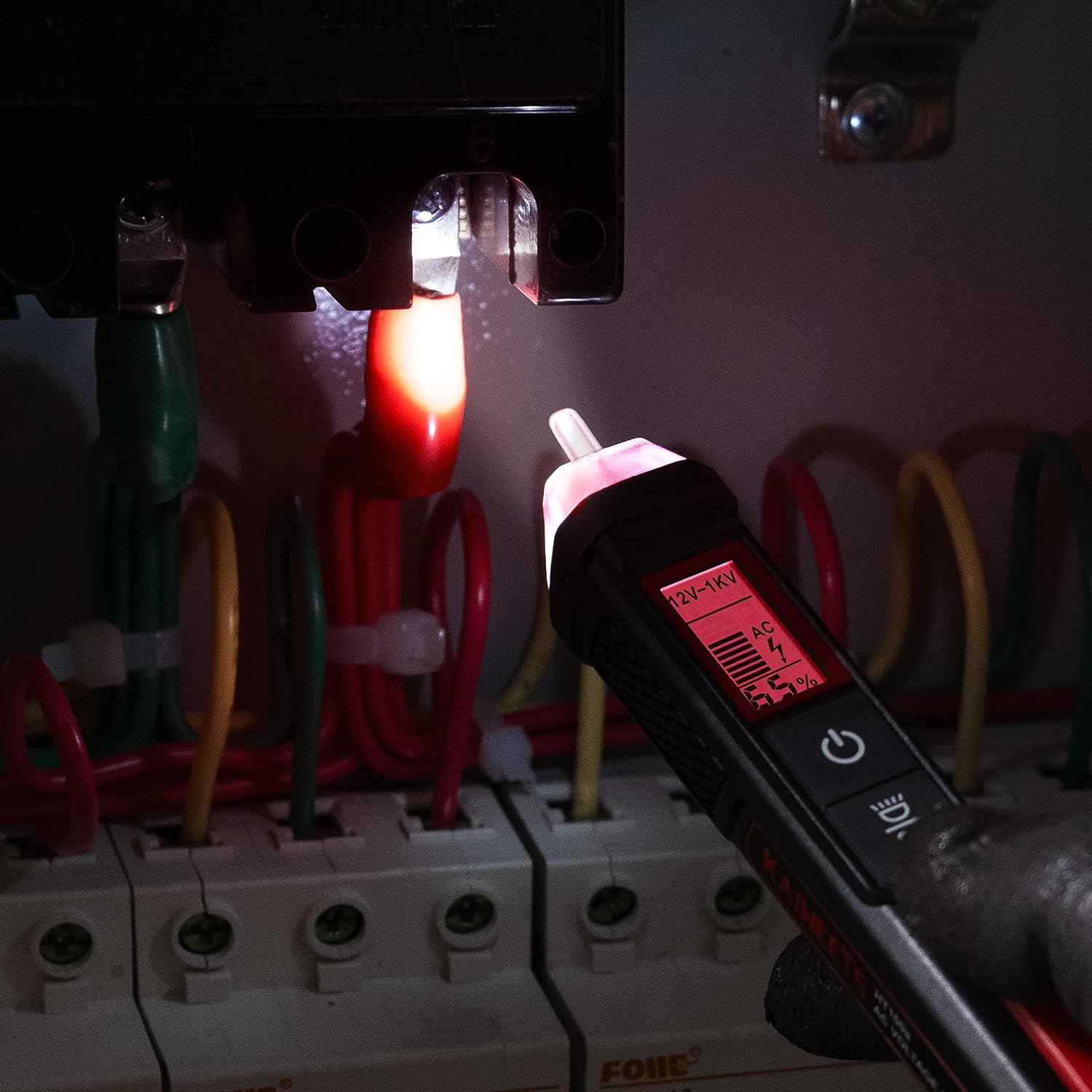
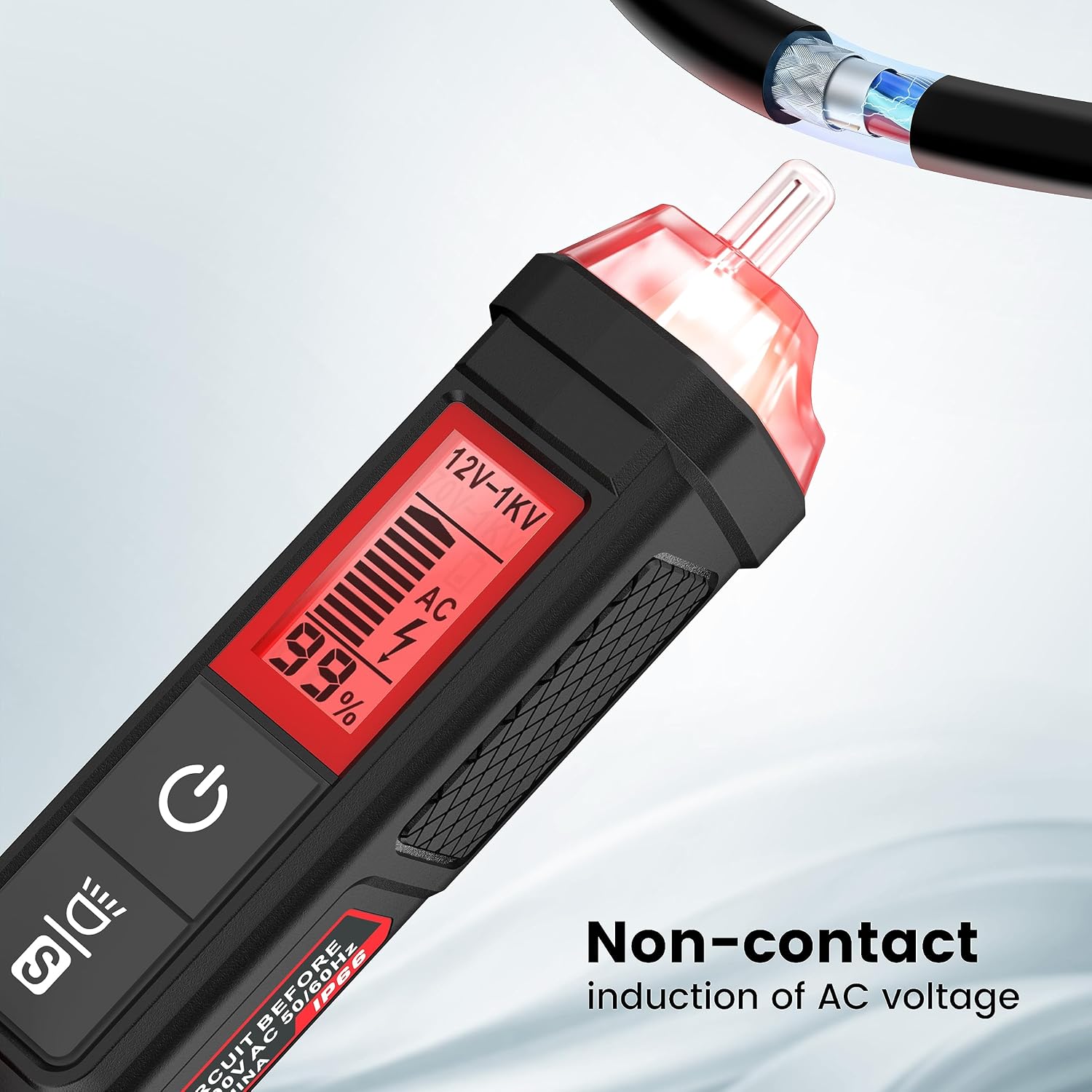
The KAIWEETS HT100S is a compact, dual-range voltage tester designed for non-contact detection of AC voltage. It’s aimed at electricians and homeowners who want a simple, quick check to verify presence of live circuits and identify breakpoints in wiring. On approach to a terminal strip, outlet, or supply cord, the NCV tip glows red and the unit emits a beep to signal voltage. The device can distinguish live or neutral wires and provides visual feedback via a red/green screen depending on detected voltage levels. It’s meant to be a practical, everyday tool for routine safety checks and basic troubleshooting.
How it works on the ground
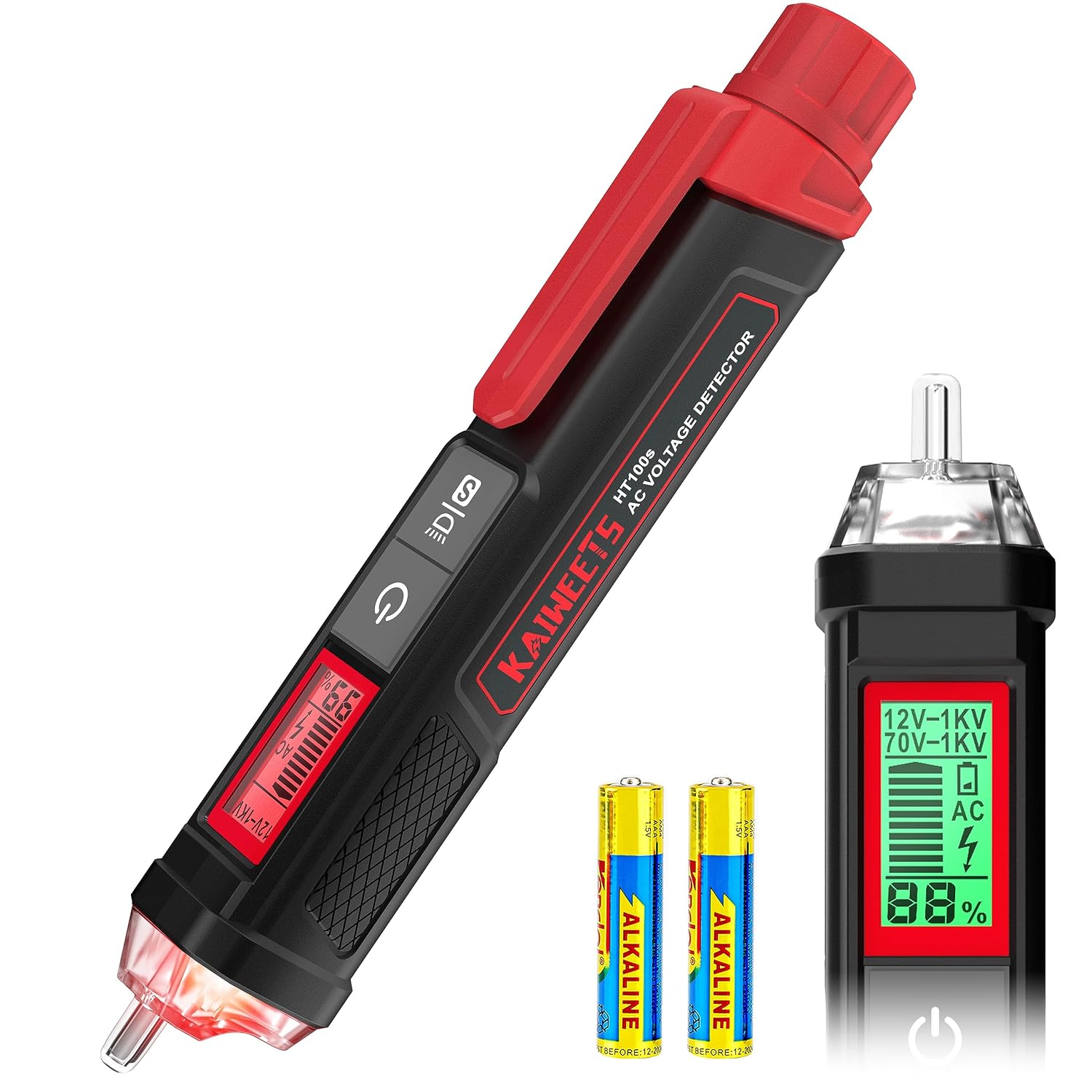
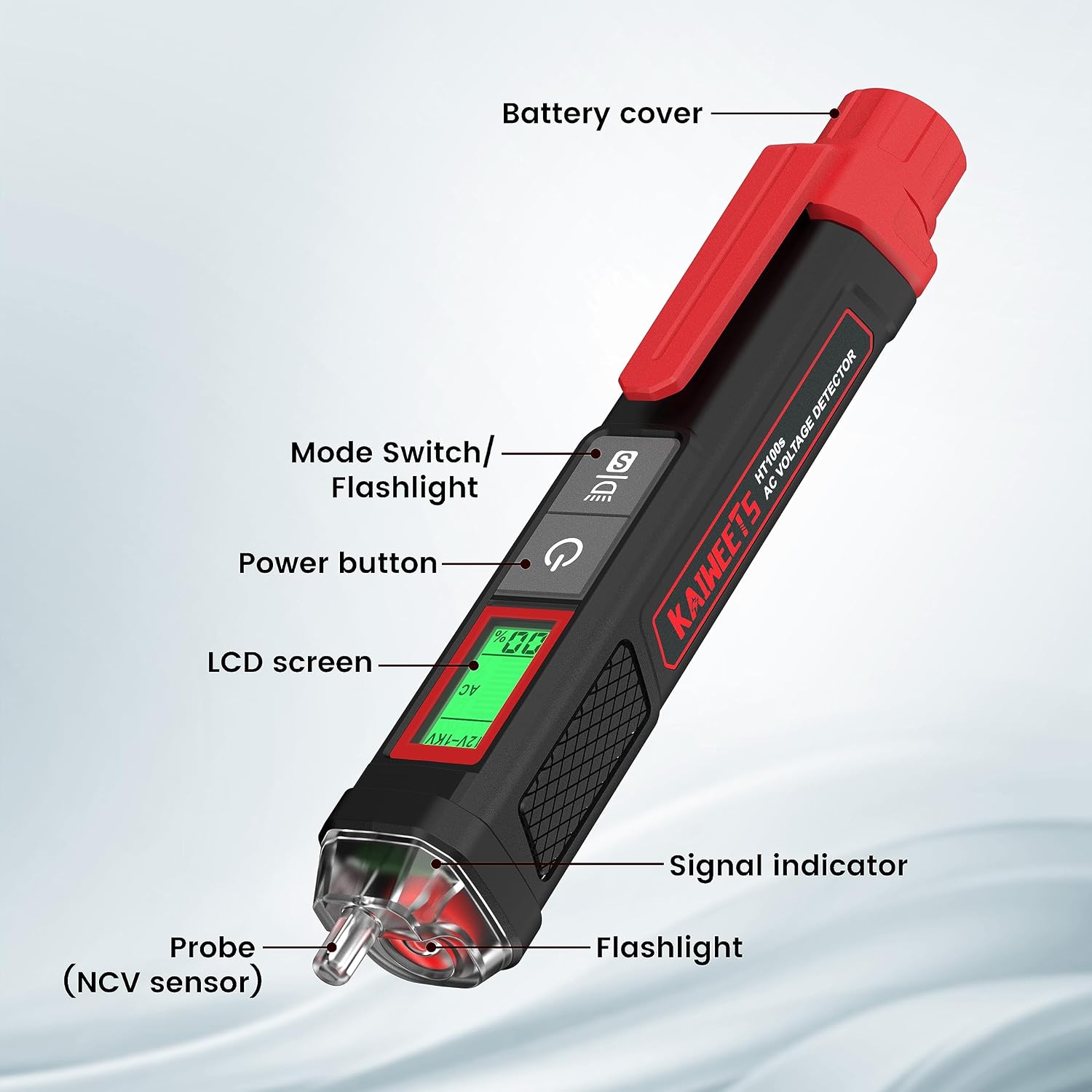
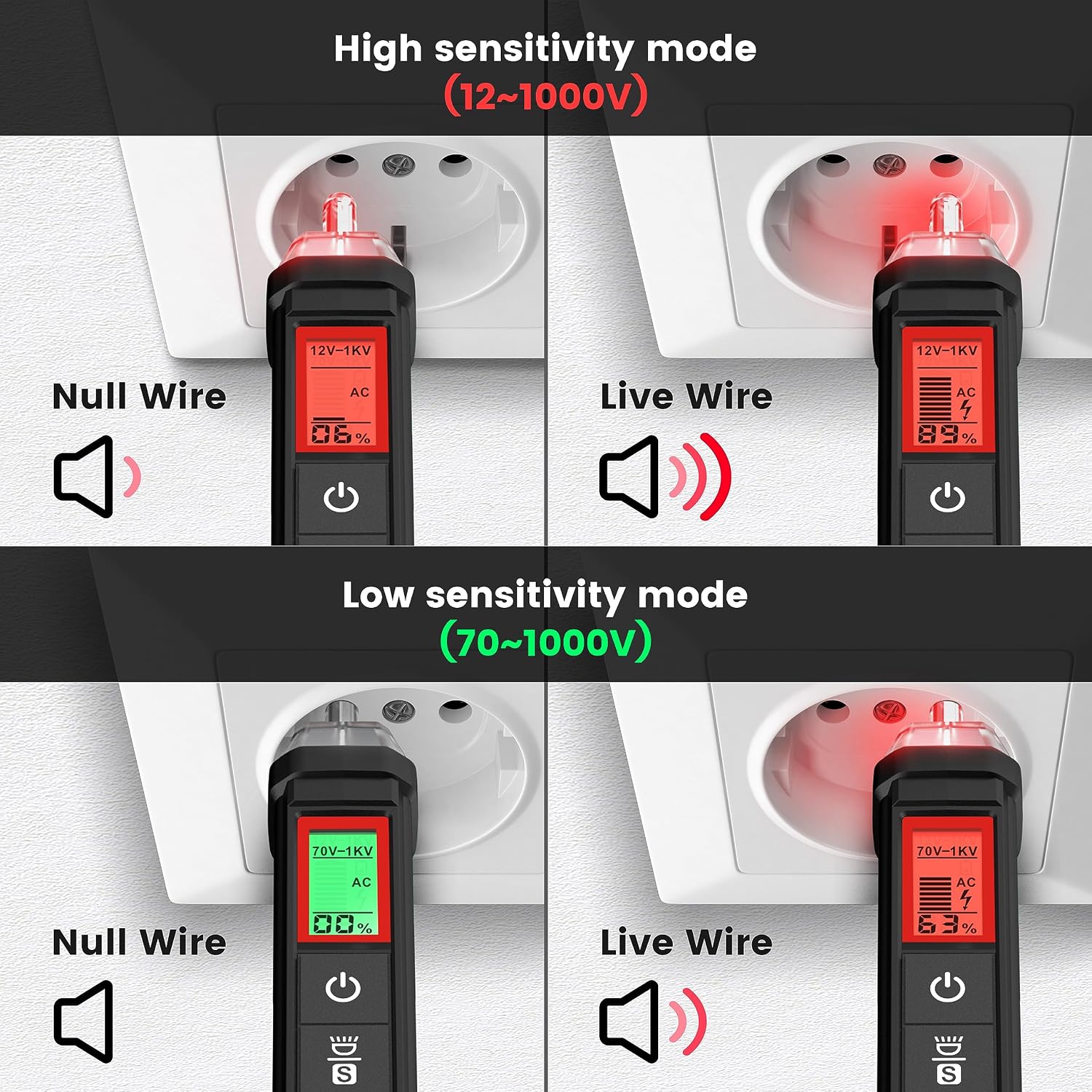
Voltage detection is non-contact, which means you can test without touching live conductors. The HT100S covers two voltage ranges: 12–1000V AC and 70–1000V AC, offering flexibility for various household and light commercial scenarios. There’s a sensitivity adjustment (the S button) to tailor detection, useful when testing lower-voltage devices like doorbells or thermostats. The NCV sensor automatically interprets voltage and displays a bar graph, while LEDs and sound alarms provide multi-sensory alerts.
What stands out in use
On the safety front, it’s IEC-rated CAT III 1000V and double-insulated, which adds a level of confidence for everyday use. The red light and higher-pitched beep indicate stronger or closer voltage, while green indicates a lower or null voltage scenario. A high-voltage alert exists to warn when voltage exceeds about 70V. A bright LED worklight helps in dim spaces, and the unit auto‑powers off after five minutes of inactivity to save battery life.
Pros and potential drawbacks
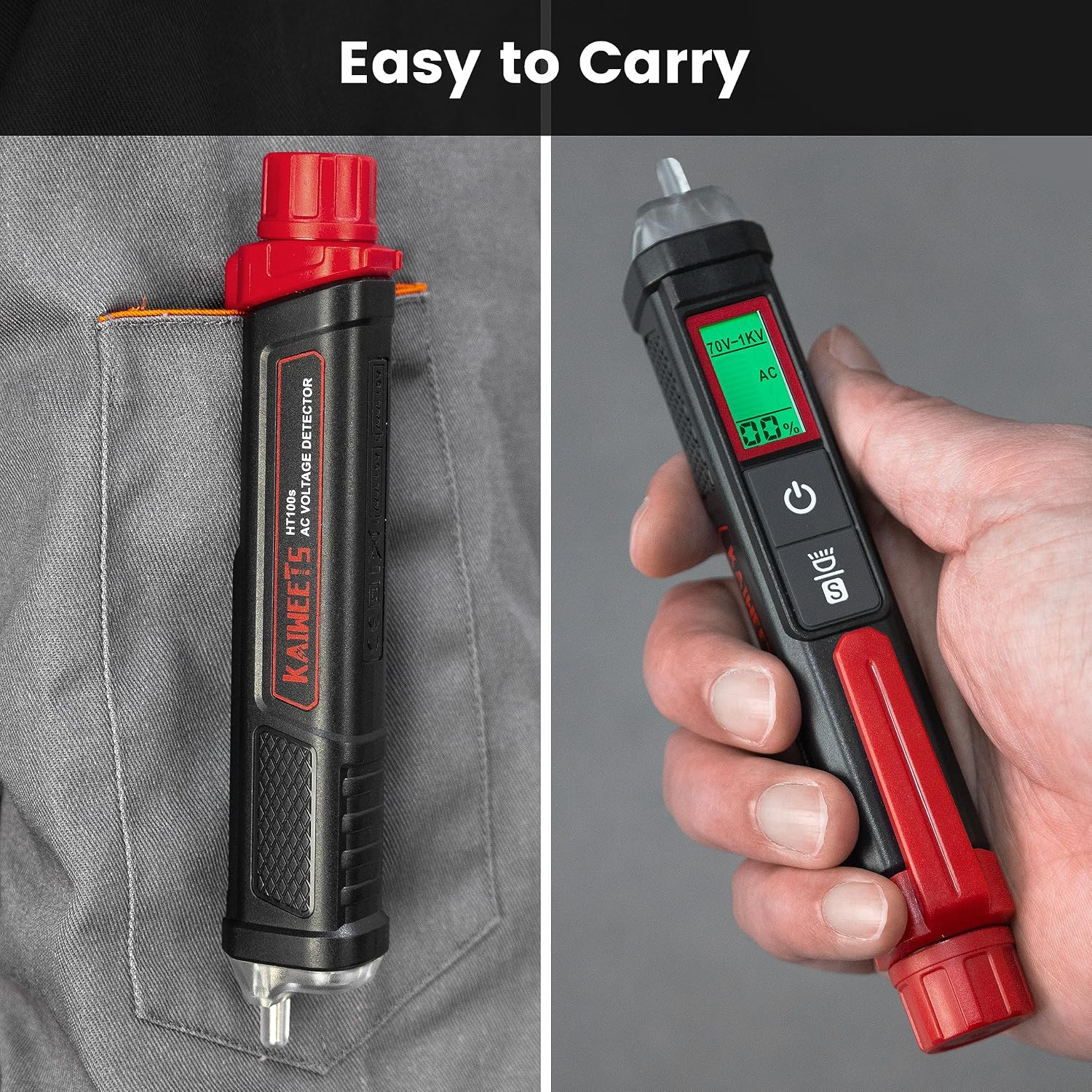
- Pros: straightforward non-contact testing reduces risk, dual-range increases versatility, automatic live/neutral recognition, clear visual and audible cues, backlit display, pocket-friendly with a hanging hook for easy carrying.
- Cons/Limitations: as with any NCV tester, it doesn’t substitute for a full multimeter or resistance checks, the tool relies on proximity and beep frequency for indication, which may require a bit of practice for precise interpretation. The device is designed for AC voltage only, so DC scenarios aren’t supported.
Who this is for
It suits electricians needing a quick field check, DIY enthusiasts, and homeowners who want a simple device to verify live circuits, locate breakpoints, and perform general wiring sanity checks. If you prioritise a compact tester with multiple alarms and a built-in light, this model aligns well with those needs.
Who it isn’t ideal for
If you require precise voltage measurement, detailed waveform data, or DC voltage testing, this isn’t the best option. It also won’t replace more advanced testers in professional settings where rigorous validation is needed.
When it makes sense to buy
Choose the HT100S if you want a compact, easy-to-use non-contact tester with two voltage ranges and visible/audible alerts. It’s particularly handy for quick checks in tight spaces or when you need to confirm whether a circuit is energised before proceeding with work.
What to check before buying
- Confirm the product supports the voltage ranges you’ll encounter (12–1000V AC and 70–1000V AC).
- Check that you’re comfortable with non-contact detection as the primary indicator, understanding that it provides quick yes/no signals rather than precise measurements.
- Consider whether a built-in flashlight and buzzer align with your typical work environment and lighting conditions.
Practical usage example
You’re checking a wall outlet in a dim utility room. You bring the HT100S near the outlet, and the tip glows red while the unit beeps. The screen shows red, indicating live voltage. You switch to the lower range to verify nearby wiring for a suspected fault, and the bar graph confirms a lower voltage reading while the green indicator appears when testing a non-energised leg. It’s not a substitute for complete circuit tracing, but it quickly identifies live wiring before you proceed with any disturbance to the circuit.
FAQ (quick answers)
- Does it test DC voltages? No, the HT100S is designed for AC voltage detection only.
- How does the device indicate voltage levels? Via red/green screen and audible beep, with higher frequency as voltage increases.
- How long does the battery last and does it auto‑shut off? It features auto power off after 5 minutes of inactivity or no signal.
Final thoughts
If you need a practical, unobtrusive voltage tester for day-to-day checks and basic breakpoint testing, the HT100S offers a balanced mix of simplicity and useful features. It may not replace a dedicated multimeter for detailed diagnostics, but for quick safety checks and routine testing, it can be a sensible addition to a toolbox.
Decision point
Is it worth it? Worth considering if you prioritise a compact, dual-range NCV tester with clear alarms and a built-in light for dim spaces, not the best choice if you require precise measurements or DC testing.