

JOYO DC 9V Guitar Pedal Power Supply (800mA–1A) with 4-Way Daisy Chain
Reviews
Price
Product description
What matters most
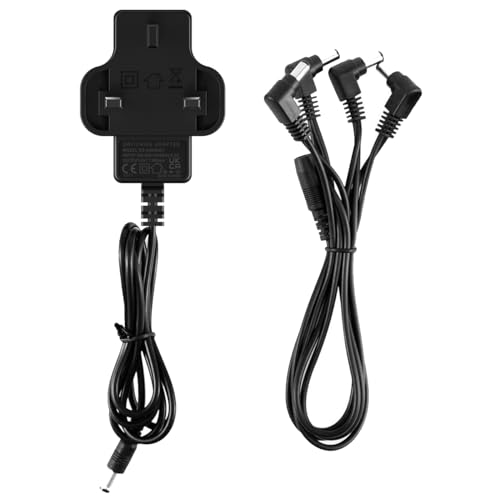
For pedalboard reliability, a dedicated power supply that can handle multiple effects without introducing noise is essential. The JOYO DC 9V pedal power supply delivers a compact solution with a single 9V DC output rated up to 1A and a practical 4-way daisy chain. It’s designed to work with pedals that use centre-negative power, a common standard in guitar gear, and it can also power certain keyboards that operate with tip-negative polarity. The unit makes a reasonable case for players who want a simple, one-cinch setup to keep their pedal board tidy rather than juggling several individual adapters.
What it is and what it isn’t
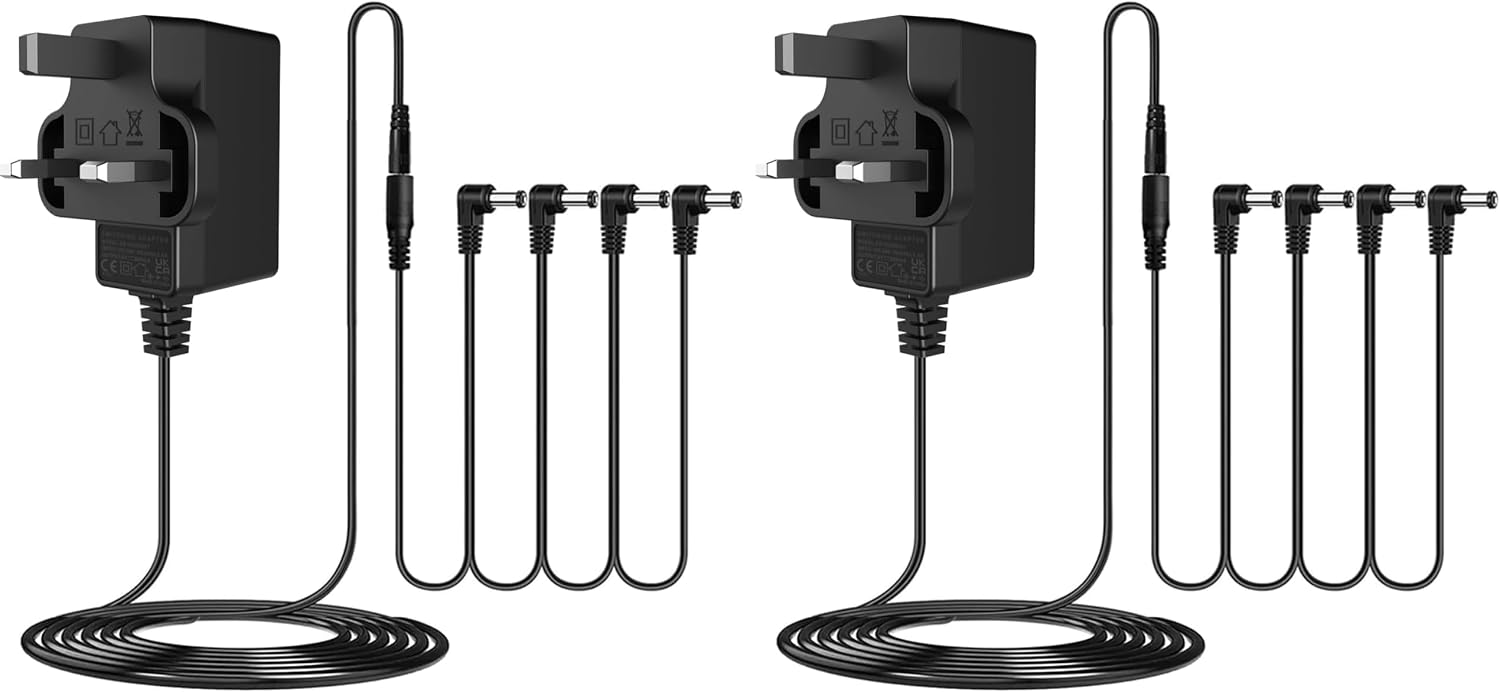
On paper, this is an AC wall charger that converts household AC to 9V DC with a maximum total current provision of 1A across four connected pedals. It includes a smart and professional IC chip to help reduce noise and provide some level of isolation and protection. That combination can help maintain signal clarity on a crowded board, but it isn’t a high-end isolated power supply or a modular system with individually regulated outputs. If your pedal chain has especially power-hungry units or you need absolute isolation per pedal, you may want to look further.
Best use cases
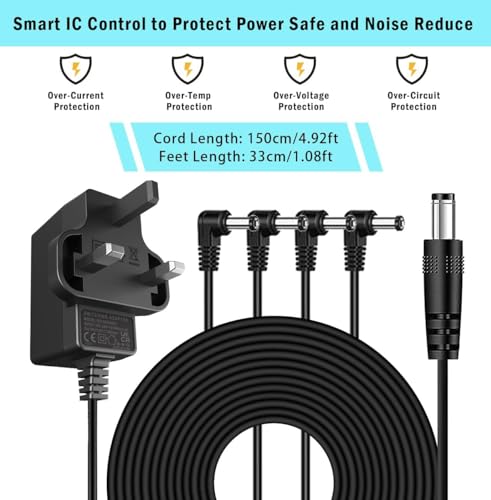
If your setup consists of a handful of standard guitar effects that prioritise quiet operation and you don’t need separate regulation for each pedal, this JOYO unit offers a straightforward, budget-conscious option. It should suit players who value simplicity, travel-light setups, or beginners building their first pedalboard. It’s also a handy backup supply for gigs or practice sessions when you’re not using a large array of pedals.
What stands out day to day
A notable strength is the 4-way daisy chain, which allows powering four pedals from a single outlet. That reduces cable clutter and limits the number of separate power bricks on the floor. The central point of failure is the daisy chain’s shared regulation and potential current drop if multiple pedals demand more than the combined 1A, so it’s sensible to map power usage before committing to the layout. The polarity note is important: centre-negative is standard for most guitar pedals, but the unit’s compatibility with tip-negative devices (like some keyboards) may widen its utility in small setups.
Limitations and caveats
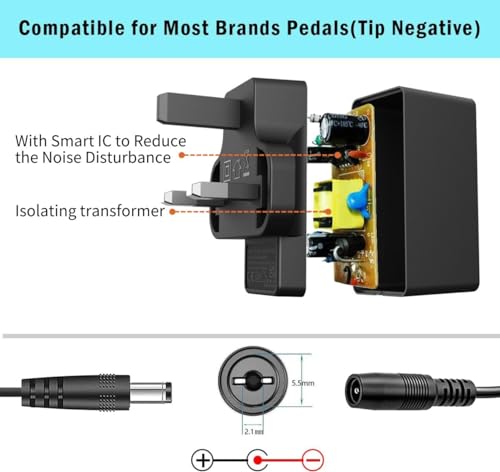
It isn’t advertised as an isolated supply per pedal, isolation and regulation are more about noise reduction and general protection rather than per-output guarantees. If you run high-gain or digitally powered pedals that draw bursts of current, the total 1A ceiling could be restrictive. Additionally, the device operates on AC input 100–240V, 50/60Hz, but the real-world performance depends on your specific AC supply and the load placed by the connected pedals. If you prioritise ultra-clean, pedal-by-pedal isolation or need individual voltage rails (e.g., 9V, 12V, 18V, etc.), this model may not be the best fit.

Who it’s for and who should think twice
It’s a sensible choice for players consolidating a modest collection of pedals and wanting a simple, compact power solution that’s easy to travel with. If your board already includes high-current, demanding effects, or you’ve encountered hum or ground-loop issues with cheaper adapters, you might prefer a higher-specification unit with dedicated isolation on each output. In short, it’s more of a space-saving, entry-to-mid level option rather than a premium power system.
Before you buy: what to check
- Confirm your pedals’ current draw and total demand to ensure it stays within the 1A limit when energised simultaneously.
- Verify polarity compatibility: centre-negative is common, but confirm if any of your devices require tip-negative.
- Consider the power-to-size ratio: if you want a truly tidy, single-branch setup, this model helps. If you need per-pedal stability and independent regulation, budget for a more robust solution.
- Acknowledge that this is not a modular, per-output isolated supply, plan your cable routing to minimise potential noise sources.
How it compares to alternative approaches
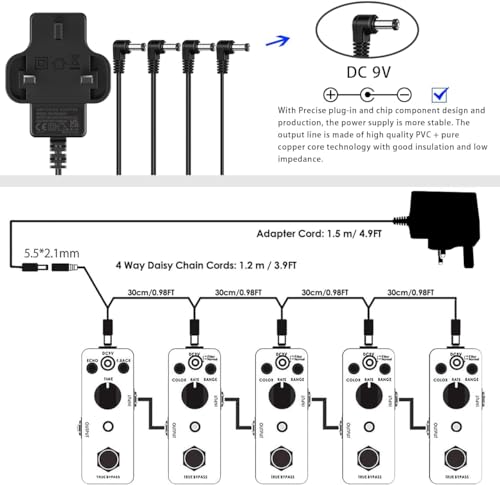
For players on a budget or those building a small-board, the JOYO option offers a pragmatic compromise between single-adapter simplicity and noise-conscious designs. If you’re weighing options, think about whether you value minimalism and portability over per-output isolation, or if you expect to scale up with more pedals or power-hungry effects. In such cases, a more feature-rich supply with separate isolated outputs would typically be the smarter long‑term investment.
Practical example in use
Imagine a compact pedalboard with a boosted overdrive, a delay, a reverb and a tuner. You can power all four from a single brick, keeping floor clutter down and setup time quick. As you switch presets during rehearsal, you’ll notice whether the supply sustains current demand smoothly or if pedal activity begins to dim with heavier effects engaged. If you find yourself occasionally resetting pedals due to power sag, that’s a cue to reassess the load or upgrade to a more capable or isolated system.
Final thoughts
Is it worth it? It depends on your priorities. If you want a no-nonsense, four-pedal power solution that’s light on the wallet and straightforward to set up, this JOYO model makes sense. If your board requires per-output isolation or extra headroom, you’ll likely outgrow it and should plan for a higher-spec alternative.
FAQ
- Will it power my multi‑effects pedalboard? It should power up to four pedals with a combined draw of up to 1A, provided the polarity and current demands align with the connected devices.
- Can I run a keyboard on this supply? Some keyboards with tip-negative polarity may work, verify polarity before connecting.
- Is there noise or hum I should expect? The device includes a noise-reducing IC and isolation features, but the level of noise depends on your overall setup and the pedals used.