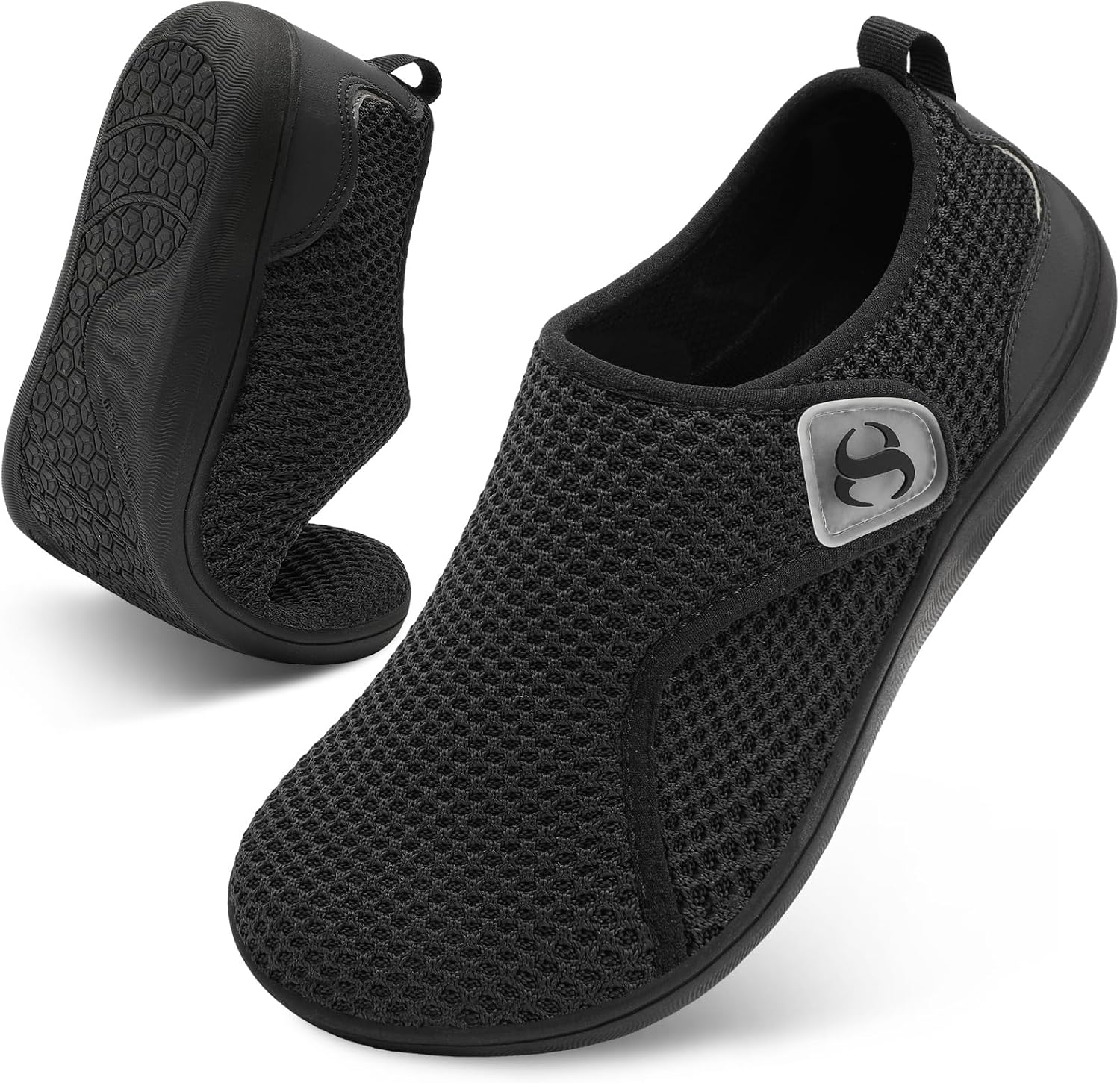
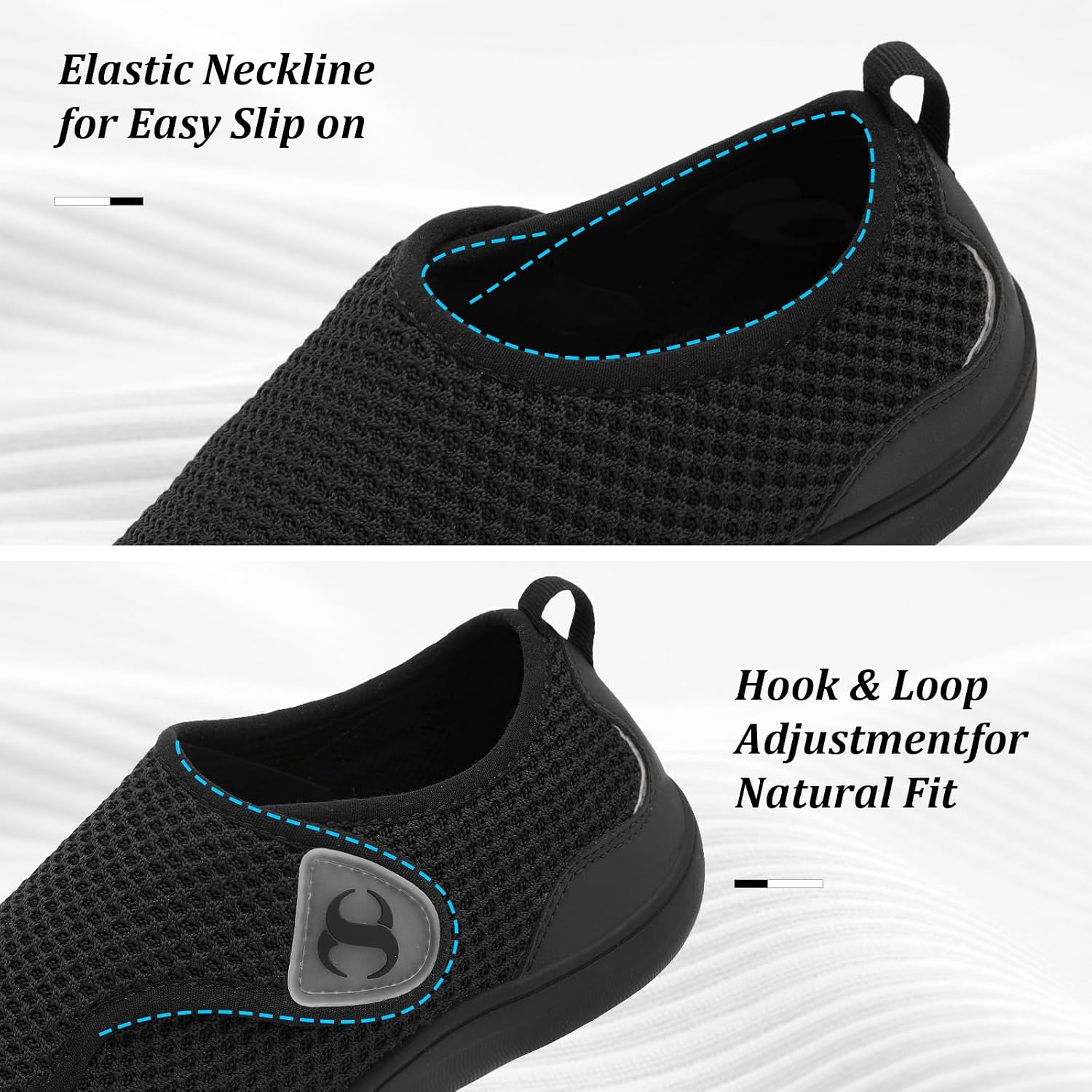
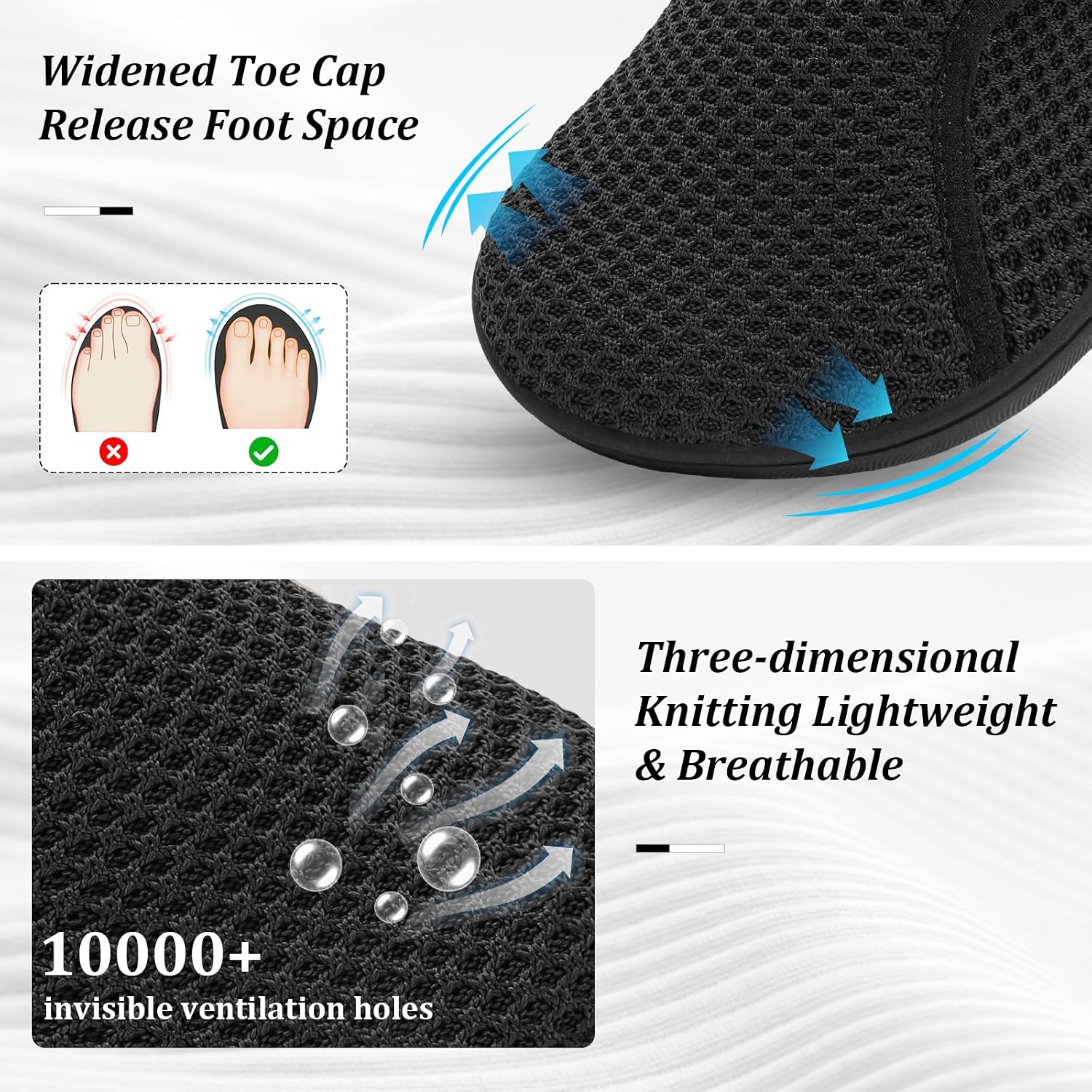
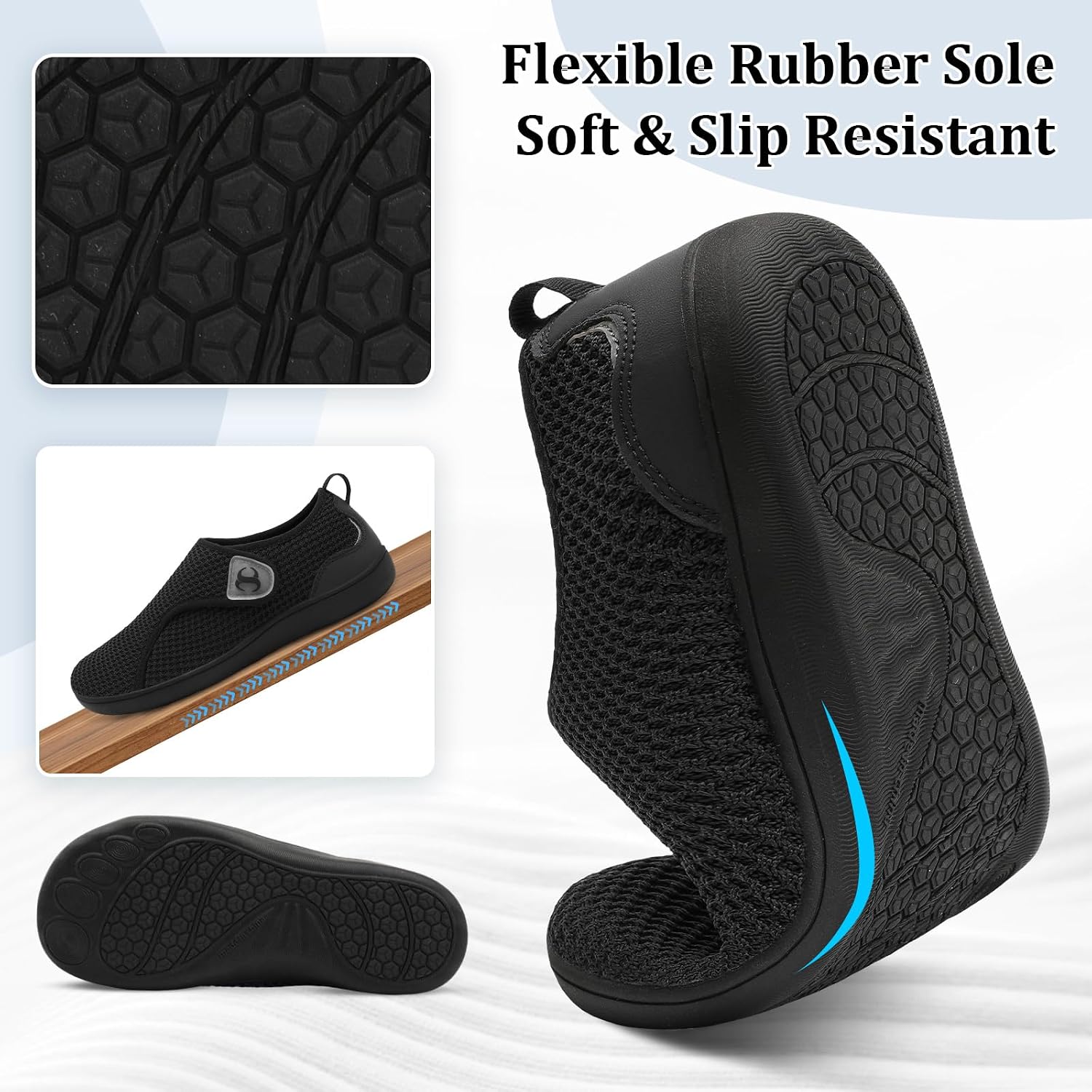
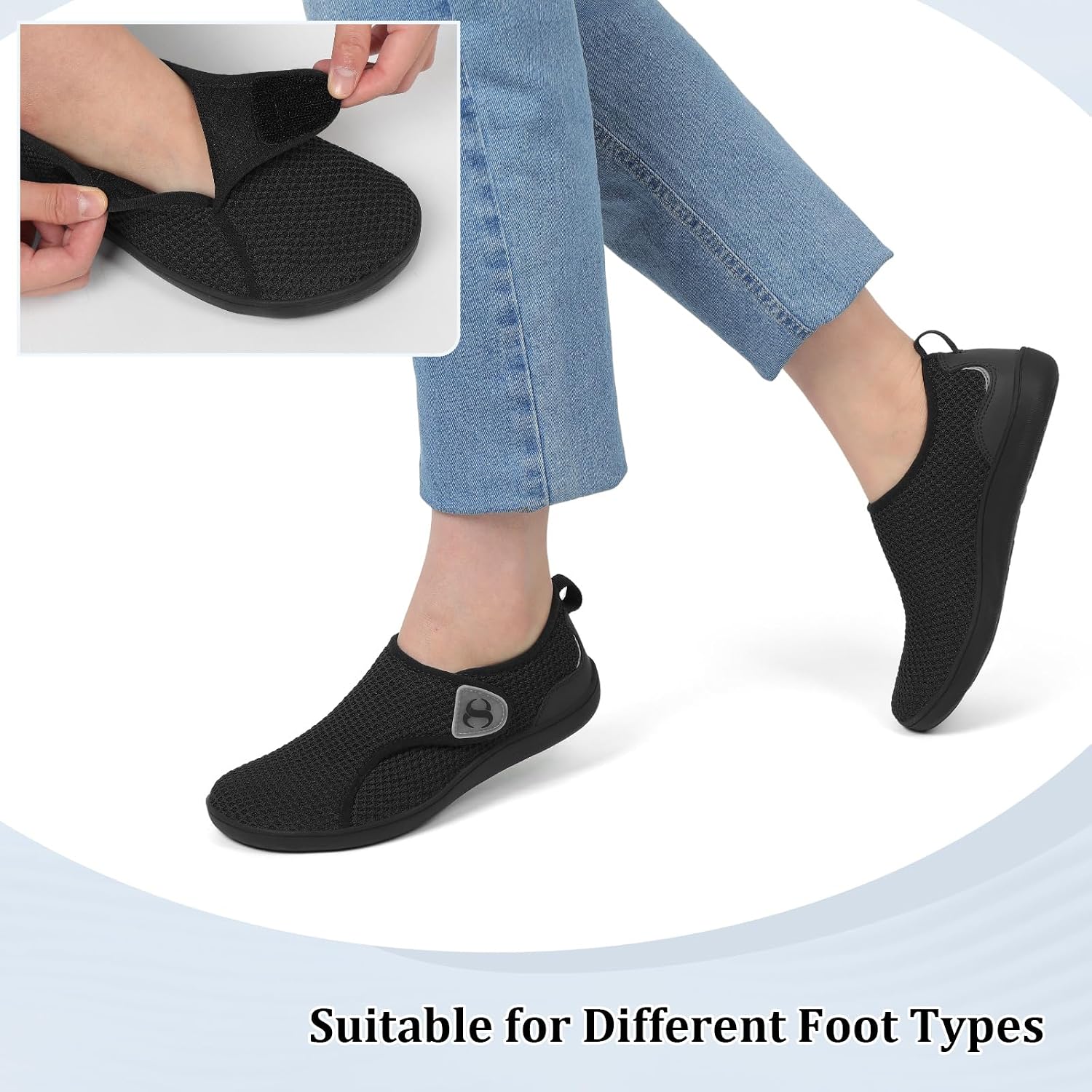
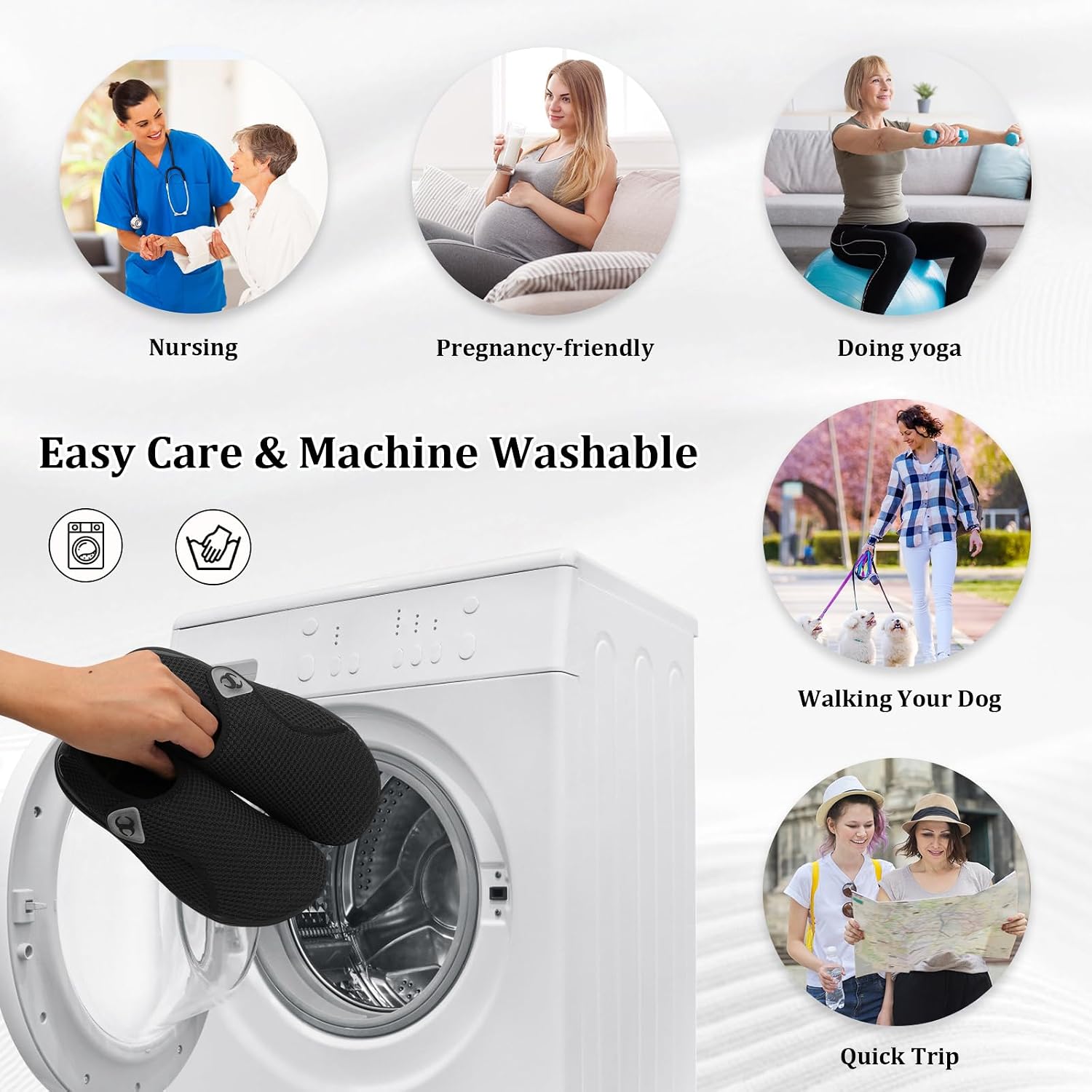
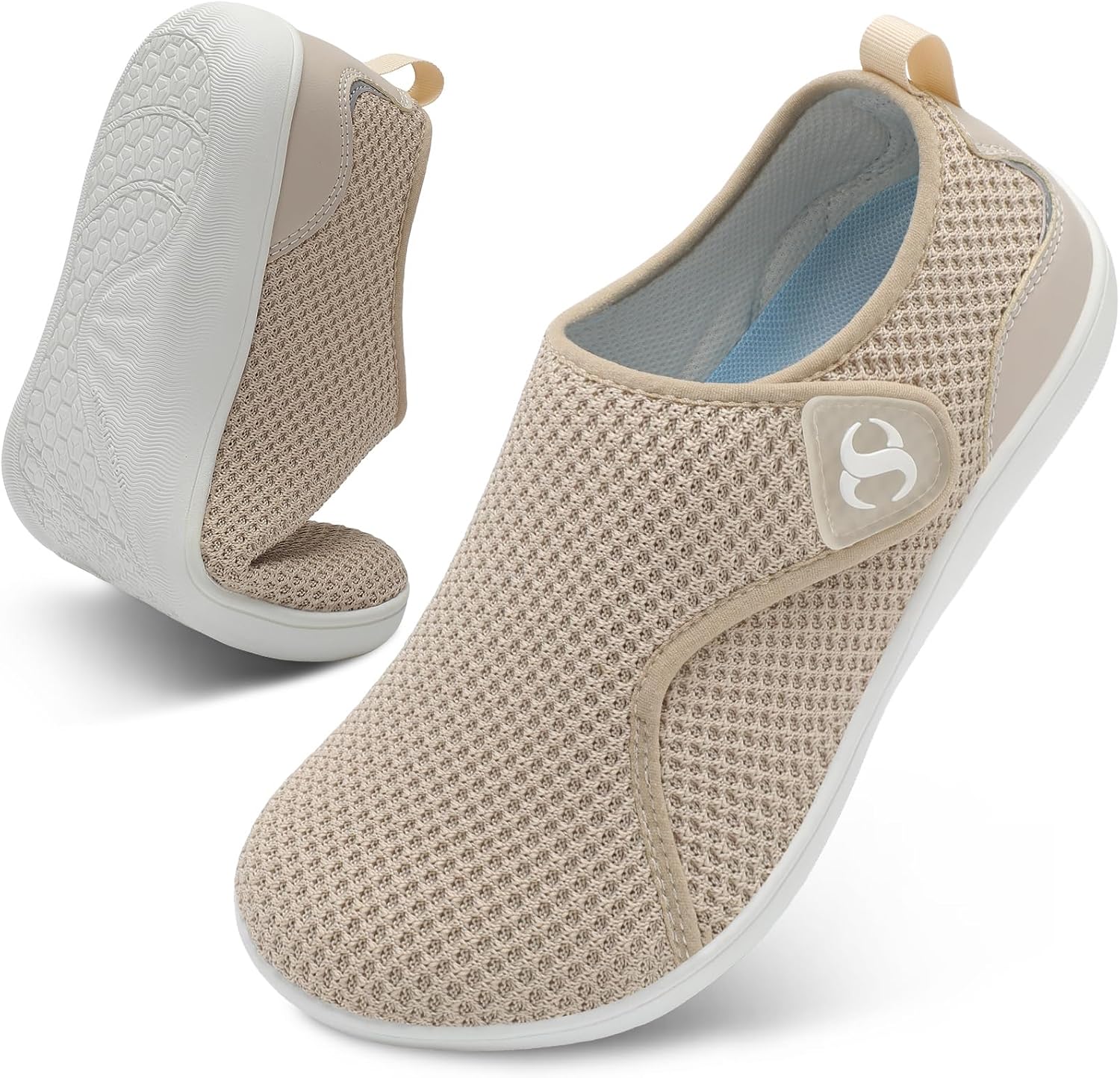
What it is and who it’s for\nJoinfree’s Women’s Barefoot Walking Shoes are designed as wide-toe, zero-drop casual trainers aimed at delivering comfort for feet that run hot or swollen, including conditions like edema, bunions, and neuropathy. The forefoot is intentionally roomy to keep toes in a natural position, which may reduce pressure in the front of the foot and help with alignment during everyday activities. If you’re seeking a lightweight, slip-on style that reduces constriction around the toes and tries to mimic a barefoot stance, these could be worth considering. The Target user tends to be anyone prioritising comfort for everyday walking, light exercise, and phases of pregnancy where foot swelling is common, or those who want a non-traditional fit that isn’t bound by a standard trainer silhouette.\n\n## Fit and design nuances\nA key feature is the adjustable dual hook-and-loop straps. This means you can tailor the fit for conditions such as oedema or neuropathy without relying on laces, which some users find cumbersome. The straps help secure the shoe so it stays on during daily activity, including short hops between errands or a stroll in the park. The upper is described as stretch-knit, intended to wick moisture and help manage odour, which can be a practical advantage if you’re on your feet for extended periods or in warmer climates. The emphasis on a breathable, lightweight feel aims to deliver comfort without adding bulk.\n\n## Sole and ground feel\nThe outsole is described as zero-drop with a one-piece rubber construction that provides a sure-grip tread. In practice, this suggests a flatter platform that encourages a more natural weight distribution and can strengthen foot muscles over time, aligning with a barefoot-inspired philosophy. However, the lack of a pronounced heel raise means those with specific plantar pressures or individual gait issues should assess comfort carefully. The tread design aims to offer steadiness on both wet and dry surfaces, which matters if you’re moving around slick pavements or rainy days.\n\n## What stands out and what might hold you back\nWhat’s notable is the combination of wide forefoot space with adjustable straps, which is not universally common in lightweight casual trainers. For someone needing extra room at the toes or dealing with swelling, this could reduce uncomfortable pinching. On the downside, the absence of laces and the reliance on two hook-and-loop fastenings may feel less secure for high-intensity activities or long runs. If your day involves more demanding workloads or you require substantial arch support, these shoes may not replace a sport-specific trainer.\n\n## How it fits different scenarios\nIf you’re shopping for daily wear—walking around town, attending appointments, light gym sessions, yoga, travel, or casual weekend outings—these could deliver the feel of barefoot cushioning with a practical fit. They are not presented as a performance racer or high-impact trainer, so expectations should align with casual, all-day comfort rather than sport-focused support or heavy-duty mileage.\n\n## Who should consider them and who might want alternatives\nThey may suit: those experiencing toe crowding or swelling who value a roomy forefoot, people prioritising a strap-fit approach for neuropathy or oedema, and anyone seeking a lightweight, breathable shoe for light activities. They may not suit: runners or walkers who require strong heel support, those who need pronounced arch or ankle stability, or individuals who want a conventional, tight-fitting trainer for competitive fitness contexts. If you prioritise a more traditional trainer feel or you expect substantial plantar support, it’s sensible to compare with other options that explicitly advertise those attributes.\n\n## Before you buy: practical checks\nConsider your typical usage: short city strolls, gentle yoga, or travel where a flexible, slip-on shoe is convenient. Remember that fit is highly individual—swelling levels can vary day to day, and a strap system should be tested to ensure it remains comfortable after hours of wear. If you’re pregnant or managing edema, try to verify how easy it is to slip on and off and whether the straps accommodate fluctuating foot size without loosening. Also, assess how the stretch-knit upper handles heat and moisture in your environment, this impacts odour control and overall comfort.\n\n## Practical usage example\nImagine a cloudy day with light drizzle during a weekend trip. You pop these trainers on, the straps tighten just enough to keep the shoe secure as you navigate crowded streets and a gentle park stroll. The flat sole gives you a barefoot-like feel without the harsh impact, and the breathable upper helps keep feet cooler as you walk more than you planned. This kind of day-in-day-out use aligns with the shoes’ stated intent and typical consumer needs.\n\n## Tech details you can reasonably expect\n- Forefoot: extra-roomy for natural toe position.\n- Fastenings: dual hook-and-loop straps rather than laces for ease of adjustment.\n- Upper: stretch-knit for breathability and odour control.\n- Sole: zero-drop, one-piece rubber outsole with non-slip tread.\n- Purpose: casual walking, light activity, comfortable everyday wear.\n\n## FAQ (quick answers)\n- Do they require breaking in? The description emphasises a comfortable fit, but as with many barefoot-inspired shoes, it’s worth wearing short periods initially to gauge comfort.\n- Will they be suitable for swollen feet every day? For oedema or pregnancy-related swelling, the adjustable straps can help customise the fit, though foot size can vary, monitor fit as swelling changes.\n- Are they appropriate for high-impact training? They are framed as casual trainers rather than high-impact footwear, so for serious fitness workouts a more supportive option may be preferable.\n\n## Is it worth it? Final verdict\nIs it worth it? Worth considering if you prioritise a roomy forefoot, a strap-based fit, and a lightweight, breathable shoe for everyday use or light activity. It may not be the best choice if you need aggressive arch support or substantial stability for intense training. For someone who wants a minimalist, barefoot-inspired feel with practical adjustments for swelling, these are a sensible option to test.\n