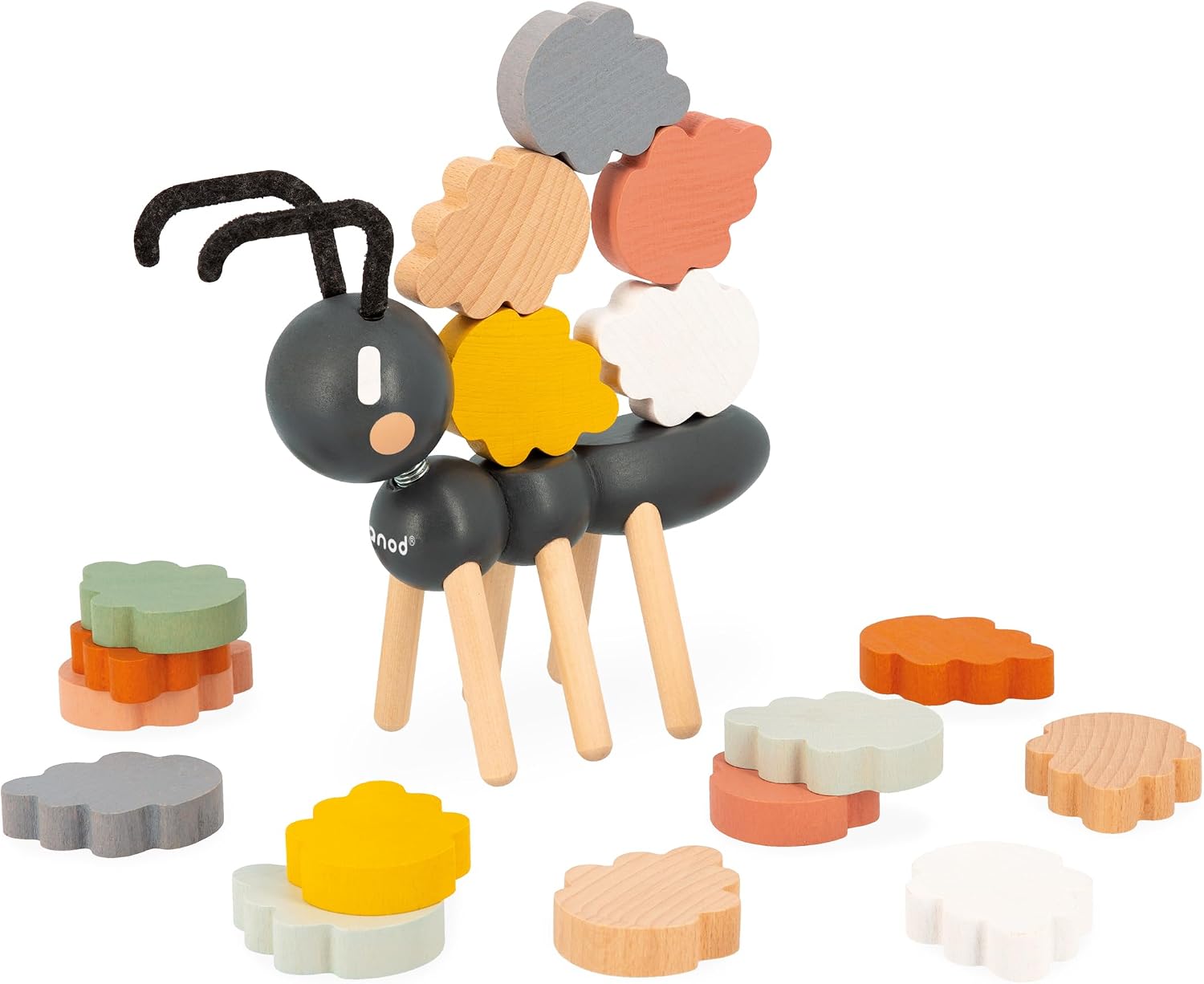
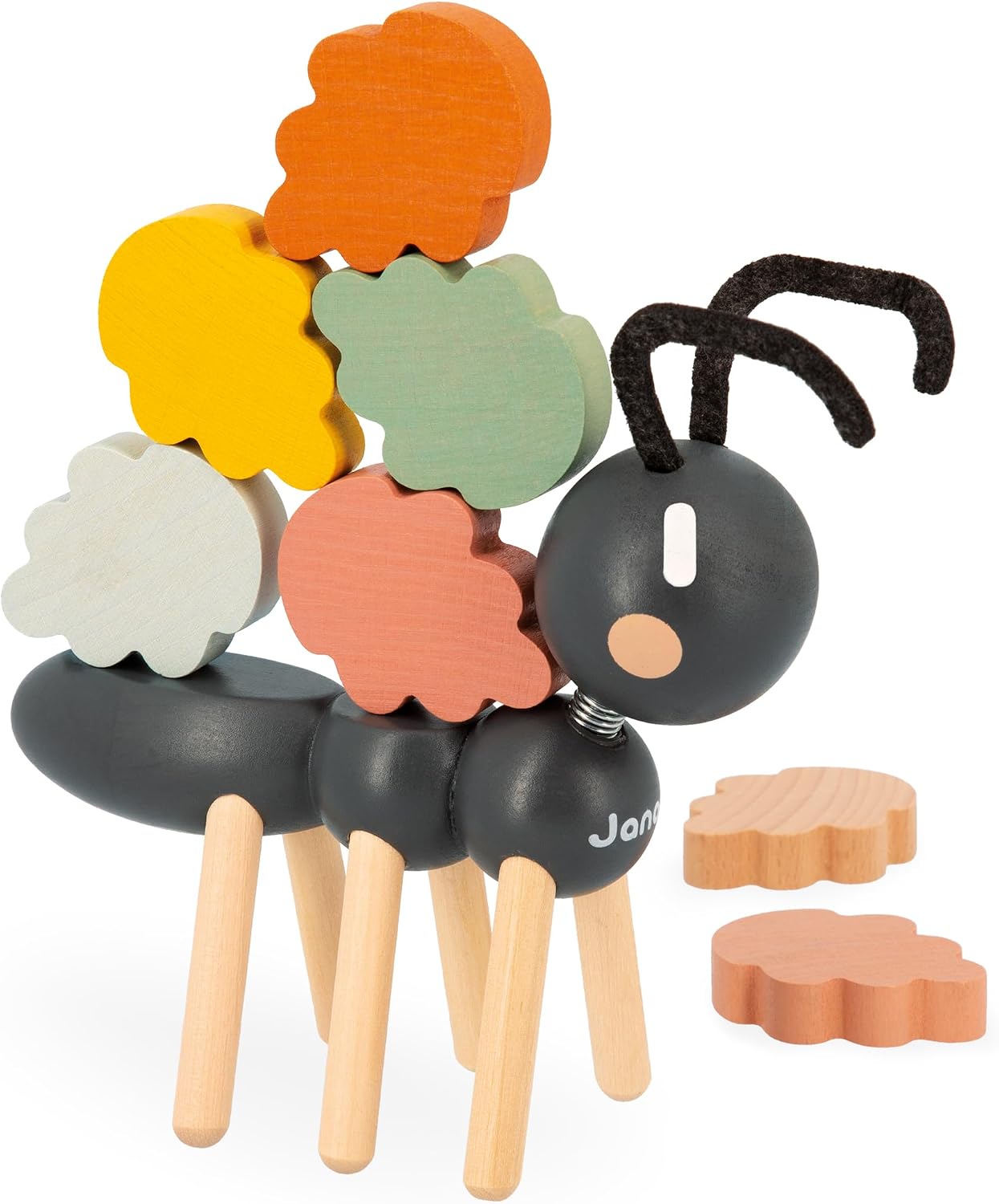
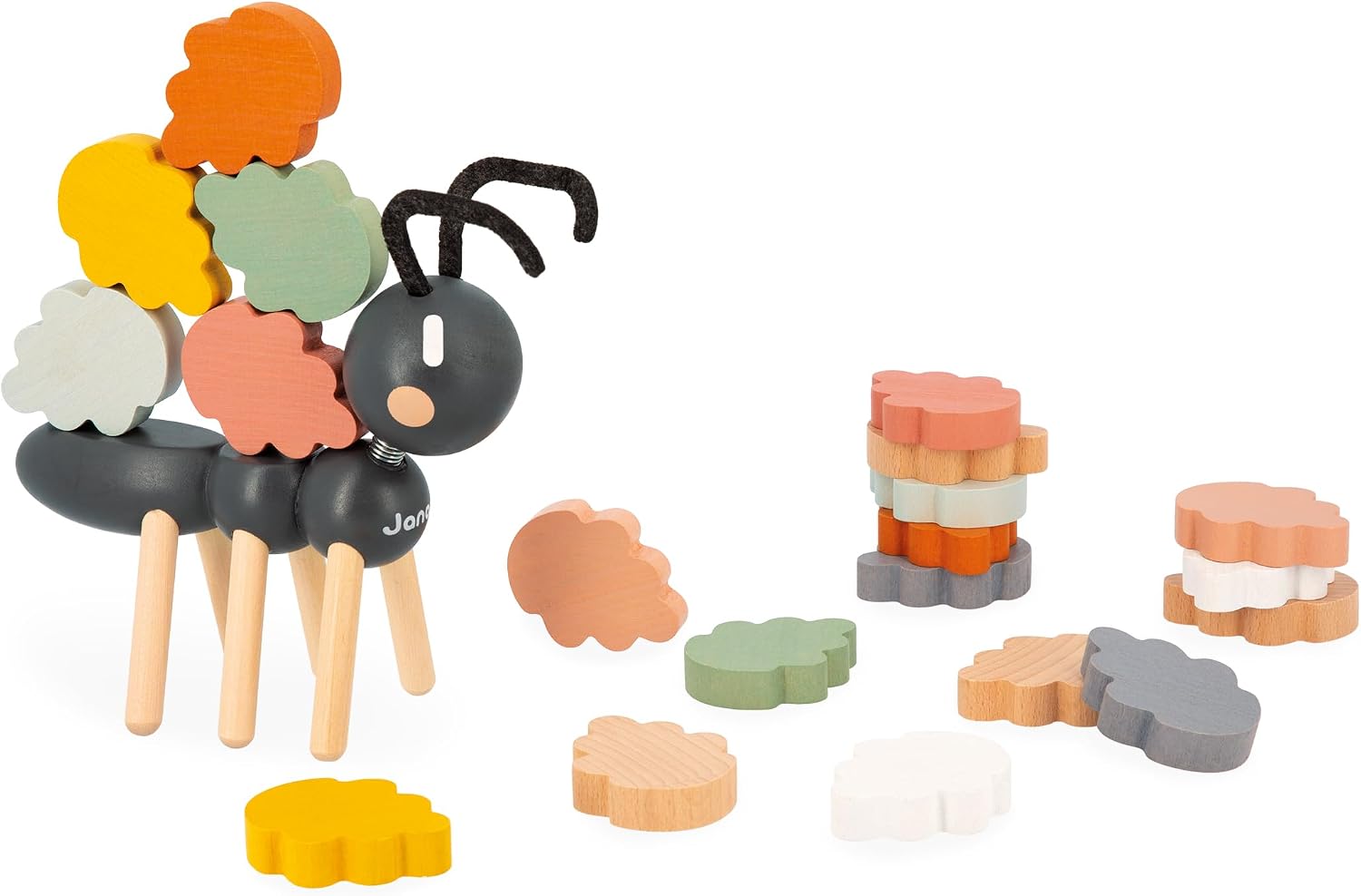
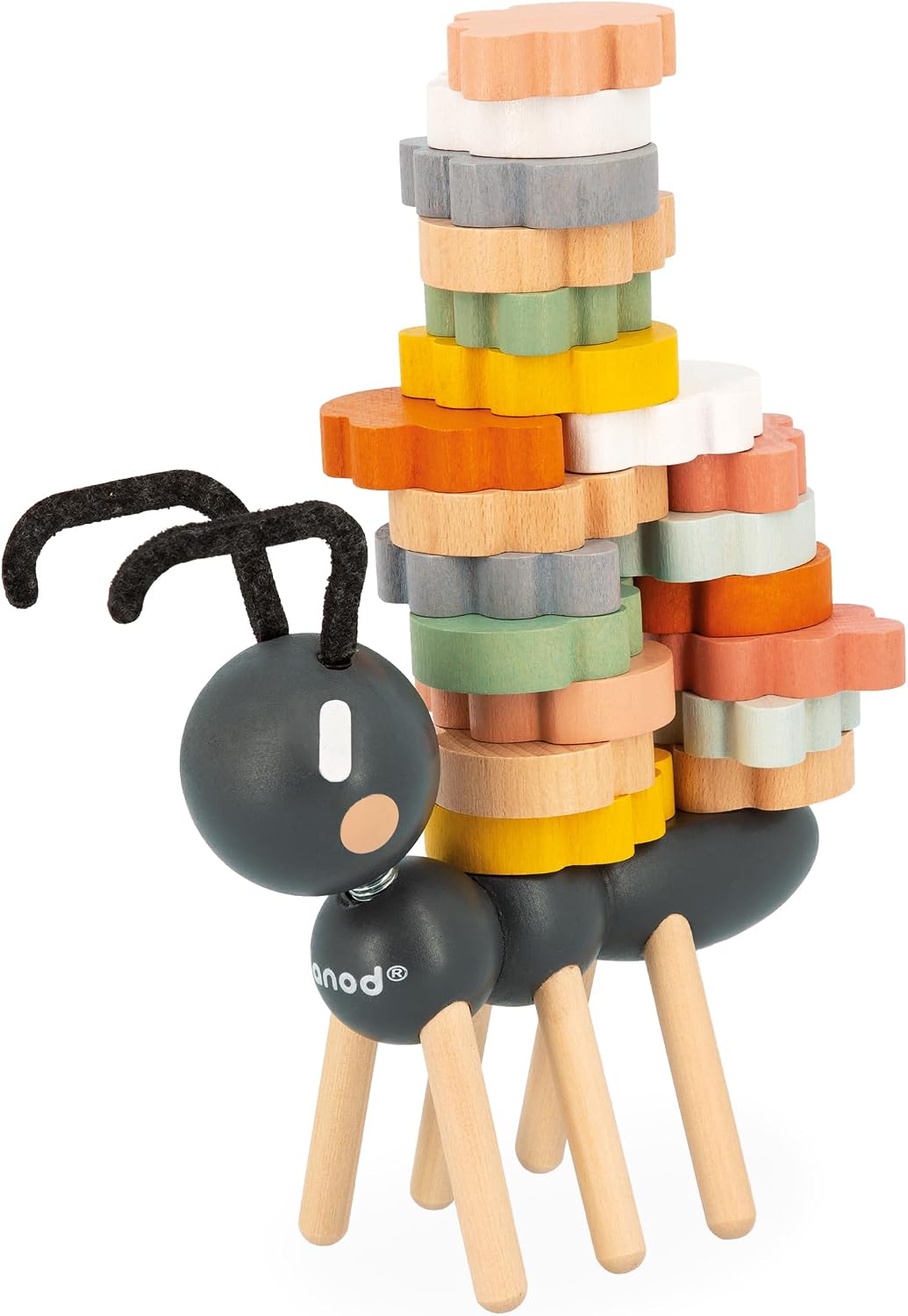
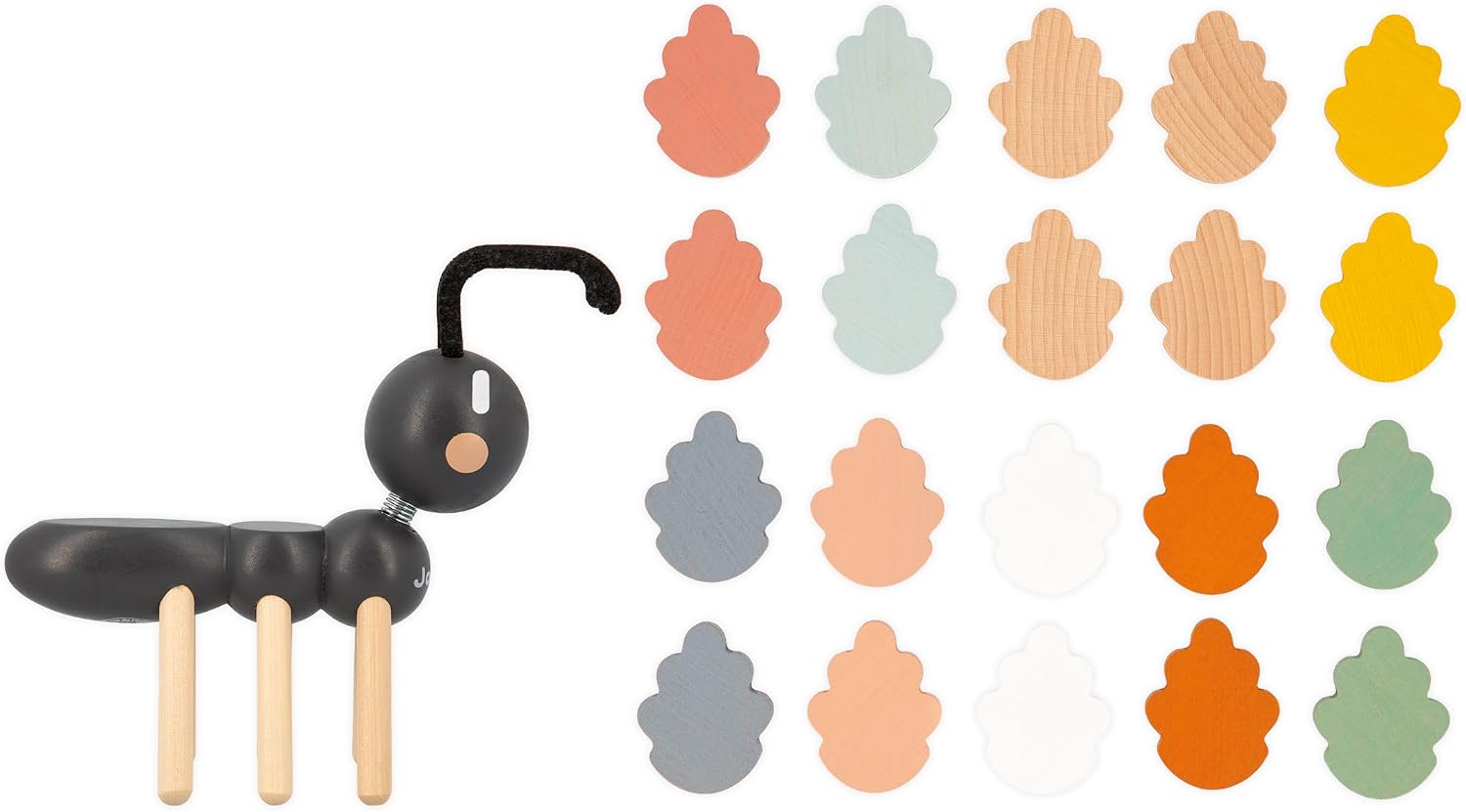
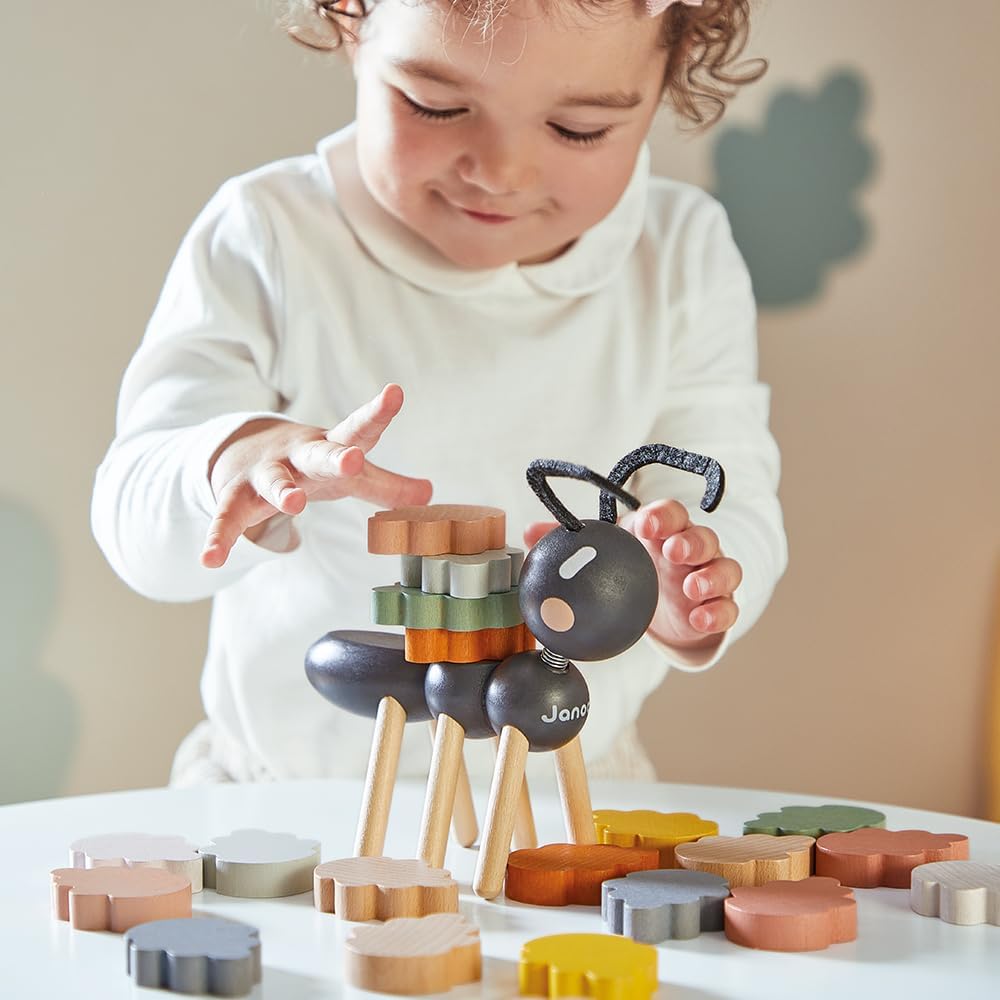
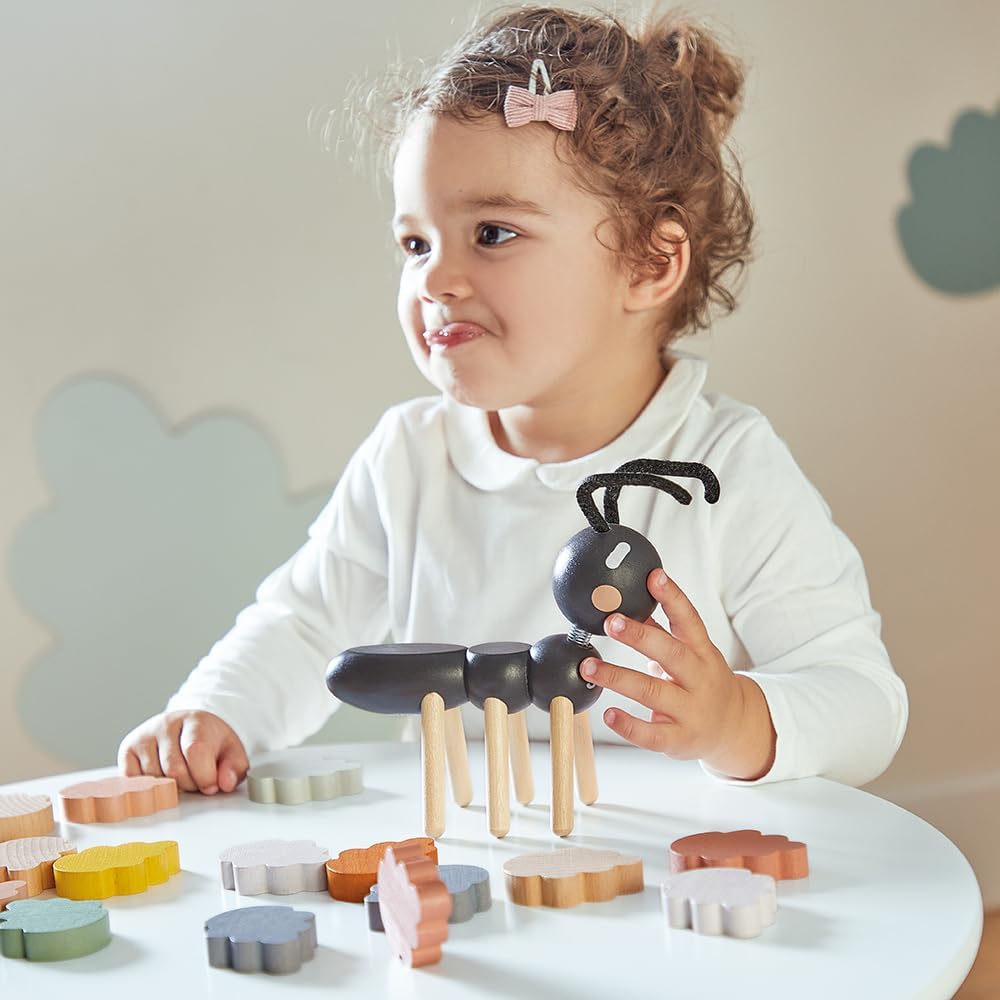
What it is and what it aims to do\nThis is a simple, tactile stacking game designed for little hands. The set features one large black FSC wood ant with 20 coloured leaves that kids can stack on its back. The goal is to balance as many leaves as possible without toppling the load, a task that helps refine fine motor control, hand–eye coordination and concentration. The ant’s felt antennae and moving spring-loaded head add a playful, inviting character that encourages imaginative play.\n\n## How it works\nChildren place the leaves one by one on the ant’s back, trying to keep the stack steady. The leaves come in different colours, inviting early colour recognition and sequencing practice. The ant is robust enough for solo play or cooperative sessions with siblings or friends. The compact size (approximately 14.6 x 7 x 11 cm) makes it suitable for small desks, playrooms or travel setups.\n\n## Why it matters for development\nOn the surface, it’s a simple balancing challenge, but the activity targets core skills: precise finger movements, controlled grip, and gradual improvements in concentration. As children experiment with different stacking orders and understand stability, they gain confidence in manipulating small pieces and planning ahead.\n\n## What stands out\n- Pays homage to ants as diligent builders with a visually appealing soft pastel colourway, consistent with the Sweet Cocoon range.\n- Uses natural wood and a simple mechanism to sustain interest without requiring batteries or screens.\n- Suitable for ages 2 to 5, offering scalability from easy to more challenging stacking as skills grow.\n\n## Limitations and considerations\nIt may not captivate a child who prefers fast-paced, highly interactive toys. The play experience hinges on patience and fine motor control, so some younger toddlers might need assistance or a slower pace to enjoy it fully. Also, as with any small part toy, supervision is advised to prevent any risk with mouthing.\n\n## Who it’s for\nIdeal for caregivers seeking a calm, developmental toy that combines problem-solving with imaginative play. It’s particularly fitting for families building a simple, durable toy collection or for early learning activities at home or in nurseries.\n\n## When it makes sense to buy\nIf you value durability, natural materials and a gentle, screen-free activity that challenges manual dexterity, this could be a sensible addition. It’s a good fit if you want a compact, age-appropriate activity that travels well and blends with pastel, décor-friendly toys.\n\n## What to check before purchasing\n- Confirm the completeness of the set (1 ant + 20 leaves).\n- Consider storage: the pieces are small enough to be stored in a neat tray or box.\n- Think about where it will be used most – a quiet corner or a play table works well.\n\n## Practical usage example\nA child places a leaf, smiles at the wobble, then tries another arrangement. After a few attempts, the stack becomes noticeably taller and steadier, a small but satisfying demonstration of steady hand–eye coordination in action.\n\n## A soft comparison to alternatives\nIf you’re weighing options, this is less about flashy features and more about durable, quiet play that supports early motor skills. Compared with more complex stacking toys, it offers straightforward rules and fewer pieces to manage, which can be appealing for parents who prefer simplicity.\n\n## FAQ (built from available data)\n- What ages is it for? Aimed at 2–5 years.\n- Are there safety concerns? It uses 100% natural wood and felt, supervision recommended for very young children.\n- Can it be used in solo or group play? Yes, suitable for both.\n\n## Decision block\n### Should you buy it?\nIt suits you if you want a durable, low-tech activity that supports fine motor development and calm, focused play.\nIf you prioritise quick, high-energy toys or need extensive interactive features, this might feel slower in pace.\n