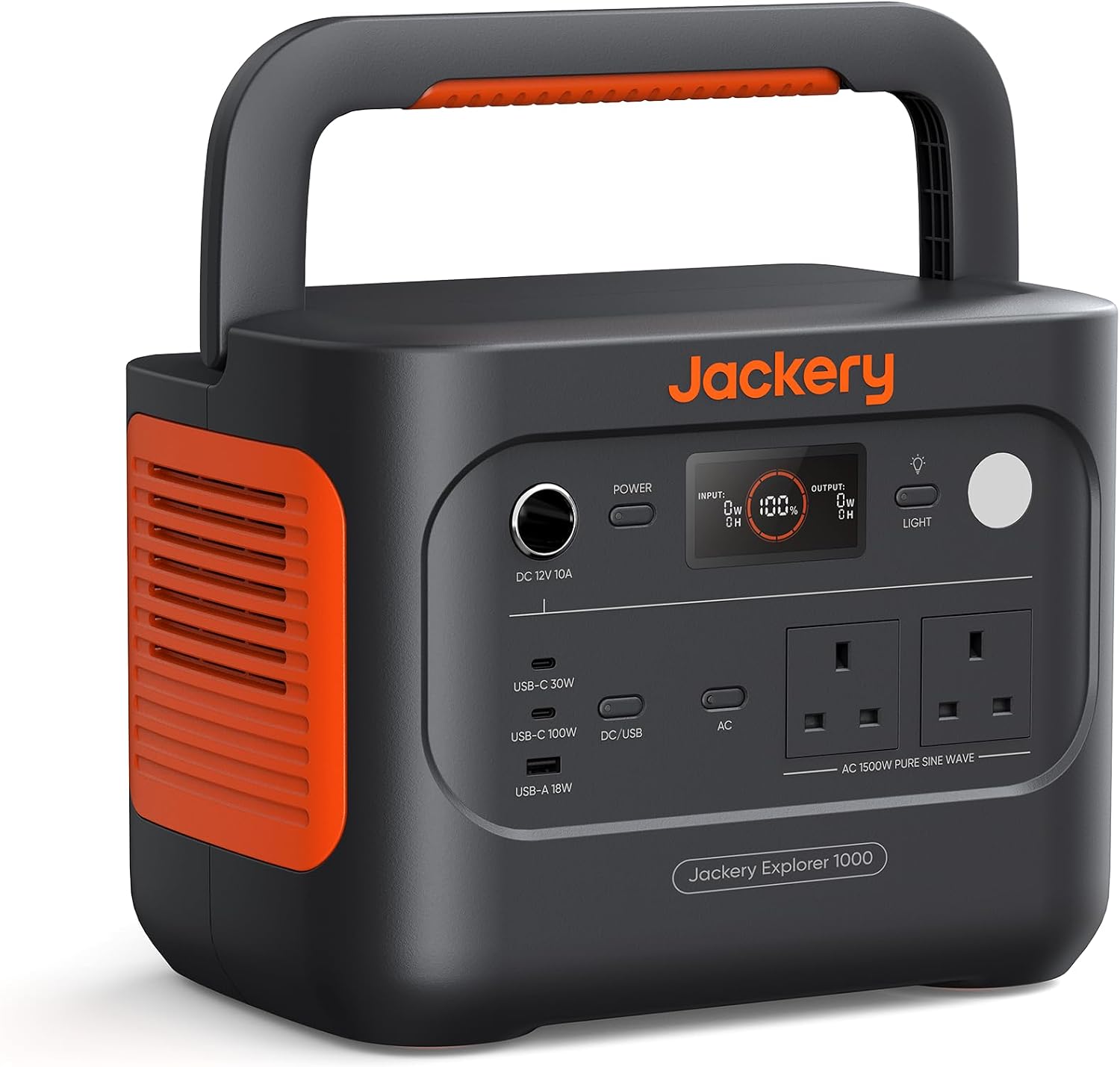
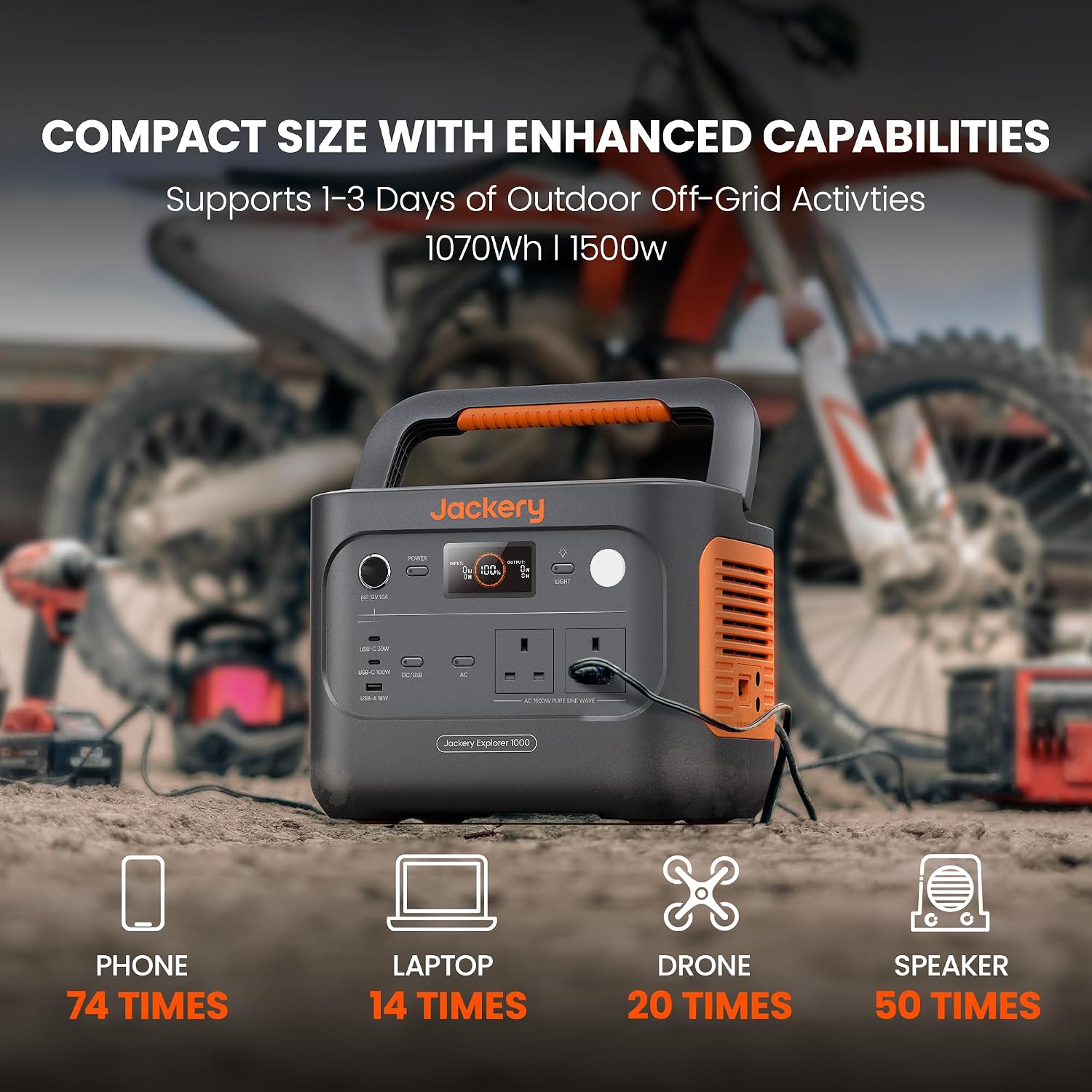
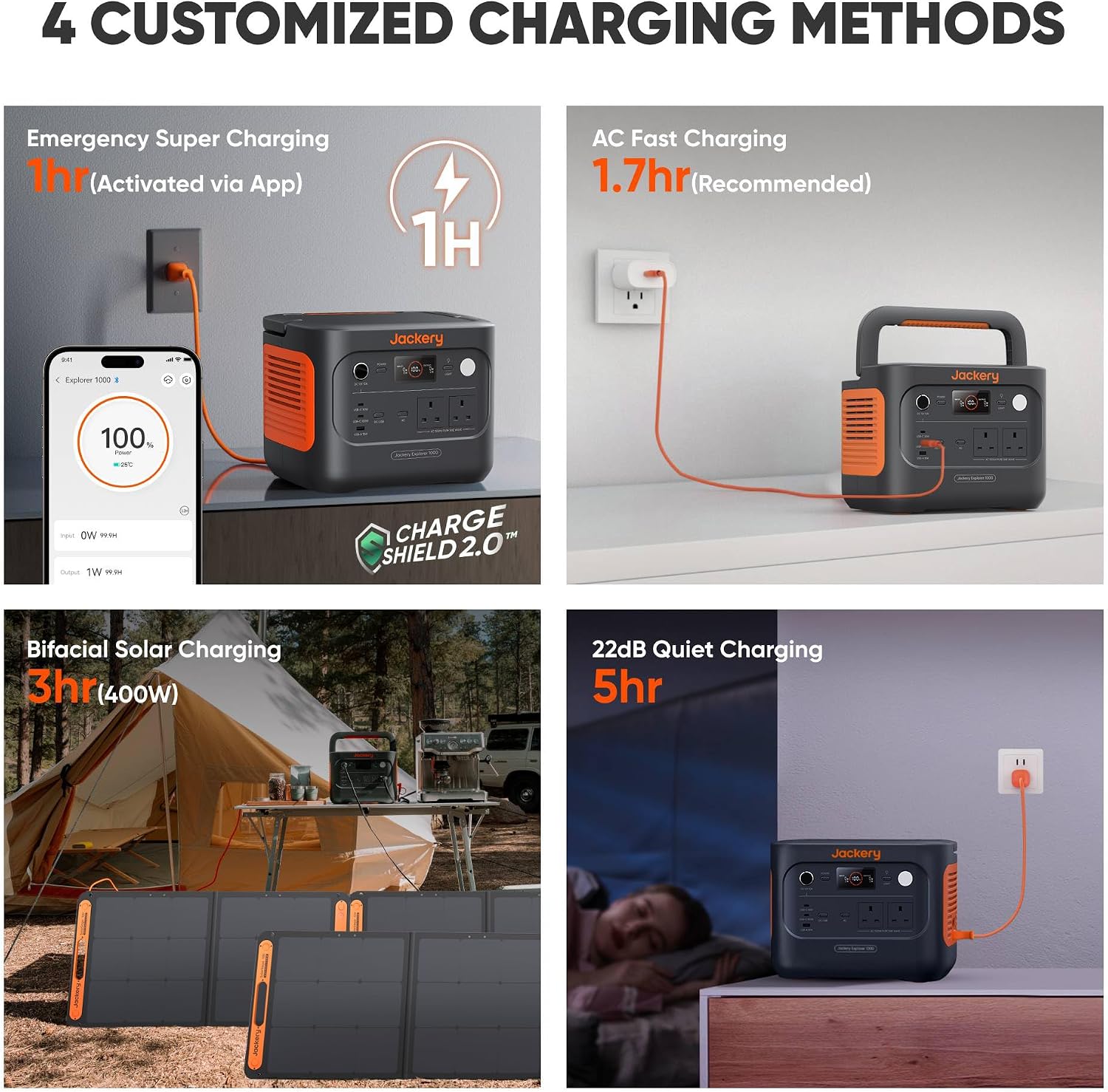
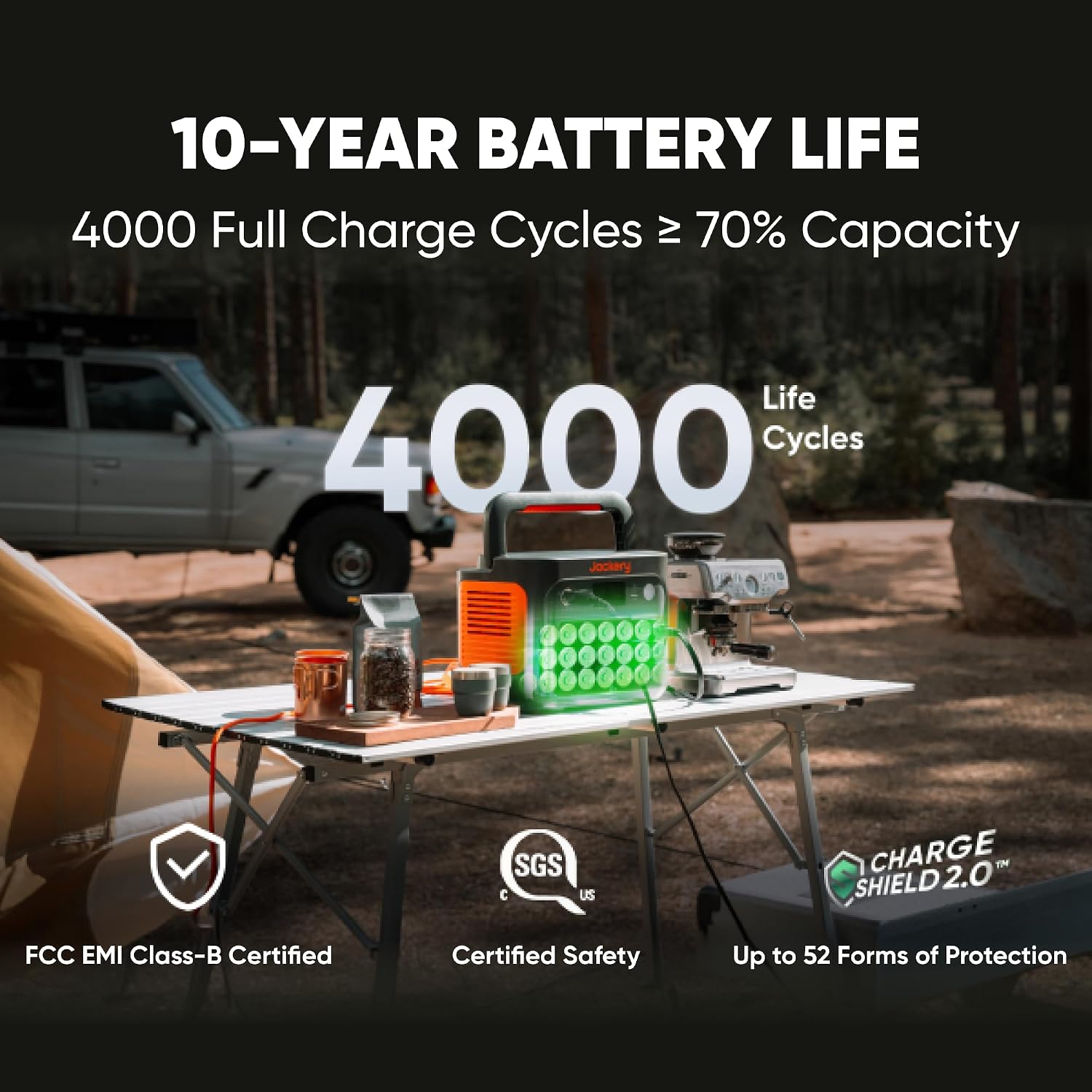
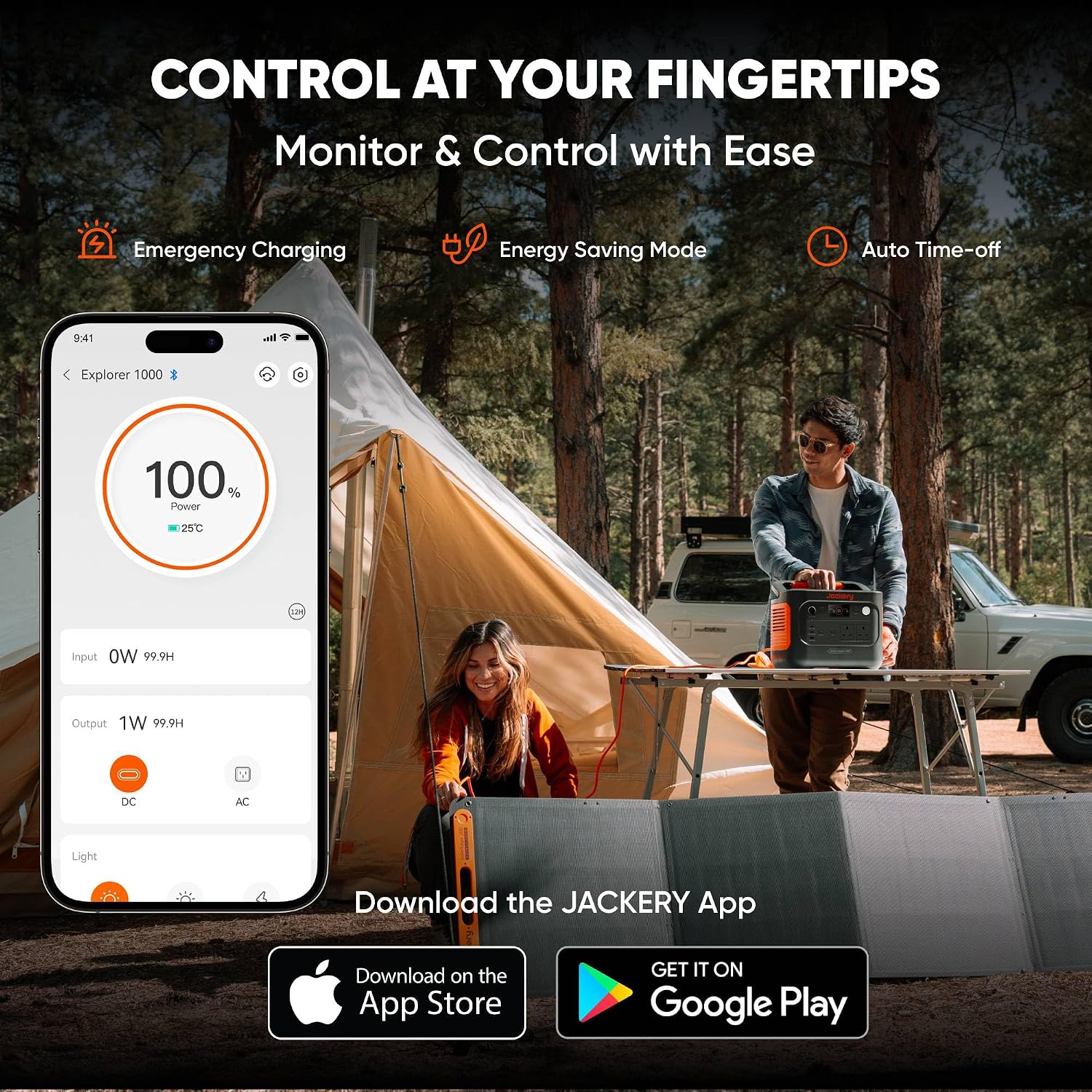
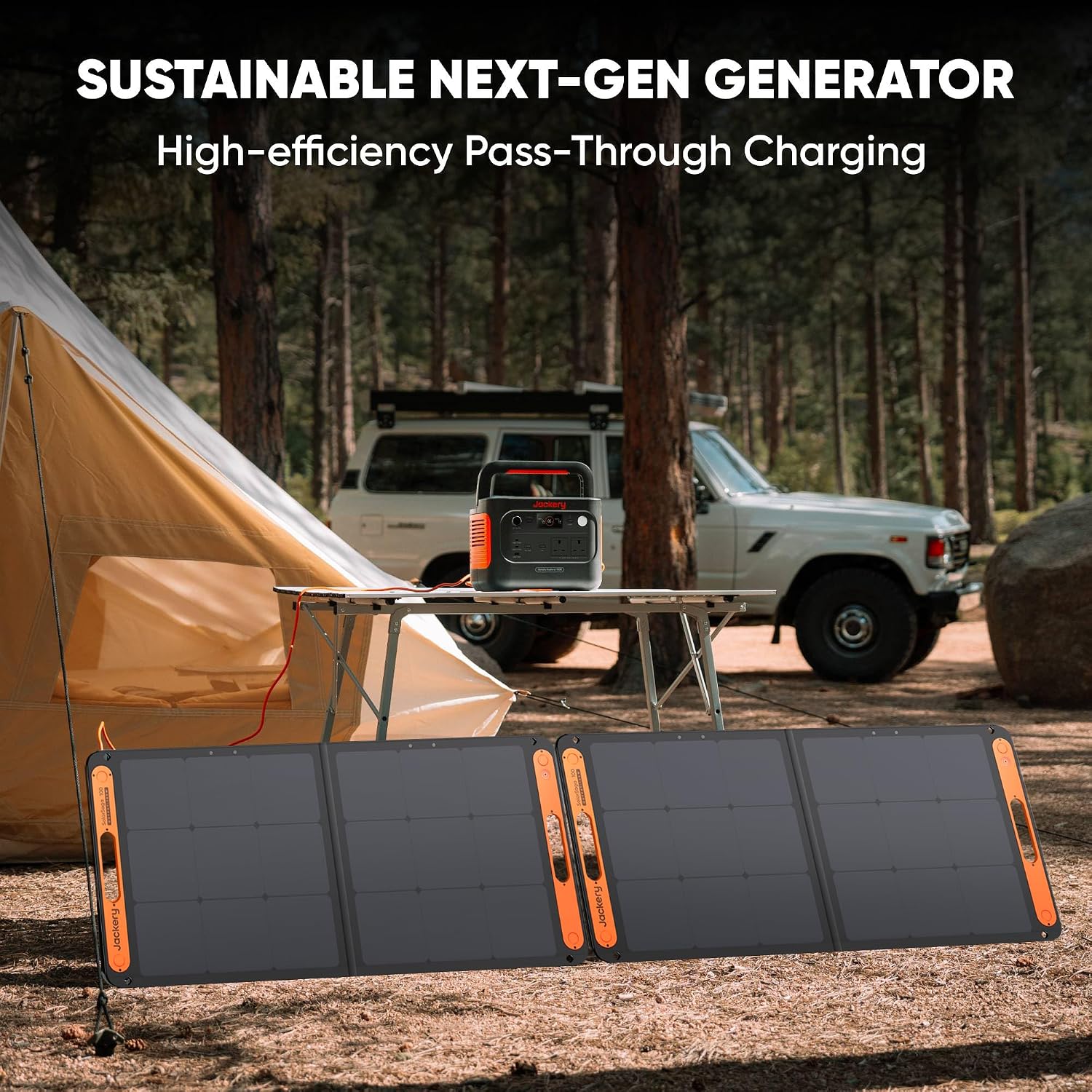
What this is and what problems it tackles\nThe Jackery Explorer 1000 v2 is a portable power station designed to supply reliable electricity when mains power is unavailable. With a 1070Wh LiFePO4 battery and a robust 1500W AC output (3000W surge), it’s positioned to run essentials—from laptops and phones to small appliances or a fridge—during outdoor trips or power outages. It aims to be more than a basic emergency pack by offering faster recharging, safer battery chemistry, and a compact footprint for portability.\n\n## The strength on the paper: what stands out\nOn paper, the standout features include a 1500W continuous AC output and a 3000W surge peak, which broadens the range of devices you can power simultaneously. The LiFePO4 cell chemistry promises a longer lifespan—up to 4,000 life cycles with more than 70% remaining capacity—so the unit should outlast many lithium-based rivals in the same class. Recharging is notably swift: a claimed 1-hour fast charge via the companion app, plus 100W PD fast USB-C input/output, which helps reduce downtime.\n\n## How it feels when you use it\nIn everyday use, you’ll find six charging ports: two USB-C, one USB-A, one DC car port, and two pure sine wave AC sockets. The unit weighs around 23.8 lb and has an integrated handle for carrying between campsites or rooms, with built‑in LED lights for night visibility. The control experience is augmented by a smartphone app over Wi‑Fi or Bluetooth, offering different charging modes such as a 1-hour super charge, 1.7-hour fast charge, or a quiet 30 dB overnight mode.\n\n## Who it’s for\nThis Power Station is suitable for campers, remote workers, or households seeking portable backup power for essential devices and small appliances. It’s particularly appealing if you value safety and longevity from the battery chemistry, as well as the convenience of app-based monitoring and tailored charging.\n\n## Who it isn’t ideal for\nIf you regularly rely on higher-wattage equipment (large air conditioning, electric heaters, or high-demand tools) beyond the 1500W continuous output, you may want to consider options with higher sustained power. Also, if you prefer a plug‑and‑play without app monitoring, the smart features might feel secondary.\n\n## When it makes sense to buy\nConsider this model if you want a credible balance between capacity, safety, and portability. It makes sense when you need reliable off-grid charging with the possibility of fast recharging cycles, and you appreciate the longevity claims of LiFePO4 chemistry.\n\n## What to check before you buy\nLook at the real-world charging time with your typical load, confirm the device mix you plan to power, and assess how often you’ll need to recharge during trips. If silence at night matters, note the 30 dB mode as a potential benefit. Also ensure your intended power needs stay within the 1500W continuous rating and that the app pairing is compatible with your phone.\n\n## Practical usage example\nYou arrive at a campsite with a cooler, a small fridge, and a laptop. The Explorer 1000 v2 can run the fridge while you charge phones and a camera via USB-C, keeping everything topped up without hunting for mains. If you’re working remotely, you can run a laptop and a router from the AC outlets while keeping a spare USB-C charger on hand.\n\n## What’s included\nExplorer 1000 v2 Portable Power Station, User Manual, AC Charging Cable, 5 Year Customer Support.\n\n## FAQ (quick answers)\n- How long does it take to recharge from zero to full? The device advertises a 1-hour fast charging via the app. Real-world times vary with load.\n- Can I run a fridge from this unit? Yes, within the 1500W continuous output and 3000W surge.\n- Is it field-serviceable? The information provided doesn’t specify upgradeability, check the manufacturer’s guidance for maintenance.\n\n## Final thoughts\nIf you’re after a capable, safer lithium‑based power station with strong real-world use potential for camping or emergency scenarios, the Explorer 1000 v2 offers a compelling mix of power, longevity, and smart features. It isn’t the simplest option to set up, but for users who value app control and longer battery life, it can be a sensible choice.