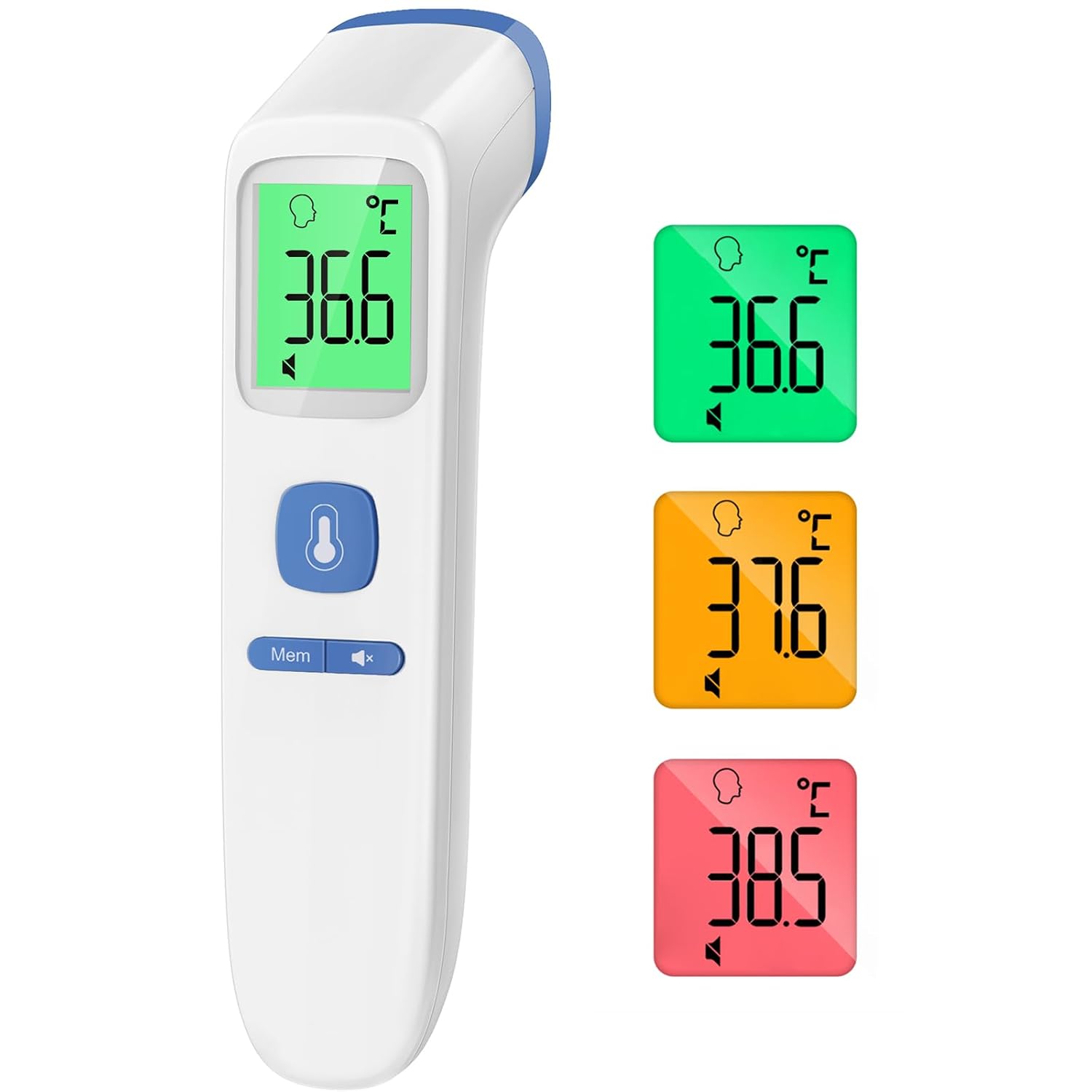
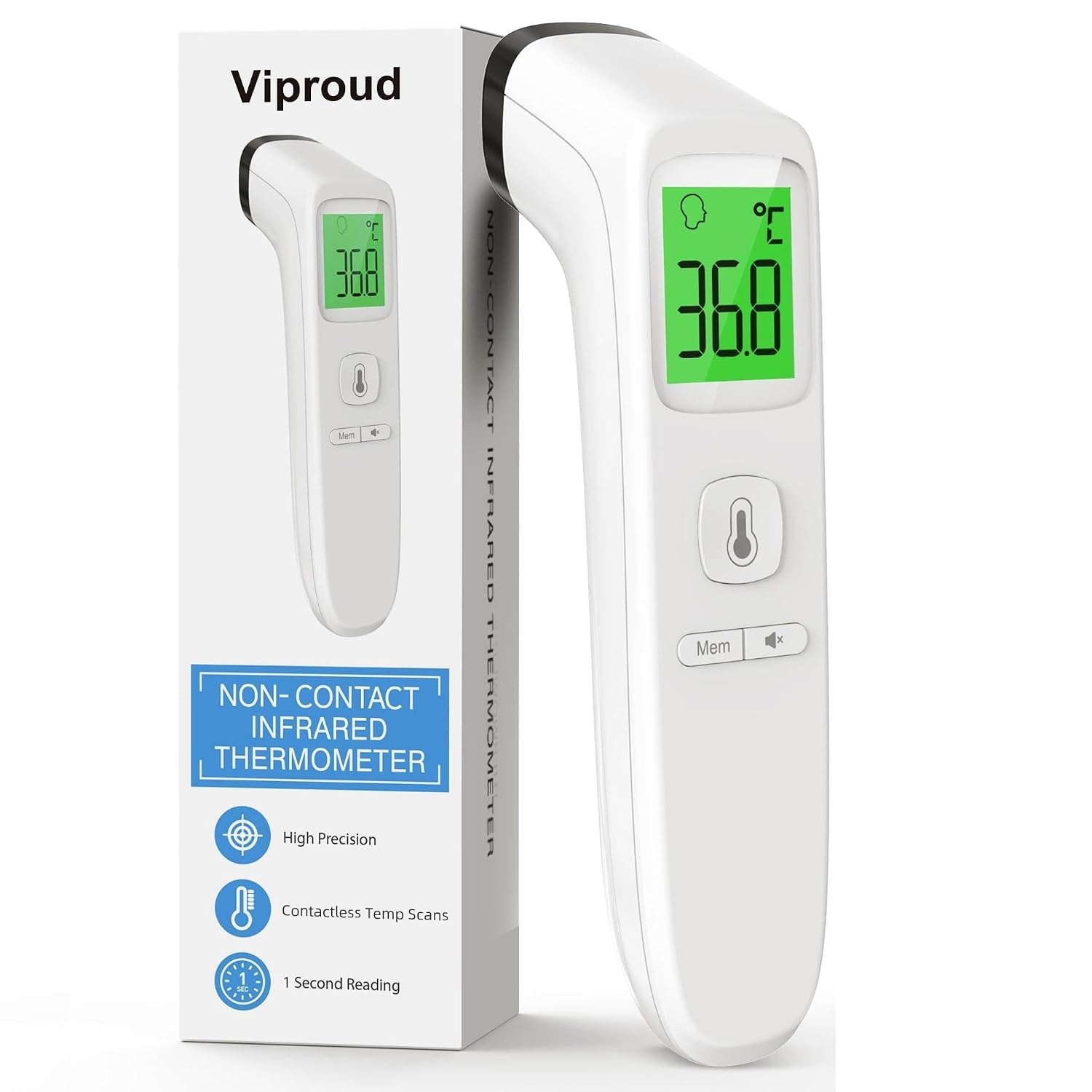
What this is and why it matters\nA non-contact infrared thermometer designed for quick, safe temperature checks across the whole family. With a 1-second reading and a wide range from 31.8°C to 42.6°C, it aims to give you a fast snapshot of fever status without disturbing the person being checked. The large LCD with backlight makes readings easy to see, even in dim rooms.\n\n## How it works in practice\nYou point the device at the forehead from a short distance and receive an instant number on the screen. Because there’s no skin contact, it’s convenient for infants, children and adults alike, and it reduces cross-contamination concerns. The fever alarm adds a practical safety feature: if the reading crosses a preset threshold, an audible alert sounds to prompt action.\n\n## What stands out on paper\n- Non-contact design for safer, hygienic checks across ages.\n- Very fast: readings in about 1 second.\n- Broad temperature range covers common fever scenarios.\n- Clear LCD display with backlight for night-time use.\n- Fever alarm helps you notice when temperatures are rising.\n- Memory for 35 readings lets you track temperature trends over time.\n\n## Limitations to consider\nAccuracy can be influenced by user technique and ambient conditions. For example, readings may vary if the forehead is sweaty or exposed to direct heat sources. While the device stores historical data, it does not replace clinical thermometers or professional advice. It’s wise to confirm fever with a second reading if you’re monitoring someone closely.\n\n## Ideal users and realistic use cases\nThis thermometer suits families with babies, kids who won’t sit still for a traditional oral check, and households needing quick fever screening during illnesses. It’s less compelling if you require medical-grade accuracy or continuous clinical monitoring. If you prioritise a simple, fast snapshot for home use, it’s worth considering.\n\n## What to compare before buying\nThink about whether you need non-contact convenience over potential trade-offs in precision. Some buyers also weigh screen readability at night and the usefulness of a fever alarm in busy households. If you already own a contact thermometer, this model offers a different workflow: quick checks without waking a sleeping child or disturbing someone in bed.\n\n## Practical example in use\nDuring a mild fever scare, you can quickly scan a family member in the living room and, if the alarm sounds, decide whether to re-check after rest or seek medical advice. The backlit display helps at night when you want a quick read without turning on bright lights.\n\n## FAQ (based on available information)\n- How fast do readings appear? About 1 second.\n- What’s the temperature range? 31.8°C to 42.6°C (89.6°F to 109.2°F).\n- How many readings can it store? 35 readings.\n- Is it suitable for newborns? Yes, designed for all ages including babies, with non-contact use.\n- Does it beep for fever? Yes, it has a fever alarm to alert when the threshold is exceeded.\n\n## Is it worth it?\nIf you prioritise quick, non-contact checks for family health and want a device that’s easy to use in daily life, this thermometer offers practical value for home monitoring. It may not be the best choice if you require clinical-grade accuracy or continuous medical-grade documentation. Consider your home needs, how often you’ll use it, and whether the memory feature helps you spot patterns over time.