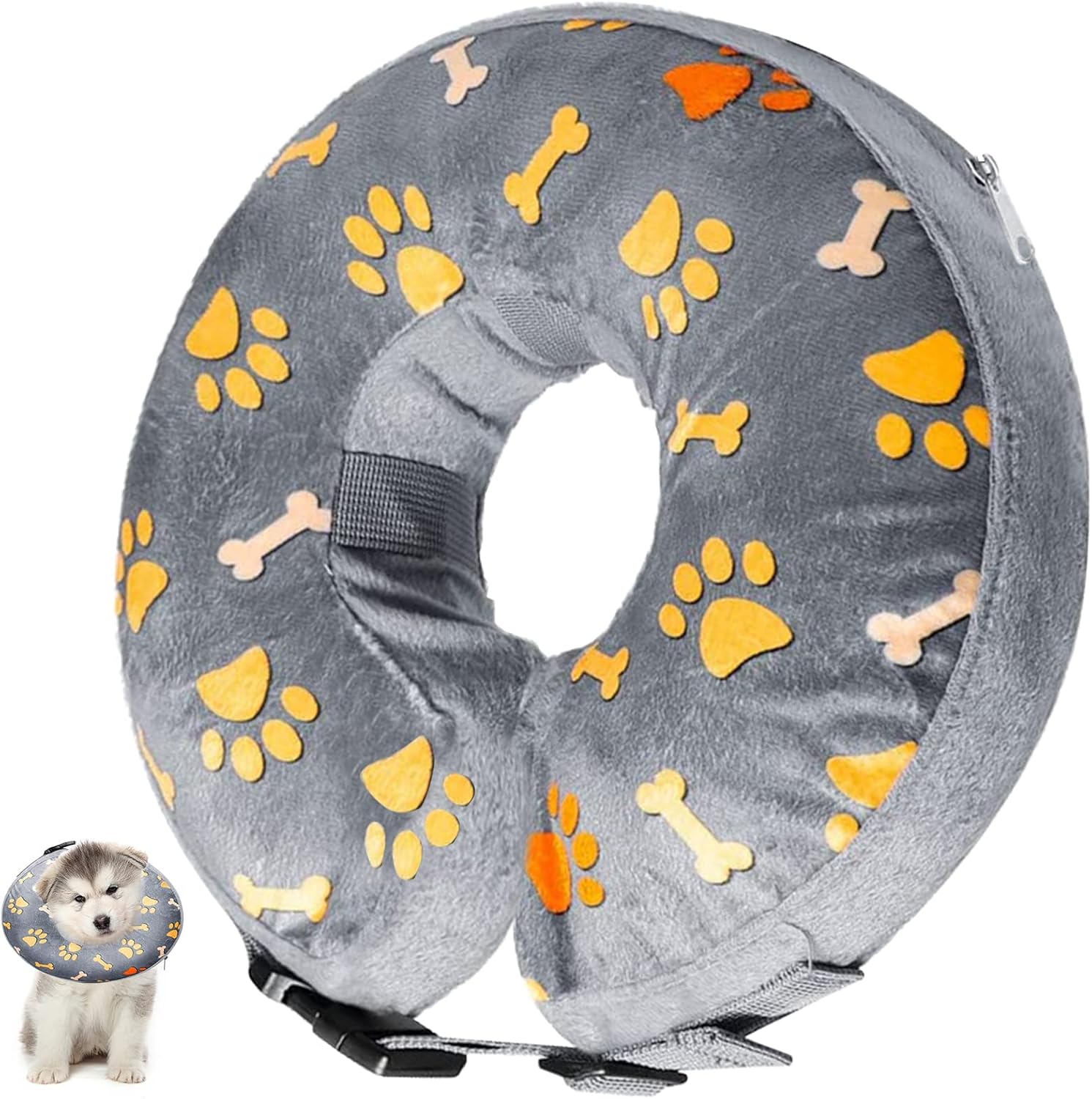
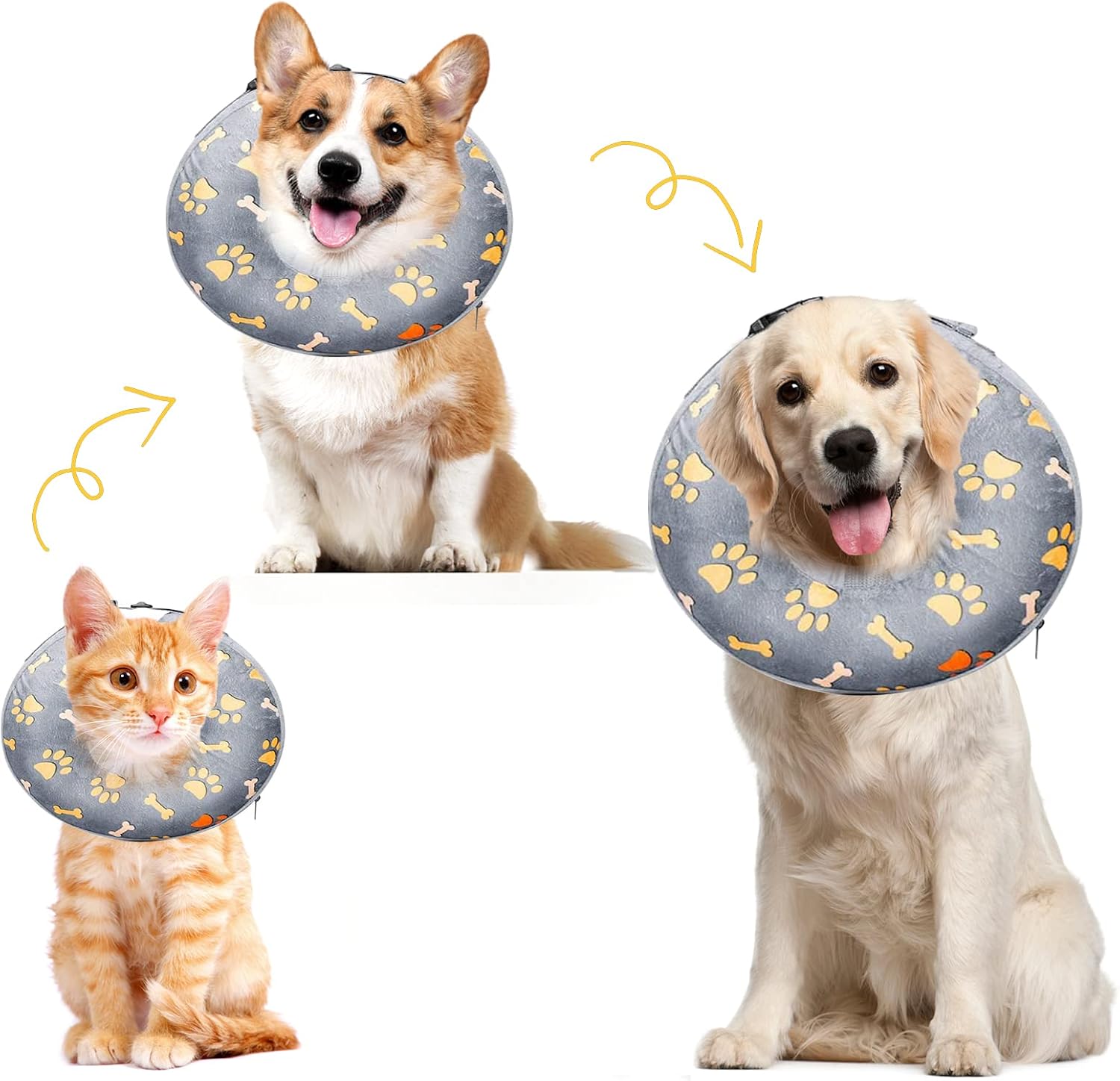
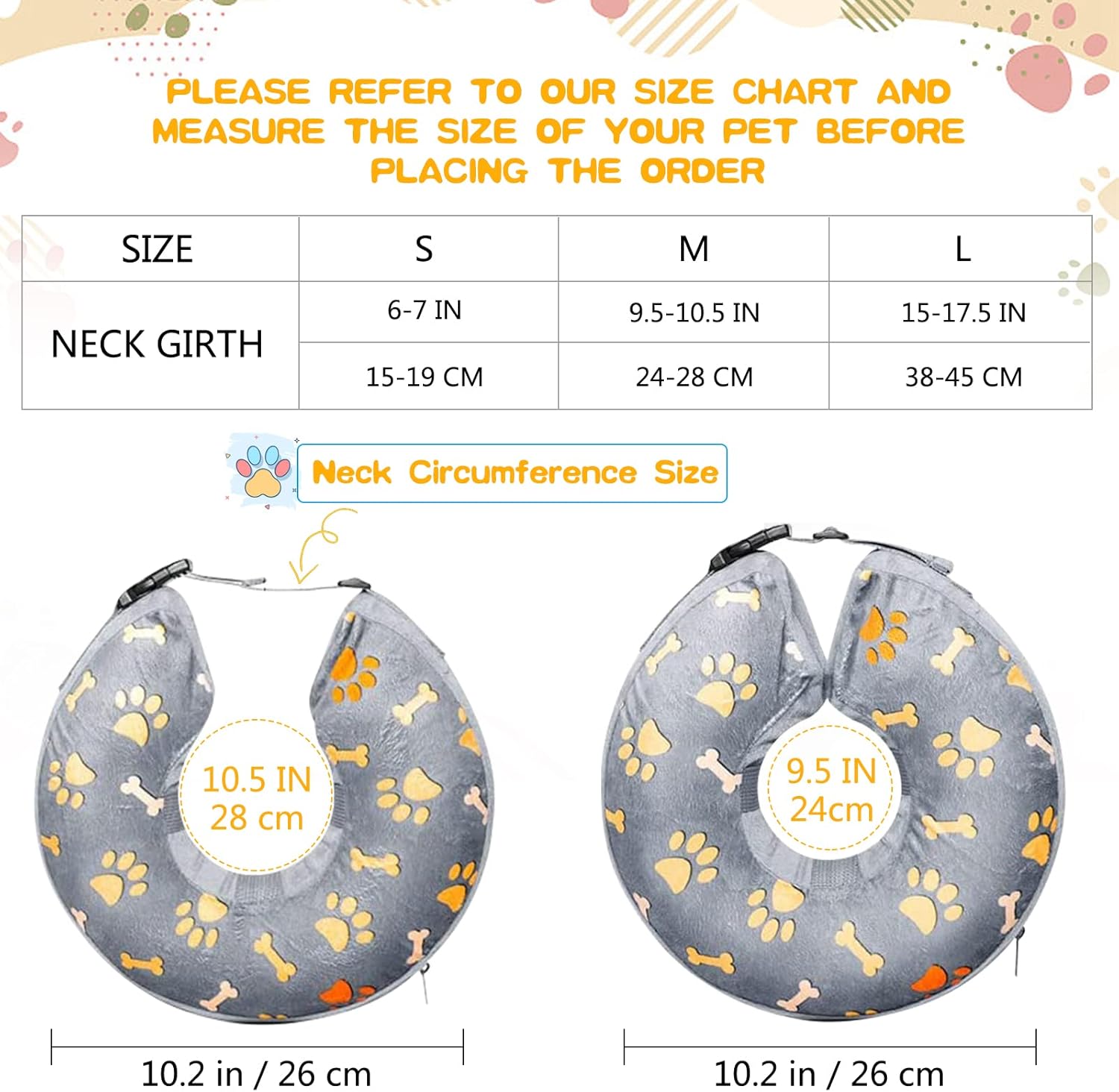
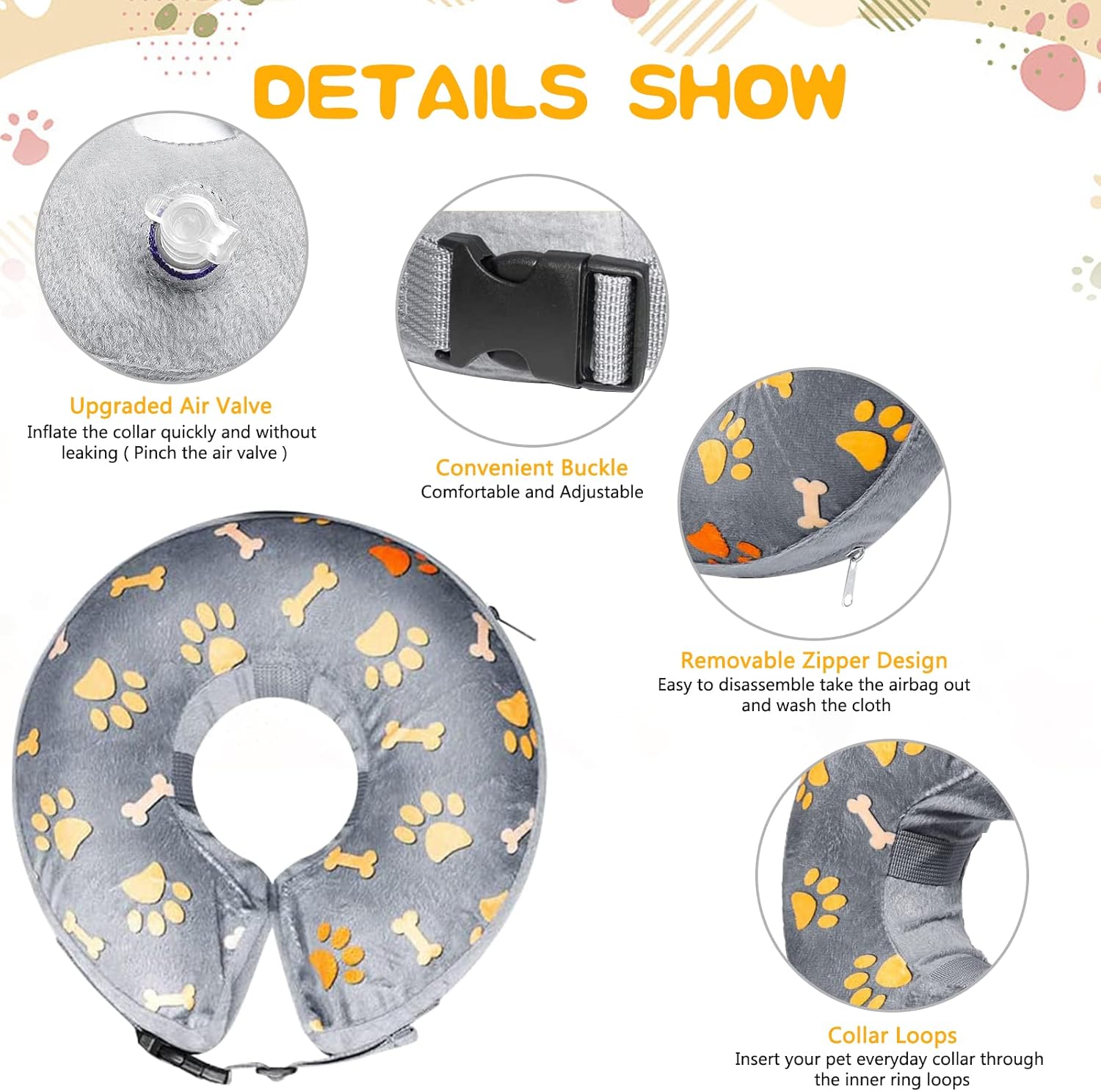
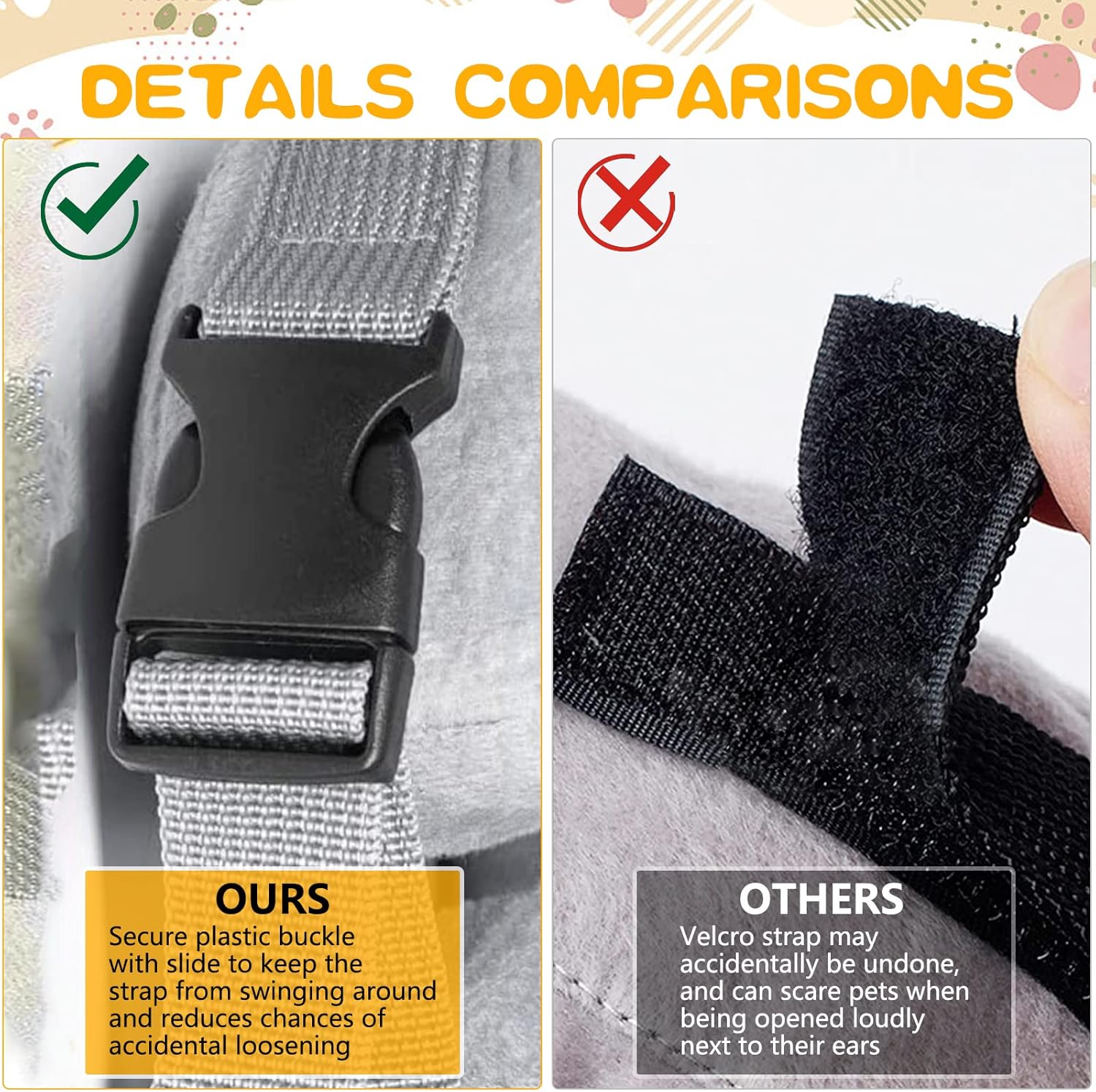
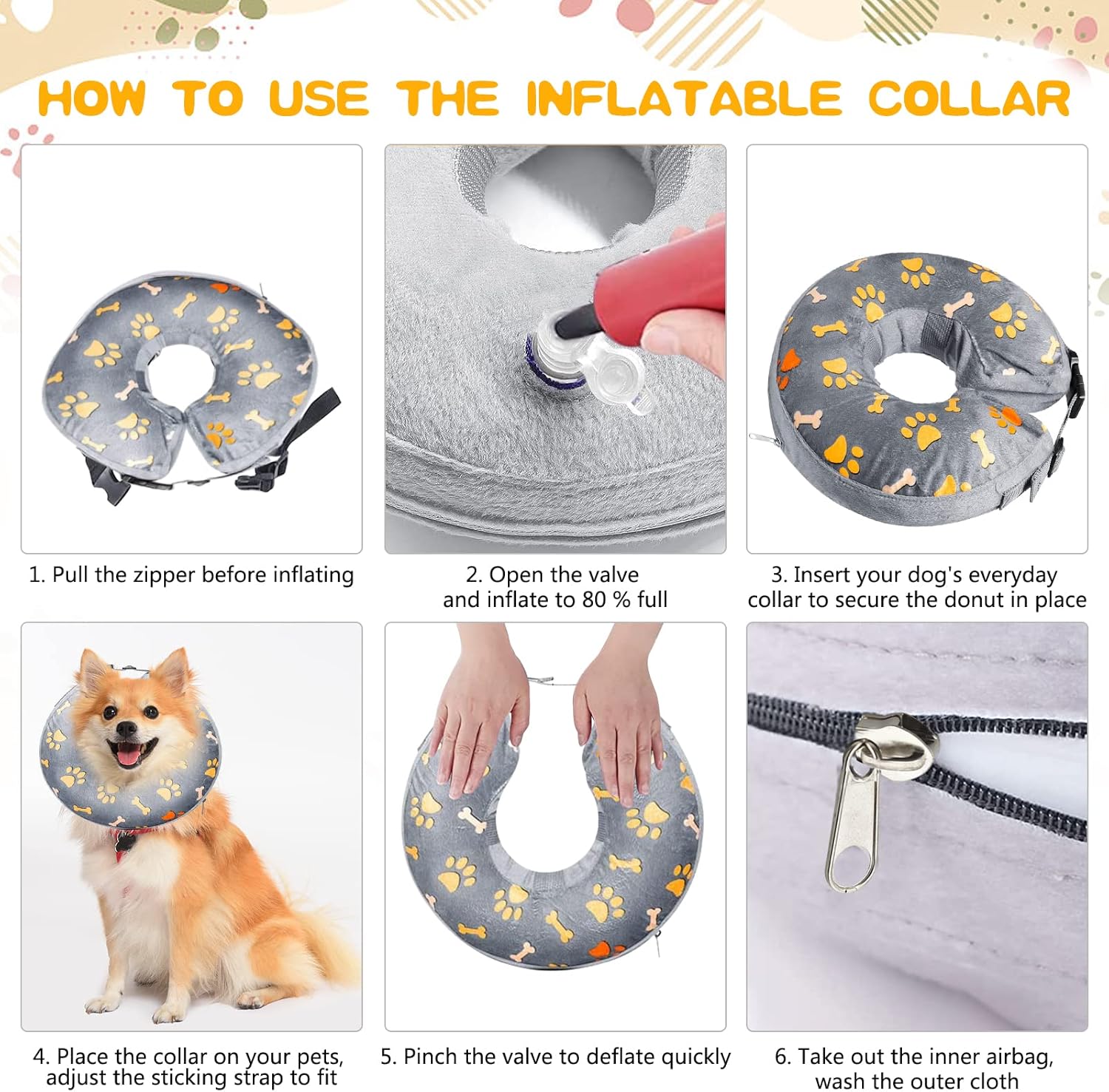
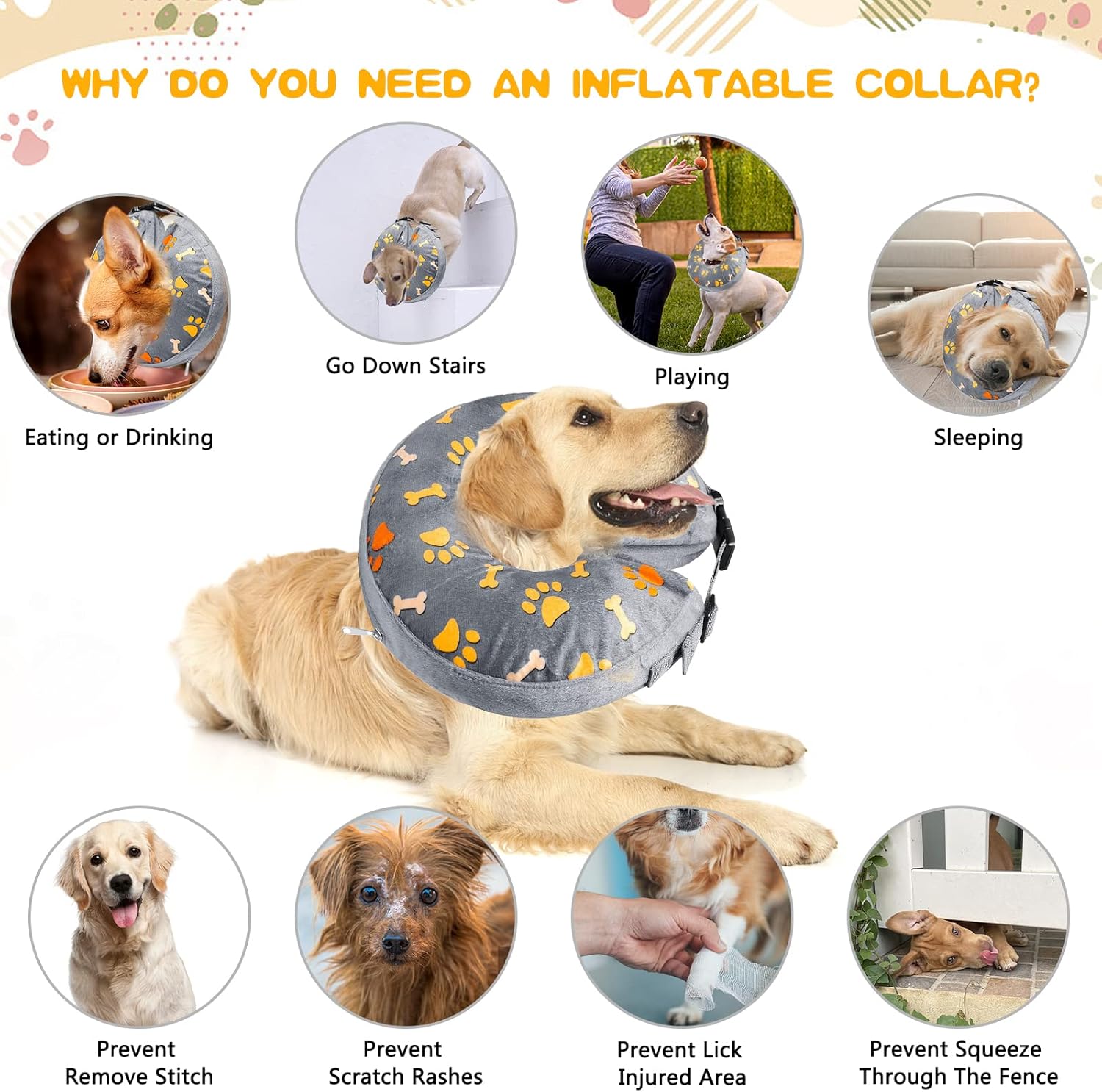
What it is and what problem it solves\nThis is an inflatable recovery collar designed for dogs and cats to prevent licking, biting or scratching wounds after surgery or injury. The aim is to support wound healing without the need for a traditional rigid cone, allowing pets to eat, sleep and move more freely while protecting the affected area.\n\n## How it feels and fits\nThe collar combines a soft plush exterior with a PVC inner layer. It’s lightweight and designed to be gentle on the skin, reducing irritation during wear. The neck opening is adjustable with a buckle and there are multiple inner loops to accommodate daily collars and comfortable wear on a variety of neck sizes. Note that you should measure your pet’s neck girth before ordering to choose the right size.\n\n## Pros and what stands out\nOn the plus side, this donut-style recovery collar provides visibility and a friendlier appearance than traditional cones, which can help in reducing stress for some pets. The design allows a relatively clear line of sight and aims to avoid obstructing daily activities, including feeding, resting and gentle play. The material is described as waterproof and soft, which can be practical for use during wet or messy recovery periods.\n\n## Potential drawbacks and limits\nWhile the collar is advertised as “soft” and comfortable, some pets used to a rigid cone may take time to adjust to the cushiony fit. The effectiveness depends on the wound location and pet behaviour, obstacles to licking may vary if a pet is particularly persistent. It may not be the best choice for very active or large dogs if the neck circumference is not correctly matched.\n\n## Who it’s for\nThis product could be a good fit for small to medium cats and dogs that require wound protection but benefit from a less obstructive alternative to a hard cone. If your pet tolerates plush wear and you prioritise ease of drinking, eating and mobility during recovery, this collar could be worth considering.\n\n## When to buy and when to hold off\nConsider this option after recommended postoperative care or injury recovery where the goal is to minimise licking without overly restricting movement. If your pet tends to chew aggressively or the wound is in a location hard to protect with a donut shape, you may want to explore other collar types or consult a vet first.\n\n## What to check before purchasing\n- Measure neck girth accurately and ensure the collar can be adjusted to a snug fit without restricting breathing or movement.\n- Verify that the pet can comfortably access food and water and that the collar doesn’t block vision or cause overheating.\n- Read any care instructions to keep the material clean and dry between uses.\n\n## Usage in practice: a quick scenario\nImagine your cat recovering from a minor facial wound. The donut design avoids a tight, hard cone around the neck, allowing steady drinking and soft play while you monitor healing. The adjustable fit helps tailor the collar to the cat’s comfort, reducing stress during the day.\n\n## Final verdict\nIs it worth it? Worth considering if you’re seeking a softer, more pet-friendly alternative to a traditional cone and your pet tolerates plush wear. It may not be ideal for every wound location or every pet, so assess fit, ease of eating and the wound site before deciding.\n\n## Quick FAQ\n- How do I know it will fit my pet? Measure your pet’s neck girth and use the adjustable buckle and inner loops to find a secure fit.\n- Can my pet still eat and drink? The design aims to allow eating and drinking with minimal obstruction, but observe your pet during initial use.\n- Is it suitable for cats and dogs alike? Yes, it’s marketed for both cats and dogs, with an adjustable fit intended to accommodate different shapes.\n