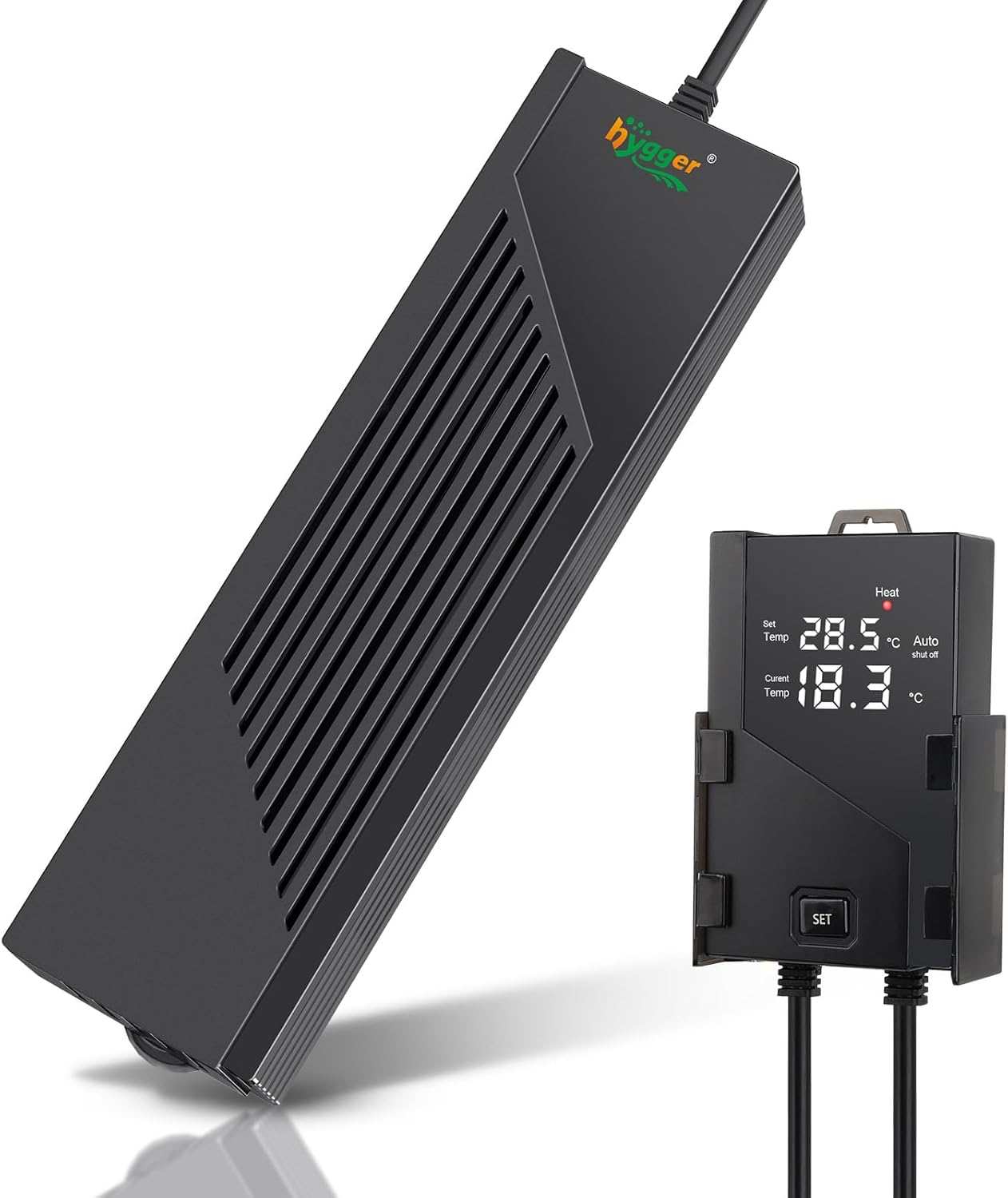
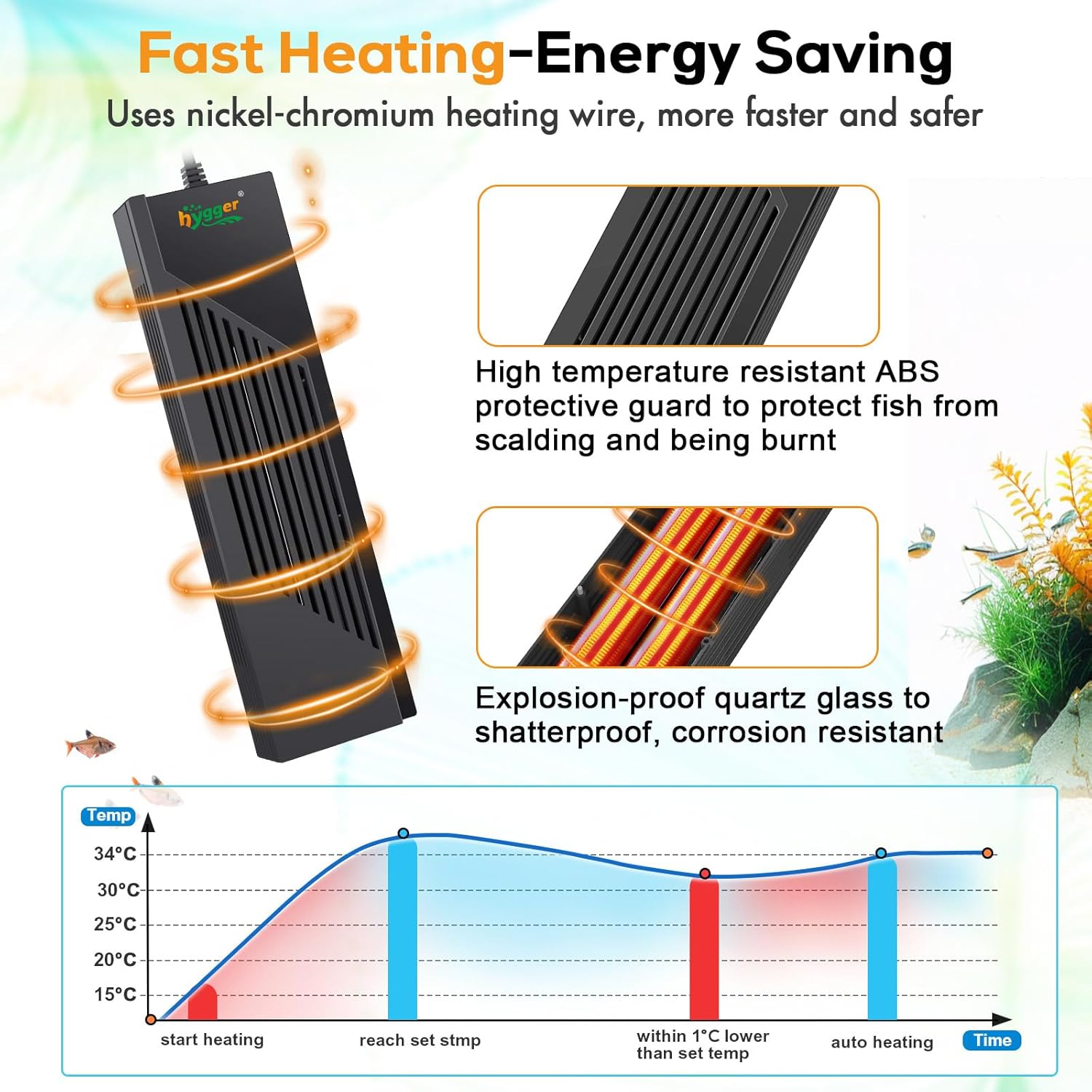
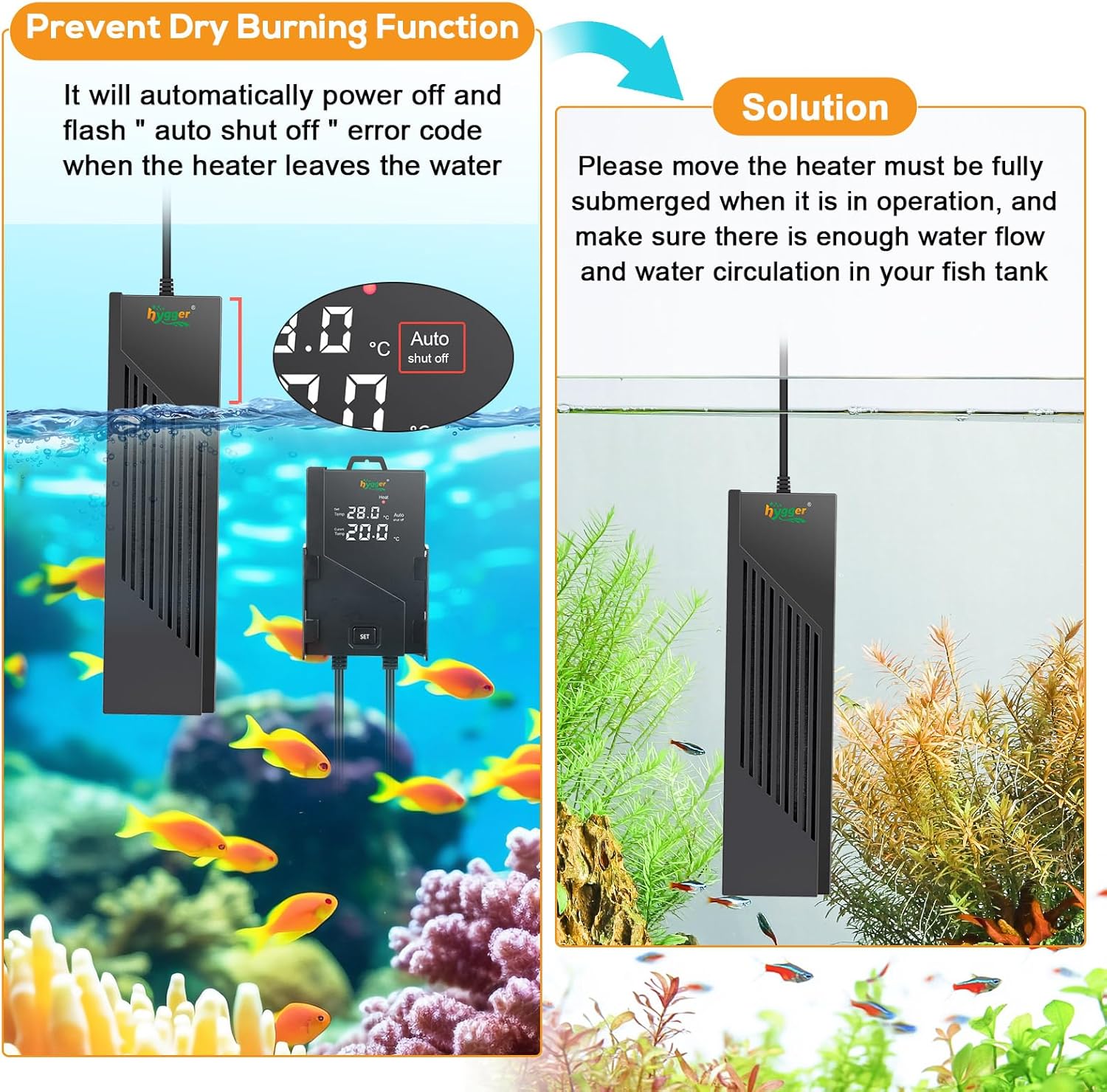
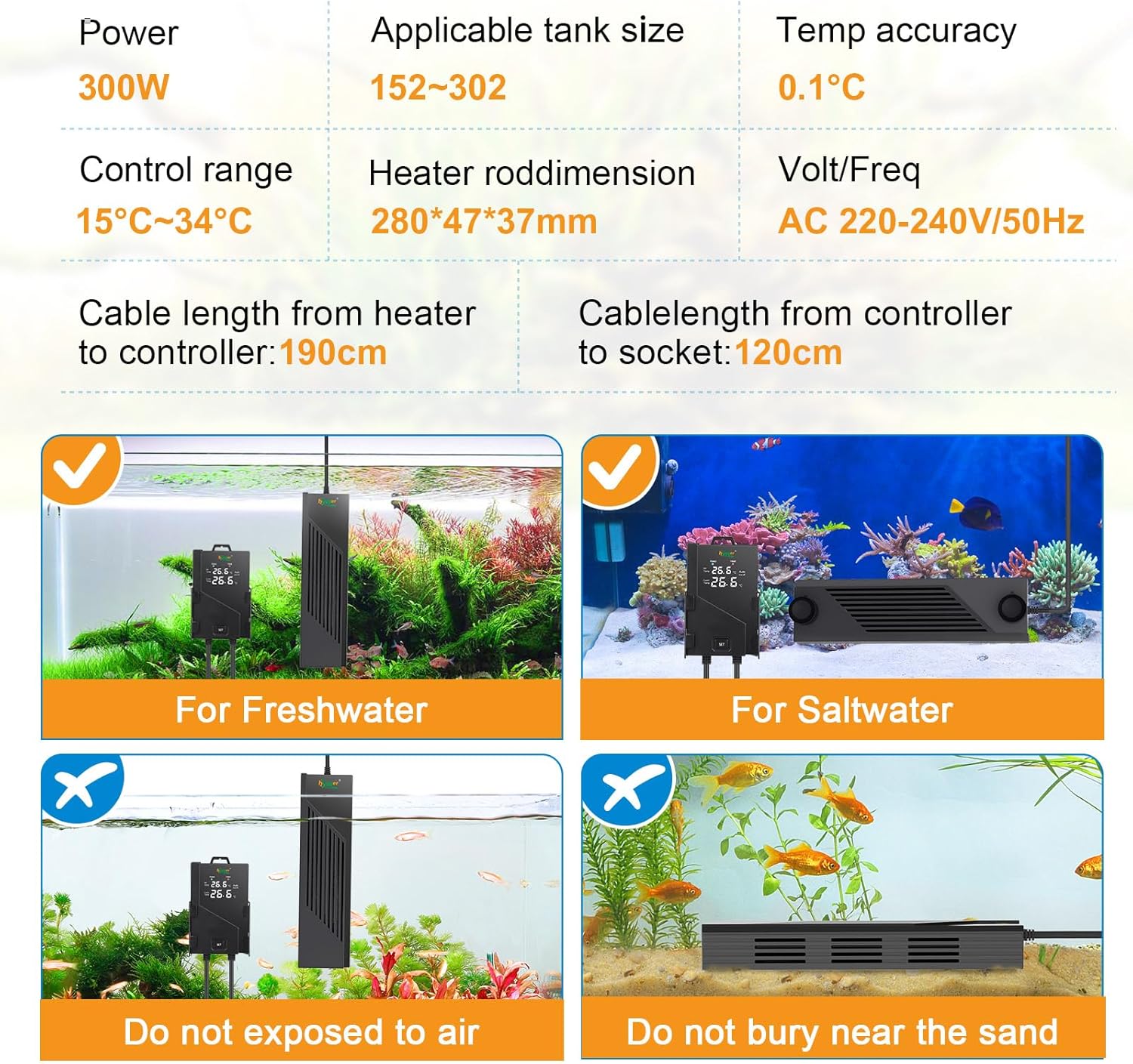
What this heater is and what it’s for\nIf you’re keeping a freshwater tank in the 150–300 litre range, the hygger 300W submersible heater offers a straightforward way to maintain steady water temperature. It combines a robust glass shell and a nickel-chromium heating element with a silicon carbide heat conductor for quicker, more even warming. On paper, the design aims to be reliable and safe, with a double explosion-proof construction and a three-layer protection approach to reduce the risk of damage to the unit or your fish.\n\n## How the temperature is controlled\nThe heater features a digital LED display that shows current water temperature and the set target. You can adjust the temperature with a simple one-button control, and the display uses a two-colour indicator: red when heating, blue once the target is reached. Importantly, the unit offers a built-in inverter technology and a dedicated chip to keep the water at a steady temperature with an accuracy of 0.1°C. The temperature range is shown in both Fahrenheit and Celsius (59–93°F / 15–34°C).\n\n## Safety and protection\nThree intelligent safety features are part of the design: an off-water warning if the heater is exposed to air (display flashes and a warning signal) and two warning states for over‑heating (HH) and low temperature (LL). These are meant to reduce the risk of unintended heating or exposure, which can be reassuring in tanks with sensitive livestock.\n\n## Ease of use and practicality\nThe heater is designed to be simple to install: it ships with suction cups for mounting and can remember its temperature after a power outage, which helps if you’re doing water changes. A recommended operating position is at a 30–45° angle, ideally with some water movement to help accuracy.\n\n## Considerations and limits\nWhile the features look solid on paper, a few caveats are worth noting. The unit relies on its electronics to manage the temperature, so if your tank experiences strong temperature fluctuations or poor water circulation, the perceived accuracy may vary. It’s also not a 'plug-and-forget' device in all setups, ensuring the heater is fully submerged and positioned correctly helps maximise performance. For very large or unusually shaped tanks outside the stated 152–302 litres, you may need to reassess cooling or supplementary heating methods.\n\n## Fit and who it suits\nThis heater is best suited for freshwater tanks within the manufacturer’s stated range where a compact, digitally monitored heater is preferred. If you prioritise precise control to a tenth of a degree and an easily readable external display, this model can be a sensible choice. It may be less ideal if you need ultra‑high durability in very gritty environments or if you require operation outside the 15–34°C band.\n\n## What to check before buying\nConfirm your tank size falls within 152–302 litres and that a water movement system is in place to aid heat distribution. Consider whether you want Celsius or Fahrenheit as your primary display unit, since the unit supports both. Also, think about your contingency for power outages and whether the memory feature aligns with your routine maintenance.\n\n## Practical usage example\nFor a typical 180–200 litre freshwater tank, mounting the heater at a slight angle near a return flow helps distribute heat evenly. After filling, set the target to a comfortable range for your fish and monitor the digital readout during the first 24–48 hours to confirm stability.\n\n## FAQ (based on available information)\n- Does it remember the temperature after a power cut? Yes, it is designed to restore the previous setting.\n- What temperature range can it maintain? 15–34°C (59–93°F).\n- How is it read—in Celsius or Fahrenheit? It supports both and can be toggled by holding the set button.\n\n## Final thoughts and decision\nShould you buy it? If you have a freshwater tank in the 150–300 litre bracket and want clear digital readouts with gradual, controlled heating, this model offers practical features without overcomplication. It’s not the best option if you need operation well outside the specified range or in tanks with highly irregular shapes where heat distribution is challenging. Consider your tank size, circulation, and preference for a built-in safety display when making your call.