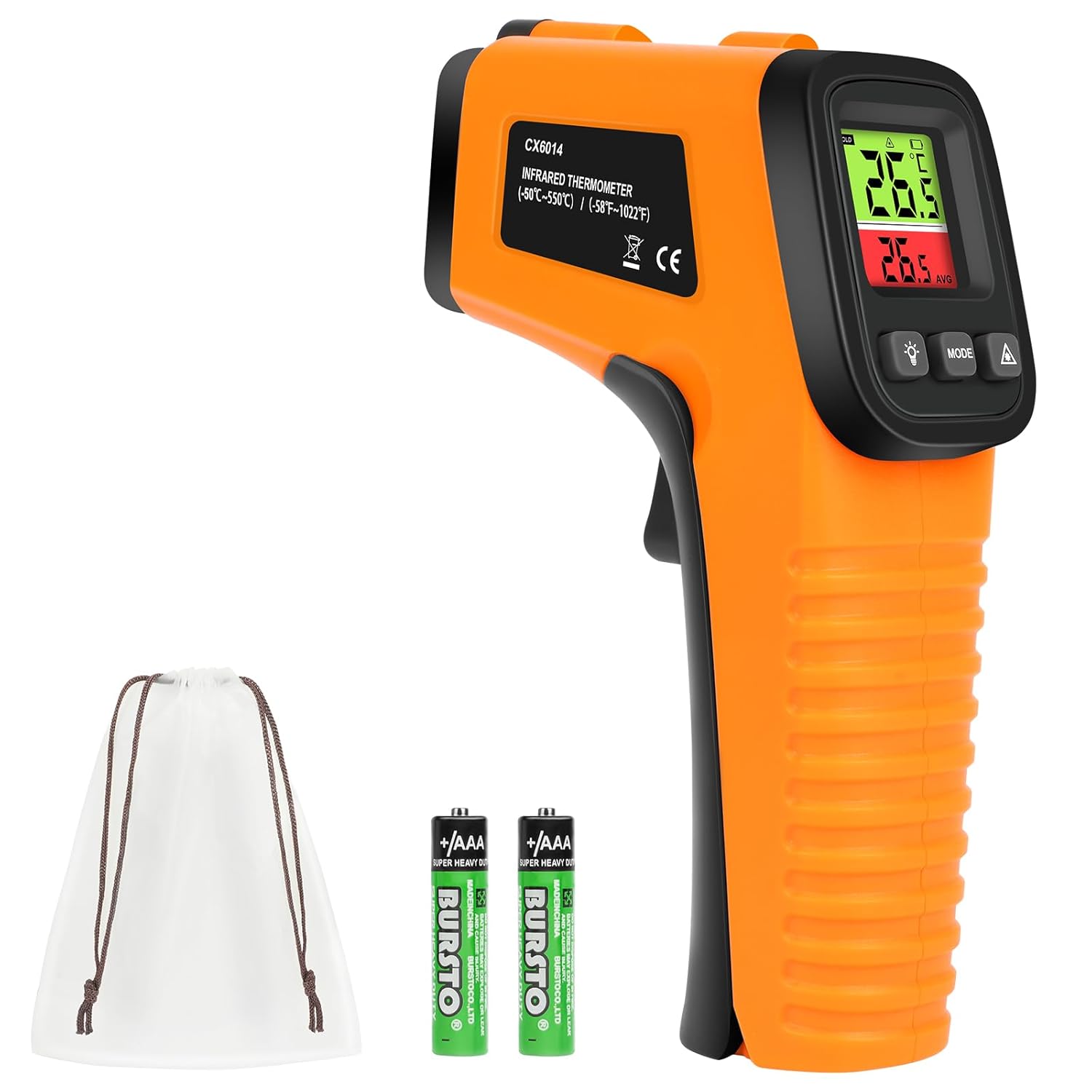
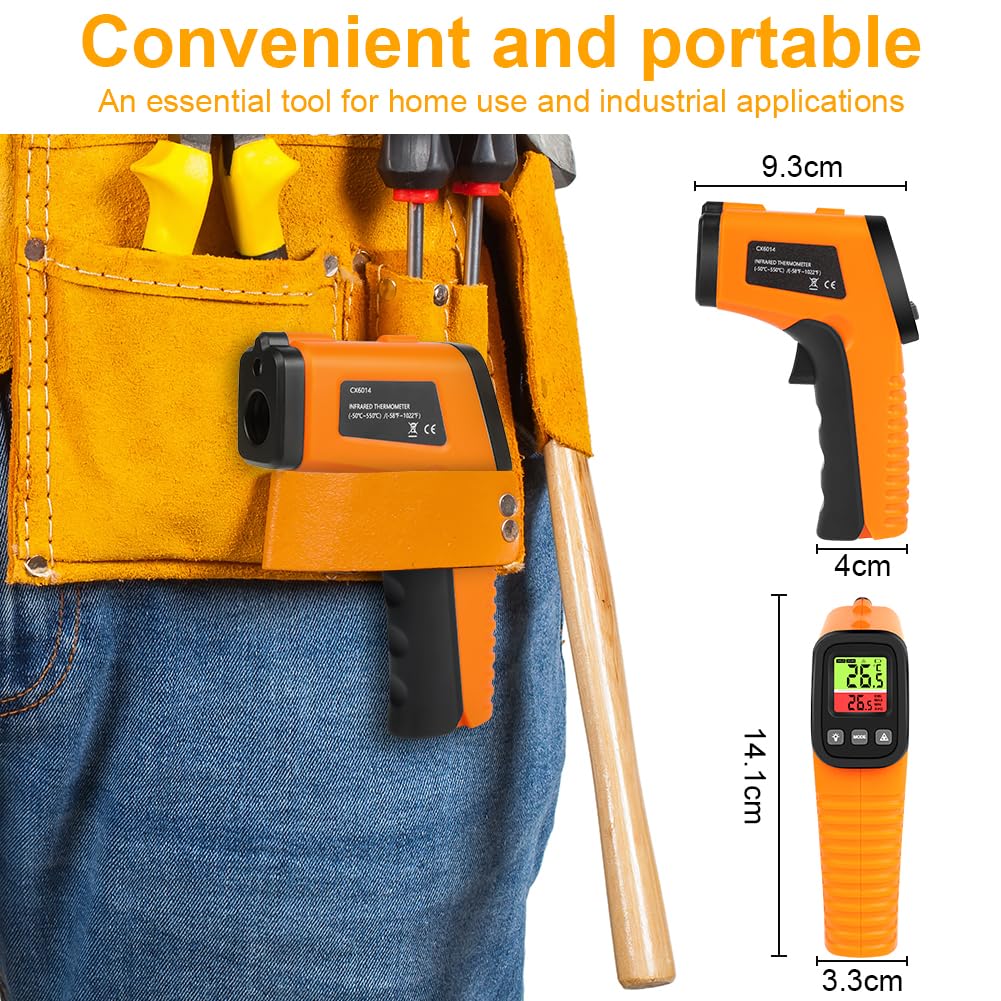
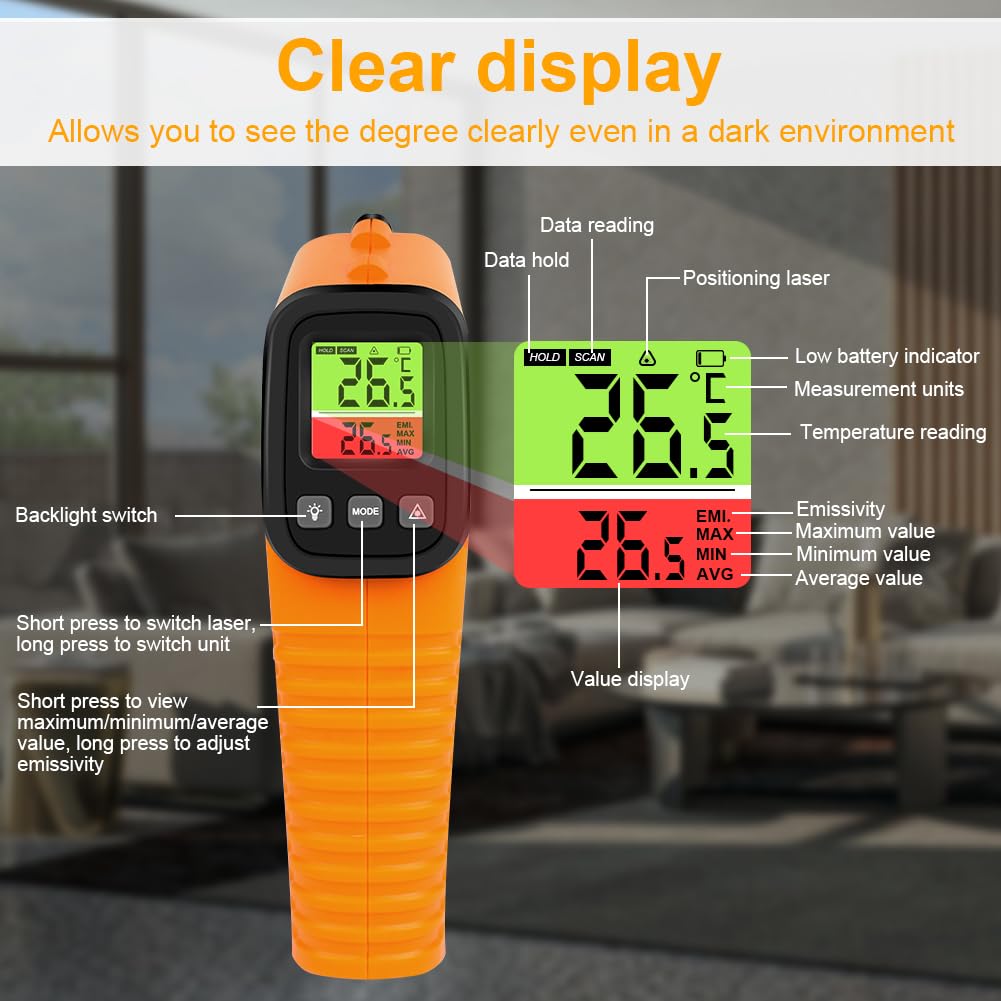
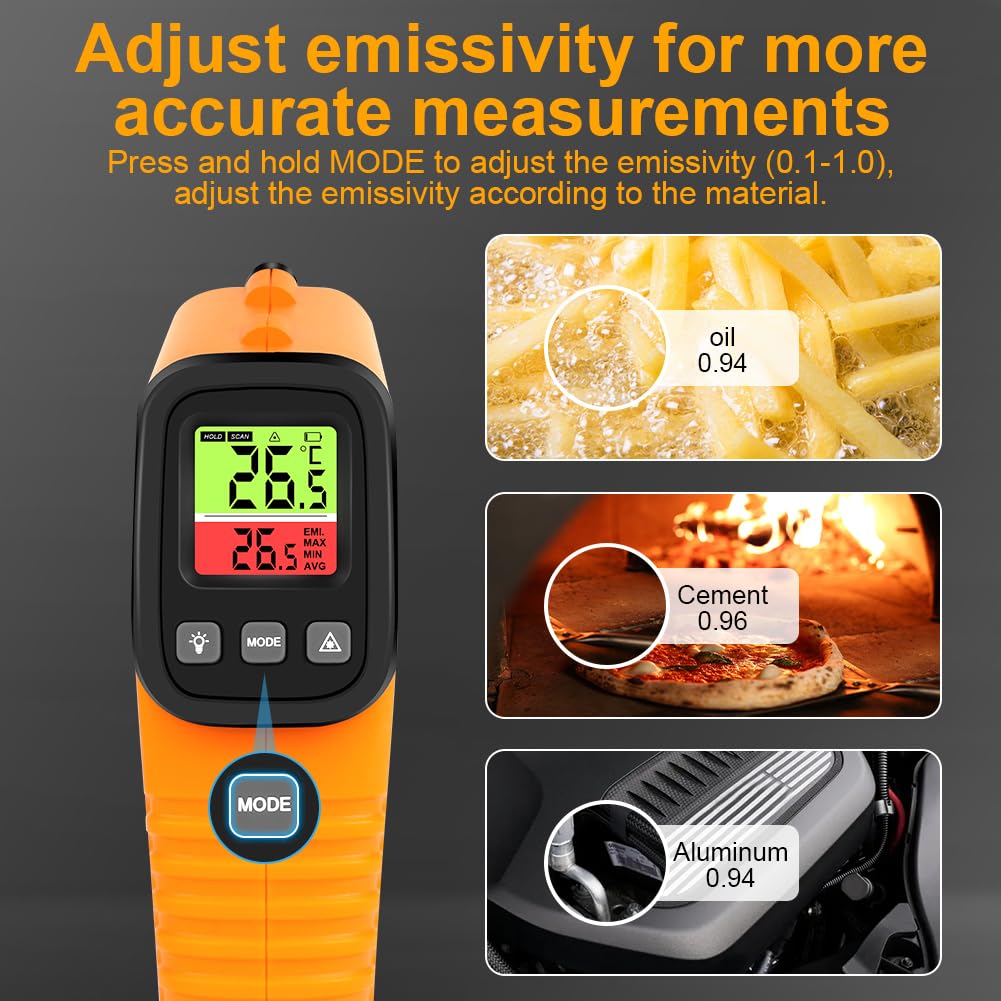
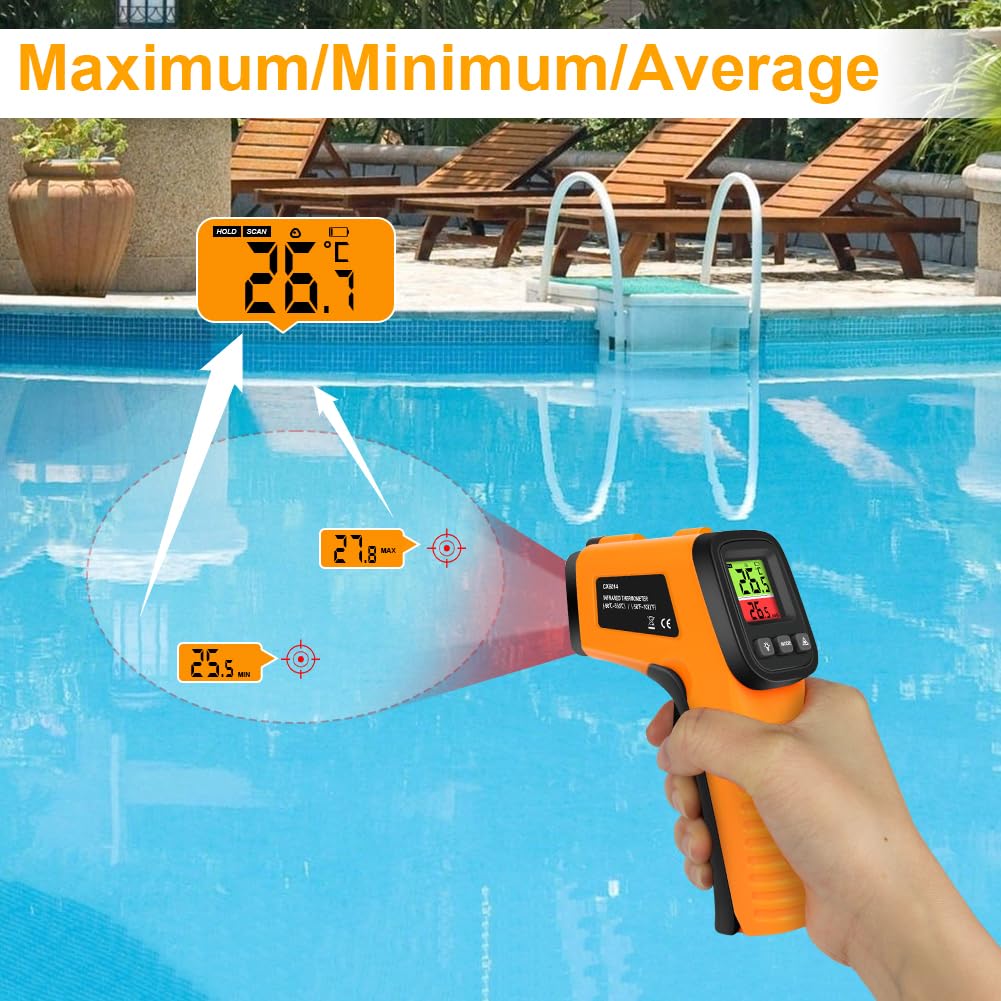
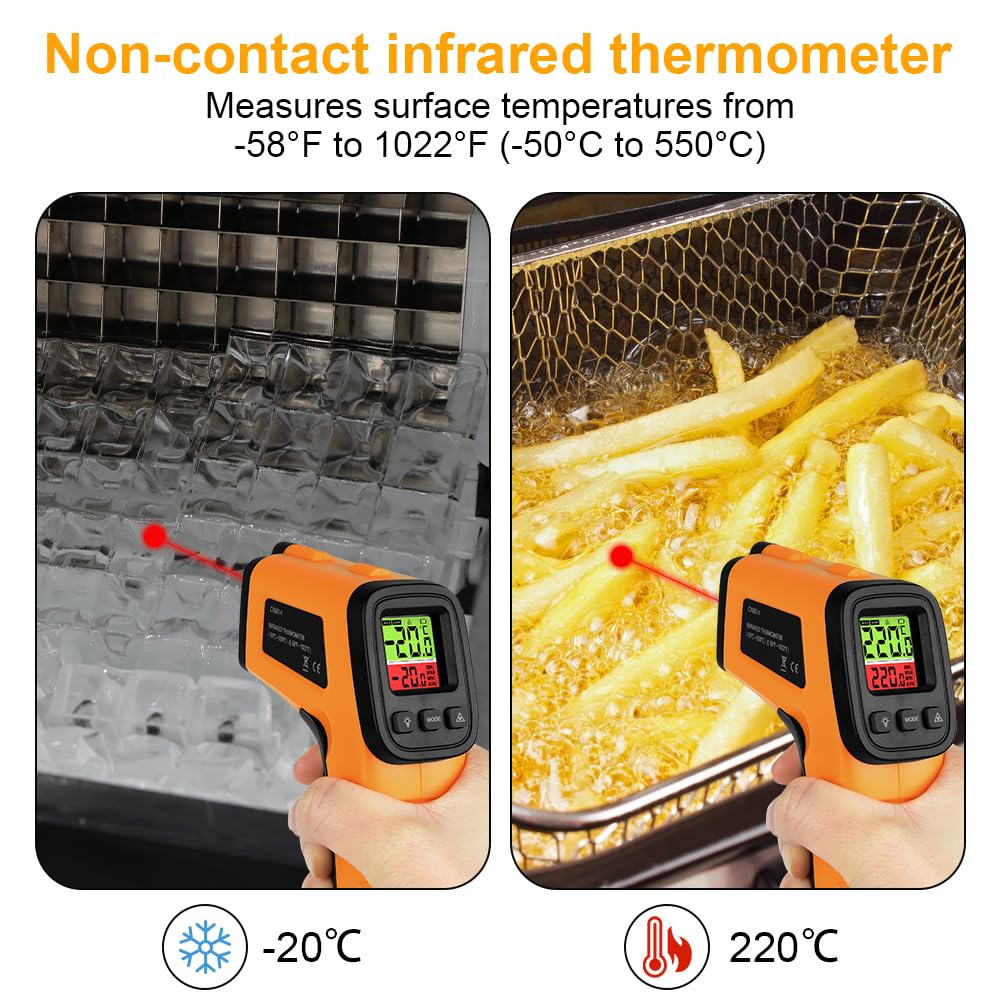
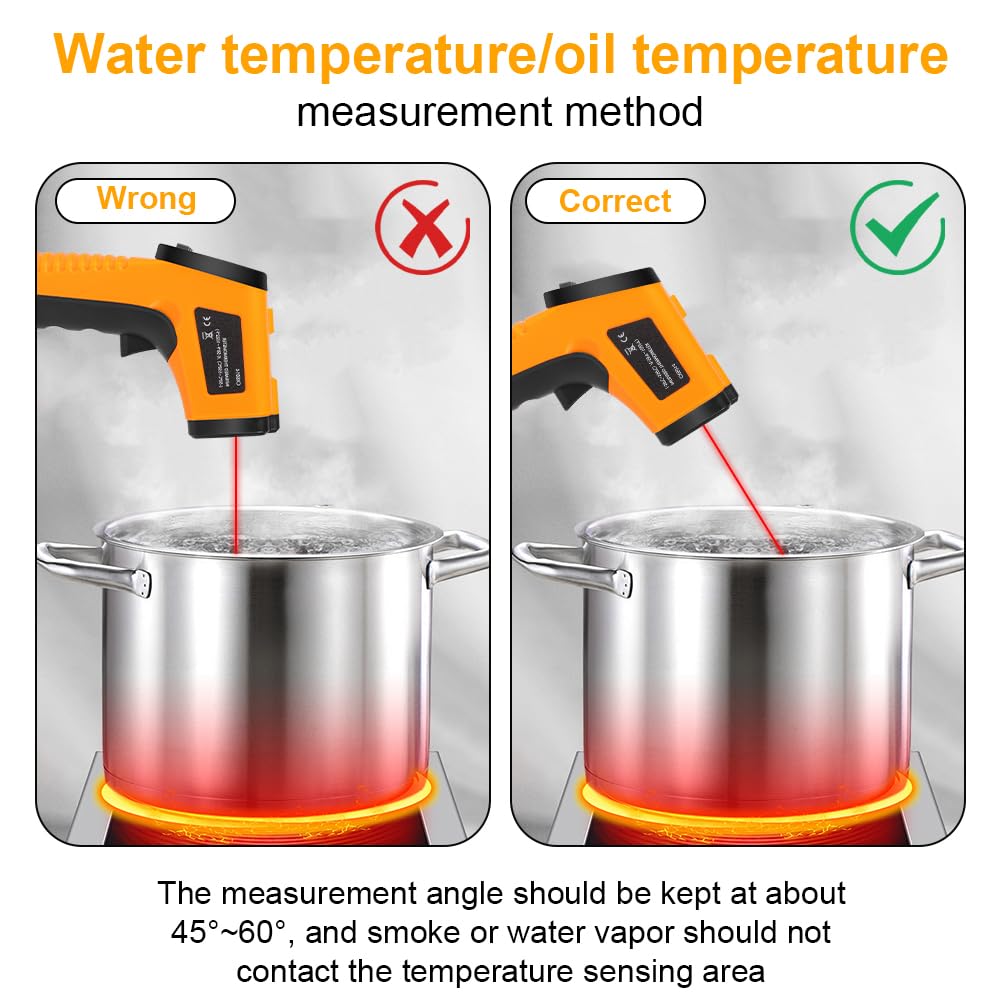
What it is and what it solves\nThe HOTUT infrared thermometer is a non-contact gun designed to read surface temperatures quickly and safely. It’s built for measured accuracy on objects and liquids, not humans or animals, making it useful in kitchens, workshops, and general home maintenance. With a short 0.5-second response and an adjustable emissivity from 0.1 to 1.0, it helps you get a realistic reading across a variety of surfaces. If you’re cooking, baking, or evaluating heat in a car or home system, this tool aims to give you a practical temperature read without touching hot surfaces.\n\n## How it performs on the numbers\nOn the page it states a measurement range of -50°C to 550°C (-58°F to 1022°F) and an accuracy of ±1.5%. The display is LCD with backlight for low-light situations, and there’s a built-in red laser to help you aim. The 12:1 distance-to-spot ratio allows you to measure a defined area from a distance, which is handy for hot pipes or oven racks where proximity isn’t safe. It also features auto power-off to save batteries after 30 seconds of inactivity.\n\n## What stands out day to day\nThe convenience of non-contact temperature checks means you can gauge food temperatures, oven cavities, grills, or heated liquids without heat transfer or a risk of burns. The adjustable emissivity broadens the range of materials you can measure, from metal pans to ceramic dishes. The laser alignment makes it easier to spot the exact spot you’re measuring, reducing guesswork in busy kitchens.\n\n## Pros and what to watch\nPros: rapid readings, non-contact operation, adjustable emissivity, visible display in dim environments, and a reasonable distance-to-spot ratio for everyday tasks. Limitations: it measures surface temperatures only, not internal temperatures, and it is not suitable for human temperature checks. The instruction notes also remind users to avoid shining the laser directly into eyes.\n\n## Who it’s for\nThis device suits home cooks, hobbyists, DIY enthusiasts, car tinkerers, and anyone who needs quick surface temperature readings without touching hot surfaces. If your work involves measuring sauces, pizzas, oven racks, hot water pipes, or cooling surfaces, it can be a practical companion. It’s less suitable as a medical or clinical thermometer and not designed for body temperature checks.\n\n## When it makes sense to buy\nConsider this tool if you value fast, non-contact readings and you primarily measure surfaces or liquids rather than internal temperatures. It’s particularly useful in kitchens and garages where you want to verify heat levels at a glance, or when you’re juggling multiple cooking temperatures and need a quick spot check.\n\n## When you might skip it\nIf you need precise internal temperature readings, or you’re looking for a device validated for medical use, this isn’t the right choice. Also, if you frequently measure very small areas or require extremely high precision across varied materials, you might want to compare emissivity settings and measurement stability more closely.\n\n## What to check before buying\nEnsure you understand the measurement range and that the emissivity flexibility covers the surfaces you work with. Remember the device is for surface temperatures and that the laser is a pointing aid, not a safety feature for eye exposure. Consider battery life implications and whether you’ll benefit from the backlit display in your typical usage environment.\n\n## Practical usage example\nWhen you’re baking pizzas, you can quickly verify oven surface temperatures or check the temperature of melted cheese on a tray without removing protective gloves. For car maintenance, you might measure the surface temperature of a hot exhaust pipe or radiator hose from a safe distance.\n\n## The decision in practice\n### Is it worth it?\nWorth considering if you prioritise fast, non-contact surface readings and value the adjustable emissivity and clear display for everyday tasks. It isn’t the best pick if you need internal temperatures or medical-grade accuracy.\n\n## Quick FAQ\n- Can it measure body temperature? No, it’s designed for objects and liquids, not human or animal bodies.\n- Does the laser pose a risk? The laser is for aiming, not for eye exposure. Avoid shining directly into eyes.\n- What surfaces work best? It works well on common cooking vessels, metals, plastics and liquids on accessible surfaces.\n- How long does the battery last? It features auto power-off after 30 seconds of inactivity to conserve power.