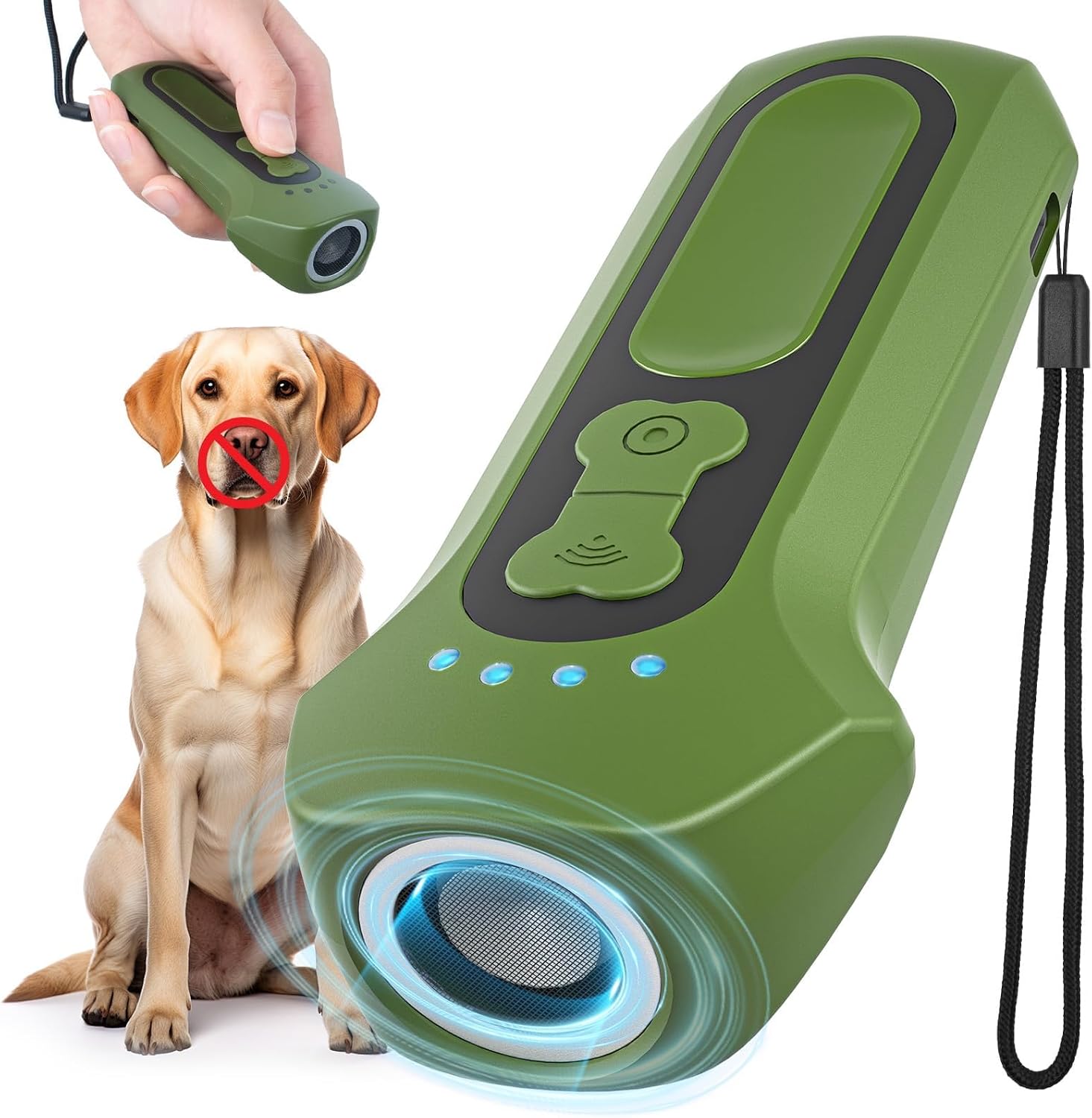
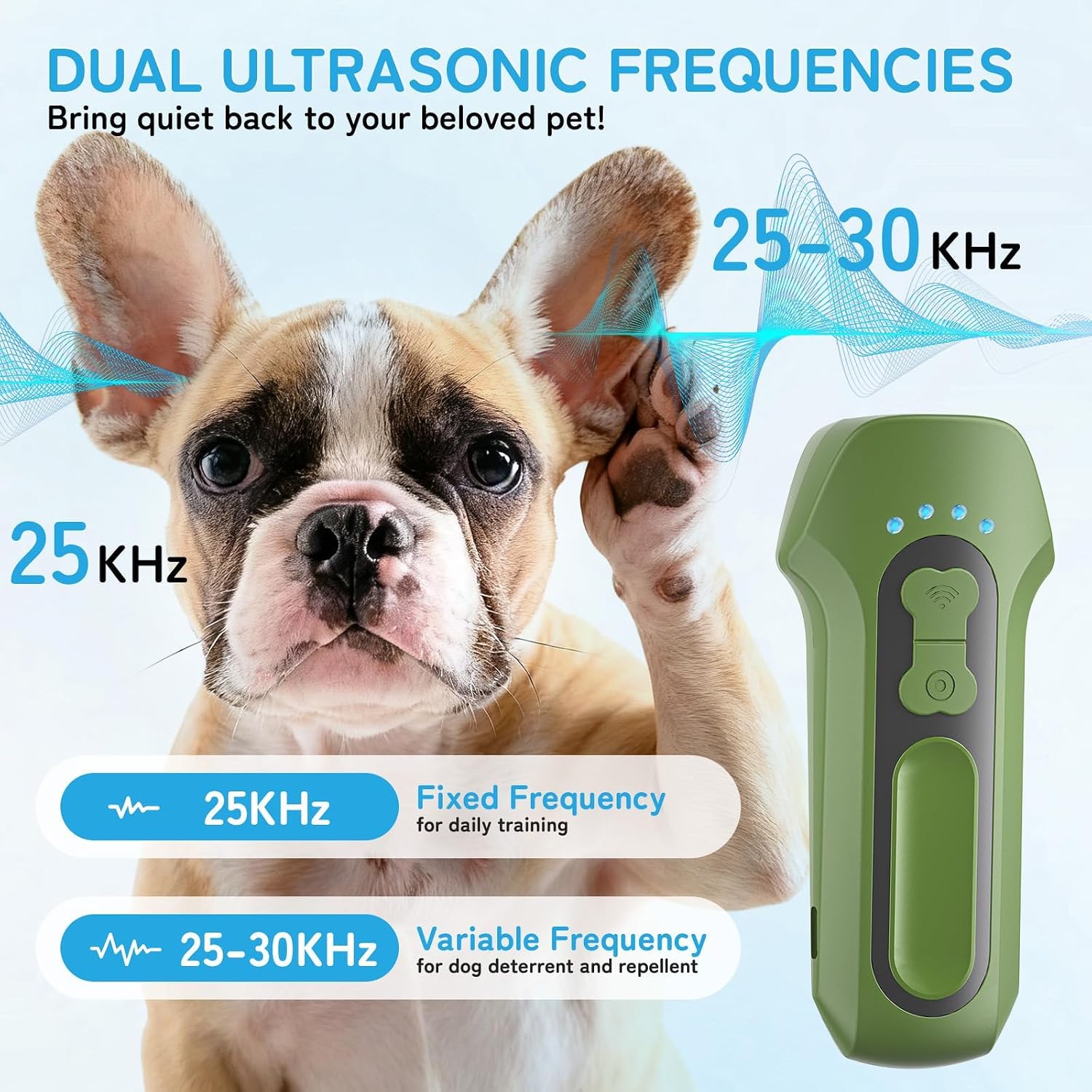
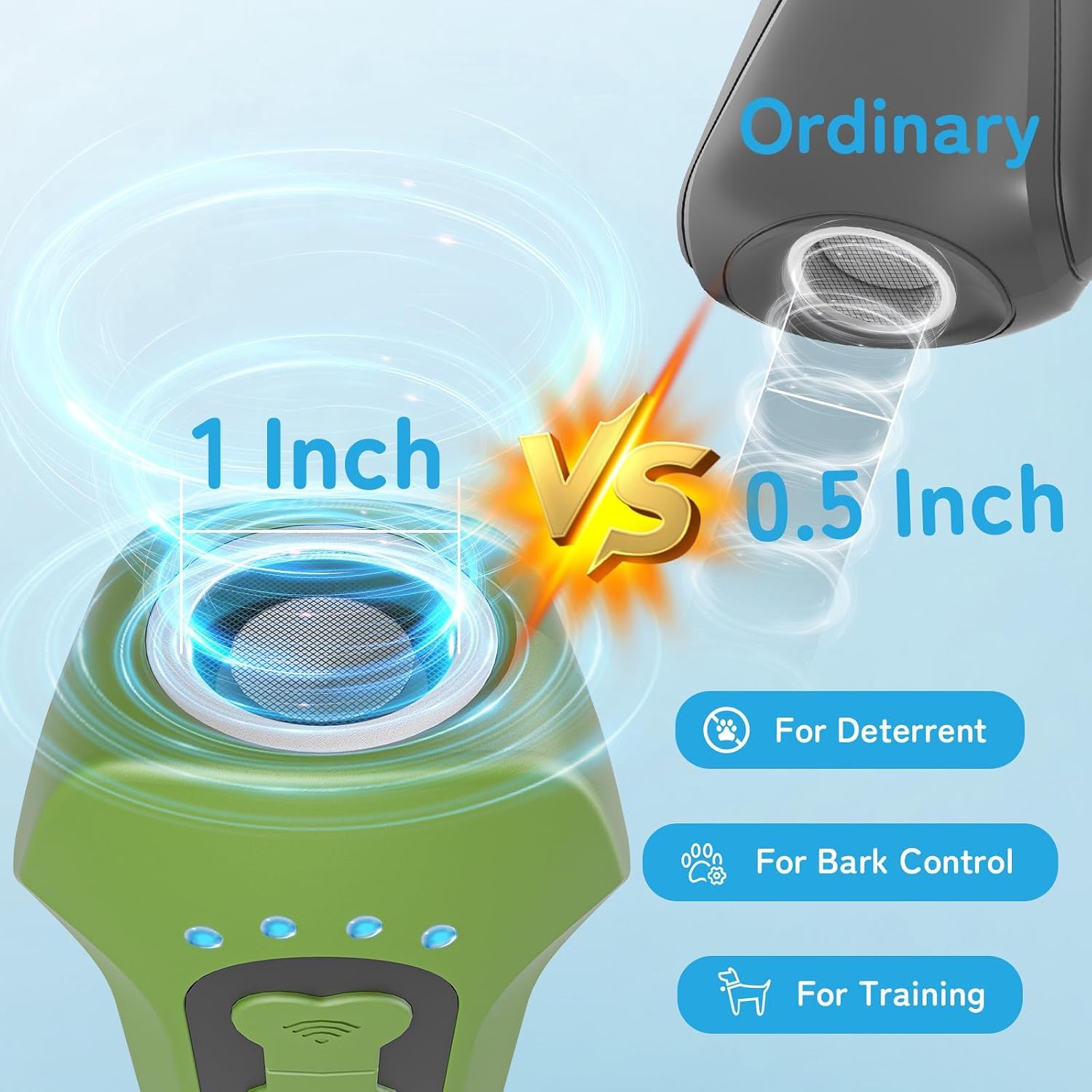
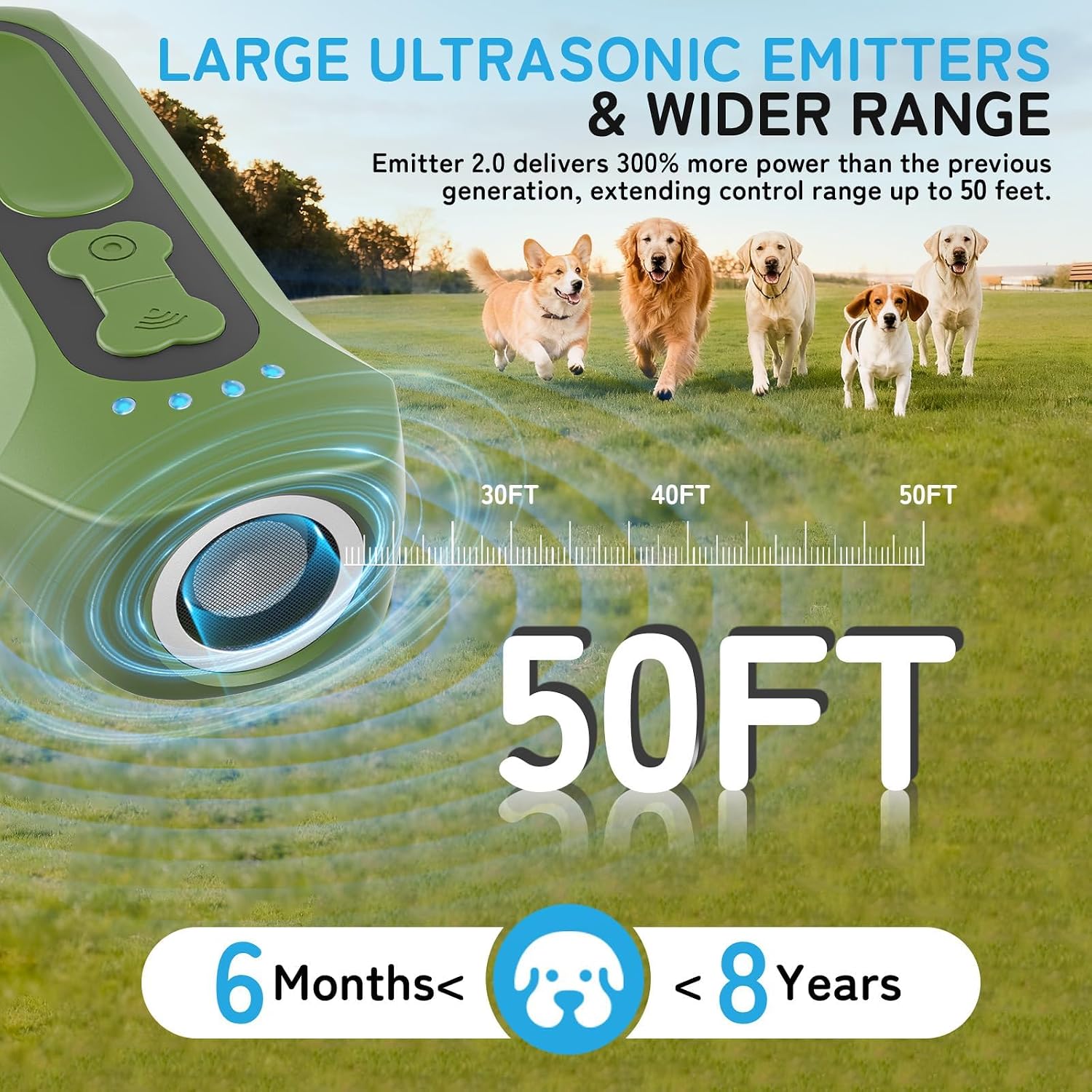
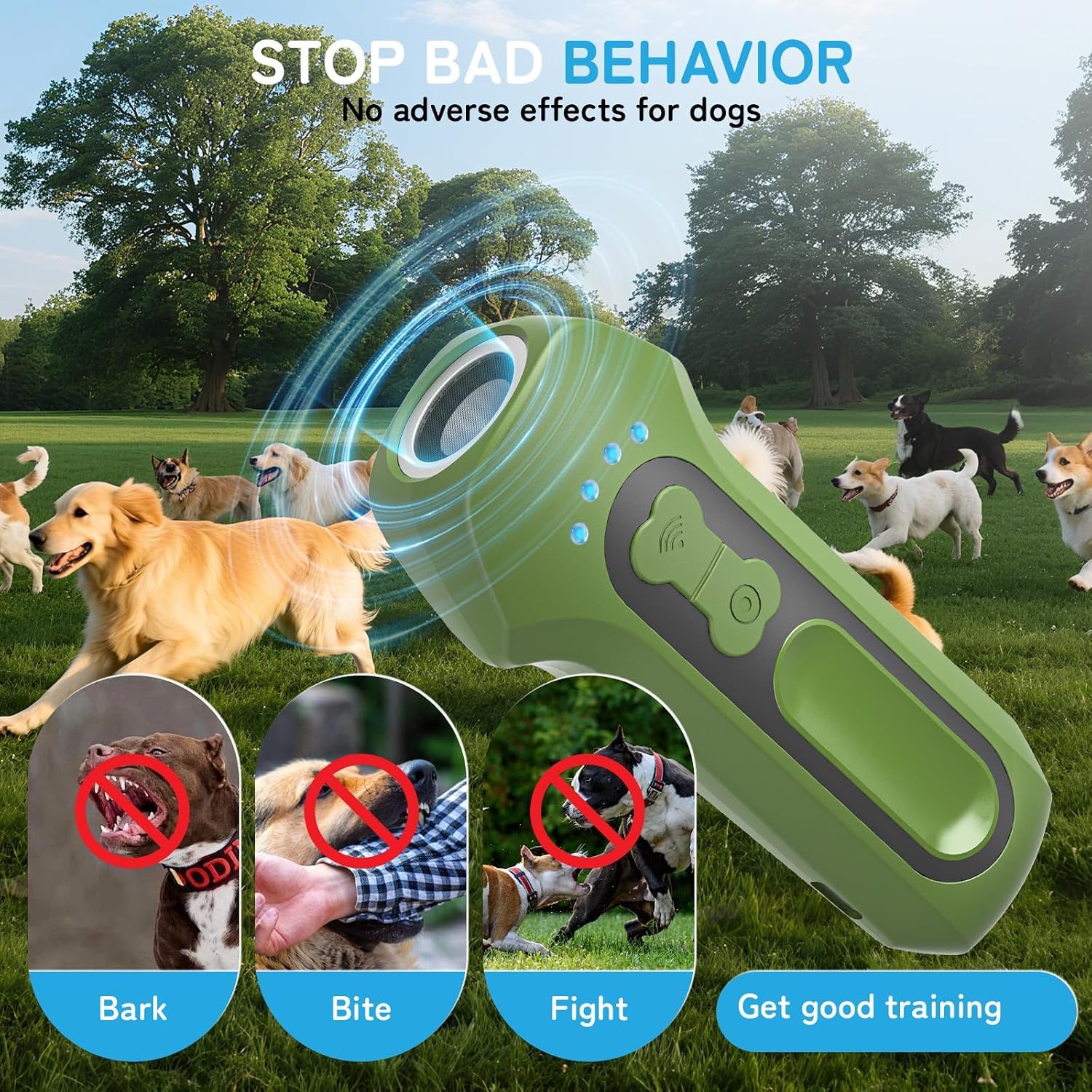
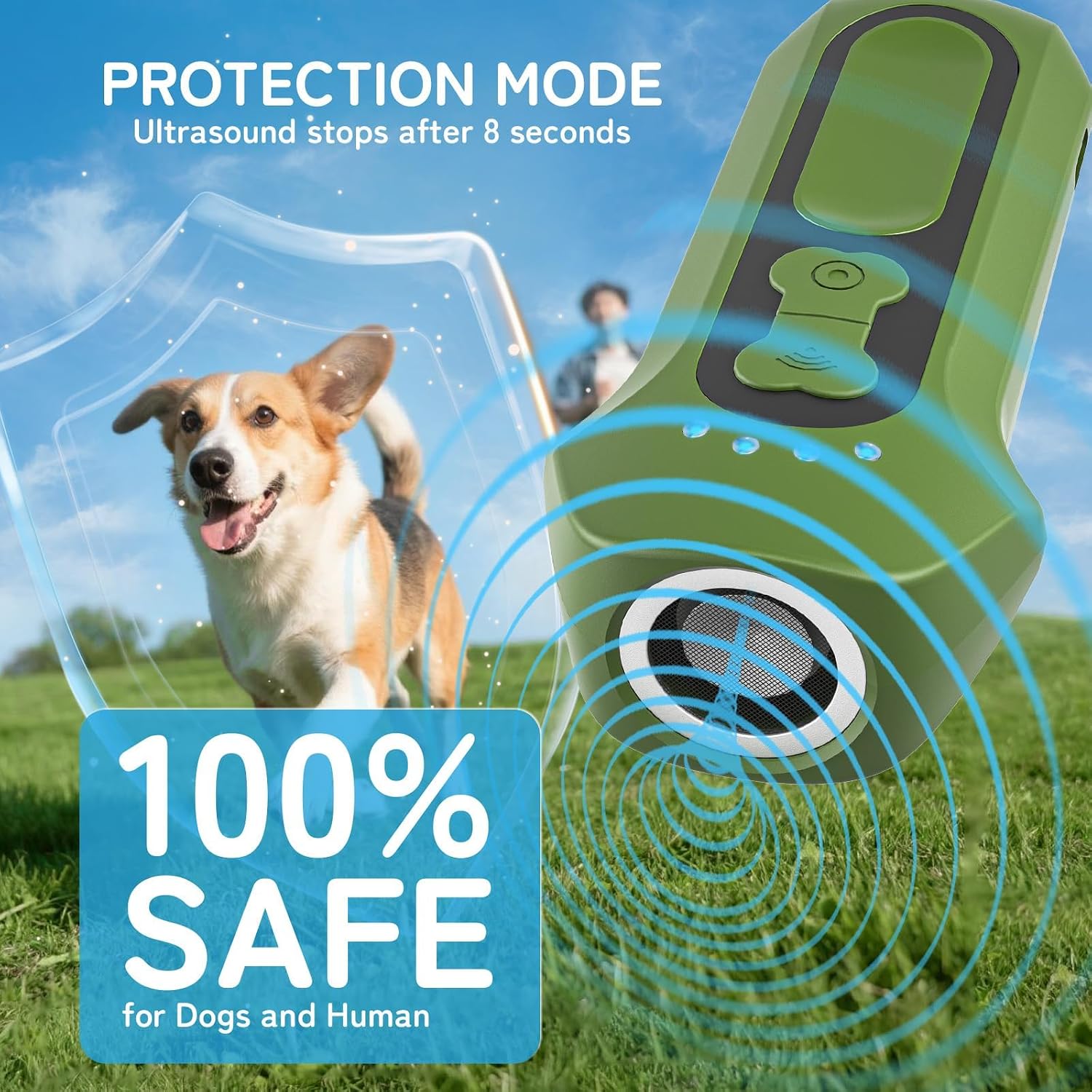
What this device is and the need it addresses\nHolercoco presents a compact ultrasonic bark deterrent designed to encourage calmer behaviour in dogs without physical contact. It aims to curb unwanted barking and related behaviours such as jumping or nipping by delivering high-frequency sound cues that are attention-getting for dogs but safe and non-invasive for humans. On the page you’re reading, it’s clear the goal is to offer a humane training tool that works at home or outdoors, potentially reducing disturbance for neighbours and giving dog owners a practical route to train-in quiet moments.\n\n## How it works\nThe unit uses dual ultrasonic frequencies (a fixed 25kHz and a variable 25–30kHz) to capture a dog’s attention. There are no electric shocks, vibrations or loud noises that would physically contact the animal, making it a safer alternative to some traditional deterrents. The idea is simple: when unwanted barking occurs, point the device at the dog and issue a firm verbal cue. If the dog responds, follow up with praise. Over time, this reinforcement can help establish quieter habits.\n\n## What stands out on paper\nCompared with basic single-transmitter models, this design emphasises broader coverage and a portable form factor. The claimed reach is up to 65 feet (approximately 20 metres), which could cover many domestic settings and small outdoor spaces. The device is described as USB-chargeable with a fast two-hour charge and a battery life that can extend to around 60 days in typical use, with standby potential up to 180 days. A wrist strap is included for hands-free portability, which is handy for walks or outdoor training sessions.\n\n## Limitations to keep in mind\nNo bark deterrent is a universal solution. The base description notes it isn’t suitable for very noisy environments, dogs with hearing impairments, situations with multiple dogs, or dogs under 6 months or over 8 years. If your dog has a sensitive temperament or if you rely on supervised or long-term behavioural modification, this tool should be part of a broader training plan. If after a couple of weeks there’s no noticeable improvement, the recommended next step is to contact support for guidance.\n\n## Pros and potential drawbacks\nPros: humane approach without shocks, dual-frequency signals, portable, easy to use, decent range for home use, long standby and reasonable charging time. It’s not perfect for every scenario, in larger outdoor spaces or very loud surroundings, the effectiveness may diminish. It may also require consistent adult supervision and positive reinforcement alongside the device.\n\n## Who it suits\nThis is probably a sensible option for dog owners seeking a non-invasive training aid to reduce nuisance barking at home or in small outdoor areas, especially if you want a portable solution you can take on trips or to training sessions. It’s more aligned with everyday use rather than dedicated professional training in complex environments.\n\n## Who might want to reconsider\nIf you share your space with several dogs, have a dog with hearing sensitivity, or if you need a tool for heavy, persistent nuisance barking in noisy settings, you may want to explore additional strategies or consult a trainer for a tailored plan.\n\n## When it makes sense to buy\nConsider this device if you’re looking for a humane, plug-and-go method to reduce barking without collars or shocks, and if your typical training space falls within the stated range. It can be a practical aid for initial training, quick reminders, or as part of a routine to soften barking before conditioning alternate behaviours.\n\n## What to check before purchasing\n- Confirm the space where you plan to use it falls within the approximate 65 feet range.\n- Consider whether your dog is within the general age range noted and whether surrounding noise levels might affect performance.\n- Think about how you’ll pair this with positive reinforcement to build lasting habits.\n- If you’re considering multiple dogs, plan for how you’ll adapt the approach to each animal.\n\n## Practical use case\nImagine you’re in a garden at dusk and your dog starts barking at passers-by. A quick, steady point and a firm “Stop” followed by a treat when the dog quiets can mark a behavioural cue. Over time, you’ll likely notice quieter moments during regular routines, with less need for repeated intervention.\n\n## FAQ (based on available information)\n- Does it hurt the dog? No. It uses ultrasonic signals designed to capture attention without physical contact.\n- How long does the battery last? About 60 days in typical use, with standby up to 180 days, full charge in roughly 2 hours.\n- Is it suitable for outdoor use? The description implies indoor and outdoor applicability, though effectiveness can vary with environmental conditions.\n\n## Decision: Should you buy it?\nIf you prioritise a humane, portable, non-contact approach to reduce barking and you operate within a home or small yard, this device offers a pragmatic option to try before pursuing more involved training plans. It suits routine use and short-term training needs, but it may not replace a comprehensive behavioural program in all cases.