

H HoldPeak Handheld Digital Light Meter (0.1–400,000 Lux) with 270° Rotating Sensor
Product description
What it is
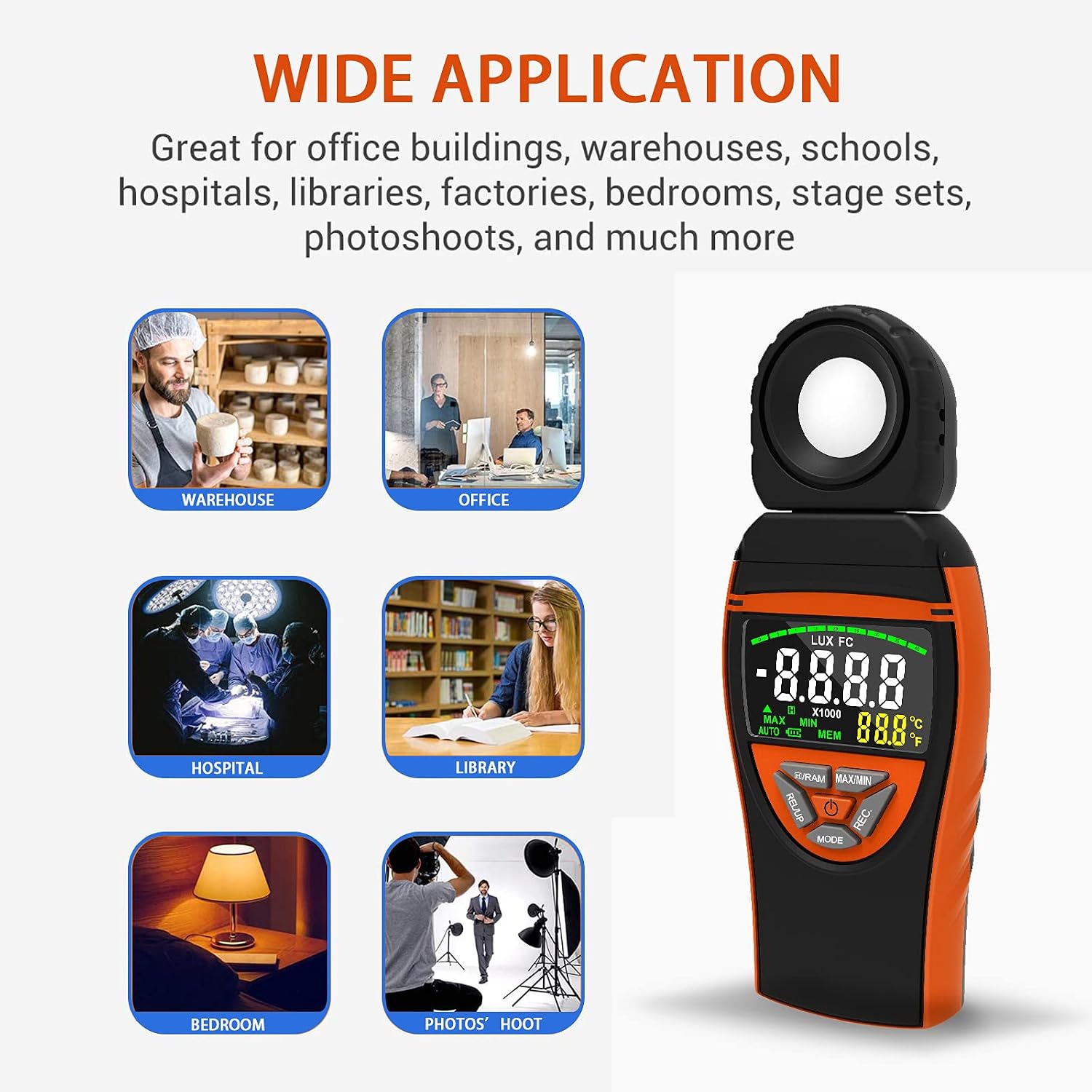
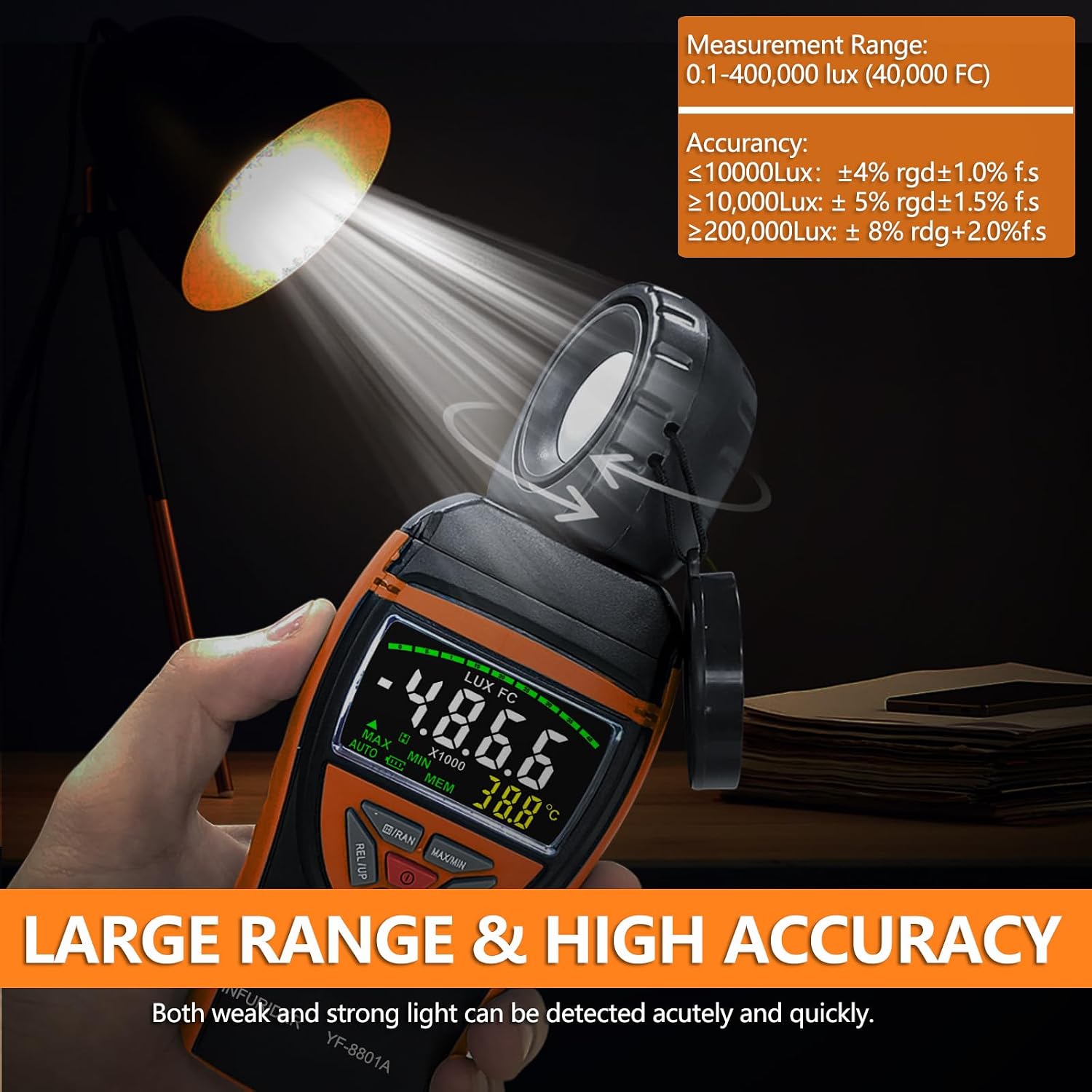
The H HoldPeak Handheld Digital Light Meter is a compact instrument designed to measure illuminance across a very wide range, from 0.1 lux up to 400,000 lux (40,000 fc). It aims to serve both professional environments and hobbyists who need reliable light readings for photography, horticulture, studio setups or industrial checks.
How it performs
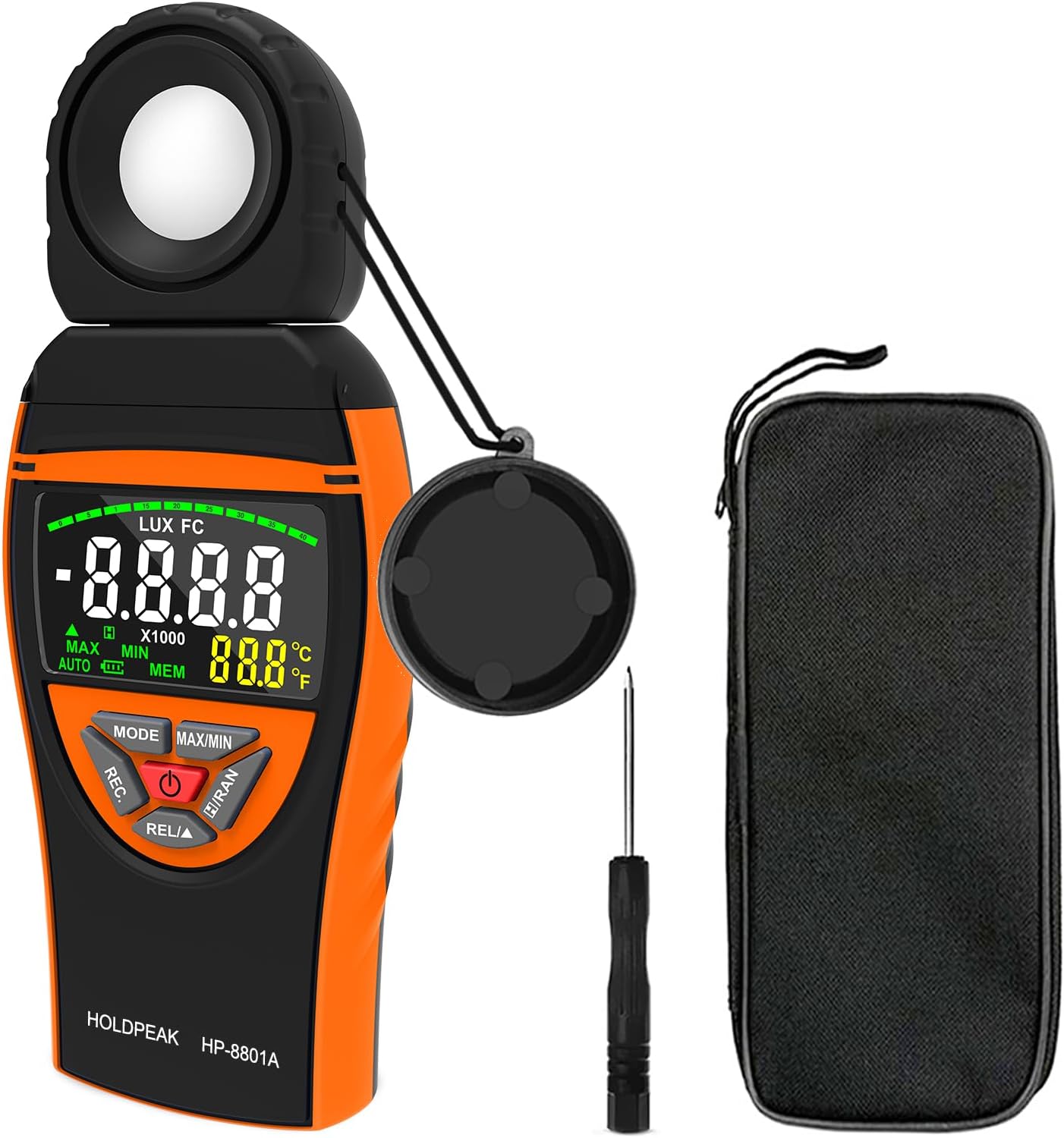
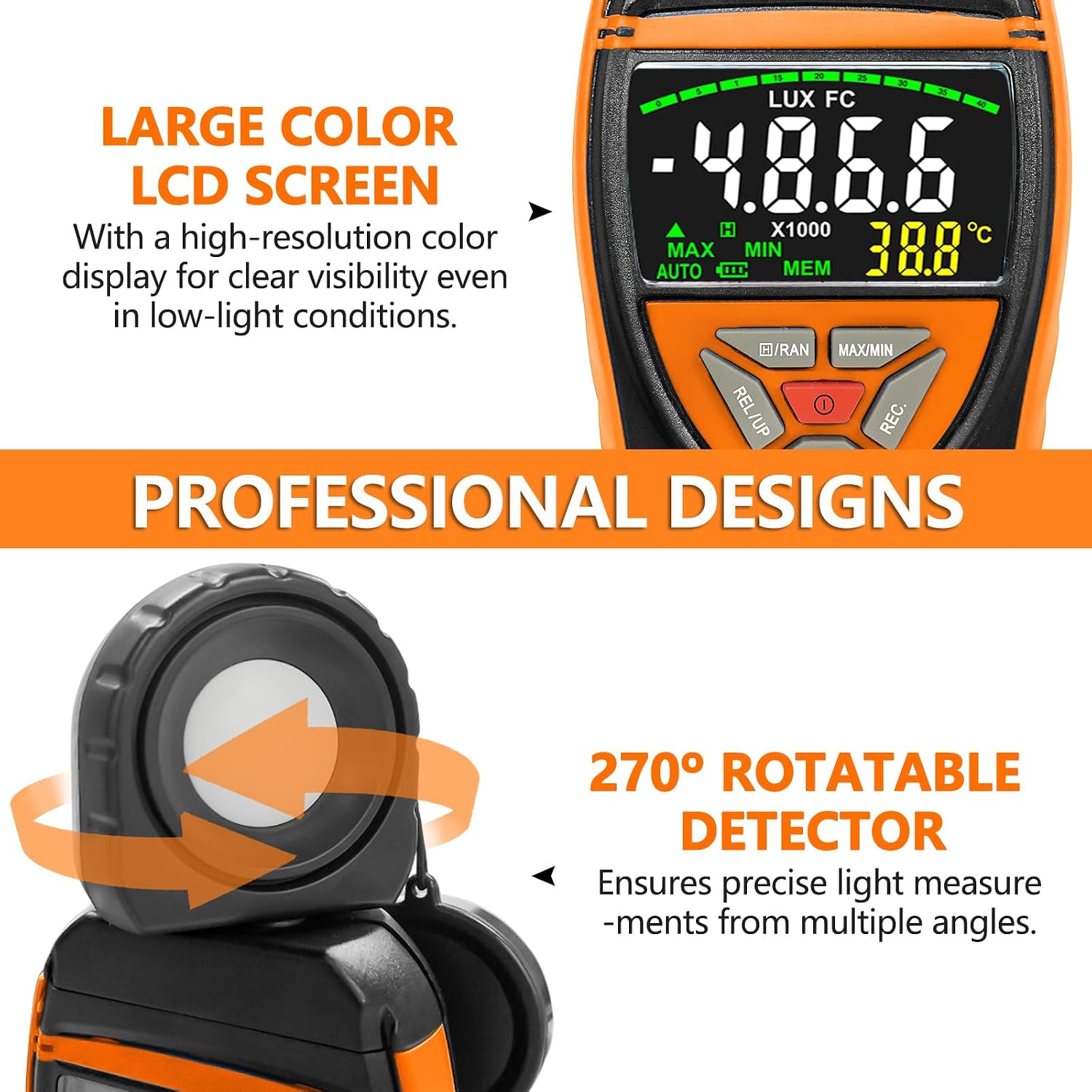
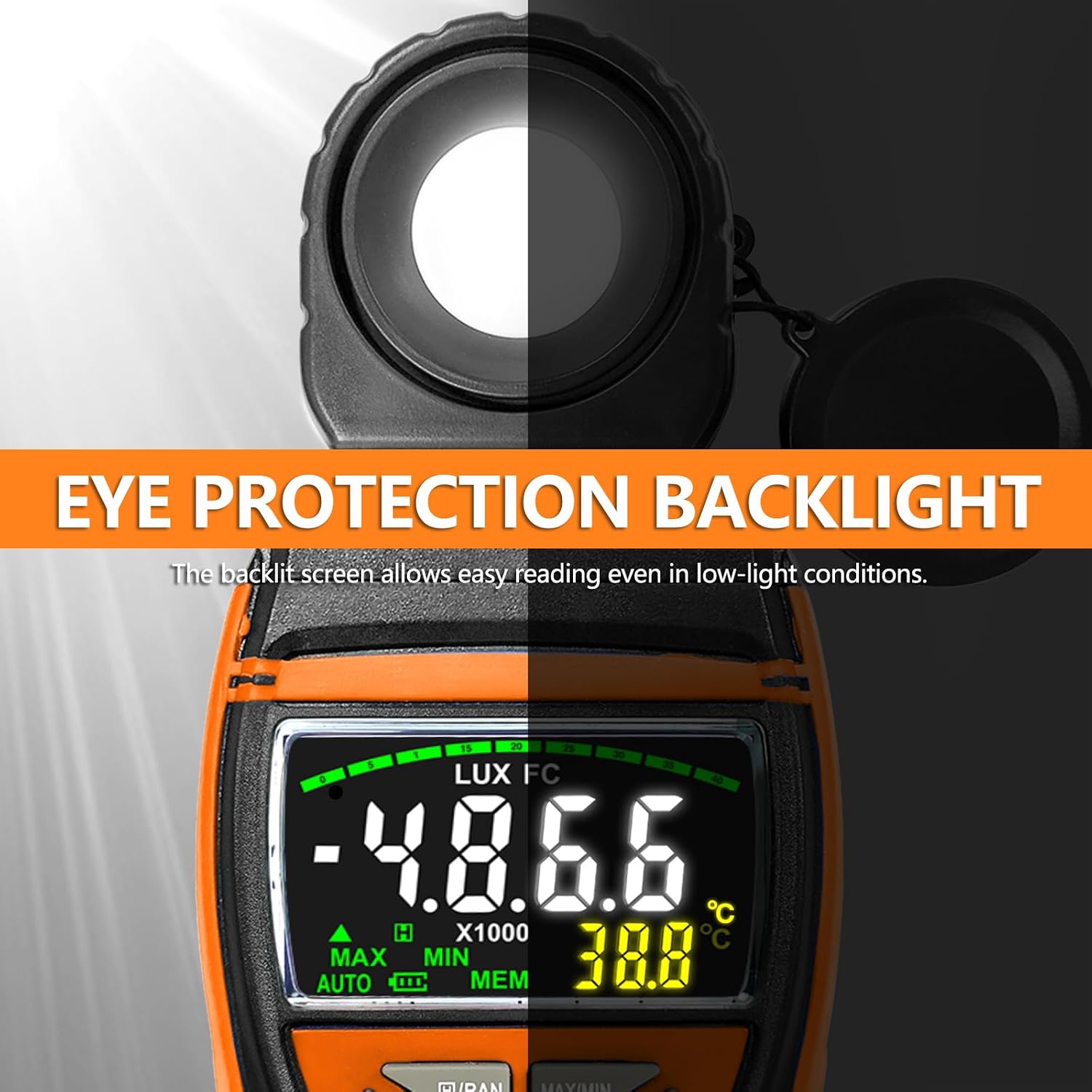
On paper, the device pairs a high-precision detector with a 270° rotating sensor, enabling readings from multiple angles without moving the unit. Readings are fast, with an average response time of around 0.4 seconds and a sampling rate of 3–4 measurements per second. The display is a high-resolution colour LCD, designed to stay legible in darker surroundings.
Key features at a glance
- Wide measurement range: 0.1 to 400,000 lux with 0.1 lux resolution.
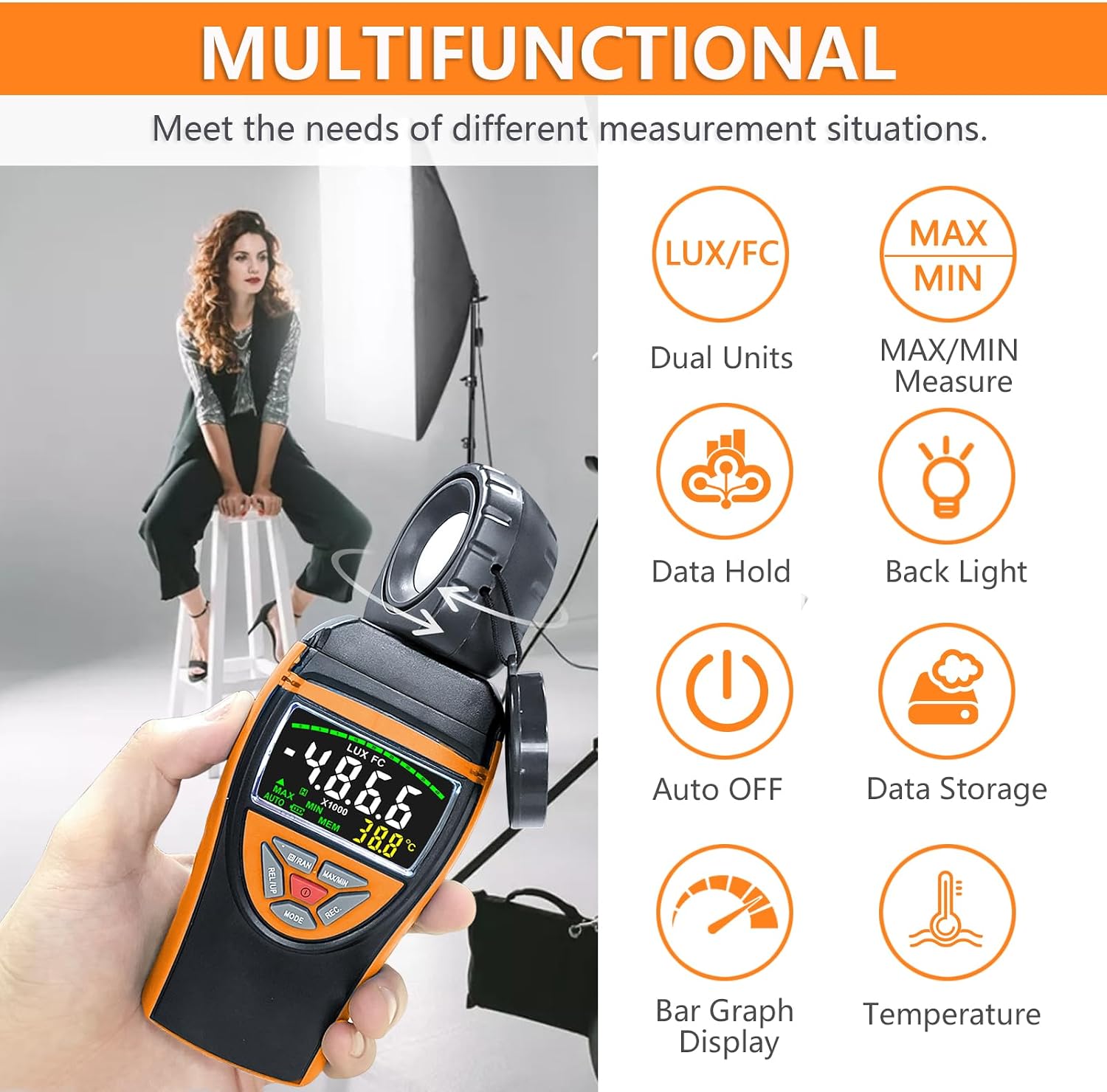
- 270° rotating sensor for flexible measurement from different directions.
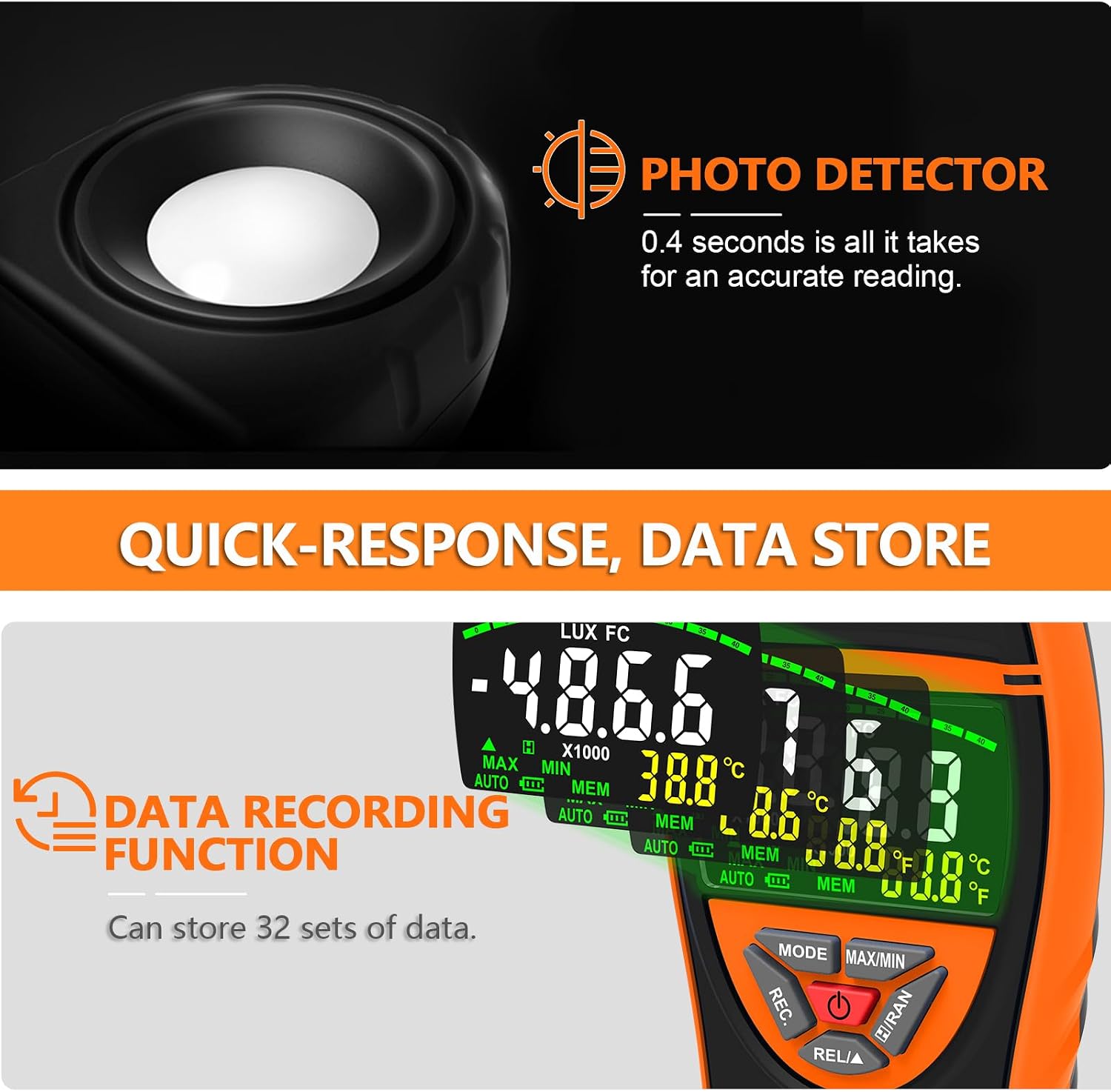
- Quick readings (≈0.4 s) and multiple readings per second.
- Dual-unit capability: lux and foot-candles.
- Additional functions: MAX/MIN recording, temperature display (°C/°F), data hold, low battery indicator, auto-off, and onboard data storage.
What stands out in use
This meter is designed to be straightforward to operate, with a bright display that remains readable in various lighting conditions. The 270° swivel enables practical checks of lighting setups on stages, work surfaces, or plant beds where positioning matters. The combination of MAX/MIN and data storage is helpful for documenting consistency over time, which is useful in studios or laboratories.
What might hold it back
While the wide range is impressive, some users may find the device larger than ultra-compact pocket meters. In low-light situations, readability depends on the backlighting quality of the display. Also, with a broad feature set, it’s not a specialist tool for any single application, those needing extreme precision in one niche (e.g., photometry) may seek a higher-end, purpose-built option.
Who this is for
- Photographers and videographers checking exposure or lighting consistency.
- Horticulture professionals monitoring lighting for plant growth.
- Workshop, studio, or classroom environments where dependable illumination data matters.
- Inspectors or facilities staff conducting routine light level checks.
Who might want to skip it
If you require an instrument with ultra-narrow calibration for a very specific light source, or if you need a device with built-in elaborate spectral analysis, this model may not be the best fit. It’s more of a practical generalist than a specialist diagnostic tool.
When it makes sense to buy
- You want a single device capable of measuring a broad range of light levels without swapping meters.
- You value quick, multi-angle readings and the ability to document data over time.
- You need a display that’s easy to read in dim environments and a simple interface to switch between lux and foot-candles.
When you might want to think again
- If your primary need is ultra-high-precision measurements for scientific research, consider whether more specialised equipment is necessary.
- If extreme portability is the priority, a smaller form factor might be preferable, provided it meets your range requirements.
What to check before buying
- Confirm how you plan to use the sensor: will 270° swivelling cover all your measurement angles?
- Decide if you need both lux and foot-candles interchangeably or if one unit suffices.
- Consider how you’ll record data: is the internal storage and data hold adequate for your reporting needs?
- Check battery life and whether the auto-off period aligns with your typical work patterns.
Practical usage example
Imagine setting up a small photography setup or a greenhouse bench. You can quickly rotate the sensor to measure light intensity from different directions, then save the data for a simple report or to verify that readings stay within an acceptable band across a session.
Is it worth it?
Should you buy it? It’s worth considering if you need a versatile, mid-range light meter that balances ease of use with a broad range. It won’t replace a specialist spectrometer, but for everyday measurement, it provides helpful features without a steep learning curve.
Quick FAQ
- How fast are the readings? About 0.4 seconds once a measurement is taken.
- Can I switch between lux and foot-candles? Yes, the device supports dual-unit selection.
- Does it record past measurements? Yes, it includes data storage and MAX/MIN recording.