

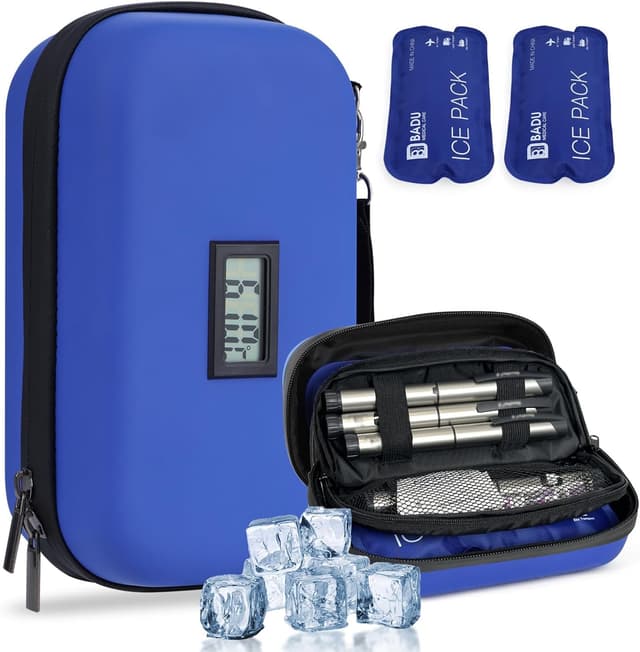
HIMDUZE 24 Hour Insulin Cooler Travel Case (TSA Approved) with Thermometer Display – Pink
Product description
What it is and why you might want it
If you travel with insulin, the practical problem is keeping it in a safe, consistent temperature band rather than just “keeping it cold for a bit”. This HIMDUZE insulin cooler travel case is designed as a refrigerated medicine cooler for trips, using two reusable ice packs and a temperature display that shows values in Celsius.
On paper, it’s built around simple diabetes travel routines: freeze the ice packs first, pack your supplies into the bag, and check the temperature display as conditions change. It also has insulation materials and a waterproof approach (at least in terms of how the cooler is described) aimed at reducing the chance of temperature swings during transit.
The essentials: key features that affect day-to-day use
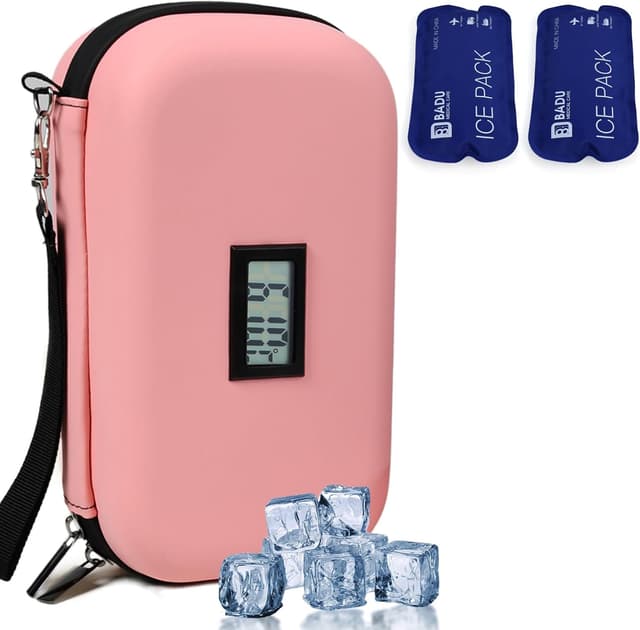
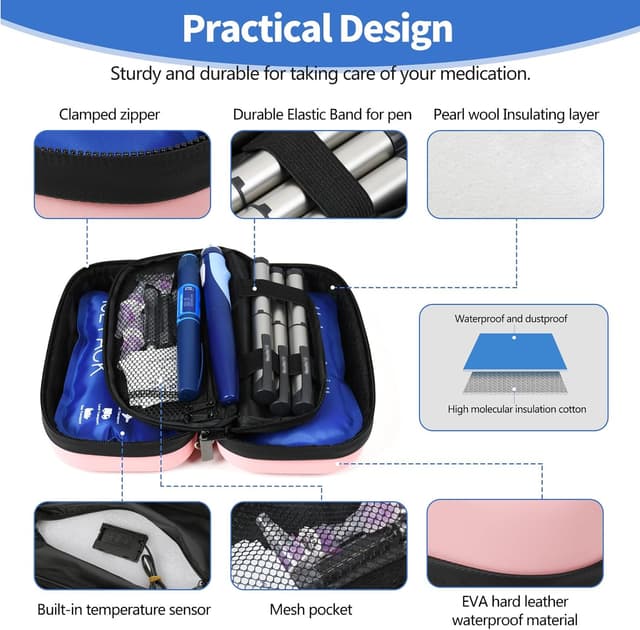
The case uses an EVA exterior with insulated layers inside (including an aluminium foil liner) plus two “large” ice packs that are described as TSA Approved and completely frozen before security.
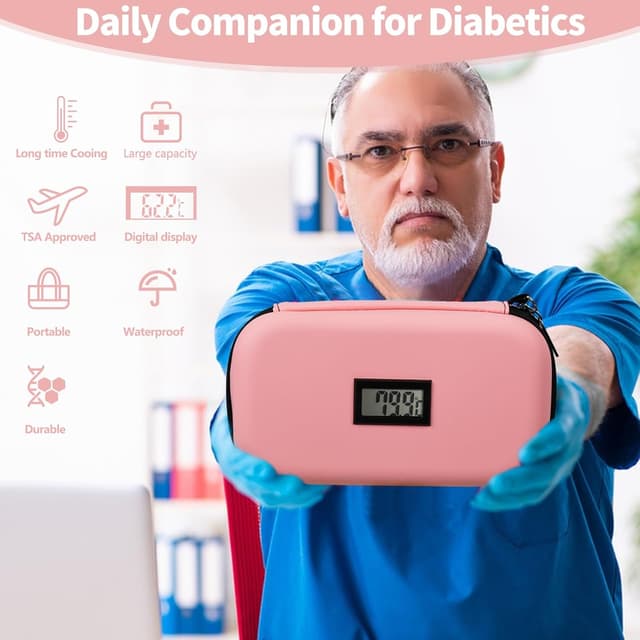
Where it gets more practical than a plain insulated pouch is the temperature display. Having a Celsius read-out means you’re not guessing as much after the bag has been in a pocket, in the car, or waiting around somewhere for a while. It’s a small detail, but for medication planning it can be a big difference.
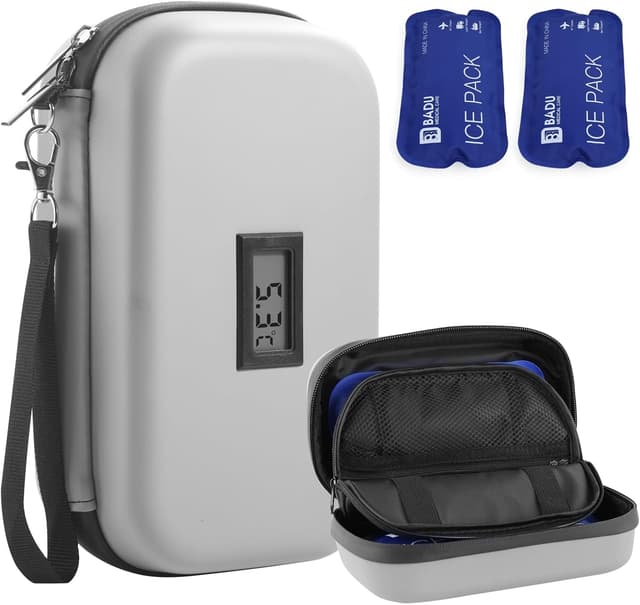
Capacity-wise, it’s aimed at packing multiple items rather than just one pen. It includes a removable gusseted storage bag, intended to tuck away 4–8 insulin pens and syringes, plus small diabetes supplies such as alcohol pads and cotton balls.
Worth noting before you buy
The cooling performance is not a fixed promise. The manufacturer’s stated 2–8℃ retention time (3–8 hours when the outdoor temperature is below 30℃) depends on factors like ambient temperature, how often you open the bag, and whether the ice packs are fully frozen. So it may do well for shorter journeys, but it could feel limiting on longer stretches with repeated access.
Cooling performance: what you can reasonably expect
The ice packs are intended to be fully frozen first, with a freezing time of about 8–12 hours. Once placed inside the cooler bag, the stated goal is maintaining around 2–8℃ for 3–8 hours in conditions described as under 30℃ outdoors.
That’s a sensible range for many day trips and commutes, especially if you plan access (pack everything you’ll need up front). If your travel involves long time periods without cold pack replenishment, you’ll want to be realistic: no insulated case can beat time, heat, and frequent opening indefinitely.

A good micro-scenario: on a morning train, you freeze the ice packs the night before, put them in the cooler (one on each side), store your pens in the centre bag area, and then you check the display if the journey runs longer than expected.
Storage and packing: how well it supports diabetes travel
The removable gusseted bag approach is mainly about organisation. Instead of everything rattling around, you get a central section for medication with the ice packs positioned on the sides. That layout can help you keep pens and small supplies together, and it gives you a cleaner packing routine when you’re in a rush.
The cooler is also described as having good waterproof performance. That matters because “insulated” doesn’t always mean “protected from drips” in real life—especially if you’re walking in rain or handling it in a wet bag.
One limitation to keep in mind: the listing notes that insulin pens shown are for demonstration only and not included. So your value is in the cooler, the storage space, and the included ice packs—not in any medication accessories beyond what’s stated.
Tech summary (from the listing)
Tech specs
- Type: Insulin cooler travel case for refrigerated medicine cooling
- Temperature display: Celsius
- Exterior material: EVA
- Interior insulation: aluminium foil liner and insulated pearl cotton (aviation insulated)
- Included ice packs: 2 reusable ice packs
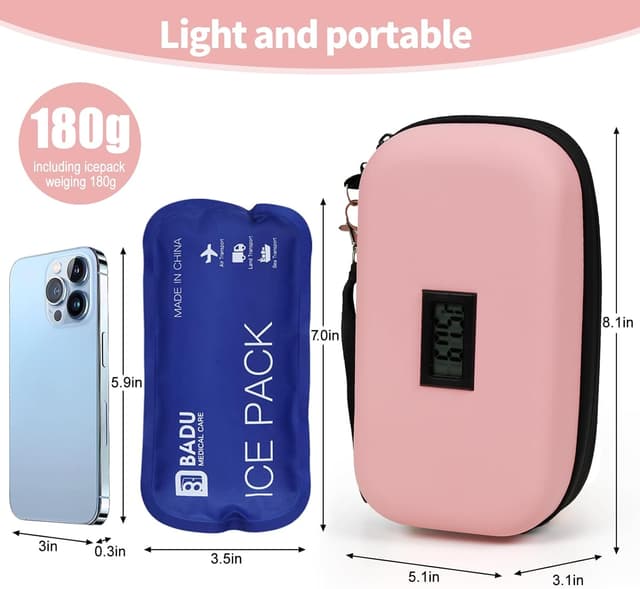
- Ice pack amount/weight: 180g each
- Freezing guidance: about 8–12 hours to form a hard block
- Stated cooling target: 2–8℃ retention for 3–8 hours (when outdoor temperature is below 30℃)
- Temperature retention note: depends on ambient temperature, frequency of opening, and whether ice packs are fully frozen
- TSA screening note: ice pack should be completely frozen
- Size (case): 8.3 x 4.7 x 3.4 (as listed)
- Weight (case): 600g
Pros and cons you’ll feel in practice
Pros
- Temperature display in Celsius to help you track changes rather than guess
- Two reusable ice packs included, and the cooler is described as designed for stable storage
- Organised storage with removable gusseted bag intended for multiple pens/syringes and small supplies
- Materials and description suggest practical insulation and a waterproof approach
What stands out (and where it may fall short)
This cooler reads as “medium capability for travel”, not a long-haul solution. If you’re the type who needs frequent access (multiple stops, repeated open-close), or if you’re facing consistently hot conditions, the listed retention time could be harder to achieve.
Also, while it’s described as TSA Approved, the listing specifically asks that the ice pack is completely frozen before security—so you’ll want to plan freezing time properly.
Is it worth it?
It’s a solid pick if you travel with insulin pens/syringes and want a dedicated cooler that includes a temperature display and two reusable ice packs, rather than relying on luck or improvised cold storage. It suits day trips, shorter journeys, and situations where you can prepare ahead (freeze overnight) and keep opening to a minimum.
You may want to skip it if your trips are long enough that you’ll regularly exceed the stated 3–8 hour cooling window, or if you know you’ll be opening the case repeatedly and in variable heat. It might not be a great match if you’re after something that behaves like a long-duration refrigerated system.
Mini FAQ
Usage tips
- How should you pack it? Freeze the ice packs first, place one on each side of the medication cartridge area, and use the centre storage section for insulin pens/syringes and small supplies.
- Do the ice packs need to be fully frozen? Yes. The listing specifically advises that ice packs should be completely frozen for TSA screening.
- How long do the ice packs take to freeze? About 8–12 hours to form a hard block, based on the instructions provided.
- How long can it keep insulin in the target range? The stated aim is 3–8 hours at 2–8℃ when outdoor temperature is below 30℃, but it depends on conditions and how often you open the bag.