

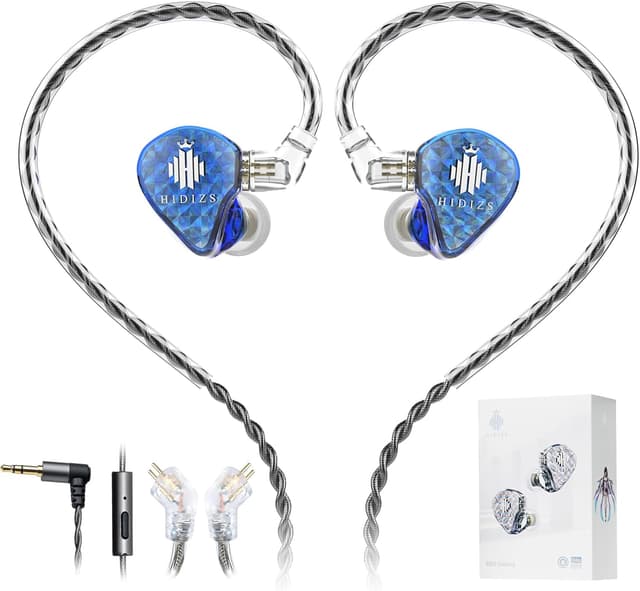
Hidizs MS1-Galaxy wired in-ear monitor earphones (IEM) with 3.5mm plug and detachable mic cable
Product description
The essentials
If you’re after wired in-ear monitors that lean into detail and low distortion, the Hidizs MS1-Galaxy is built around a dual magnetic circuit dynamic driver and a carefully tuned frequency response target. On paper, that’s exactly the kind of approach you want if you care about clearer midrange-to-bass performance and a controlled sound rather than something purely “fun” at all costs.
It’s also designed for everyday practicality: a 3.5 mm plug for straightforward connection, plus an inline control microphone lead (detachable) when you want calls on the go. And because it uses a 0.78 mm 2-pin cable connection, you’re not stuck with one cable forever.
That said, it’s still an IEM product, so comfort and seal will matter a lot. If your ears don’t get a good seal, you can end up missing some of the punch and clarity the tuning is aiming for.
What to know before you buy
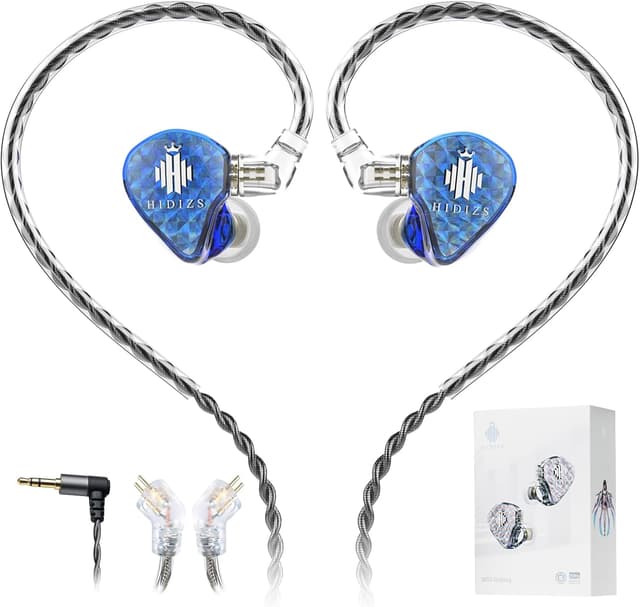
The MS1-Galaxy is positioned as a performance-focused pair rather than a basic bundle. The key design claims in the description centre on:
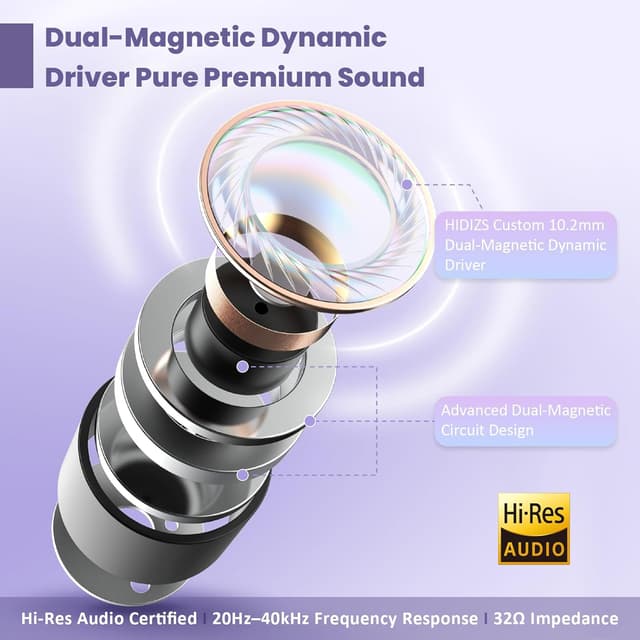
- A dual magnetic circuit dynamic driver with a 10.2 mm high-performance setup
- A resin shell using Makrolon (German high-density resin) and a composite polymer PEEK diaphragm approach described as stable and mature in driver manufacturing
- Tuning intended to follow a target frequency response curve (B&K HATS / H-2019 guidance are mentioned)
- Low claimed non-linear distortion of 0.05% across a full-frequency range (as reported from the Hidizs Acoustic Laboratory)
In real buying terms, that translates to: if you like an IEM that aims to reproduce details with tight behaviour, this is the kind of engineering-led option worth considering. If you’re only looking for something super forgiving with any source, you may find you need to pair it sensibly with your device and listening habits.
What stands out in everyday use

There’s a very practical reason people pick wired IEMs: consistent connection and direct control. With the MS1-Galaxy’s 3.5 mm plug and an impedance of 32 Ω, it’s intended to be easy to drive from a smartphone without fuss. Sensitivity is listed at 108 dB, which also helps the “switch on and get usable volume quickly” feel when using lower-output devices.
A small micro-scenario: imagine you’re on a commute, plugging into your phone’s 3.5 mm socket (or a dongle DAC if your phone doesn’t have one). You get music immediately, then when you need to take a call, you’ve got the detachable inline microphone/control cable option available—handy when you don’t want to faff with adapters mid-journey.
Where it may not feel as seamless is if you’re expecting a “wireless-like” convenience level. This is wired, so cable management is still your job, not the product’s.
Sound and tuning: the goal is detail with control
The description makes it clear Hidizs is aiming for a specific tuning direction rather than leaving things generic. The MS1-Galaxy is said to be tuned based on a target frequency response curve, following guidance from an H-2019 target (via B&K HATS). It’s also described as showing greater sensitivity in the mid to low frequency range.
So, what does that mean for you? Over a typical listen—vocals, acoustic lines, and bassier tracks—you can reasonably expect a sound that prioritises detail retrieval and steadier behaviour instead of exaggerated changes that can mask small notes.
Bear in mind though: tuning targets don’t remove the basics. If you don’t like the tonal balance of “mid-to-low focused” IEM tuning, you might not click with it even if the distortion figures look strong.
Comfort and build, including the cable setup
Comfort here isn’t just a vague claim. The shell design is said to be based on broad ear-lobe data and ergonomic principles, aiming for a fit “like a custom mould”. The package also mentions liquid silicone IEM tips designed to suit different ear shapes.

On the durability side, the cable is copper-plated silver (and explicitly described as detachable), with standard 3.5 mm connectors made from pure copper plated with gold. The plug housing and splitter are listed as aluminium alloy.
One more decision point: you get two cable options (a professional music cable and a higher-definition cable with mic and inline control). If you’re the sort of buyer who wants different setups for gaming, commuting, or work calls, that flexibility is a tangible win. If you only ever listen at a desk, you might just use one cable and never touch the other.
Who it’s for (and who should skip it)
It’s a good fit if you want wired IEMs that are tuned with a stated frequency target, and you value low distortion figures and detail-focused engineering. It suits you if you like straightforward 3.5 mm connection, and you want the ability to swap cables thanks to the 0.78 mm 2-pin design.
It might not be a great match if you’re chasing maximum wireless convenience, or if you typically don’t bother getting a proper seal with ear tips. Also, if your listening is very source-dependent (for example, you only ever use one weak output device), you’ll want to be sure the volume and tonal balance work for you—sensitivity and impedance help, but not every phone/dongle pairing lands the same way.
Tech specs
- Type: Wired in-ear monitor (IEM) earphones
- Driver: Dual magnetic circuit dynamic driver, 10.2 mm high-performance
- Impedance: 32 Ω
- Sensitivity: 108 dB
- Distortion claim: less than 0.05% non-linear distortion (full-frequency range)
- Tuning reference mentioned: B&K HATS / H-2019 target frequency response guidance
- Plug: 3.5 mm
- Microphone/control: Inline microphone with detachable mic/control cable option
- Cable connection: 0.78 mm 2-pin detachable cable
- Materials mentioned: Makrolon resin shell, composite polymer PEEK diaphragm, copper-plated silver cable, gold-plated 3.5 mm connectors, aluminium alloy plug housing and splitter
- Ear tips mentioned: liquid silicone IEM tips (all ear shapes / different ear shapes referenced)

FAQ
How does the detachable mic cable help?
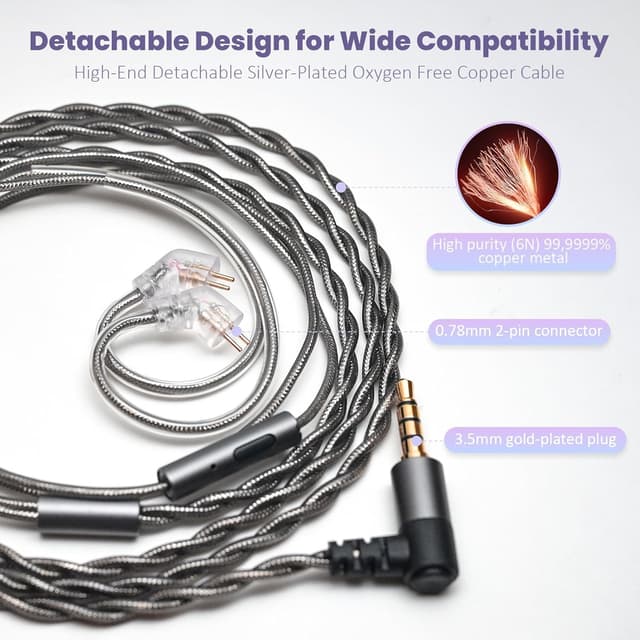
It lets you switch between a music-focused cable and a cable with an inline microphone/control. That’s useful when you want to go from listening to taking calls without buying a separate solution.
Do I need a DAC dongle to use the MS1-Galaxy?
The description says the earphones are designed to connect directly and easily to a smartphone, and also mentions pairing with dongle DACs and music players. If your device has a 3.5 mm output, you may not need one.
What does the tuning “target curve” mean in practice?
It’s an approach to frequency response aiming to match a specific target profile (B&K HATS / H-2019 guidance are referenced). In practice, it’s about trying to keep the tonal balance and detail presentation consistent.
Is the 0.78 mm 2-pin cable worth considering?
If you like having options—different cables for different use cases—it’s a meaningful feature. It also means you’re not tied to a single cable in the long term.
Should you buy it?
The Hidizs MS1-Galaxy is worth considering if you want wired in-ear monitors with a detailed, engineered tuning approach, and you like the flexibility of a detachable inline mic cable plus a 0.78 mm 2-pin upgrade-style connection. It’s a sensible pick for commuting, desk listening, and everyday phone use where you want reliable wired performance.
You should probably look elsewhere if you prioritise wireless convenience, or if you struggle to get a consistent seal with IEM tips—because no amount of driver engineering can fully compensate for a poor fit. Also, if you’re after a very “set-and-forget” sound without caring about tuning, this one may feel more like a thoughtful performance IEM than a carefree daily beater.