

HAUSPROFI 12V/24V 8Amp Battery Charger
Product description
This automatic battery charger from HAUSPROFI combines flexible 12V and 24V support with a mid-range charging current to maintain and repair a variety of lead-acid batteries for cars, motorcycles, boats and mowers. It is intended to simplify routine charging and to extend battery life through a controlled three-stage process, making it useful for seasonal vehicles and household machinery.
Key Points
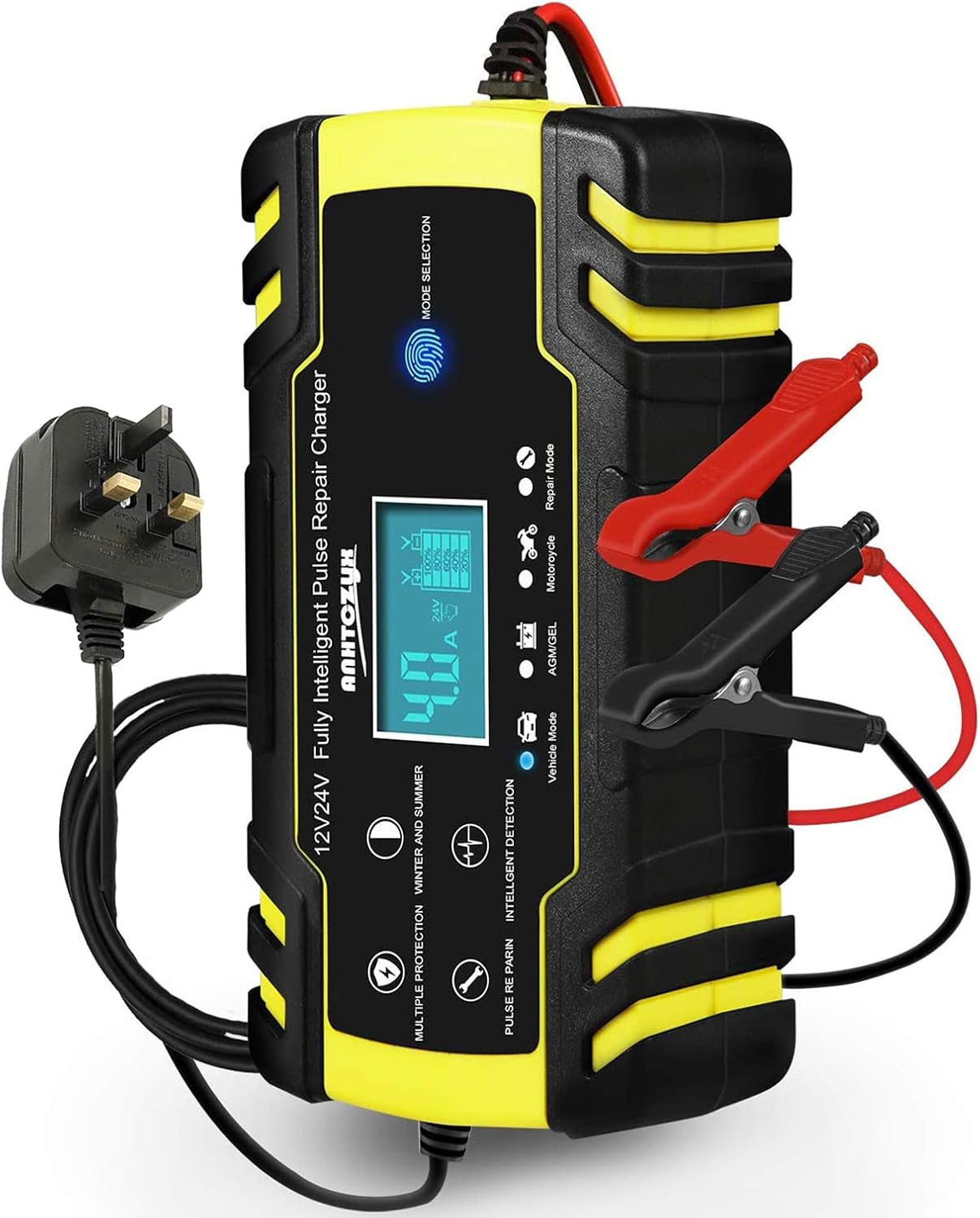
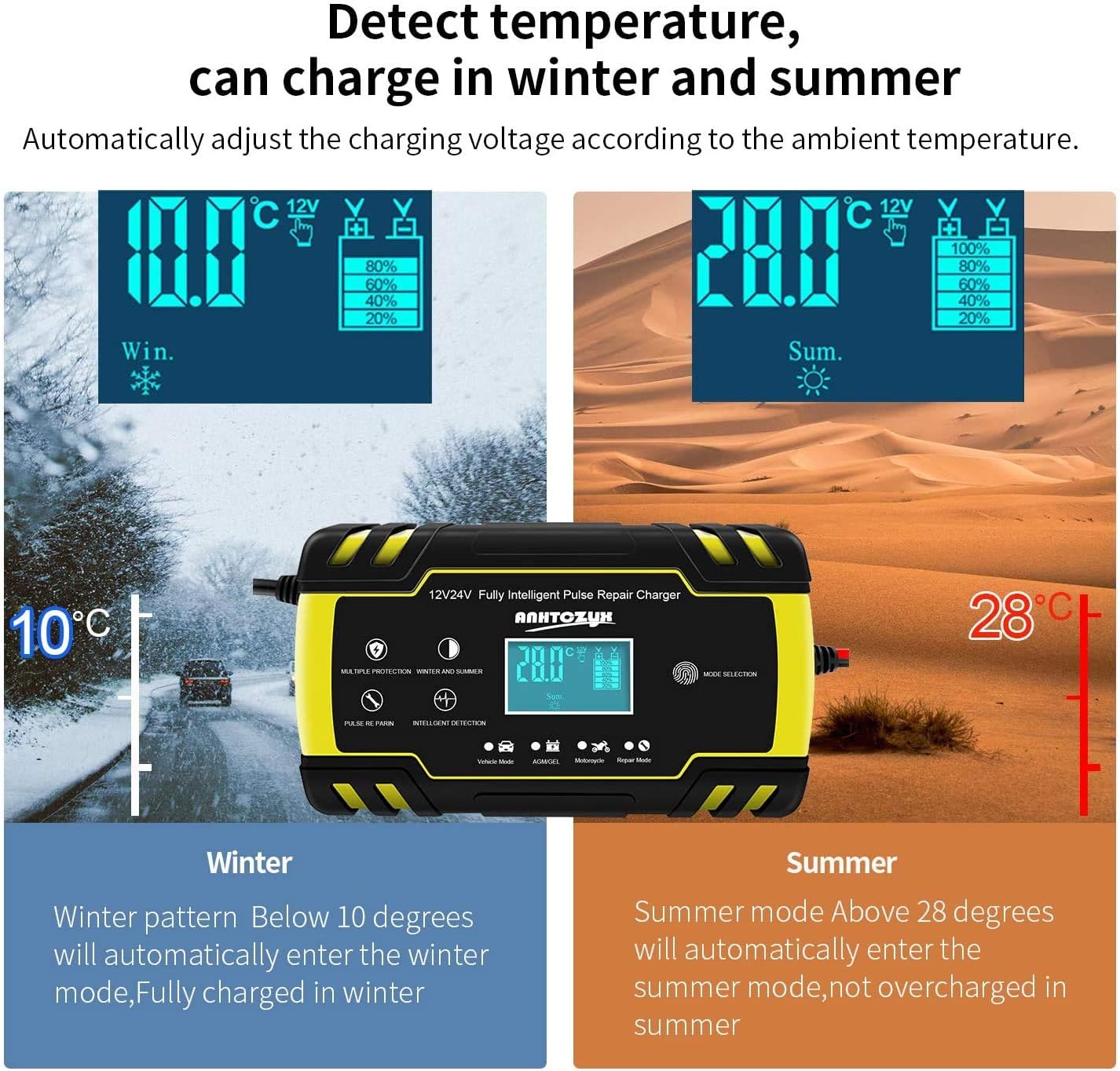
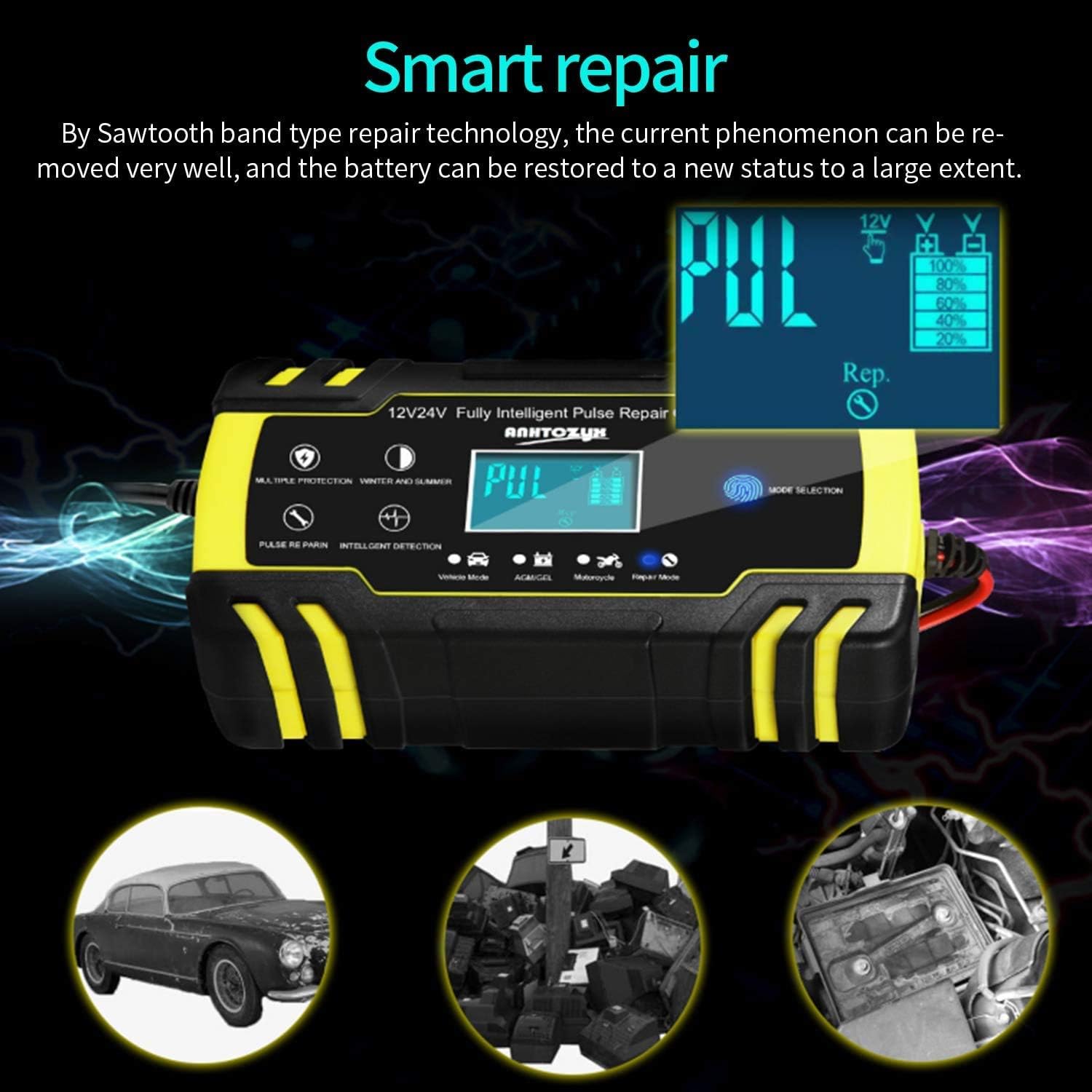
The unit includes 3-stage charging and automatic mode selection that adapts to temperature and battery type, helping to reduce overcharging and to optimise top-up cycles. It also has an advanced repair mode that uses pulse technology to attempt recovery of older or inactive batteries, although it cannot revive a completely dead or severely damaged battery according to the manufacturer. ⚡
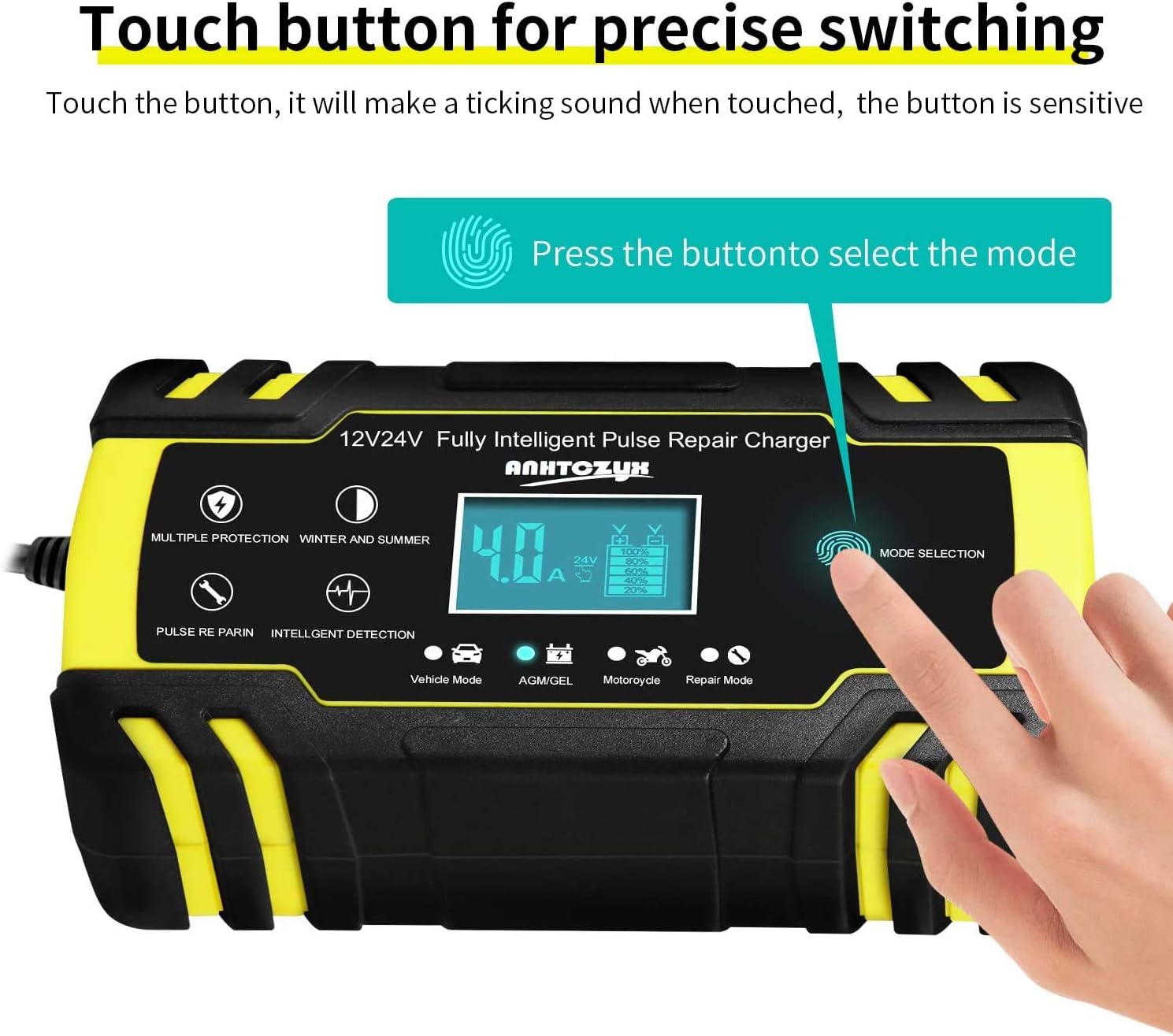
Safety features are comprehensive, with reverse polarity warning, spark-proof connections, overvoltage and overcurrent protections and short-circuit protection. A cooling fan helps prevent overheating during extended charging sessions, which is practical when working on larger vehicle batteries.
The charger can handle a wide range of battery chemistries including AGM, gel, calcium, MF, SLA, VRLA and flooded lead-acid types. It offers a motorcycle mode for lower current charging and higher current settings for cars and larger batteries.
Technical Specifications
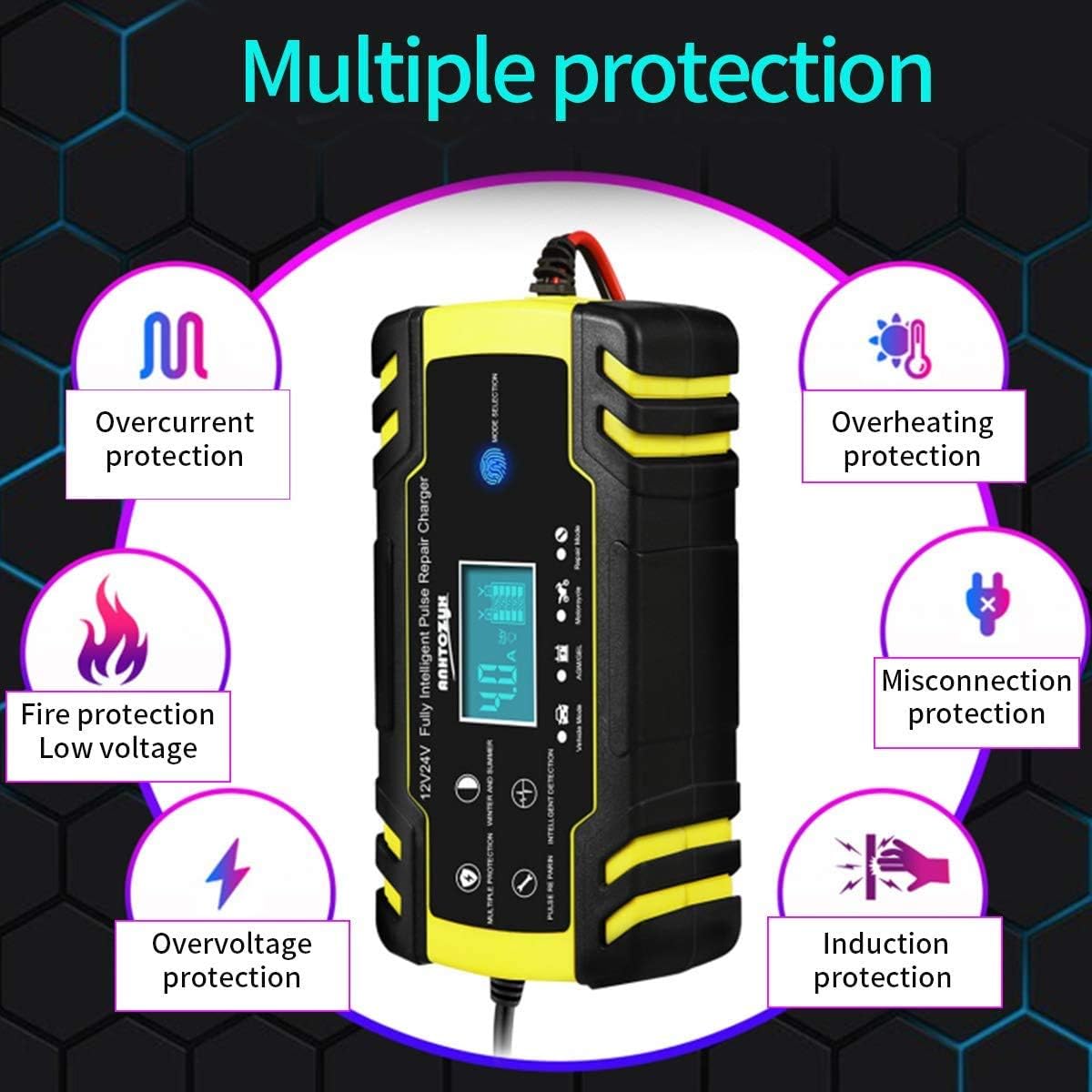

- Name: HAUSPROFI 12V/24V 8Amp Automatic Battery Charger
- Input voltage: 110-265 V
- Compatible battery capacities: 12 V: 6 Ah–150 Ah, 24 V: 6 Ah–100 Ah
- Charging current: 12 V 8 A, 24 V 6 A, motorcycle mode max 1.5 A
- Display: LCD showing temperature, charge voltage, current and battery charge level
Usage Recommendations
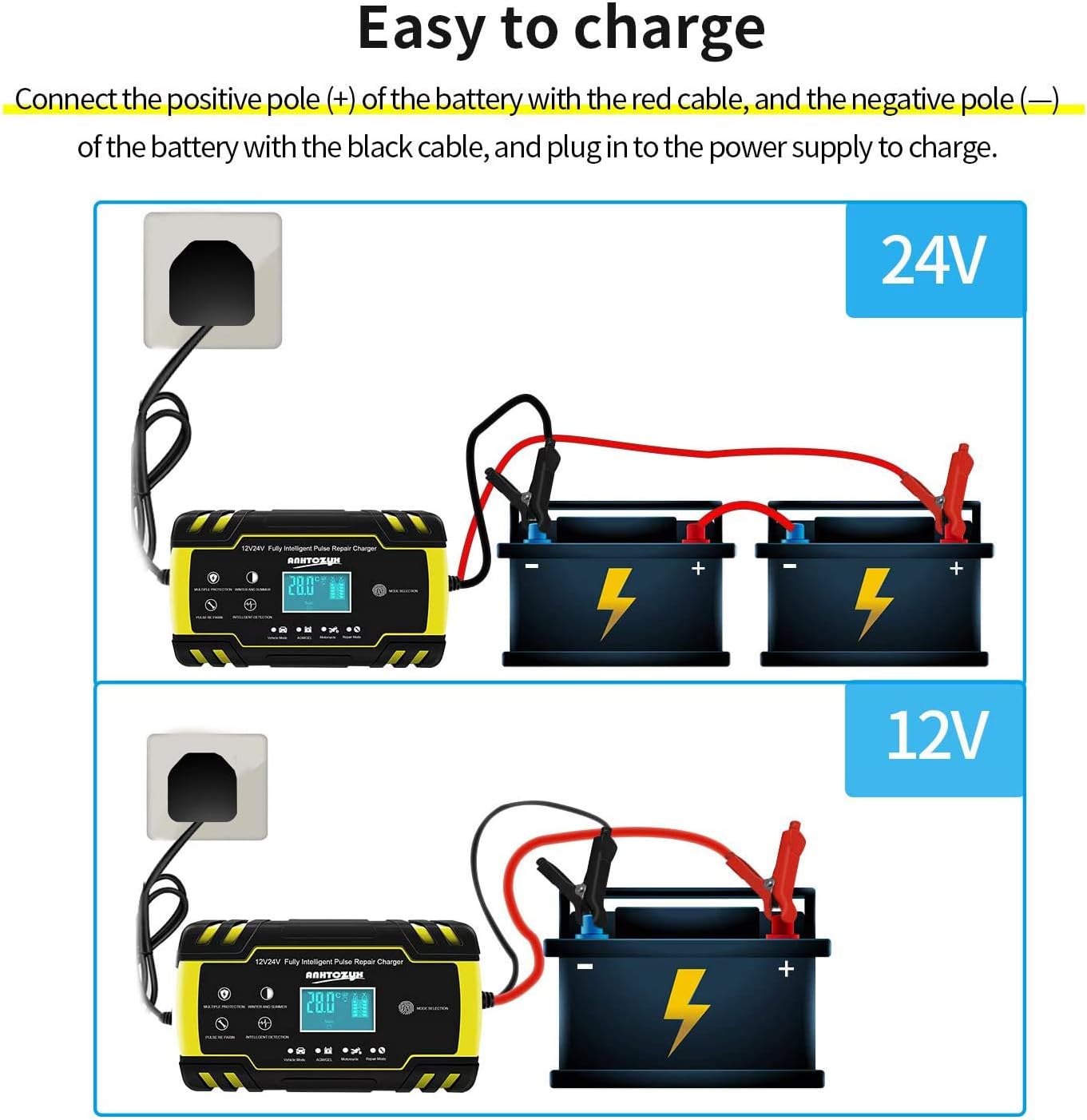
For routine maintenance, connect according to polarity markings and allow the microprocessor to select the appropriate mode automatically. The LCD provides real-time information on voltage and current so you can monitor the process. For winter storage, the charger’s temperature-aware adjustments help to raise or lower charge voltage as needed to match ambient conditions, which can reduce self-discharge effects. 🔋
When attempting battery repair use the dedicated repair mode sparingly and monitor progress on the display. Consider that severely sulphated or physically damaged batteries may not respond to pulse repair methods. The protective plastic film on the LCD should be removed before first use to ensure clear readings.