

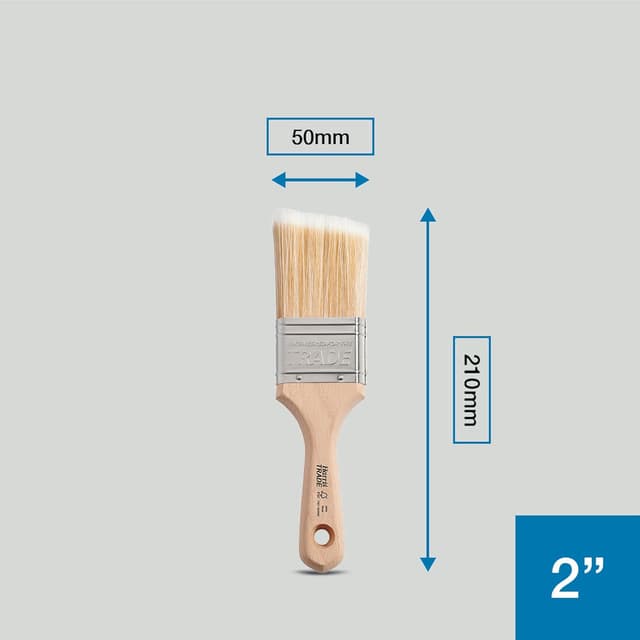
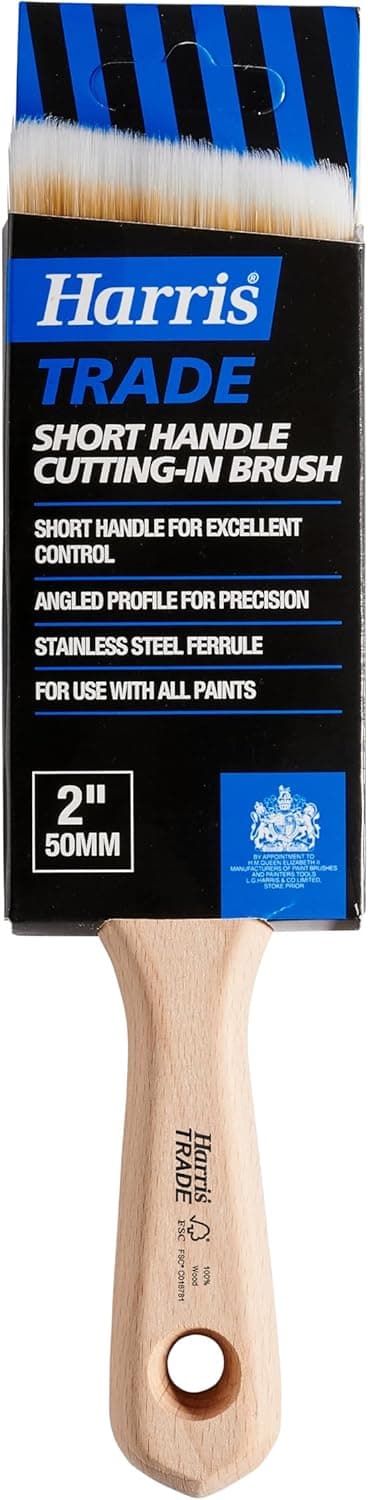
Harris Trade Short Handle Cutting-In Brush 2" for precise edge painting
Product description
What this brush is for
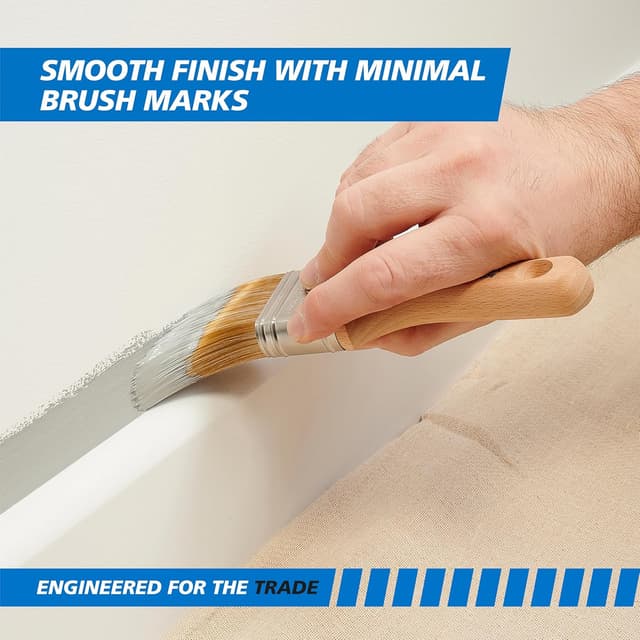
The Harris Trade Short Handle Cutting-In Brush 2" is designed for one job: cutting in. That’s the edging work where you paint neat lines around corners, frames, coving, radiators, and other “awkward to reach” areas. A short-handled brush like this is built for control close to the wall, so you’re not fighting distance while trying to keep a crisp finish.
If you’ve ever had to go back later to tidy up wobbly brush marks, you already know why a dedicated cutting-in brush matters. On paper, this one leans into precision: a angled tip profile and fine points aimed at minimising visible brush marks, plus the kind of filament control you need when you’re working slowly and carefully.
The details that drive the finish
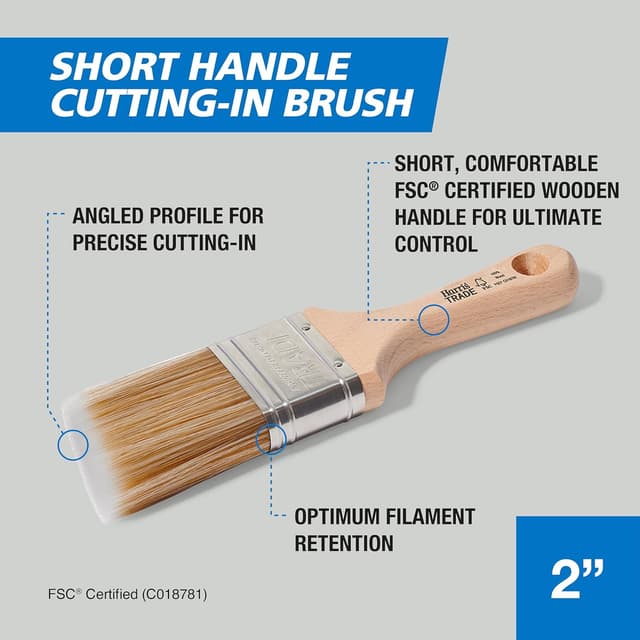
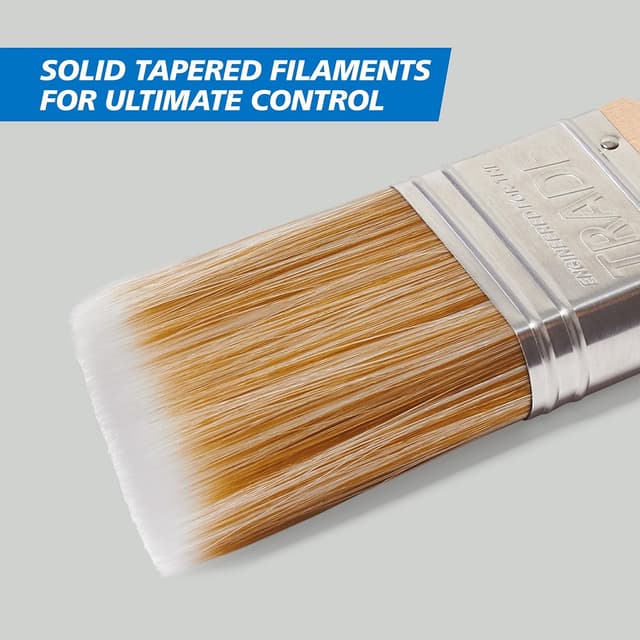
This brush’s head shape is the headline. It uses an angled tip profile with fine points, which is intended to help you paint along edges with better accuracy. The goal isn’t just to “get paint on” the line, it’s to keep the surface looking smooth, with fewer obvious streaks.
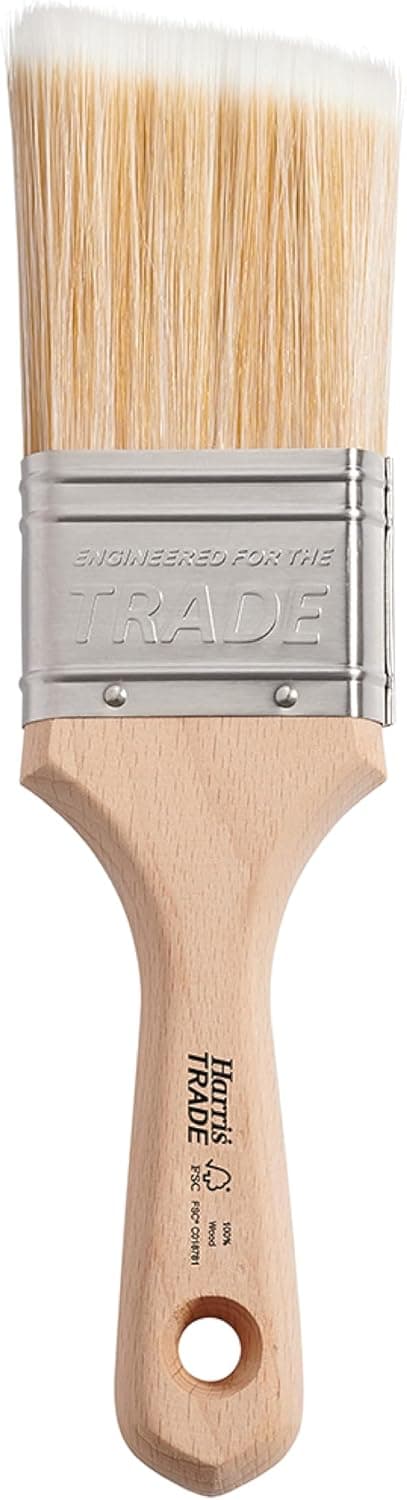
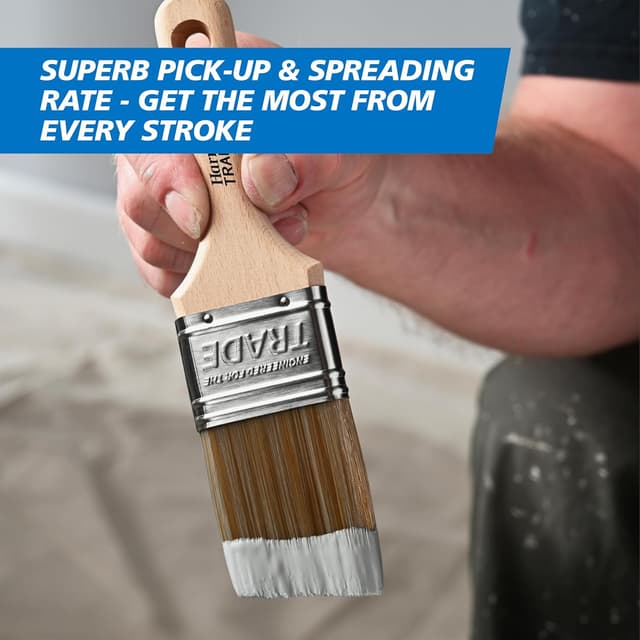
You also get a focus on paint behaviour. Harris states it has optimal filament retention and strong pick-up and spread rates, meaning paint is released consistently during longer strokes. In plain terms: fewer moments where you have to keep reloading the brush because the flow drops off mid-line.
The filaments are described as solid and tapered (conical), which should translate into more control when you’re dealing with difficult sections. That matters most when you’re tracing tight corners or feathering paint right up to a boundary.
What you’ll notice during use
Using a brush like this typically feels different from a general-purpose paintbrush. Because it’s made for cutting-in, you can work closer to the wall with a steadier hand, and the angled tip helps you “steer” the paint rather than smear it.
A common micro-scenario: you’re painting the edge where a wall meets skirting. You load the brush, wipe lightly to manage the amount of paint, then draw it along the junction in steady passes. With the fine points and tapered control, you can concentrate on keeping the line even and reducing the need for multiple reworks.
That said, cutting-in brushes still require technique. If you rush, overload paint, or apply too heavily, you can still end up with visible marks—no brush design can fully cancel out heavy-handed application.
Key points at a glance
The Harris Trade Short Handle Cutting-In Brush 2" is a purpose-made tool for sharper edging. It’s built around an angled, fine-point profile to reduce brush marks, plus conical solid filaments intended for better control in tricky spots. The filament design also aims for consistent paint release over longer strokes, which can make long edge lines feel more manageable.
Where it sits best is with detail work that needs care more than coverage.
Where it shines (and where it may not)
This is a sensible choice if you regularly do touch-ups or planned painting where edges matter. It suits anyone who prefers a tidy, controlled approach rather than relying on masking tape for everything.
It may not be the best pick if you’re tackling large areas where you need broad coverage. Cutting-in brushes are about accuracy, for walls and ceilings you’d normally want a tool made for faster, wider laydown. Also, if your project relies heavily on heavy textures or thick coatings, you may find a dedicated edging brush can get less forgiving than broader brushes—mostly down to how the paint behaves in your specific mix.
Finally, without information on specific paint compatibility or size of the brush’s internal filament load beyond the general “pick-up and spread” claims, you should treat it as a strong edging brush rather than a universal solution for every coating.
Tech specs
- Name: Harris Trade Short Handle Cutting-In Brush 2"
- Type: Cutting-in brush
- Size: 2"
How to get the most from it
To keep the finish looking smooth, it helps to use the brush with deliberate loading. Don’t soak it to the point where every stroke dumps excess paint. Instead, load, then wipe off excess against the inside edge of the tin or container (lightly), so you control how much reaches the surface.
Work in steady passes and let the brush do the blending. If you find the line starting to look thicker, it usually means there’s too much paint on the brush or the stroke is too heavy.
Is it worth it?
A solid pick for cutting-in if you care about crisp edges, reduced brush marks, and consistent paint release during longer edging strokes—exactly the sort of work you do along frames, corners and skirting. You’ll likely get the most value if you paint with a careful, methodical style.
It may be less of a buy if your priority is fast coverage over large flat areas, or if your coating and workflow demand a different brush style for predictable laydown. In those cases, a brush made for spreading wider could make more sense.
Mini FAQ
Will a short handle help with cutting in?
It often does, because you can work closer to the wall with better control over pressure and direction. That matters when you’re tracing edges.
What makes a cutting-in brush different from a standard brush?
Cutting-in brushes focus on an edge-friendly shape (here, an angled profile with fine points) and filament control, so you can create cleaner lines and reduce visible brush marks.
Does it keep feeding paint on long strokes?
The product description says it has optimal filament retention and strong pick-up and spread, with paint released consistently during longer strokes. That’s the intent for smoother continuous edging.
Is this only for professional decorators?
It’s branded “Trade” and positioned for accurate finishing, but it can be just as practical for DIYers who want that neat, controlled cutting-in look.
What should I watch out for?
Cutting-in success still depends on technique. Overloading the brush or applying too thickly can undermine even a well-designed edge brush.