

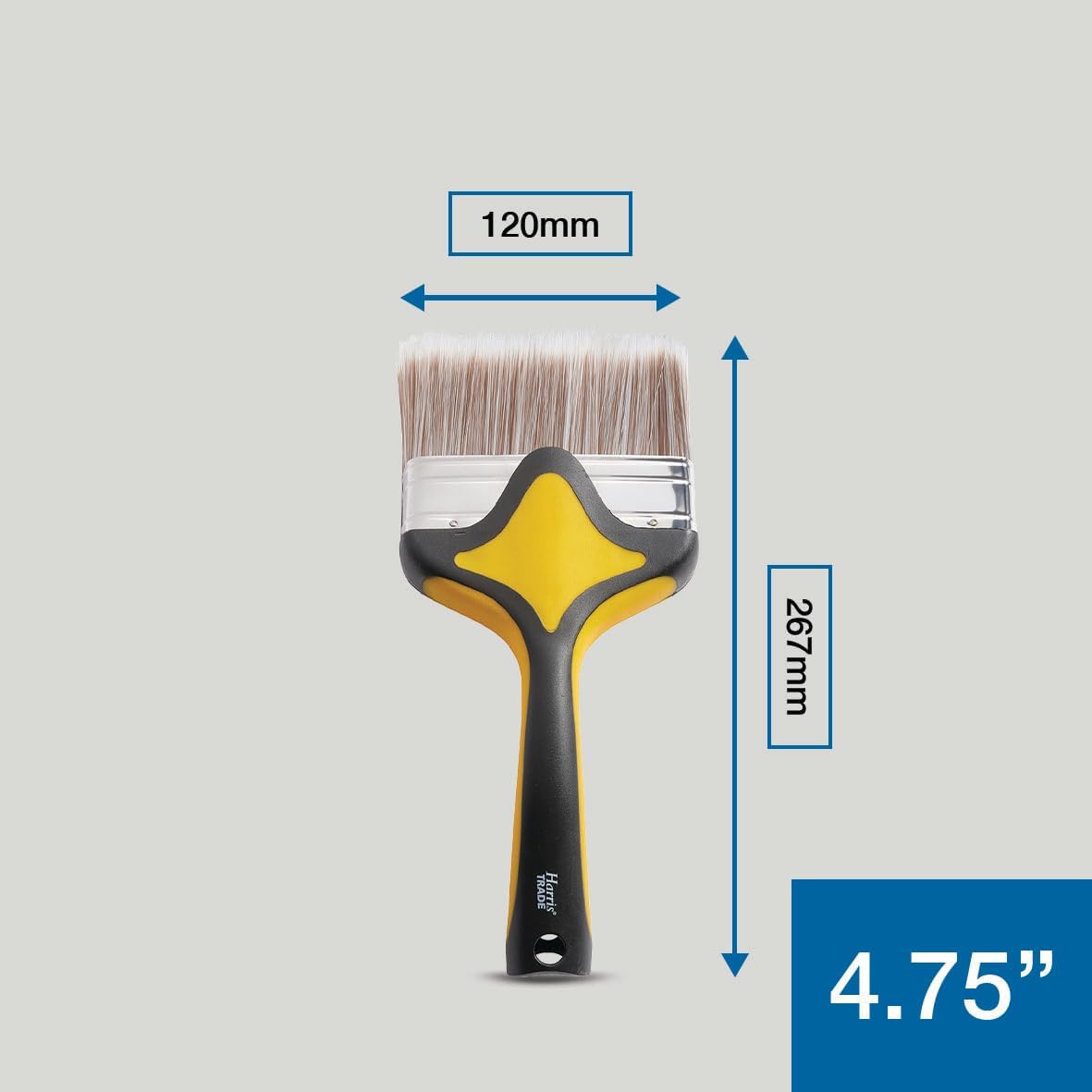
Harris Trade Angled Masonry Brush 4.75" for brick and block painting
Product description
The essentials
If you’re painting masonry such as brickwork or rough block, a flat brush can feel like hard work—mainly because you need paint to reach the texture without making a total mess. The Harris Trade Angled Masonry Brush (4.75") is built for that kind of job. On paper, its angled head and dense block head are aimed at giving you broad coverage while still helping the paint get into the gaps.
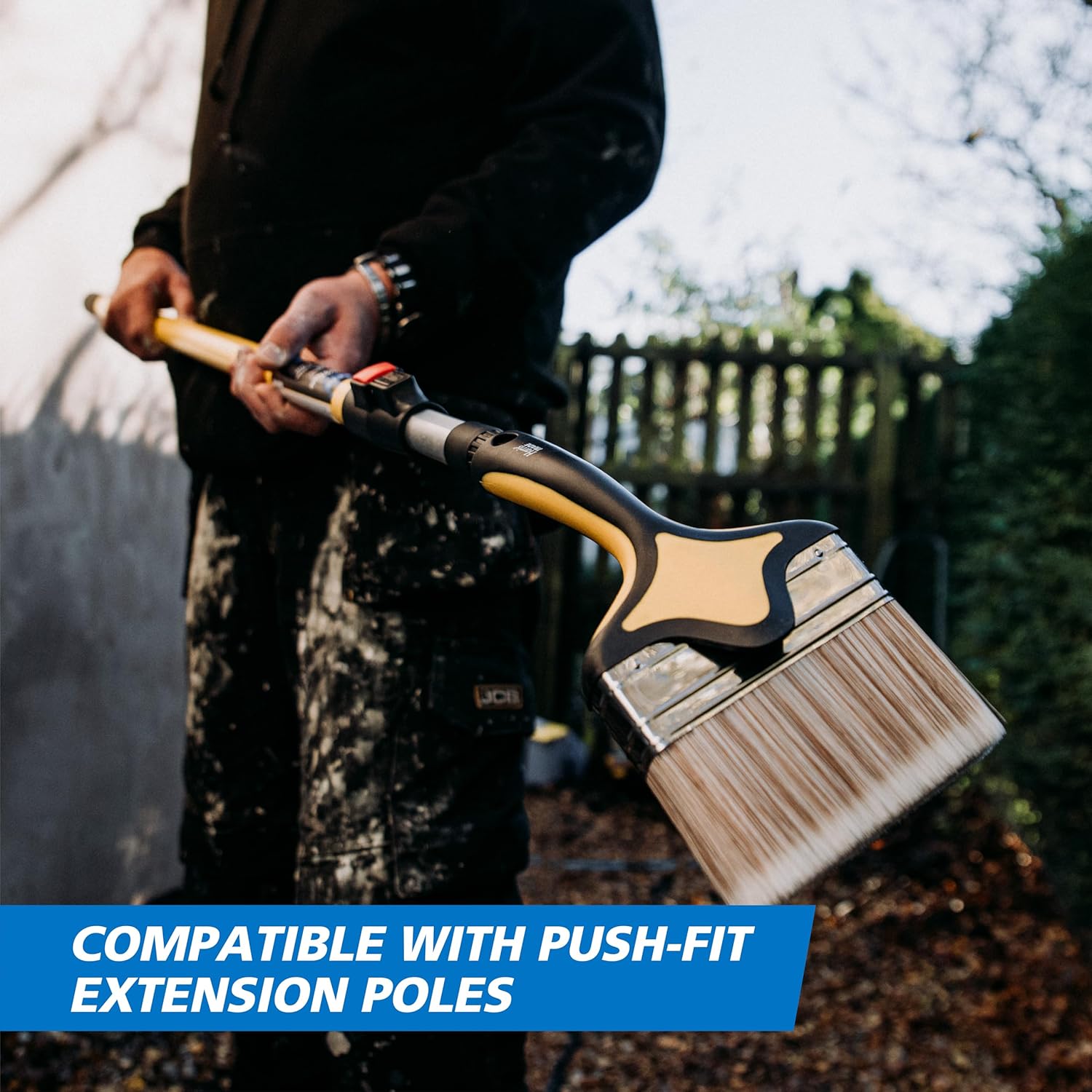
This is the sort of brush you reach for when you want a quicker “cut-in and cover” routine rather than endless passes. The handle is described as comfortable, and there’s also an integrated hook, which may sound small, but for everyday use it can make storage and cleaning a bit more straightforward.
What it’s for (and where it fits)
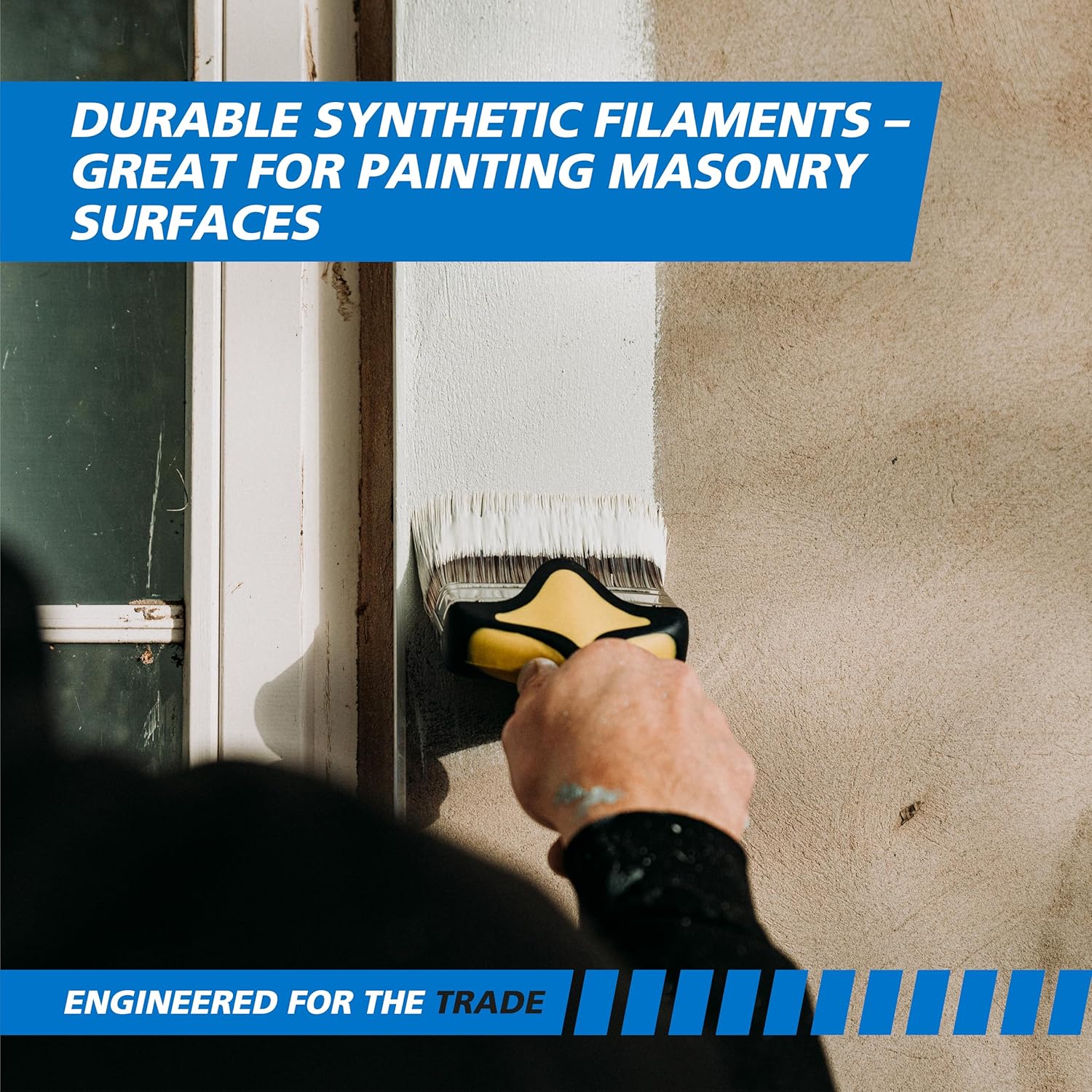
This masonry brush is designed for use on surfaces like brick and pebbled stones (the description specifically calls out brick and flints/pebbles). It’s intended to work with masonry paints, with synthetic filaments described as durable for “all masonry paints”.
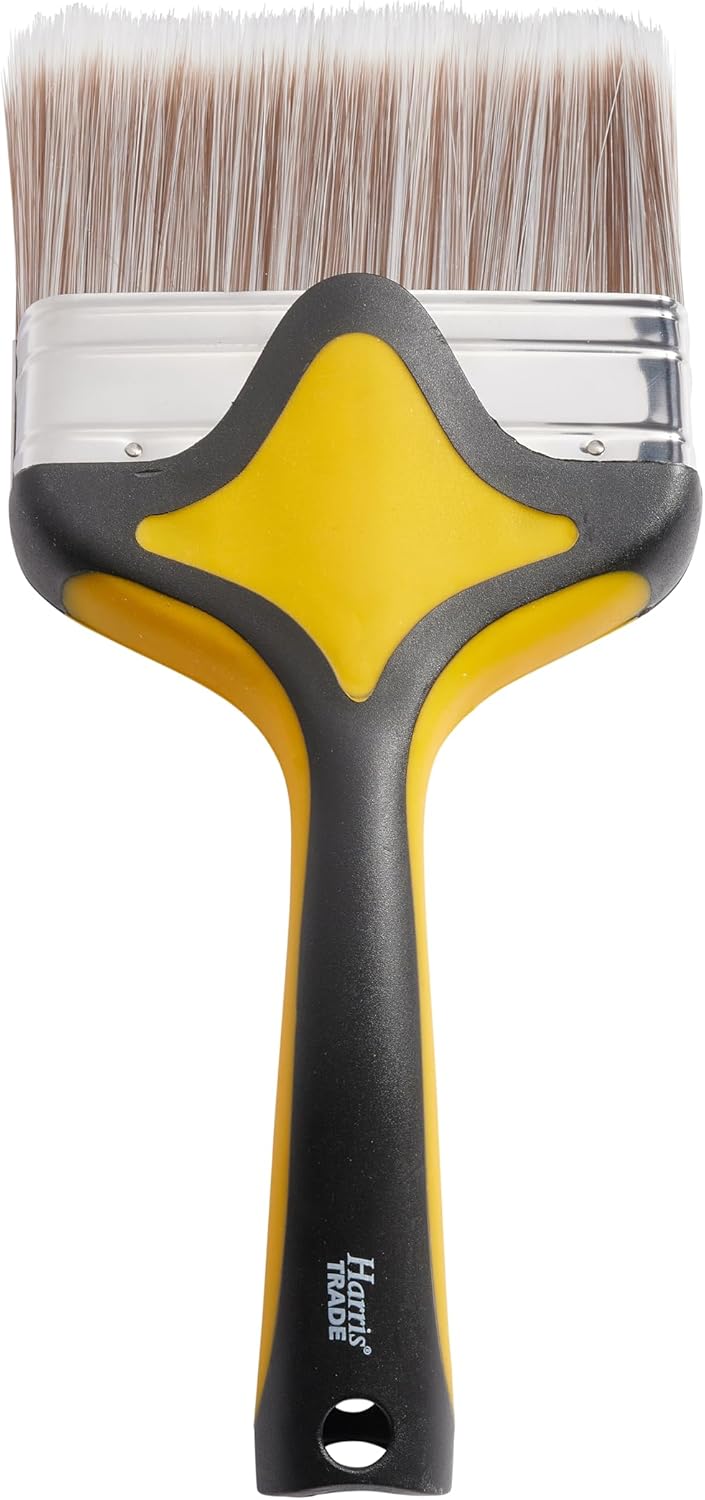
In practical terms, think about painting a garden wall edge: you can load the brush, work paint up and down across the brick faces, then tilt the angled head to feed paint into lines and mortar texture. It’s less about achieving a razor-straight edge and more about getting an even coat across irregular surfaces.
It also suggests better paint control than some generic brushes, because there’s a hook designed to help with convenience and a cleaner workflow with fewer drips back into the bucket.
Key features that matter in use
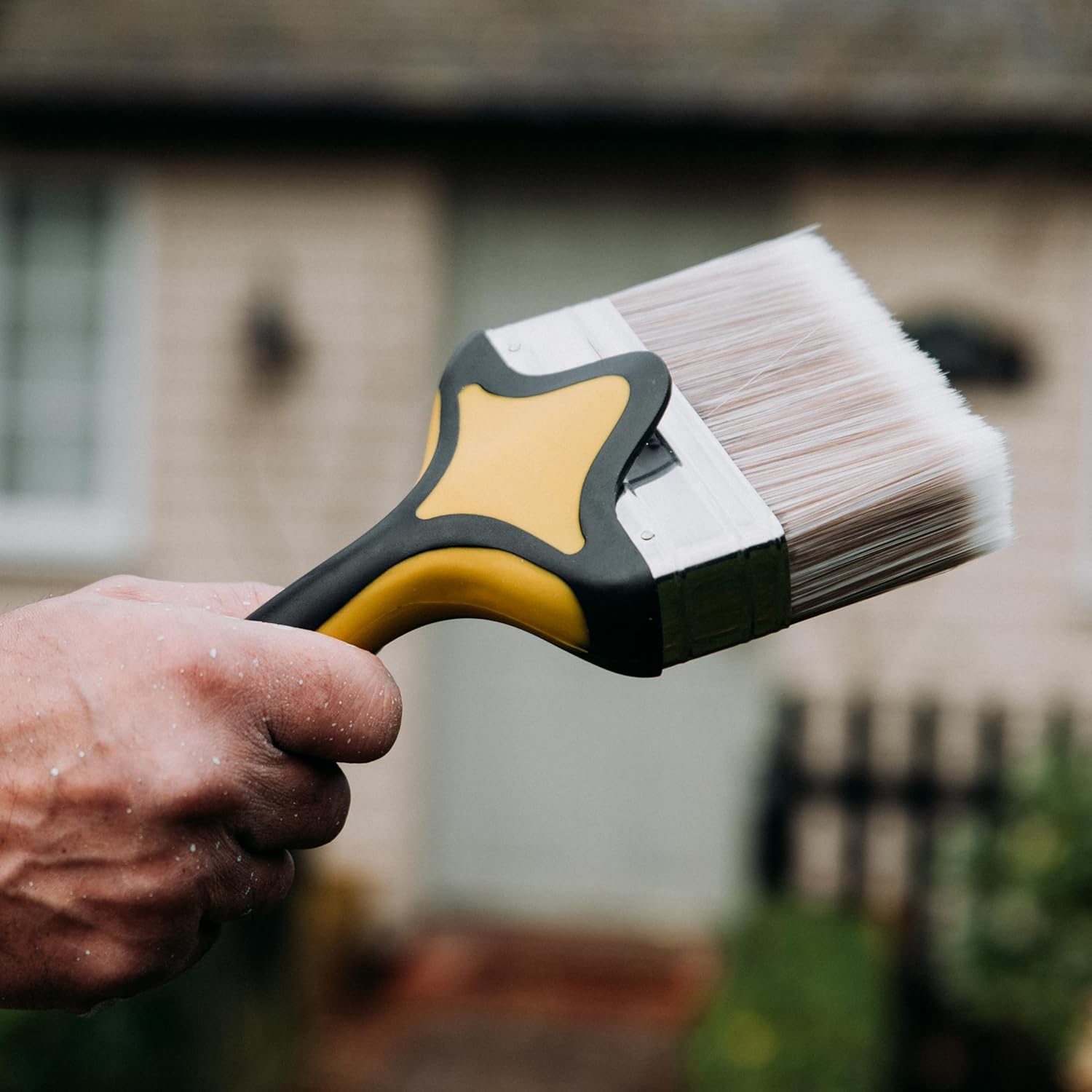
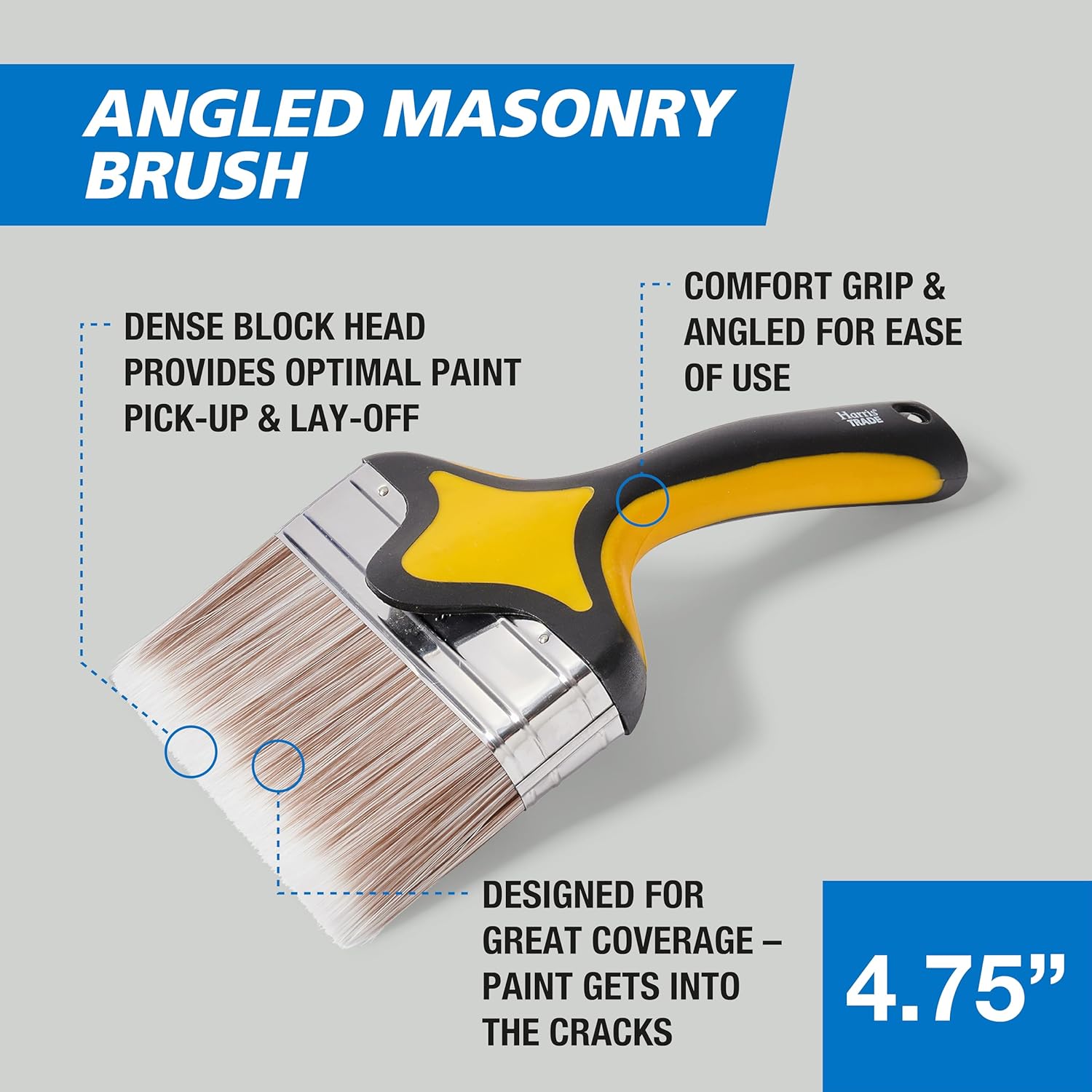
The two biggest “real-world” ideas here are coverage and control. A dense block head is meant to pick up and lay down paint efficiently, which should reduce how many times you need to reload. The angle is there to make top-to-bottom work feel easier and more natural, especially on vertical surfaces.
The synthetic filaments are another practical point. For masonry jobs, you’re often dealing with thicker paints and gritty textures, so durability matters more than with more delicate finishes. If you regularly handle masonry repainting—whether for DIY touch-ups or more frequent exterior refreshes—this kind of construction is the direction you want.
Worth noting, though: the description doesn’t mention bristle stiffness, paint type (oil/water-based), or performance specifics on very fine pointing work. So if you’re trying to do ultra-precise detail around tiny edges, you may still prefer a narrower specialist brush for the final finesse.
Who it suits (and who should be cautious)
It makes sense if you’re painting block, brick, or similarly textured masonry and you want a brush that can cover quickly while still managing the texture. You’ll likely appreciate the comfortable grip if you’re doing a few hours of work, and the integrated hook is a neat extra for keeping the brush to hand during a session.
It might not be a great match if your main job is smooth interior surfaces, where an angled masonry brush can feel oddly “busy” compared with brushes made for finer, flatter coats. Also, if you’re expecting the brush to behave like a precision edging tool, you may find it better used for coverage first, then followed by a smaller brush where needed.
Buying considerations before you commit
Before buying, it’s worth checking a few basics in line with how masonry painting usually goes:
- Make sure you actually need a masonry brush rather than a standard wall/trim brush. This one is positioned specifically for masonry paints.
- Consider the size you want. The 4.75" head is likely aimed at efficient coverage, but if your project is mostly tight corners and small sections, a smaller brush may be more practical.
- Think about your workflow. If you frequently stop and start, a hook for hanging can help reduce time faffing about with cleaning and temporary storage.
Pros
- Angled head is intended to make vertical top-to-bottom coverage easier.
- Dense block head designed for good paint pickup and faster application.
- Comfortable grip for longer sessions.
- Integrated hook helps with convenience and keeping drips under control.
- Synthetic filaments made for durable use with masonry paints.
Cons
- It’s focused on masonry coverage, so it may not be the best choice for precision edging on fine details.
- The description doesn’t give performance metrics (coverage per load, exact compatibility by paint chemistry), so you’ll want to rely on your masonry paint instructions.
Is it worth it?
A sensible buy if you’re painting brickwork or block and you want quicker, cleaner masonry coverage with an angled, dense head that helps paint reach the texture. It’s also a decent pick for anyone who values convenience mid-job—especially with the integrated hook designed to reduce mess.
You may want to skip it if your project is mainly smooth interior painting or if you need a brush primarily for tight, high-precision edging. In those cases, this angled masonry tool could end up doing more “coverage work” than you actually need.

Mini FAQ
How is this brush different from a regular wall brush?
It’s made specifically for masonry paints and textured surfaces, with synthetic filaments and a dense block head intended to pick up and lay down paint effectively on brick or pebbled stone.
Is the angled head mainly for comfort or for performance?
Both, on its design intent: the angle is described as helping make work lighter when painting up and down on masonry surfaces.
Will it help reduce paint drips?
The description mentions an integrated hook for convenience and cleaning, with the goal of fewer drops of paint out of the bucket.
Can I use it on any type of masonry paint?
The description states the synthetic filaments are designed for “all masonry paints”, but you should still follow the paint manufacturer’s guidance for best results.
What size coverage should I expect from a 4.75" brush?
The 4.75" head suggests a coverage-focused tool for masonry, so it should be more efficient for broad faces than for tiny corner work.