

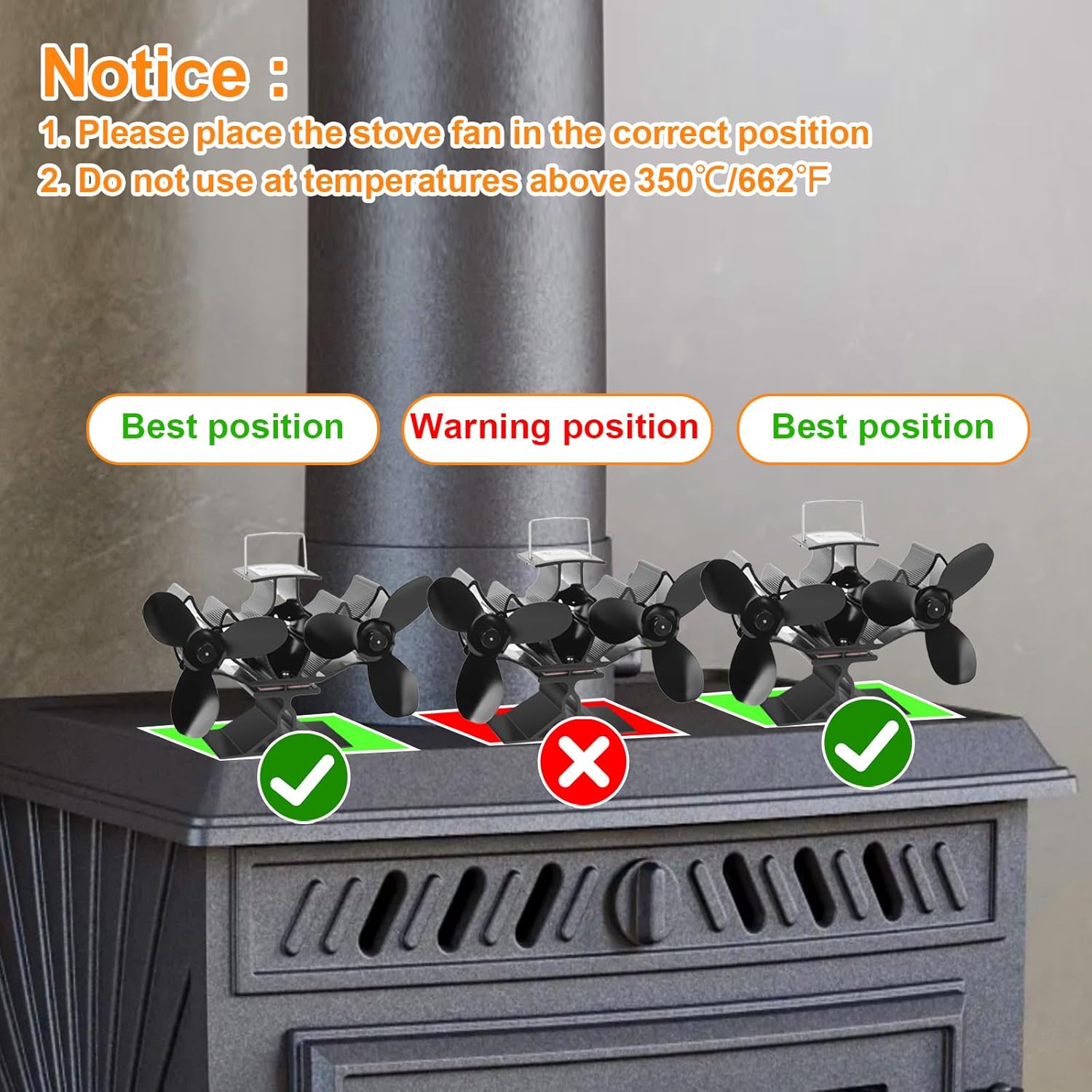
Hanaoyo twin-motor heat-powered log burner fan with silent double TEG power
Product description
The essentials
If you’re running a wood stove, log burner or similar appliance, you’ll know the usual problem: the room near the stove warms up fast, but the rest of the space can lag behind. The Hanaoyo Newly Log Burner Fan is designed to help with that by using heat from the stove itself to drive the fan, so you’re not adding batteries or running cables.
It’s a simple idea and, on paper, the execution looks fairly considered: twin motors, a 6-blade design and a TEG (thermoelectric generator) setup intended to circulate warm air more efficiently. The manufacturer also positions it as whisper-quiet, which matters if you’ll use the stove in the evenings or around sleeping areas.
That said, it won’t suit every setup. Stove placement and clearance make a big difference, and built-in fireplaces in particular can be tricky if there isn’t enough space for the airflow.
What it does (and how it works)
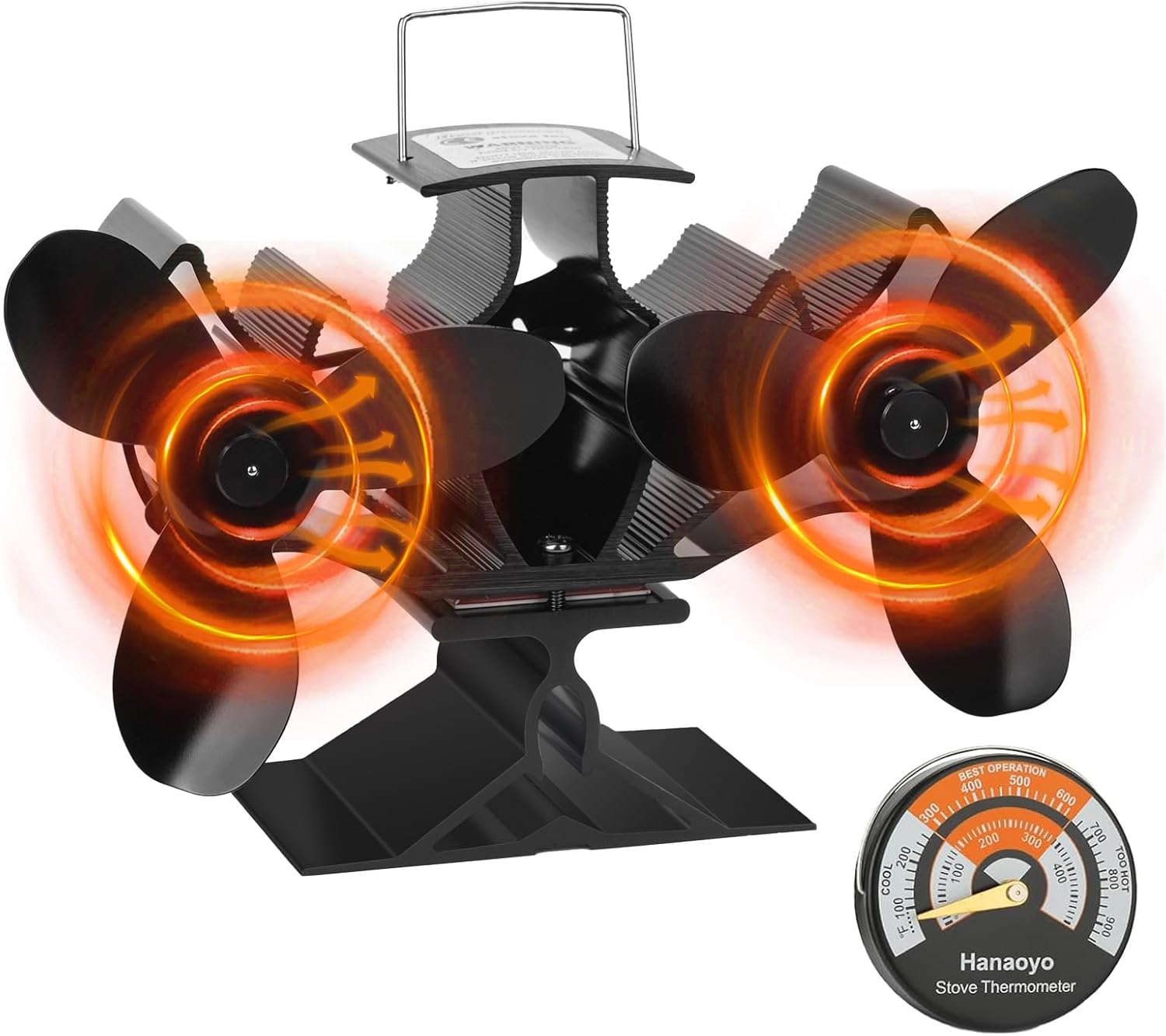
This is a heat-powered stove fan. Instead of being powered by electricity, it spins thanks to the heat produced by burning wood/coal/pellet fuel, which the TEG module converts into power for the fan motors. In practical terms, once the stove heats up enough, the fan starts circulating the warm air around the room.
A useful way to think about it: imagine you’ve got the stove going on a cool evening. Without a fan, you get a hot pocket in the vicinity of the appliance. With a fan like this, the warm air is pushed and mixed, so the rest of the room benefits sooner.
The brand claims a higher airflow volume (up to 200CFM) and a shorter start-up time versus a typical 4-blade stove fan, but you’ll still need to judge your own stove and room conditions.
Key points
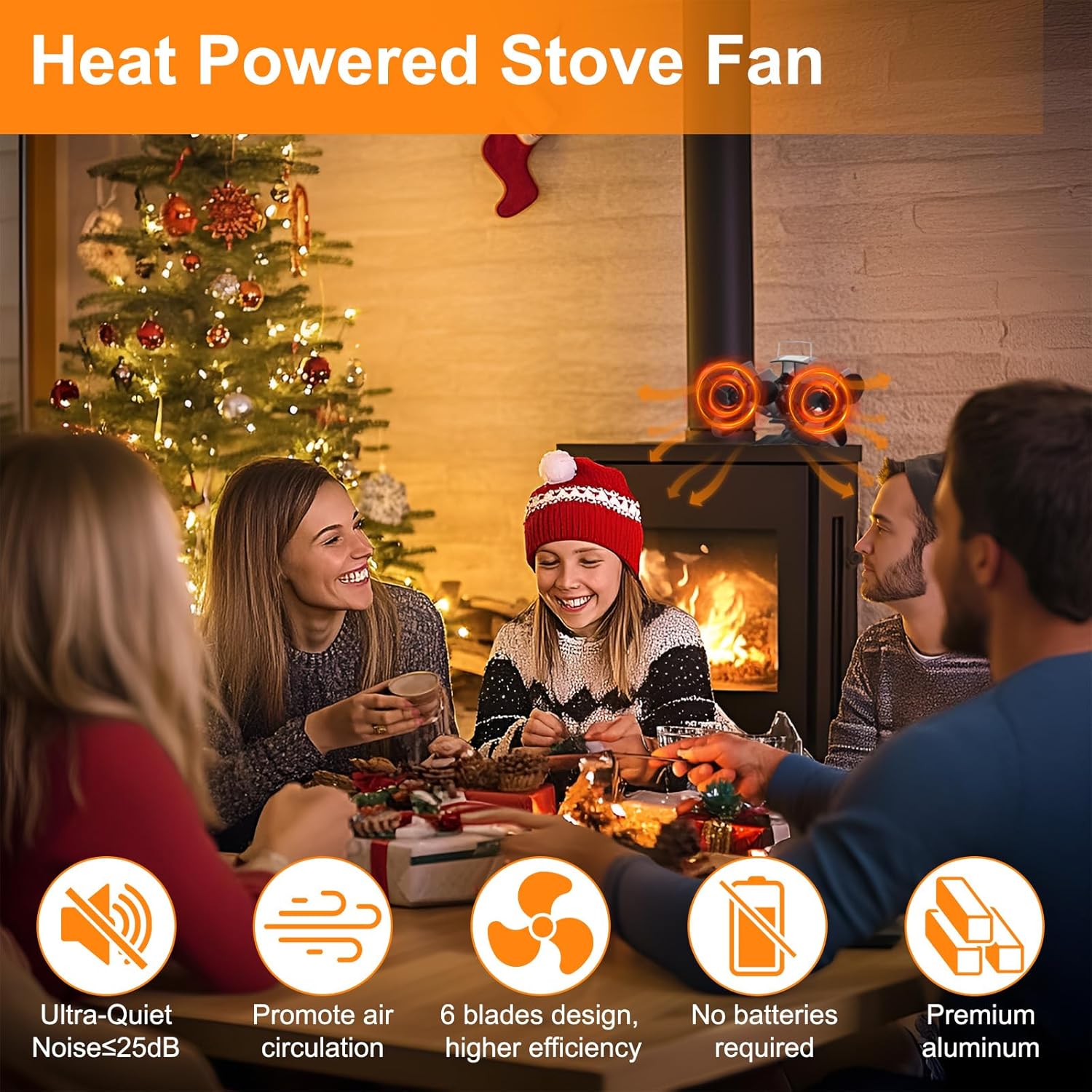
Twin motors and 6 blades are the main differentiators here. More blades typically means more chances to move air at once, and the company’s message is that this helps increase heat output and distribution.
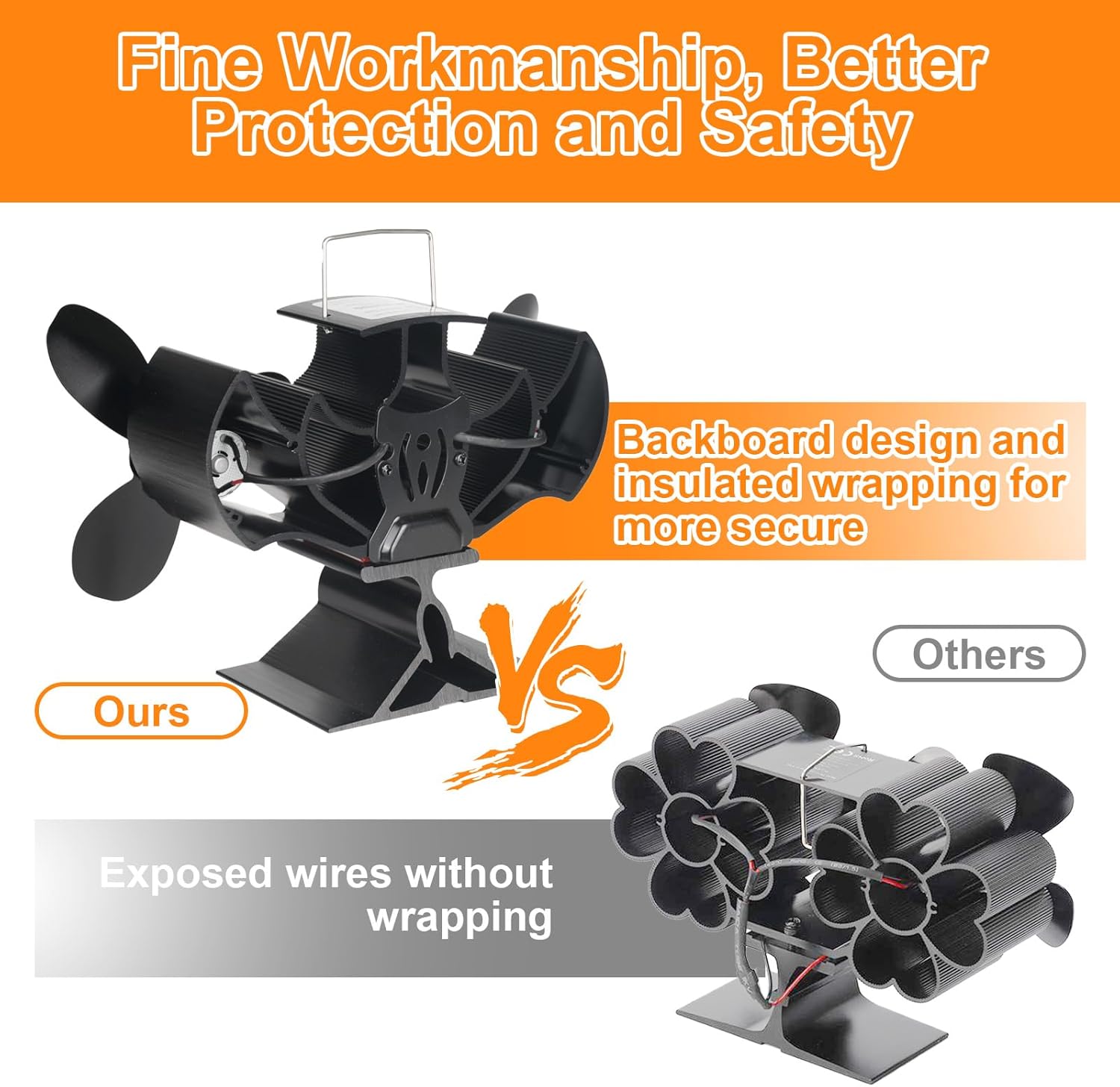
It’s also built around the idea of staying usable long term: the fan housing is described as aluminium alloy (rust-resistant, and with good thermal conductivity). There’s also mention of a TEG module and starter designed for durability.
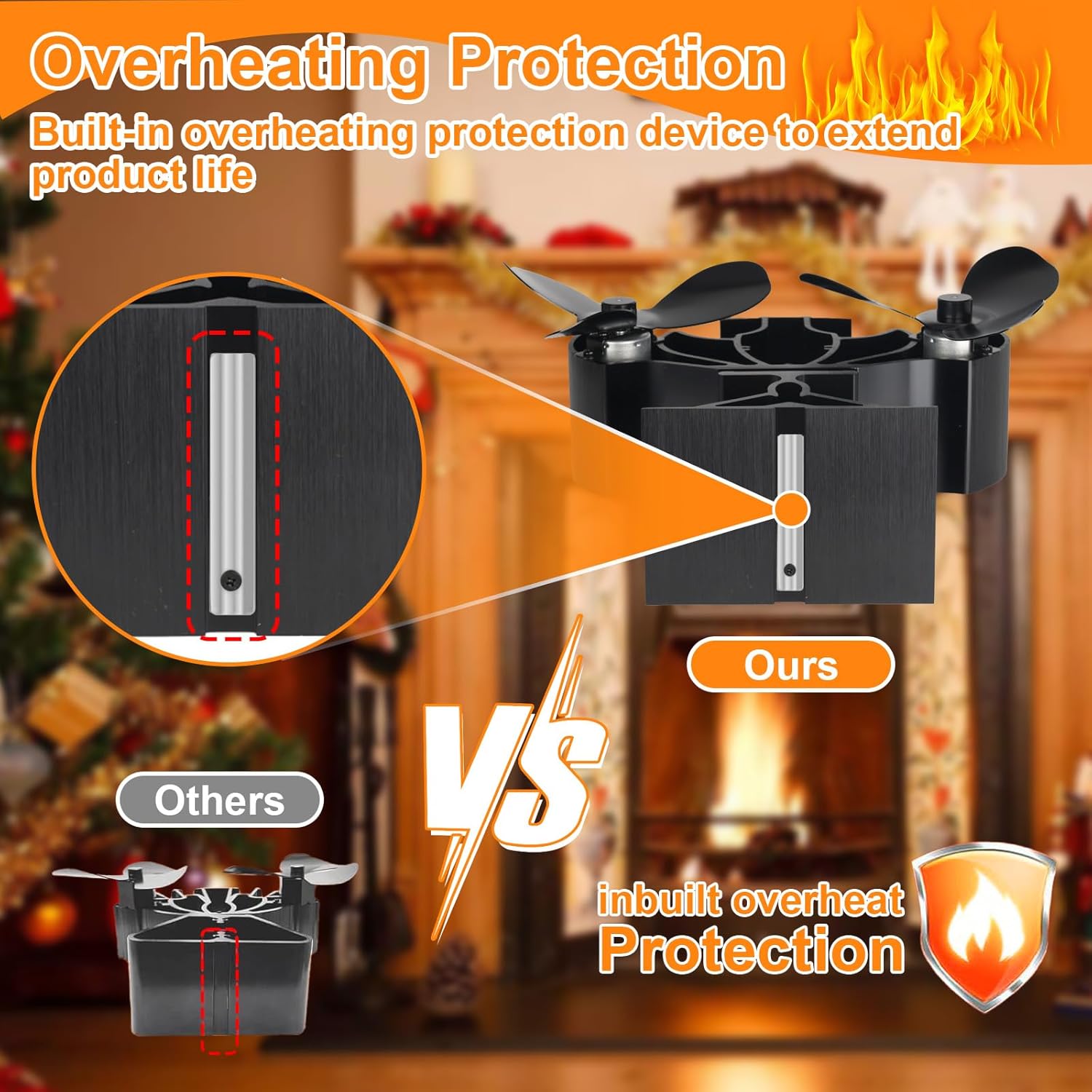
Safety is another part of the pitch. A bimetallic device at the bottom is said to slightly lift the fan edges when it approaches maximum operating temperature, to protect the centre module and motor, then return to normal as the temperature drops. It’s the sort of feature that can extend motor life, though the real-world result depends on how hot your stove runs.
For comfort, the noise claim is specific: lower than 25dB even at the highest speed. If you’re sensitive to background noise, that’s a meaningful detail (even if actual perceived quietness can vary a bit with your stove and room).
The technical details that matter
- Type: heat-powered log burner / stove fan driven by stove heat (no batteries or electricity required)
- Drive: twin motors with a 6-bladed design
- Airflow (claimed): up to 200CFM
- Materials (stated): aluminium alloy body, described as rust-proof and thermally conductive
- Power system (stated): high performance TEG module and starter
- Safety (stated): bimetallic device that lifts edges near maximum temperature to help protect internal components
- Noise (claimed): lower than 25dB
- Temperature guidance (stated): avoid leaving the fan under high temperature above 345°C for a long time
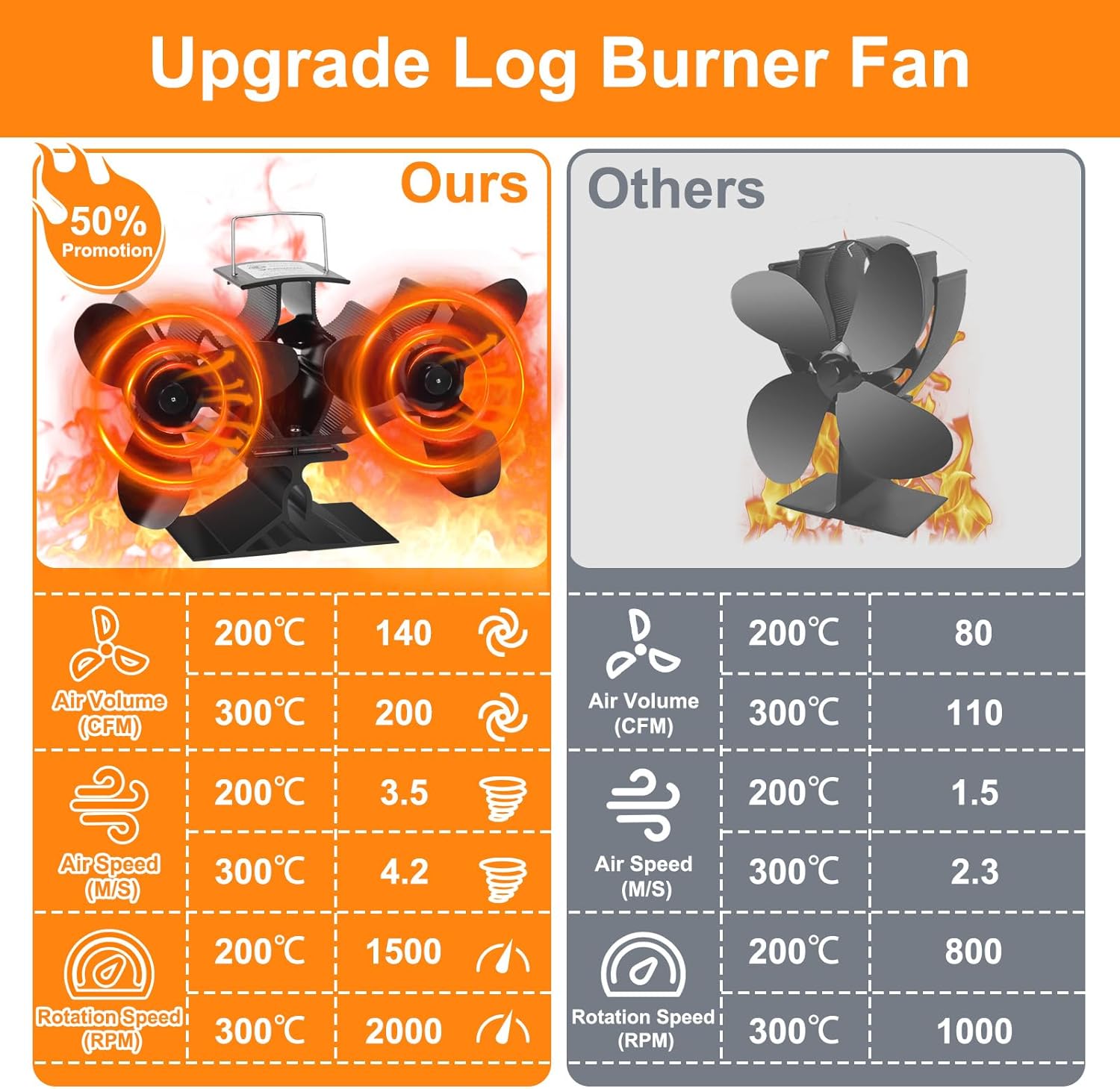
Not all of these items will translate perfectly to every home, but they do give you a clear picture of what the product is trying to optimise: airflow, quiet operation, and component protection.
Where it shines (and where it can fall short)
Where this kind of fan usually makes the most difference is in living rooms where the stove is running but you’re still reaching for extra warmth elsewhere. If you want the room to feel more even without switching on fans that plug in, a heat-powered unit like this can make sense.
It also has a practical advantage: no batteries to replace and no separate wiring to manage.
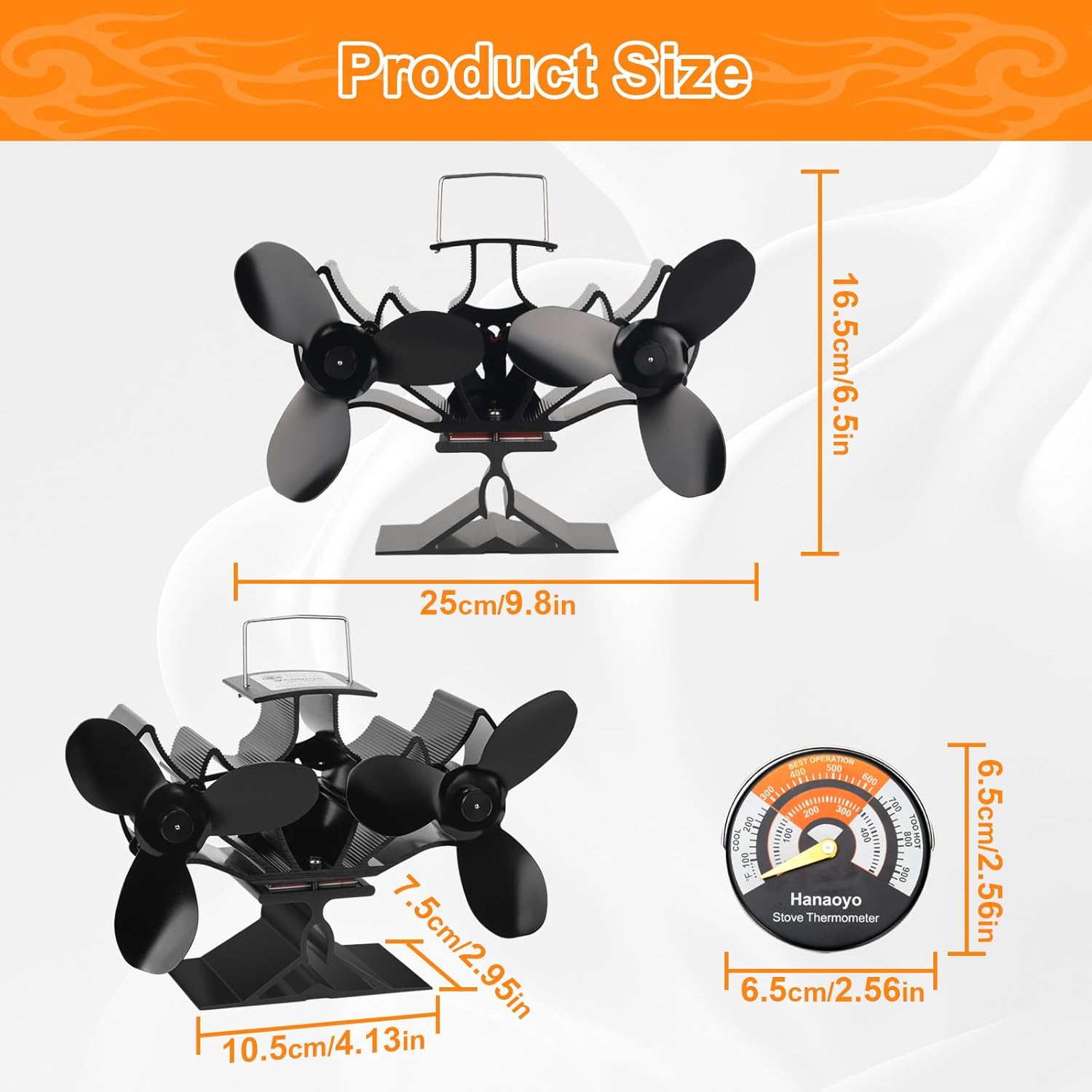
However, don’t ignore the limitations. The warm tips are pretty direct: if your fireplace is built-in, you should measure the distance first. Space can be limited for placement, and if airflow can’t circulate properly, temperatures may become too high. So, it may not be the best choice if your stove sits in a tight recess with poor air movement.
Also, as with any stove fan, performance depends on how hot and how steadily your stove burns. If your stove runs cooler or intermittently, the fan may spend more time ramping up and less time pushing warm air around.
Buying verdict
Worth buying if you want a heat-powered log burner fan that runs quietly, avoids batteries/electricity, and is designed around twin motors and a 6-blade airflow setup. It’s a good fit if you’ve got reasonable clearance around the stove and you’re aiming for better warm-air circulation in the room.
You may want to skip it if your fireplace is built-in with limited space, or if you can’t be confident about placement and airflow. It might not be a great match if the fan would sit where it can’t circulate air properly, because the brand explicitly warns about prolonged high-temperature exposure.
It makes the most sense for day-to-day winter evenings, when you’re trying to keep one main living space comfortable while the stove does the heating.
Quick FAQ
Will it need batteries or an electricity supply?
No. It’s described as heat-powered and doesn’t require batteries or electricity.
How quiet is it?
The manufacturer claims it runs at lower than 25dB even at the highest speed.
Can I use it on a built-in fireplace?
If it’s built-in, the guidance is to measure the distance first. Placement space is limited in some built-in setups, and poor circulation could make temperatures too high.
Is there a temperature limit?
The product guidance says not to leave it under high temperature (more than 345°C) for a long time to protect internal parts.
What fuels is it intended for?
It’s stated to circulate hot air when burning wood/coal or pellet fuel.