

Growing Success Plum Maggot Monitoring Trap
Product description
What it is and what it’s for
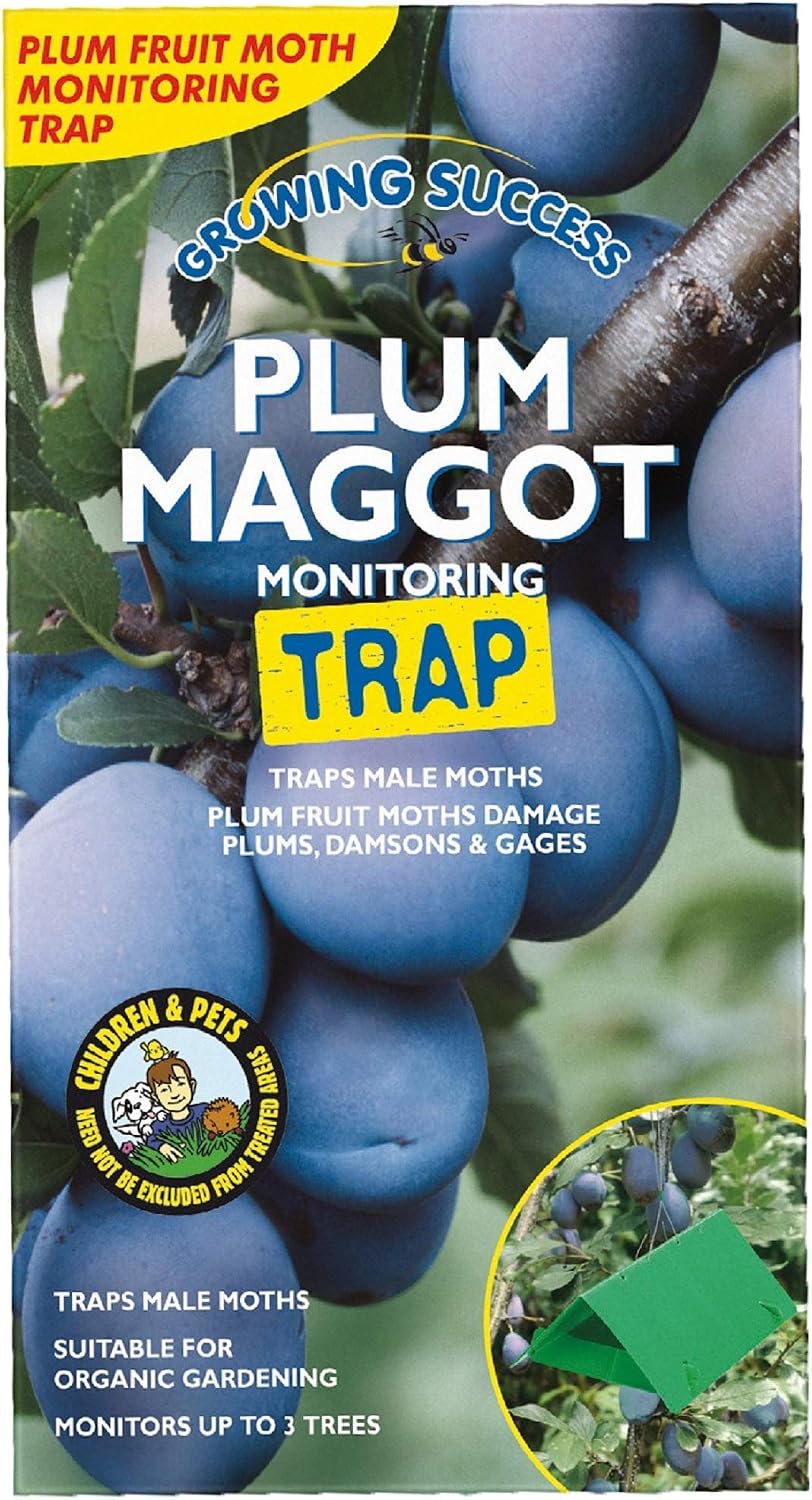
The Growing Success Plum Maggot Monitoring Trap is a simple, practical device designed to help monitor and reduce plum moth activity in small garden settings. It’s marketed as suitable for organic gardening and is stated to cover up to 3 trees, making it a low‑effort option for homeowners wanting a non‑chemical approach to protect plums, damsons and gages.
How it works in practice
On the surface, the concept is straightforward: attract and trap adult moths to prevent eggs from being laid on fruit. If you’re prioritising an environmentally conscious setup or you’re trying to keep pest pressure predictable over a growing season, this kind of monitoring trap can form part of a broader pest management plan. If you’re new to fruit tree care, think of it as a first line of observation that may complement other non‑insecticidal steps such as pruning for airflow or removing fallen fruit.
What’s good about it
- Simple design aimed at organic gardeners who want to avoid synthetic sprays.
- Targets a common pest on stone and p bek fruit trees, with a stated coverage for up to three trees, which helps with planning for small plots or family orchards.
- Quiet, unobtrusive presence in the garden, so it won’t disrupt regular activities or aesthetics.
Limitations and what to watch for
- The description doesn’t specify the exact attractant or lure mechanism, so results may depend on local pest pressure and seasonality.
- It’s positioned as a monitoring tool rather than a guaranteed control solution, in practice, you may still need to combine it with hygiene measures (collecting fallen fruit) and careful timing of any interventions.
- For larger plots or higher pest pressure, more proactive or integrated approaches might be preferable.
Who this is for
This trap is potentially a good fit for: - Small garden owners with 1–3 plum trees who prefer organic approaches. - Gardeners looking to start monitoring pest activity before taking broader steps. - Those wanting a non‑chemical option that is easy to deploy and maintain through the season.
Who it isn’t ideal for
- If you have a larger orchard or persistent, high moth pressure, a single monitoring trap may not be sufficient.
- If you rely on precise, data‑driven control measures, you might need more detailed monitoring or professional guidance.
- If you expect guaranteed suppression of damage, this device alone is unlikely to meet that expectation.
When it makes sense to buy
- At the start of the growing season, to establish a baseline of pest activity.
- If you want a low‑effort, organic option to observe pest dynamics before adjusting cultural practices.
- When you’re managing a small number of trees and prefer non‑chemical solutions.
When to reconsider
- If you don’t see any signs of plum moth activity after several weeks of use, reassess its value in the context of overall tree health.
- If you’re dealing with other pests or diseases that require different strategies, this tool should be part of a broader plan.
What to check before buying
- Confirm the trap is suitable for the types of plum trees you grow (plums, damsons, gages) and your climate.
- Consider whether you want a purely monitoring solution or a broader integrated pest management approach.
- Think about placement, accessibility for regular maintenance, and how you will manage and dispose of trapped moths.
Practical usage example
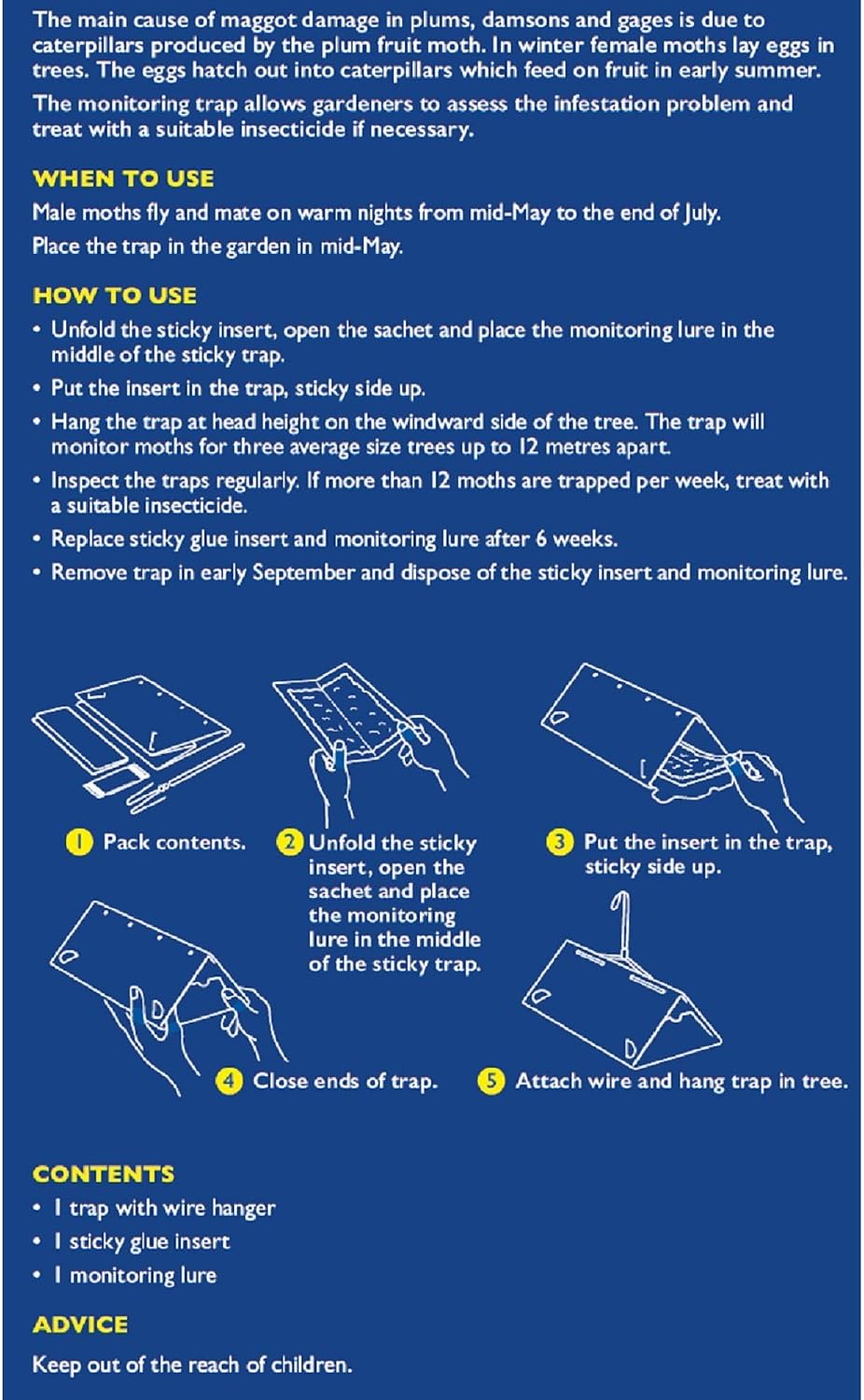
In a typical late spring to midsummer period, you’d install the trap on or near the canopy of each tree you’re monitoring. You’d then observe trap activity and correlate it with fruit development stages. If you notice rising captures, you may increase vigilance with fruit protection steps, such as careful harvesting and fruit hygiene, to minimise potential damage.
Quick FAQ
- How many trees can this cover? Up to 3 trees are stated in the description.
- Is it a replacement for sprays? No, it is described as a monitoring and pest management aid, not a standalone solution.
- Can it be used in organic gardens? Yes, it is described as suitable for organic gardening.
Is it worth it?
Worth considering if you’re prioritising an organic, non‑chemical approach for a small number of trees and you want to start monitoring pest activity without committing to more aggressive controls.