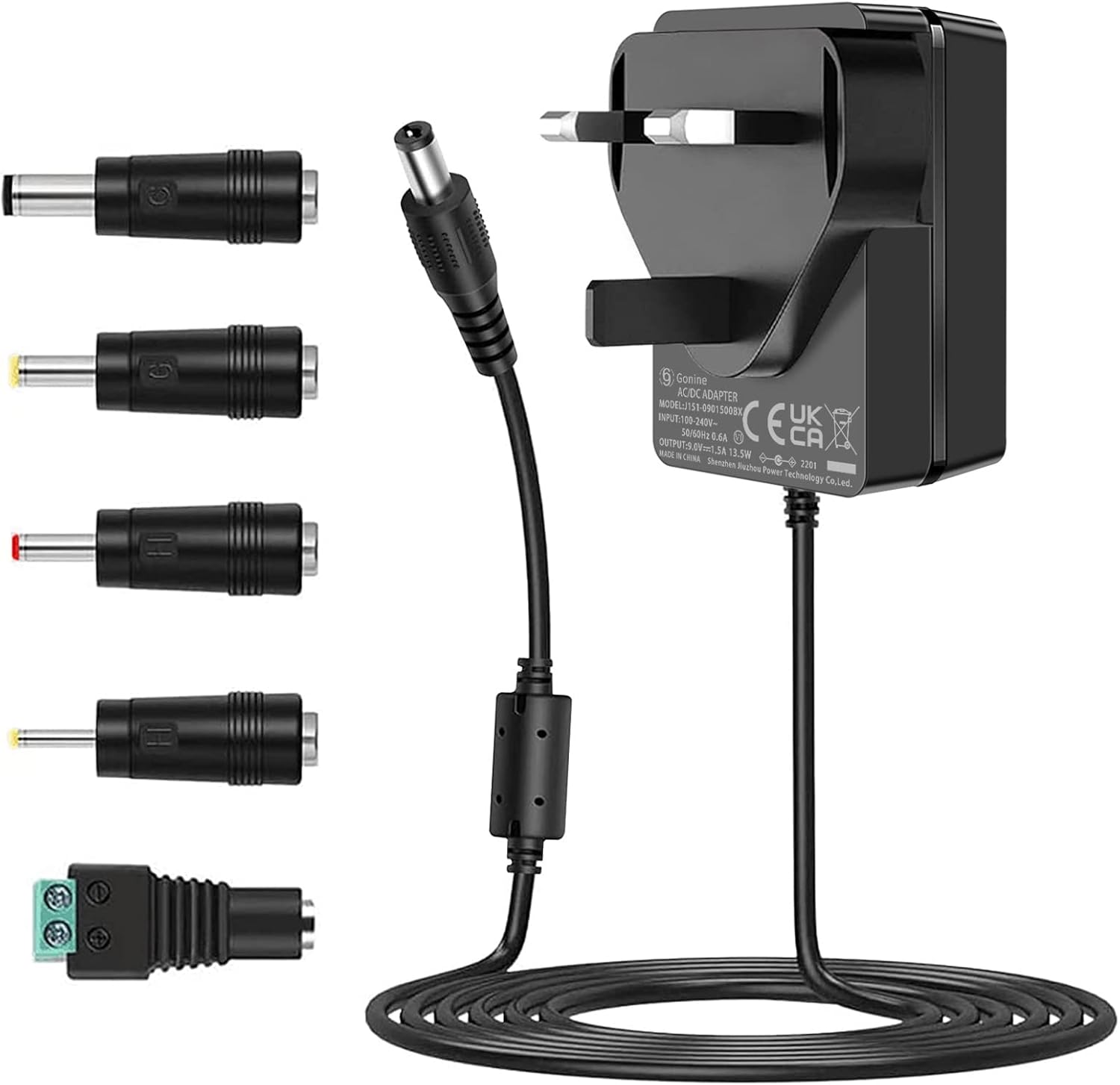
What this is and why it matters\nThe Gonine 9V 1.5A power supply is a versatile AC to DC adapter designed to deliver a stable 9V output at up to 1.5A. With a centre-positive polarity and a selection of five DC tips, it targets a range of small to mid‑sized electronics, from hobbyist boards to consumer gadgets. On paper, this kind of supply can simplify powering projects and devices that require a reliable 9V source, without juggling multiple wall warts.\n\n## What it can power and where it fits\nThe supplied 9V 1.5A output and the 5.5×2.1 mm (and compatible options) connector layout make it suitable for many Arduino projects and similar equipment that specify 9V input and modest current. The description lists compatibility with Arduino UNO R3 and MEGA 2560, as well as various hobbyist turntables and gym equipment, suggesting the product aims to be a general-purpose 9V supply for a mix of electronics and small appliances. If you prioritise a single, common supply for experimenting with Arduino projects or older peripherals, this offer could be convenient.\n\n## Design, build and safety considerations\nThe unit is described as containing plastic and metal, which is typical for wall‑wart adapters. It features multiple safety protections (over‑voltage, over‑current, and short‑circuit protection) and UKCA, FCC, and ROHS certifications. That combination is reassuring for daily use, but it’s worth noting that the product may not cover higher‑demand devices or those requiring more than 1.5A. Always verify that your device’s current draw stays within the 1.5A limit and that the tip you’re using matches the device’s input jack.\n\n## 5 tips for flexible use\nWith five tips included (H 5.5×2.5 mm, G 4.0×1.7 mm, H 3.5×1.35 mm, H 2.5×0.7 mm, LED terminal), the adapter helps you avoid buying separate leads for various gadgets. The inner positive polarity is standard for many devices, but the warning remains: this does not fit every device, particularly those with different plug geometries or negative‑tip configurations. Always confirm connector size and polarity before plugging in.\n\n## Pros and potential drawbacks in real life\nOn the plus side, you get a globally compatible input, a stable 9V output, a respectable current ceiling for its class, and a bundle of tips that increases flexibility. It’s compact enough to sit on a desk or in a small power strip without dominating space. On the downside, the max 1.5A limit means it may not satisfy power‑hungry peripherals or future upgrades that demand more current. If you plan to power higher‑drain devices, this unit may appear restrictive.\n\n## Who this is best for\nThis supply is a reasonable fit if you’re building or maintaining Arduino projects, or you need a common 9V option for older equipment like certain turntables or compact exercise machines listed in the note. It suits hobbyists and makers who want a one‑box solution with multiple tips rather than hunting down individual adapters. It’s less ideal if you foresee needing more than 1.5A or devices with unusual jacks or polarity.\n\n## When to buy and when to hold off\nConsider purchasing if you want a single, versatile 9V supply that covers several common devices and you’re prepared to stay within the 1.5A ceiling. If your project or device requires higher current, a supply with a higher amperage would be more appropriate. Also check whether your device’s plug needs a tip that isn’t among the five included.\n\n## What to check before purchasing\n- Confirm device compatibility: 9V input, centre‑positive, and a current draw at or below 1.5A.\n- Match the correct tip size and type to your device’s DC jack.\n- Verify UK compatibility and safety certifications (UKCA, FCC, ROHS) as listed.\n- Consider your future needs, if you anticipate heavier loads, plan for a higher‑amp supply.\n\n## Practical usage example\nA typical scenario: you’re prototyping a small Arduino Uno project and you want a straightforward wall charger rather than batteries. You connect the UNO to the 9V 1.5A supply using the appropriate tip, power it up, and monitor stability during a long test run. If you decide to add a sensor shield or a small motor, you’ll want to re‑evaluate the current draw to ensure you don’t exceed the 1.5A limit.\n\n## Decision of purchase\n## Is it worth it?\nYou’ll like it if you need a compact, versatile 9V supply with multiple tips and you’re comfortable staying under 1.5A. It makes sense for simple Arduino setups or older gear that relies on a 9V input. Not the best option if your projects demand more current or non‑standard jacks, in that case, a higher‑current or differently shaped adaptor would be more suitable.\n\n## Quick FAQ\n- What devices is this suitable for? It’s described for Arduino boards and a range of small appliances that fit 9V input and up to 1.5A.\n- Do all five tips fit every device? No. Check the connector size and polarity for your specific device.\n- Is it safe for long use? It includes over‑voltage, over‑current, and short‑circuit protection and has recognised safety certifications, but always supervise power connections with novelty or critical equipment.\n