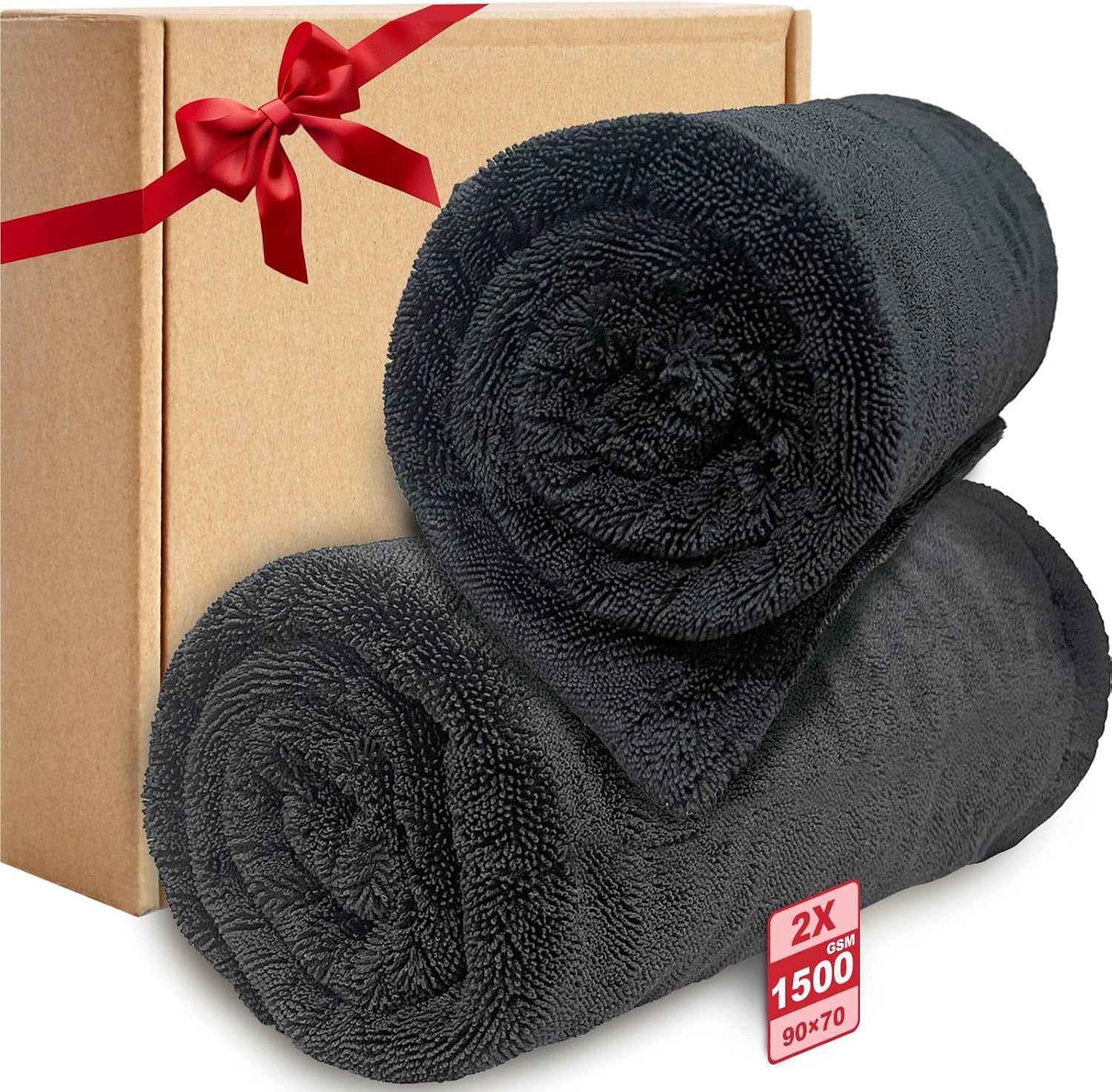
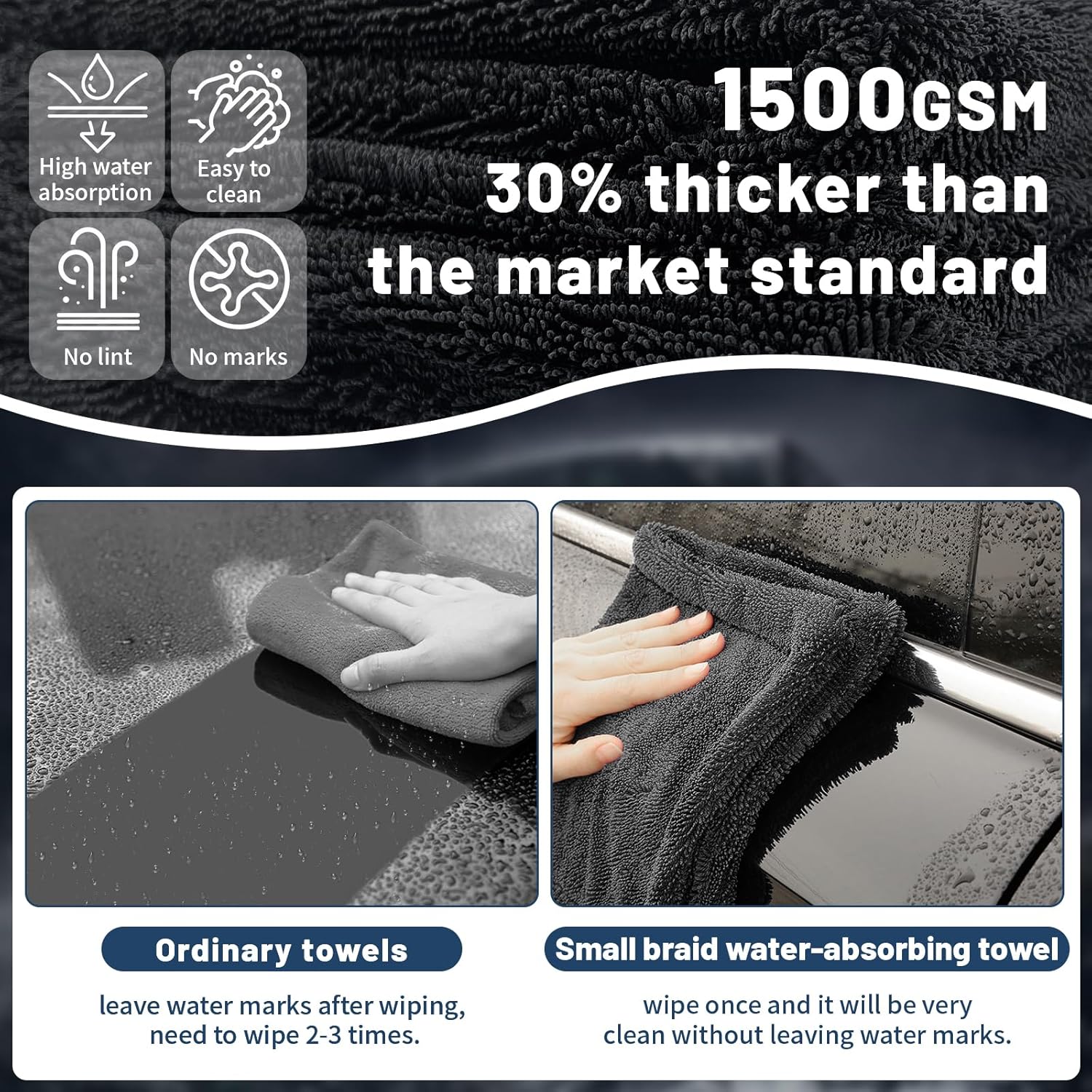
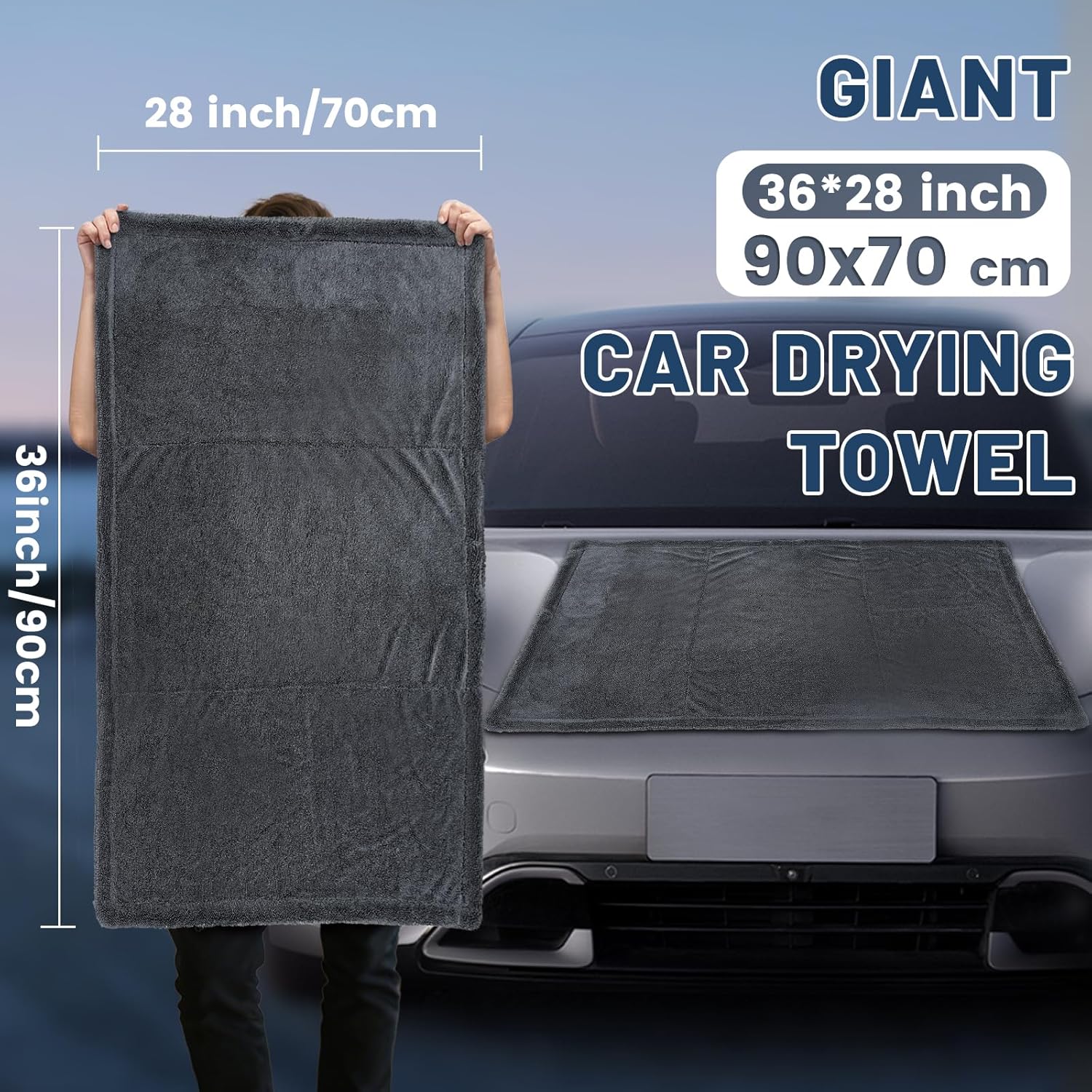
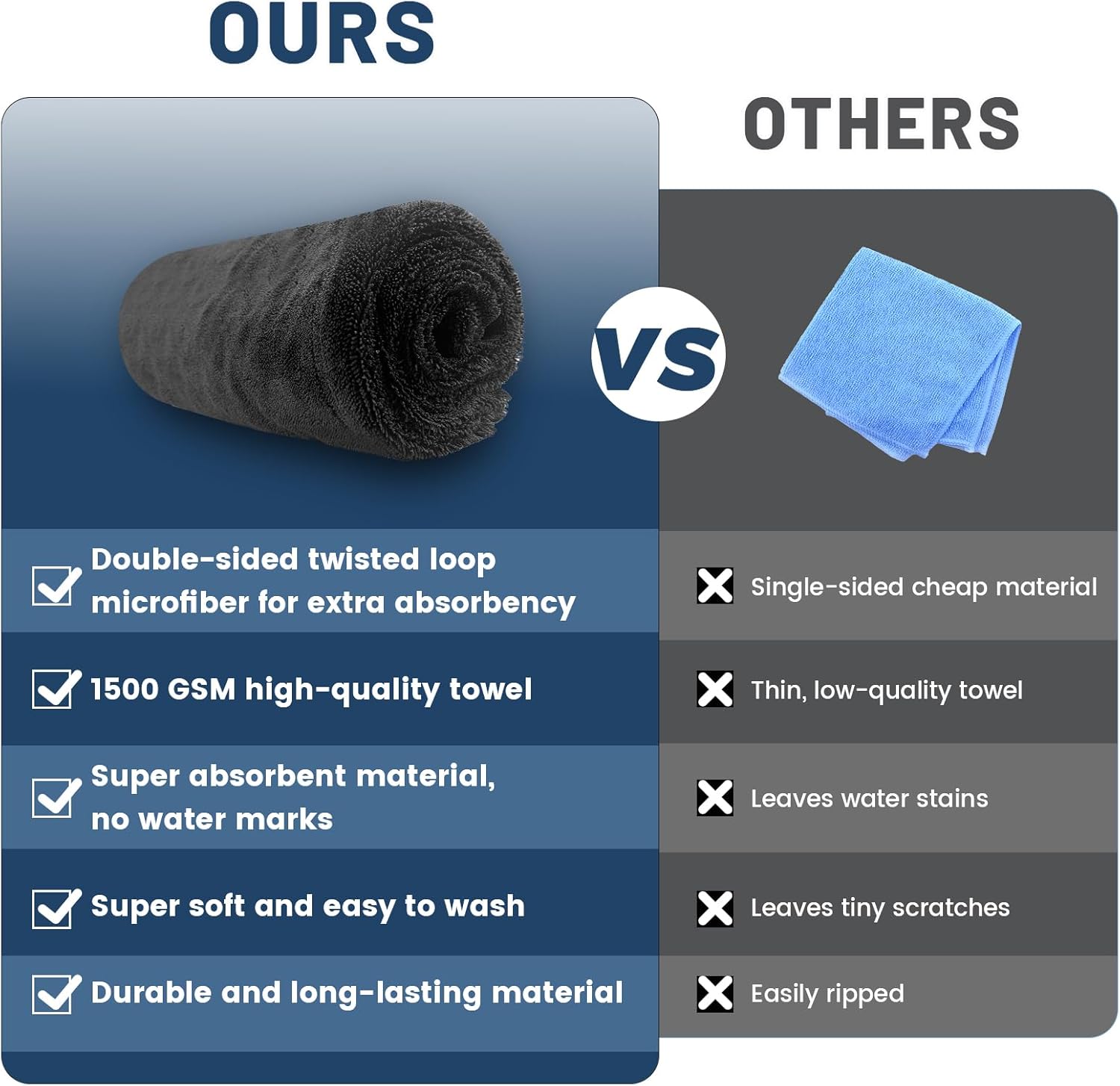
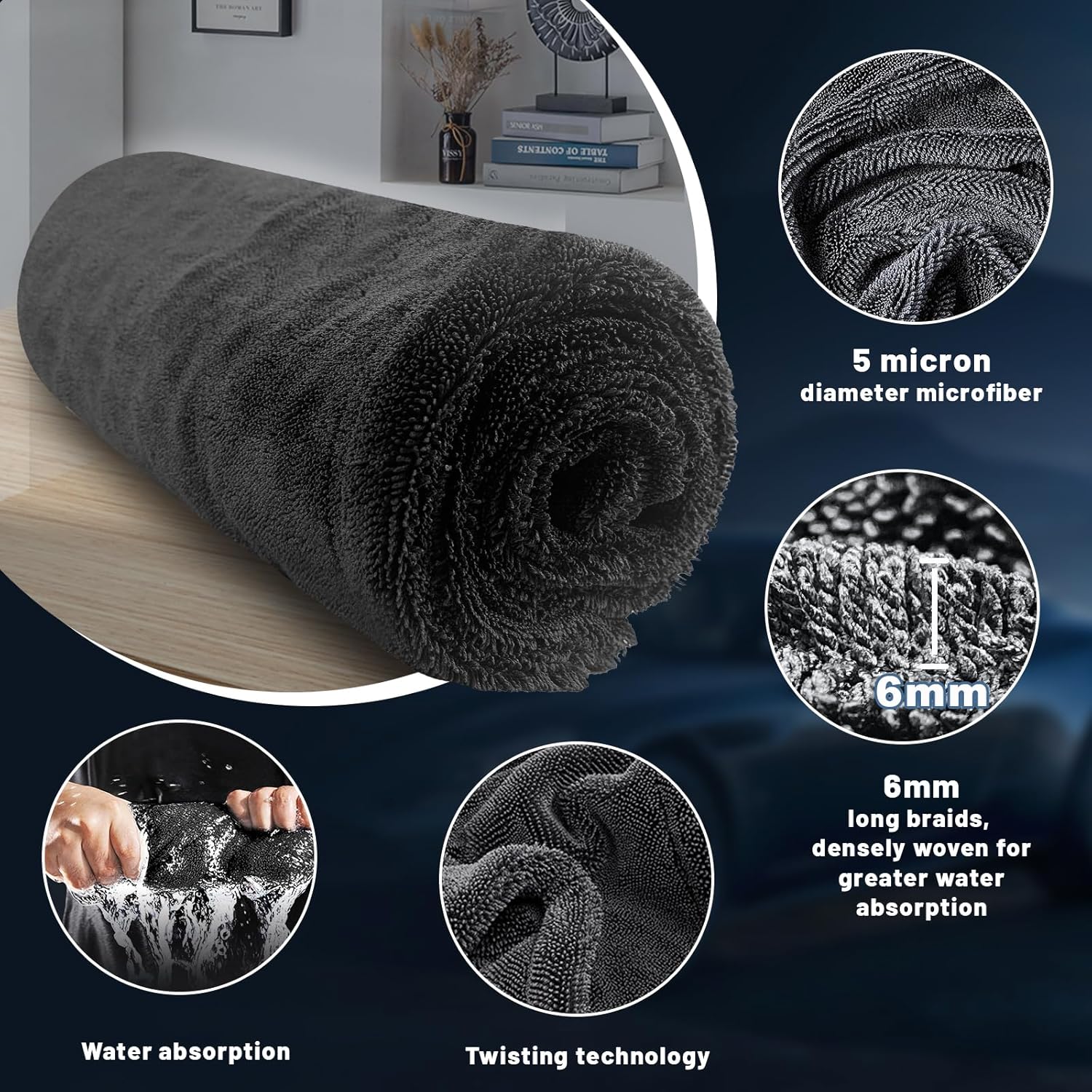
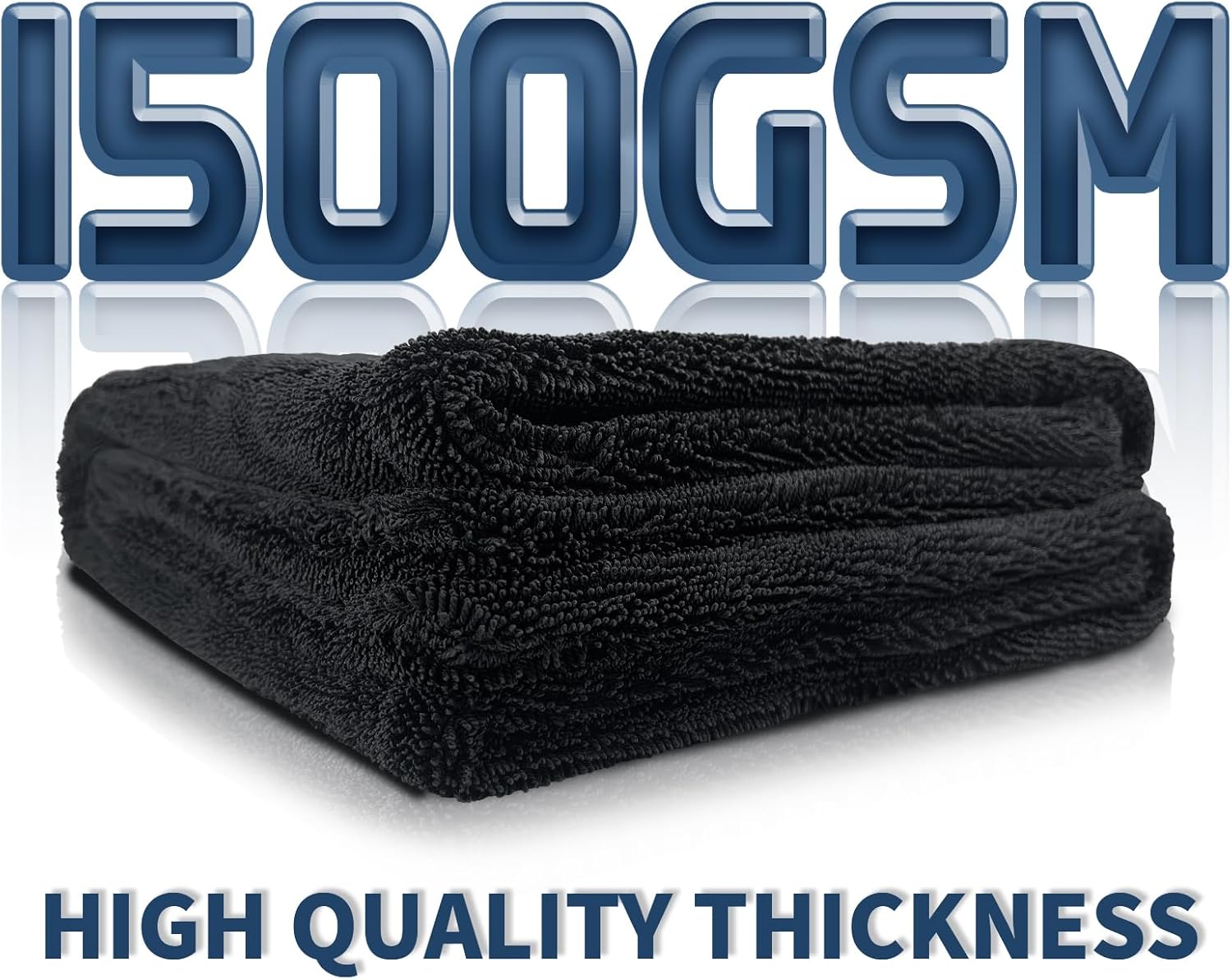
What it is and what it solves\nGhguole’s car drying towels are extra-large microfibre cloths designed to soak up water quickly and leave surfaces free of water marks and lint. With a 90 × 70 cm footprint and a dense 1500GSM body, they aim to cover large panels in a single pass, reducing the time you spend drying. The spiral weave and double-sided construction are marketed to give a soft touch on paint while grabbing water effectively, which helps minimise the risk of micro-scratches from residual debris.\n\n## How it’s built (and why it matters)\nThe towel uses a thick, rolled loop structure that promises 360° contact with surface moisture, combined with ultra-fine 5-micron fibres. The result, on paper, is rapid absorption and gentleness on clear coats. The dense 6 mm pile contributes to softness and a cushion that can help pick up grit without grinding it into the finish. For bigger jobs, the extended size means you’ll likely dry one side of the car in fewer passes.\n\n## What stands out in use\nOn a practical level, the towel is described as lint-free and machine washable, with a design that resists easy creasing and maintains performance after washing. The claim of no shrinking or loss of cleaning power during care cycles is useful, but it’s worth bearing in mind that, like any high-absorbency fabric, it benefits from a proper washing routine and air drying to preserve loft.\n\n## Who it’s for\nThis kit is well-suited for car owners who want a fast, one-towel approach to drying a full vehicle, and who also value versatility for other cleaning tasks around the home or boat. Its size and apparent absorbency may appeal to those who regularly wash larger vehicles, trucks, SUVs or motorcycles and prefer fewer tools on hand.\n\n## The good and the not-so-perfect\nIt’s strong on paper for covering ground quickly and reducing towel shedding, which helps avoid residues. A potential limitation is that the speed of drying and the visual finish will still depend on ambient humidity and water hardness. If you’re aiming for ultra-polished showroom results, you might still want a supplementary smoother or another drying method to compare.\n\n## Before you buy: what to check\n- Ensure your washing routine keeps the fibres clean to maintain absorbency and avoid transferring grit.\n- Remember the advised care: wash at appropriate temperatures and avoid mixing with other fabrics to minimise lint pickup.\n- Consider whether two towels meet your typical vehicle size and drying pace, or if a larger or more multi-purpose cloth would fit your needs better.\n\n## How it compares to other approaches\nCompared with standard cotton towels, these microfibre towels aim to offer faster drying with less towel shedding and a more consistent finish. They aren’t a magic bullet and won’t replace the need for careful washing technique or a secondary detailing step if you’re chasing a spotless, flawless look. If you prioritise speed and a broader dry area, this approach makes sense, if you’re sensitive to maintenance and ongoing fabric care, you’ll want to factor in the washing routine.\n\n## Practical usage example\nAfter a gentle rinse, you roll the towel across the bonnet in broad, overlapping strokes and notice how much water is absorbed in a single pass, leaving the paint with a dry-to-the-touch feel. You can then switch to a second panel without switching towels, thanks to its generous size.\n\n## Quick care notes\nLaunder the towel as advised, avoid high-temperature washing beyond 60°C, and air or tumble dry on low to preserve loft. Let it dry fully before next use to maintain fluff and absorbency.\n\n## Is it worth it?\nThis is a solid pick if you prioritise a large, low-maintenance towel that promises strong absorption and a lint-free finish for routine drying tasks. It may not be the best option if you require perfection on every panel or if your washing setup makes proper fabric care difficult.\n\n## FAQ (quick answers)\n- Can I use it on boats or motorcycles? Yes, it’s described as multi-vehicle friendly.\n- Will it leave fibres on the paint? The design aims to be lint-free, but always ensure the fabric is clean before use.\n- How should I store it between uses? Keep it dry and clean to preserve absorption.