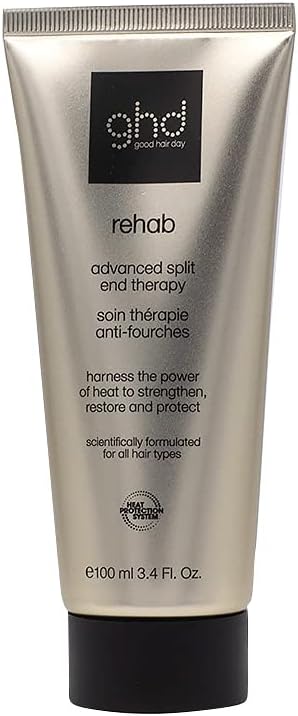
What it is and what it claims to do\nThe ghd Rehab Advanced Split End Therapy Serum is a lightweight conditioning cream designed to work with heat styling. According to the base description, it blends protecting polymers and conditioning agents to prevent cuticle lifting, aiming to deliver sleek, smooth hair while restoring and protecting against daily styling. The serum is described as leaving hair feeling nourished and stronger. On the surface, this positions the product as a backstage helper for those who regularly style and want to minimise visible split ends.\n\n## How it fits into a routine\nIf you style with heat tools, this serum is intended to be used in tandem with heat protection strategies. The phrase “Activated by Heat of Styling Tools” suggests the formula responds to heat to help seal in moisture and smoothness, potentially reducing further damage from brushing, drying or curling. It’s pitched as a lightweight option, so it might be appealing for those who dislike heavy residue or weigh-down on fine hair.\n\n## What stands out\nThe main appeal seems to be twofold: protection of hair cuticles during heat styling and a sense of nourishment without a heavy feel. That combination can help create smoother, more manageable strands day to day. The explicit note about protecting against daily styling hints at a practical, ongoing benefit rather than a one-off treatment.\n\n## Pros\n- Lightweight texture that aims to avoid weighing hair down.\n- Aims to protect cuticles during regular heat styling.\n- Combines protective polymers with conditioning agents for a smoother finish.\n\n## Cons and limitations\n- The claim of “prevents cuticles lifting” is common in styling serums but may vary depending on hair type and heat exposure. If you have very damaged or highly textured hair, results could differ. The description does not specify exact actives or concentrations, so it may be harder to compare with other serums on a technical basis.\n- It’s unclear how well it performs on very long or thick hair without layering or consumption details.\n\n## Who it’s for\nThis product seems suited to people who regularly use heat tools and want a lighter, nourishing serum that also sounds like it helps with daily protection. Those seeking a non-greasy feel or minimal residue might find it appealing.\n\n## Who it isn’t ideal for\nIf you’re seeking a heavy, repair-forward treatment for severely damaged ends, or if you require specific active ingredients to address particular hair concerns, this serum may not be the strongest option.\n\n## When it makes sense to buy\nPurchase makes sense if you style with heat tools frequently and want a lightweight serum that aims to protect while imparting softness. If you prioritise daily protection and a sleek finish without heaviness, this could fit.\n\n## What to check before buying\nConsider your hair type and styling habits: very fine or oily scalps may prefer a lighter touch, whereas very coarse or thick hair might need additional nourishment or layering with other products. Also, verify how you plan to use it in your routine with your preferred heat tools.\n\n## Practical usage example\nAfter washing, you apply a small amount to damp hair before blow-drying or styling with a straightener or curler. The aim is to help smooth the cuticle while protecting against heat, ideally leaving hair with a controlled shine and less flyaway.\n\n## FAQ (based on available data)\n- Q: Is this serum suitable for all hair types? A: It’s described as lightweight and nourishing, but exact suitability may vary by hair type and styling intensity.\n- Q: Does it replace a separate heat protectant? A: It’s marketed as a serum with heat-activated properties and a heat protection system, but your existing routine may influence whether you need an additional product.\n- Q: Can it repair all split ends? A: The term “therapy” implies restoration benefits, yet results will depend on the level of existing damage.\n\n## Final thoughts and decision point\nIf you prioritise a light, heat-activated treatment to support daily styling and want to reduce the feel of residue while aiming for smoother ends, this ghd option could be worth testing. It sits more in the realm of maintenance and protection rather than dramatic restoration, so manage expectations accordingly.