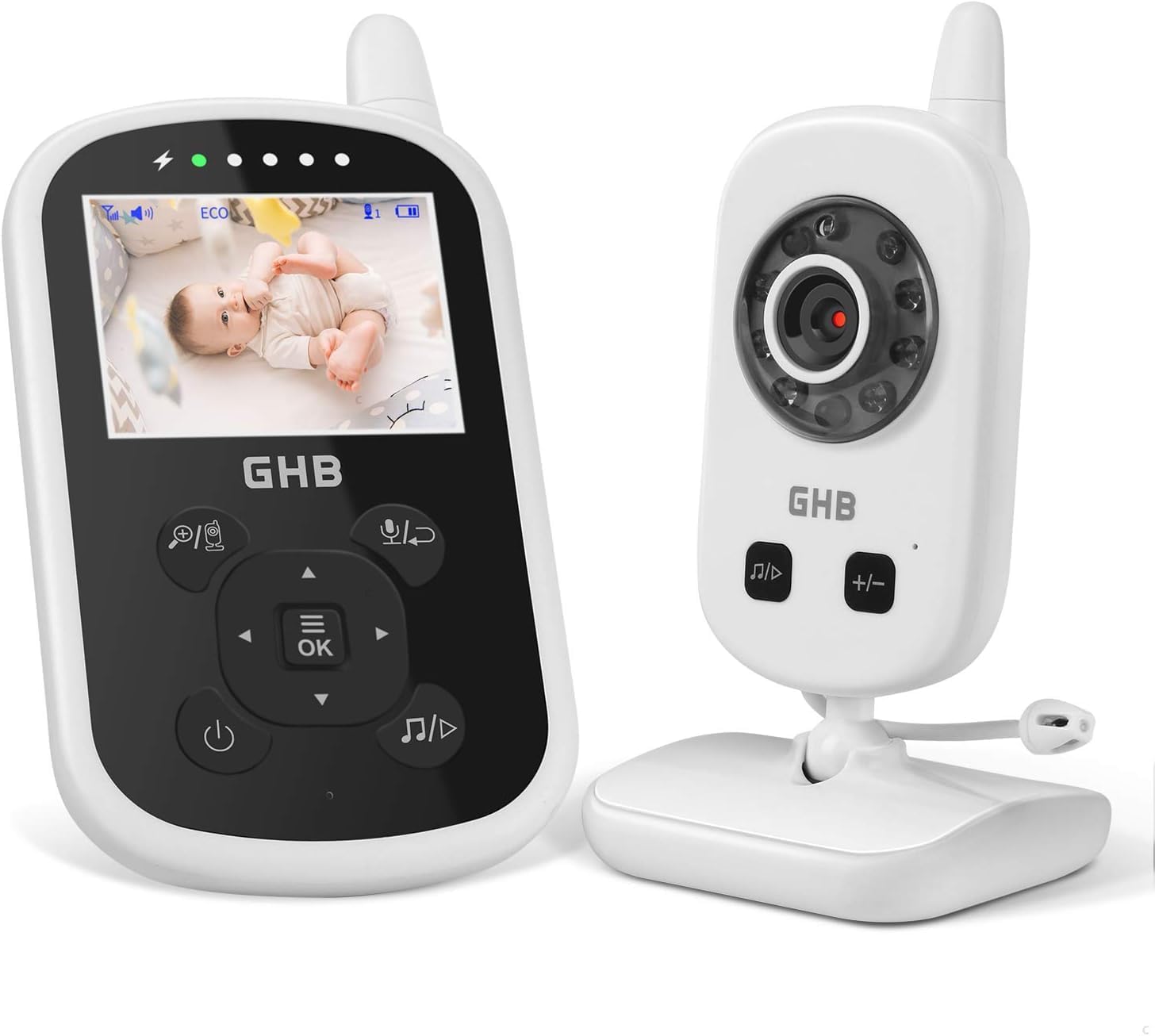
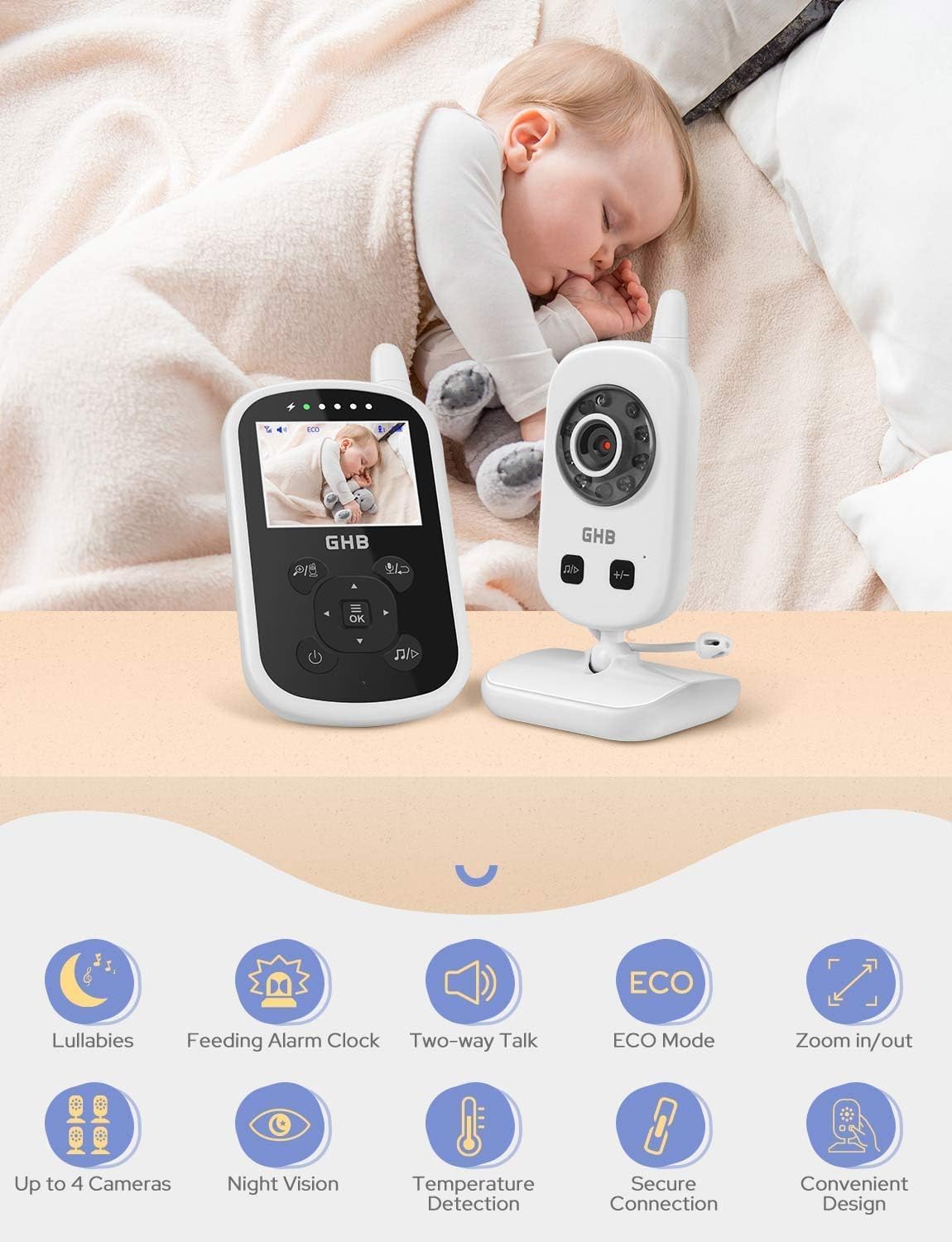
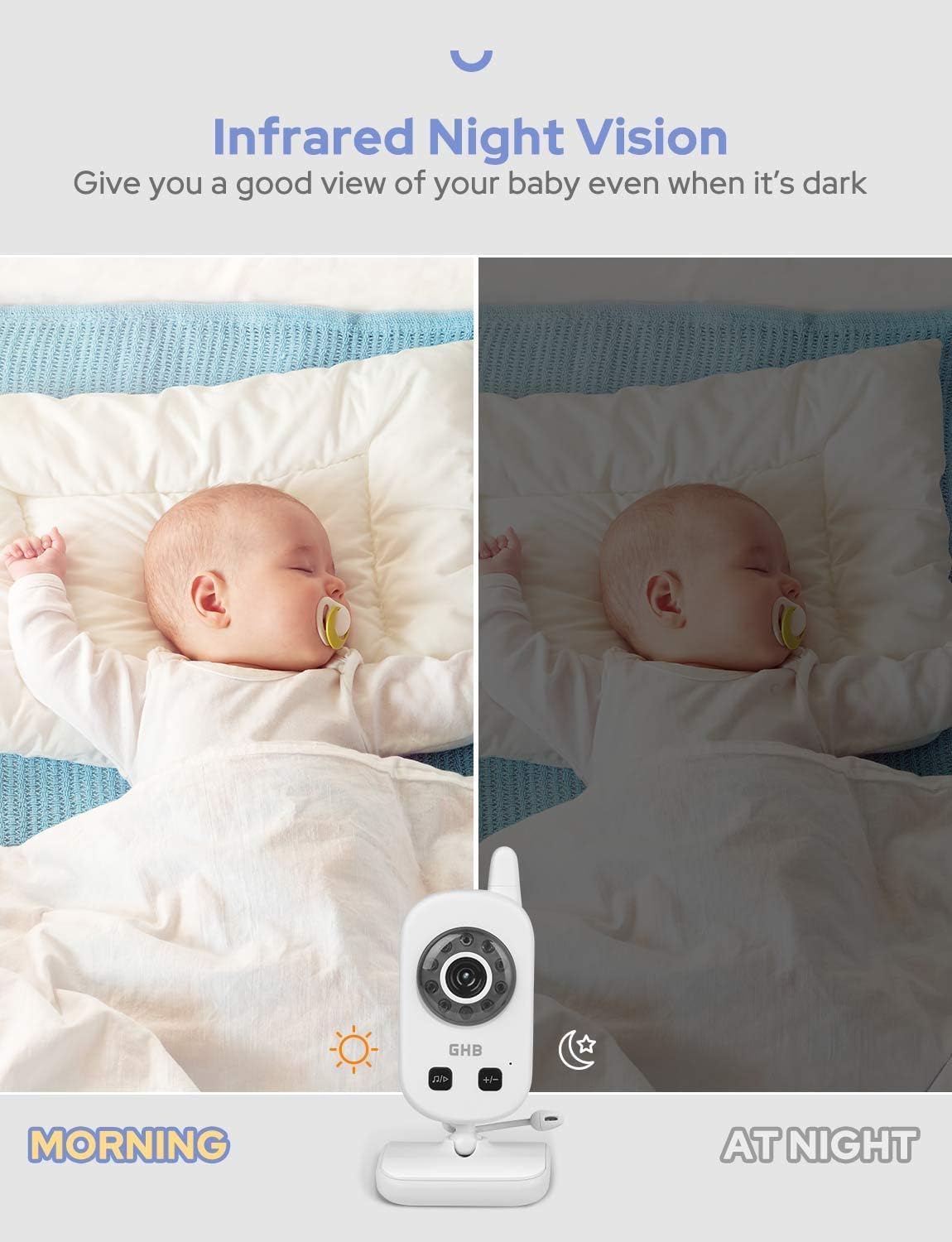
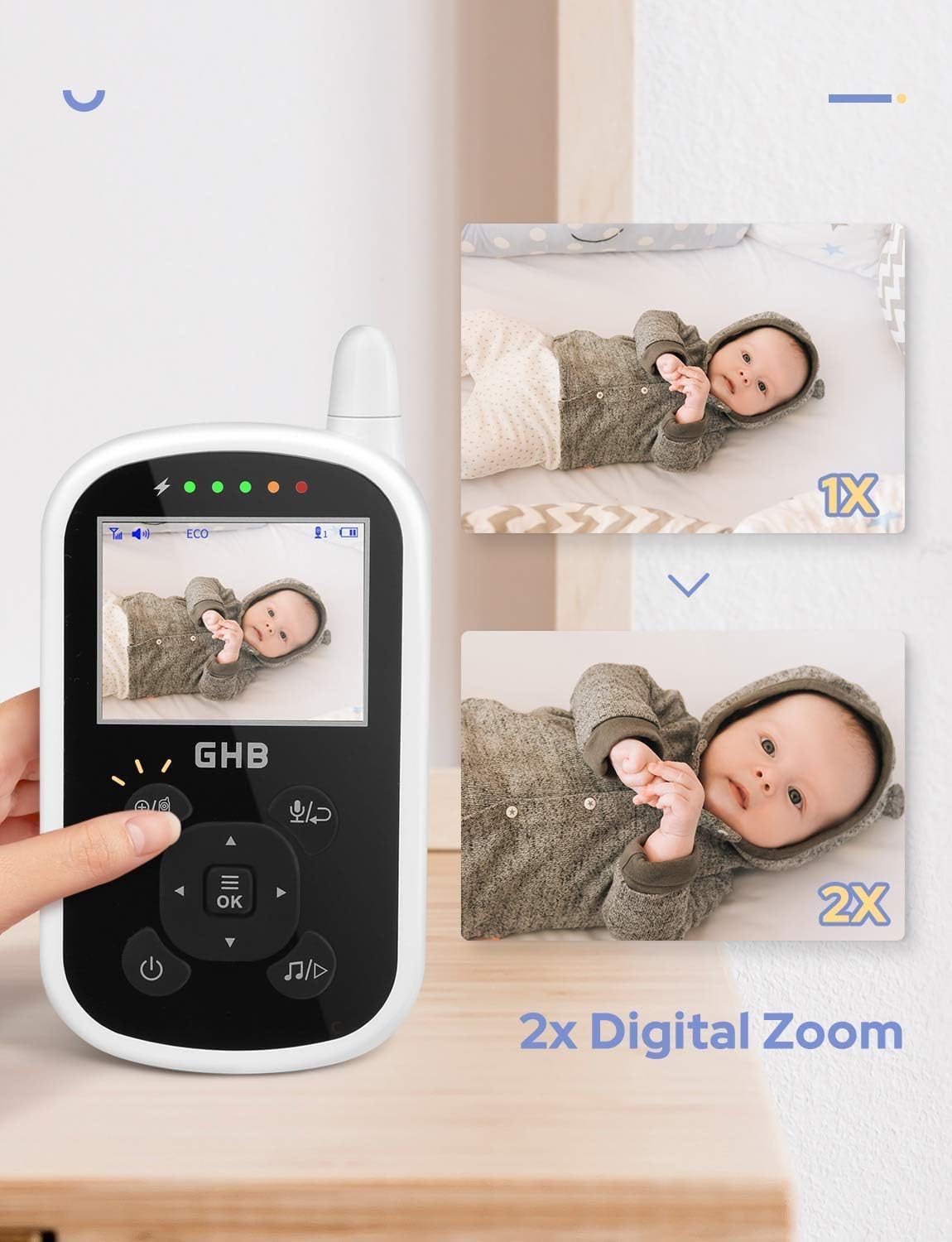
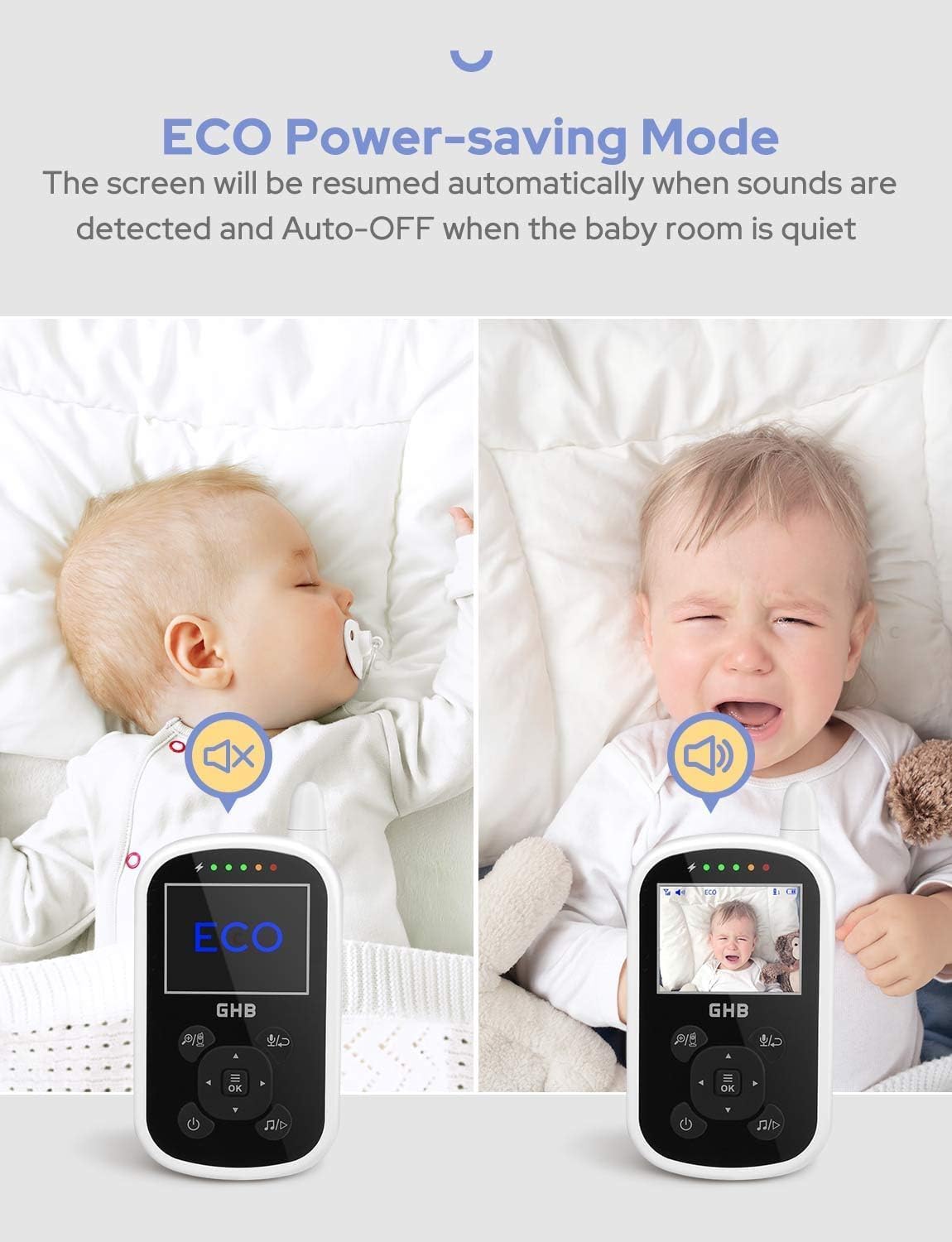
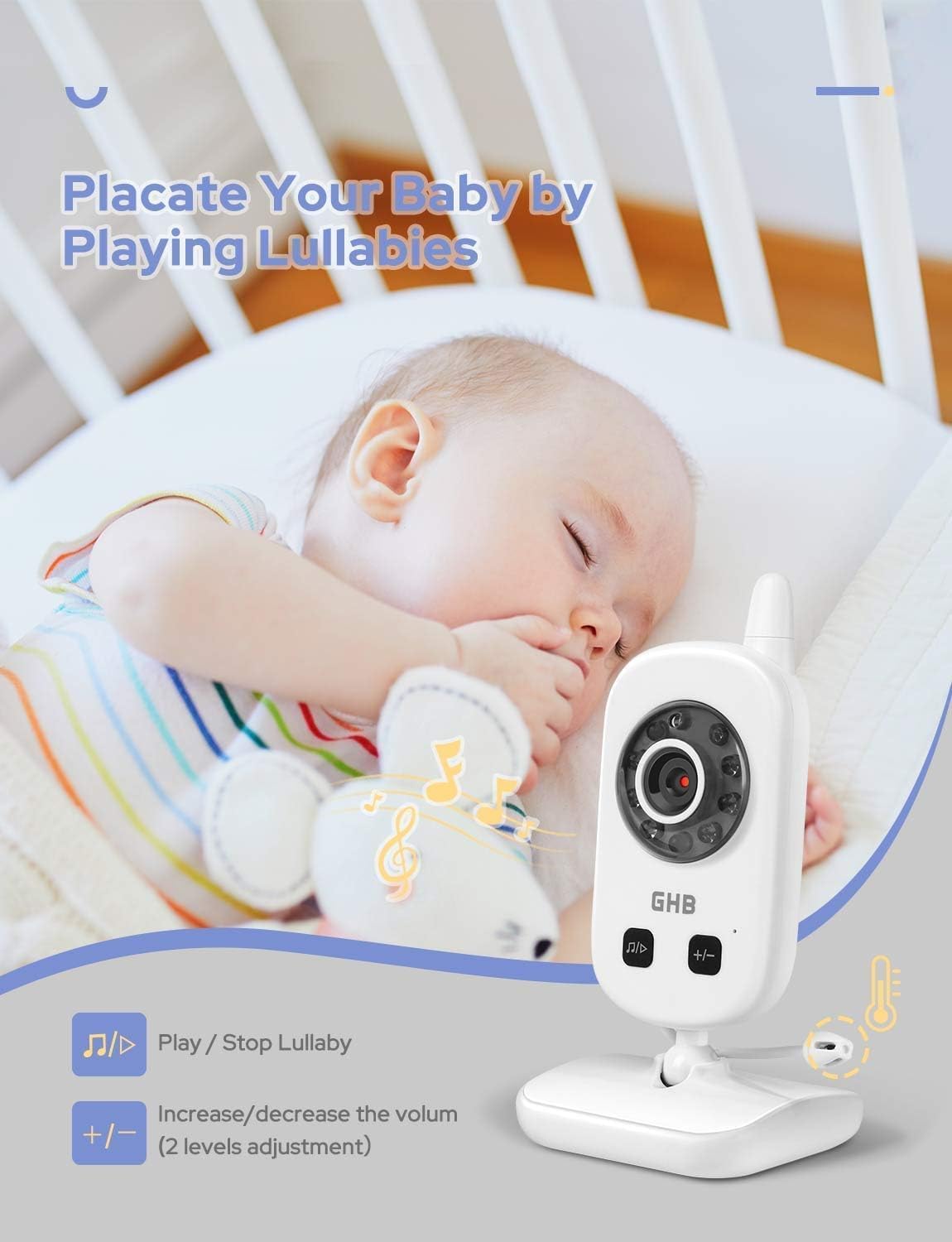
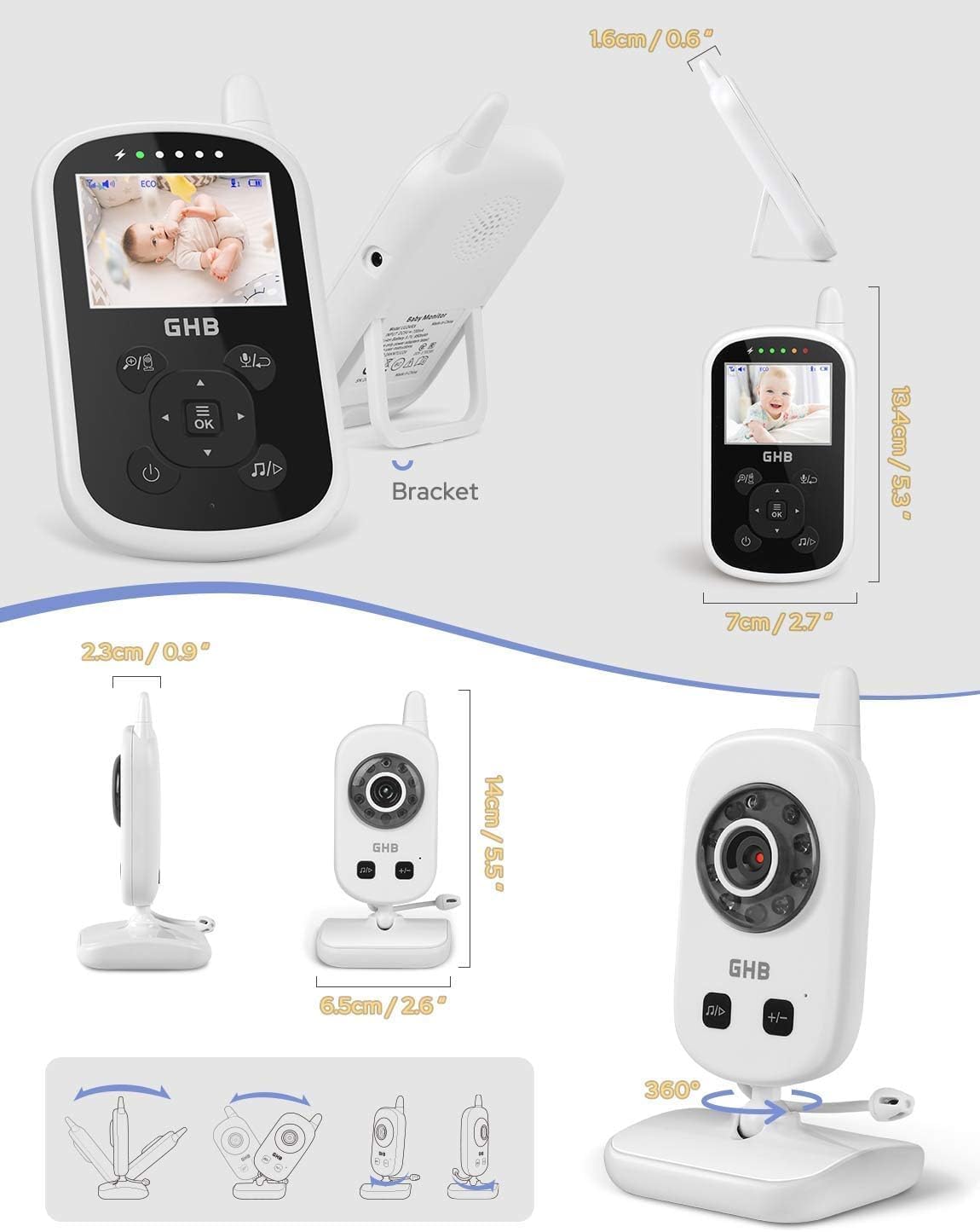
What it is and what it’s for\nA compact baby monitor designed to give you a private, room-wide view without relying on Wi‑Fi. The GHB model pairs a 2.4‑inch parent unit with a camera that offers infrared night vision and temperature monitoring, plus practical reminders for feeding. If you want a straightforward setup for keeping an eye on baby and staying in control of the nursery routine, this monitor aims to deliver the essentials with a focus on privacy and ease of use.\n\n## How it works on the ground\nPrepare the camera and parent unit in a quiet room, connect via 2.4 GHz FHSS to minimise interference and avoid external access. There’s no app or cloud dependency, which reduces hacking concerns but means you’ll be keeping everything local to your home. The camera streams to the 2.4‑inch screen on the parent unit, and when quiet moments turn into fussiness, you can speak back through the 2‑way talk feature or help soothe with the built‑in lullabies. The integrated temperature sensor helps you gauge whether the room is comfortable for sleep, which is useful for planning bedtime routines.\n\n## What stands out in use\nThe infrared night vision lets you check in the dark without turning on lights, which can disturb sleep. The option to activate ECO Power Save mode is practical for overnight or longer stretches when you want to stretch battery life. In ECO mode, the display sleeps and only wakes when the camera detects noise, reducing disruption during the night. The 4–5 hours of continuous use from the parent unit’s battery is modest, but, with the camera plugged in, it can be economical during daytime monitoring. For extended use, plan on recharging the parent unit between sessions.\n\n## Strengths and limitations\nOn the positive side, the private, non‑Wi‑Fi connection reduces privacy concerns and the setup is straightforward, making it a sensible option for households that prefer not to rely on internet connectivity. The night vision and temperature alerts add practical context to baby monitoring, and the lullaby feature can offer a gentle fallback to soothe a frustrated infant without entering the nursery. However, the trade‑offs include a relatively small display and a battery life that is tied to a plugged‑in camera. If you need a monitor that fully operates off battery for long periods or offers a larger screen, this model may feel limited.\n\n## Who it’s for\nIf you prioritise privacy, a simple, no‑app setup and immediate access to baby status from a dedicated screen, this monitor fits well. It suits first‑time parents who want a calm, fuss‑free introduction to home monitoring, or homes where a non‑Wi‑Fi system is preferred. It may suit households that don’t need constant, cloud‑based access or advanced features and are happy with basic alerts, talkback, and lullabies.\n\n## Who it isn’t for\nIf you expect multi‑room monitoring, extensive range, or a large, feature‑rich interface, this model might feel underpowered. It isn’t designed to operate as a connected, app‑driven system, so users who want remote access away from home will need a different solution. It also isn’t a long‑haul baby monitor for families who want the unit to run longer on battery without plugging in the camera.\n\n## What you should check before buying\nConsider whether your nursery layout requires a stronger signal or a wider range than the FHSS 2.4 GHz setup can provide. Confirm you’re comfortable with the parent unit’s screen size and battery life, and decide if the ECO mode aligns with your night‑time rhythm. If you value a fridge‑quiet night operation, this model’s night vision and noise‑triggered wakefulness may help reduce disturbance.\n\n## Practical usage example\nDuring an evening feed, you can watch the baby’s activity on the 2.4‑inch screen, talk softly to reassure them, then switch on a gentle lullaby if they’re fussy but still waking. When the room gets chilly, you’ll notice the temperature alert and can adjust the duvet or room environment accordingly. In ECO mode, the unit’s display sleeps yet promptly wakes if baby stirs or cries, so you’re rarely out of the loop.\n\n## FAQ\n- Does it require a Wi‑Fi network or an app? No, it uses a private 2.4 GHz connection with no app required.\n- How long does the parent unit battery last? About 4–5 hours of continuous use, ECO mode can extend the screen life to about 12 hours by turning off the display until noise is detected.\n- Can you play lullabies without waking the baby? Yes, you can use the built‑in lullabies through the 2‑way talk option to soothe from a distance.\n\n## Is it worth it?\nWorth considering if you want a private, straightforward monitoring solution that avoids Wi‑Fi exposure and offers practical features for night‑time care. If your needs include long, battery‑free operation or more advanced smart alerts, you may want to explore other options.\n