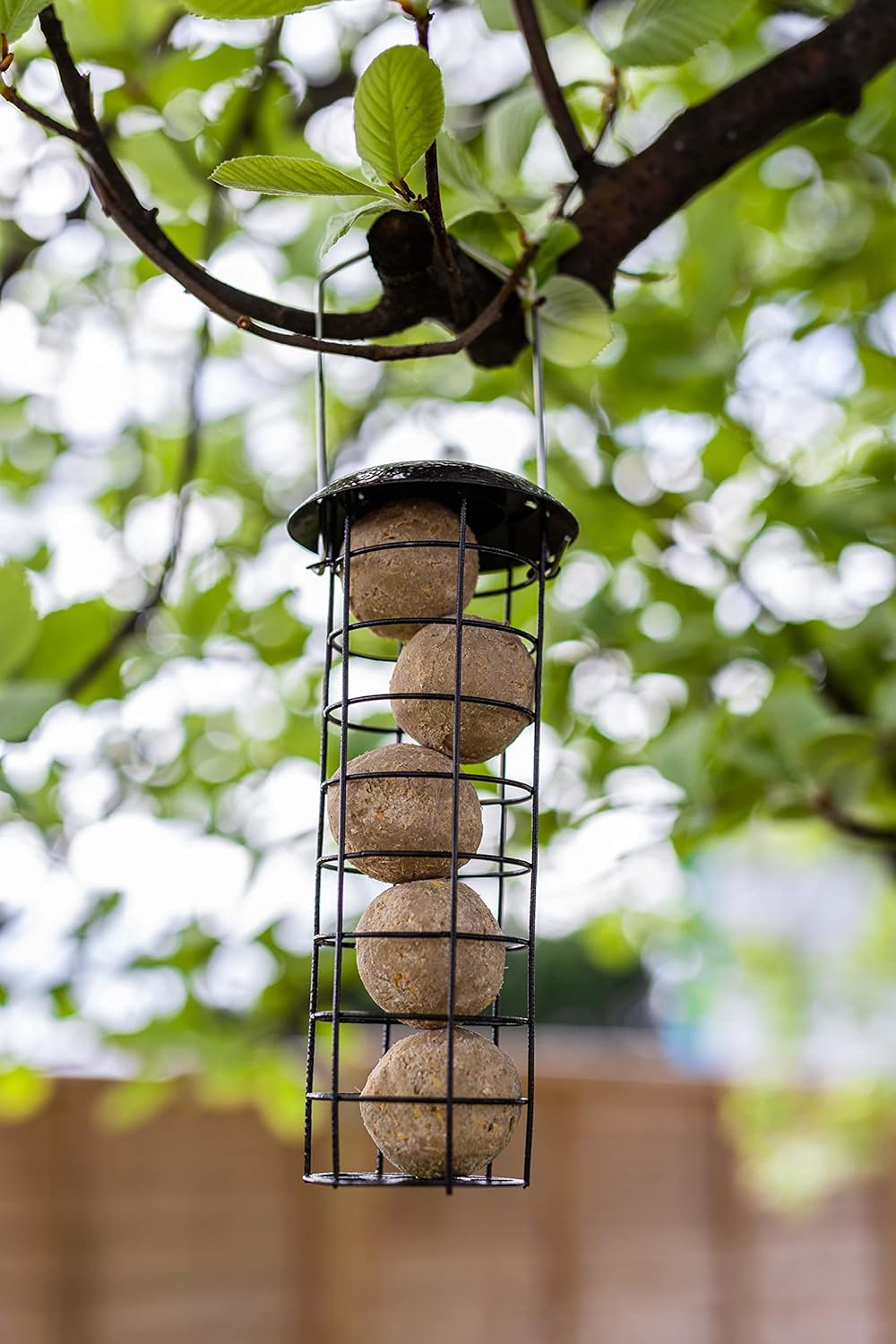
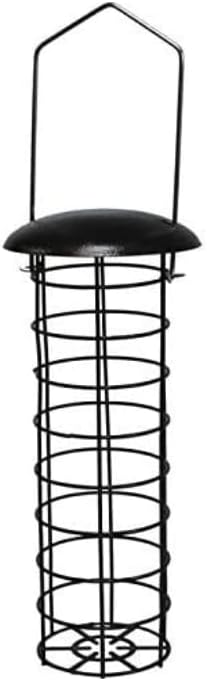
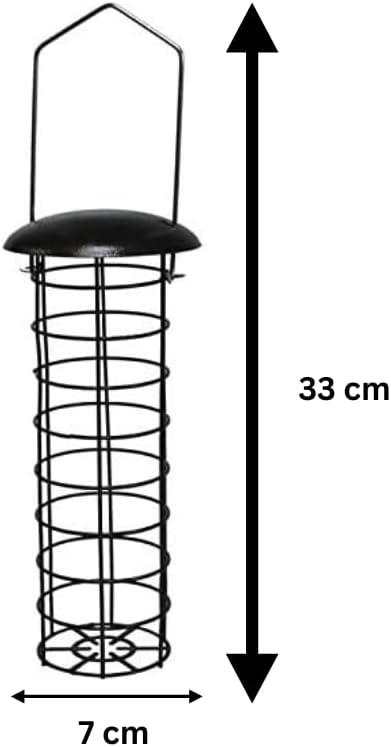
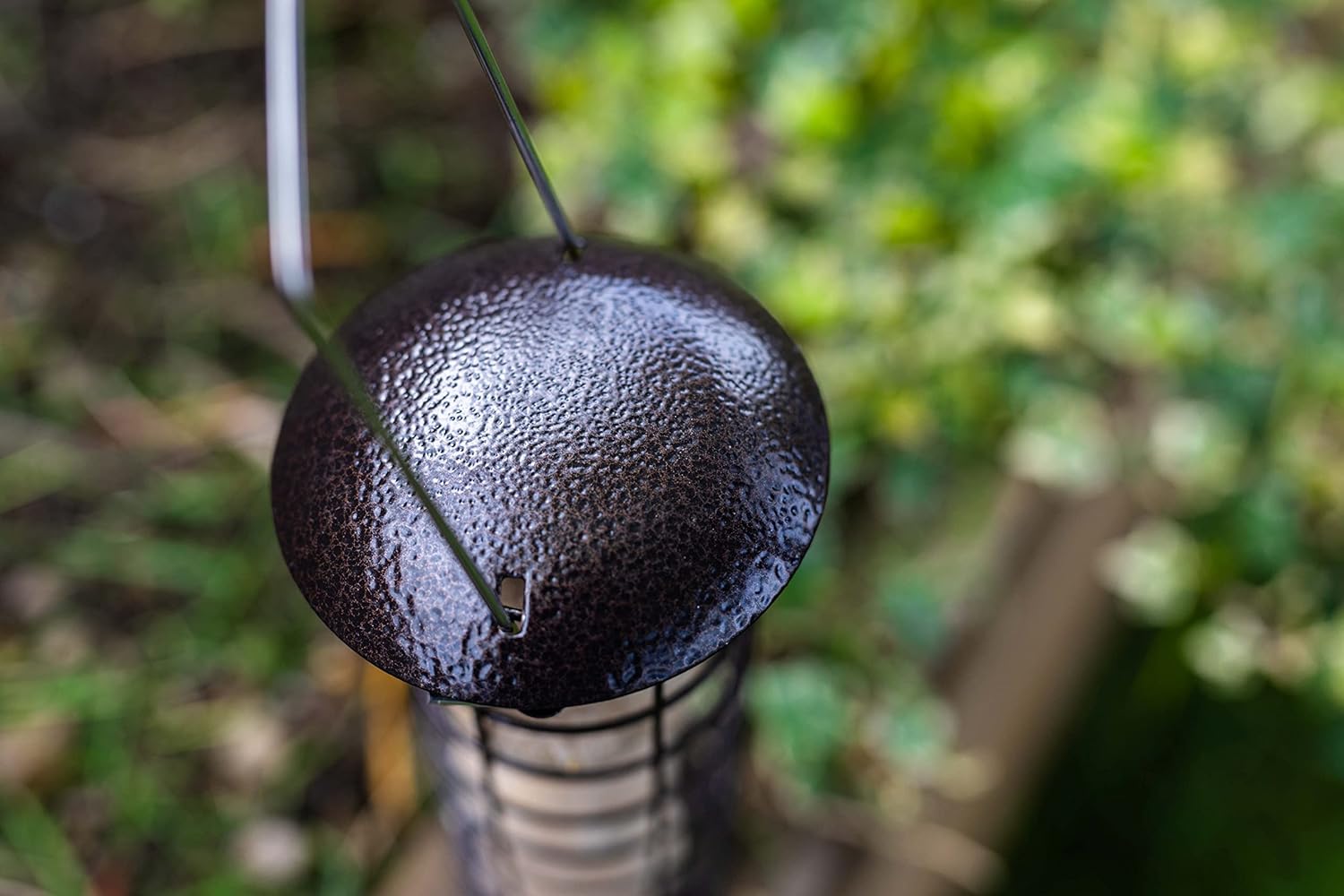
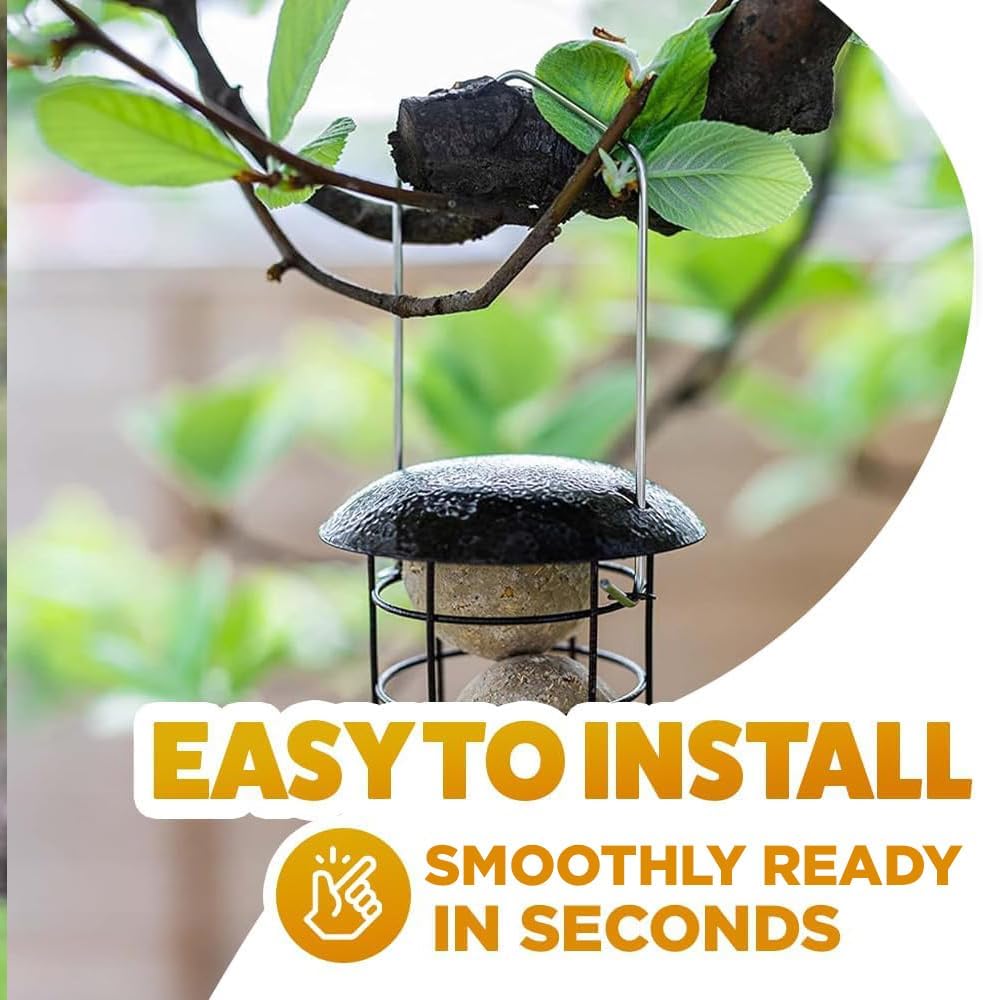
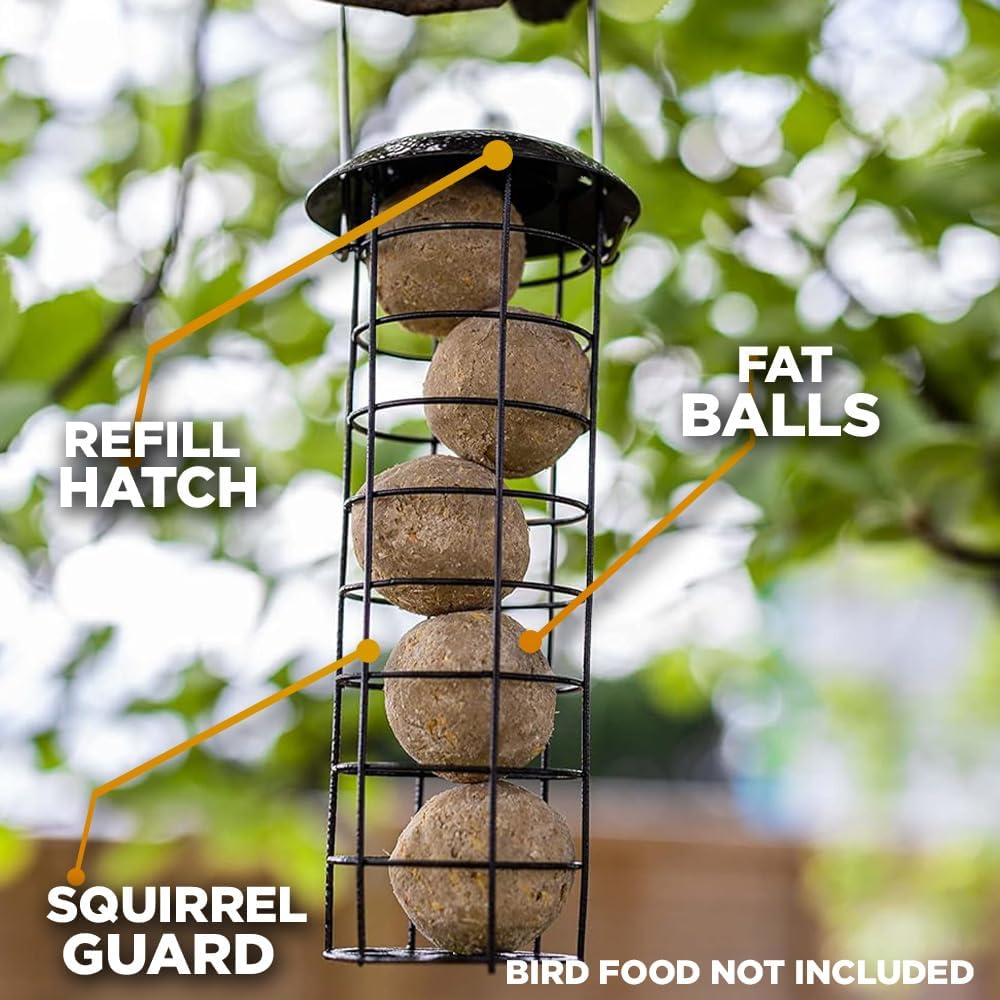
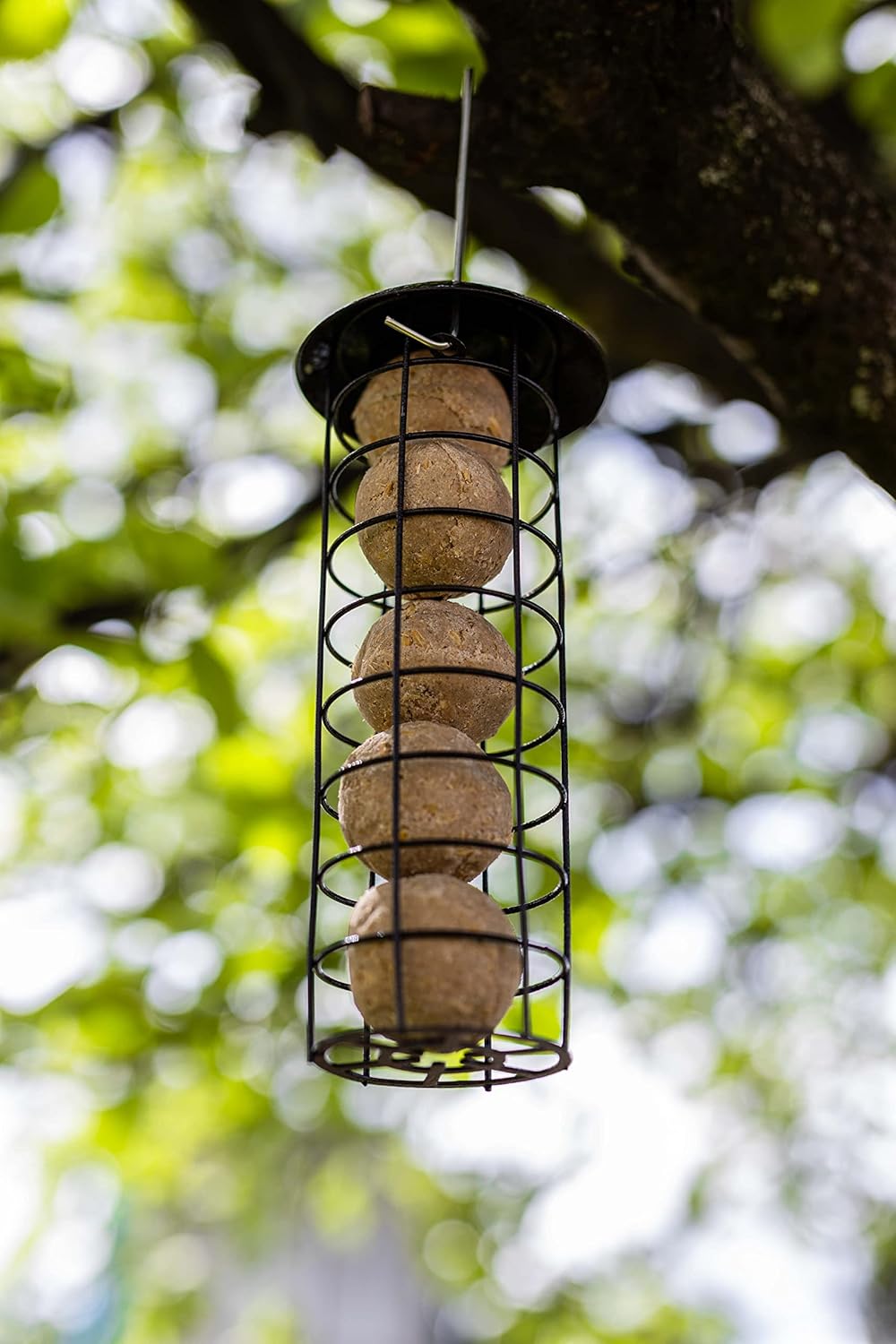
What this is and what it does\nThe Garden Mile Fat Ball Bird Feeder is a durable, metal hanging feeder designed to hold fat balls for wild birds. With dimensions around 33cm x 7cm, it’s built for outdoor use in gardens, patios or front yards and aims to attract small species such as robins, tits and finches all year round. The feeder is powder-coated iron, weather-resistant and rustproof, meaning it’s meant for year‑round garden use without frequent replacements. It includes an electroplated hanging pole for simple setup and can be suspended from a shepherd’s hook, tree branch or a feeding station without requiring tools.\n\n## Who it’s for\nIf you enjoy birdwatching and want a straightforward way to offer fatty treats to small birds, this feeder is aimed at gardeners who value a long‑lasting, low‑maintenance solution. It’s particularly suited to those who want an uncomplicated hanging feeder that you can refill and clean easily.\n\n## How it performs in practice\nOn the surface, the design focuses on practicality: metal construction for durability, a fat ball format that suits small birds, and straightforward hanging with no tools needed. The weatherproof build suggests resilience against typical UK weather, but as with all metal feeders, it’s reasonable to expect some maintenance to prevent buildup or rust in harsher climates. The product is described as suitable for year‑round use, yet the actual performance can depend on local bird activity and the size/type of fat balls used.\n\n## What stands out\n- Heavy‑duty metal construction and powder coating for durability.\n- Weatherproof and low maintenance, designed for outdoor use.\n- Specifically made for fat balls and small birds, not a universal bird feeder.\n- Easy to hang with an electroplated pole, no tools required.\n\n## What may not persuade everyone\nIf you’re after a larger capacity feeder or a model that accommodates different seed types, this design may feel modest in comparison. It’s tailored to fat balls for small species, so it’s less flexible for households wanting to feed a broader range of birds.\n\n## When it makes sense to buy\nChoose this feeder if you prioritise a dedicated fat ball feeder for small birds, value durability, and want a straightforward, maintenance‑light setup for outdoor use. It’s a sensible option for long‑term garden decor and a steady stream of small birds in suitable climates.\n\n## When you might skip it\nIf your aim is to feed a wider variety of birds or you expect very high feeding activity, you might prefer a larger capacity or a feeder with multiple ports. If you want a more decorative piece instead of a utilitarian feeder, this metal design is functional but not ornamental.\n\n## Care and maintenance tips\nRegularly check the hanging point for wear and indoor after harsh weather. Clean to remove seed residue and prevent mould. Refill with fresh fat balls as needed, taking care not to overfill and to keep the feeding area tidy for birds.\n\n## Practical example of use\nHang this feeder from a garden tree branch near a seating area, the fat balls attract small birds, and you can enjoy their visits while keeping maintenance straightforward. It’s compact enough to fit in smaller gardens yet exposed enough to catch the attention of passing robins and bluetits.\n\n## FAQ (illustrative, based on available data)\n- Q: Is it suitable for year‑round use? A: Yes, it’s described as weatherproof and designed for year‑round outdoor use, though local conditions may affect maintenance needs.\n- Q: How is it hung? A: It includes an electroplated hanging pole for easy attachment, you can hang it from a shepherd’s hook, tree branch or feeding station without tools.\n- Q: What birds will it attract? A: It’s targeted at small species like robins, tits and finches.\n\n## Final verdict\nIs it worth it? Worth considering if you want a purpose‑built fat ball feeder that prioritises durability and simple, tool‑free setup for a small‑bird feeding station. It may not be the best choice if you need high capacity or broader feeding options, but for a reliable, low‑maintenance option for small garden birds, it delivers on its core idea.\n