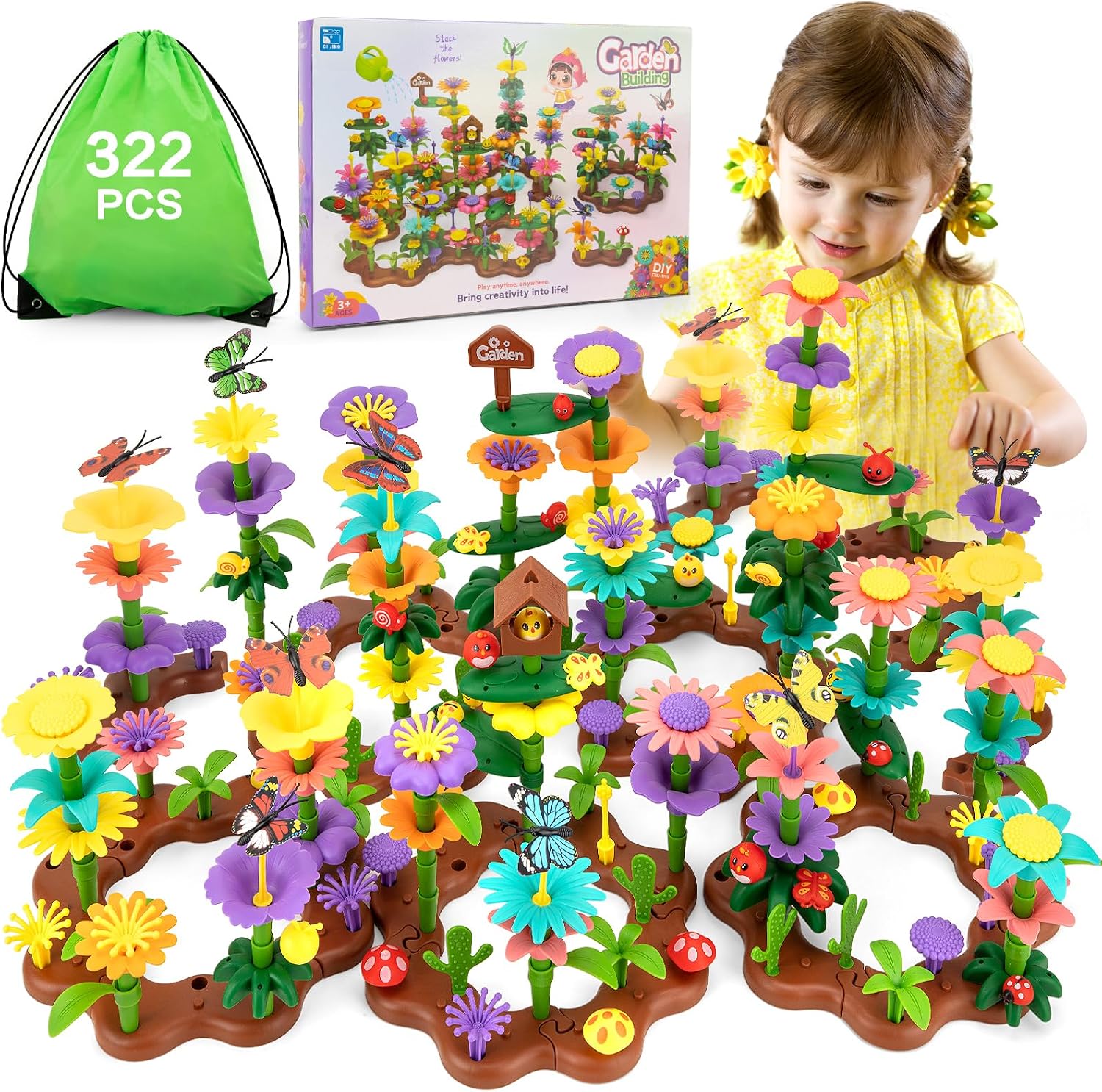
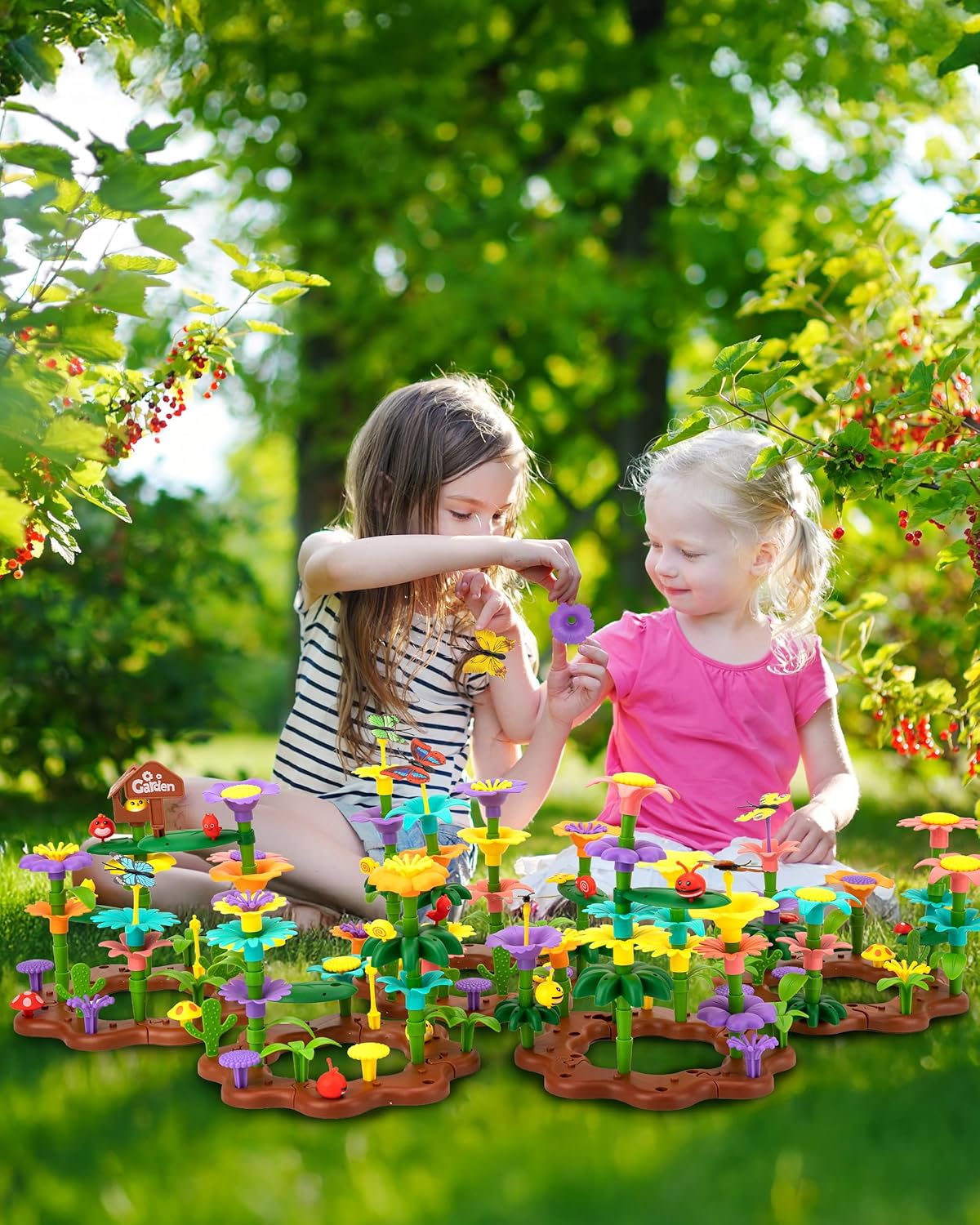
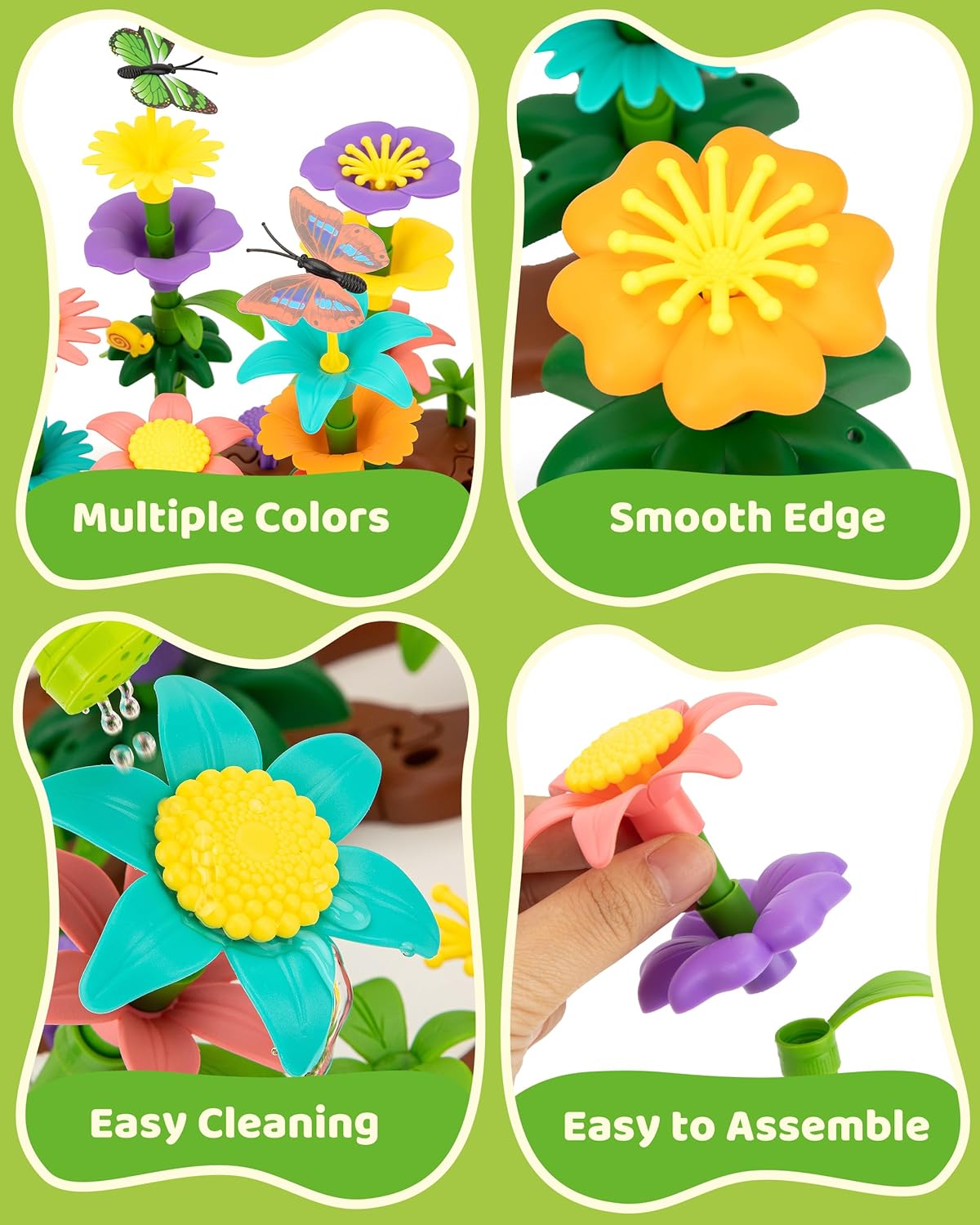
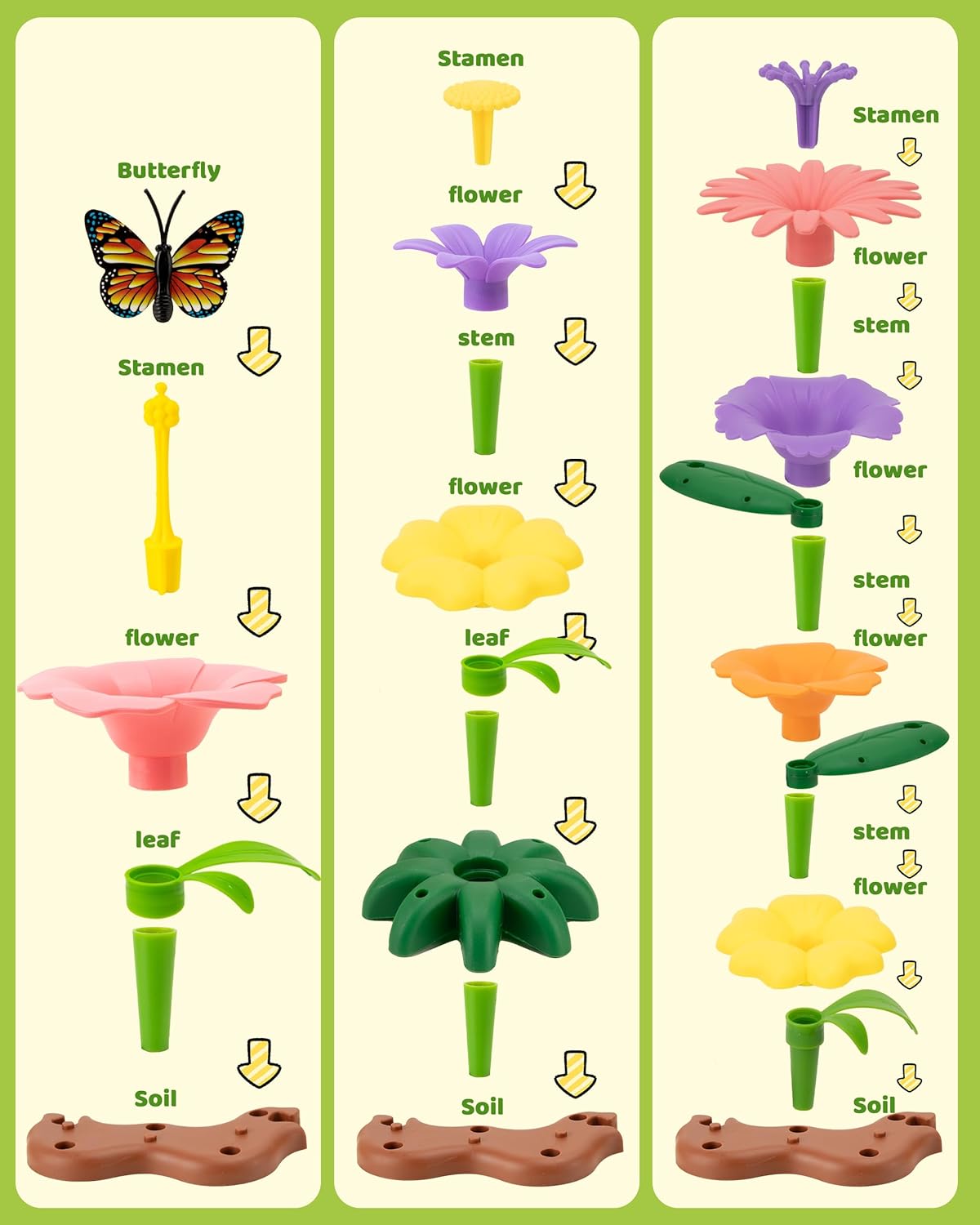
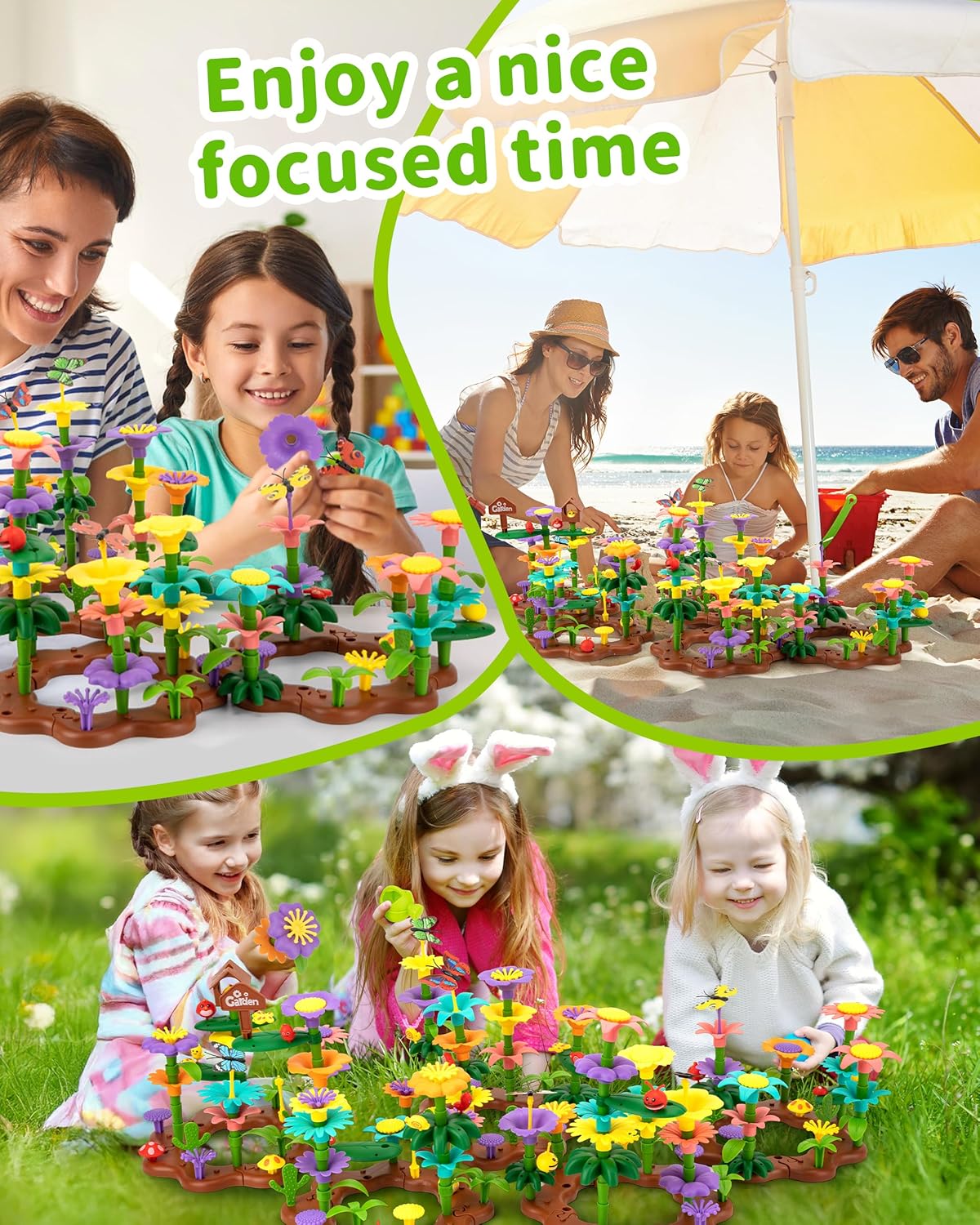
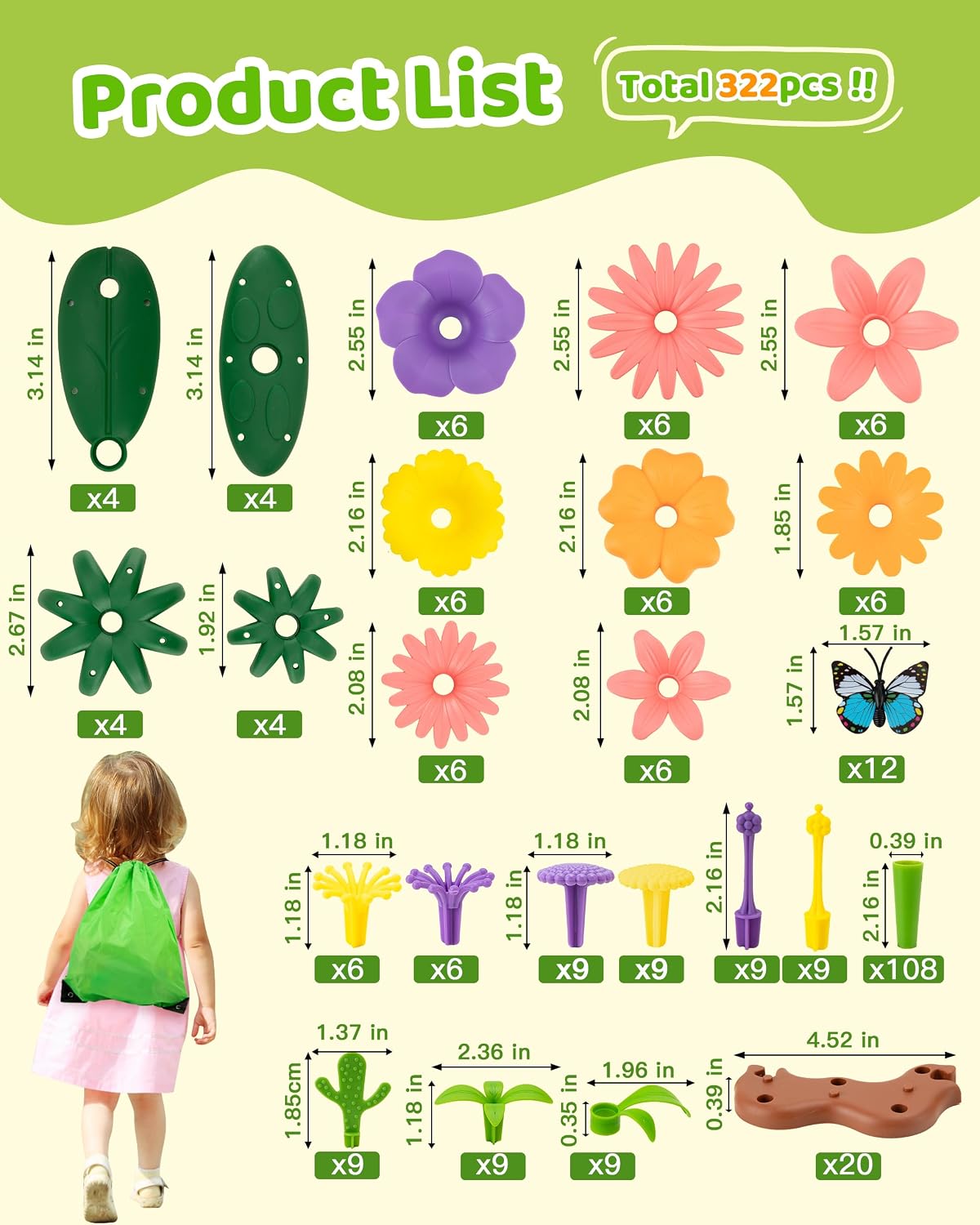
What it is and what it helps with\n\nAt a glance, this is a 322-piece building toy set designed around interlocking flowers, leaves, stems, and garden accessories. It’s pitched towards imaginative play and early STEM learning for children roughly from 3 to 6 years old. The idea isn’t just to assemble pretty blooms, it’s to encourage colour and shape recognition, boost creativity, and foster basic problem-solving through hands-on construction. On the table, the parts invite children to experiment with arrangements, swap components, and realise that design is a process that can be revisited and redesigned.\n\nIf your child enjoys tiny worlds and craft-like play, this kit aligns with that impulse while introducing subtle educational aims—without needing screens to entertain. The promise is that kids build hundreds of different flower layouts, which makes every session feel fresh and gives a tangible sense of progress, even with simple pieces.\n\n## What’s included and how it’s organised\nThe set contains flowers, stamens, stems, leaves, butterflies, bases, a variety of tools and a storage bag. All parts are interchangeable, which supports a wide range of designs rather than a single model. The storage bag adds a practical touch, making it easier to carry outdoor sessions or tidily store parts between playtimes. The design emphasises safety: edges are rounded and smooth, grips are sized for small hands, and grooves help keep pieces from slipping apart during play.\n\n## How it fits into DIY and learning play\nFor parents and carers, the kit offers a digestible entry into plant anatomy and growth concepts. Children can explore what different plant parts do—stems to support growth, leaves for photosynthesis in imagination, and petals and stamens for colour and detail—while developing fine motor skills through placement and assembly. The kit also supports a broader education approach (often labelled STEM) by combining artful creativity with basic engineering and planning.\n\n## What stands out when you use it\nOn the positive side, the interchangeable nature of the pieces unlocks numerous layouts, so play remains engaging rather than repetitive. The materials are described as high-quality and harmless, which provides reassurance for everyday use and easy cleaning after outdoor play. The empty potential of “hundreds of possible flower arrangements” is appealing if you value open-ended play rather than a fixed model.\n\n## Where it may fall short or what to watch for\nIt may not suit households looking for a single, highly detailed mini garden model with advanced mechanics. For some kids, the novelty of endless combinations could feel overwhelming at first, so initial guidance or a shared building session can help. If you prioritise a compact, perfectly themed display piece over a broad creative playground, this kit could feel less satisfying.\n\n## Who it’s for and when it makes sense to buy\nThis kit is well suited for children who enjoy hands-on construction, patterning activities, and role-play within a garden or nature theme. It can be a good value gift for birthdays or holidays, particularly if you want a nurturing, screen-free activity that can be enjoyed alone or with someone else. It also aligns with parents seeking a beginner-friendly STEM introduction that blends artistic design with theoretical ideas about plants.\n\n## Practical checks before purchasing\nConsider the space available for play and storage. While the bag is handy for portability, a dedicated play area helps keep parts from getting lost during busy days. Check whether the child is comfortable with assembling and separating small pieces, as some youngsters prefer simpler, more guided activities at first.\n\n## A practical example in use\nPicture a rainy afternoon: a small table, a tray of pieces, and a kid who loves turning a flat pile of bits into a blooming garden. They try a few arrangements, compare what looks best, and then recreate a scene in their mind—this is where a simple toy set becomes a vehicle for storytelling and spatial thinking.\n\n## Quick comparison and buying stance\nIf you’re choosing between this and a fixed-model garden set, you’ll gain versatility with the Funsland kit. It’s more about flexible play and learning through making than about building a single, polished model. If you prefer a straightforward, non-changeable display piece for a shelf, a more traditional set might be less open-ended.\n\n## FAQ (practical answers based on available information)\n- Do the pieces come apart easily for reshaping? Yes, the interchangeable parts are designed for frequent assembly and reconfiguration.\n- Is it suitable for outdoor use? The kit includes a storage bag, which supports outdoor play, and the pieces are washable if soiled.\n- What age is it best for? Targeted at 3–6 years, with ongoing possibilities as the child grows in confidence and skill.\n\n## Final buying decision\n### Is it worth it?\nWorth considering if you prioritise open-ended creative building and a gentle STEM introduction that can grow with a child. It is less about a single completed model and more about ongoing play possibilities and developing fine motor and cognitive skills through design.\n