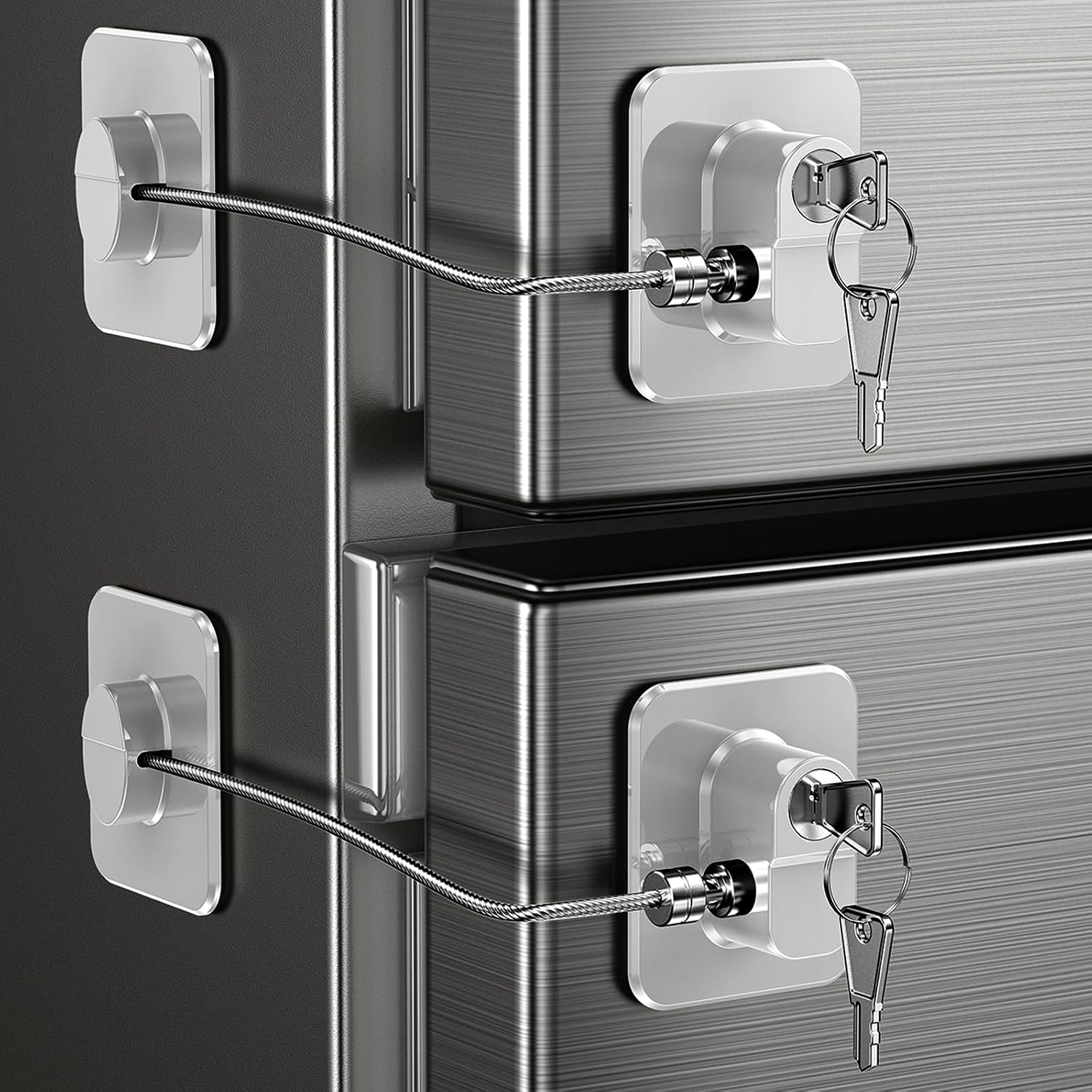
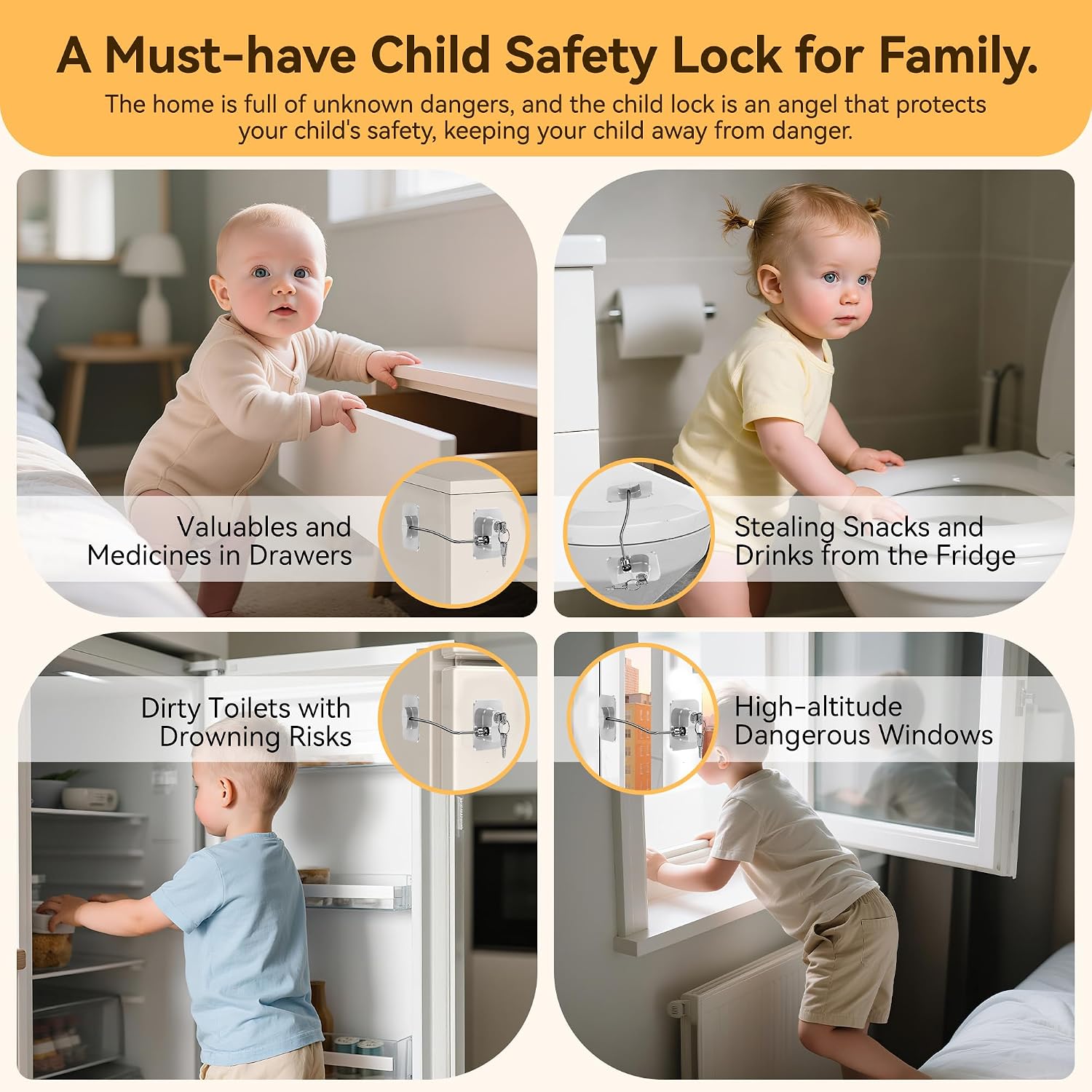
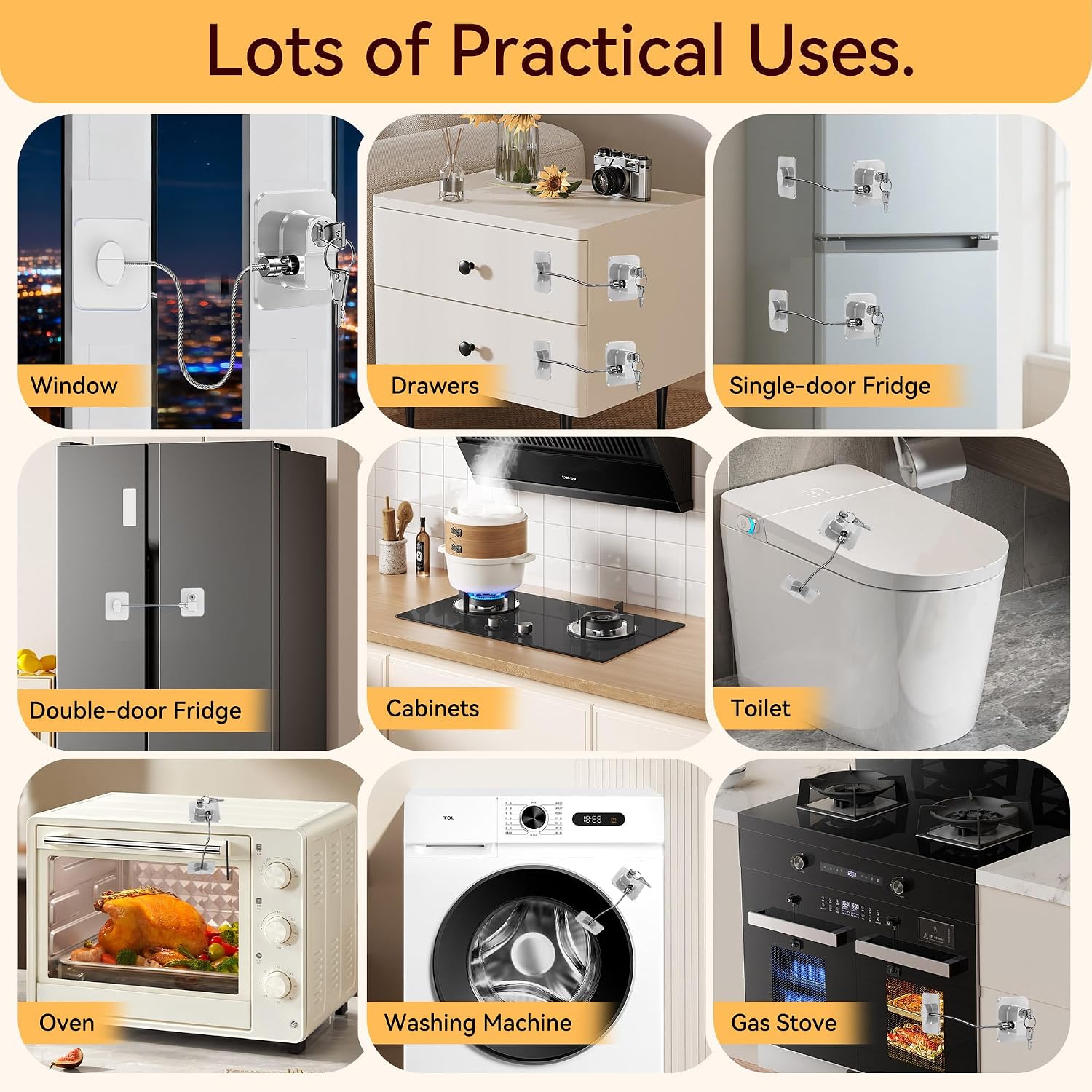
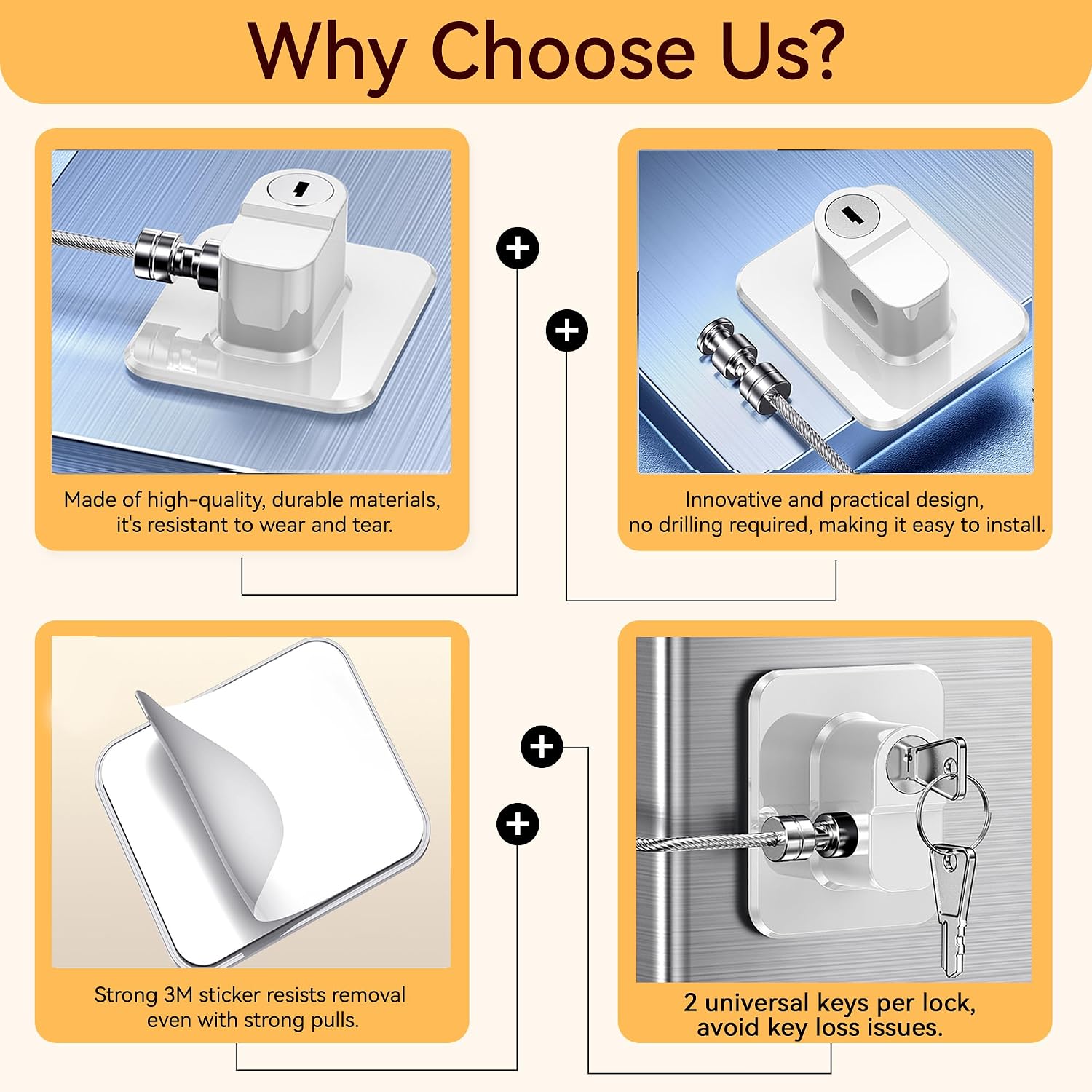
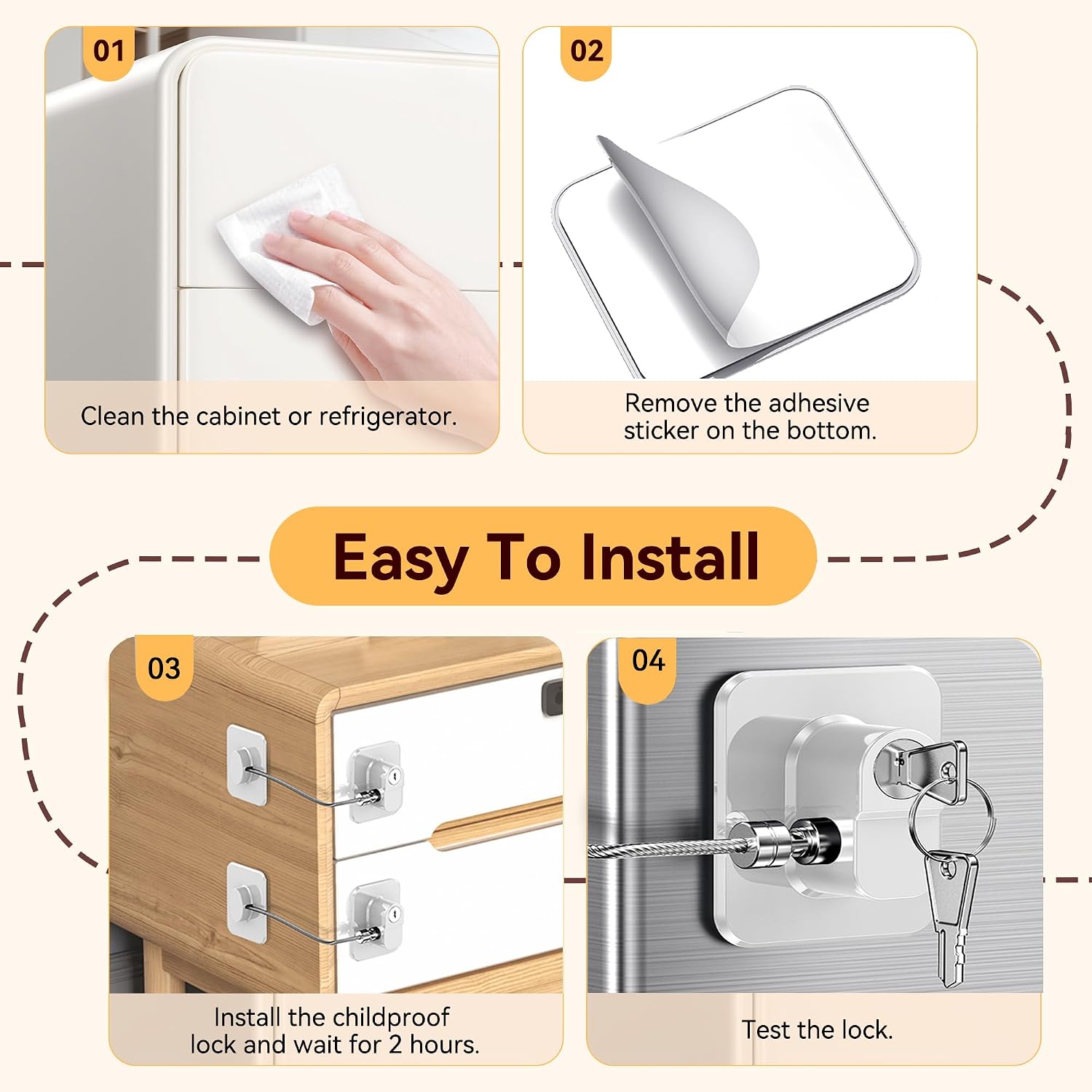
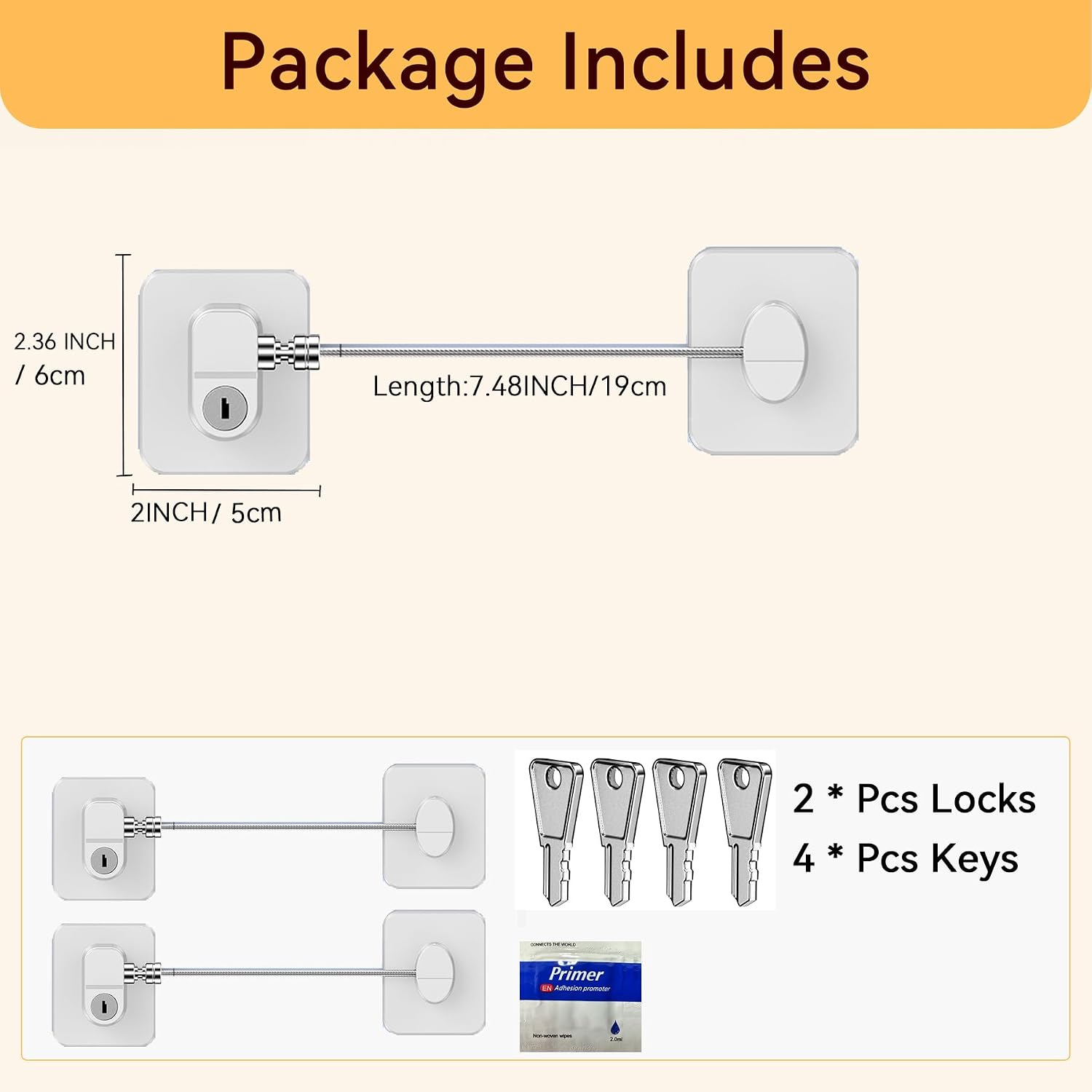
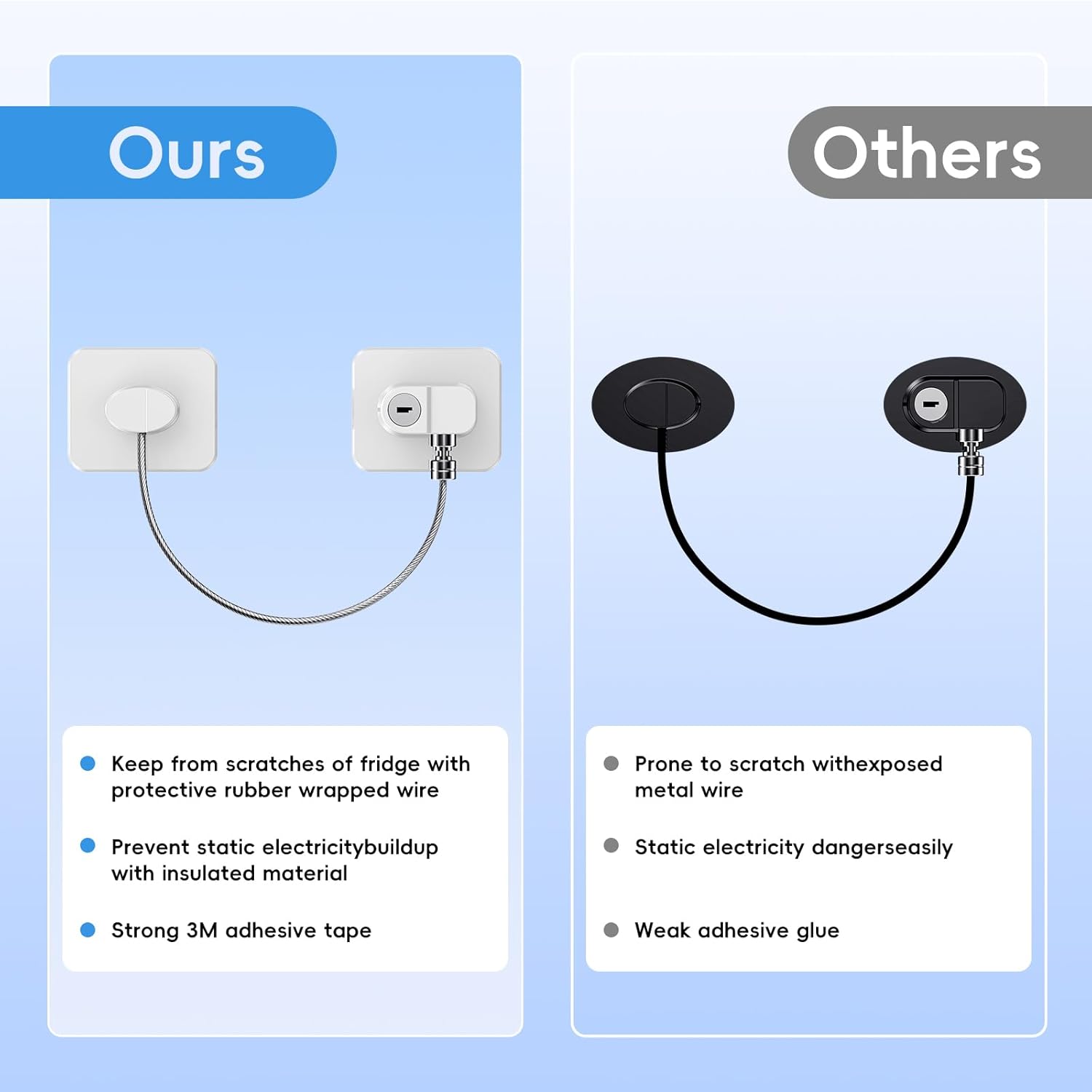
What it is and what problem it solves\nThis is a pair of self-adhesive fridge locks designed to keep little ones from opening the fridge, potentially pinching fingers or reaching forbidden foods. The product ships as 2 locks plus 2 keys, aiming to provide a practical, no-drill solution for babyproofing kitchens. On paper, it addresses common parental safety concerns by creating a quick barrier for doors and drawers where little hands might explore.\n\n## How it works and installation\nNo tools are required. The locks rely on an adhesive backing that you peel and stick to a clean surface. The strong tape is intended to avoid surface damage, and the set includes two keys to unlock when needed. It’s advised to clean and dry the surface before applying for best adhesion. The design is compact, so it won’t radically alter the appearance of standard fridges or cabinets.\n\n## What stands out and where it may fall short\nWhat users tend to value is the ease of setup and the ability to use the same mechanism across multiple areas—fridges, cabinets, ovens, drawers and even windows in some setups. On the downside, adhesive solutions can be less robust on curved or heavily textured surfaces, and over time adhesion may degrade with heat exposure or frequent movement. If you’re renting or anticipate repositioning, you might need new adhesive later.\n\n## Who it’s for\nIdeal for households with babies or toddlers who are curious about the kitchen, and for families wanting a simple, non-permanent deterrent to unsupervised access. It also covers situations where parents want to prevent children from accidentally locking themselves inside a fridge. It’s less suitable for very irregular surfaces where the adhesive won’t hold well.\n\n## When it makes sense to buy\nIf you prioritise quick installation, portability across rooms or furniture, and a straightforward two-key system, this set can provide peace of mind without structural changes. It’s a pragmatic option for someone seeking a budget-friendly, temporary childproofing measure rather than a heavy-duty security system.\n\n## When to skip it\nIf you require a highly durable, long-term solution or have surfaces where adhesive is unreliable, this may not deliver the longevity you need. If your kitchen features unusual door edges or heavy use where locks experience frequent movement, consider alternatives with more robust mounting.\n\n## What to check before purchasing\nEnsure your fridge and cabinets have smooth, clean surfaces suitable for adhesive application. Confirm you’re comfortable with a temporary, adhesive-based solution and that you understand how to use the key mechanism for quick access when required.\n\n## Practical usage example\nImagine a busy morning: you grab a kid-friendly snack from the fridge, your toddler’s hands are curious but the doors stay shut until you unlock with the included keys. The locks offer a simple, non-intrusive barrier while you supervise.\n\n## Is it worth it?\nWorth considering if you want a lightweight, non-permanent safety measure that’s easy to move between furniture and use without tools. It may not be the best choice if you need long-term or heavy‑duty protection or if the surfaces aren’t ideal for adhesive installation.\n\n## FAQ\n- Do these locks damage surfaces? They’re designed to be non-permanent and should not damage surfaces when removed, but always test on an inconspicuous area first.\n- Can they be used on windows? They’re described as adaptable to multiple surfaces, but availability depends on the surface’s smoothness and temperature.\n- How many keys are included? The set includes 2 keys for easy access.\n- Are they suitable for metal or glass cabinets? Adhesive pads are intended for smooth surfaces, effectiveness may vary with material.\n- Do they prevent a child from pinching fingers? They are designed to reduce access and help avoid finger pinching by limiting door movement.