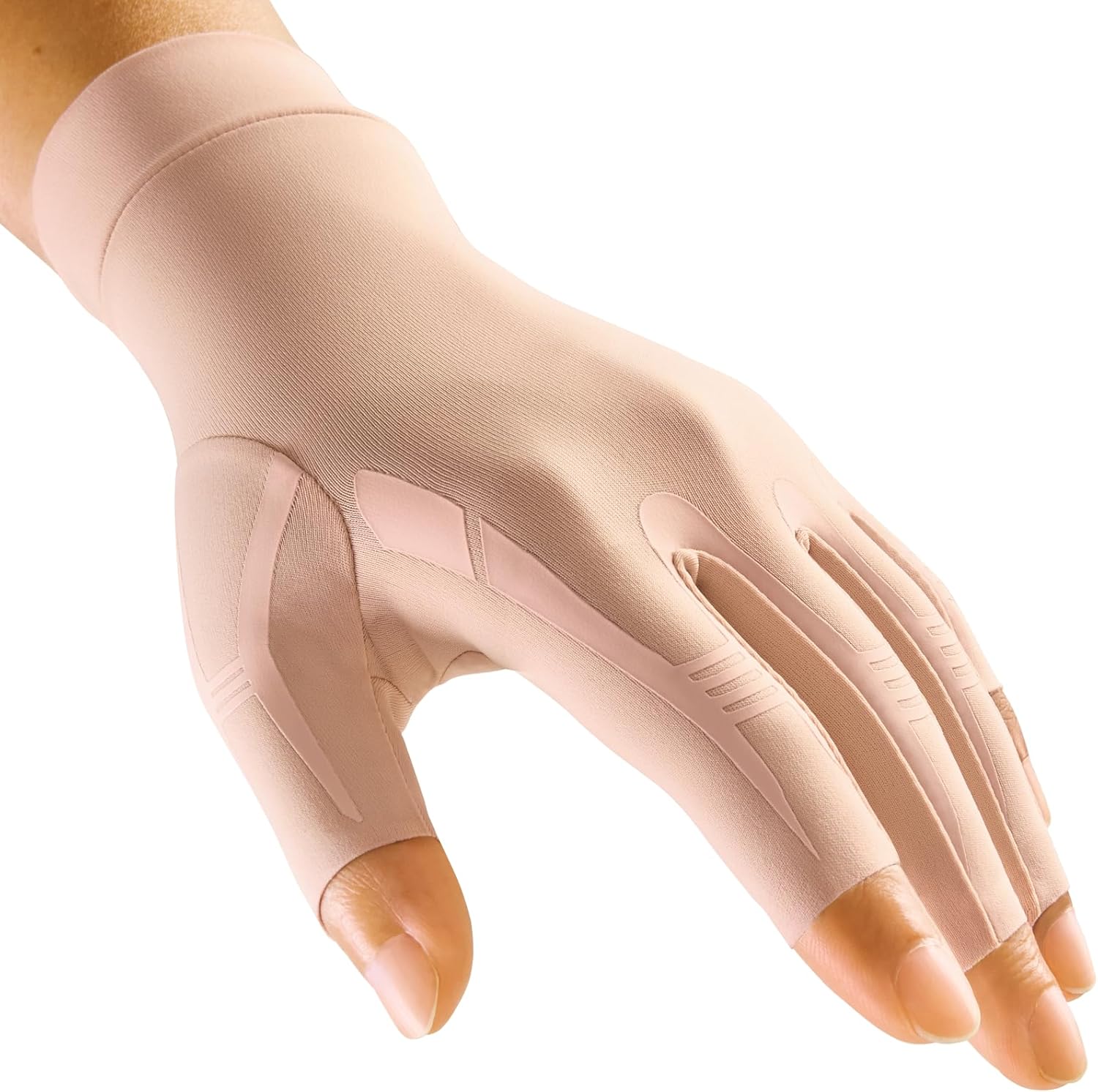
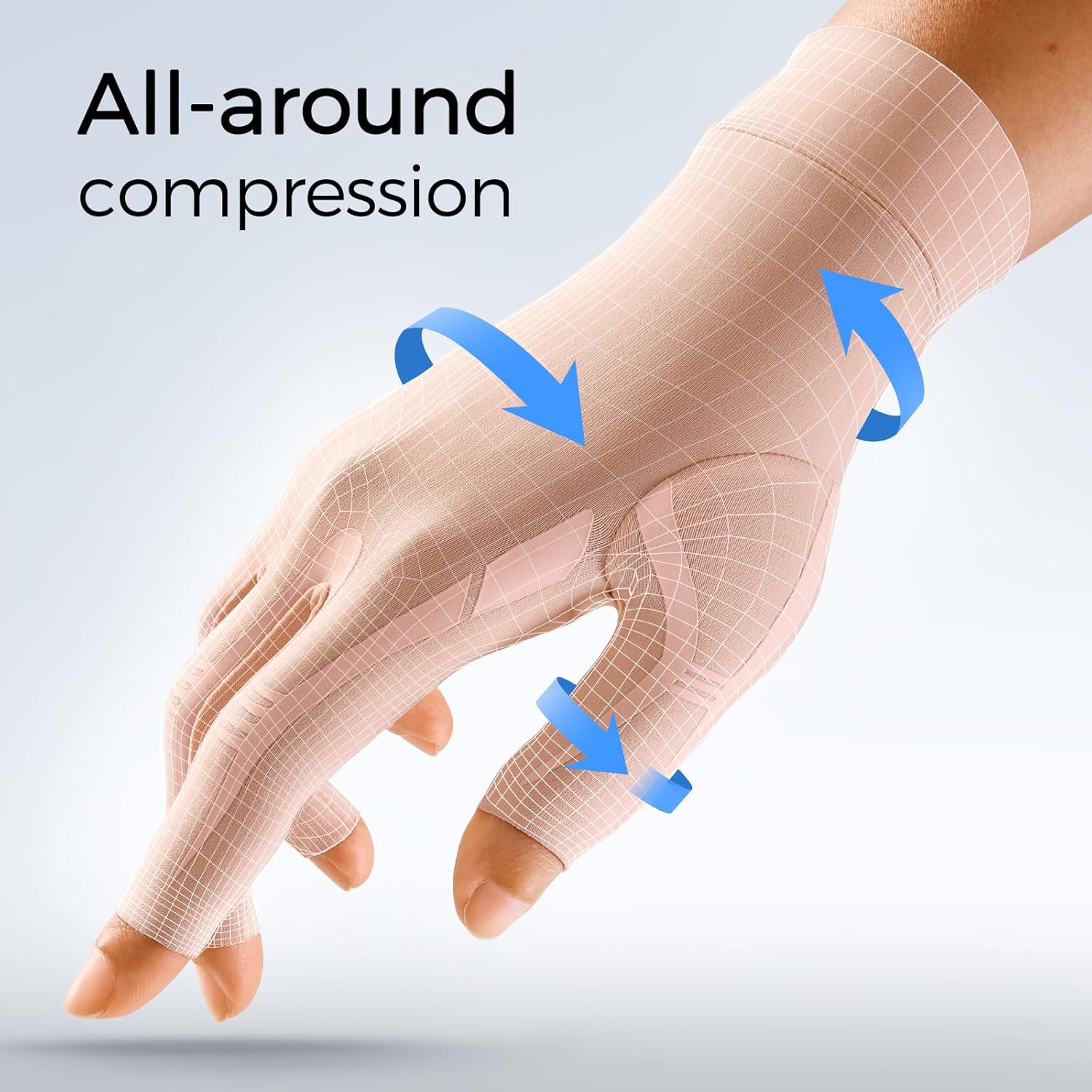
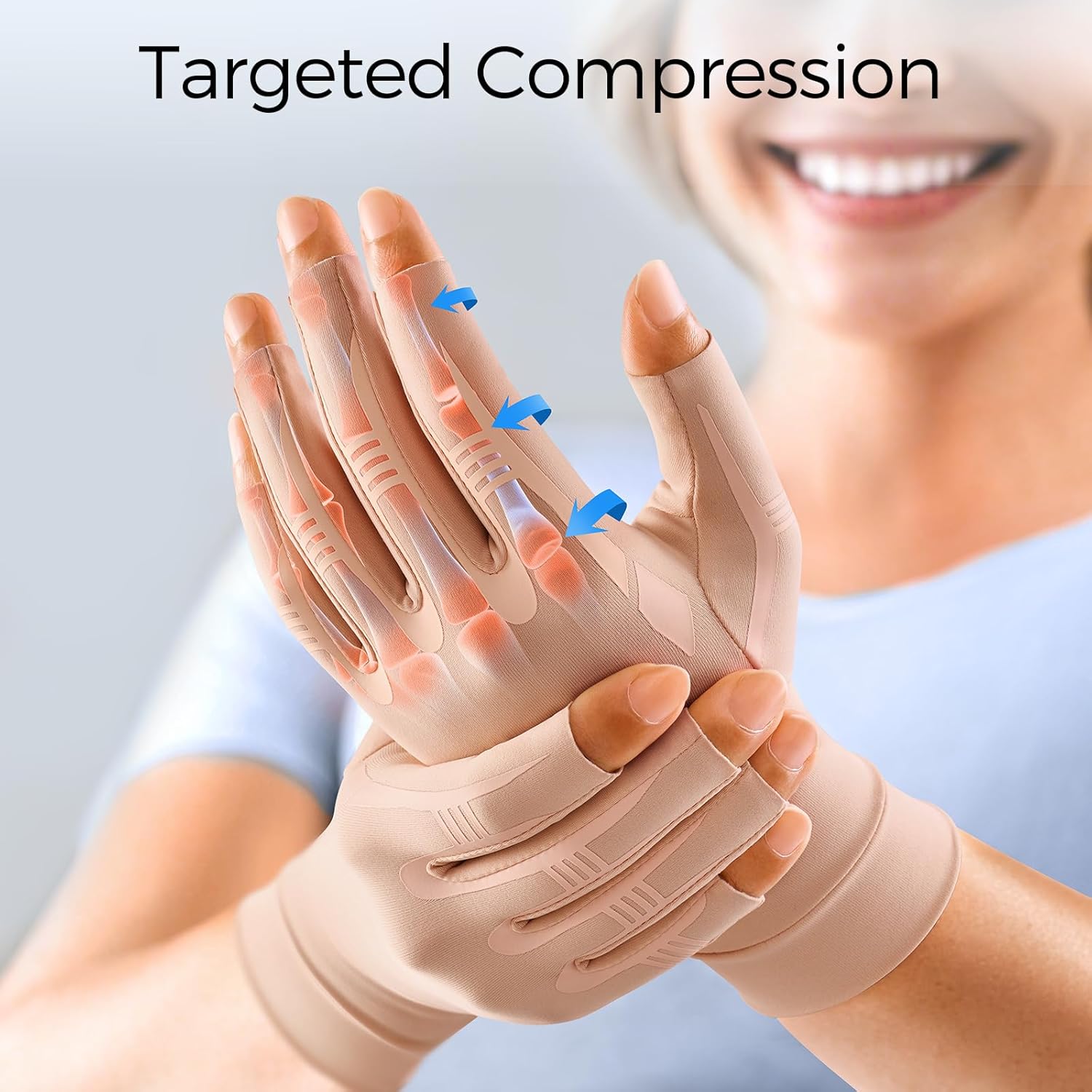
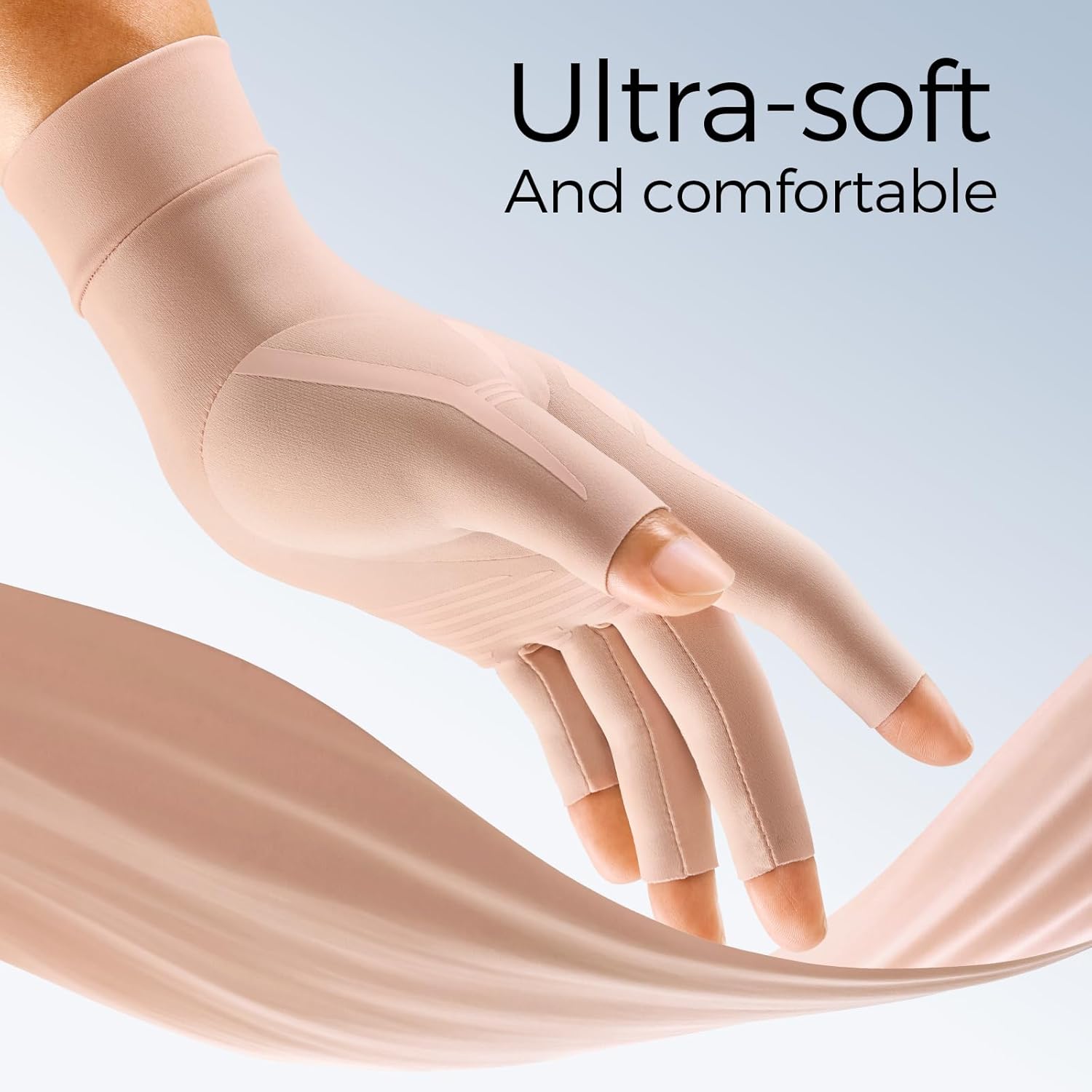
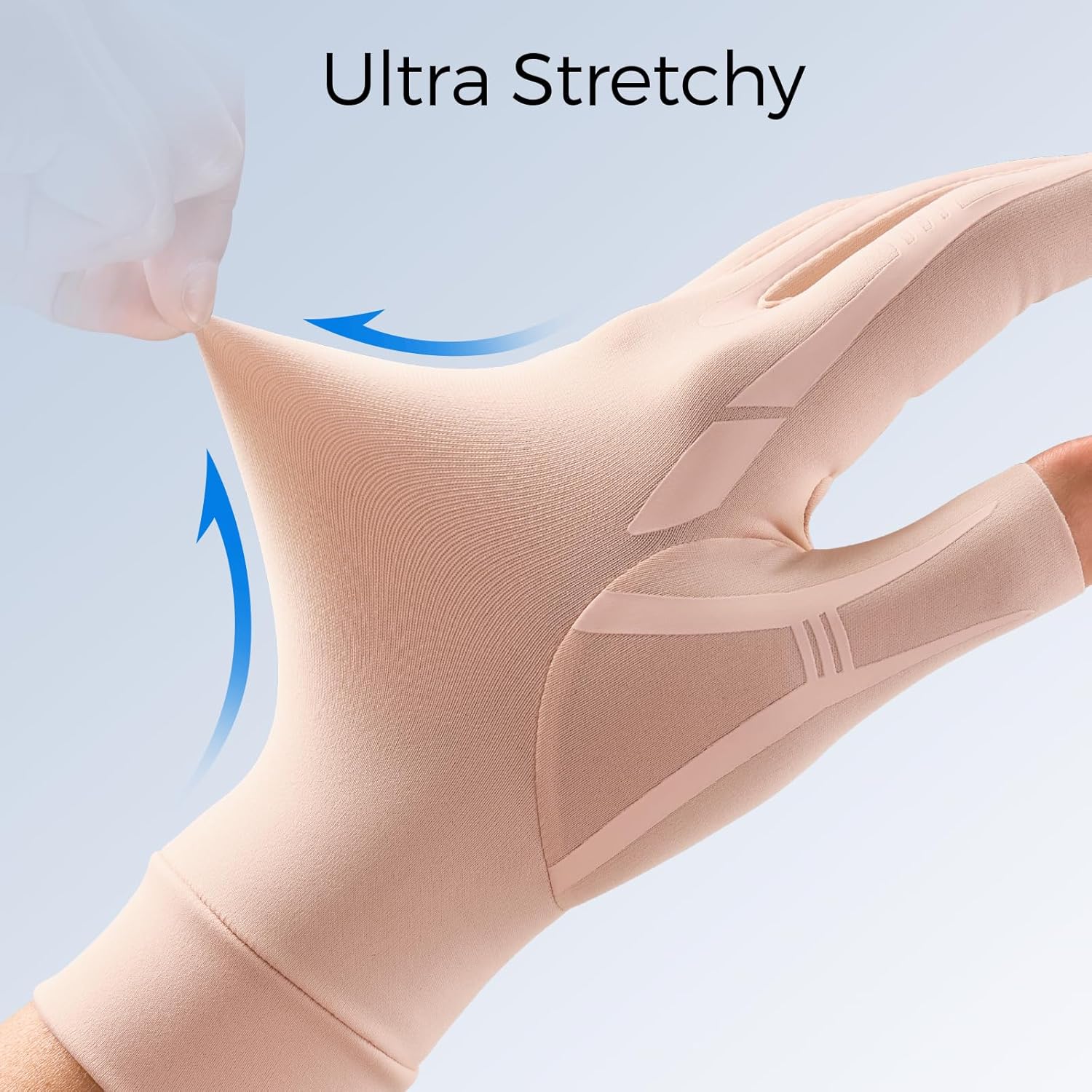
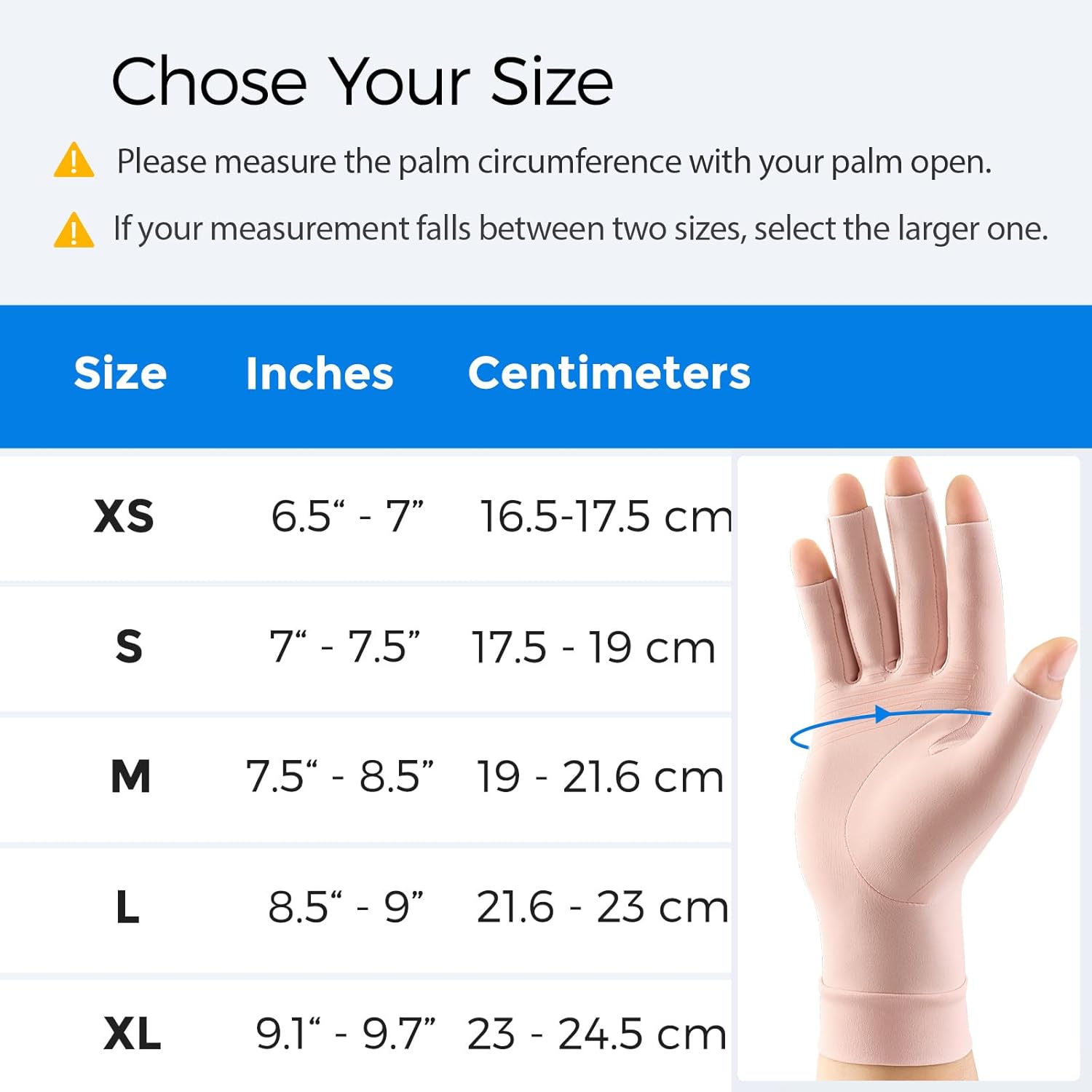
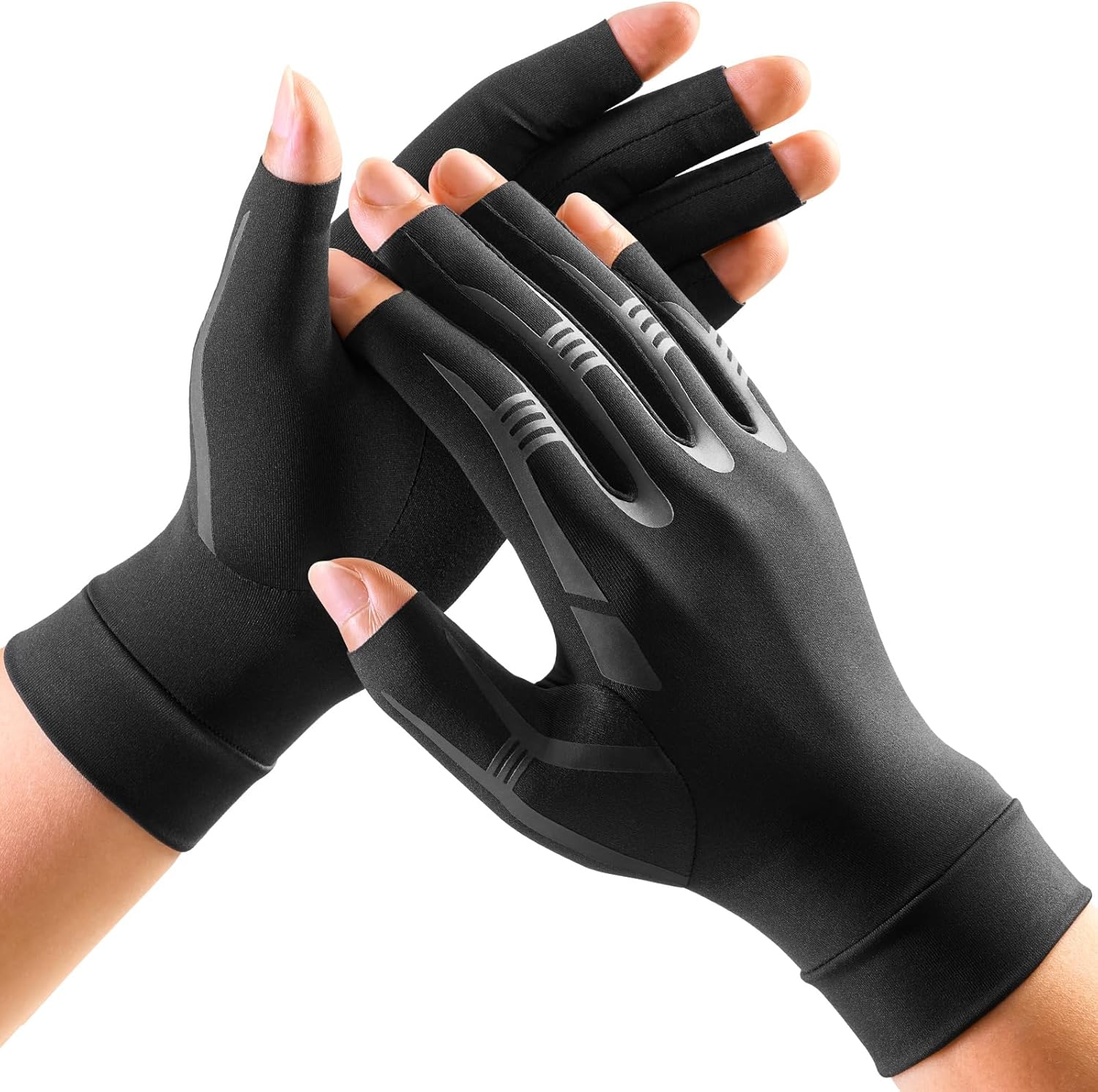
What this is and what it helps with\nFREETOO’s arthritis gloves are fingerless, compression gloves designed to target finger joints and the knuckles with a wraparound silicone structure. They aim to reduce pain and swelling from arthritis, tendonitis, and repetitive strain, while preserving enough dexterity for daily tasks like typing or texting. On paper, the gradient compression—strong at the knuckles, medium in the palm, lighter at the wrist—seeks to speed circulation and improve metabolism in swollen areas.\n\n## How it works in practice\nThese are made from Lycra microfibre, which is celebrated for its stretch and skin-friendly feel. The fibre allows substantial elongation and recovery, so the gloves can mould to the hand while staying comfortable through wear. An important design note is the extended fingertip coverage, which pushes compression to the last joint while keeping the fingers usable for light manual tasks.\n\n## Who it’s for\nThey’re pitched at people dealing with arthritis, carpal tunnel symptoms, swelling, rheumatism, or tendinitis, and also aimed at those who need maintenance of finger grip for typing, texting, or daily activities. If you frequently experience joint swelling or stiffness after work, these gloves attempt to offer ongoing support without disabling finger mobility.\n\n## What stands out (pros)\n- Targeted knuckle compression plus dexterity from fingerless design.\n- Extended fingertip coverage helps with end-joint compression that smaller gloves often miss.\n- Gradient compression structure is intended to aid circulation where it’s slowest.\n- Durable stitching aims to resist common wear and tear.\n\n## What might not persuade you (cons)\n- Effectiveness depends on individual anatomy and severity of symptoms, some users may not notice a dramatic difference.\n- As with any compressionwear, comfort varies by hand size and sensitivity, the fabric can feel snug for extended wear.\n- The product description emphasises medical principles, real-world results may be more modest than the theory suggests.\n\n## When it makes sense to buy\nIf you want a discreet, low-profile aid that can be worn during sleeping or light work, with the aim of reducing swelling and supporting grip, these gloves could be reasonable to try, especially if prioritising finger dexterity over full hand coverage.\n\n## When it may not be the best option\nIf you need full-hand compression or have very delicate skin sensitive to synthetic fabrics, or if you expect dramatic pain relief, you may want to manage expectations and consider other approaches.\n\n## What to check before buying\n- Confirm whether finger coverage reaches the last knuckle for your comfort needs.\n- Consider how you’ll wear them (night, day, or both) and whether you prefer lighter or firmer compression.\n- Look for consistency in stitching and finish to avoid early wear.\n\n## Practical example in use\nImagine typing for an hour at a keyboard and then putting these gloves on for a light task afterwards. The grip helps hold a pen or phone more steadily, while the glove’s compression aims to reduce post-activity swelling around the joints.\n\n## FAQ (brief)\n- Do they fit men and women equally? Yes, they’re designed for both, with adjustable feel due to stretch.\n- Can I wear them while sleeping? They’re marketed for sleep and daily activities.\n- Are they machine washable? The base description doesn’t specify care, follow typical gentle washing guidelines for Lycra fabrics.\n\n## Final decision: Should you buy it?\nIf you prioritise gradual swelling relief and improved finger dexterity in a single, unobtrusive glove, this is worth considering. It’s not a miracle cure, and results depend on individual symptoms. You’ll like it if you want a practical, low-profile aid that doesn’t lock your fingers away. Better avoided if you need heavy compression or have very sensitive skin and require guaranteed therapeutic effects.\n