

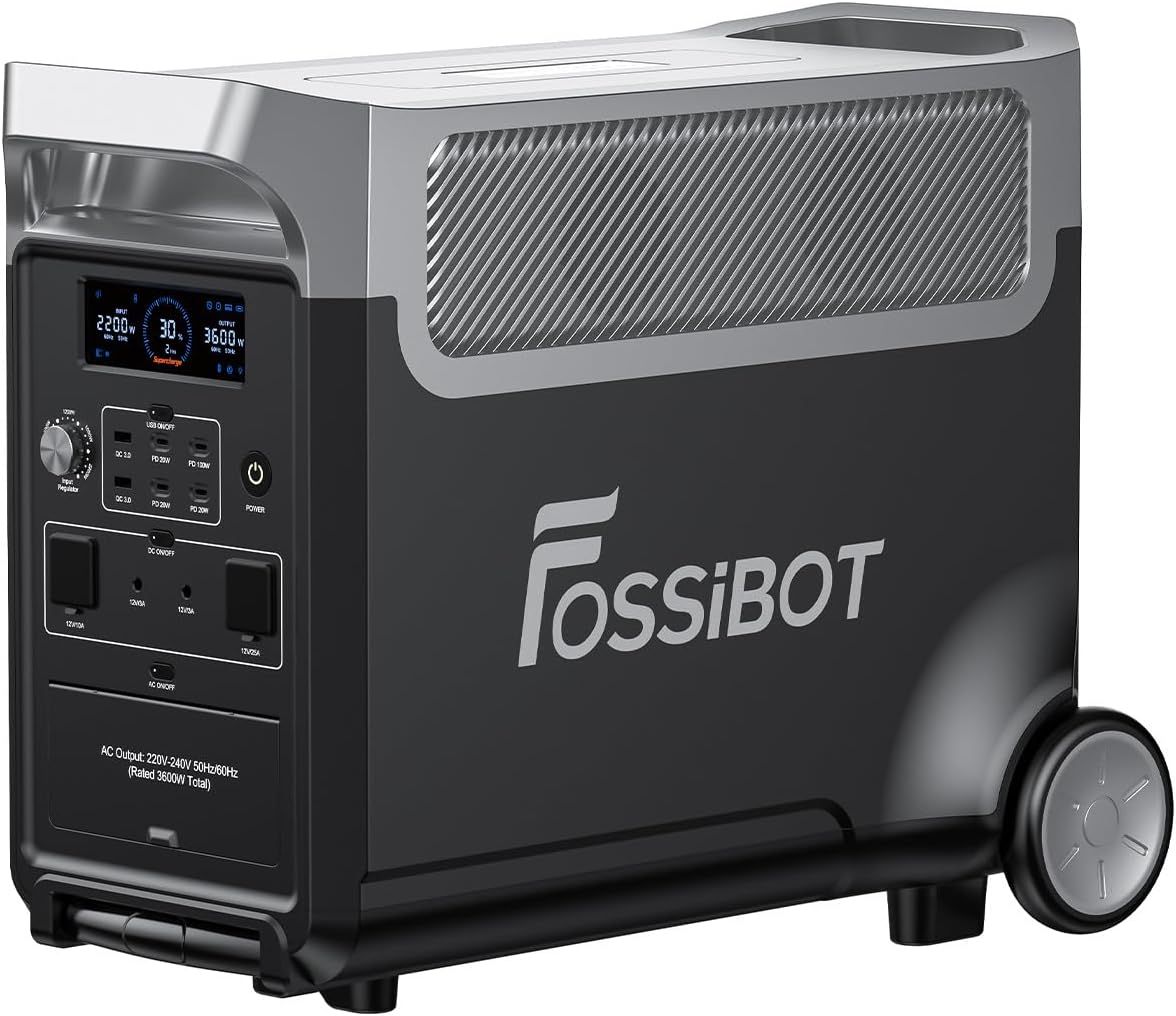
FOSSiBOT F3600Pro Portable Power Station – 3840Wh LiFePO4, 3600W Output
Reviews
Price
Product description
What it is and what it’s for
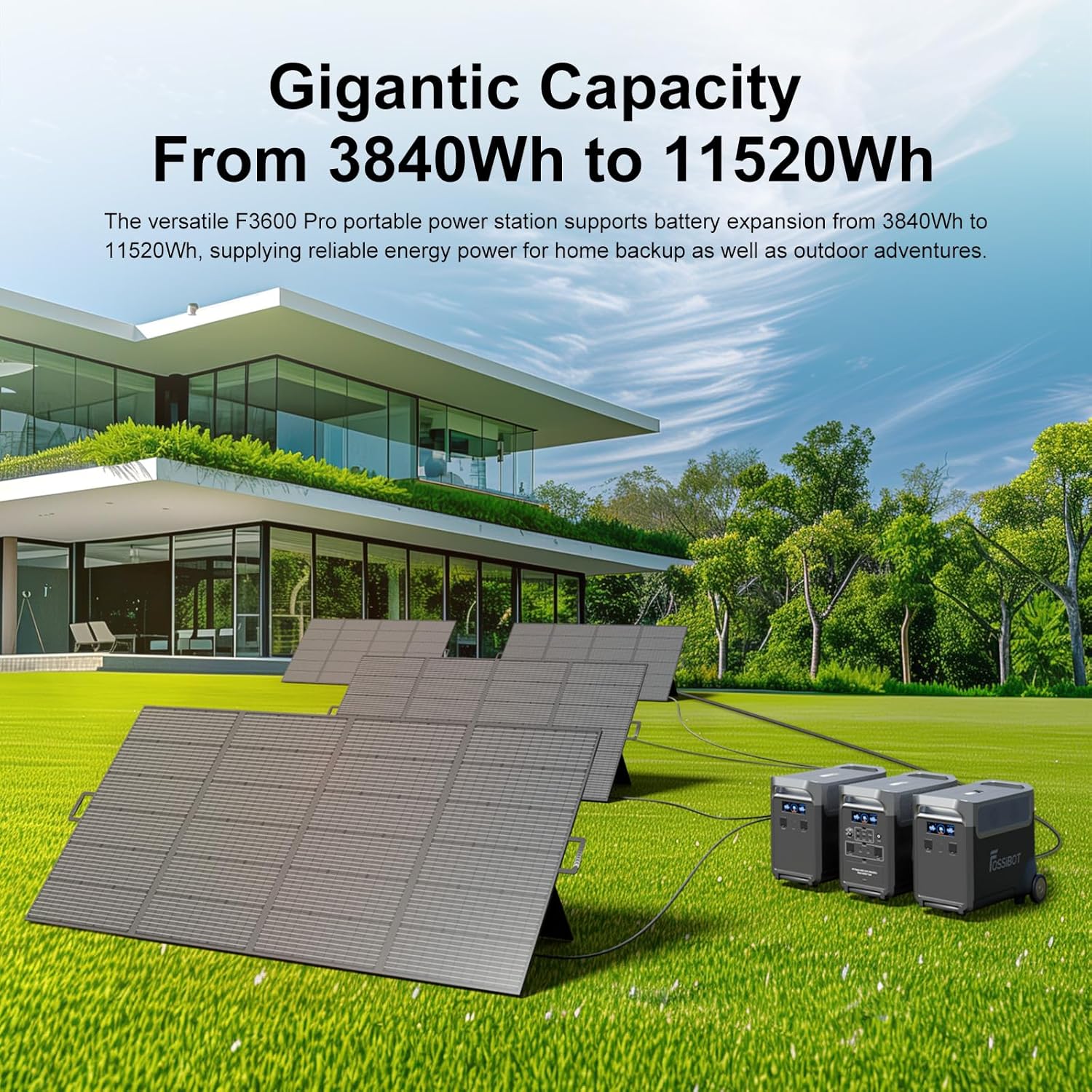
A portable power station designed for outdoor use, camping, emergencies, and situations where a reliable 230V-240V supply is required. The FOSSiBOT F3600Pro brings a high-capacity 3840 Wh LiFePO4 battery with a substantial 3600 W continuous AC output and multiple output options, including USB, DC, and AC. It’s positioned as a practical, heavy-duty non-mains power source that can run several devices at once and serve as a rescue power bank during outages. If you prioritise off-grid capability and a more durable chemistry, this model aims to deliver it.
How it performs on paper
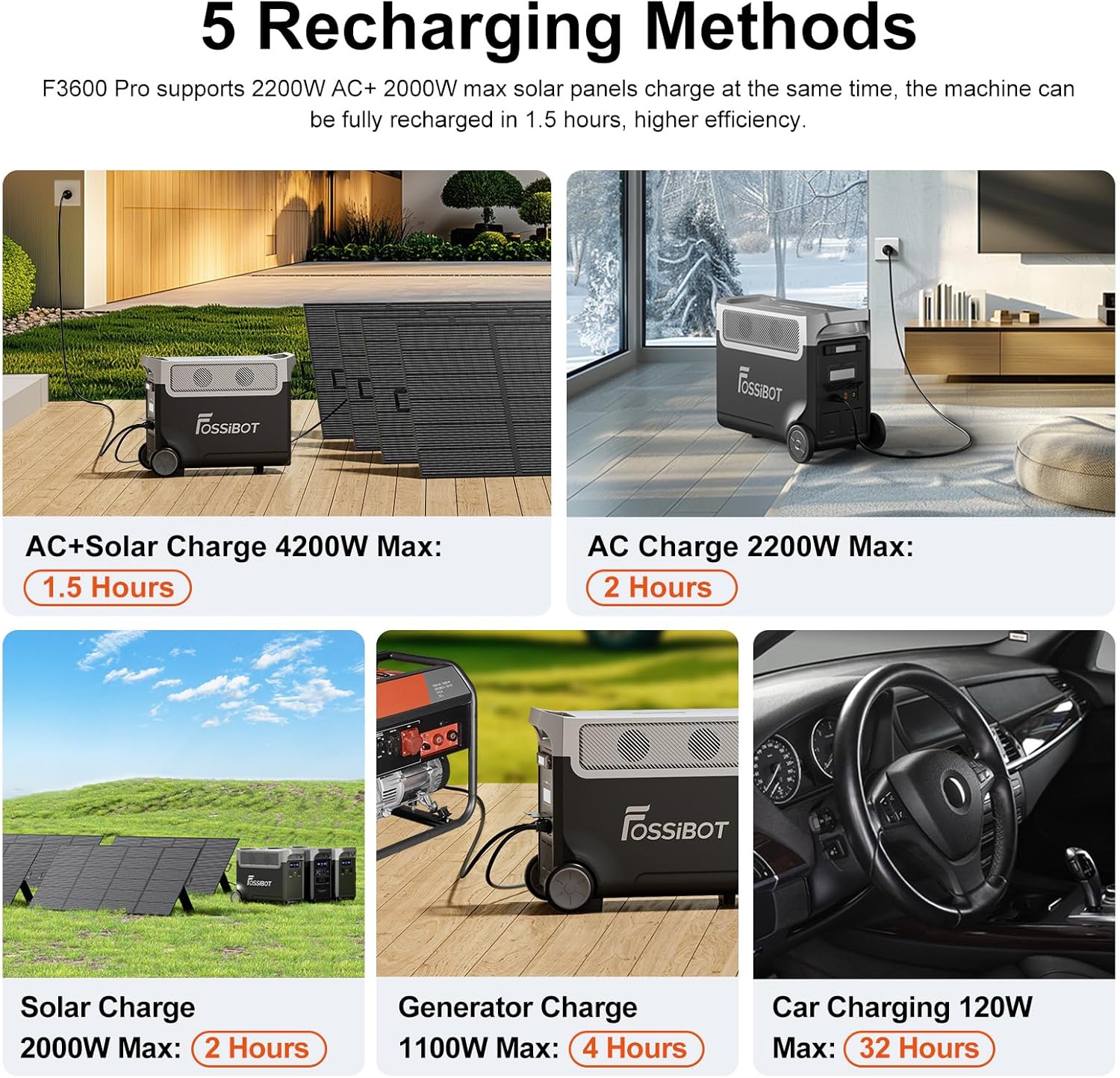
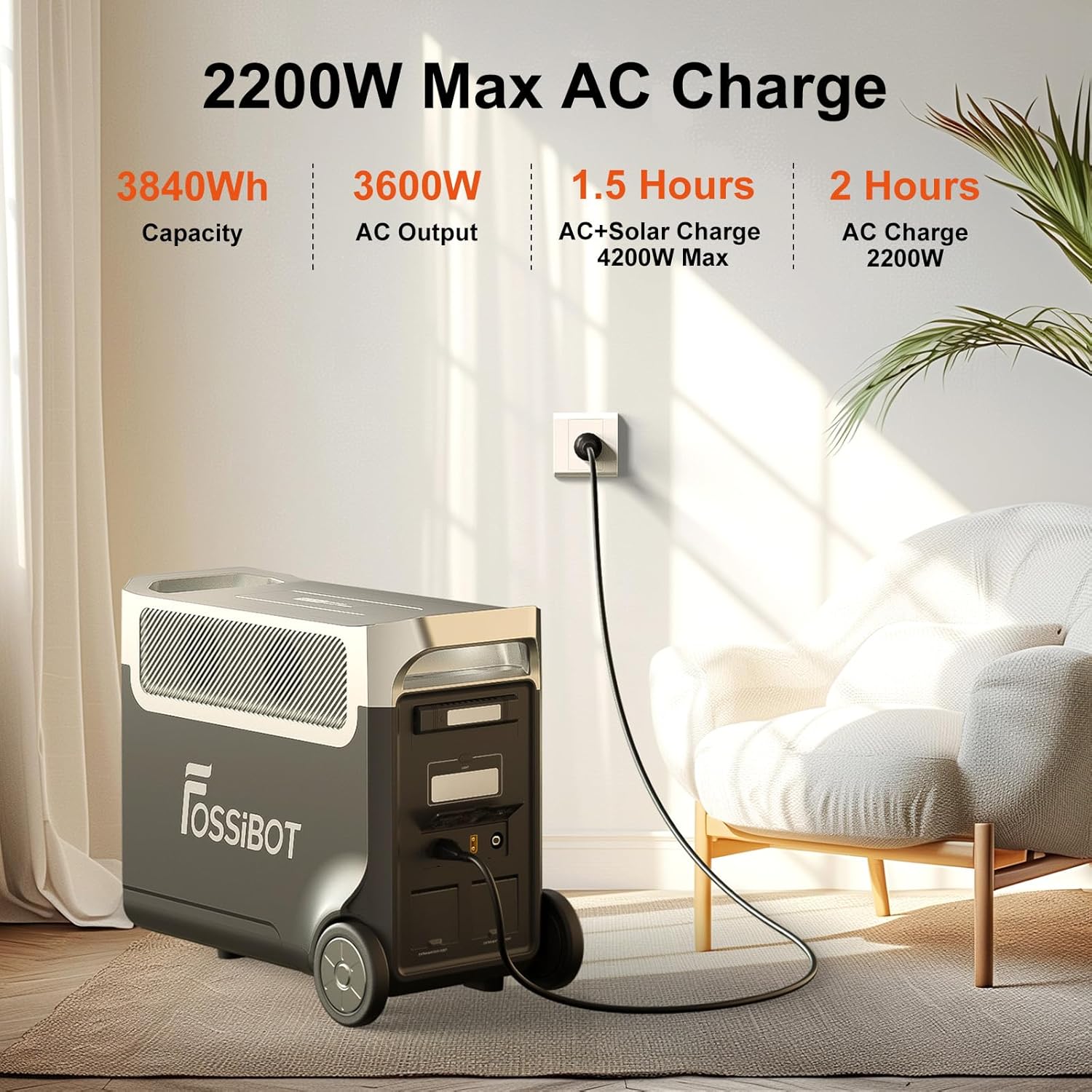
On paper, the F3600Pro combines a sizeable 3840 Wh battery with a 3600 W AC output, and an ecosystem that includes UPS/EPS functions and a BMS. The LiFePO4 chemistry promises long life and stability—up to about 6,500 cycles—potentially translating to a long horizon of use. With a claimed 1.5-hour full recharge when using 2200 W wall input plus 2000 W solar input, it’s positioned as a fast-charging option relative to typical portable power stations. It weighs 41 kg and measures roughly 61 cm by 32 cm by 48 cm, making it sizeable but still portable enough to move with a retractable handle and wheels.
What stands out in use
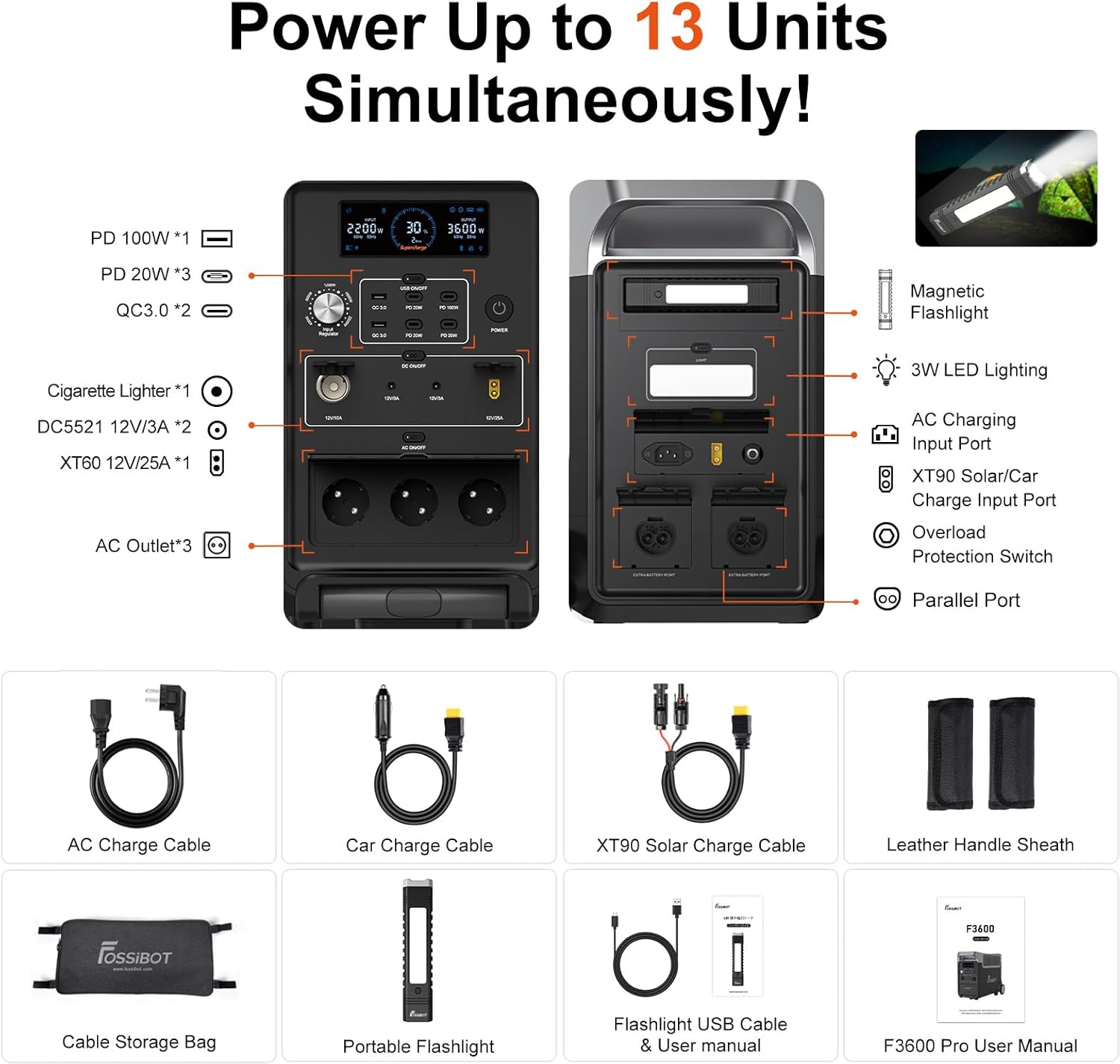
The station supports multiple outlets: several AC sockets (3), USB ports (6), and DC outputs (4), enabling a mix of gadgets from cameras and phones to small home appliances. A built-in dual-mode light with removable magnets adds a practical touch for late-night camping or emergency lighting. The option to scale charging with different input levels (400 W to 2200 W) means you can tailor charging to your power conversion preferences and reduce battery stress, potentially extending overall battery life.
What might not persuade you
If you expect a compact, ultralight power pack, this model isn’t that. At around 41 kg, it remains a heavy unit for frequent travel in a car or RV, and its size could limit portability in tight spaces. While the LiFePO4 chemistry is robust, real-world cycle life depends on operating conditions, depth of discharge, and climate, the stated 6,500 cycles is an estimate and not a guaranteed warranty figure. Also, while the recharging claim is strong on paper, effectiveness can vary with solar conditions and wall input availability.
Who it suits best
- Outdoor enthusiasts who need a high-capacity, reliable power source for long trips, RV setups, or remote camping.
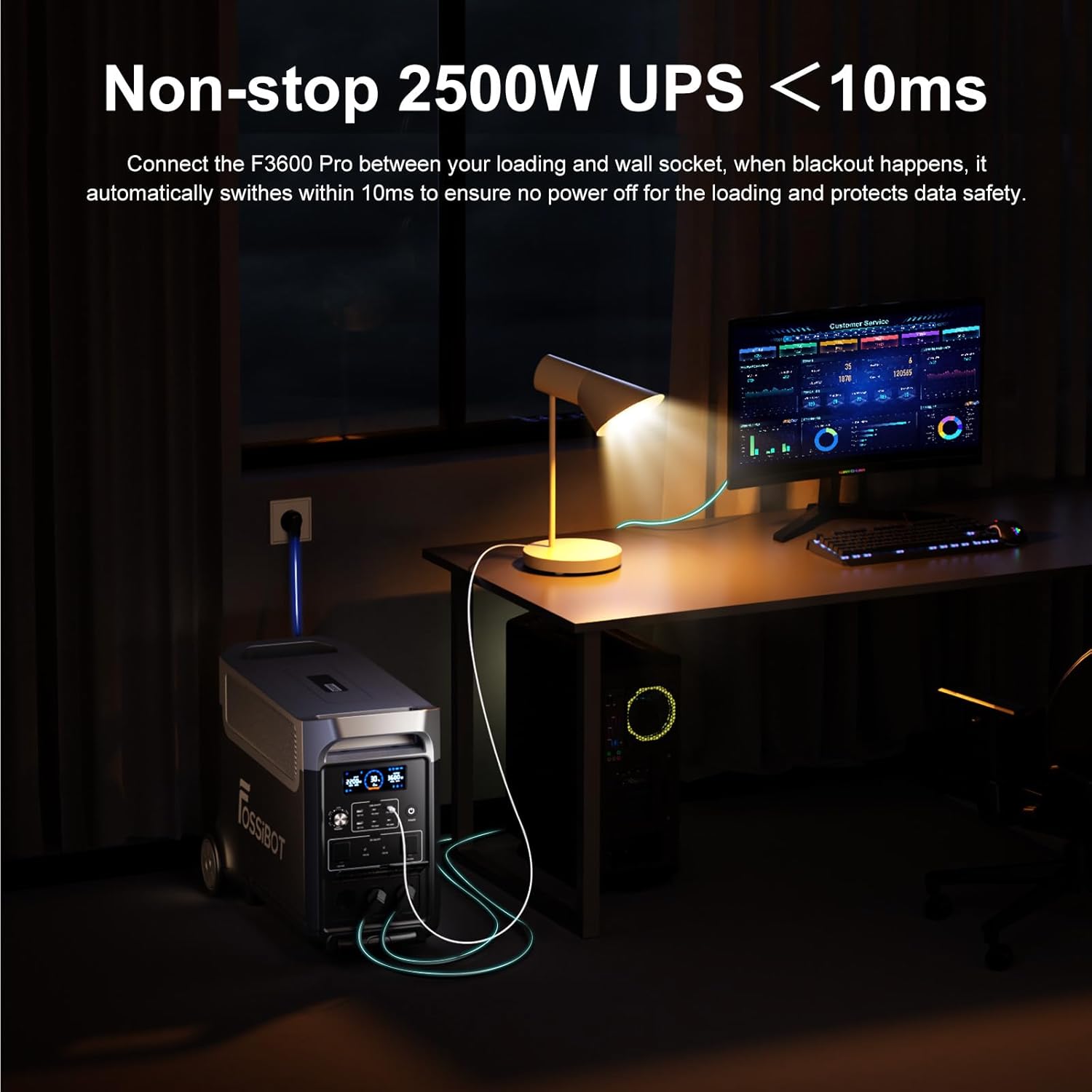
- Home users seeking a robust UPS/EPS option that can cover power outages with a clear battery health profile.
- Anyone prioritising battery safety and longevity from LiFePO4 chemistry and a structured management system.
Who should think twice
- If you require a truly light or compact solution, this may feel bulky for easy daily carry.
- If your use-case involves frequent shallow charges or minimal outages, you might not need this much capacity or the fastest charging tech.
- If you’re dependent on real-world solar conditions that rarely meet high input, the 2000 W solar input may not always be achievable in practice.
When does it make sense to buy
- You want a reliable, high-capacity off-grid power option with a clear ability to run multiple devices at once.
- You need a rechargeable unit that can also act as a UPS/EPS for home outages.
- You value the safety and longevity characteristics of LiFePO4 chemistry and want a long-service-life battery.
What to check before purchasing
- Confirm the exact configuration of AC/USB/DC outputs to match your devices’ needs.
- Consider how often you’ll move the unit, the weight and wheel design should suit your setup, especially if you travel with it in a vehicle.
- Check availability of solar input under your typical sunlight conditions to gauge real-world charging speed.
- Review the warranty terms and service support for LiFePO4 systems and battery health management.
Practical usage example
Imagine a weekend in a remote campsite: you power a portable fridge, a small projector, phone chargers, and a lamp from the 3600 W AC outlets and USB ports. When a power outage hits at home, the F3600Pro can bridge several essential devices until mains returns, thanks to its UPS/EPS features and large capacity. If you’re finishing a late-night fishing trip, the magnetic lamp component can be pulled off the unit and used as a standalone light while you unpack.
How it compares to common alternatives
Compared with smaller portable power banks or generators, the F3600Pro sits in a higher-capacity bracket with LiFePO4 safety benefits and a broad outlet mix. It won’t be the lightest option, but it offers a balance of high capacity, fast charging on paper, and a dedicated charging strategy that helps manage battery wear. If portability is paramount and your power needs are modest, a lighter, less capable unit could be a better fit, if you want sustained high-power output with a long-lifespan battery, this is worth considering.
What you’ll get in practice
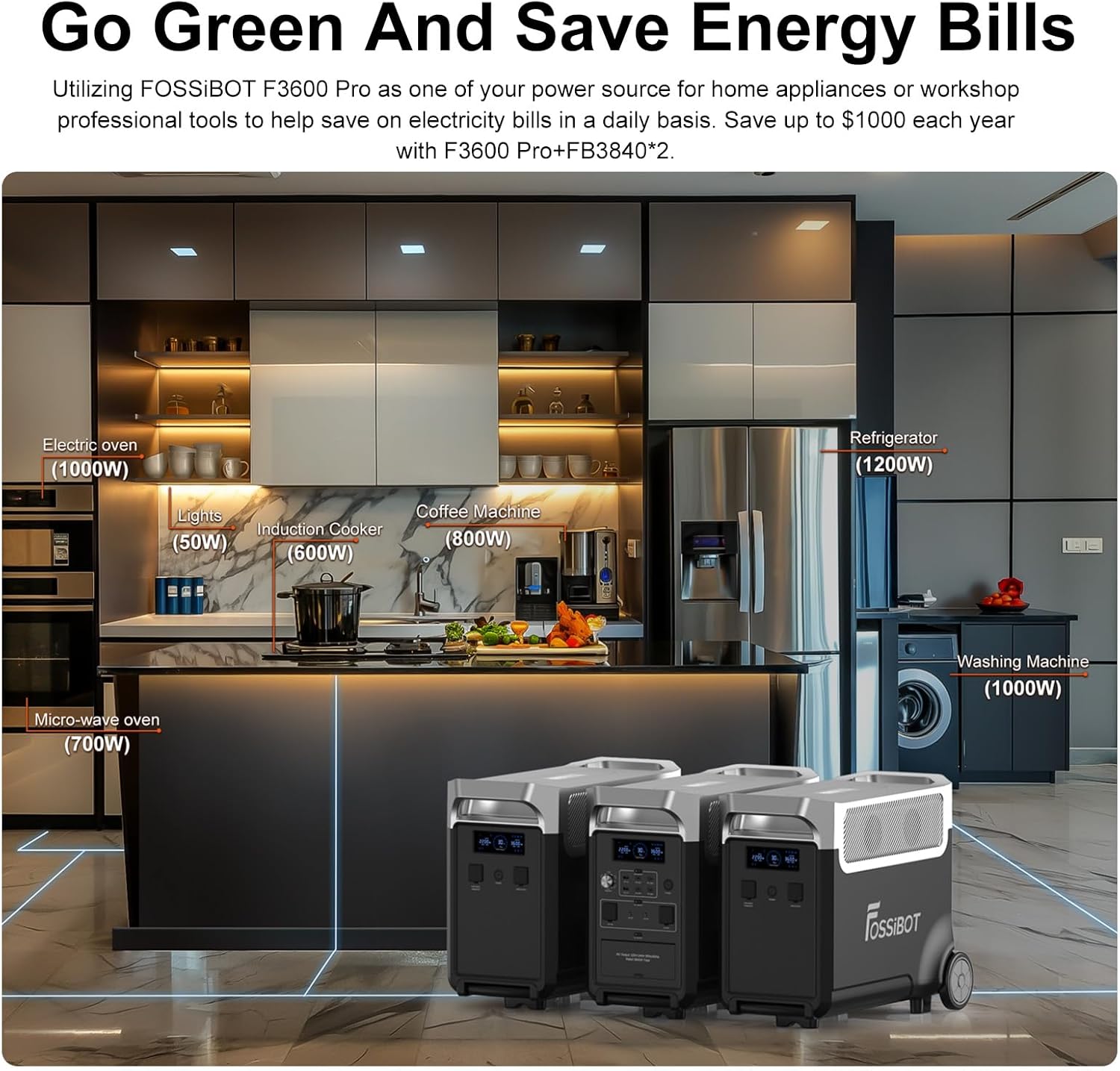
You get a large-capacity power station with the ability to run multiple devices, plus a practical light feature. It’s designed to handle outdoor scenarios and emergencies with a focus on durability and lifecycle. It’s not a budget pick, but it aims to offer a reasonable balance between performance, safety and long-term value.
Is it worth it?
Should you buy it? It makes sense if your priority is high capacity, robust battery chemistry, and the flexibility to power several devices simultaneously, including 230V appliances. If your needs are lighter or you prioritise portability over capacity, you may want to explore smaller options.
Quick FAQ
- What does 3840 Wh really mean for day-to-day use? It indicates substantial stored energy, allowing several devices to run for extended periods, depending on load.
- Can it be charged only with solar panels? No—there is a wall input and solar input, charging speed depends on both and solar conditions.
- How long will it take to recharge from empty? The design suggests 1.5 hours under ideal conditions with combined 2200 W wall input and 2000 W solar input, but real-world times vary with sun, temperature and load.
Final decision
Is it worth it? Worth considering if you need a high-capacity, long-life power solution for off-grid living, camping, or emergency use, and you’re prepared for a heavier unit with a rich feature set.