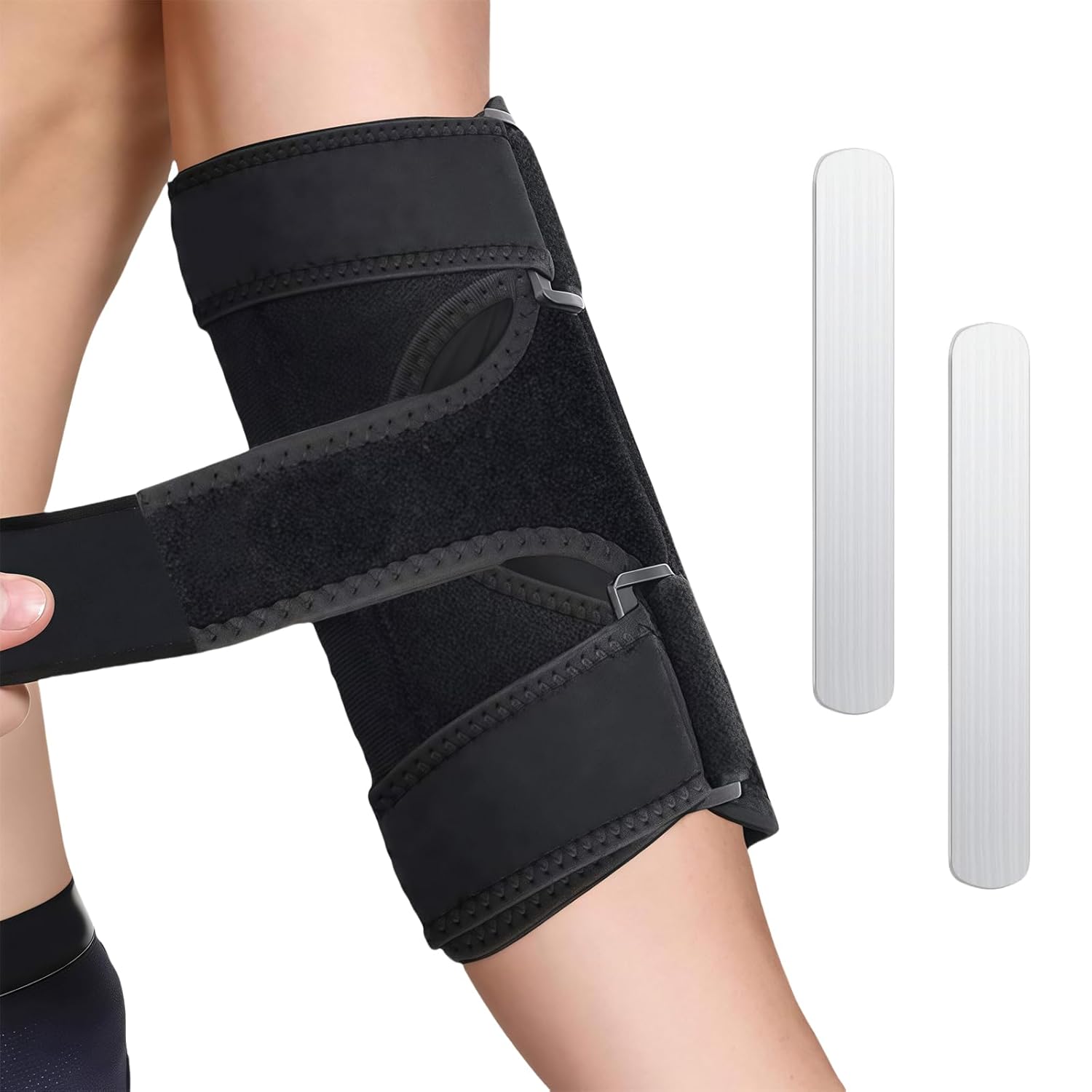
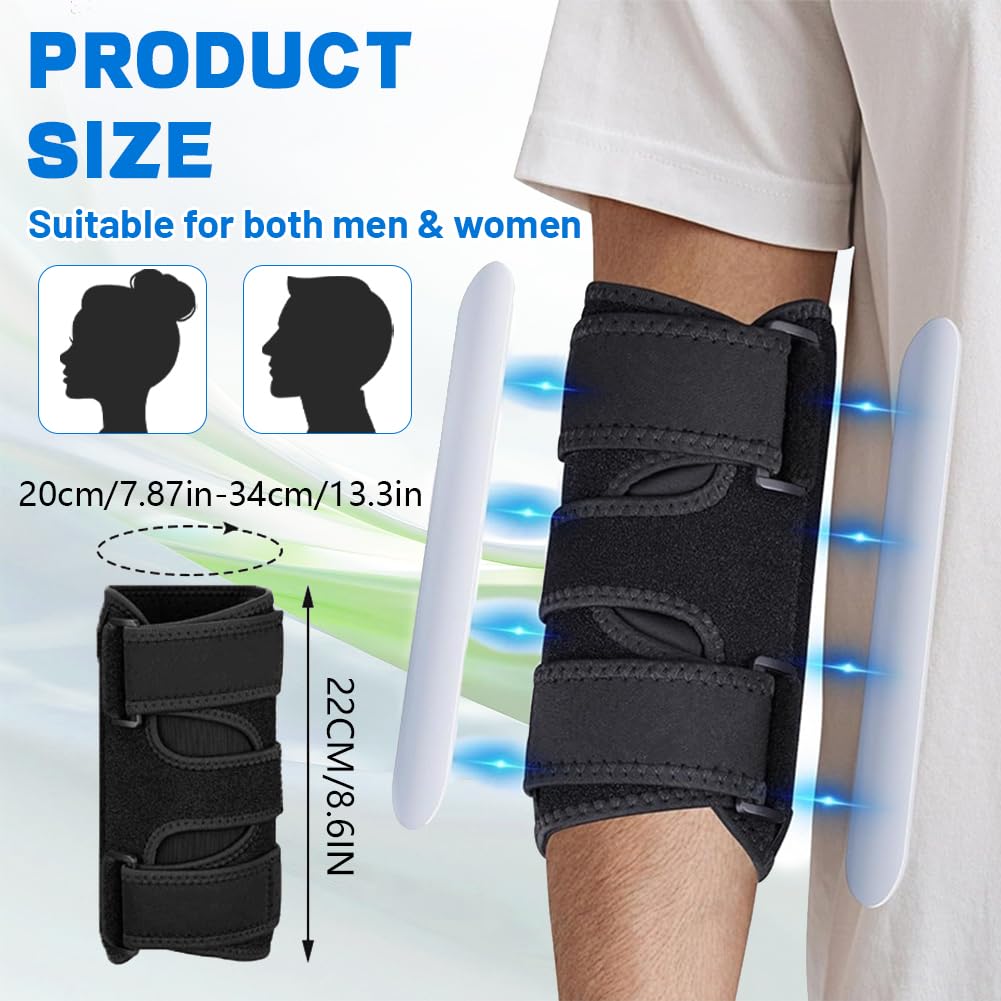
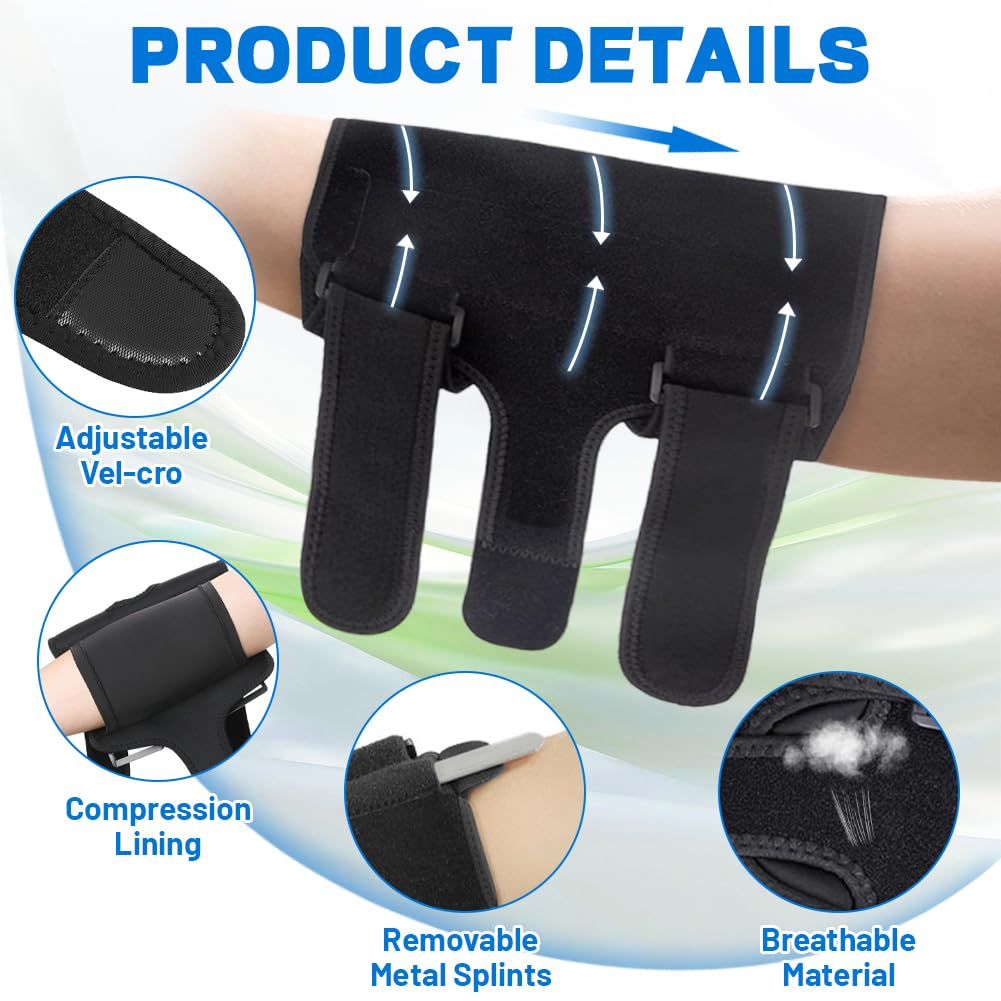
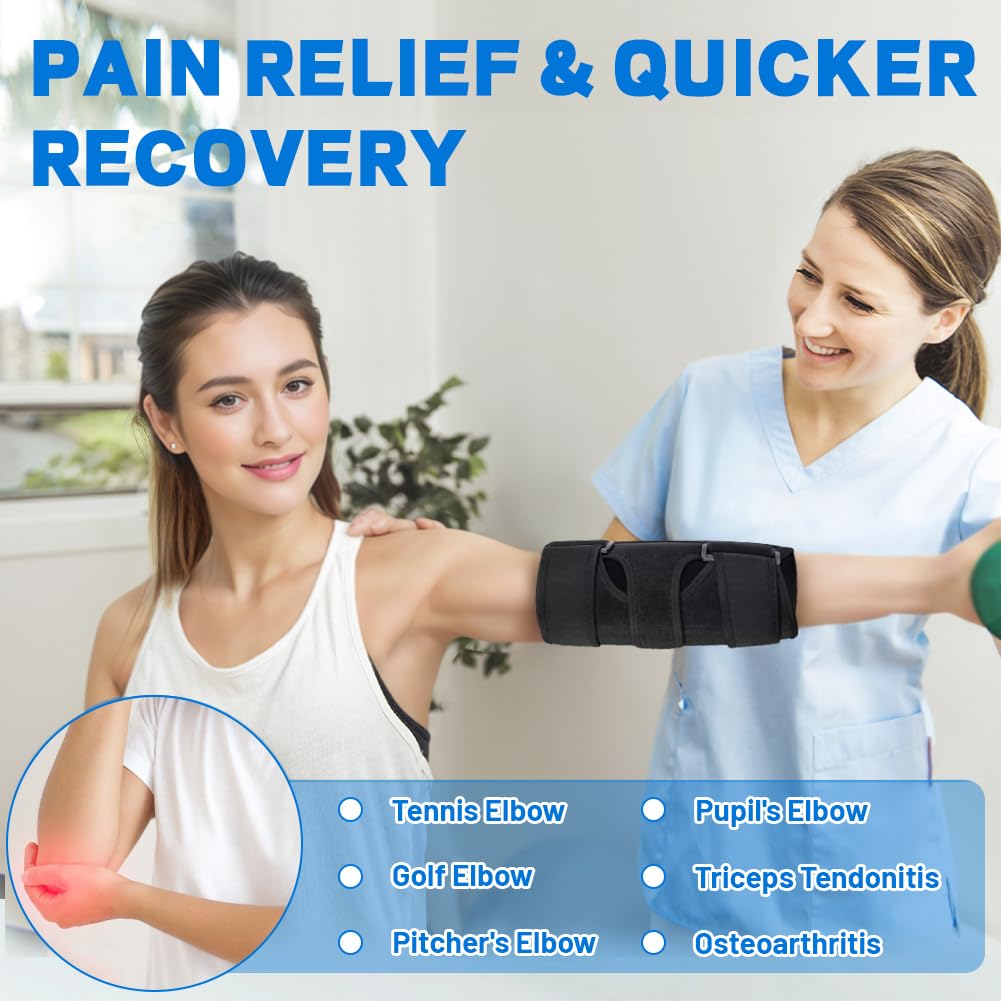
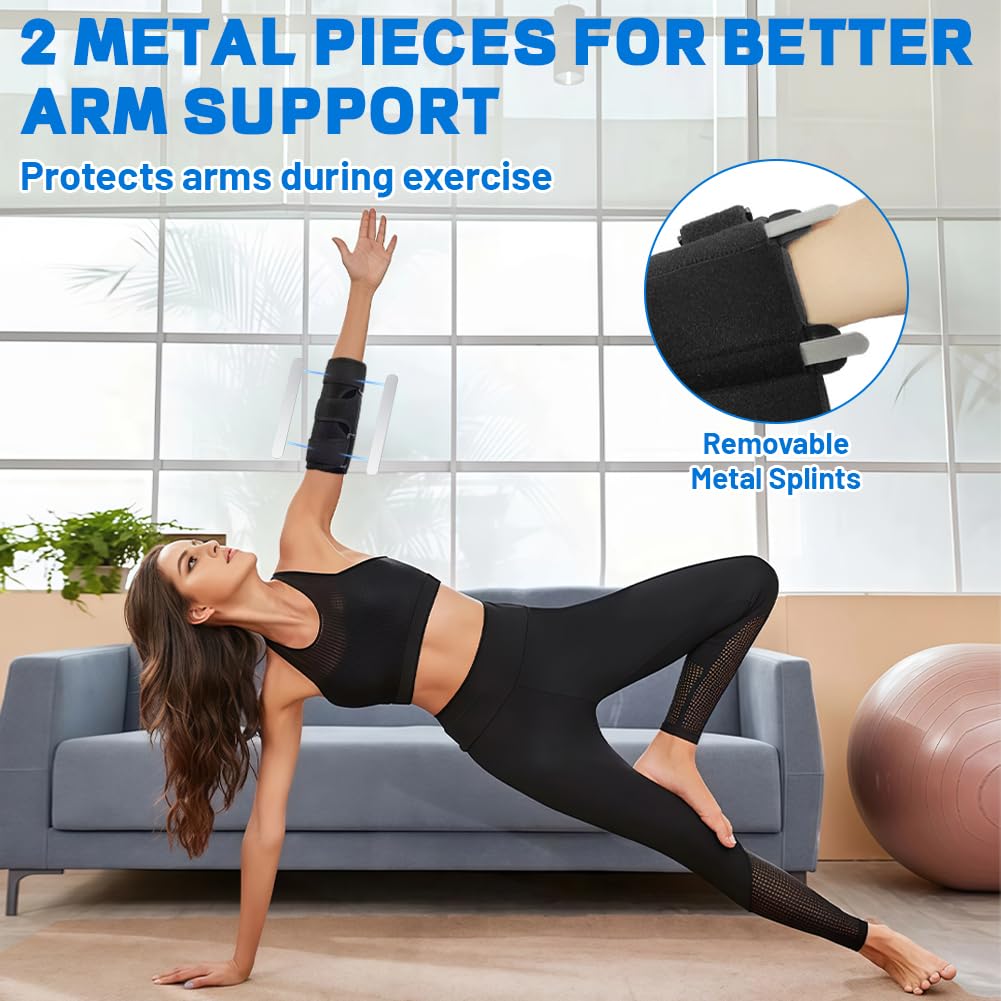
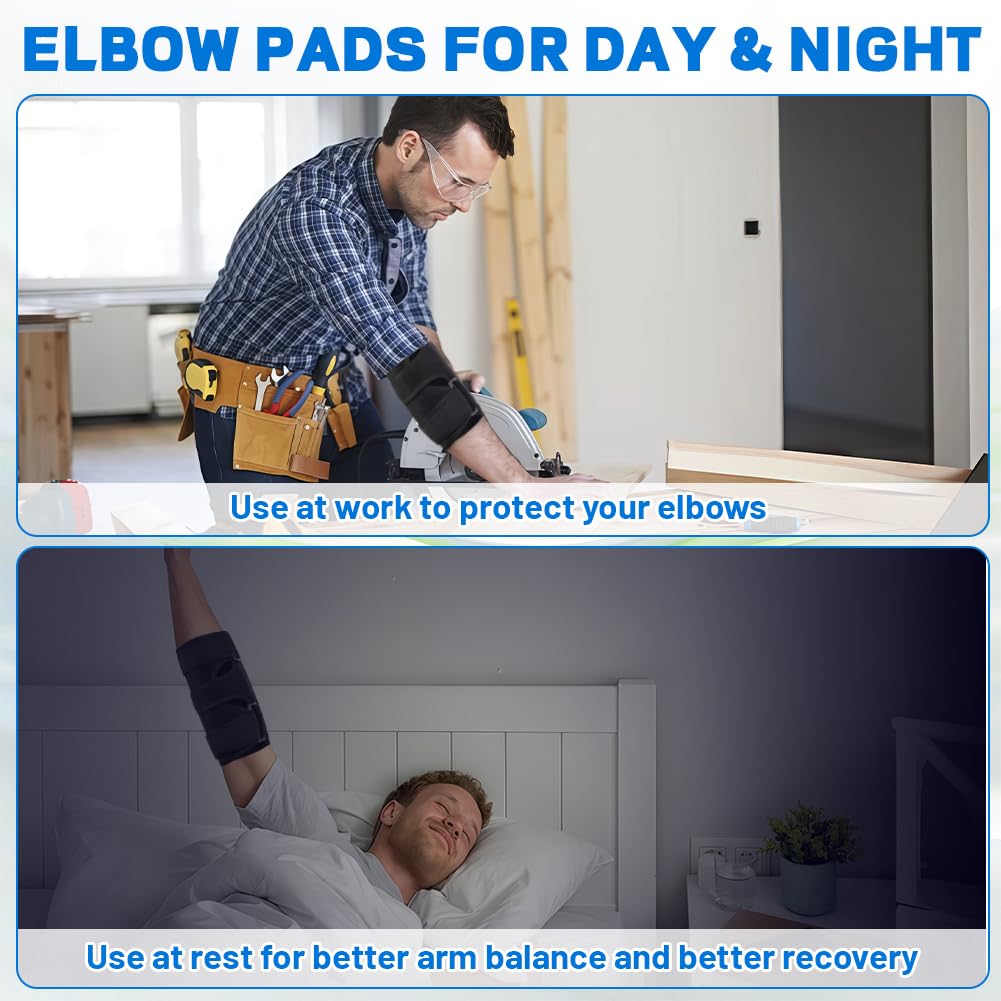
What this is and what it’s for\nThe flintronic Elbow Brace is an adjustable support designed to apply targeted compression around the elbow. It aims to stabilise the joint and surrounding tissues to help manage pain from tennis elbow, golfer’s elbow, tendinopathy and related conditions, as well as discomfort from ulnar nerve entrapment or cubital tunnel syndrome. On the paper, it serves as a practical aid for both active use and recovery, offering a more controlled level of pressure than a basic wrap.\n\n## How it’s built and how it feels\nThis brace emphasises a lightweight, breathable build with skin-friendly fabric so it can be worn for longer periods. The design includes a comfortable lining that covers the elbow and a wrap-around system that makes it simple to put on and adjust. The three adjustable Velcro straps and two nylon buttons let you tailor tightness across the upper arm, elbow joint and forearm, which is useful if you’re managing swelling or specific areas of tenderness. The inclusion of two removable metal splints lets you immobilise the joint when needed while supporting the surrounding muscles.\n\n## Pros and what to watch for\nWhat stands out is the combination of removable splints and a fully adjustable wrap, which offers flexibility for different activities and stages of recovery. It’s worth noting that the level of compression will depend on how tightly you fasten the straps, so you may need to experiment a little to find the most comfortable setting. For people with larger or smaller forearm circumferences, the stated range is 20–34 cm, so check that your measurement falls within this window.\n\n## Who it’s for\nThis brace is suitable for active individuals dealing with elbow pain linked to repetitive strain, tennis or golfer’s elbow, as well as injuries or post‑operative recovery where immobilisation or support is beneficial. It’s also potentially helpful for night relief during sleep if elbow stability reduces pain. It can fit either arm and is designed to be worn under or over clothing as needed, depending on activity.\n\n## Who it isn’t ideal for\nIf you need absolute immobilisation for a fracture or a specific post‑op protocol, this brace relies on removable splints rather than a rigid cast. If you require a higher level of fixed support or a more compact profile for sports with limited space for gear, you might want to compare alternatives.\n\n## When it makes sense to buy\nConsider this elbow brace if you want a breathable, adjustable option with removable splints for custom support. It suits someone who alternates between light activity and rest, or who needs targeted pressure around the elbow to manage pain and swelling without a bulky immobiliser.\n\n## What to check before purchasing\n- Confirm your forearm circumference falls within the 20–34 cm range.\n- Decide whether you prefer removable splints for adjustable immobilisation.\n- Think about how you’ll wear it during daily tasks or while exercising, and whether you need left or right orientation.\n- If you’re recovering from a specific injury, consider how easily you can don and doff with one hand.\n\n## Practical use and alternatives\nIn day-to-day use, it’s a practical compromise between a simple elbow support and a rigid splint. If you prioritise full immobilisation or a minimal footprint for sports, you might explore other approaches like dedicated braces with integrated stabilisers or non‑splint options for lighter support. A measured approach to use—start with moderate tightness and adjust as comfort allows—helps avoid irritation or restricted blood flow.\n\n## FAQ (where data allows)\n- Can I wear this during sleep? It’s designed for comfort and support, but individual sleep comfort may vary.\n- Is it suitable for left or right arms? Yes, it fits both.\n- Do the splints have to be removed? They can be removed to adjust immobilisation as needed.\n\n## Final decision: Is it worth it?\nWorth considering if you want a customisable elbow support that provides targeted pressure, stabilisation and removable splints for flexible use in everyday activities and during recovery. It may not be the best option if you need rigid, all‑day immobilisation or if your forearm measurement falls outside the stated range.\n