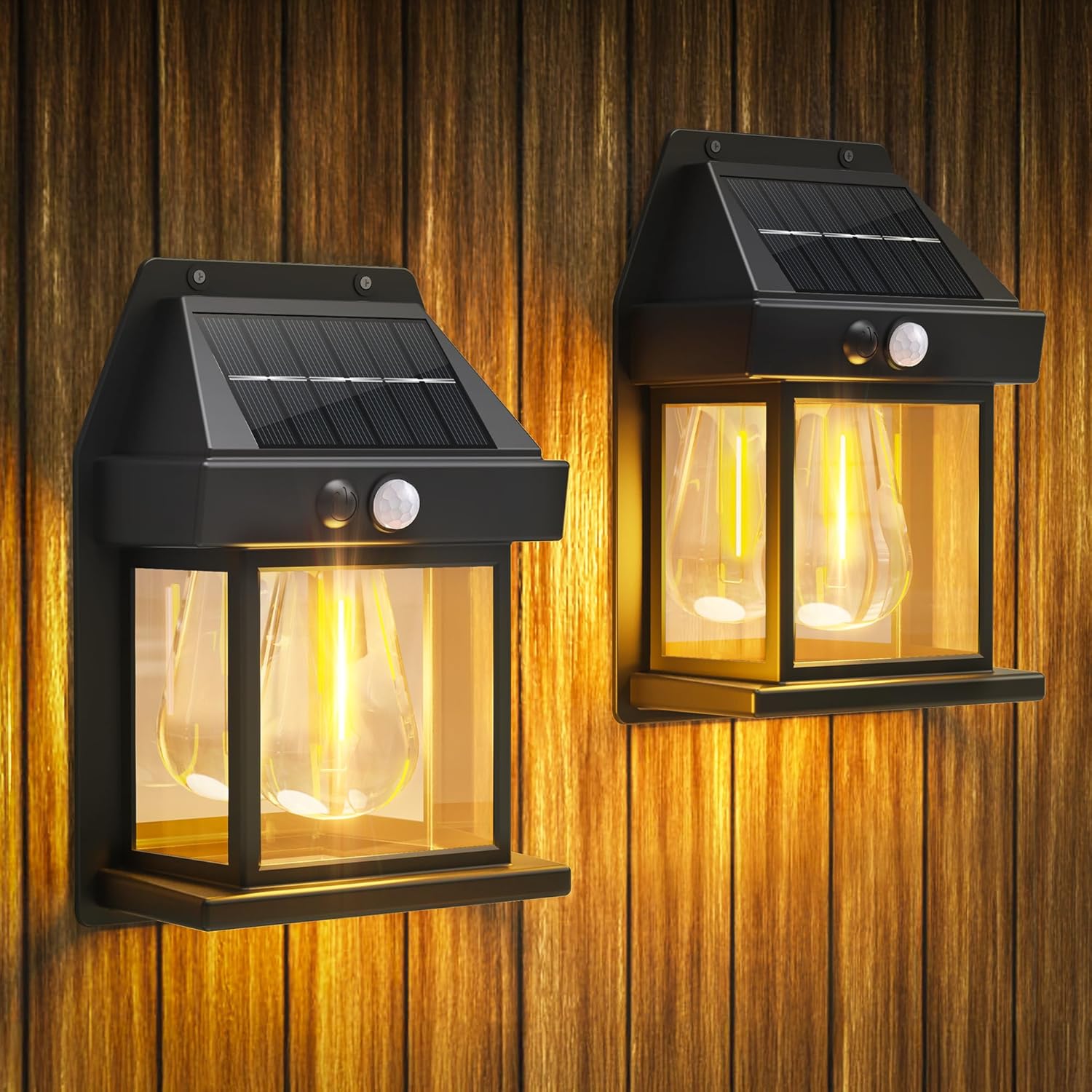
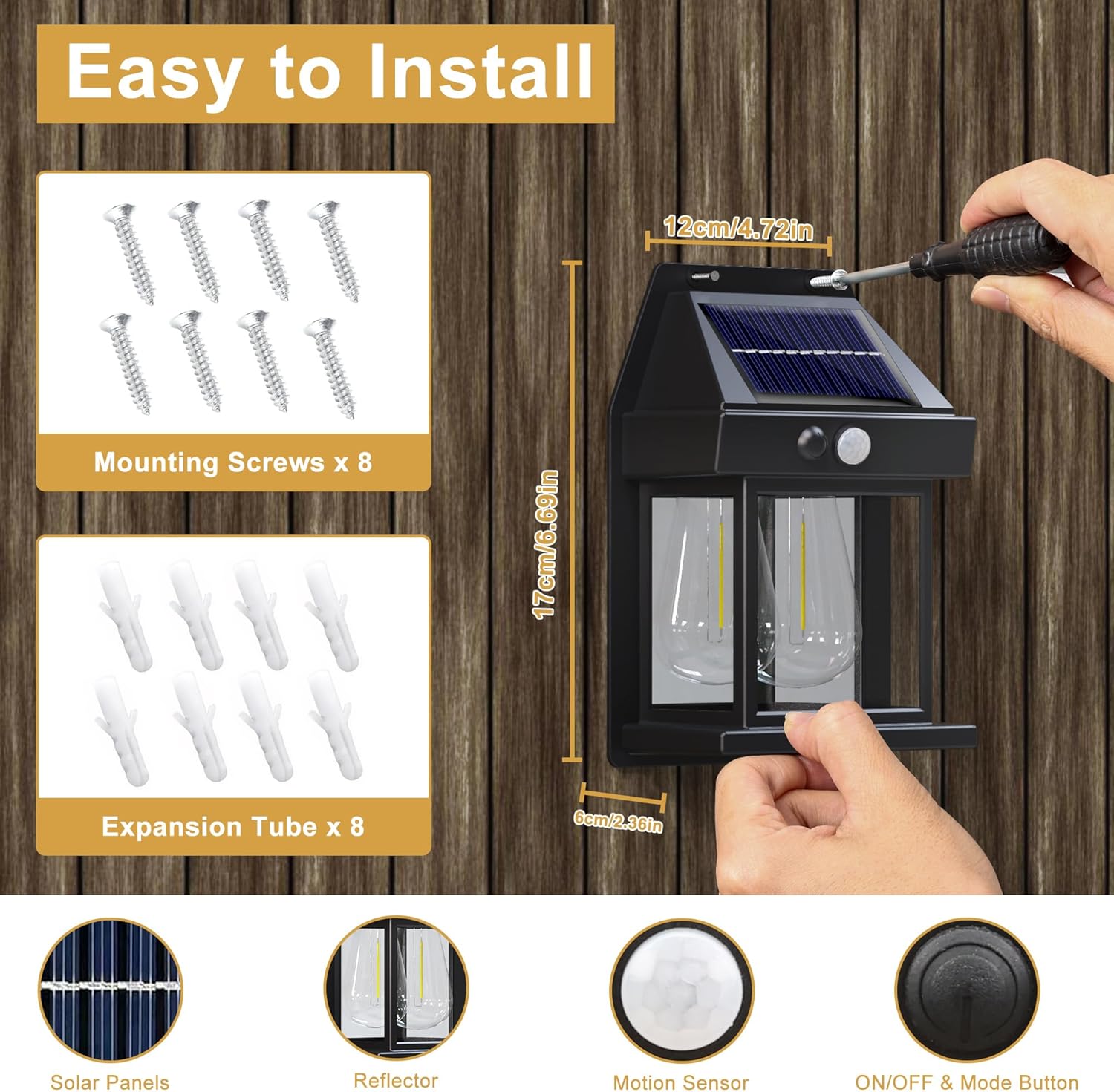
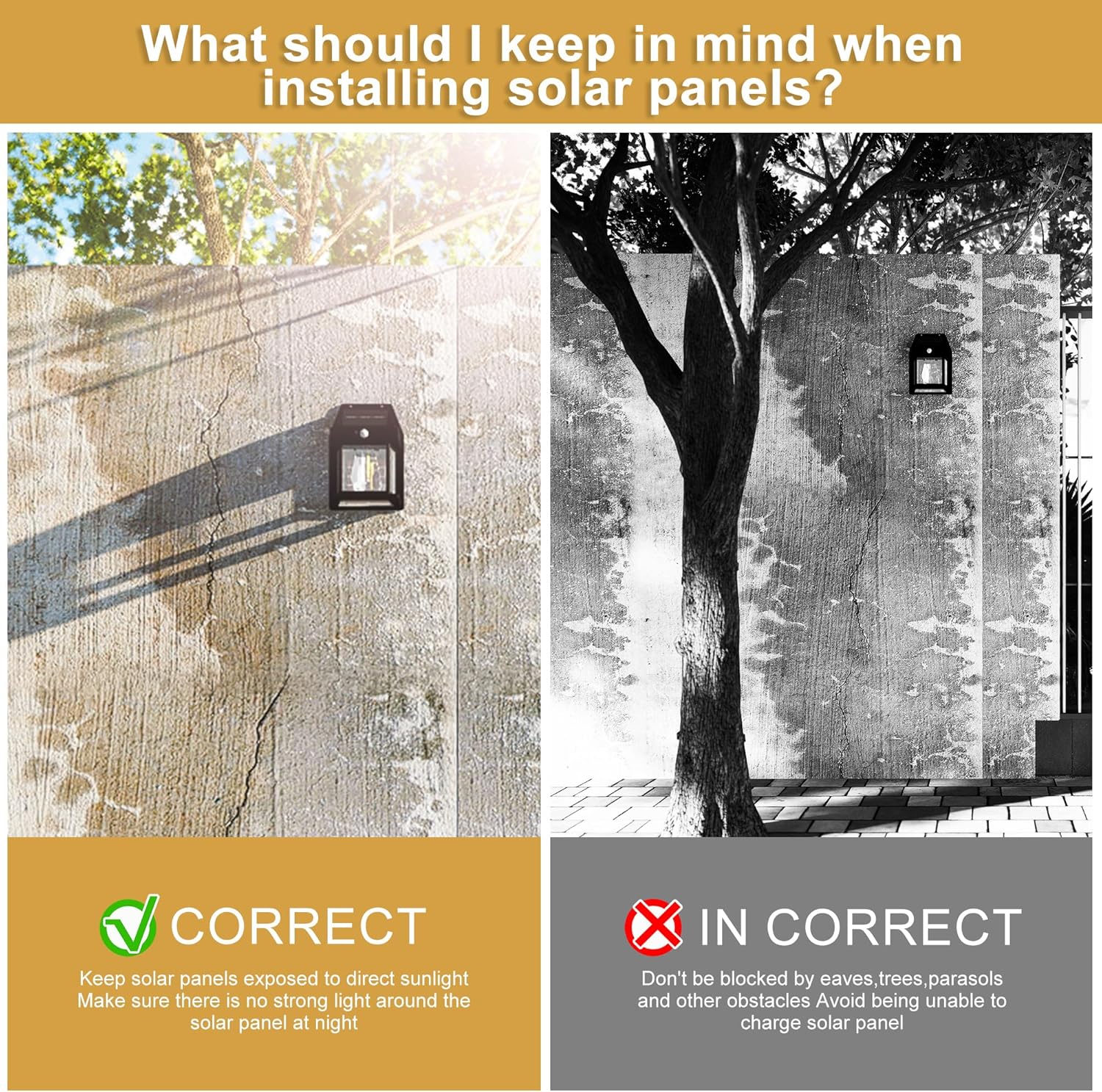
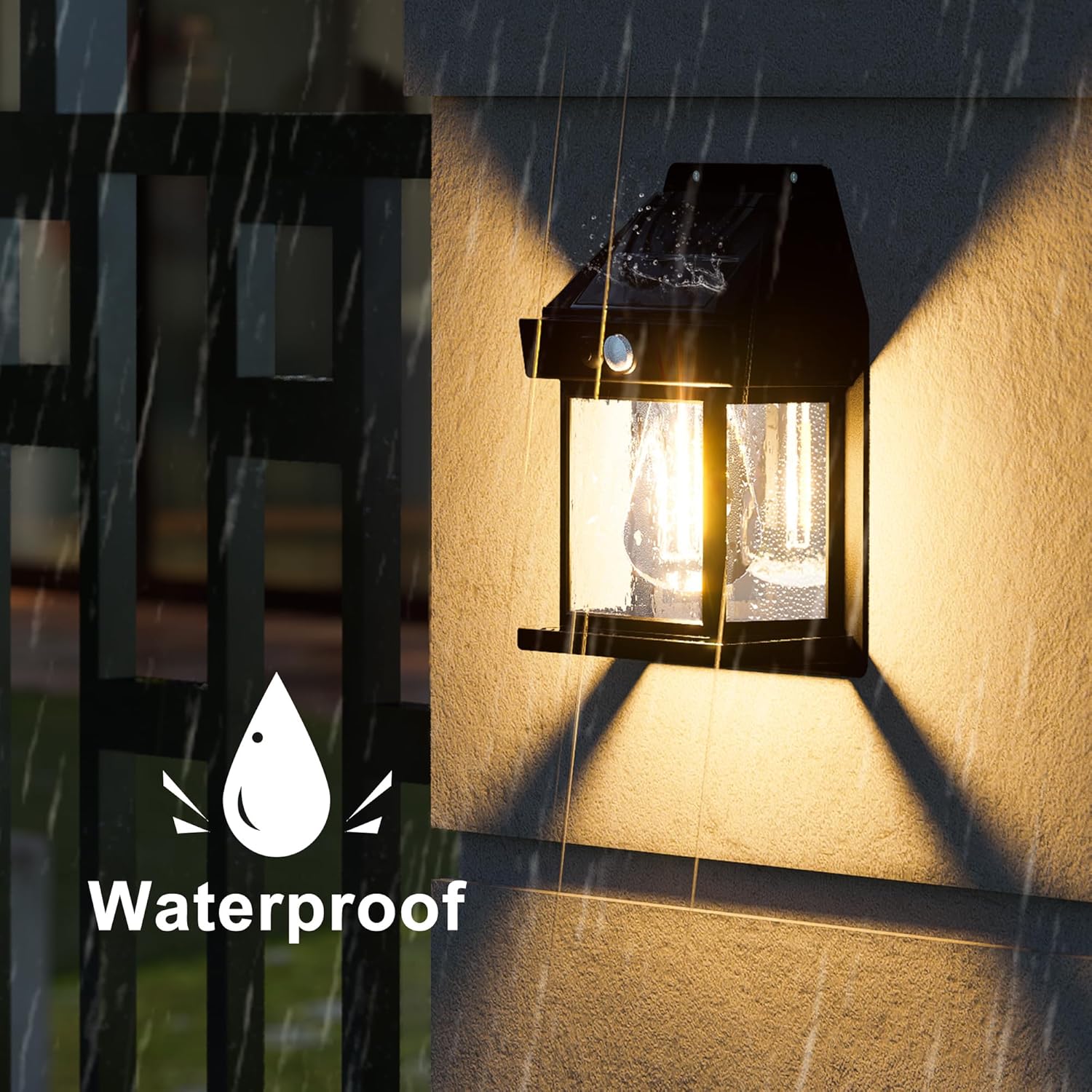
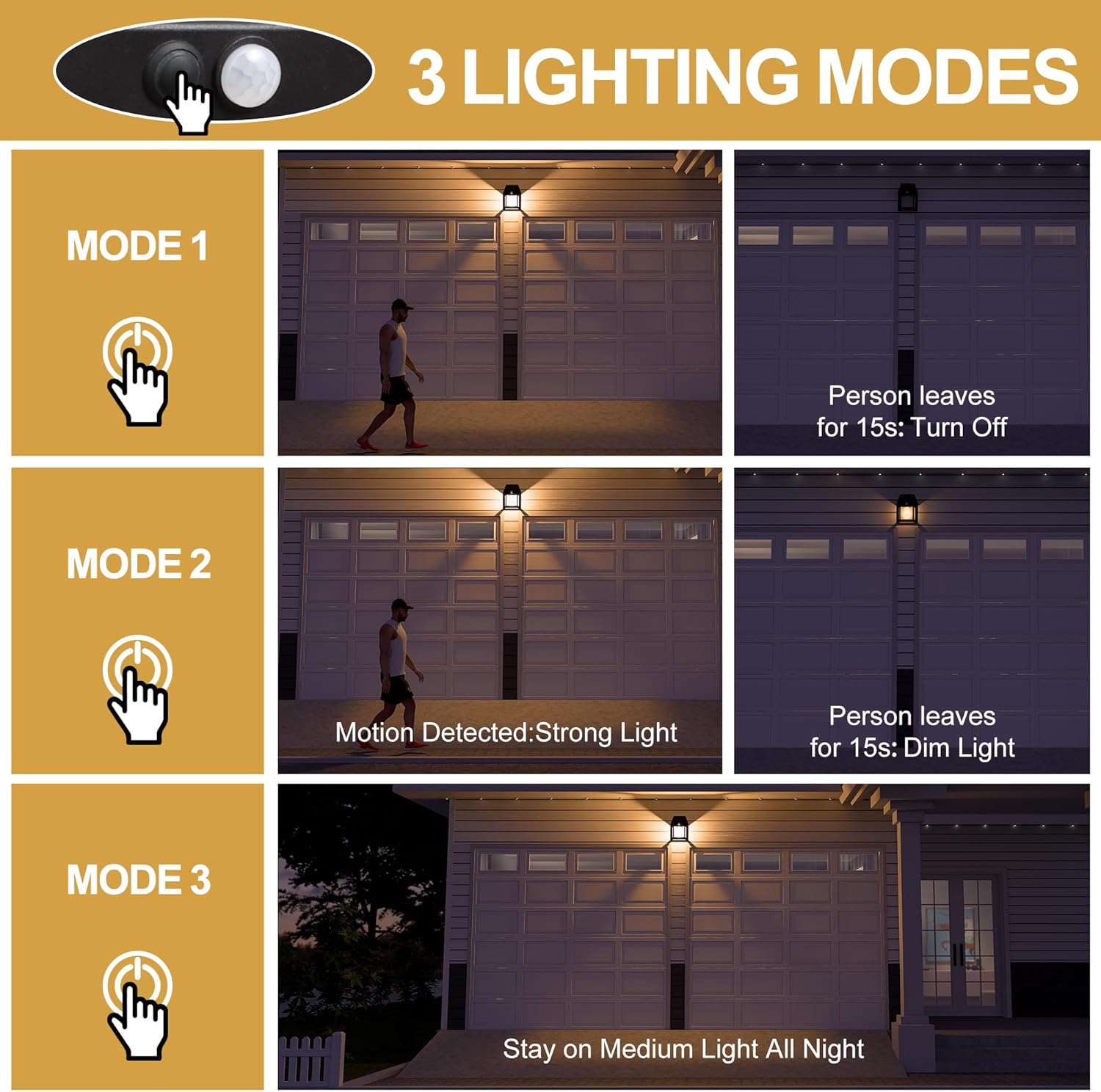
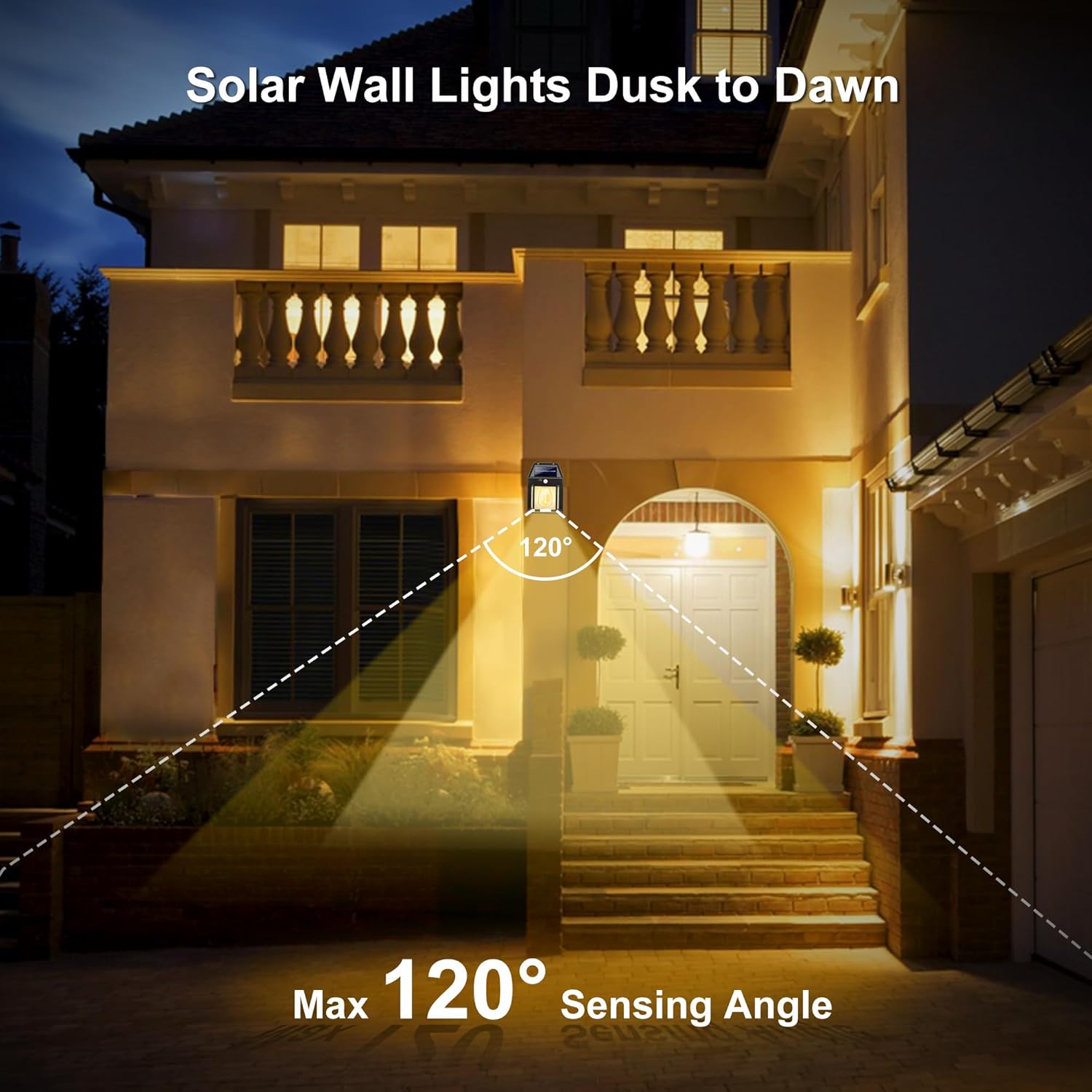
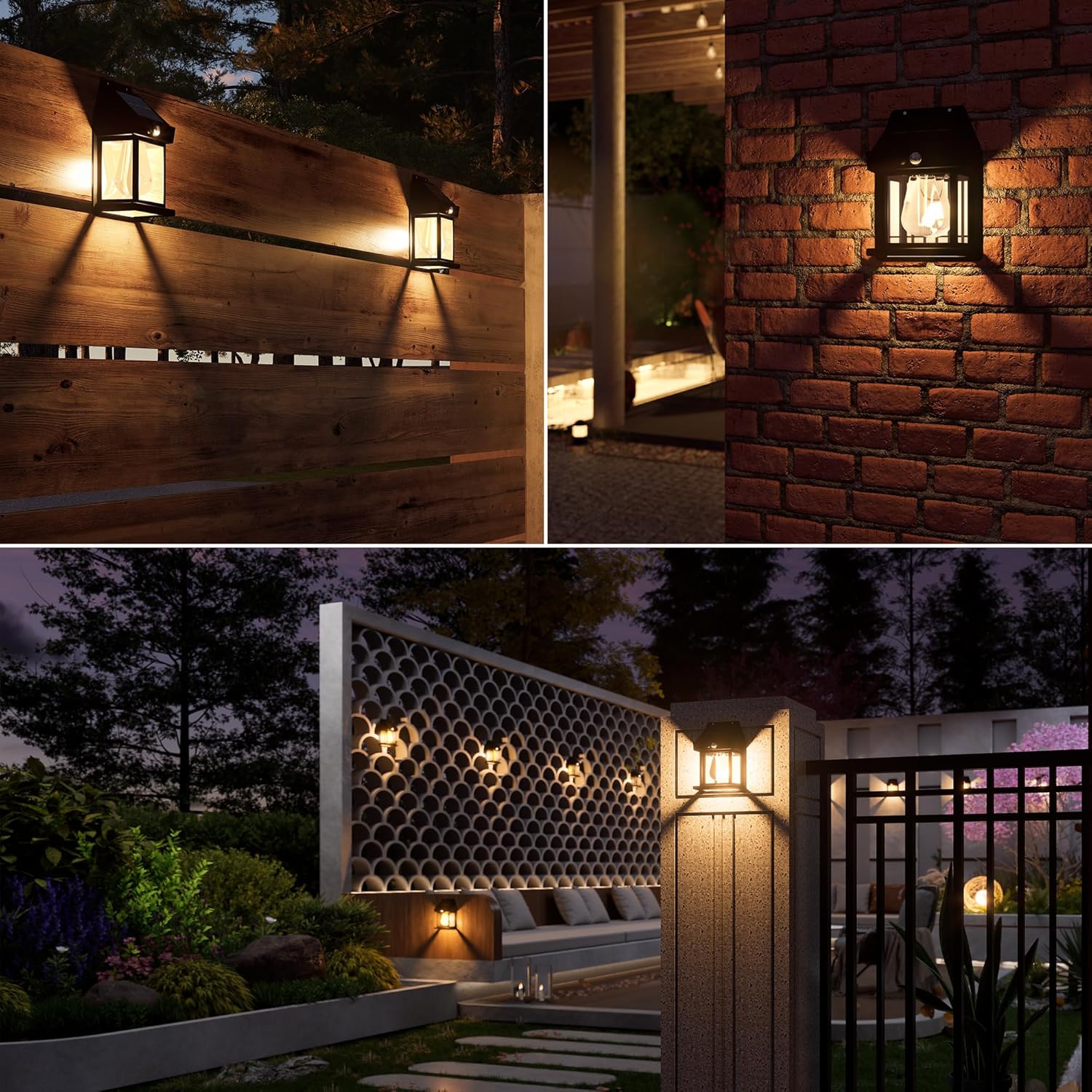
What this is and what it solves\nThese are two solar-powered wall lights designed for outdoor spaces such as gardens, courtyards and porches. They rely on daylight charging to deliver illumination at night without wiring, aiming to simplify installation and reduce energy costs. The warm white light, paired with a mirror reflector, is intended to create a brighter, more inviting atmosphere without overpowering the space. If you’re after a practical, low-maintenance option for ambient lighting and added security, these could be worth considering.\n\n## How the motion sensor and lighting modes work\nThe lights include a motion sensor and offer three modes: high brightness on motion detection, low brightness when there’s no activity, and a constant-on setting for continuous illumination. This setup is useful if you want to balance visibility with energy efficiency and tailor lighting patterns to daily routines. You’ll need to know that the system is powered by solar energy and should provide around 8–10 hours of light on a full charge, depending on sun exposure and weather.\n\n## Design and durability in real use\nWith an IP65 waterproof rating, these fixtures are built to withstand rain, spray and general outdoor exposure. The design is described as stylish, with a mirror reflector to help maximise brightness in your outdoor area. In practice, the look should blend with most exterior styles, giving a practical glow rather than a harsh beam. Yet, as with any solar light, performance will be influenced by the amount of sun the panels receive during the day and how well the lights are positioned for shade or wind exposure.\n\n## Who it’s best for\nThese are suitable for homeowners seeking straightforward, tar‑free installation and a flexible lighting solution for walls around a terrace, garden path or porch. If you prioritise energy efficiency, simple maintenance and the option of motion-activated lighting, this two-pack could align with those needs. It may be less ideal if you require ultra-bright or colour-changing effects, or if you need guaranteed operation on overcast days.\n\n## What to check before buying\n- Confirm the mounting surface allows secure wall fixing and can support the fixtures.\n- Evaluate your daily sunlight exposure to gauge charging efficiency.\n- Consider whether the motion sensor range and sensitivity fit your space.\n- Check the consistency of warm white output and whether you prefer a steady or motion-responsive glow.\n- Ensure you understand how to replace or service the unit if needed and whether spare parts are readily available.\n\n## Practical use case in everyday life\nOn a typical evening, you might place these by the back door to guide your steps as you walk to a patio. When someone approaches from the garden, the light can switch to high brightness, then drop to a low level once the area is clear, preserving energy. When you’re outside late, you can switch to constant-on mode for continuous light, which helps with safety and convenience.\n\n## Alternatives and how this compares\nIf you want to avoid any electrical wiring, solar options like this are increasingly common for straightforward outdoor illumination. They won’t match wired lights in peak lumens or adjustable colour temperature, but they offer simplicity and cost savings over time. If you need higher brightness or more robust reliability during prolonged cloudy periods, you might weigh more powerful or wired options.\n\n## Is it worth it?\nWorth considering if you want a maintenance-light, battery-free solution that’s easy to install and aims to balance visibility with energy use. It’s not the best choice if you need very bright, continuous lighting in a large area or if you experience frequent long periods of overcast weather.\n\n## FAQ (quick answers)\n- How long do the lights last on a full charge? Typically 8–10 hours, depending on sun exposure.\n- Do they come with mounting hardware? The product description indicates easy installation for walls, verify in the box contents at purchase.\n- Can the brightness be adjusted? They offer three modes, including a constant-on option, but individual brightness levels are governed by those modes.\n