

Firecore FS23412 SDS Plus Floor Scraper 300×100mm 🛠
Product description
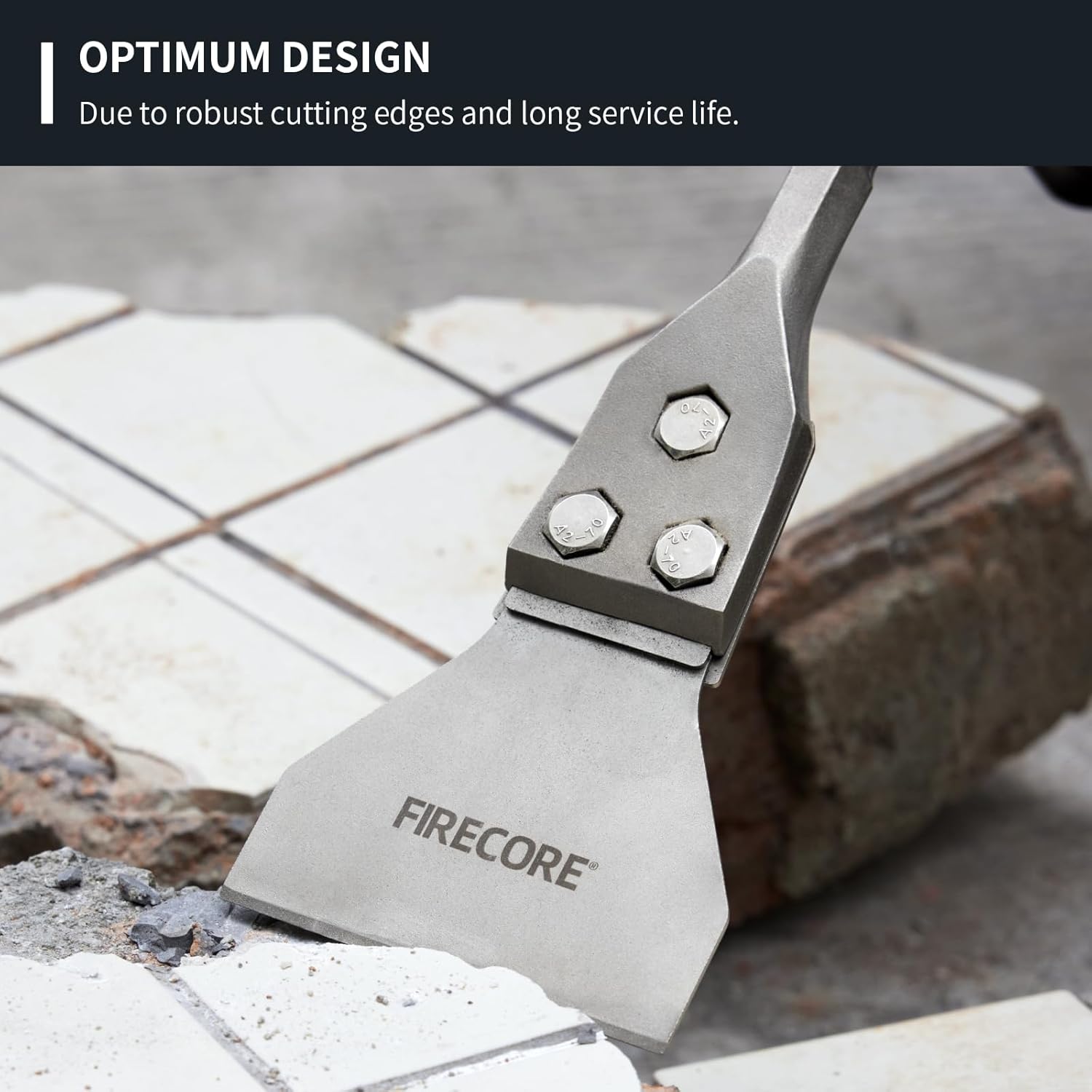
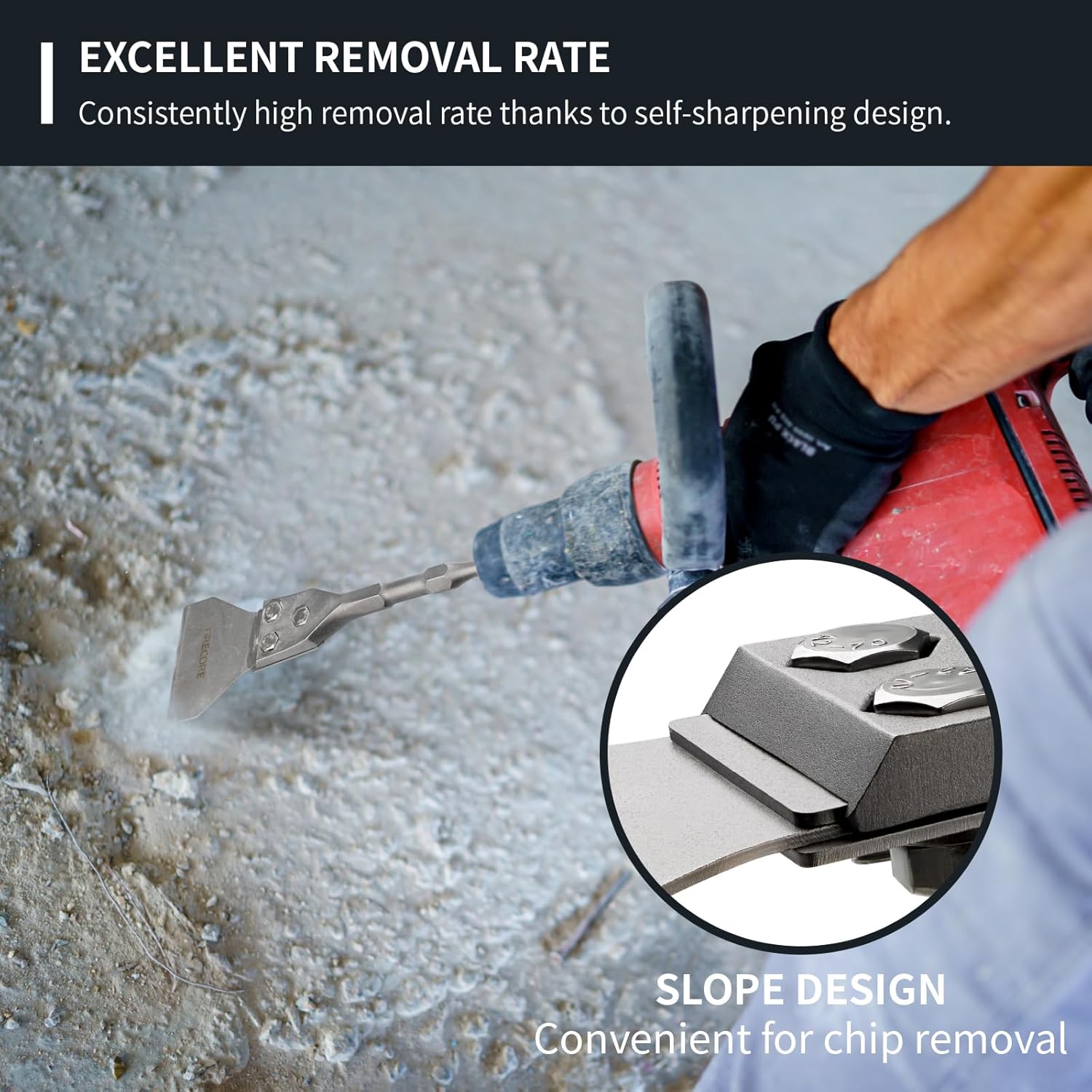
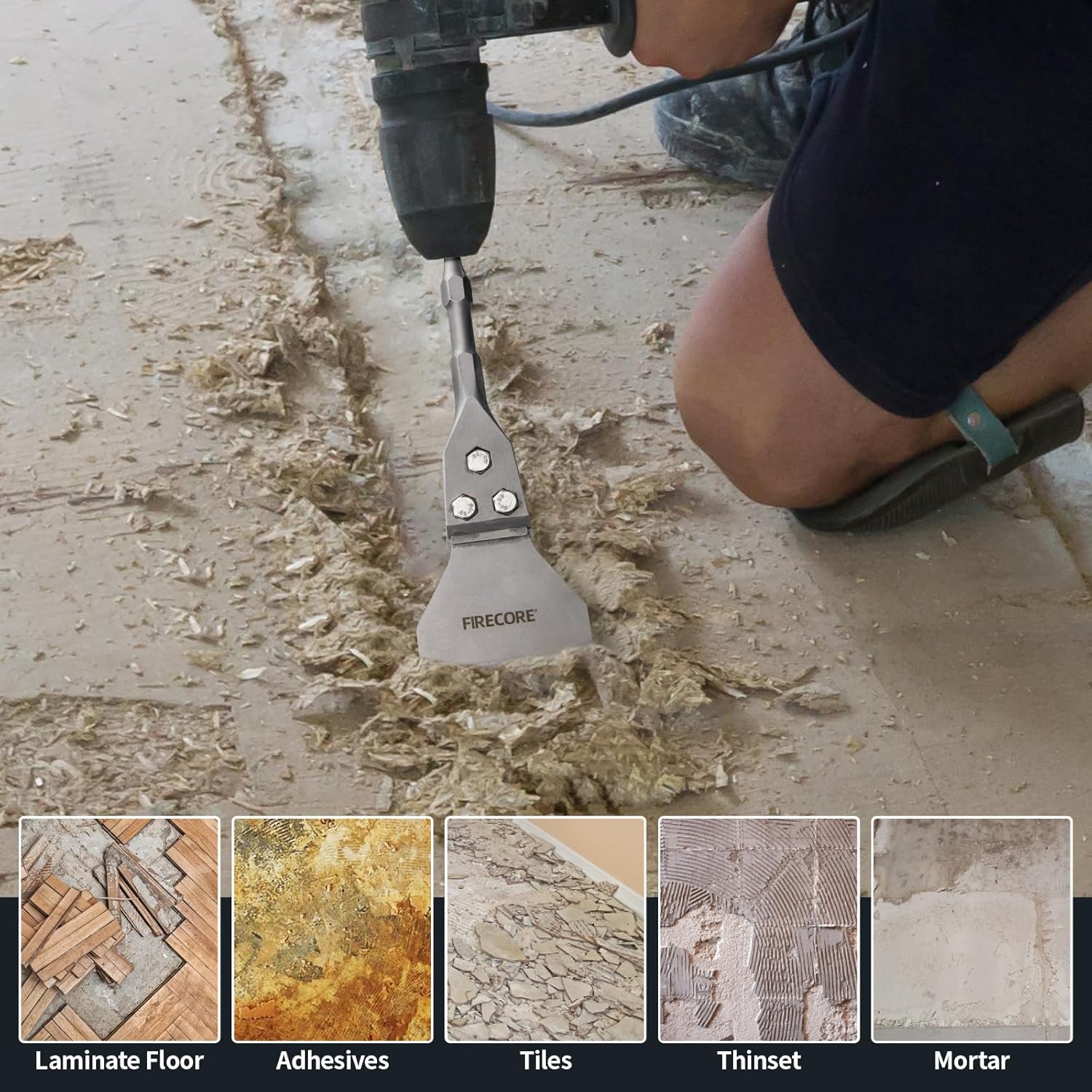
This floor scraper is a heavy-duty chisel bit designed to strip adhesives, vinyl, tile and mortar quickly from concrete and subfloors, saving time on renovation and refurbishment tasks. Its wide 300mm×100mm blade and angled working end help lift stubborn residues while reducing the need for repeated passes.
Key Points
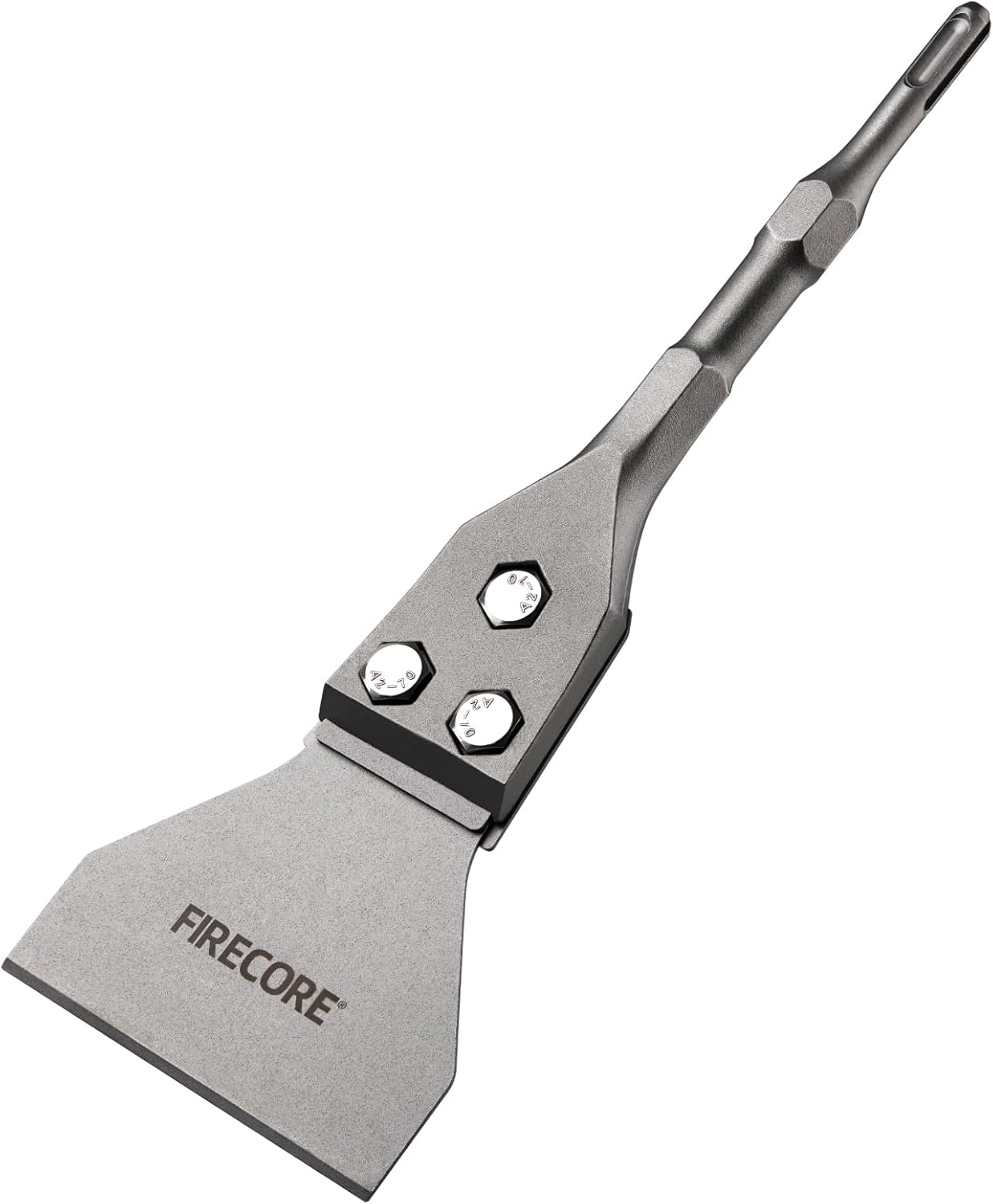
The blade is manufactured from high strength manganese steel and receives a surface hardening treatment that, according to the manufacturer, increases resistance to wear and heat. This construction aims to extend service life when tackling dense adhesives and cementitious residues. 🛠️
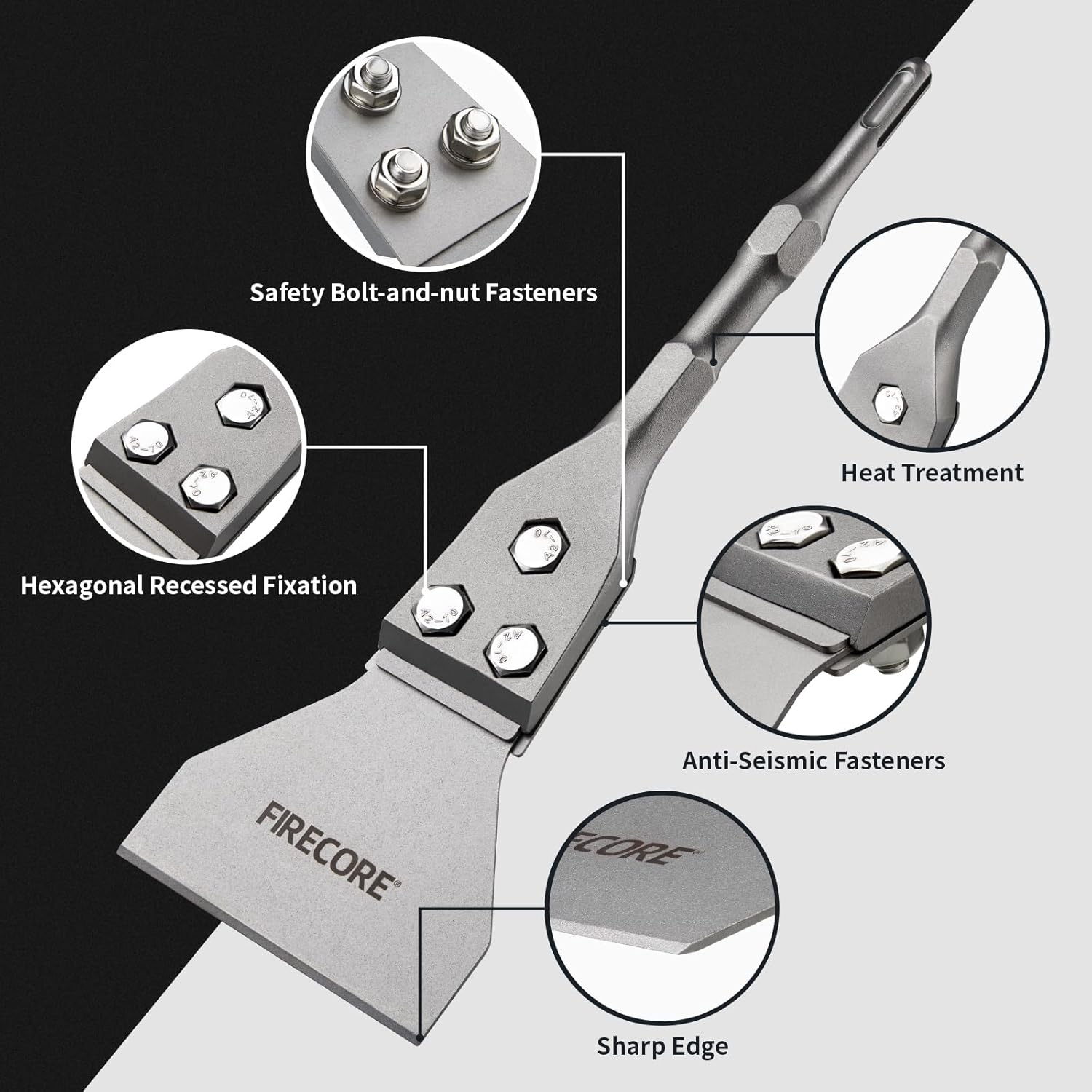
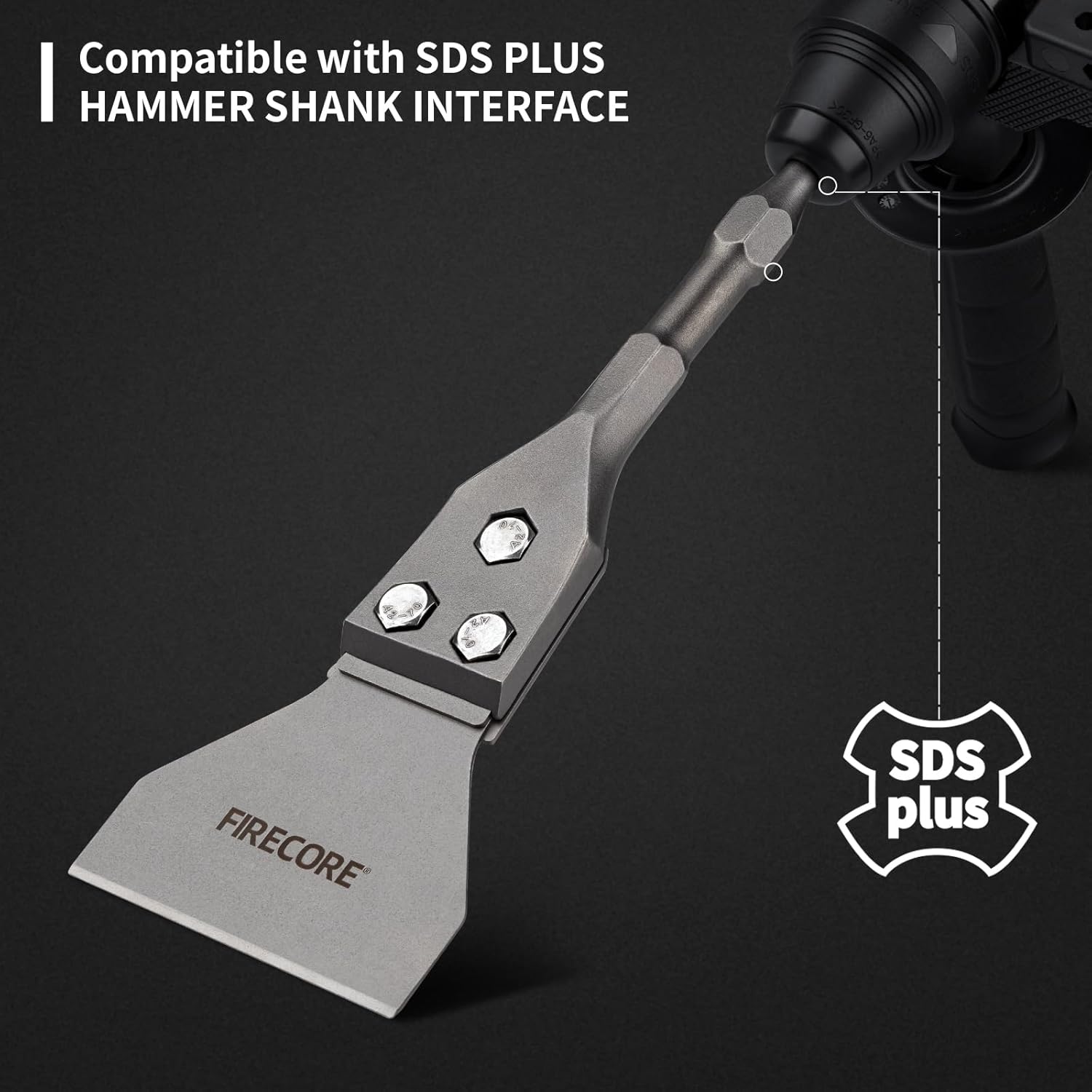
An improved locking system with nut fasteners reduces the risk of vibration-driven loosening, making the scraper more secure in prolonged use. The tapered long shank helps prevent breakage and makes handling more reliable during continuous chipping work. For portability, the unit fits directly into any SDS Plus holder so no adapter is needed. 🔩
Consider that the aggressive edge and wide profile are most effective on robust floors. It may not be the best option for fragile or decorative surfaces where precision finishing is required.
Technical Specifications
- Name: Firecore SDS Plus Floor Scraper FS23412
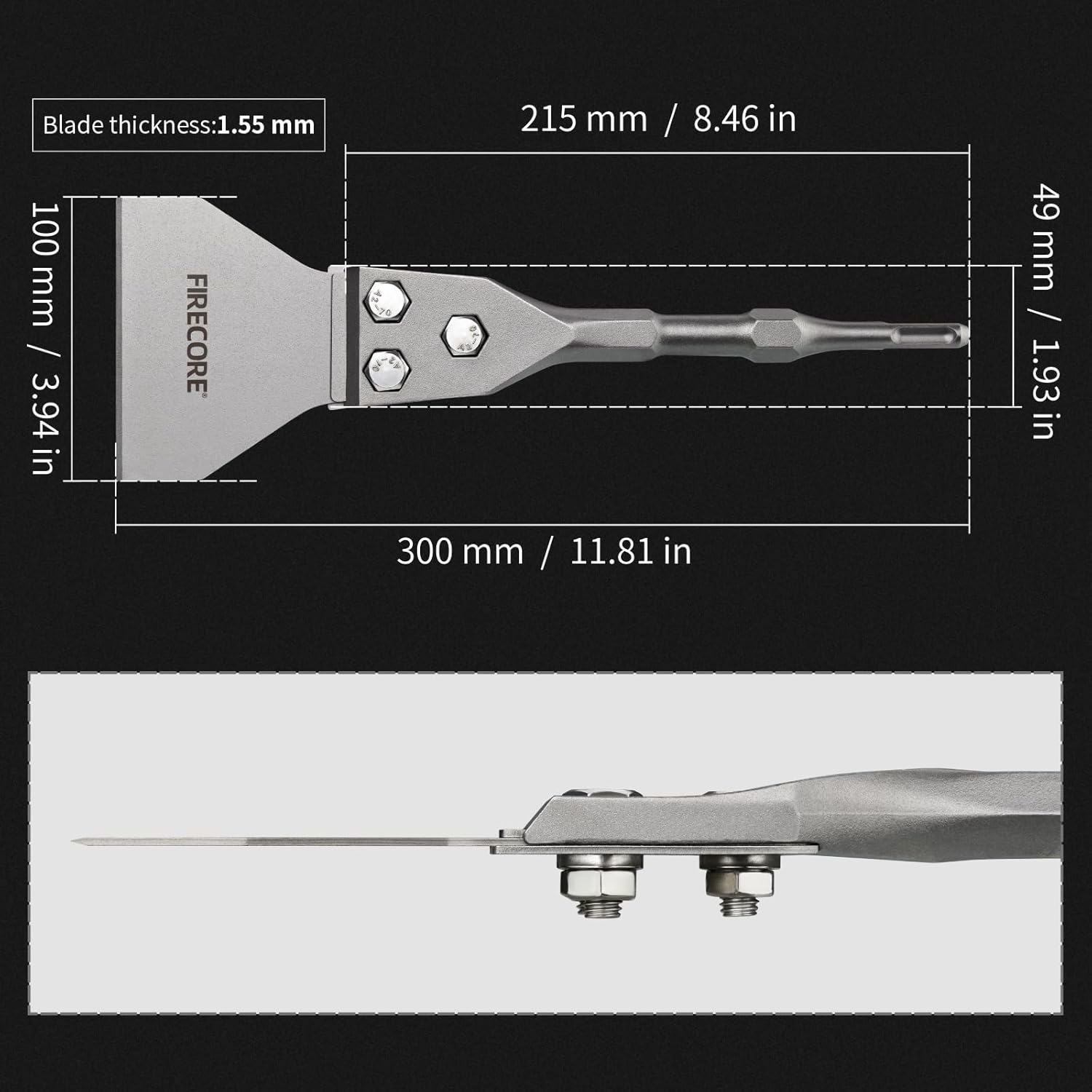
- Blade size: 300mm×100mm
- Material: manganese steel, heat treated
- Shank type: SDS Plus compatible
- Typical uses: adhesive removal, vinyl, VCT tile, linoleum, concrete mortar
Usage Recommendations
Begin by securing the scraper in an SDS Plus hammer following the tool manufacturer’s guidance. Use a moderate hammer setting and keep the blade angle low against the floor to lift layers efficiently and avoid gouging the substrate. For large areas, work in overlapping passes to limit strain on the bit and the power tool, and replace the bit once wear visibly reduces cutting performance. 🧰
When removing thick or cured thinset, allow the scraper to chip gradually rather than forcing aggressive passes. Wearing impact-rated gloves and eye protection is recommended due to flying debris and chips during operation. Also inspect locking bolts periodically during long jobs to confirm the fasteners remain tight.